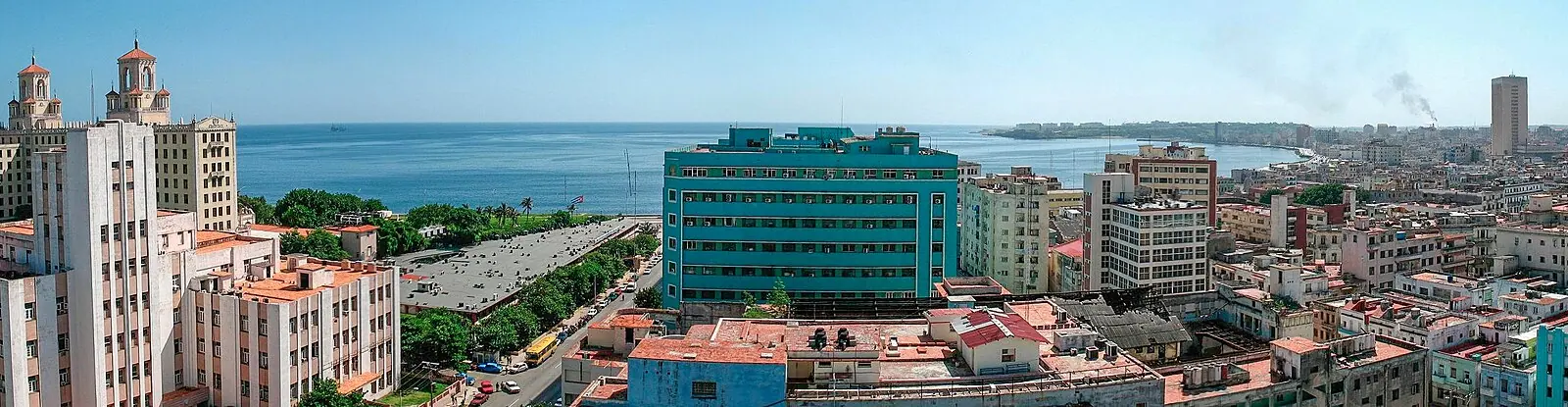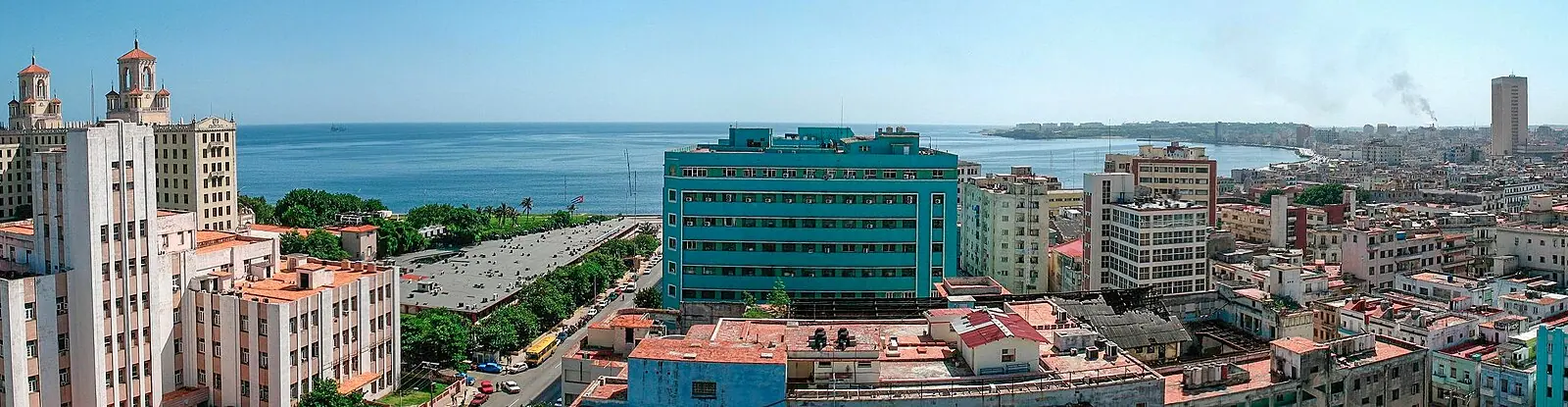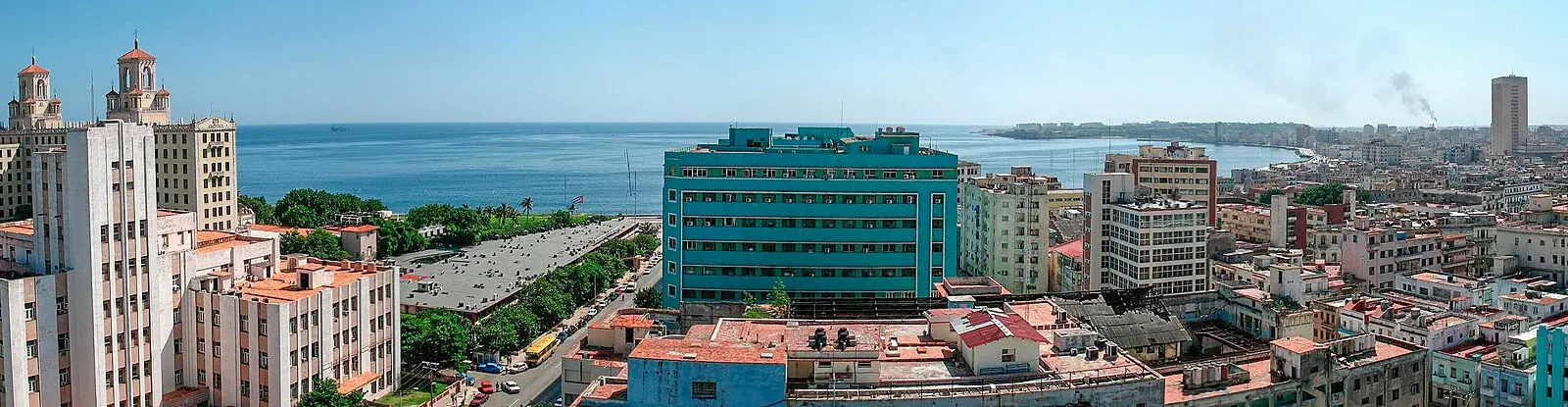
Cuba rarely eases you in. It greets you with salt air off the Malecón, son cubano leaking from shuttered doorways, and chrome-heavy 1950s cars still doing the rounds as taxis. Give it a week and a sensible flight plan, and you can fold colonial plazas, a tobacco valley, a sugar-baron town and a Caribbean beach into one unhurried loop.
Landing in Havana: Flights, Arrival and Your First Evening on the Malecón
Most long-haul arrivals touch down at José Martí International Airport, roughly 20 to 30 minutes southwest of the city centre. Direct services reach it from Miami, Cancún, Mexico City, Toronto, Montreal, Madrid, Paris, Amsterdam, Panama City and Bogotá, among others, which means Cuba is genuinely easy to reach from both the Americas and Europe. If your priority is sand rather than streets, you can instead land at Varadero's Juan Gualberto Gómez airport, Santa Clara's Abel Santamaría, Holguín's Frank País or the Cayo Coco gateway and work backwards. Whichever you choose, budget an hour or more to clear immigration and collect bags; terminals are small and often warm.
Sort the paperwork before you fly. Most visitors need a tourist card, usually sold at check-in or through the airline, and you should carry proof of onward travel and health insurance — both are periodically requested on arrival. Keep the stamped half of your tourist card safe, because you'll hand it over when you leave. Money is the other thing to plan: bring cash in euros, Canadian dollars or pounds sterling and change it at official money-changing offices in town rather than at the airport. Cards issued by US banks will not work here, and outside Havana and Varadero even non-US cards are hit-and-miss, so treat cash as your only real currency.
Check into a private guesthouse — a casa particular — in Habana Vieja or Vedado, where you get a room in a family home, a far more personal base than a state hotel. Then walk. The Malecón, Havana's eight-kilometre seafront curve, is at its best in the last hour of light, when fishermen, kids diving off the wall and couples on the sea wall all share the same stretch of crumbling elegance.
Days 1–2: Old Havana on Foot — Plazas, Fortresses and the Nightly Cannon Shot
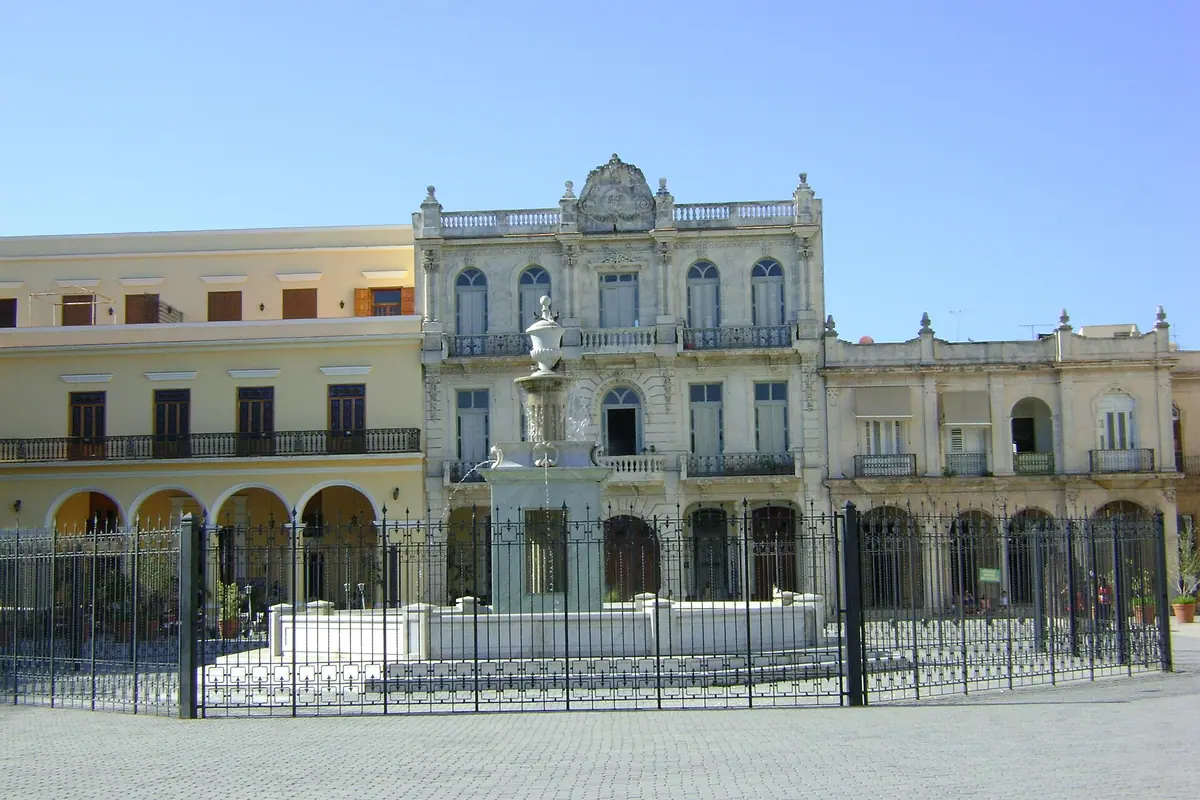
Old Havana rewards walking and nothing else. Start at Plaza de la Catedral, where the Catedral de San Cristóbal sits behind a baroque facade that looks like it was carved from coral. Two minutes away, Plaza de Armas holds the Castillo de la Real Fuerza, one of the oldest stone forts in the Americas, and the stalls of a secondhand book market. Then push on to Plaza Vieja, the most fully restored square in the city, where you can climb to a rooftop café and look down on pastel arcades, and to Plaza de San Francisco, framed by a white bell tower.
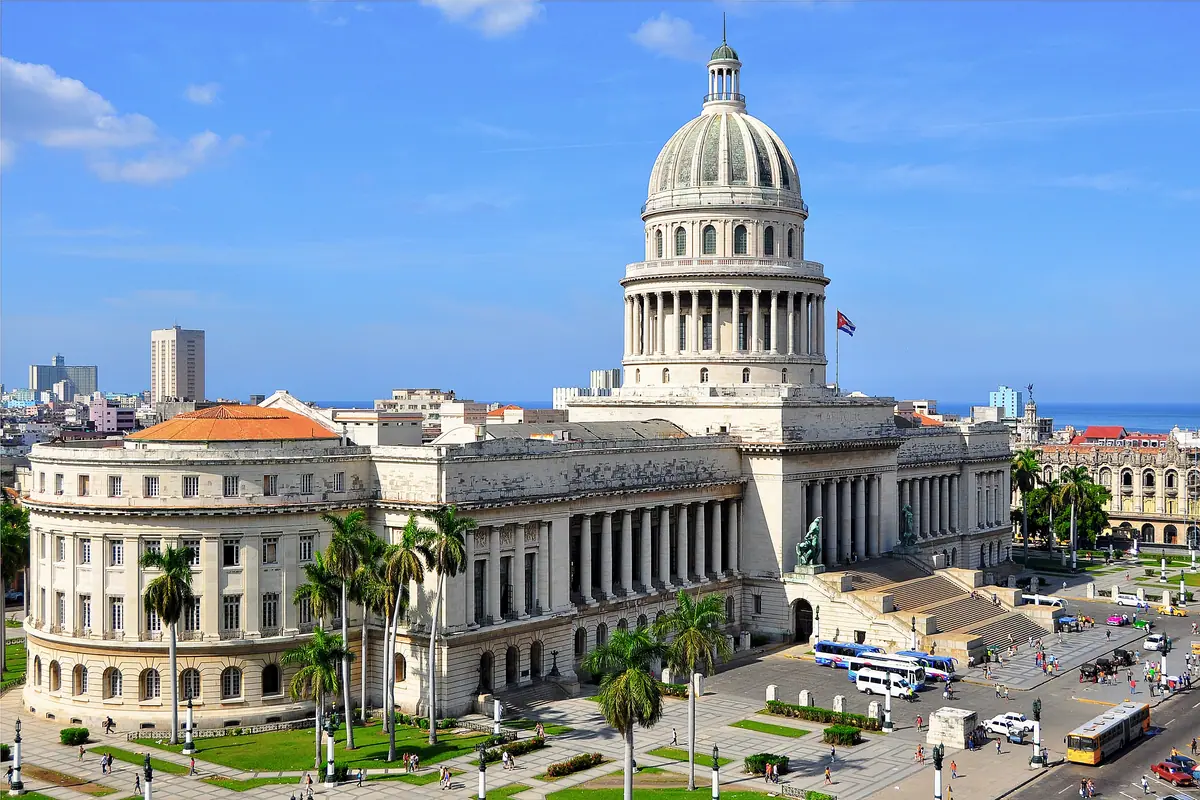
Follow Paseo del Prado north towards El Capitolio, the gold-domed parliament building that dominates the skyline, and the Gran Teatro next door. The Museo de la Revolución, housed in the former presidential palace, fills in the twentieth-century story with bullet-scarred walls and a tank parked outside. Across the bay stand the Castillo de los Tres Reyes del Morro, the city's postcard fortress with its lighthouse, and the vast Fortaleza de San Carlos de la Cabaña, where a soldier fires a cannon at nine o'clock each evening in a ceremony that has been staged for centuries.
With a second day, head west to the Playa district for the Necrópolis de Cristóbal Colón, a marble city of angels and family vaults that ranks among the world's great cemeteries, and continue to Jaimanitas, where the artist José Fuster has tiled an entire neighbourhood in riotous mosaic. Finish at Plaza de la Revolución, where the José Martí Memorial tower lifts you above the parade ground. Two full days is the minimum for Havana; start early, because the heat peaks by early afternoon and most state museums close on Mondays.
Day 3: Viñales Valley — Mogotes, Tobacco Barns and Caves
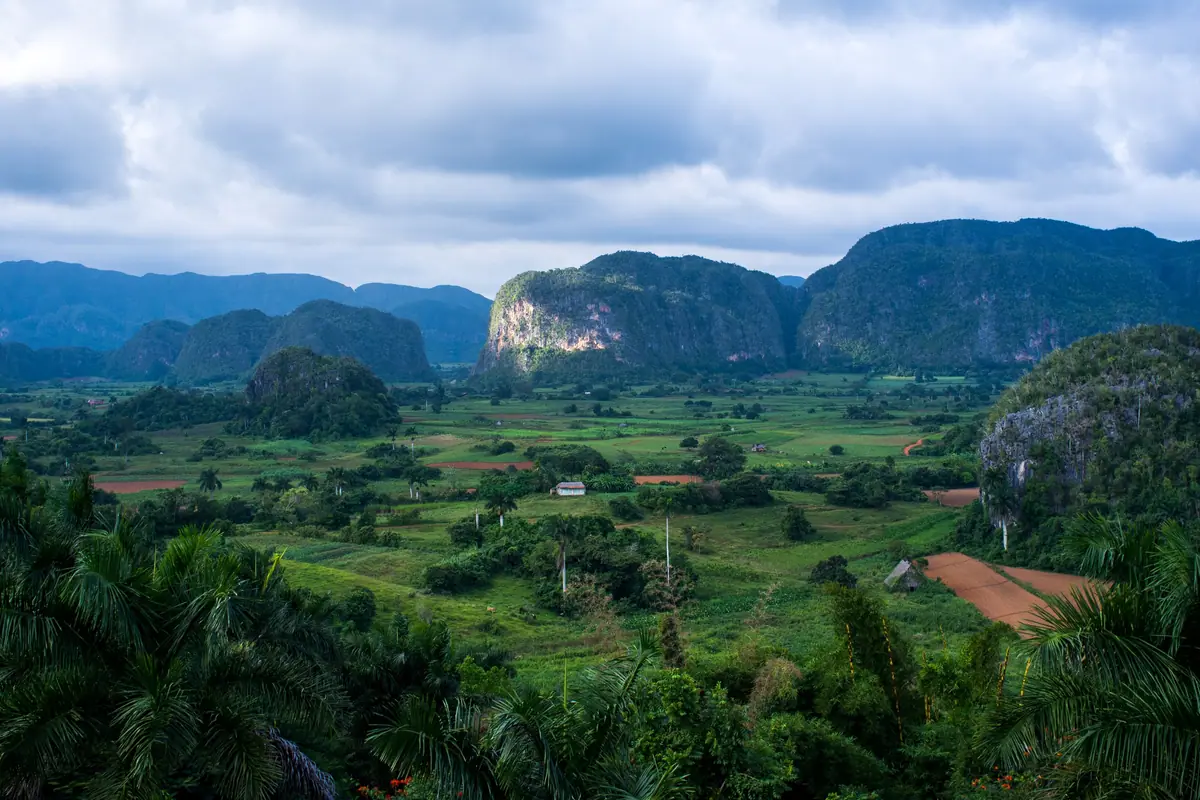
Three hours west of Havana, in Pinar del Río province, the Viñales Valley opens up like a stage set: sheer limestone mogotes rising out of flat red-earth fields, oxen ploughing between tobacco rows, and palm-thatched drying barns the colour of cured leaf. The whole valley is a protected cultural landscape, and the best way to understand it is to spend the morning on a farm. Farmers will show you the rolling, the curing and the pressing, and most sell bunches of cigars straight from the porch — far cheaper and far more memorable than anything in a city shop.
Ride a horse or walk the valley floor to the Mural de la Prehistoria, a vast painted fresco smeared across a cliff face, and take a rowboat into the Cueva del Indio, where a subterranean river slips between stalactites. Serious cavers head for the Cueva de Santo Tomás, one of the largest cave systems in the Caribbean, while everyone else saves their energy for sunset. The classic viewpoint is at Los Jazmines, a terrace above town where the mogotes turn pink and then violet as the light goes.
Stay the night in a village guesthouse rather than day-tripping back to Havana. Coaches empty out by late afternoon, and Viñales becomes a slow place of rocking chairs, roosters and woodsmoke. Bring cash, because ATMs in the valley are unreliable at best, and pack a light rain layer — this is one of the wettest corners of the island, green for a reason.
Days 4–5: Trinidad, the Valle de los Ingenios and Playa Ancón
The drive east to Trinidad takes around five hours, and it's worth every kilometre. Trinidad is the best-preserved colonial town in Cuba, a UNESCO-listed maze of cobbles, pastel walls and wrought-iron grilles that grew rich on sugar and then froze in time. Its heart is Plaza Mayor, watched over by the Iglesia Parroquial de la Santísima Trinidad and ringed by mansions, including the Palacio Brunet, now the Museo Romántico, with its frescoed halls and painted ceilings. Climb the bell tower for the classic view of terracotta rooftops against the mountains.
Just outside town, the Valle de los Ingenios tells the other half of the story. This was sugar country, and the ruins of mills, barracks and estate houses still stand among the cane. At Manaca Iznaga a 44-metre watchtower rises over the valley, built so overseers could spot escapes; the wooden stairs inside are steep but the panorama is worth the climb. A vintage steam train runs from Trinidad into the valley on certain days, and it's a far more atmospheric way to arrive than by road.
Give your second day to the water and the hills. Playa Ancón, twenty minutes south, is a gentle curve of pale sand with calm, snorkel-friendly shallows and a couple of beach bars. Inland, the Sierra del Escambray offers hiking at Topes de Collantes and swimming beneath the El Nicho waterfalls, where the water pools in terraces of turquoise. Back in town, the stone steps below the church fill with bands after dark — this is where Trinidad's music happens, and it happens late.
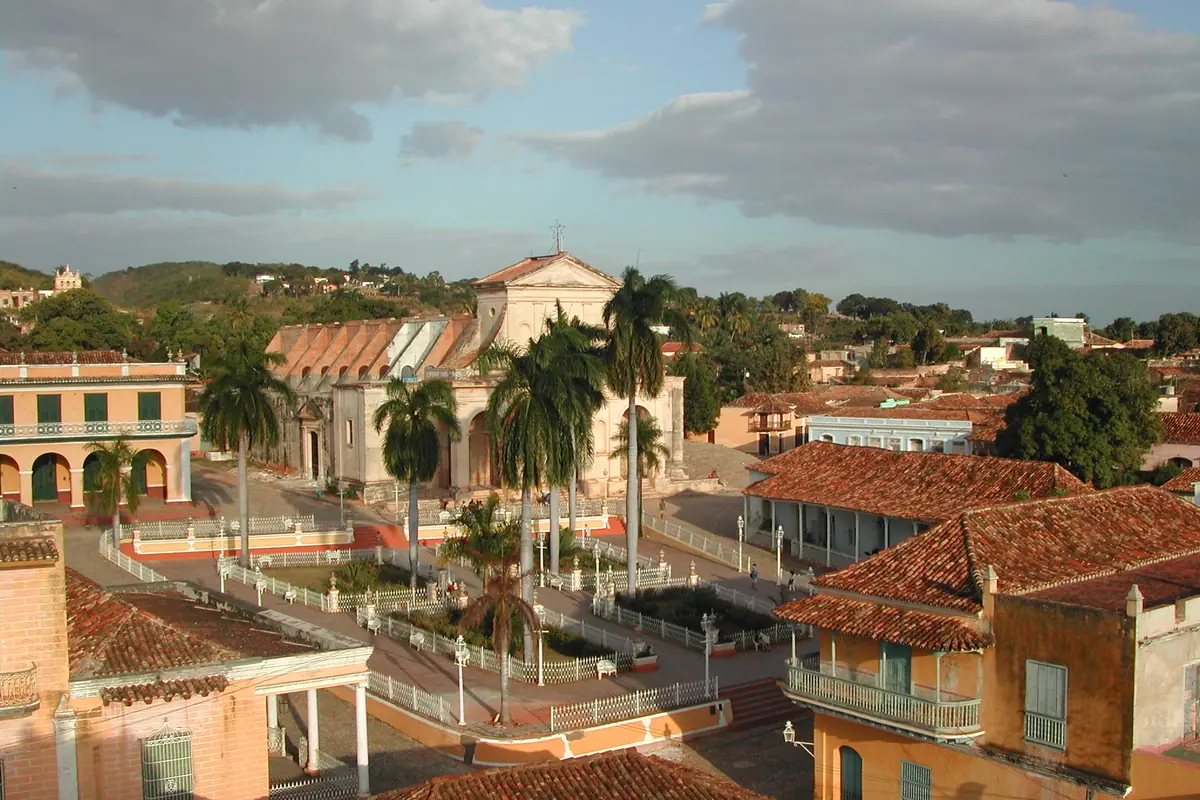
Day 6: Cienfuegos, the Bay of Pigs and Santa Clara
Looping back towards Havana, break the journey at Cienfuegos, a city founded by French settlers and laid out in a grid of neoclassical facades around a deep bay. Its UNESCO-listed centre clusters around Parque José Martí, with the Teatro Tomás Terry and a triumphal arch that is unique on the island. Drive out along the Punta Gorda peninsula to the Palacio de Valle, a Moorish-Gothic confection of turrets and tiles that serves as the city's most photographed building, then stop at the botanical garden north of town.
Further west lies the Bay of Pigs, known locally as the Bahía de Cochinos, where the road runs along mangrove coast and the water turns startling shades of blue. Playa Girón has a small museum covering the 1961 invasion and offers excellent shore snorkelling from Caleta Buena, with coral heads close enough to reach without a boat. It is quiet, cheap and gloriously undeveloped compared with the northern resort strip.
Your final stop should be Santa Clara, the city where the revolution was effectively decided. The Che Guevara Mausoleum and museum on the western edge is the country's most visited monument, a solemn plaza of stone and eternal flame, and the Tren Blindado park preserves the derailed armoured train that sealed the city's fate. The Mausoleum is closed on Mondays, so plan around it. Santa Clara also has its own airport, which makes it a neat place to finish if you'd rather not double back to Havana.
Day 7: Varadero, the Cayos and the Flight Home
Finish on the sand. Varadero is a 20-kilometre ribbon of white beach on the north coast, with shallow, bath-warm water and a reef just offshore that makes it one of the easiest places in Cuba to learn to snorkel or dive. It is the most resort-heavy part of the island, but step away from the big hotels and you'll still find quiet stretches, especially early in the morning before the sun gets serious. Boat trips run out to the nearby cays for a day of swimming and lobster lunches.
If you're flying out of Varadero's Juan Gualberto Gómez airport, the beach is less than half an hour from check-in — an ideal way to end a trip. Otherwise it's a two-and-a-half-hour transfer back to Havana, so leave a generous buffer for Cuban road conditions and check-in queues. Aim to be at the airport three hours before an international departure; the process is slower than you'd expect, and there's no lounging area worth rushing for.
A week is only a slice of Cuba, and it's worth knowing what you're skipping. If you'd rather go east, short domestic flights connect Havana with Santiago de Cuba, Holguín and Baracoa, unlocking the Sierra Maestra mountains, colonial Santiago's Casa de Diego Velázquez and the cocoa-and-coconut coast around Baracoa. Beach-first travellers can fly straight into Cayo Coco or Cayo Santa María and never leave the cays. Whichever shape your trip takes, book your international flights early for the December-to-April high season, when seats fill fast and the weather is at its most reliable.
Frequently asked questions
When is the best time to visit Cuba?
The dry season runs from November to April, with December to March offering the most reliable sunshine and the most comfortable temperatures. May and June turn hot and humid but stay relatively dry, while the hurricane season from June to November peaks in September and October — those two months are the wettest and the likeliest to disrupt flights and road travel.
Which airport should I fly into for a one-week Cuba trip?
Havana's José Martí International Airport suits the classic western loop of Havana, Viñales, Trinidad and Cienfuegos. Fly into Varadero if you want to start or end on the beach, Santa Clara for the geographic middle of the island, or Holguín, Cayo Coco and Santiago de Cuba if you're heading east.
Do I need a visa or tourist card for Cuba?
Most nationalities need a tourist card, typically purchased at check-in or through the airline before departure, and it usually allows a 30-day stay that can be extended. Carry a passport valid for at least six months, proof of health insurance and evidence of onward travel, as these are sometimes requested on arrival. Keep the stamped portion safe until you leave.
Can I use credit or debit cards in Cuba?
Rarely. Cards issued by US banks don't work at all, and even non-US cards are accepted in very few places outside Havana and Varadero. Bring cash in euros, Canadian dollars or pounds sterling, change what you need at official money-changing offices, and keep plenty of small notes for tips, taxis and guesthouse payments.
How do I travel between Cuban cities without a car?
Intercity coaches link the main tourist towns, and shared taxis — colectivos — cover the same routes more quickly for a modest premium. Private drivers can be arranged through your guesthouse and are often the most comfortable option for longer hops like Havana to Trinidad. Rental cars are scarce and must be booked well in advance, and domestic flights serve Santiago de Cuba, Holguín and Baracoa.