Croatia crams an improbable amount into a country you can drive end to end in a day: Venetian stone towns, Roman ruins still in daily use, island archipelagos and lakes so green they look lit from below. Where you sleep decides how much of that you actually experience, because a hotel above the Adriatic and a room behind a bus station are the same distance apart as a good trip and a mediocre one.
Croatia's Hotel Landscape: What First-Timers Should Know
Croatian accommodation splits roughly into four buckets: polished coastal resorts with pools and spa wings, boutique hotels carved out of medieval stone houses, private apartments and rooms, and inland guesthouses and farm stays. The country's hotel stock is smaller than its reputation suggests, which is why August fills up months ahead along the Dalmatian coast while inland towns in Slavonia or the Zagorje hills stay quiet and cheap.
Season shapes everything. May, June, September and early October bring warm sea, open ferries and sane prices; mid-July to late August brings water at its warmest but also peak rates, packed pebble beaches and coastal roads moving at a crawl. Winter empties the islands almost entirely — many hotels on Hvar, Korčula and Vis shut from November to March — though Dubrovnik, Split, Zagreb and Istria stay open year-round.
Expect a small per-person nightly tourist tax added on arrival in most towns, air conditioning as standard in coastal hotels, and stone-built rooms that stay gloriously cool in summer but can feel damp out of season. Sea view almost always costs extra; a room facing a back alley in the same building can be a third cheaper.
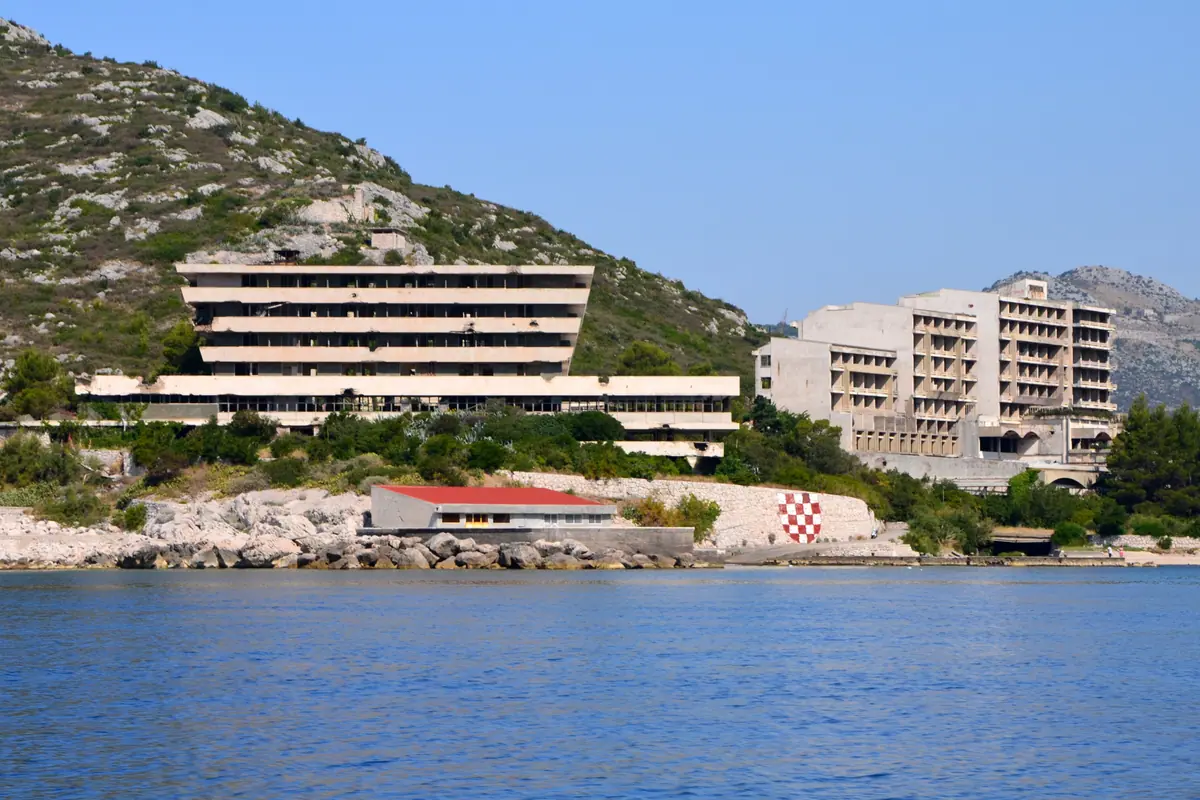
Dubrovnik: Inside the Walls or Above the Old Town
Dubrovnik is the reason many people come at all, and its hotel geography is unusually dramatic. Staying within the walls puts you steps from the Stradun, the polished limestone main street, and the Rector's Palace, with the chance to walk the 2km circuit of the Dubrovnik City Walls at sunrise before the crowds appear. Rooms inside are small, stair-heavy and pricey, and cars cannot reach most of them — you will be hauling luggage up stepped lanes.
Just outside the walls, the neighbourhoods of Ploče to the east and Pile to the west give you the same view of the old town from above at lower rates, while Lapad and Babin Kuk, a 15-minute bus ride away, offer larger resort hotels with pools and easy parking. For the postcard panorama, head to Mount Srđ by cable car and look down on the terracotta roofs, the forts of Lovrijenac and Bokar, and Lokrum island offshore — a short ferry hop if you want a swim away from the city beaches.
Timing matters more here than anywhere in Croatia. Cruise ships disgorge passengers mid-morning, so explore before 9am and after 5pm and use the middle of the day for swimming at Banje beach or a boat trip. June and September are the sweet spot: warm sea, thinner crowds and hotel rates well below the August peak.
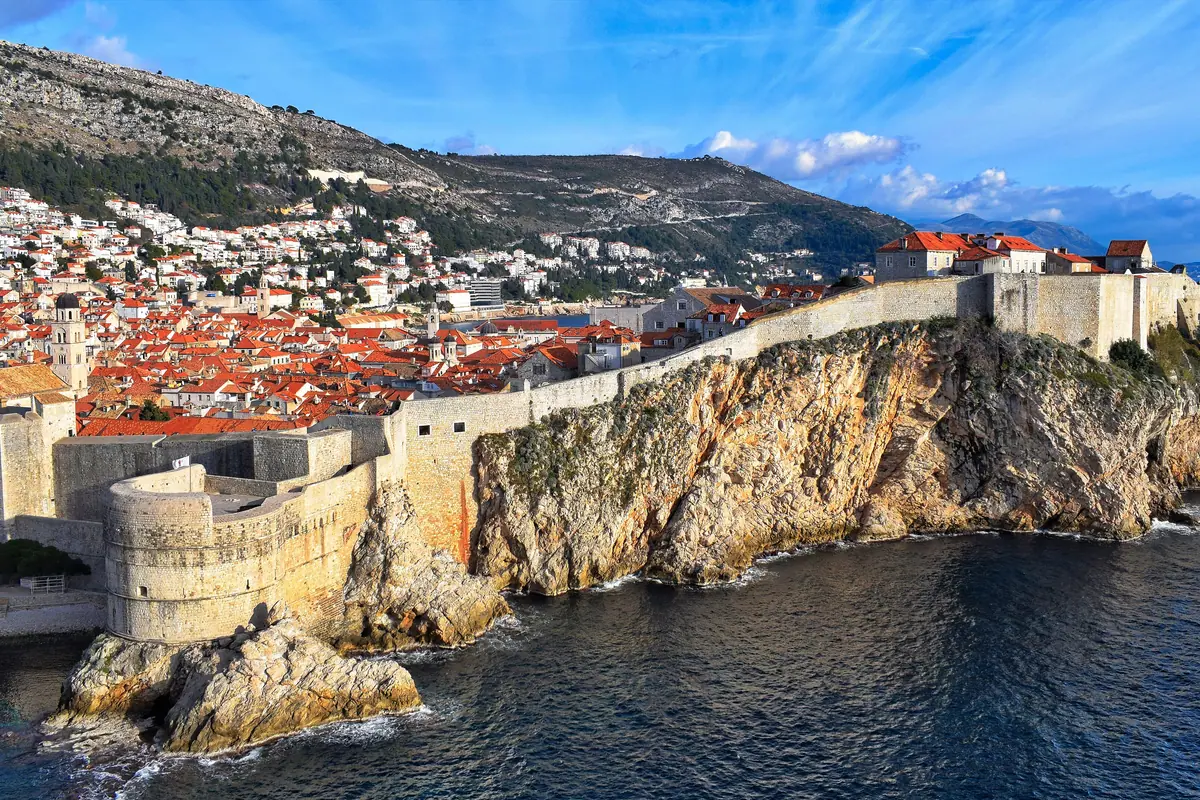
Split and the Dalmatian Islands: Diocletian's Palace and Beyond
Split's old town is a Roman emperor's retirement home that never stopped being lived in. Diocletian's Palace is not a ruin behind glass — its colonnaded peristyle is a café-lined square, its cellars hold shops, and apartments sit inside 1,700-year-old walls. Hotels range from design rooms tucked into the palace itself to big resort complexes along the Bačvice and Znjan waterfront, and the Riva promenade is the city's living room at any hour.
From Split's ferry port you can reach the islands that define a Dalmatian holiday. Hvar town has a Venetian square, the hilltop Fortica fortress and the Pakleni Islands a short boat ride away; Korčula claims Marco Polo and packs a miniature walled town onto a peninsula; Vis is quieter, with the Blue Cave on nearby Biševo and the sandy cove of Stiniva. Brač offers Zlatni Rat, the pebble spit that shifts shape with the wind. Stay overnight on an island if you can — day-trippers see the harbour, not the place.
Split rewards a longer base more than most cities. From here you can reach Klis Fortress above the city, the Roman ruins of Salona, and Trogir, a UNESCO-listed island town 30 minutes away that makes a lovely quiet alternative to sleeping in Split proper.
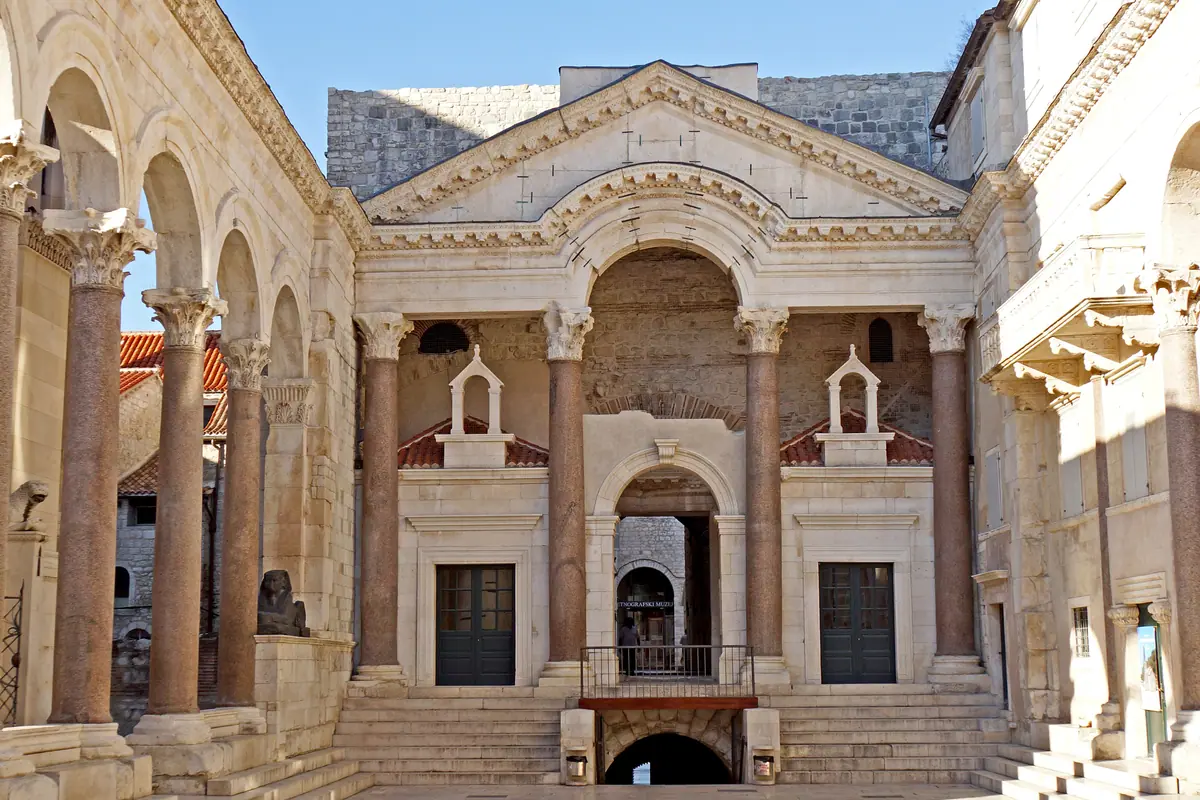
Istria and the North Adriatic: Rovinj, Pula and Poreč
Istria is the part of Croatia that feels closest to Italy: hilltop villages, truffle woods, olive groves and a coastline of Venetian-era ports. Rovinj is the showpiece, a jumble of pastel houses stacked on a former island, crowned by the baroque Church of St Euphemia whose bell tower you can climb for a view straight down onto the fishing harbour. Hotels here cluster around the old town and the wooded Zlatni Rt park, and boutique conversions of Venetian palazzi are common.
Pula, at the peninsula's southern tip, is built around the Pula Arena, one of the best-preserved Roman amphitheatres anywhere — it still hosts concerts and film festivals inside the ancient arcades. Nearby Poreč holds the Euphrasian Basilica with its glittering 6th-century mosaics, while the Brijuni Islands, reachable by boat from Fažana, mix Roman remains with a safari park. Inland, Motovun and Grožnjan reward a stay in a village guesthouse or agrotourism farm with home-cooked fuži pasta and local Malvazija wine.
Compared with Dubrovnik, Istrian hotels are better value, easier to reach by car and less crushed by day tourism. May and September are ideal; the sea is swimmable from June, and the shoulder months bring truffle season in autumn — worth planning a stay around if you like eating.
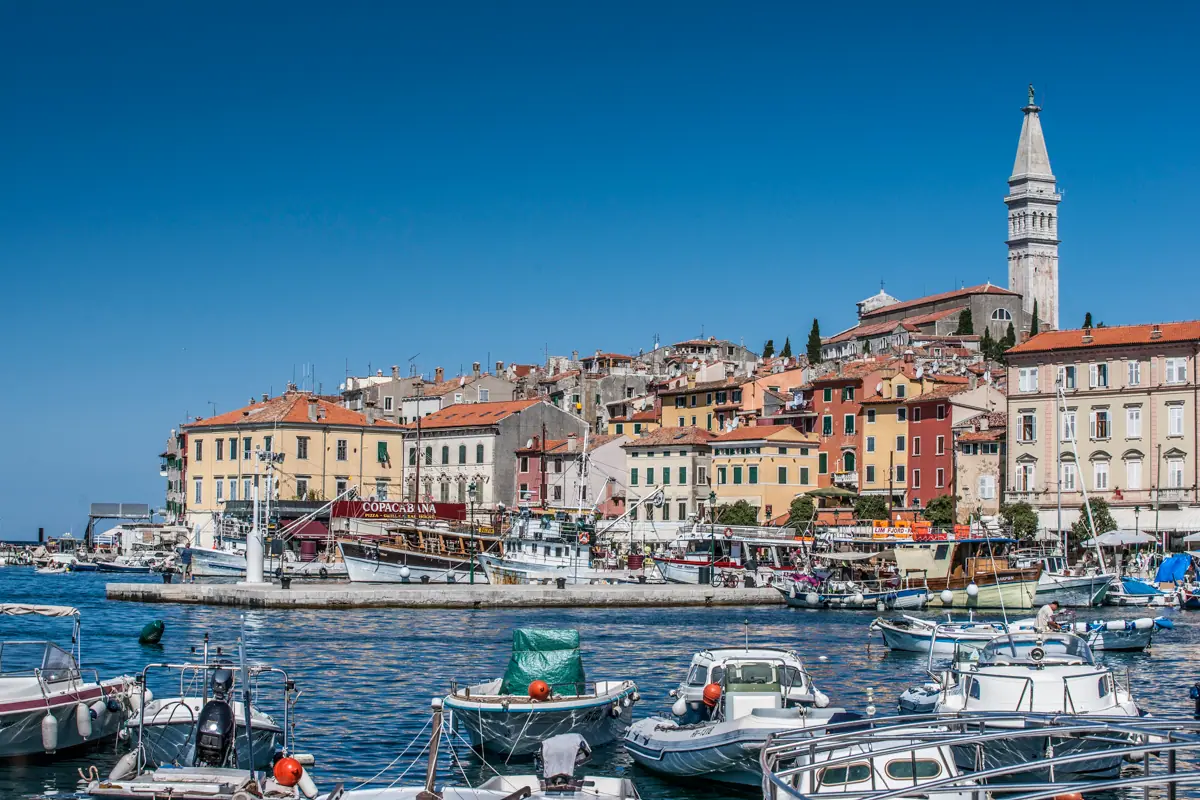
Zagreb, Plitvice and the Inland Stays
Croatia's capital is often skipped, which is a mistake. Zagreb's Ban Jelačić Square anchors the Lower Town, with the Dolac Market spilling fresh produce and flowers above it, and St Mark's Church with its tiled coat-of-arms roof sitting in the Upper Town. Hotels here are conventional city properties at prices that make the coast look extravagant, with the bonus of the Museum of Broken Relationships and the arcaded Mirogoj cemetery for a half day.
Inland Croatia is where you base yourself for the country's greatest natural sight: Plitvice Lakes National Park, sixteen terraced lakes linked by waterfalls and crossed on wooden boardwalks. Staying in the gateway villages around the park — Jezerce, Mukinje, Korenica — lets you enter when the gates open and walk the upper lakes before the tour buses arrive around mid-morning. A two-day ticket makes the slow version possible, which is the only way to enjoy it properly.
Further south, Krka National Park near Šibenik offers waterfalls you can swim beneath, with the UNESCO-listed St James's Cathedral in Šibenik and Zadar's Sea Organ and Sun Salutation — a solar-powered light installation and a set of stone steps that make music with the waves — anchoring a route down the coast. Zadar and Šibenik both have comfortable, reasonably priced hotels and far less summer pressure than Split.
When to Go and How to Book Croatia's Hotels Wisely
For coastal hotels, book early: late June through August in Dubrovnik, Hvar and Split sells out by spring, and the best boutique rooms — often fewer than a dozen keys — go first. Shoulder-season travel in May, early June, September and October gives you warm water, open ferries and rates that can be 30–50% lower for the same room. If you are set on August, expect to pay a premium and to book non-refundable to secure anything central.
Think about transport before you think about the room. Croatia's islands work on car ferries and passenger catamarans, and a hotel 5km from the port without a car is a nuisance; conversely, hotels inside Dubrovnik's walls and Split's old town are car-free by design. Parking in both cities is scarce and expensive in summer, so an out-of-centre hotel with a free lot often saves more than it costs in bus fares.
Finally, match the property to the trip. Families do well in the resort complexes of Lapad, Babin Kuk and the Istrian coast; couples and walkers are better served by small stone guesthouses in Rovinj, Trogir or Korčula; and anyone chasing Plitvice or Krka should trade a coastal base for a night or two inland. Air conditioning, a lift for heavy bags, and confirmation of whether a 'sea view' really faces the water are the three questions worth asking before you commit.
Frequently asked questions
Which Croatian city is best for a first hotel stay?
Split is the most practical first base: it has an airport, direct ferries to Hvar, Brač, Korčula and Vis, and a walkable old town built inside Diocletian's Palace. Pair two or three nights in Split with two nights on an island, and add Dubrovnik or Istria rather than trying to cover everything in one trip.
How far ahead should I book a hotel in Croatia for summer?
For July and August on the Dalmatian coast, book three to six months ahead, especially in Dubrovnik, Hvar town and Split's old town. For May, June, September and October you can often book a few weeks out, though small boutique properties still fill early.
Is it better to stay inside Dubrovnik's Old Town or outside the walls?
Inside the walls you get early-morning access to the Stradun and the city walls before crowds arrive, but rooms are small, stairs are unavoidable and cars cannot reach most addresses. Staying in Ploče, Pile, Lapad or Babin Kuk costs less, offers parking and pools, and is still a short bus ride or walk from the gates.
Can Plitvice Lakes be done as a day trip, or should I stay overnight?
It can be done from Zagreb or Zadar in a long day, but you will arrive after the busiest hours and rush the boardwalks. Staying one or two nights in a gateway village lets you enter at opening time, walk the upper lakes in near silence and return for the lower lakes the next day.
What extra costs should I expect at Croatian hotels?
Most towns charge a small tourist tax per person per night, usually collected on arrival and often payable in cash. Parking in Dubrovnik, Split and Rovinj is charged separately in summer, sea-view rooms carry a significant premium, and some island hotels close entirely between November and March.
Sort the rest of your trip
Everything for Croatia, in one place
Transfer in Croatia
Private driver waiting on arrival — no queues, no surprises.
Book a transfer
Things to do in Croatia
Skip-the-line tickets, guided tours and standout experiences.
See experiences
Stay online in Croatia
Travel eSIM — data the moment you land, no roaming bills.
Get an eSIM