Burkina Faso is West Africa without the crowd — mud-brick mosques that look hand-sculpted, granite elephants at Nazinga, and a capital that fills its streets with cinema, street food and drumming after dark. Where you sleep shapes the trip here, because the country's hotels cluster in two cities and thin out fast once the tarmac ends. Get that part right and the rest of the journey opens up.
Where to Sleep in Burkina Faso: A Hotel Map of the Country
Burkina Faso's accommodation map is drawn by its highways. Ouagadougou, the capital, holds the widest spread — from polished international-standard hotels with pools and gardens to modest auberges tucked into residential courtyards. Bobo-Dioulasso, roughly 360 km to the southwest and four to five hours away by road, is the second hub, and it's where the southwest circuit of Sindou, Banfora and the wildlife reserves begins. Outside these two cities, expect auberges, mission-run guesthouses and bush campements rather than polished chains — often simple, sometimes wonderful, and nearly always best reserved in advance.
Each class of lodging comes with its own rhythm. City hotels generally offer air-conditioning, a generator to cover power cuts, Wi-Fi that comes and goes, and breakfast of baguette, omelette and instant coffee. Guesthouses lean harder on fans, cold showers and conversation. Campements inside or beside reserves trade comfort for location: you wake to birdcall, and the generator switches off around ten at night. Whichever you choose, confirm three things before you commit — air-conditioning, a working generator, and mosquito nets over the beds.
Timing matters more than most visitors expect. Rooms vanish weeks ahead during the country's big cultural events, when the diaspora returns for the December holidays, and around the capital's major festival periods. If your dates are fixed and your trip falls in a busy window, book early and confirm in writing; if your dates are flexible, aim for the cool, dry months and you'll find both choice and calm.
Ouagadougou: Neighbourhoods, Landmarks and Day Trips
In Ouagadougou, where you stay is really a question of how you want to move. Ouaga 2000, in the south, is the modern face of the city — wide boulevards, embassies, big hotels and easy parking. Koulouba and the area around the civic centre put you within walking distance of the National Museum and the cathedral. Zone du Bois, Gounghin and Cissin are quieter, greener and cheaper, with small guesthouses where the family who runs the place will happily tell you which maquis serves the best grilled chicken.
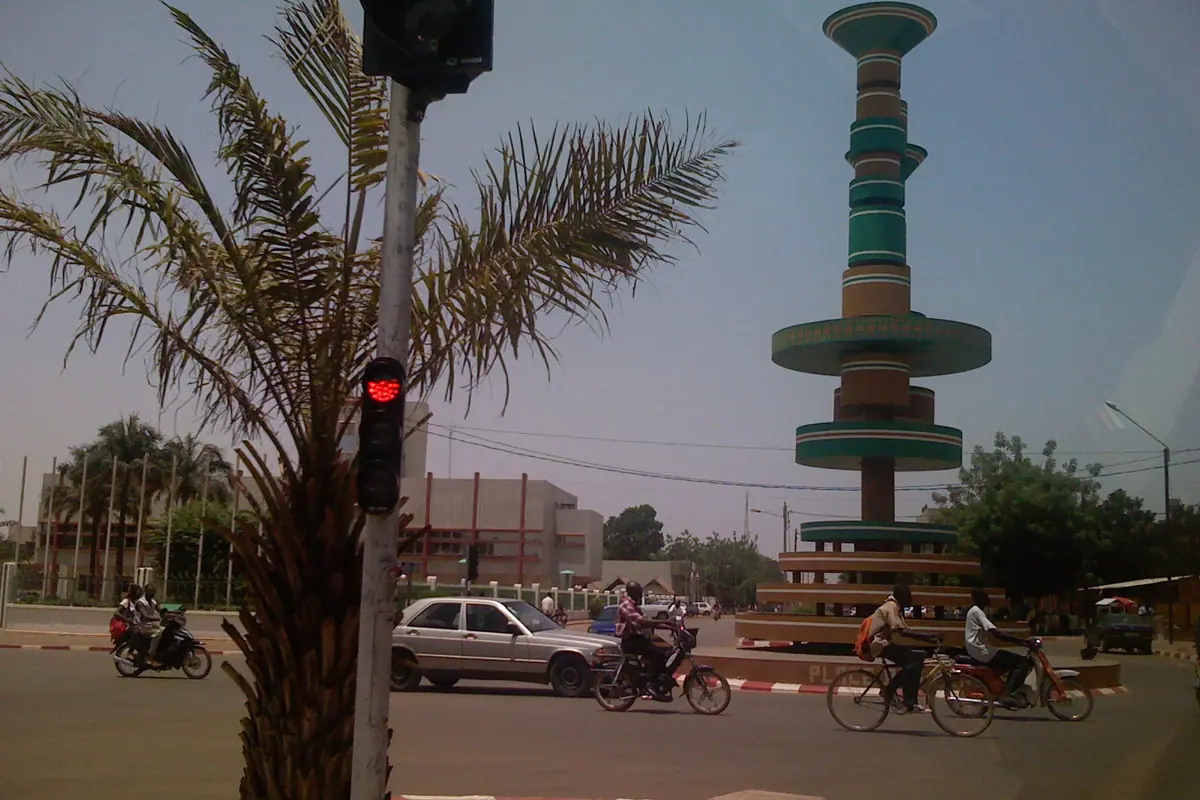
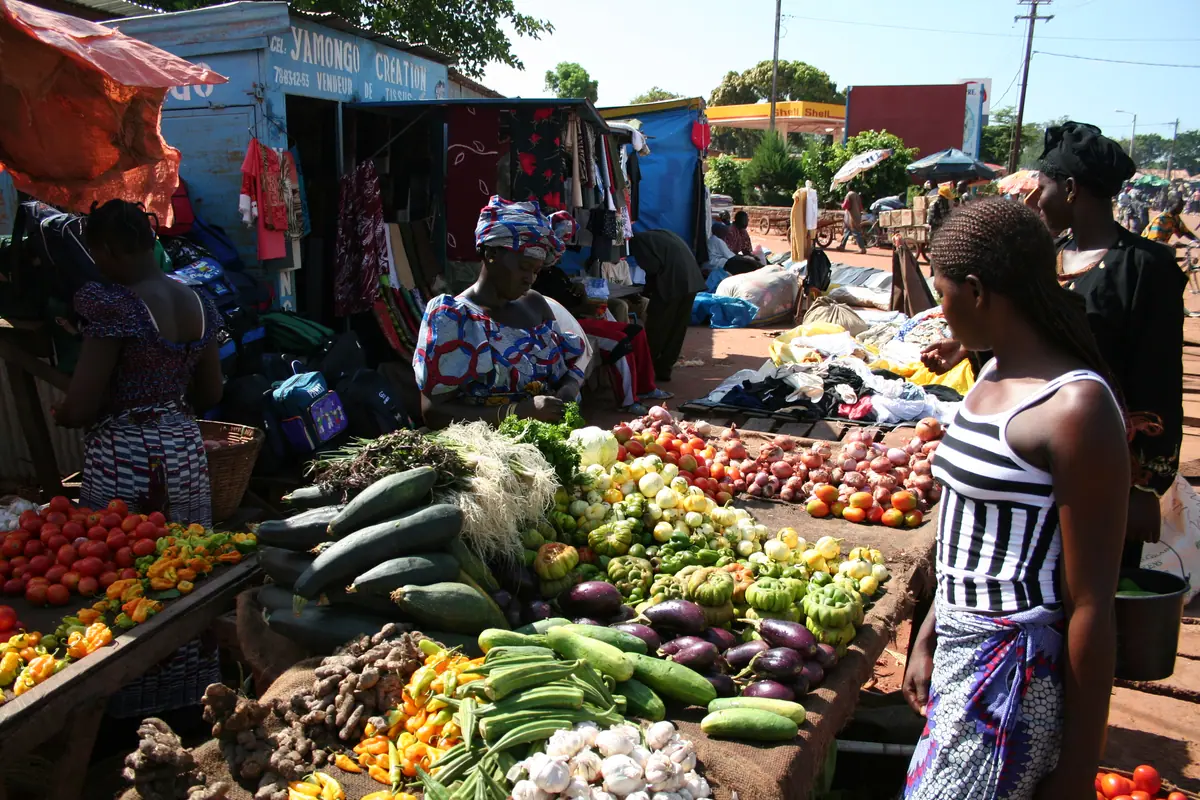
The city's sights are easy to fold into a couple of days. Start at the Monument des Héros Nationaux, the soaring concrete landmark that anchors the capital's skyline, then walk the Place des Cinéastes, a square honouring the country's famous film culture and the backdrop for its biennial cinema festival. The Grand Marché, rebuilt as the Rood Woko complex after a fire, is the place to bargain for Faso Dan Fani woven cloth and bronze work; the Immaculate Conception Cathedral stands nearby. The National Museum of Burkina Faso gathers masks, instruments and textiles from across the country's many peoples, while the Parc Urbain Bangr-Weogo gives you 260 hectares of woodland trails and a small zoo on the northern edge of town.
Save a day for the surroundings. About 35 km east on the Fada N'Gourma road, the granite slabs of Laongo have been carved into open-air sculpture since the late 1980s — a landscape gallery you wander at your own pace. West of the city, the village of Bazoulé keeps a pond of sacred crocodiles that visitors can approach with a guide, and 55 km northwest the Musée de Manéga displays Bendré masks and ritual objects in a compound of traditional architecture. None of these need more than half a day, and all of them pair neatly with a hotel base in the capital.
Bobo-Dioulasso: The Old Town and Its Mud-Brick Mosque
Bobo-Dioulasso is the country's cultural heart, and its hotels reflect a slower, warmer city. Accart-Ville and the commercial centre have the most comfortable mid-range and top-end rooms; staying closer to Dioulassoba, the old quarter, puts you in the middle of the action, with the smell of grilling meat and the sound of Dioula music drifting through the lanes. The city also hosts a major biennial national culture week, when its streets become one long stage of dance, theatre and craft — book far ahead if you land on those dates.
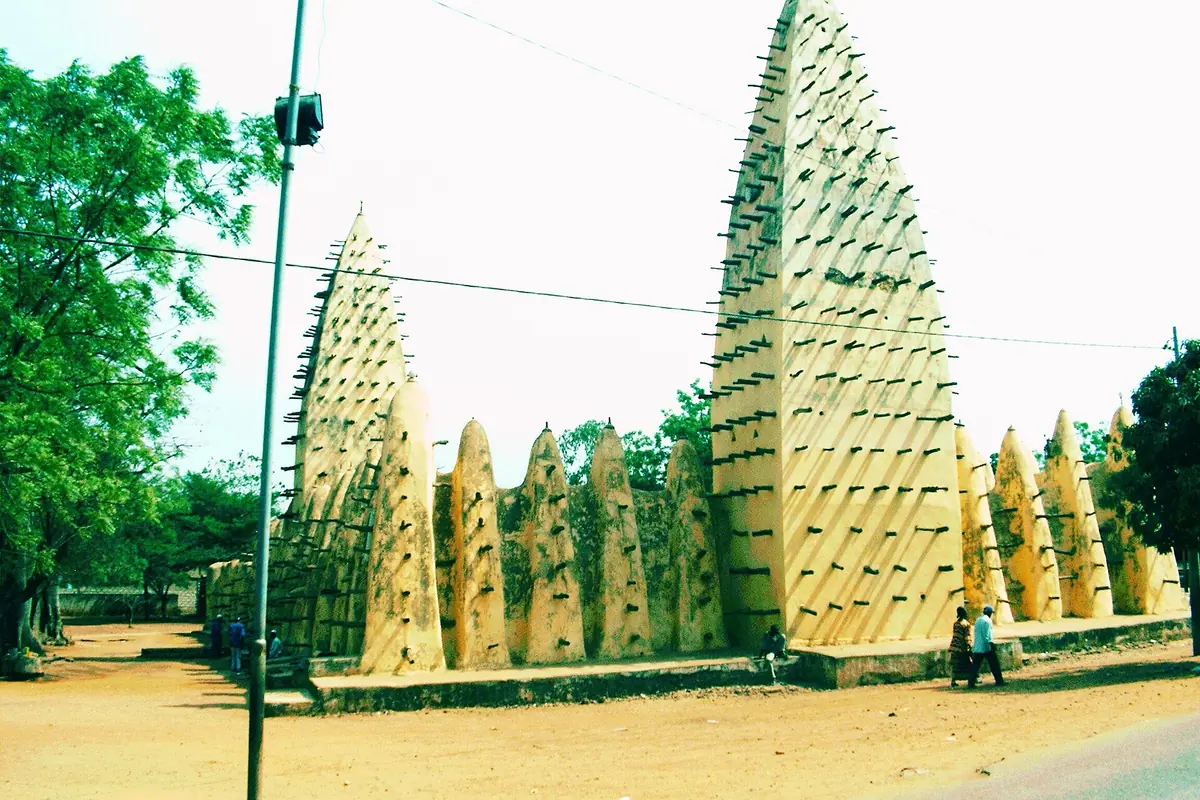
The old town is the reason to come. The Grande Mosquée de Dioulassoba, a Sudano-Sahelian masterpiece of hand-moulded earth studded with projecting wooden stakes, has watched over the quarter since the nineteenth century; visitors admire it from the courtyard, respectfully dressed and covered. Nearby is the mausoleum of Guimbi Ouattara, the nineteenth-century ruler and diplomat whose story is woven into the city's identity. Wander on through the balconied colonial-era houses of the old quarter, then head to the Grand Marché for masks, leatherwork and jewellery, and to the artisans' village where you can watch bronze casting and weaving in progress.
Use Bobo as a base for the hippos too. Roughly 60 km north, the Mare aux hippopotames de Bala is a protected pool where hippos surface in the late afternoon; a locally arranged pirogue trip gets you close without disturbing them. Back in town, an evening on a terrace with a cold drink and grilled fish is the proper way to end the day.
Banfora, Sindou and the Southwest Water-and-Rock Circuit
Southwest of Bobo-Dioulasso, the landscape changes abruptly: sandstone pillars, waterfalls and mango groves replace the flat Sahelian plain. Banfora, an hour and a half down the road, is the natural base, with a handful of comfortable hotels and several small guesthouses where rooms are simple but the gardens are lovely. Farther west, near the Malian border, tiny campements at Sindou let you sleep almost under the rock formations that draw people here.
The attractions come thick and fast. The Cascades de Karfiguéla, about 12 km from Banfora, tumble over a wide ledge into pools you can swim in during the rainy season and the early dry months — a rare treat in this part of West Africa. The Pics de Sindou rise like a row of stone teeth from the plain, with paths through and around them and viewpoints over the border country. Between the two, the Dômes de Fabedougou offers smooth, rounded rock domes that children scramble over happily. And at Lac Tengrela, a short drive south, hippos graze in the shallows at dawn and dusk.
Practicalities are straightforward but worth planning. The circuit is best done with a car and driver, or by bicycle if you're confident in the heat. Access to the waterfalls depends on water levels, so the months after the rains are the most rewarding. Bring cash, since card machines are scarce out here, and carry water and sun protection for every stop.
Safari Camps and Reserve Lodges: Nazinga, Arli and W
Burkina Faso is not a classic safari destination, which is exactly why the wildlife here feels like a discovery. The Nazinga Game Ranch, a few hours south of Ouagadougou near the town of Pô, protects a large elephant population alongside antelope, warthogs, baboons and hundreds of bird species. Its accommodation is built for the setting rather than for luxury: simple en-suite rondavels and tented campements near the waterholes, with a bar and restaurant overlooking the action. Elephants come to drink most reliably in the dry season, when surface water elsewhere dries up.
Further east, Arli National Park shares a border with a neighbouring reserve and forms part of a vast transboundary wilderness, while the W National Park, named for the double bend of the river that runs through it, is the wildest of all — remote, thinly visited and home to elephant, buffalo and a scattering of lion. Both are reached from small eastern towns where lodging is basic and arranged locally rather than online. West of Bobo-Dioulasso, the Bala hippo pool rounds out the options and works beautifully as a half-day excursion.
Plan your park stays around the seasons. December to April is the dry window, when vegetation thins, animals congregate at water and tracks are passable; by May the heat is punishing and by the peak of the rains some routes turn to mud. Expect early starts, guided drives in open vehicles, mosquito nets and evenings under enormous skies — and budget at least two nights if you want more than a fleeting glimpse of elephants.
Tiébélé, Loropéni and the Practical Side of Planning
Two of Burkina Faso's most memorable sights sit well off the main hotel circuit. In the south, near the Ghanaian border, the royal court of Tiébélé is a compound of earth houses painted by Kassena women in bold black, white and ochre geometric patterns, repainted after each rainy season — a living artwork you visit with a local guide. Farther southwest near Gaoua, the Ruins of Loropéni, a UNESCO World Heritage Site, are the stone remains of a fortified settlement tied to the region's gold trade, and one of the oldest such sites in the country. Both reward a night in simple accommodation rather than a rushed day trip.
The best time to come is November to February: the harmattan haze has not yet thickened, the heat is manageable, and the roads are dry. March to May brings temperatures that frequently pass 40°C, while June to September is the rainy season — green, dramatic and cheap, but muddier underfoot. Money matters too: the currency is the CFA franc, cash is king once you leave the cities, and although ATMs exist in Ouagadougou and Bobo-Dioulasso, you should carry enough for several days of fuel, food and tips.
Give the country at least ten days. Four or five would cover Ouagadougou and Bobo-Dioulasso with a day trip each; add Banfora, Sindou and a park stay and you'll want two weeks. French is the official language, with Mooré in the capital and Dioula in the west, and even a few words of greeting go a long way. Book city hotels ahead, arrange reserve campements through local contacts, and treat every long drive as a chance to stop, buy mangoes at the roadside and watch the country unfold.
Frequently asked questions
What is the best time of year to visit Burkina Faso?
November to February is ideal: dry, dusty but bearable heat, clear roads and easy travel between Ouagadougou, Bobo-Dioulasso and the southwest. March to May is extremely hot, often above 40°C, and June to September brings the rains — greener landscapes and lower prices, but muddy tracks in the reserves.
What kind of hotels can I expect outside Ouagadougou and Bobo-Dioulasso?
Small auberges, mission guesthouses and bush campements near the parks. Rooms are usually simple — a bed, a fan or air-conditioning, a cold shower and mosquito nets — with meals cooked on site. Quality varies, so ask about generators, water supply and netting before you commit, and reserve ahead whenever possible.
How many days do I need to see the main sights and where should I base myself?
Allow ten days to two weeks. Use Ouagadougou for the Monument des Héros Nationaux, the Grand Marché and the granite sculptures at Laongo; Bobo-Dioulasso for the old town and Dioulassoba mosque; and Banfora or Sindou for the Karfiguéla waterfalls and the Sindou peaks, with a night at Nazinga or Bala for wildlife.
Can I pay by card, and how much cash should I carry?
Cards are accepted at larger city hotels but rarely elsewhere. The currency is the CFA franc, and ATMs are limited to the main cities, so withdraw enough to cover several days of fuel, meals, park fees and tips before heading out to Banfora, Tiébélé or the reserves.
Do I need a visa, and how do I get around between cities?
Many visitors can obtain an e-visa before arrival, so check the current rules for your nationality well in advance. Between cities, buses and shared taxis run on the main paved routes, while a hired car and driver is the most flexible option for the southwest circuit and national parks. Driving is on the right and road conditions vary sharply off the tarmac.
Plan it — hotels in Burkina Faso
Live search, booked directly with trusted providers.
Sort the rest of your trip
Everything for Burkina Faso, in one place
Transfer in Burkina Faso
Private driver waiting on arrival — no queues, no surprises.
Book a transfer
Things to do in Burkina Faso
Skip-the-line tickets, guided tours and standout experiences.
See experiences
Stay online in Burkina Faso
Travel eSIM — data the moment you land, no roaming bills.
Get an eSIM