Botswana is the rare safari country that chose wilderness over volume: a place where vast concessions hold a handful of camps, and a mokoro gliding through the Okavango Delta is often the loudest thing you will hear. Knowing where to base yourself — Gaborone, Maun, Kasane, the salt pans or the Kalahari — is the difference between a good trip and an unforgettable one.
Botswana's Lodging Landscape: Low Volume, High Value
Botswana built its tourism on a deliberate idea: few guests, enormous spaces. Instead of sprawling resort complexes, most accommodation sits inside private concessions bordering the Okavango Delta, Chobe National Park and the Kalahari, where a handful of tented camps share thousands of square kilometres. Rates are higher than in many African safari destinations, but so is the payoff — you may spend an entire morning with a lion pride and see no other vehicle.
The seasons decide both what you see and what you pay. The dry months from roughly May to October pull wildlife to permanent water and thin out the bush, making Moremi Game Reserve, the Chobe River front and the Central Kalahari exceptional for predators. Nights in the desert can fall close to freezing, so layers matter. The green season, about November to April, brings thunderheads, newborn antelope, migratory birds and noticeably lower lodge rates, though some Delta water camps close and sandy tracks soften.
Expect a spectrum of stays: ultra-luxurious tented camps with plunge pools, mid-range safari lodges, self-catering cottages, business hotels in Gaborone and Francistown, riverside lodges in Kasane, family-run guesthouses and backpacker camps in Maun, mobile expedition camps that move with the herds, and houseboats moored on the Chobe and the Okavango Panhandle. Most itineraries link two or three areas using small light aircraft.
Gaborone and the Southeast: City Hotels and Short Escapes
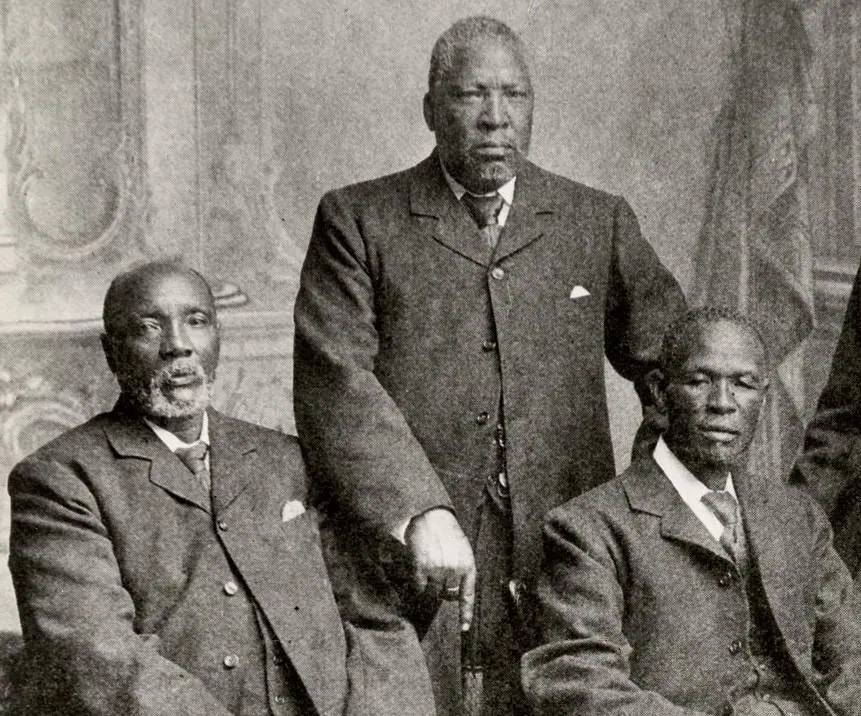
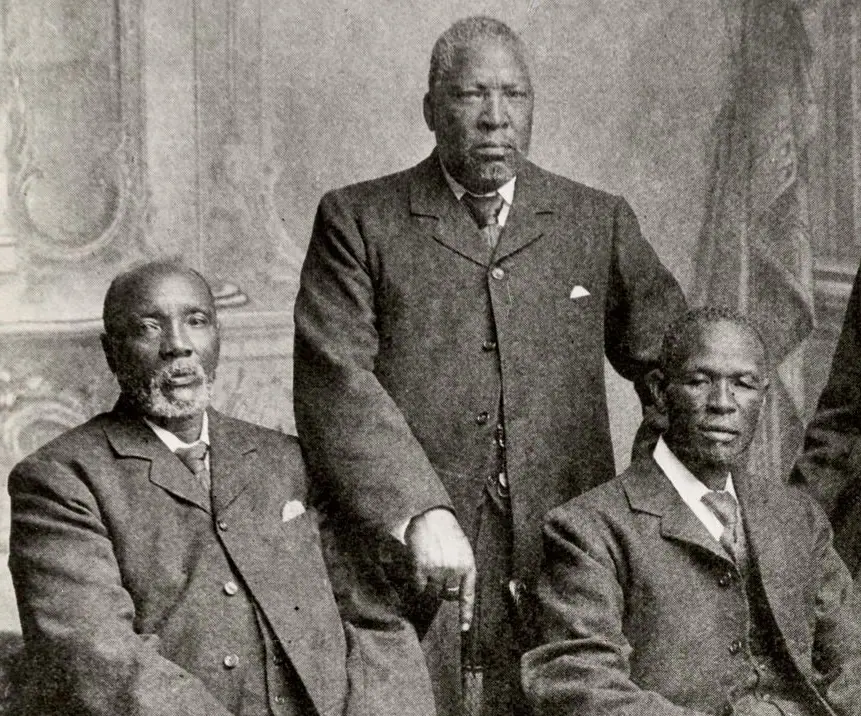
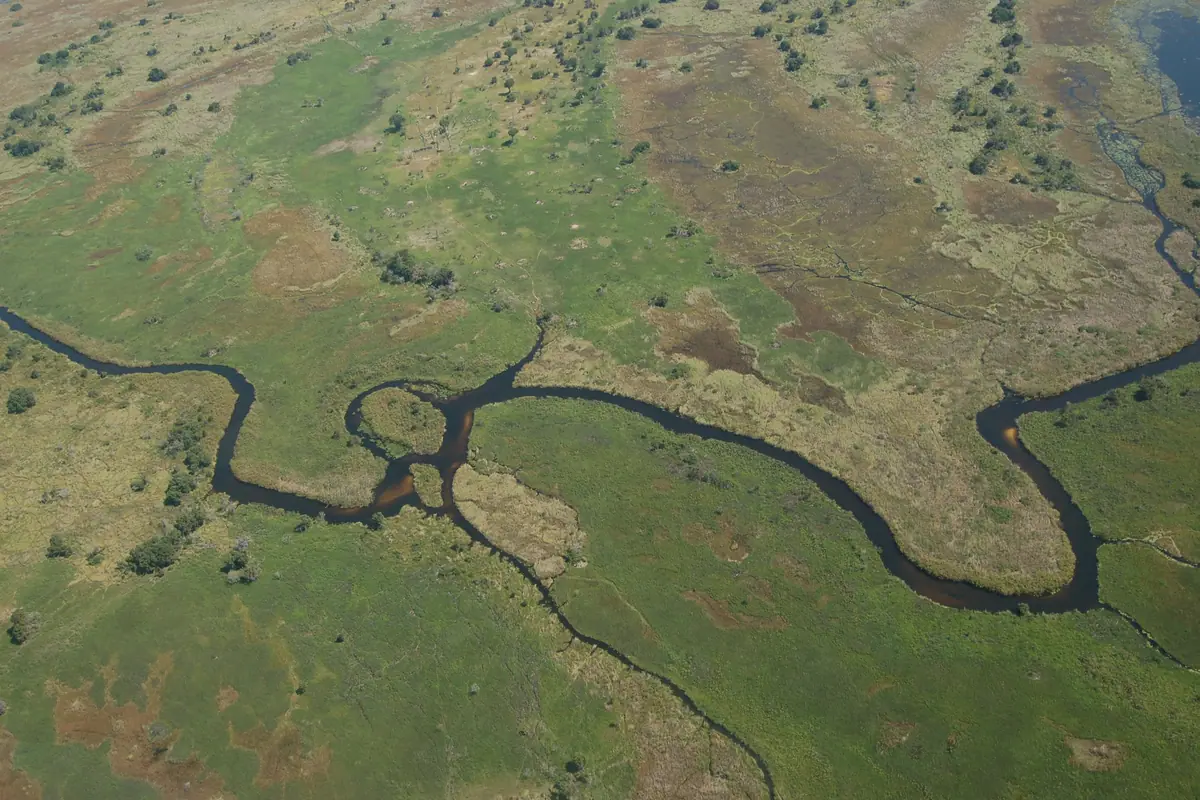
Gaborone is where most international flights arrive and where a night of air-conditioning and reliable Wi-Fi makes sense before the bush. The city centre rewards a half-day: the Three Dikgosi Monument, three towering bronze figures of the chiefs who travelled abroad in the 1890s to protect their land, stands near the Main Mall, while the Botswana National Museum and Art Gallery offers a compact introduction to San rock art, archaeology and contemporary painting. Climb Kgale Hill for sunset views over the dam, or spend a morning in Gaborone Game Reserve, where zebra, wildebeest and ostrich wander within sight of the skyline.
Just south of the city, Mokolodi Nature Reserve is the easiest place to track white rhino on foot, and its guided drives are a gentle reintroduction to African wildlife for families and first-timers. Accommodation here runs from international-style business hotels and conference properties to quiet boutique guesthouses in leafy suburbs such as Extension 12 and Phakalane, all within a short drive of the airport.
Heading north towards Maun, the town of Serowe and the community-run Khama Rhino Sanctuary make a superb, affordable first stop, with chalets and campsites set among camelthorn trees and a strong record of protecting both white and black rhino. It breaks the long drive and gives you your first taste of dusk birdsong and distant jackal calls.
Maun and the Okavango Delta: Gateway Lodges and Water Camps
Maun is Botswana's safari capital and the launching pad for the Delta. Sitting on the Thamalakane River, it is a town of dusty streets, safari outfitters and light aircraft buzzing overhead. Lodges and guesthouses line the riverbanks, ranging from simple rooms with ceiling fans to riverside properties with pools where you can watch fish eagles while you eat breakfast. Most travellers spend one night here on arrival and another on the way out.
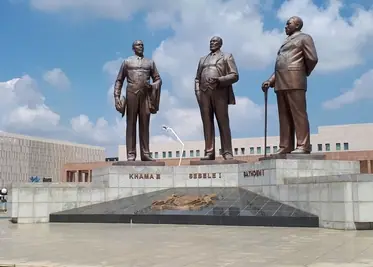
From Maun, small planes hop into the Okavango Delta itself, a maze of channels, floodplains and palm islands that floods at the height of the dry season as water arrives from the Angolan highlands. Camps on Chief's Island, in the Jao and Xigera areas, around Vumbura and Duba Plains offer mokoro canoe trips, motorboat excursions, guided walks and classic game drives in Moremi Game Reserve, where the predator viewing is among the finest in southern Africa. Two or three nights per camp is the minimum for a relaxed rhythm.
In the far northwest, the Okavango Panhandle around Shakawe trades floodplains for papyrus-lined channels, excellent tiger fishing and quieter, cheaper lodges. Nearby, the Tsodilo Hills rise from flat bush, a sacred site covered in thousands of rock paintings left by San communities over centuries — a compelling half-day trip and a reminder that Botswana's story did not begin with safaris.
Chobe, Kasane and the Northeast: River Lodges and Elephant Country
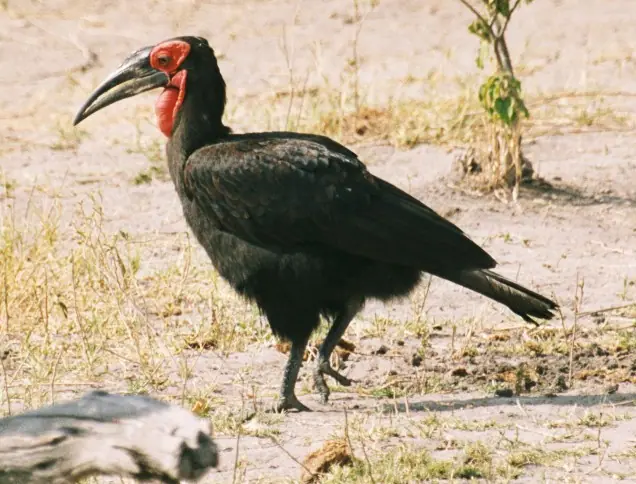
Chobe National Park is elephant country on a scale that is hard to comprehend; in the dry season, herds converge on the river in numbers found almost nowhere else on the continent. Kasane, the park's gateway town, sits where four countries meet, and its riverside lodges and houseboats let you watch elephants crossing the Chobe River from your deck. Sunset cruises and morning game drives along the waterfront are the classic combination, with buffalo, hippo, crocodile and abundant waterbirds never far away.
Deeper into the park, the Savuti and Linyanti areas are remote and quietly spectacular, with seasonal channels, dead-tree plains and camps that feel genuinely isolated. It is also from Kasane that travellers make the easy day trip to Victoria Falls, roughly an hour and a half away across the border, where the spray can be seen from kilometres off during the high-water months of April and May.
South of Kasane, the road passes Nata, home to the Nata Bird Sanctuary and the edge of the Makgadikgadi salt flats, where flamingos gather in the wet season. In the far east, the Tuli Block offers a different Botswana entirely: sandstone ridges, giant baobabs, walking safaris and night drives in a landscape that feels like a hybrid of bushveld and desert.
The Kalahari and Makgadikgadi: Desert Camps and Salt Pans
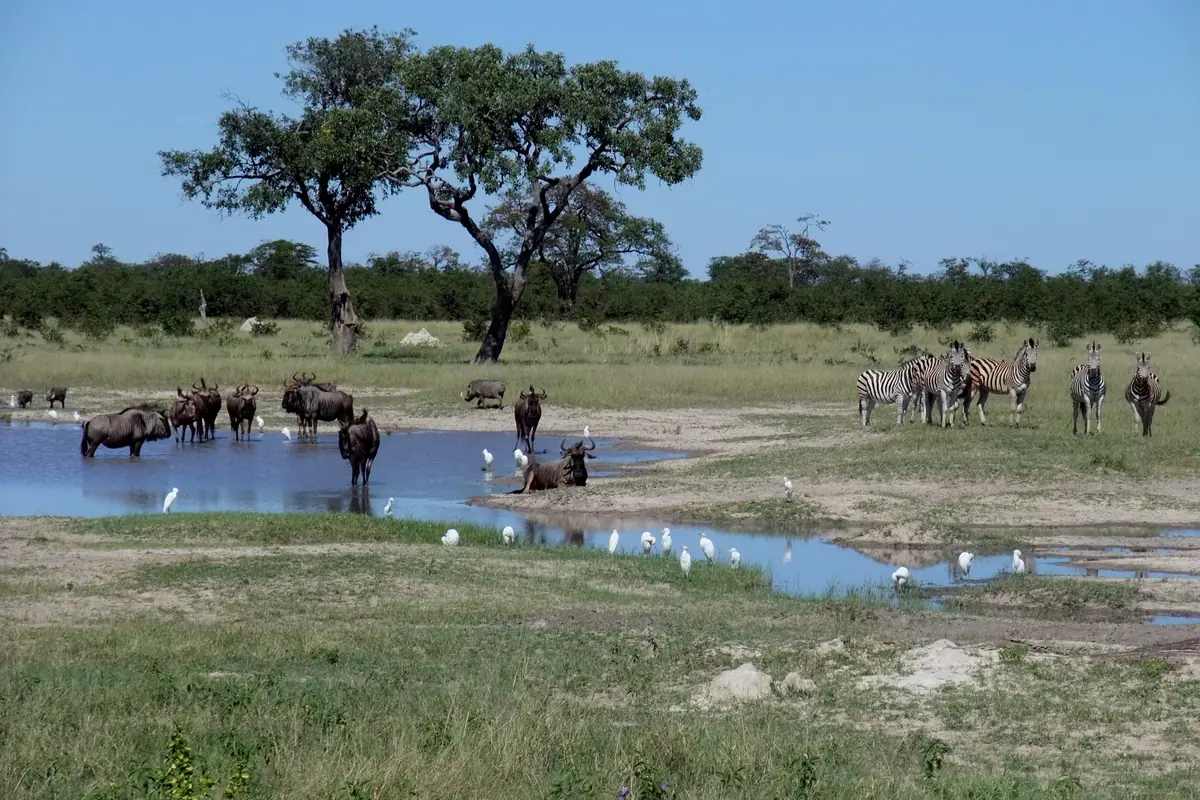
The Central Kalahari Game Reserve is one of the largest protected wildernesses on Earth, a place of fossil river valleys, silky grasslands and famous black-maned lions. Deception Valley, where the dry riverbed once held water, is the classic area to explore, offering excellent green-season game viewing and a silence that is almost physical. Tented camps here are small and often solar-powered, with self-drive campsites for those travelling by 4x4.
Further southwest, the Kgalagadi Transfrontier Park spreads across red dunes and dry riverbeds where gemsbok, springbok, cheetah and meerkats thrive in harsher conditions than almost anywhere in the region. Expect long driving distances, extreme temperature swings and some of the best self-drive camping in Africa.
The Makgadikgadi and Nxai Pan area north of the Kalahari offers a different desert again: vast salt flats, the sculptural Baines' Baobabs, and Kubu Island, a rocky outcrop crowned with ancient baobabs and stone-age tools amid a white pan that shimmers after rain. Around Ghanzi, San communities run cultural trails explaining tracking, plant medicine and survival skills in the Kalahari — often the most memorable day of a Botswana trip.
Booking Botswana Well: Seasons, Logistics and Etiquette
Peak season runs from July to October, when water levels, weather and wildlife align and prices peak; the most sought-after Delta and Chobe camps are often booked nine to twelve months ahead. April to May and November are sweet spots with good game viewing and gentler rates, while the deep green season from December to March suits birders, photographers chasing storm light and budget-conscious travellers willing to accept afternoon showers and occasional camp closures.
Logistics matter more than in most countries. Light aircraft have strict luggage limits, usually around 15 to 20 kilograms in soft bags, so pack a duffel rather than a hard suitcase, and keep a daypack for the cabin. Park and concession fees are payable on entry, self-drive trips need a reliable 4x4 with two spare tyres and extra fuel, and driving between Maun, Kasane and the pans can easily take a full day on gravel. Mobile safaris, with a guide, cook and dome tents, are an excellent middle ground.
Health and courtesy go a long way. Malaria transmission occurs in the north, particularly from November to June, so discuss prophylaxis with a travel health professional before you fly. Tipping guides and camp staff is customary, and Botswana's guiding culture rewards genuine curiosity — ask about tracks, plants and bird calls. When visiting San villages or rock-art sites, ask permission before photographing people, and buy crafts directly where you can; it keeps tourism's benefits local.
Frequently asked questions
What is the best time of year to visit Botswana?
The dry season from May to October is best for classic game viewing, especially in the Okavango Delta, Moremi Game Reserve and Chobe National Park, when animals concentrate around water. The green season from November to April offers lush scenery, newborn animals, superb birding and lower lodge rates, but expect heat, afternoon storms and some seasonal camp closures.
How many days do I need in Botswana?
Seven to ten days is a realistic minimum to combine two areas, such as the Okavango Delta and Chobe. If you also want the Kalahari, the Makgadikgadi Pans and a night in Gaborone, plan on twelve to fourteen days. Spend at least two or three nights in each camp or lodge so you are not constantly repacking.
Is Botswana an expensive safari destination?
Fly-in luxury camps are among the pricier options in Africa, partly because the country limits guest numbers to protect wilderness areas. Costs drop sharply if you self-drive a 4x4 and use guesthouses, self-catering cottages and campsites in Maun, Kasane, Nata and Ghanzi, or join a mobile safari with a guide and cook.
Should I self-drive or fly between camps in Botswana?
Flying in small aircraft saves time and lets you reach remote Delta and Linyanti camps, but luggage is limited to roughly 15 to 20 kilograms in soft bags. Self-driving suits the Kalahari, Makgadikgadi and Chobe, requires a sturdy 4x4, and gives you freedom — just allow longer than you think for gravel roads and wildlife on the track.
Do I need malaria precautions for Botswana?
Malaria risk exists in northern Botswana, including the Okavango Delta, Chobe and Kasane, particularly during and after the rainy season from November to June. The south and the Kalahari are generally considered low risk. Speak to a travel health professional well before departure about appropriate medication and bite prevention.
Sort the rest of your trip
Everything for Botswana, in one place
Transfer in Botswana
Private driver waiting on arrival — no queues, no surprises.
Book a transfer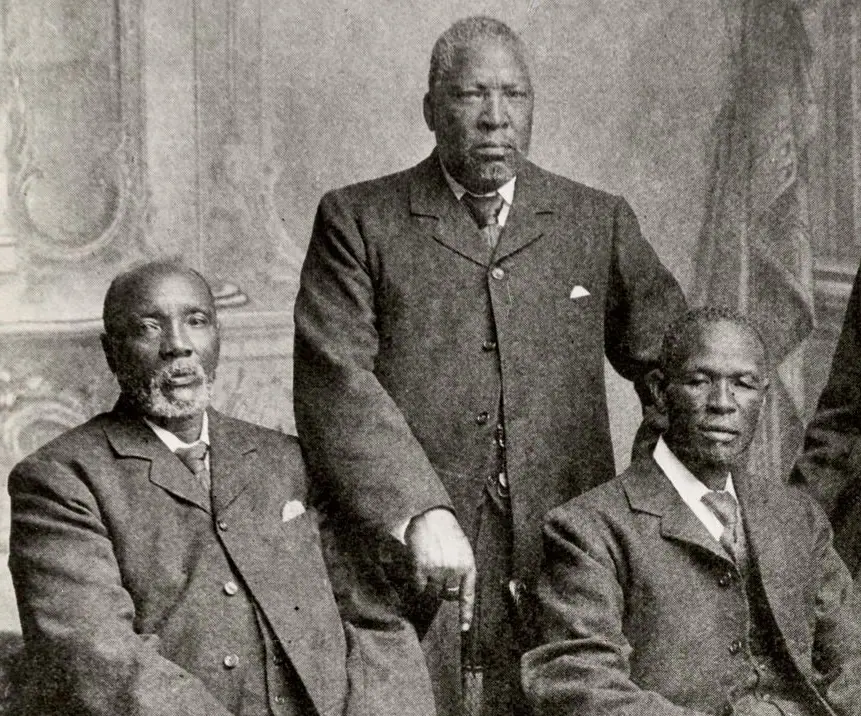
Things to do in Botswana
Skip-the-line tickets, guided tours and standout experiences.
See experiences
Stay online in Botswana
Travel eSIM — data the moment you land, no roaming bills.
Get an eSIM