Botswana is a country of enormous silences stitched together by water, sand and sky, and the only way to see its greatest places in a single week is to rise above them. A light aircraft turns a landscape that takes days to cross by road into a string of twenty-minute hops between palm islands, elephant highways and salt pans that shine like wet mirrors.
Why Botswana Is Best Explored by Light Aircraft
Look at a map and Botswana looks manageable; look at a sand track in the middle of it and the map lies. The Okavango Delta sprawls across the northwest, Chobe National Park pushes against the far northeast corner, and the Makgadikgadi Pans and the Kalahari sit hundreds of kilometres southwest. Driving between them means long, hot, corrugated hours, whereas a bush flight of twenty-five to fifty minutes delivers you straight onto a dirt strip with a game-drive vehicle already waiting.
Most itineraries hinge on Maun, the dusty aviation capital of the safari world, and Kasane in the far north, both of which have airports receiving regional flights from southern and eastern Africa. From there you move by light aircraft: four- to twelve-seat single- or twin-engine planes flown by pilots who double as informal guides, pointing out hippo pods, elephant paths and the fingers of floodwater below. Luggage is strictly limited, usually to a soft-sided bag of around 15 to 20 kilograms, because every kilo counts on a short runway, and camps almost always offer same-day laundry to compensate.
Timing matters more than anything. From May to October the bush thins, water concentrates at pans and rivers, and game viewing peaks; the Delta's flood arrives in the middle of this dry window, usually peaking between June and August, which is why mokoro trips run in the heart of winter. December to March is the green season, hot, dramatic and superb for birds, newborn antelope and lower rates, while April, May and November offer a quieter middle ground. Just pack for cold dawns: June and July mornings in the Kalahari can hover near freezing.
Days 1-2: Maun, the Okavango Delta and Moremi Game Reserve
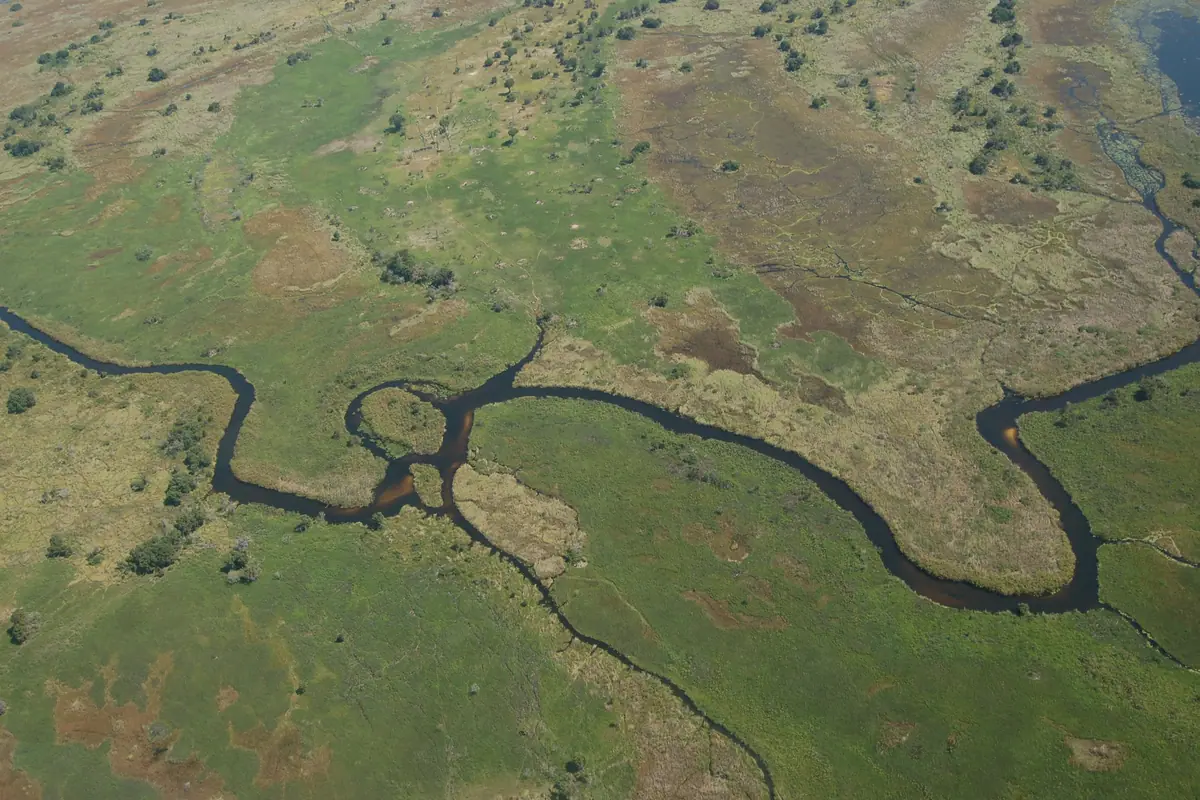
Overnight in Maun, then take the short hop north into the Okavango Delta, the vast inland river system that empties into the sand and never reaches the sea. Base your first two nights in or beside Moremi Game Reserve, the Delta's protected heart, where the classic camps sit along the Xakanaxa Lagoon and around Third Bridge. Chief's Island, the largest island in the Delta, lies just north and is famous for big buffalo herds, wild dog packs and lions that have learned to swim between islands.
Mornings here are for game drives through mopane and leadwood, afternoons for gliding through reed channels in a mokoro, the traditional dugout canoe poled by a local guide. Watch for red lechwe splashing through shallow floodplains, shy sitatunga in the deeper swamps, and the sheer density of birdlife, from African fish eagles to malachite kingfishers. If you want one detour with real cultural weight, fly to the panhandle in the far northwest for the Tsodilo Hills, a UNESCO-listed cluster of rock outcrops covered in thousands of paintings and sacred to the San people who have lived around them for millennia.
Days 3-4: Chobe National Park, Savuti and the Chobe Riverfront
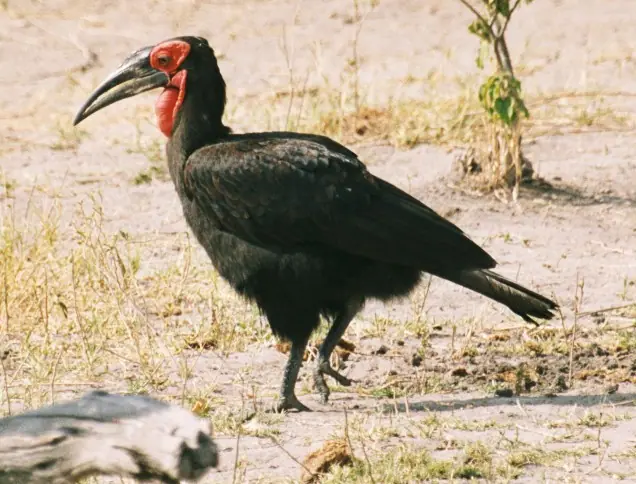
A forty-minute flight northeast lifts you from swamp to sandveld and into Savuti, the wild heart of Chobe National Park. The Savuti Channel flows and dries in decades-long cycles, and when it runs it pulls in everything: elephants in their hundreds, buffalo, zebra, and the region's celebrated lions that have taken to hunting young elephants. Neighbouring Linyanti, with its papyrus-fringed marshes, adds roan antelope, sable and some of the most reliable wild dog sightings on the continent.
Then fly to Kasane for the Chobe Riverfront, where the park is at its most generous. From Sedudu Gate the road traces the river, and boat safaris launch from town to drift past drinking herds along Sedudu Island. Chobe holds one of the greatest concentrations of elephants anywhere in Africa, and in the dry months the waterline becomes a slow procession of grey backs, buffalo, puku, waterbuck and, if you are lucky, a leopard draped along a riverine branch. Finish with a sunset cruise as fish eagles call across the water.
Day 5: The Makgadikgadi Pans and Nxai Pan
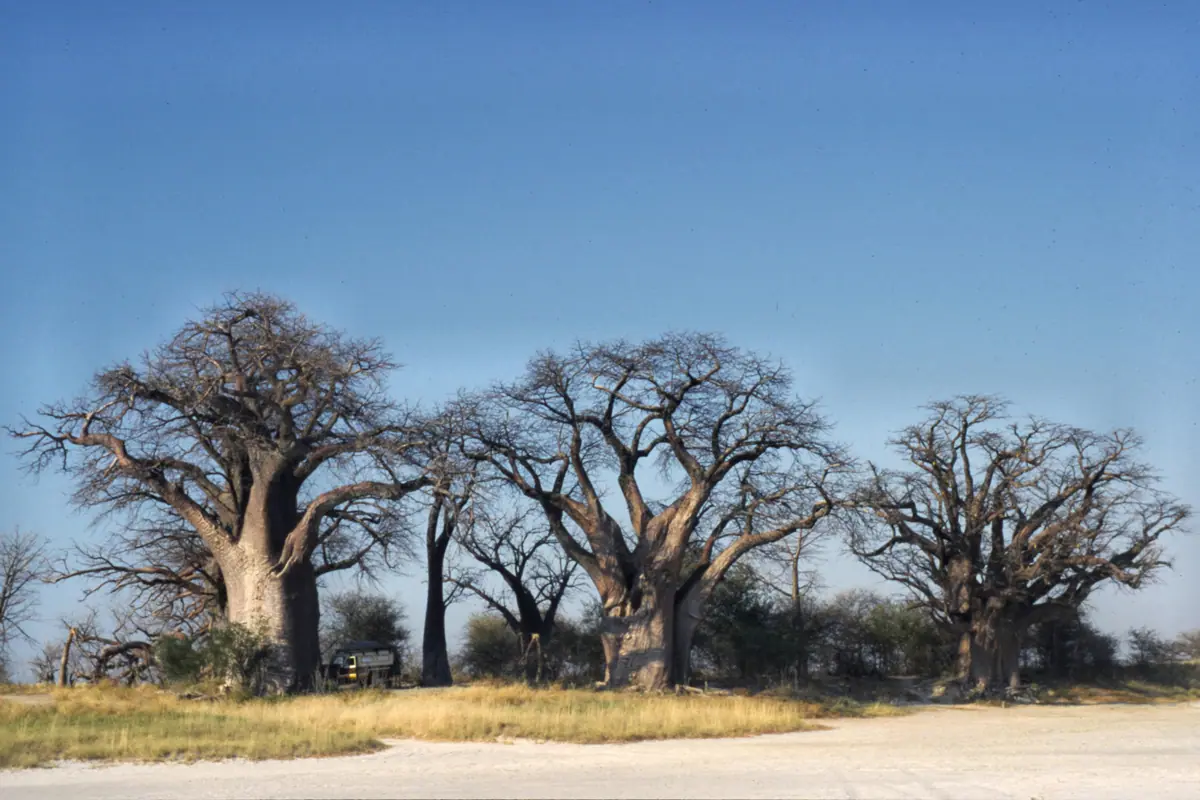
A westward flight takes you over one of the strangest landscapes on earth: the Makgadikgadi, a fossil lakebed split into the vast Ntwetwe and Sowa salt pans, blinding white in the dry season and transformed into shallow, flamingo-flecked water after heavy rain. Land at Nxai Pan National Park to see Baines' Baobabs, a cluster of ancient giants standing on a bleached pan floor, immortalised in nineteenth-century explorers' sketches and still one of the most photographed sights in the country. Further east, Kubu Island rises from Sowa Pan like a granite whale, ringed by baobabs and stone walls.
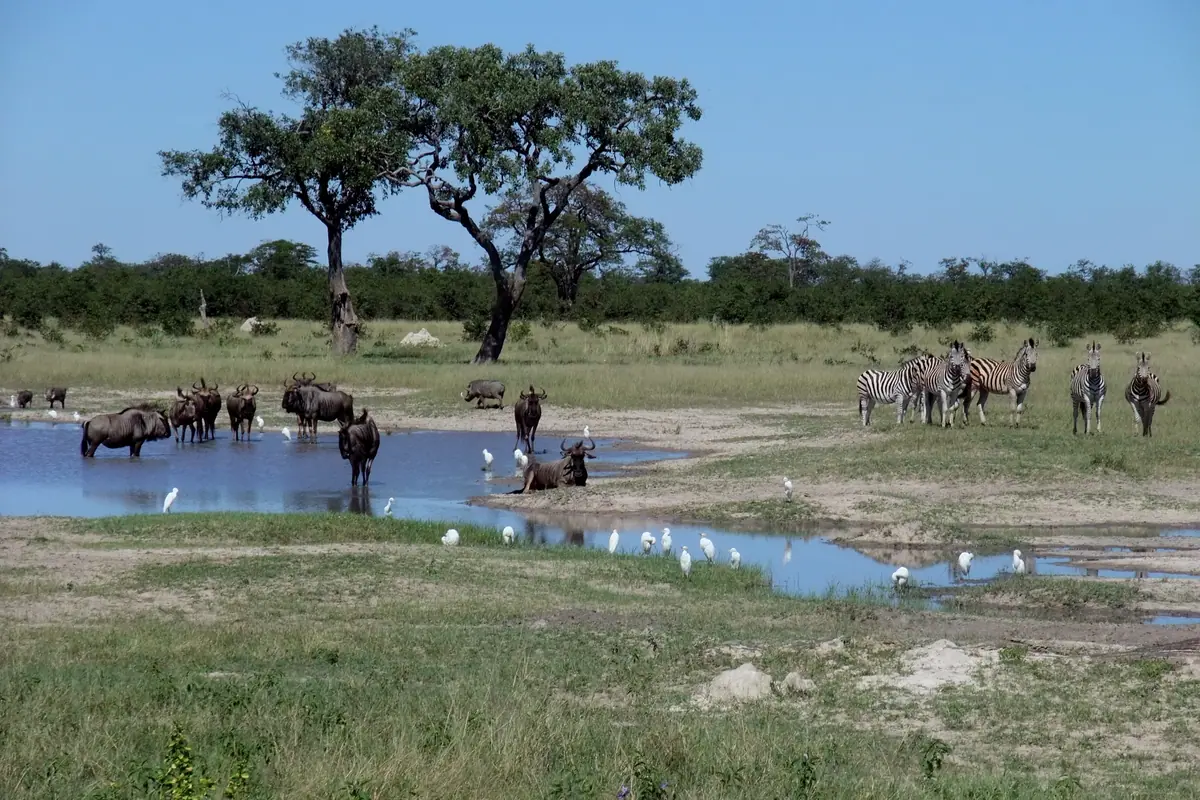
The pans reward those who slow down. Near Gweta you can sit quietly with habituated meerkats that treat visitors as convenient lookout posts, and nights are astonishingly clear, with the Milky Way pouring down to a horizon with no lights on it. Between roughly December and April, when the rains come, zebra and wildebeest move onto the grasslands of Nxai Pan and the Boteti River area, followed by predators. In the dry months expect dust devils, mirages and a silence so complete you can hear your own heartbeat.
Days 6-7: The Kalahari and Central Kalahari Game Reserve
Your last two nights belong to the Kalahari. Fly southwest via Maun to the Central Kalahari Game Reserve, one of the largest protected areas on the planet, where Deception Valley hides a dry fossil riverbed under pale grasses and camel thorn trees. This is black-maned lion country, alongside cheetah, oryx, springbok and bat-eared foxes; game densities are lower than in the Delta, but the sightings feel earned and the emptiness itself is the attraction. Dawn drives here, with the sand glowing pink and cold air in your lungs, are among the most memorable hours of any Botswana trip.
If you prefer red dunes to grey pans, aim instead for the Kgalagadi Transfrontier Park on the southwestern border, Africa's first cross-border park, where the Auob and Nossob riverbeds and the remote Mabuasehube section offer a quieter, more self-reliant style of safari with its own bush airstrip. Either way, keep your final morning flexible: fly back to Maun or Kasane for onward connections, and build in a buffer day rather than cutting a connection fine, because desert dust and afternoon heat can shift flight timings at short notice.
Practical Logistics for a Flying Safari Week
Pack for a small hold. Soft duffel bags only, neutral colours for game drives, layers for freezing dawns and hot afternoons, a wide-brimmed hat, high-factor sunscreen, lip balm, a head torch and spare camera batteries, since charging points are limited and shared. Bring binoculars per person if you can, and keep a small day pack with medication, documents and a camera in the cabin rather than the hold. Camps generally wash clothes daily, so four or five changes of clothing is plenty for a week.
On health, the Okavango Delta, Chobe and Linyanti sit in malaria-risk areas, particularly in the wetter months, so discuss prophylaxis with a travel clinic well before departure. The Kalahari and Makgadikgadi carry much lower risk. Make sure your travel insurance explicitly covers light aircraft flights and medical evacuation, and carry a copy of your itinerary with airstrip names, since mobile coverage disappears the moment you leave Maun or Kasane.
Booking is usually done as an all-inclusive fly-in package: camps bundle the internal flights, transfers, game drives, meals and house drinks, which is why the headline price looks high but covers nearly everything on the ground. Ask for the proposed flight routings in writing, expect the plane to make one or two intermediate stops to collect other passengers, and allow at least half a day at the start and end in Maun or Kasane for arrival, repacking and weather delays. Seven days is enough for two or three contrasting regions; trying to add a fourth will leave you spending your holiday in transit.
Frequently asked questions
How do you travel between safari camps in Botswana?
Almost always by light aircraft. Small four- to twelve-seat planes link bush airstrips such as those near Xakanaxa and Chief's Island in the Okavango Delta, Savuti and Linyanti in Chobe, Nxai Pan, and the towns of Maun and Kasane. Hops typically take 20 to 50 minutes and a game-drive vehicle meets you on landing, replacing road transfers that can take six hours or more on sand tracks.
What is the luggage limit on Botswana bush flights?
Expect a strict allowance of roughly 15 to 20 kilograms per person in a soft-sided bag with no rigid frames or wheels, plus a small hand luggage item. The limit exists because of weight and space on small aircraft, and excess may be left behind or charged for. Most camps offer same-day laundry, so packing light for a week is entirely realistic.
When is the best time for a flying safari in Botswana?
May to October is the dry season and the strongest all-round window, with July to October best for game viewing as water and wildlife concentrate. The Delta's flood peaks around June to August, ideal for mokoro trips. December to March is the green season, hot and superb for birds, newborn animals and lower rates, while April, May and November give a quieter balance of both.
Do you need malaria medication for Botswana?
The Okavango Delta, Chobe National Park, Savuti and Linyanti are considered malaria-risk areas, especially during and after the rains, so prophylaxis is commonly recommended. The Kalahari, Central Kalahari Game Reserve and Makgadikgadi Pans are much lower risk. Speak to a travel health professional several weeks before you fly, as some medications need to be started in advance.
Can you combine the Okavango Delta with Victoria Falls in one week?
Yes. Kasane, the gateway to Chobe National Park, sits close to the point where Botswana, Namibia, Zambia and Zimbabwe meet, and the Victoria Falls area on the Zimbabwean and Zambian sides is reachable as a day trip or an easy extension. A common seven-day shape is two nights in the Delta, two in Savuti or Linyanti, two on the Chobe Riverfront, and a final night near Kasane with a falls excursion.
How many days do you need for a Botswana flying safari?
Seven days lets you cover two or three contrasting regions comfortably, for example the Okavango Delta and Moremi Game Reserve, Chobe with the Savuti and Chobe Riverfront, and either the Makgadikgadi Pans, Nxai Pan or the Central Kalahari. Adding a fourth region usually means spending too much of the trip in transit, so it is better to go deeper in fewer places.
Sort the rest of your trip
Everything for Botswana, in one place
Stay in Botswana
Hotels, guesthouses and apartments — compared in one search.
Search hotels
Transfer in Botswana
Private driver waiting on arrival — no queues, no surprises.
Book a transfer
Travel insurance
Medical cover, delays and lost baggage — sorted before you go.
Get covered