Jamaica keeps its warmth all year, so the seasons that matter here are measured in rainfall, wind and room rates rather than temperature. Get the timing right and you trade a few afternoon showers for cheaper hotels, emptier beaches and waterfalls at full roar. Get it wrong and you pay peak-season prices for the same turquoise water.
Jamaica's Seasons at a Glance: Why Timing Matters More Than Temperature
Straddling the northern Caribbean between roughly 17 and 18 degrees latitude, Jamaica barely shifts its thermostat. Coastal days sit around 27–31°C in every month, and the sea hovers between 26°C in February and a bath-like 29°C by September. What actually changes is rain, wind and demand — and hotel pricing follows that rhythm far more obediently than it follows the mercury.
Broadly, the island runs a drier window from December through April and a wetter, greener stretch from May to November. The official storm season overlaps that second half, running June through November with the risk climbing highest from late August into October. Within the dry season, the most expensive weeks cluster tightly around Christmas and New Year, followed by February and Easter, when flights and rooms are booked out months ahead.
The quiet pockets are easy to miss: the first two weeks of December, the stretch after Easter into mid-May, and the tail end of April. Winter also brings the northeast trades, which locals call the Christmas breeze — lovely on the coast, but cold enough in the Blue Mountains that a jumper belongs in your bag if you're heading uphill.
Dry Season, Mid-December to April: The Classic Jamaica Window
This is the postcard Jamaica. Low humidity, long blue days, calm seas and reliable sunshine make the north and west coasts the safest bet for anyone planning beach time, snorkelling or a wedding. It's the season when Seven Mile Beach in Negril is at its glassy best and Doctor's Cave Beach in Montego Bay invites a lazy afternoon swim without a cloud in sight.
It's also prime time for the island's headline sights. Dunn's River Falls near Ocho Rios is most comfortable to climb when the water isn't surging, Rose Hall Great House runs full tour schedules, and day trips into the Blue Mountains for coffee-farm visits are at their clearest, with views down to Kingston harbour. Expect to share all of it: this is when cruise ships and northern-hemisphere winter refugees converge.
Book accordingly. For the Christmas and New Year fortnight, three to six months ahead is realistic, and many larger resorts impose minimum-stay rules and non-refundable deposits. If you want dry-season weather without dry-season prices, aim for late April — the last reliable sunny weeks before the rains build, with rates already softening. On the south coast, around Treasure Beach and Black River, January to March is the driest stretch of the entire year.
Shoulder Months, May to June and November: The Value Sweet Spot
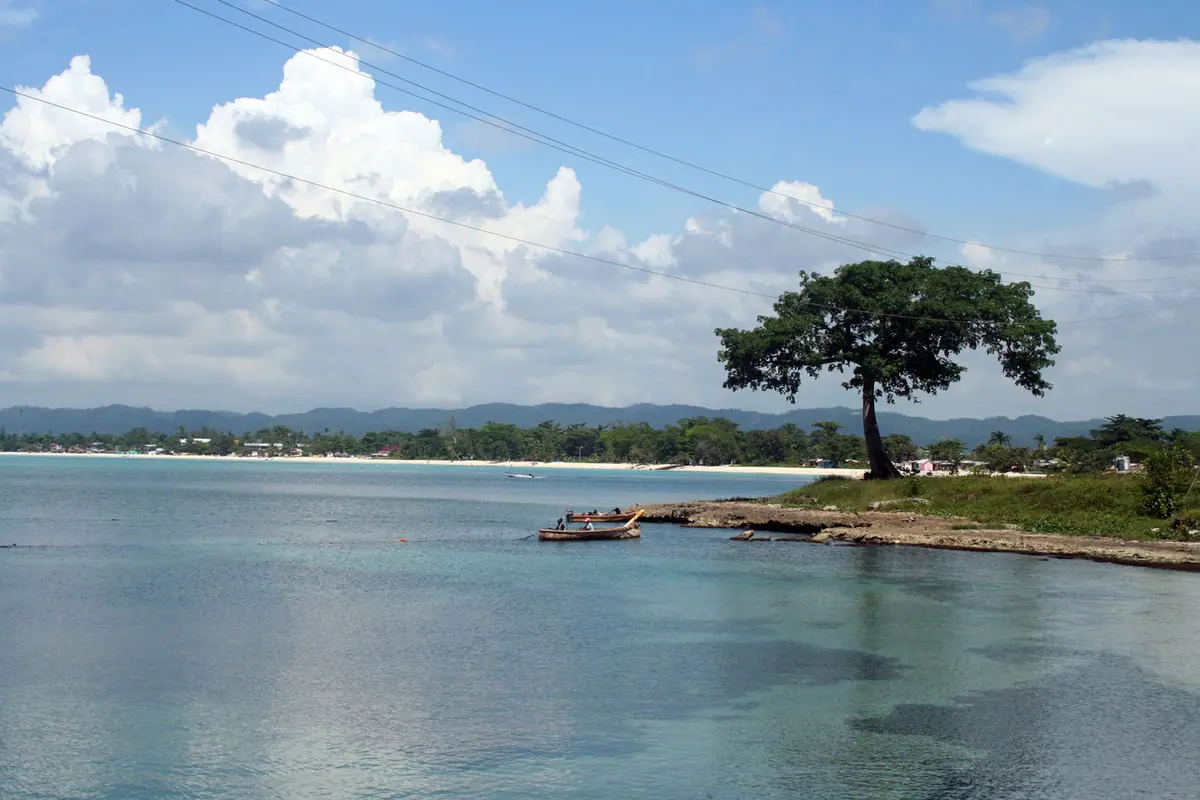
May and June are Jamaica at its lushest. The crowds thin out after Easter, room rates dip noticeably, and the sea reaches its warmest and most inviting. Rain does arrive, but typically as short, heavy afternoon bursts that clear by evening — enough to keep the countryside emerald and the falls thundering without ruining a beach holiday.
May and June are also excellent for waterfall and river days. The Blue Hole outside Ocho Rios runs full and cold, YS Falls in St Elizabeth is at its most dramatic, and rafting on the Rio Grande near Port Antonio is at its most scenic. If you're basing yourself in Kingston, it's a fine time for the Bob Marley Museum and Devon House before the summer heat really settles in.
November is the other quiet bargain. You're at the tail end of the storm season, prices stay low until mid-December, beaches empty out and restaurant tables are easy to come by. The risk of a late tropical system is small but genuine, so flexible bookings are wise. For couples and independent travellers who'd rather have space than certainty, this is arguably the island's most underrated month.
Summer and Storm Season, July to October: Heat, Rain and the Cheapest Rooms
July and August are busier than many first-timers expect. North American school holidays and the Jamaican diaspora coming home push up demand on the north coast, particularly around Montego Bay and Ocho Rios, and the island's biggest reggae festival fills the second city every July. Days are hot, humid and frequently interrupted by thunderstorms.
September and October flip the equation entirely. These are the cheapest months to sleep in Jamaica — sometimes dramatically so — and the island is at its most vivid, with Black River Safari crocodiles active, coffee cherries ripening in the Blue Mountains and the Luminous Lagoon in Falmouth glowing brightest on still, dark nights. The trade-off is real: this is peak hurricane season, humidity is relentless, and a handful of small guesthouses shut for September.
If you go, choose a hotel with a solid generator and good drainage, take out insurance that specifically covers tropical storms, and keep your first and last nights flexible. Rain rarely lasts all day, and mornings are usually clear, so plan outdoor excursions early and leave afternoons for rum punch under a roof.

Coast by Coast: How Microclimates Shape Your Hotel Choice
Jamaica is small but its weather is not uniform. The north coast, from Montego Bay through Runaway Bay to Ocho Rios, catches steady trade winds and brief winter showers, and it carries the island's densest concentration of resorts, restaurants and excursion operators. It's the easiest place for a first visit and the most forgiving if the weather turns.
Negril and the western tip are drier and calmer, split between the long sweep of Seven Mile Beach and the two miles of limestone cliffs where the sunset ritual at Rick's Café draws a nightly crowd. Portland, in the northeast, is a different animal altogether — one of the wettest corners of the island, all jungle-covered mountains dropping straight to the sea, with Reach Falls and the Rio Grande gorge as its rewards. Pack for rain there in any month.
Kingston sits in the dry south, roasting in July and August but pleasantly warm and largely rain-free from December to March. Above it, the Blue Mountains are genuinely cool, with nights that can dip into the low teens and mornings wrapped in mist over the coffee farms. The south coast around Treasure Beach and Black River is the driest, most laid-back region of all — perfect in the shoulder months when the rest of the island is sweating.
Must-See Sights Worth Building Your Dates Around
The Ocho Rios corridor holds some of the island's most famous attractions. Dunn's River Falls is the icon — a terraced cascade you climb in a human chain, best tackled before 9am when the cruise crowds are still disembarking. Nearby, the Blue Hole offers a quieter swim-and-jump alternative, while the Green Grotto Caves and the Luminous Lagoon near Falmouth make ideal evening excursions in the wetter months.
Around Montego Bay, Rose Hall Great House delivers the island's best-known ghost story along with its colonial architecture, and Doctor's Cave Beach remains the classic town beach. Inland from St Ann, the village of Nine Mile, where Bob Marley was born and buried, is a pilgrimage site set high in the hills. Kingston contributes the Bob Marley Museum on Hope Road, the Georgian elegance of Devon House, and the forts and sunken city of Port Royal.
For natural drama, head south and west: the tiered pools of YS Falls, the sugar-and-spice heritage of the Appleton Estate, and the boat safaris of the Black River. In the Blue Mountains, a pre-dawn hike to Blue Mountain Peak rewards you with sunrise over both coasts, while Negril's cliffs and Seven Mile Beach close out most itineraries. A week is the bare minimum to cover the highlights; ten days lets you actually enjoy them.
Frequently asked questions
What is the best month to visit Jamaica?
January to April offers the most dependable dry weather, calm seas and clear mountain views, though it's also the priciest. If value matters more, late April, May, June and November deliver similar warmth with fewer crowds and noticeably lower hotel rates.
When is hurricane season in Jamaica, and should I still book?
The season runs from June through November, with the highest risk from late August to October. Plenty of travellers visit then anyway: mornings are usually clear, the island is at its greenest, and hotels are at their cheapest. Choose flexible, storm-covered bookings and keep an eye on forecasts in the week before you fly.
How far in advance should I book a Jamaica hotel?
For the Christmas and New Year period, aim for three to six months ahead — many resorts add minimum-stay rules and non-refundable deposits. For February and Easter, two to three months is sensible. In the summer and autumn, four to six weeks is usually plenty, and last-minute deals appear in September and October.
Which part of Jamaica has the best weather?
The south coast, around Treasure Beach and Black River, is the driest region overall. The north coast from Montego Bay to Ocho Rios has the most consistent sunshine with reliable sea breezes. Portland in the northeast is the wettest and greenest, while Kingston and the Blue Mountains are dry in winter but hot and humid in midsummer.
Are Jamaica hotels cheaper in September and October?
Yes — these are consistently the lowest-rate months of the year, with discounts on both rooms and flights. Be aware that some small guesthouses and restaurants close for September, and that this is peak storm season, so book flexible rates and consider staying in larger properties with backup power and easy access to services.
Sort the rest of your trip
Everything for Jamaica, in one place
Transfer in Jamaica
Private driver waiting on arrival — no queues, no surprises.
Book a transfer
Things to do in Jamaica
Skip-the-line tickets, guided tours and standout experiences.
See experiences
Stay online in Jamaica
Travel eSIM — data the moment you land, no roaming bills.
Get an eSIM