Bolivia is a country of climate bands stacked on top of each other, where a frosty Altiplano morning and a humid jungle afternoon can belong to the same trip. Pick your months around what you actually want to see — the salt flats, the lake, the carnival — and the rest of the planning falls into place.
The Dry Season: May to October, Bolivia's Most Dependable Window
From May through October the Altiplano dries out and the skies over La Paz, Oruro and Potosí turn a hard, brilliant blue. This is the season most travellers aim for, and with good reason: roads to the Salar de Uyuni stay open, boat crossings to the Lake Titicaca towns of Copacabana and Isla del Sol run on schedule, and the Cordillera Real trekking routes around Huayna Potosí and Condoriri are at their safest. Daytime temperatures hover in the mild teens, but nights between June and July routinely drop below freezing on the high plateau, so the quality of a hotel's heating matters far more than its star rating.
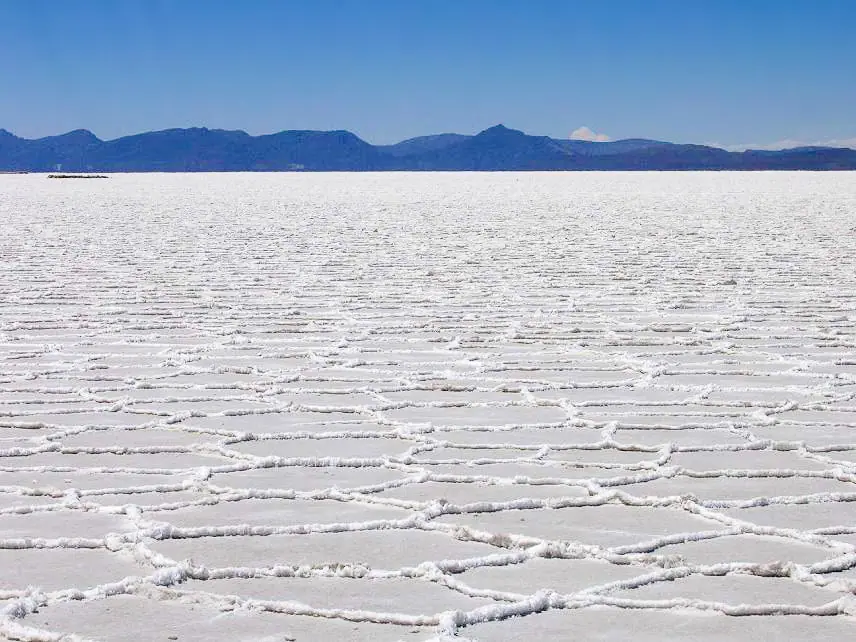
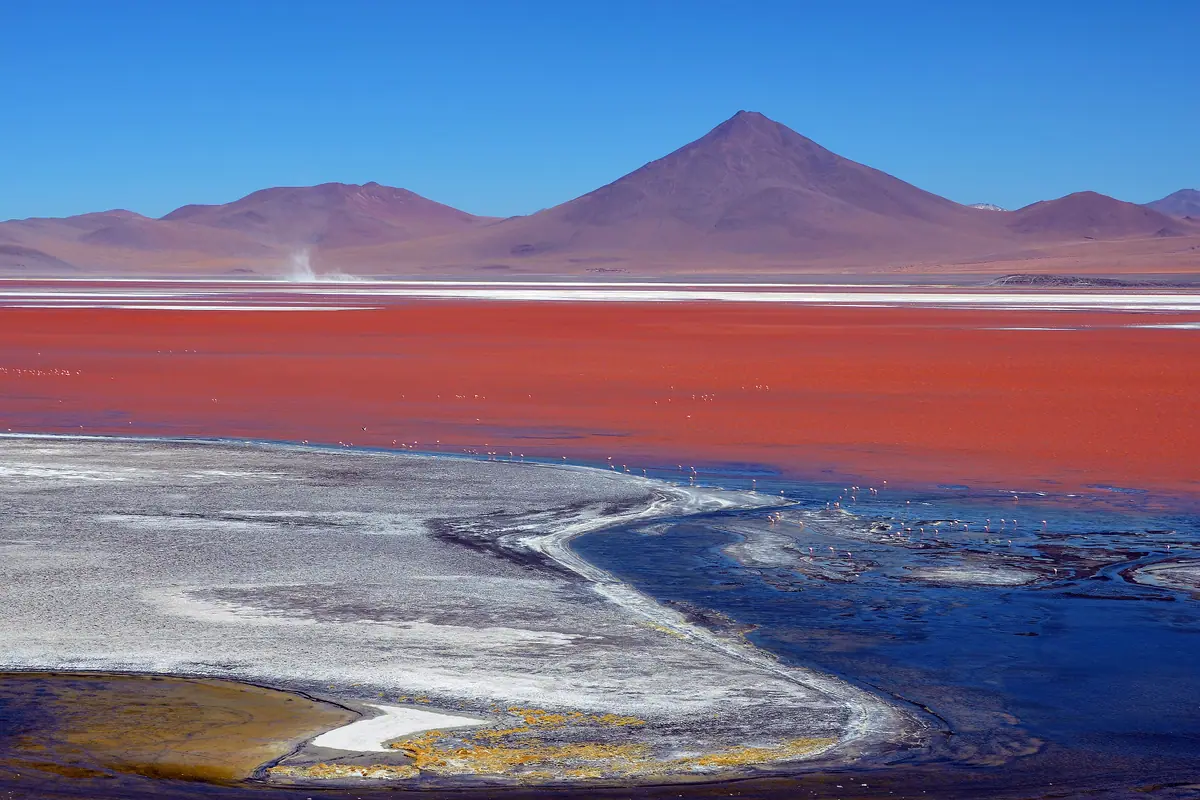
Within this window, May, June, September and October are the sweet spots. July is the coldest and the busiest, coinciding with school holidays and the national independence celebrations in early August, when domestic travel surges and rooms in La Paz and Sucre fill weeks in advance. If your trip hinges on the Salar de Uyuni, the dry months give you the classic experience: a cracked hexagonal crust stretching to the horizon, the cactus-covered slopes of Incahuasi Island rising out of the white, and full access to the high-altitude lagoons of the Eduardo Avaroa Andean Fauna Reserve, including Laguna Colorada with its flamingos and the green-tinted Laguna Verde beneath Licancabur.
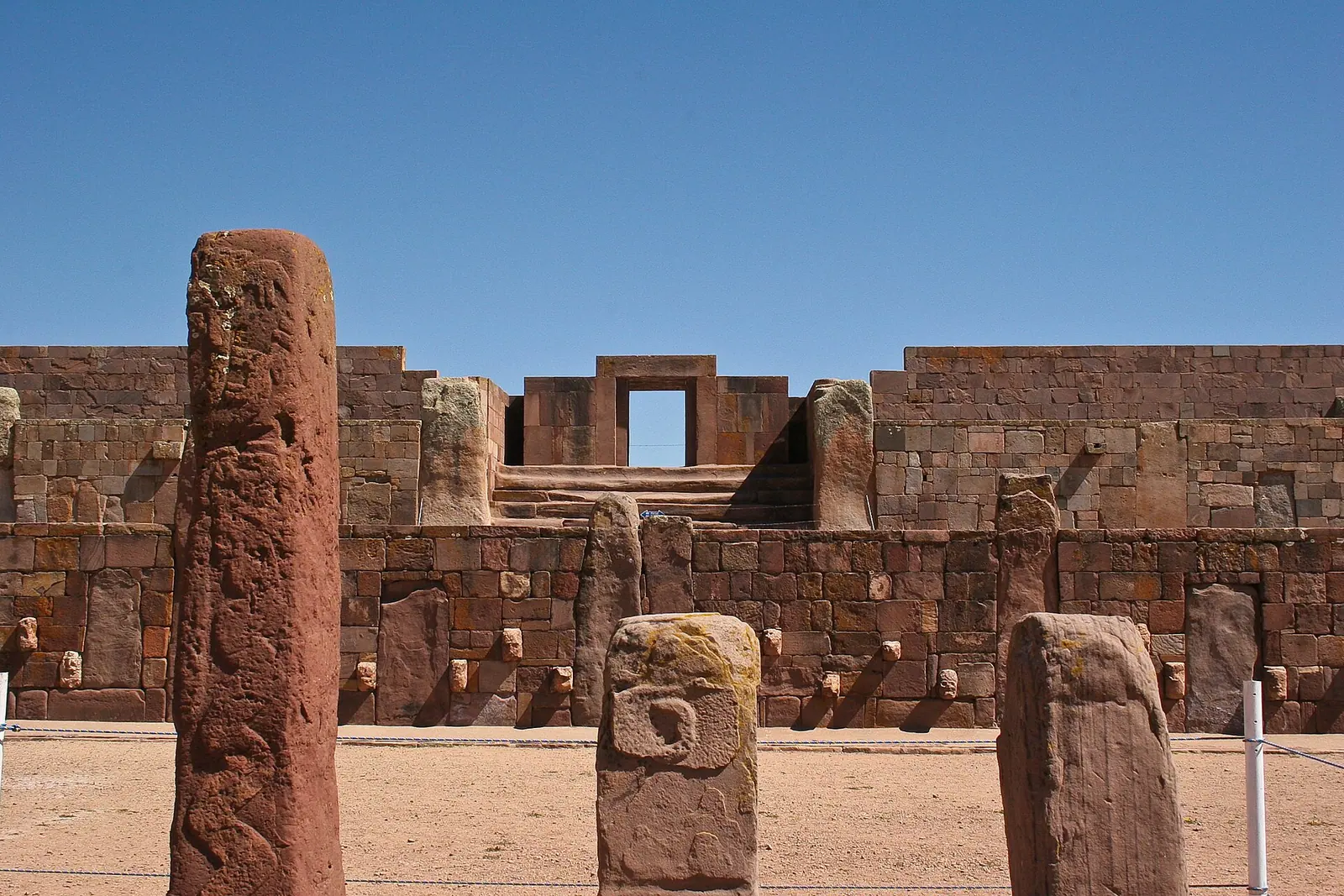
The dry season also unlocks Sajama National Park, where Bolivia's oldest protected area wraps around a snowcapped volcano and steaming hot springs, and makes day trips to Tiwanaku comfortable — the pre-Inca ceremonial site with its monolithic Gateway of the Sun and sunken temple sits about 72 kilometres from La Paz and is far more enjoyable in dry, sunny weather. Book accommodation in Uyuni town and the surrounding salt lodges early for June to August; the number of rooms is genuinely limited and the multi-day salt-flat circuits sell out first.
The Rainy Season and Uyuni's Famous Mirror: December to March
Bolivia's wet season concentrates between December and March, when afternoon downpours turn the Altiplano green and the Salar de Uyuni collects a shallow layer of water. That flooding is exactly what thousands of visitors come for: a few centimetres of water transforms the world's largest salt flat into a mirror that doubles the sky, the clouds and everyone standing in it. The effect is most reliable in February, though late January and early March often deliver it too. Be aware that tours are rerouted when the water is deep, some vehicles take longer detours, and the salt hotels can be harder to reach.
Elsewhere in the country, the rains mean different things. In the Amazon lowlands around Rurrenabaque, the gateway to Madidi National Park and the flooded pampas, December to March is hot, humid and soaked, with mosquitos at their most persistent and some dirt roads turning to soup. Down in the Yungas, the North Yungas Road — the legendary stretch nicknamed Death Road — becomes a slick, landslide-prone ribbon, and several operators suspend mountain-bike descents when conditions are bad.
The upside is price and space. Outside Carnival, hotel rates across La Paz, Sucre and Cochabamba soften noticeably and you can often walk into a colonial courtyard property that would be full in July. Pack a proper rain shell, quick-drying layers and waterproof bags for electronics, and build slack into your itinerary: a washed-out road between Uyuni and Potosí can cost you a day, and no amount of planning outruns Andean weather.
Shoulder Seasons and Bolivia's Climate Bands: April and November
April is arguably Bolivia's most underrated month. The rains have tapered off, the high plateau is still green rather than dust-pale, and the crowds thinned out after Easter. It is an excellent time for the colonial cities: Sucre, with its whitewashed centre and the Casa de la Libertad where the country's independence was declared, enjoys mild weather almost year-round, and the Sunday market at Tarabuco fills with textiles from surrounding communities. Potosí, at over 4,000 metres, is cold in any month, but April makes the climb up Cerro Rico and the tour of the old mint far more pleasant.
November behaves similarly, with the first scattered showers usually arriving late in the month. It is a strong choice for the eastern lowlands — Santa Cruz de la Sierra and the Jesuit Missions of Chiquitos at Concepción and San Javier, reachable on the mission circuit and warm and green at the tail end of the year. Cochabamba, with its perpetual spring-like valley climate and the towering Cristo de la Concordia watching over the city, is comfortable in both April and November.
The key to planning is remembering that Bolivia is not one climate. Santa Cruz sits at around 400 metres and stays warm all year; the temperate valleys of Tarija and Cochabamba rarely see frost; La Paz, Potosí and Uyuni are high, thin-aired and cold at night; and the Yungas and Amazon are humid and hot regardless of season. Decide which of those Bolivias you want, and the calendar mostly sorts itself out.

Festivals That Decide When Hotels Sell Out
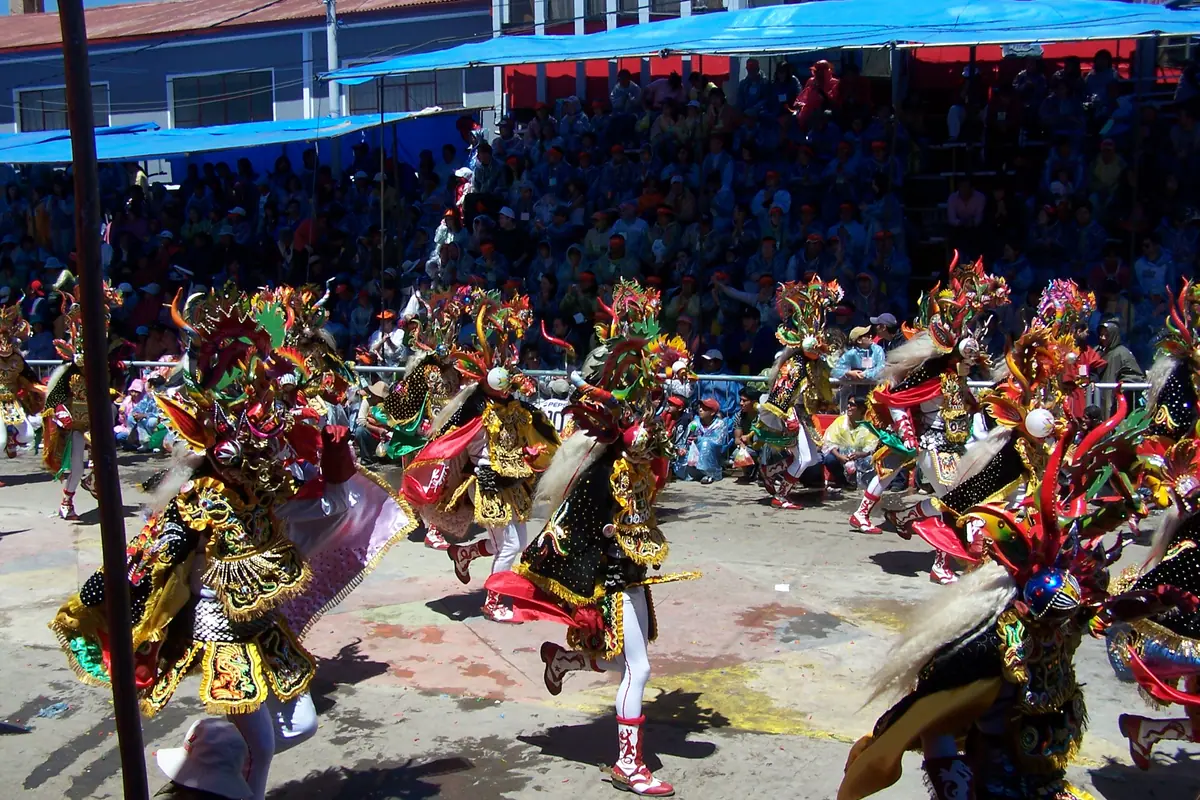
Bolivia's festival calendar has a bigger effect on hotel availability than the weather does. The Carnaval de Oruro, held in February or early March depending on the liturgical calendar, is one of South America's great processions — four days of masked dancers, brass bands and elaborate costumes that pull crowds from across the country and abroad. Rooms in Oruro are booked out months ahead, and many visitors end up basing themselves in La Paz or Cochabamba and travelling in for the main parade.
In La Paz, the Fiesta del Gran Poder fills the streets in May or June with hundreds of dance troupes, while Alasitas on 24 January draws crowds to buy miniature versions of everything they hope to acquire in the coming year. On 21 June, the Aymara New Year and Inti Raymi ceremonies at Tiwanaku begin before dawn, with thousands gathering at the archaeological site to greet the winter solstice sunrise — a genuinely spectacular reason to be in the altiplano in the middle of the dry season.
Semana Santa brings solemn processions to Sucre and silence to many towns, and Todos Santos on 1 and 2 November sees families decorating graves with flowers, food and drink around La Paz and Lake Titicaca. National holidays, especially independence day on 6 August, trigger domestic travel spikes: buses fill, flights get expensive, and hotels in popular towns stop offering flexible cancellation. If your dates overlap with any of these, treat accommodation as the first thing you book, not the last.
Altitude, Comfort and Choosing the Right Base
Altitude shapes every hotel decision in Bolivia. La Paz sprawls between roughly 3,200 and 4,000 metres, and El Alto international airport sits even higher, so your first night is often your hardest. Potosí is higher still, Uyuni hovers around 3,700 metres, and Sucre's 2,800 metres feels almost gentle by comparison. Give yourself two slow days at the start, drink more water than feels necessary, and look for properties that offer reliable heating, constant hot water and, in the bigger cities, in-room oxygen or a clinic on call. Coca tea in the lobby is not a gimmick; it genuinely helps some travellers.
Where you base yourself changes the whole rhythm of the trip. La Paz is the natural first stop, with the Witches' Market, the Mi Teleférico cable-car network that doubles as commuter transport and sightseeing, and the eroded badlands of the Valle de la Luna just outside the city. Copacabana on Lake Titicaca is the launch point for Isla del Sol and its Inca-era terraces and shrines. Uyuni town is the base for salt-flat expeditions and salt hotels. Sucre suits longer, slower stays, and Rurrenabaque is where jungle lodges and pampas tours into Madidi National Park begin.
Match the property to the season. In the cold dry months, prioritise heated rooms, electric blankets and thick walls over rooftop terraces you will never use. In the wet months, ask about drying space, secure storage for wet gear and whether transfers still run when tracks flood. Jungle lodges should have screened rooms and mosquito nets; salt lodges near the Salar have only a handful of rooms, so they are the single hardest booking in the country during peak weeks.
Timing Your Booking and Building a Sensible Itinerary
For July, August and the Carnival period, aim to reserve accommodation two to three months ahead, and treat Uyuni salt lodges and any multi-day Salar circuit as the priority bookings that shape your dates. For April, May, September, October and November, a few weeks' notice is usually enough outside the festival towns. December to March offers the best chance of spontaneous, discounted rooms — but only if you are prepared for rain, rerouted tours and occasional road closures.
Logistics deserve as much thought as dates. Bolivia's internal flights connect La Paz, Santa Cruz, Cochabamba and Uyuni but fill quickly in high season, while long-distance buses are cheap and frequent yet vulnerable to blockades and landslides. Build at least one buffer day before any international departure, and avoid scheduling a tight connection the morning after a night bus from the salt flats.
A realistic first trip runs ten to fourteen days: a couple of days acclimatising in La Paz with a Tiwanaku day trip, a few days around Copacabana and Isla del Sol, then a flight or overnight bus to Uyuni for a three- or four-day reserve circuit, finishing in Sucre or Potosí. That route works beautifully from May to October and still works in the wet season if you accept that the mirror effect — and a bit of mud — are part of the deal.
Frequently asked questions
What is the best month to visit Bolivia overall?
May, June, September and October offer the best balance of dry weather, open roads and manageable crowds across the Altiplano, Lake Titicaca and the Salar de Uyuni. July and August are equally dry but colder and far busier, while February is the standout month if you specifically want the flooded mirror effect on the salt flat.
When can I see the mirror effect on the Salar de Uyuni?
The salt flat floods during the rainy season, roughly January to March, with February the most reliable month for the reflective surface. Tours still run but may be rerouted, and some salt hotels become harder to reach, so expect flexible schedules.
How far ahead should I book hotels in Bolivia?
For July, August and the Carnival dates in Oruro and La Paz, book two to three months ahead. Uyuni salt lodges and multi-day salt-flat tours should be reserved as early as possible because capacity is genuinely small. In shoulder months, a few weeks is usually sufficient.
Is altitude a problem in Bolivian hotels?
La Paz, Potosí, Uyuni and much of the Altiplano sit above 3,500 metres, so expect breathlessness and disturbed sleep for the first day or two. Choose hotels with reliable heating, hot water and, in the larger cities, in-room oxygen or medical support, and keep your first 48 hours gentle.
What should I pack for Bolivia depending on the season?
For the dry season, pack thermal layers, a warm hat and gloves, strong sun protection and lip balm — days are sunny but nights freeze. For the wet season, add a waterproof shell, quick-drying clothing and dry bags, plus insect repellent for the Amazon and Yungas. A rain jacket is useful year-round in the lowlands.
Sort the rest of your trip
Everything for Bolivia, in one place
Transfer in Bolivia
Private driver waiting on arrival — no queues, no surprises.
Book a transfer
Things to do in Bolivia
Skip-the-line tickets, guided tours and standout experiences.
See experiences
Stay online in Bolivia
Travel eSIM — data the moment you land, no roaming bills.
Get an eSIMMore guides in Bolivia
Top Things to Do in Bolivia: Salt Flats, Altiplano and Amazon Landmarks
Best Places to Visit in Bolivia: Salt Flats, Andean Peaks and Amazon Rainforest
Hotels in Bolivia: Where to Stay for Salt Flats, Colonial Cities and the Andes