Bolivia packs a continent's worth of scenery into a landlocked country the size of Peru and France combined — blinding white salt flats, red-and-green crater lakes at 4,500 metres, colonial cities of whitewashed arcades, and rainforest rivers where pink dolphins surface beside your canoe. It is high, raw and gloriously unpolished, and the rewards for a little patience with altitude and long bus rides are enormous.
Salar de Uyuni: The White Desert at the Top of the World
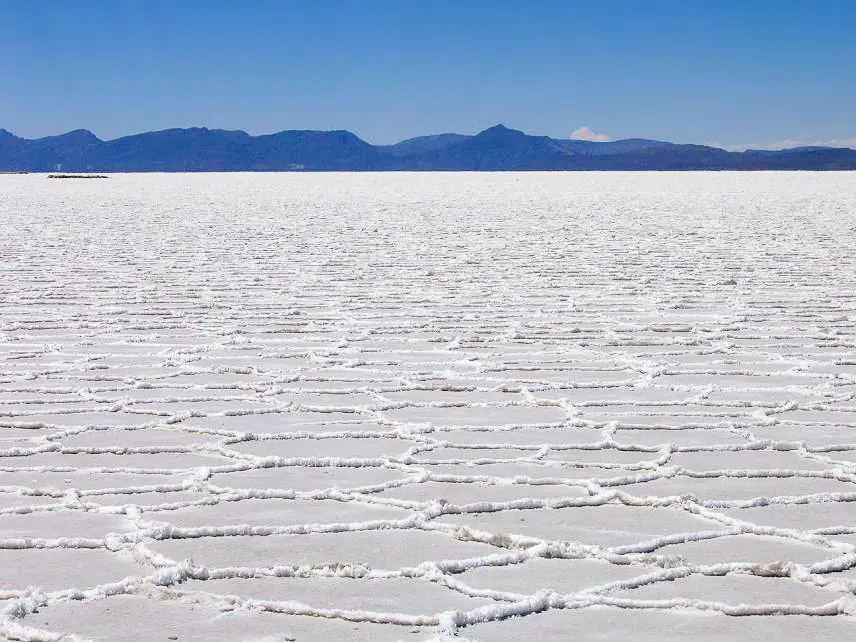
Nothing prepares you for the Salar de Uyuni. More than 10,000 square kilometres of salt crust sprawl across the Altiplano at around 3,650 metres, so flat and so vast that the horizon dissolves and distance stops meaning anything. In the dry months, from roughly May to October, the surface cracks into endless geometric polygons and the sky is a hard, cloudless blue. From January to April, a thin film of rainwater turns the whole flat into the planet's biggest mirror, and travellers walk on clouds.
Most trips start in the scruffy town of Uyuni, reached by overnight train or bus from Oruro, or by short flight from La Paz. A one-day tour takes in the Cementerio de Trenes — the rusting locomotive graveyard just outside town — the salt-processing village of Colchani, and Isla Incahuasi, a fossil coral island bristling with giant trichocereus cacti that makes a superb viewpoint over the white void. Purists should hold out for sunrise or sunset, when the light turns the salt pink and gold and the crowds thin to almost nothing.
Three-day tours continue south from the salt flat into the dramatic volcanic landscapes described below, ending at the Chilean border or looping back to Uyuni. Bring sunglasses, high-factor sunscreen, lip balm and a warm layer: the sun is brutal at midday and the nights are genuinely freezing, and altitude can leave you breathless on the slightest slope.
La Paz and the High Andes: Cable Cars, Markets and the Death Road
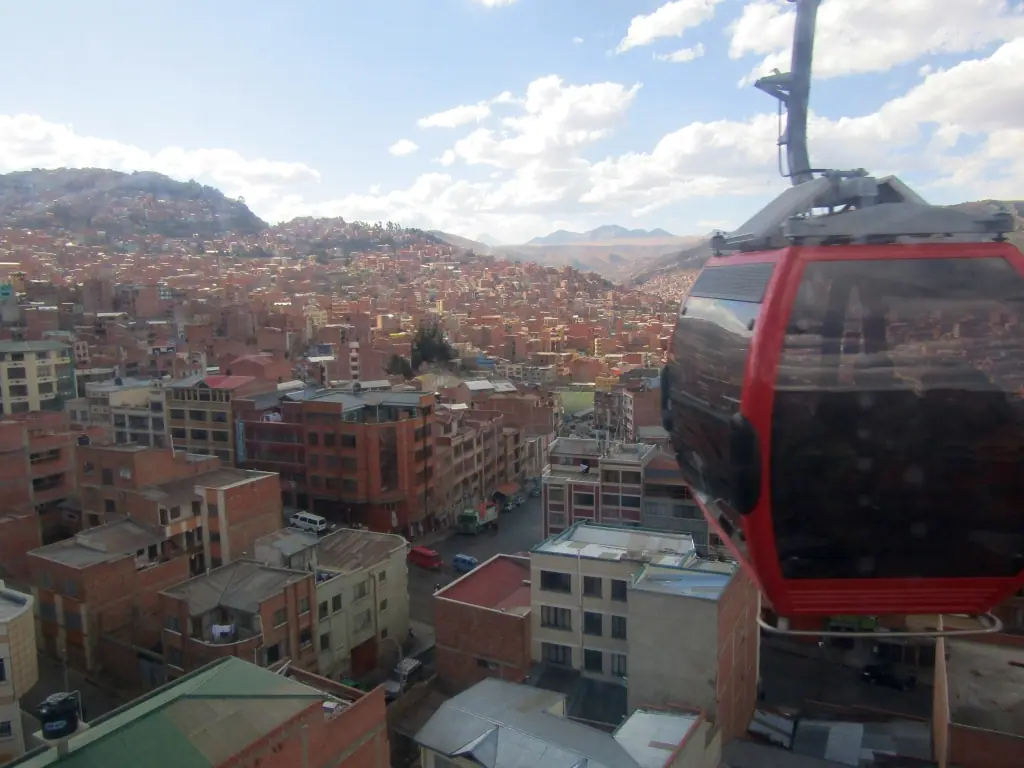
La Paz is the world's highest administrative capital, spilling down a steep bowl of red-roofed houses at 3,640 metres, with the indigenous city of El Alto looming above it on the rim. The best way to grasp the geography is to ride the Mi Teleférico cable-car network, an urban lift system that soars over the city from neighbourhood to neighbourhood and doubles as the cheapest sightseeing in South America. Above it all, the snow-capped Illimani watches like a silent judge.
Down in the centre, Plaza Murillo is the political heart, flanked by the presidential palace and the cathedral, while the Basílica de San Francisco and its monastery museum anchor the old quarter. A few blocks away, the Mercado de las Brujas — the Witches' Market — sells dried llama foetuses, herbs and amulets for blessings to Pachamama. For a panorama, climb to the Mirador Killi Killi at dusk, and if you have a spare half-day, the eroded clay spires of the Valle de la Luna in Mallasa feel like another planet entirely.
La Paz is also Bolivia's adventure capital. Cyclists hurtle down the Yungas Road — the infamous Death Road — a 60-kilometre descent from freezing altitudes to steaming subtropical forest, usually done as a guided full-day trip. Serious mountaineers base themselves here for Huayna Potosí, a 6,088-metre peak that many fit first-timers summit on a three-day guided climb, and for the high refuge of Chacaltaya, once home to the world's highest ski lift.
Lake Titicaca, Copacabana and the Ruins of Tiwanaku
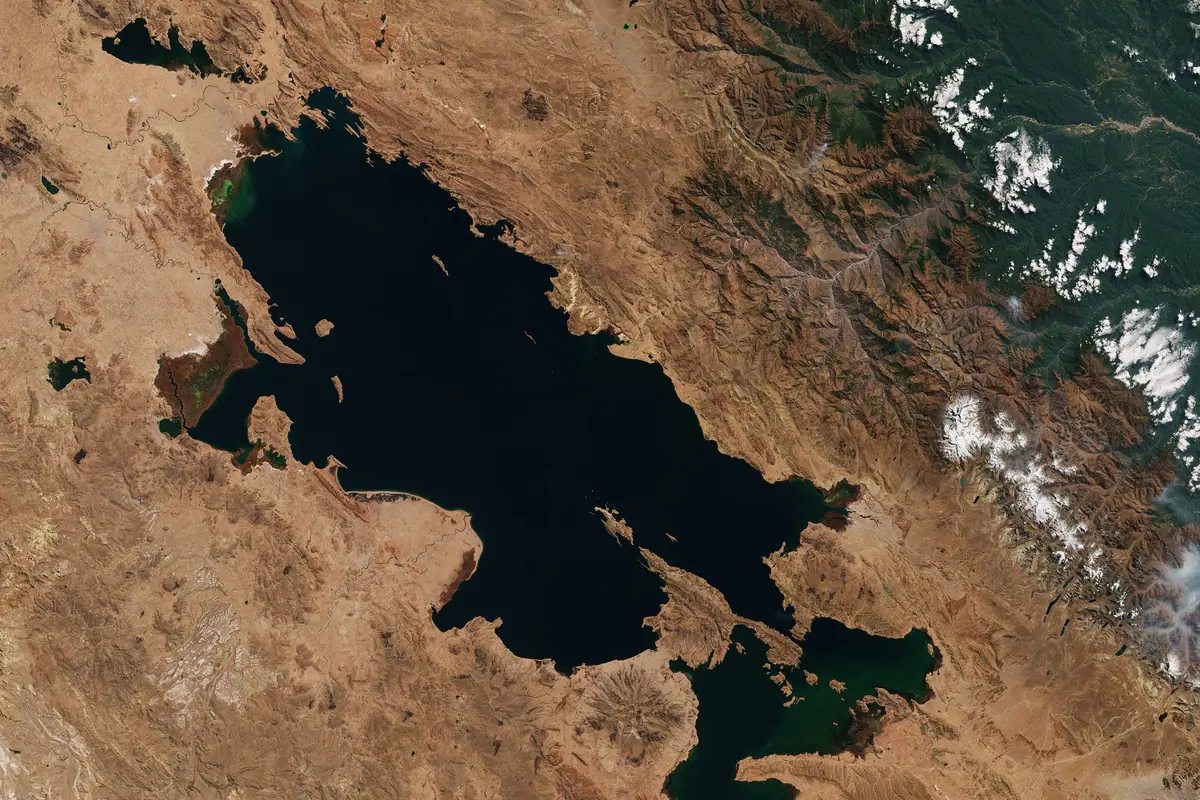
Lake Titicaca straddles the border with Peru and sits at 3,810 metres, an impossibly blue inland sea ringed by terraced hills and sacred islands. The Bolivian gateway is Copacabana, a pilgrimage town whose white Moorish-style basilica draws thousands of worshippers for the blessing of vehicles and the Virgin of Copacabana festival each February. From the harbour, small boats run to the Isla del Sol, the legendary birthplace of the Inca sun god, where stone stairways, terraces and the Pilko Kaina ruins climb steeply from the water and there are no cars at all.
Spend a night on the island's northern or southern end and you will be rewarded with some of the clearest night skies in the Andes and a sunrise that turns the whole lake to copper. The smaller Isla de la Luna, with its Inca convent of virgins, can be visited on the same boat route. Days are mild and bright between April and October; the rainy season brings afternoon cloud and occasional travel disruption on the water.
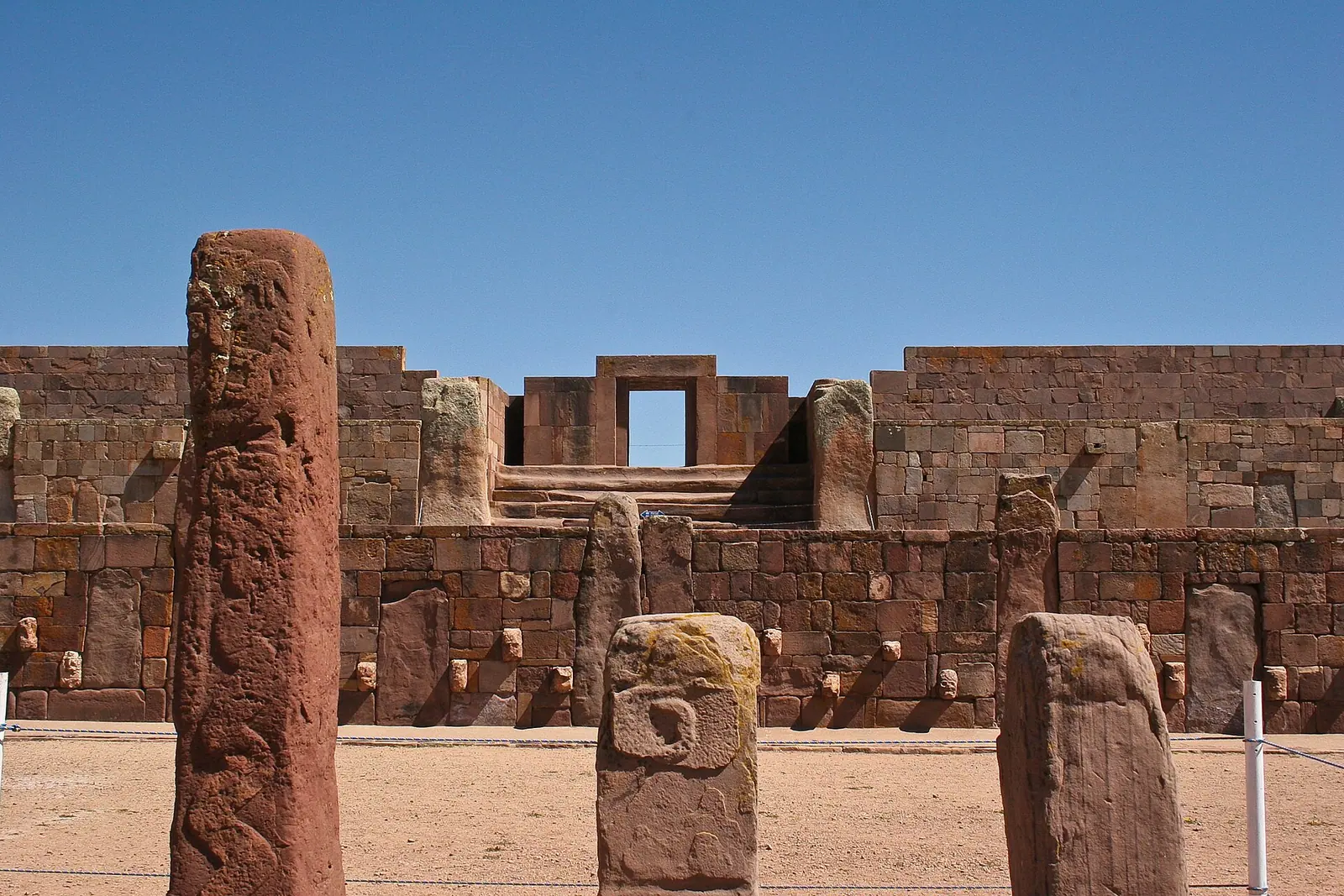
Closer to La Paz, the archaeological site of Tiwanaku is the country's most important pre-Inca monument and a UNESCO World Heritage Site. Its monumental Akapana pyramid, semi-subterranean temple with carved stone heads, and the celebrated Puerta del Sol — the Gateway of the Sun — testify to a civilisation that dominated the Altiplano for centuries before mysteriously collapsing. Combine it with a stop at the nearby village of San Pedro de Tiquina, where vehicles are ferried across a strait of the lake on flat barges.
The Far Southwest: Red Lagoons and Andean Geysers
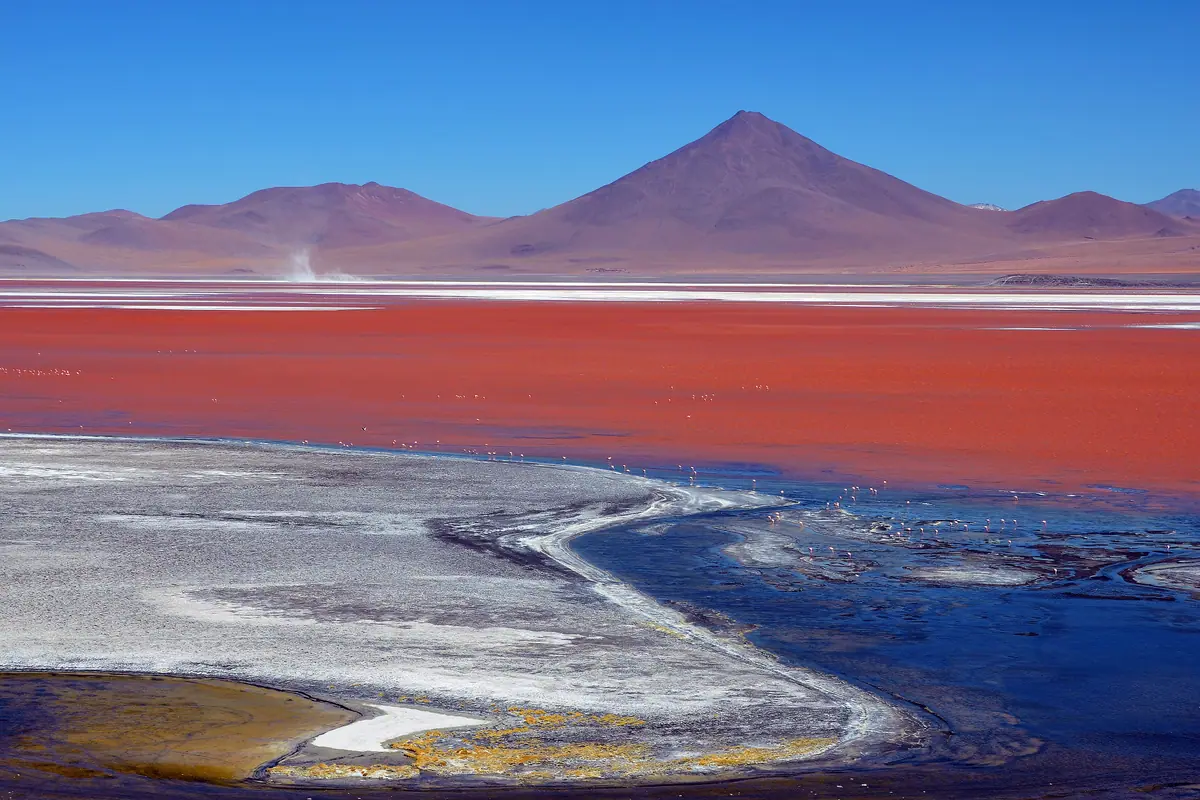
South of Uyuni lies the Eduardo Avaroa Andean Fauna National Reserve, a high-altitude wilderness of volcanic cones, borax lakes and windswept desert at 4,200 to 5,000 metres. Its showpiece is Laguna Colorada, where microscopic algae and mineral sediments stain the water a deep brick red, broken by white borax islands and patrolled by flocks of rare James's flamingos. Nearby Laguna Verde glows an eerie arsenic green beneath the perfect cone of Licancabur volcano.
Most three- or four-day salt-flat tours thread through this landscape, stopping at the Sol de Mañana geyser field, where sulphuric steam roars out of the earth at dawn; the Termas de Polques hot springs, where you can soak at 4,400 metres while ice forms on your hair; and the Árbol de Piedra, a surreal wind-carved rock balanced on a narrow stem. The Dali Desert, named for its melting, dreamlike rock formations, is another highlight of the route.
Be prepared: this is a genuinely remote region with basic lodges, no reliable mobile signal and night temperatures that can drop well below freezing. Bring a headlamp, toilet paper, cash in small notes and layers you can sleep in. Many travellers finish the loop by crossing into Chile at Hito Cajón, so check border formalities before setting out if that is your plan.
Sucre and Potosí: The Colonial Heartland
Sucre, Bolivia's judicial capital, may be the most beautiful city in the Andes. Its UNESCO-listed centre of whitewashed walls, arcaded plazas and red-tiled roofs is best explored on foot from Plaza 25 de Mayo, home to the cathedral and the Casa de la Libertad, where the country's independence was declared in 1825. The Convento de San Felipe Neri offers a rooftop view over the whole city, and the Mercado Central is the place to try salteñas, the sweet-savoury baked pastries that Bolivians eat mid-morning.
Just outside town, the Parque Cretácico protects a sheer cliff face at Cal Orcko imprinted with thousands of dinosaur footprints, made when this rock was soft mud. Further afield, the market town of Tarabuco hosts a famously colourful Sunday textile market, and the remote Torotoro National Park hides caves, canyons and more fossil tracks in a landscape that sees very few visitors. Sucre's mild, spring-like climate makes it a comfortable base year-round.
A few hours away by road, Potosí is a stark contrast: a mining city at 4,090 metres that grew rich on the silver of Cerro Rico, the mountain that still towers over its streets and has been mined since the sixteenth century. The Casa de la Moneda, the old royal mint, is a superb museum of colonial silver and machinery, and organised tours into the working cooperative mines offer an unflinching look at a hard and historic industry. Give yourself time to acclimatise before you arrive.
The Amazon Lowlands: Madidi, Pampas and the Jesuit Missions
Bolivia's eastern lowlands are a different world entirely. From the steamy river town of Rurrenabaque, reached by a white-knuckle mountain road or a short flight from La Paz, trips head into Madidi National Park — one of the most biologically diverse protected areas on earth — for jungle lodges, night walks and guided birding among macaws, toucans and howler monkeys.
The alternative is the pampas, the flooded savannah of the Beni, where you cruise by motorised canoe and see yacaré caimans basking on the banks, capybaras grazing in family groups, and, if you are lucky, pink river dolphins breaking the brown water. Tours typically last two to four days and include fishing for piranha, sunset hammock time and a swim in the river alongside the dolphins themselves.
For a completely different flavour, head east to Santa Cruz de la Sierra, the country's booming lowland capital, and onward to the Jesuit Missions of the Chiquitos — UNESCO-listed churches at Concepción, San Javier and San Ignacio de Velasco, where Baroque music festivals fill the wooden interiors. Near Samaipata, the mysterious carved rock of El Fuerte sits on a hilltop with sweeping views, and the cloud forests of Amboró National Park offer waterfalls and condors within a day's reach of the city.
Frequently asked questions
When is the best time to visit Bolivia?
The dry season from May to October is best for the Altiplano, Lake Titicaca, Sucre and trekking, with clear skies and cold nights. If you want the famous mirror reflection on the Salar de Uyuni, travel between January and April, when rain leaves a shallow film of water on the salt — though roads and tours in the southwest can be disrupted. The Amazon lowlands are hot and humid year-round and rainier from December to March.
How long do you need to see the main highlights?
Two weeks is a realistic minimum. A typical route links La Paz, Tiwanaku and Copacabana, then Sucre and Potosí, then a three-day Salar de Uyuni and southwest circuit, finishing in the Amazon at Rurrenabaque or flying out from Santa Cruz. With three weeks you can slow down, add the Death Road, a Huayna Potosí climb or the Chiquitos missions.
Is altitude sickness a problem in Bolivia?
Yes, and it is the single most common issue for visitors. La Paz sits at 3,640 metres and El Alto airport higher still, while the southwest reserves and Potosí exceed 4,000 metres. Spend your first day or two taking it easy, drink plenty of water, avoid heavy alcohol, and consider acclimatising in Sucre or Santa Cruz first. Ask a doctor about medication before you travel if you know you are sensitive.
How do you get around Bolivia?
Long-distance buses connect most cities and are cheap but slow, with overnight services on the main routes and rough roads to the lowlands. Domestic flights link La Paz, Santa Cruz, Cochabamba, Sucre and Uyuni and save days of travel. Trains run on limited routes, including the scenic line between Oruro and Uyuni. Shared taxis and cable cars cover city transport in La Paz.
Is Bolivia safe and easy for independent travellers?
Bolivia is generally welcoming and affordable, but petty theft happens in busy markets and bus terminals, so keep valuables out of sight and use registered taxis at night. Road conditions and occasional strikes can disrupt plans, so build in flexibility. Altitude, cold nights in the southwest and long journeys are the bigger practical challenges — travel with small notes of local currency, since change is often scarce outside the cities.
Plan it — experiences in Bolivia
Live search, booked directly with trusted providers.
Sort the rest of your trip
Everything for Bolivia, in one place
Stay in Bolivia
Hotels, guesthouses and apartments — compared in one search.
Search hotels
Transfer in Bolivia
Private driver waiting on arrival — no queues, no surprises.
Book a transfer
Stay online in Bolivia
Travel eSIM — data the moment you land, no roaming bills.
Get an eSIM