Angola is a country of contrasts that rewards good timing: a misty Atlantic coast, a cool highland plateau and a tropical north where waterfalls detonate after the rains. Choose your months well and you will get clear mountain passes, calmer roads and a hotel room in Luanda that you actually secured ahead of the rush.
How Angola's Seasons Actually Work: One Country, Several Weather Systems
Angola is vast, and its weather refuses to behave as a single block. The narrow coastal strip — Luanda, Benguela, Lobito, Namibe — is cooled by the cold current sweeping up from the south Atlantic, which keeps temperatures mild, rainfall low and mornings frequently wrapped in grey drizzle. The interior plateau, where Lubango, Huambo and Bié sit high above sea level, is cooler and greener, with genuinely cold nights in the middle of the year. Further north, Cabinda, Uíge, Malanje and the Lunda provinces slide into a humid tropical rhythm, where rain is generous and vegetation is dense.
The broad pattern is simple enough: a dry season that runs roughly from May to early September, and a wet season from October or November through April, usually peaking in March and April. Along the coast this dry season has a local name — the cacimbo — and it is less about blazing sunshine than about cool, damp, overcast mornings that burn off into clean, hazy light by late morning.
Why does this matter for a hotel booking? Because timing changes three things at once: how easily you can move around the country, how much demand there is for rooms, and what the landscapes are doing. A waterfall that thunders in March can be a modest trickle in August; a dirt track into the desert that is passable in July can be a swamp in February.
May to September: The Cool Dry Season Most Travellers Aim For
If you want one answer, this is it. From May through early September the rains retreat, humidity drops and the country becomes markedly easier to travel. On the coast, expect soft grey mornings, cool breezes off the water and comfortable afternoons; on the plateau, pack a fleece, because evenings in Lubango and Huambo can be genuinely cold and guesthouses are not always built for it.
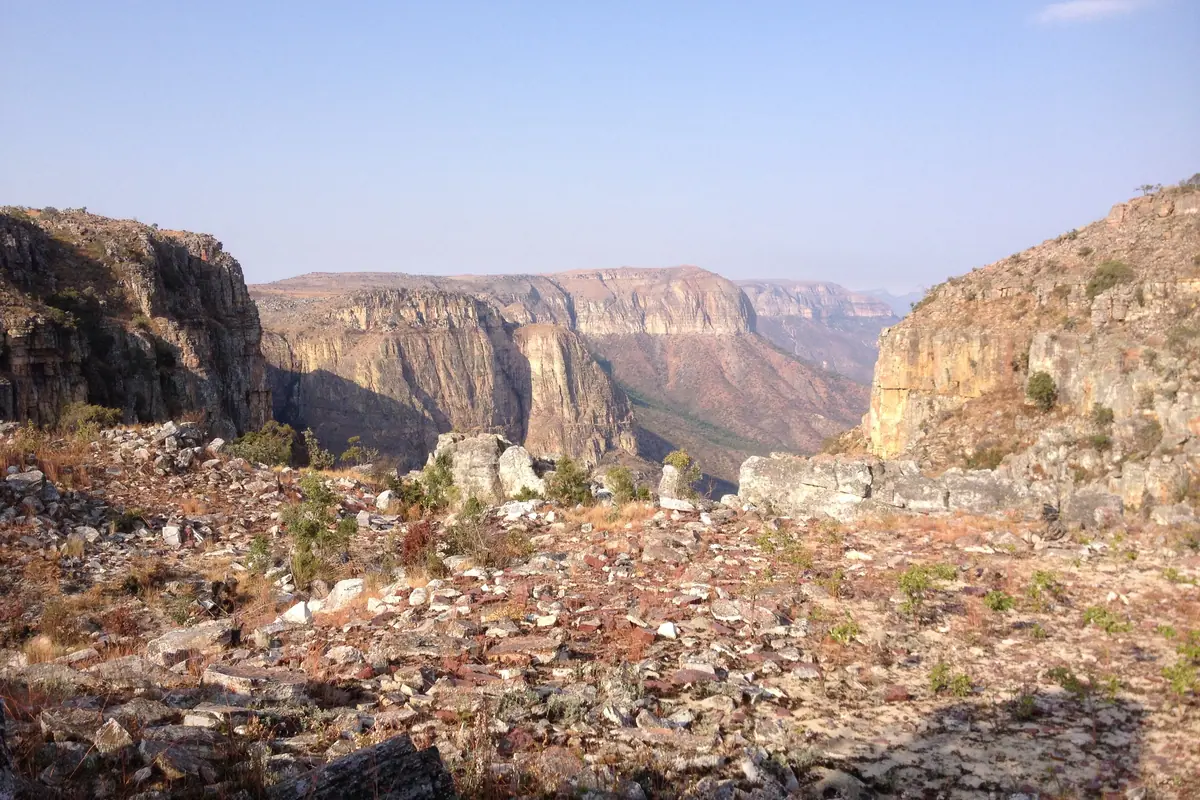
This window suits almost every classic Angola experience. It is the time to stand at the Tundavala Gap, where the plateau drops away in a sheer escarpment towards the coastal plain, and to drive the switchbacks of the Serra da Leba pass without wrestling fog and mud. Wildlife viewing in Quiçama National Park, an easy day trip from the capital along the Kwanza River, improves as the bush thins and animals gather near water. In the far south, the dunes and gravel plains of Iona National Park in Namibe province — home to the extraordinary welwitschia plants — are at their most manageable, though you still need a sturdy 4x4, fuel, water and a local guide. Humpback and southern right whales move along the Benguela coast around July to October, which makes the stretch between Lobito and Namibe especially rewarding.
The catch is demand. June to August coincides with the northern hemisphere's long holidays and with the busiest stretch of Angola's business and conference calendar, so Luanda's hotels fill quickly and quietly. Reserve well in advance, and if your itinerary depends on domestic flights to Lubango, Benguela, Namibe, Huambo, Cabinda or Menongue, book those seats at the same time as your room.
October to April: Heat, Green Country and Thundering Water
The wet season is not a write-off — it is simply a different trip. Temperatures climb, humidity thickens, and by March and April Luanda can feel like a steam room. Afternoon downpours arrive suddenly, dump their load and clear, leaving brilliant light and impossibly green hills. Roads in and around the cities cope reasonably well; the rural tracks are the ones that suffer.
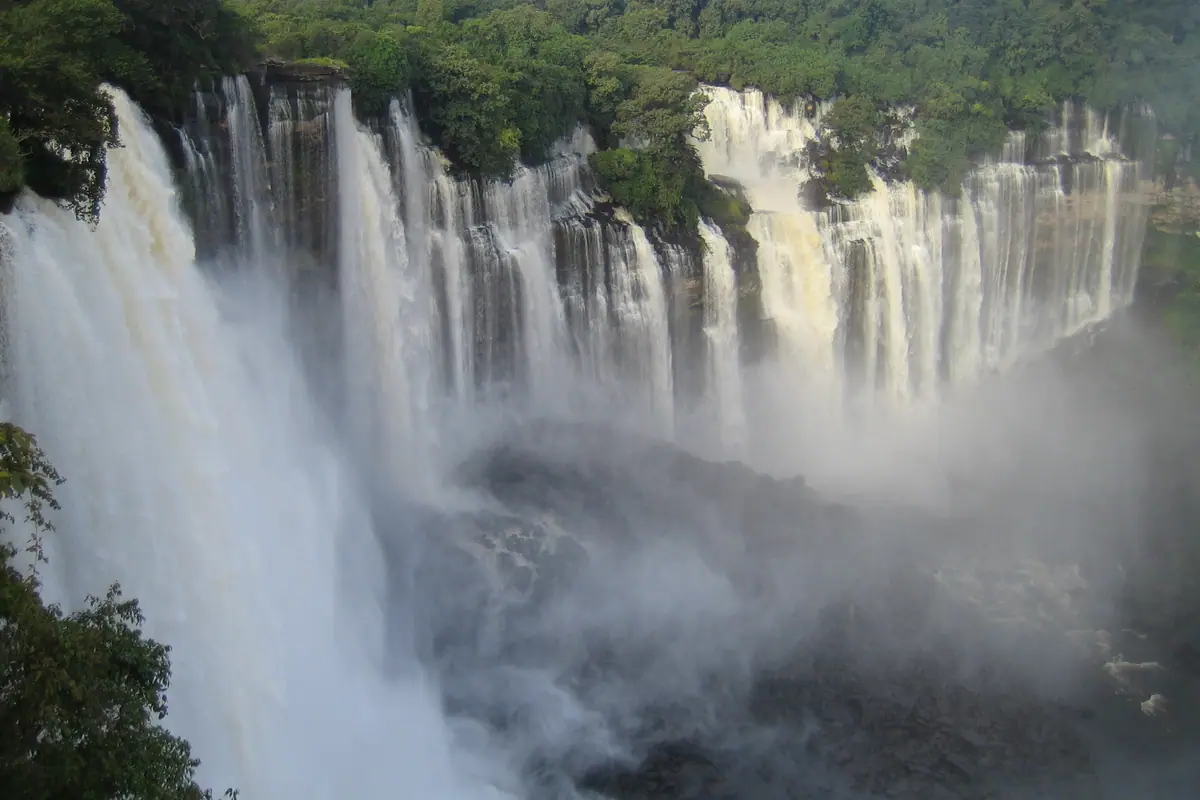
This is the season for waterfalls and for the interior at its most dramatic. Kalandula Falls in Malanje province, one of the widest waterfalls in Africa, is at full, roaring volume between roughly February and April, throwing spray across the gorge. Nearby, the black boulders of Pungo Andongo rise out of lush bush rather than dry scrub. Northern Angola becomes a dense, humid garden, and river country everywhere is at its most alive.
Two practical trade-offs. First, malaria risk is highest during and just after the rains, so take prophylaxis advice seriously and use nets and repellent. Second, rain can strand you: remote routes towards Iona and the far south, or the dirt approaches to rural lodges, can become genuinely difficult. On the plus side, hotel demand in Luanda tends to ease when the conference calendar thins out, with two big exceptions — the Carnival period around February and March, and the December–January holidays, when coastal resorts fill with Angolan families.
Choosing Where to Sleep in Luanda: Bay Views, Business Districts and Beach Islands
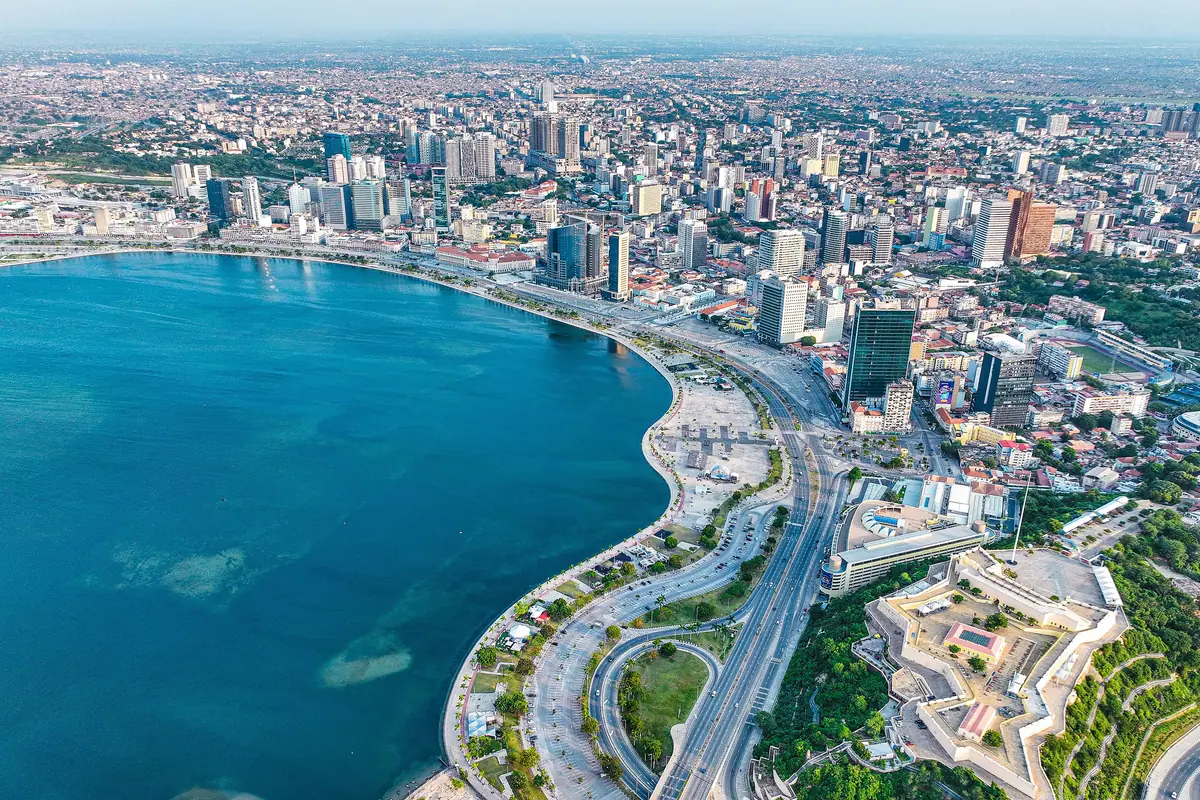
Luanda has a reputation as one of the most expensive cities in Africa for accommodation, and it is earned: rooms are priced for oil, construction and diplomatic traffic, and value-for-money is not the city's strong suit. The smartest approach is to match the neighbourhood to your reason for being there. The Marginal — Avenida 4 de Fevereiro — and the Miramar and Alvalade districts put you close to the bay, the colonial-era fortress and the city's better restaurants. Talatona and the Belas business area, south of the centre, offer newer towers, conference facilities and easier parking.
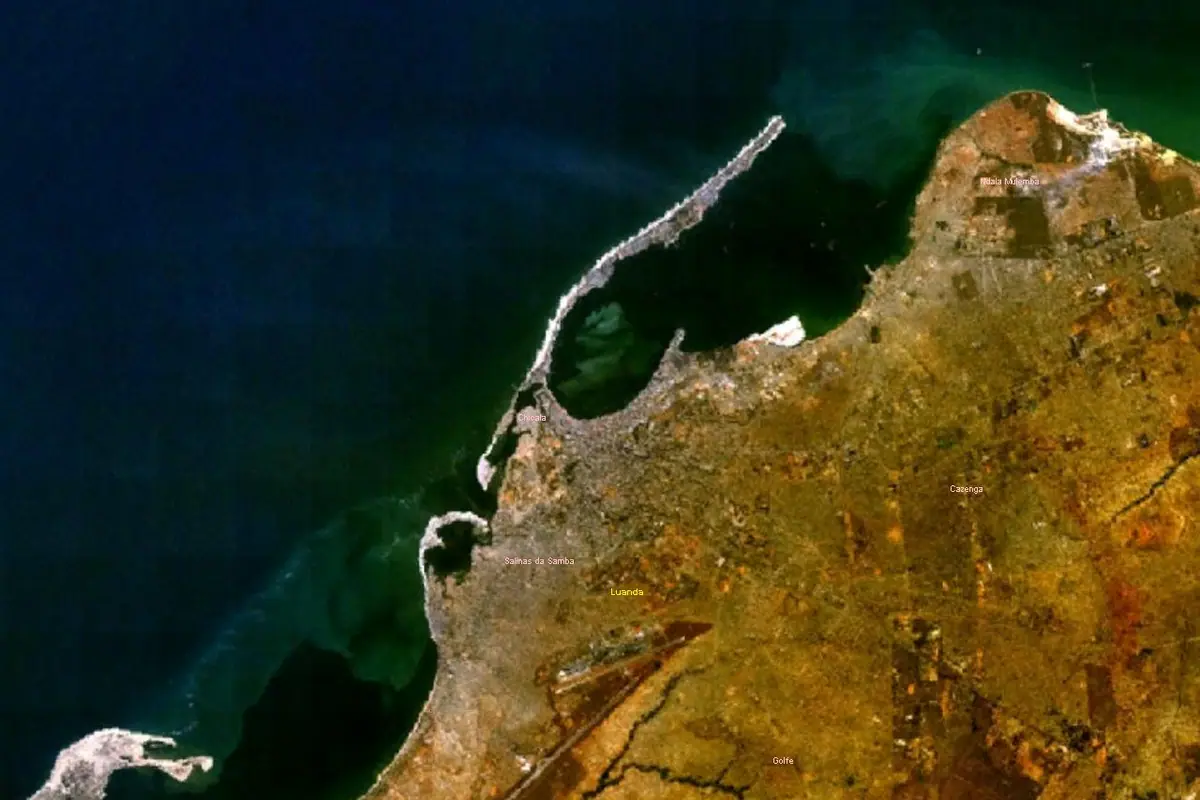
For something slower, look at the Ilha do Cabo, the sandy spit that curls around the bay and holds a string of seafood restaurants and low-rise beach stays, or cross by boat to Mussulo, a long peninsula of sand and fishing villages where guesthouses trade city energy for quiet water. These are the places to be if you want to swim, eat grilled fish and watch the sun go down rather than sit in traffic.
Booking rhythm matters. Weekdays are dominated by business travellers, so weekends can be marginally easier; Carnival, December and the June-to-August peak are the tightest periods. Check two details before you commit: reliable generator backup and a dependable water supply, both of which vary more than you might expect, and the transfer time from the newer international airport far to the north-east of the city, which can turn a short hop into a long drive at peak hours.
Outside the Capital: Beach Lodges, Plateau Guesthouses and Desert Camps
Angola's second city, Benguela, and its neighbour Lobito make an excellent coastal base from May to September. The Restinga, a narrow sandspit curving out into the bay at Lobito, is lined with simple beach lodges and seafood joints, while Benguela's Praia Morena and the quiet coves at Baía Azul further south offer calmer swimming. Benguela itself rewards a wander for its faded colonial buildings and market life. South of Luanda, Cabo Ledo has become a low-key surf and beach retreat, reachable as a long day trip or a weekend stay.
On the plateau, Lubango is the natural hub for the south-west: pousadas and family-run guesthouses here put you within reach of the Tundavala Gap, the Serra da Leba pass and the towering Cristo Rei statue overlooking the town. Nights between June and August are cold, so ask about heating. Further south again, Moçâmedes (Namibe) is the gateway to the Namib desert edge and to Iona National Park, where a handful of rustic camps and guesthouses operate — book these early in the dry season and expect basic comforts, self-sufficiency and long, dusty drives.
Inland, Malanje is the base for Kalandula Falls and Pungo Andongo, with modest hotels and lodges that fill around holidays. Distances are the real constraint: Angola is enormous, main roads between provinces are long, and driving after dark is not advisable outside the cities. Where you can, pair a road leg with a domestic flight, and always build a buffer day around it.
Must-See Landmarks and the Best Time to See Each
In Luanda, start with the Fortaleza de São Miguel, the 16th-century fortress on the ridge above the bay that now houses a military history museum and offers the best view over the city and the Ilha. Walk the Marginal to the Mausoleum of Agostinho Neto, the angular obelisk marking the resting place of Angola's first president, and detour to the Palácio de Ferro, the iron-framed colonial pavilion in the Baixa. The National Museum of Anthropology and the craft stalls of the Benfica market round out a day. Visit in the dry season, when mornings are cooler and the light is clearer for photographs.
The country's natural set pieces deserve their own timing. Kalandula Falls is most spectacular from February to April, when the Lucala River is swollen; go between June and September if you value easier access over sheer volume. Pungo Andongo's black rock formations, the Tundavala Gap and the Serra da Leba pass are all best in the dry months, when mist does not swallow the views and the switchbacks are safe. The Cristo Rei of Lubango stands above the city on a clear-day walk. In the far south, Iona National Park, the mouth of the Cunene at Foz do Cunene and the ghost settlement of Baía dos Tigres are dry-season-only propositions for anyone without serious expedition support.
Closer to the capital, Quiçama National Park along the Kwanza River is the easiest taste of Angolan wildlife and works year-round, though the dry season gives better sightings; the riverside viewpoint at Miradouro da Lua, sculpted into lunar-looking gullies south of Luanda, is worth a stop in the same dry-season months. And if you are in the country around September, the pilgrimage to the church at Muxima on the Kwanza draws enormous, colourful crowds — a very different kind of Angola, but an unforgettable one.
Frequently asked questions
What is the single best month to visit Angola?
July and August are the safest bet for most itineraries. The rains are gone, coastal mornings are cool and misty rather than hot, the plateau is comfortable for hiking and the far south is at its most accessible. It is also the busiest period, so book flights and hotels early.
Why are hotels in Luanda so expensive?
Demand comes from the oil, construction and diplomatic sectors, and the supply of quality rooms is limited. Rates are high year-round, so compare neighbourhoods — the Marginal and Miramar for bay views, Talatona for modern business hotels — and reserve before you travel rather than hoping to negotiate on arrival.
When should I see Kalandula Falls?
For maximum power, go between February and April, when the Lucala River is at its fullest and the falls throw spray across the gorge. For easier driving on the approach roads and clearer skies, choose June to September — the flow is smaller but the trip is simpler.
Is the rainy season a bad time to travel in Angola?
Not necessarily. The wet season brings green landscapes, dramatic skies, fuller waterfalls and often softer demand in the capital outside December and Carnival. The trade-offs are humidity, a higher malaria risk and rural dirt roads that can become impassable, particularly in the far south and around remote lodges.
What should I check before booking an Angola hotel?
Confirm generator backup and a reliable water supply, ask whether air conditioning actually works in the hot months, and factor in the drive from the international airport north-east of Luanda. In the highlands around Lubango and Huambo, ask about heating for June to August, when nights get genuinely cold.
Sort the rest of your trip
Everything for Angola, in one place
Transfer in Angola
Private driver waiting on arrival — no queues, no surprises.
Book a transfer
Things to do in Angola
Skip-the-line tickets, guided tours and standout experiences.
See experiences
Stay online in Angola
Travel eSIM — data the moment you land, no roaming bills.
Get an eSIMMore guides in Angola
Flying Into Angola: A One-Week Itinerary from Luanda to the Kalandula Falls
Best Things to Do in Angola: Waterfalls, Desert Coast and Highland Escarpments
Best Places to Visit in Angola: Luanda, Kalandula Falls and the Namibe Desert