Angola is enormous, and the things you came to see — thundering waterfalls in the north, a lunar coastline in the south, a colonial-era capital on the Atlantic — are separated by domestic flights, not by a morning's drive. This one-week route uses the country's internal air network as its skeleton, filling the gaps with roads, river crossings and long, memorable afternoons.
Day 1 — Landing in Luanda: Arrival, the Marginal and Your First Evening
Most journeys into Angola begin at Luanda's new international gateway in the Bom Jesus area, roughly 40 km north-east of the city centre, where the immigration hall, visa checks and baggage reclaim can take a leisurely hour or more on a busy arrival. Carry a printed copy of your visa approval, your yellow fever vaccination certificate and your accommodation address — officials ask for them routinely, and having them in hand saves a lot of standing around. Outside, the air is warm and heavy with Atlantic humidity; the drive into town takes the better part of an hour depending on traffic, which in Luanda is a force of nature in its own right.
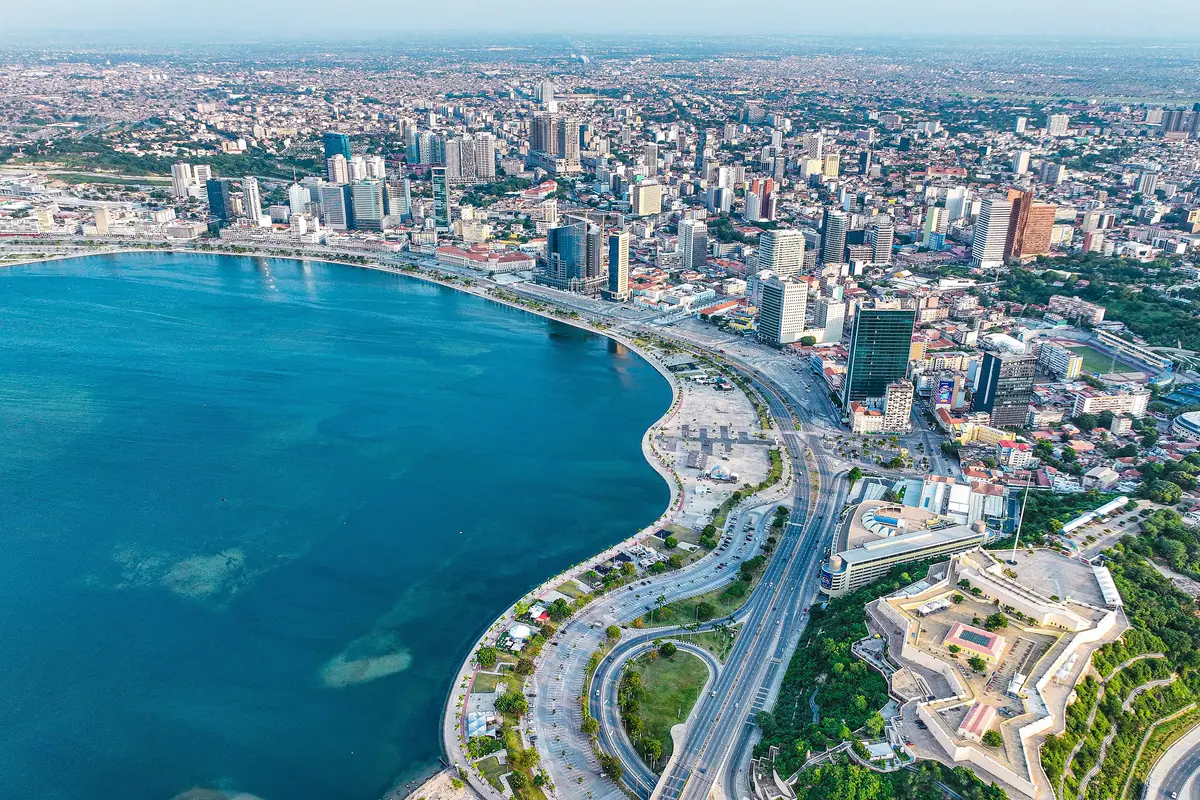
Check into a hotel near the Baixa or along the bay, drop your bags and walk the Avenida 4 de Fevereiro — the Marginal — as the sun drops. This curving seafront promenade is Luanda at its most photogenic: palms, fishermen, kids playing football on the sand below the seawall and the curve of the bay lit up after dark. Continue onto the Ilha do Cabo, the sandbar peninsula that shelters the harbour, for grilled fish and cold drinks at a beachside restaurant. Order the day's catch with funge or muamba de galinha, and let the city's odd blend of Portuguese and Central African rhythms settle over you.
Practical notes for day one: change a modest amount of money into kwanza on arrival, since cards work in larger hotels and restaurants but almost nowhere else; buy a local SIM card for data; and don't try to do too much. Luanda runs late and eats late, and your body clock is still somewhere over the Atlantic.
Day 2 — Luanda's Historic Core: Forts, Museums and the Mausoleum
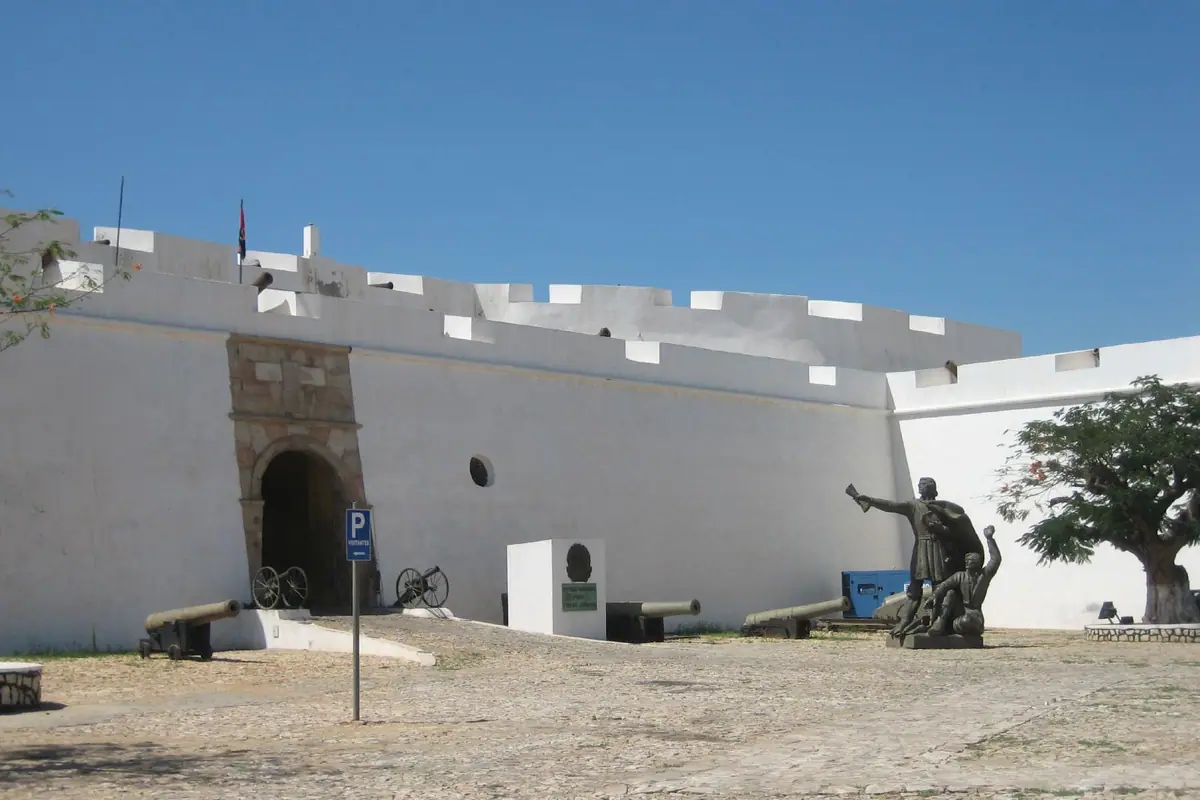
Start high. The Fortaleza de São Miguel, begun in 1576 on the bluff above the bay, is the oldest standing structure in the city and now houses the Museum of the Armed Forces — cannons on the ramparts, tiled courtyards and a view straight down onto the harbour that explains why the Portuguese built here first. From the fort, walk downhill into the older streets of the Baixa, past faded pastel facades and iron balconies, to the Museu Nacional de Antropologia, whose collection of masks, musical instruments and ritual objects from Angola's many peoples is the best short introduction you'll get to the country's cultures before you travel inland.
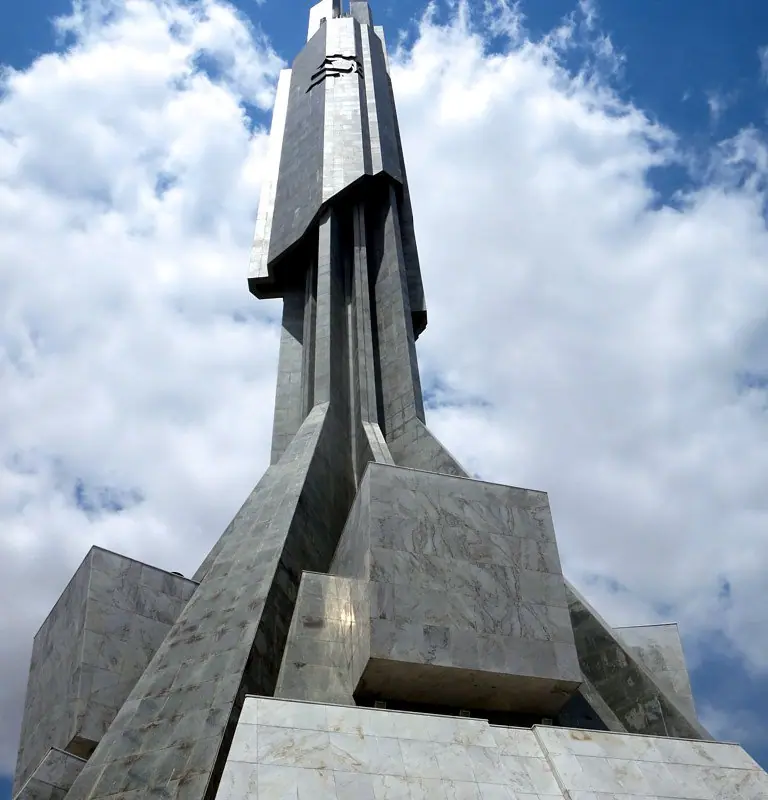
Continue along the waterfront to the Mausoleum of Agostinho Neto, a rocket-shaped monument of concrete and glass on the Marginal that dominates the shoreline and remains the city's defining silhouette. A little further east, the Igreja de Nossa Senhora dos Remédios and the lively Mercado do Artesanato at Benfica are worth an hour each — the first for its history, the second for woodcarvings, basketwork and Congolese malachite.
Keep the afternoon loose. Luanda's traffic is brutal between roughly 4 pm and 7 pm, so plan any longer transfer before or after that window. If you have energy left, the view from the Miradouro da Lua Belo — the city's newest lookout over the bay — is a fine place to end the day. Tonight, eat early and pack light: tomorrow you head south, and on this itinerary the domestic flights that follow all leave from Luanda, so anything you don't want to carry stays here.
Days 3–4 — South to Quiçama: the Kwanza River, Miradouro da Lua and Cabo Ledo
Hire a car and driver for two days and follow the coast road south out of the city. Your first stop is the Miradouro da Lua, a stretch of eroded cliffs above the sea where the road bends towards the Kwanza River mouth and the landscape turns suddenly strange — gullies, pinnacles and ravines of pale clay that genuinely look like a moonscape, especially in the flat light of early morning. It's the most photographed natural spot within easy reach of the capital and takes only half an hour to walk.
Cross the long bridge over the Kwanza River into Quiçama National Park, Angola's oldest and most accessible reserve. Wildlife here is recovering rather than abundant — you may see eland, roan antelope, zebra, bushbuck and, with luck, elephants moving down towards the river — but the park's real appeal is its emptiness: kilometres of acacia and miombo scrub, mangroves at the estuary and a coastline of wild, unvisited beaches. Stay overnight at one of the small riverside lodges, where the evening is all birdsong, insect noise and a sky thick with stars.
Spend day four slowly: an early game drive or a boat trip on the Kwanza, then lunch at Cabo Ledo, the surf beach where Luandans escape on weekends. The break here is powerful and the water cold; swimmers should be cautious, and there are no lifeguards. Drive back to Luanda in the late afternoon so you're positioned for tomorrow's flight — this is the only long road leg on the itinerary, and it's a good introduction to how big Angola really is.
Day 5 — Flying North-East to Malanje and the Kalandula Falls
Domestic flying in Angola is hub-and-spoke: nearly everything routes through Luanda, and services to the provinces are operated with small turboprops and jets on schedules that change with demand. Book well ahead, expect baggage limits of around 15–20 kg on the smaller aircraft, keep your valuables and medication in your hand luggage, and treat departure times as approximate — delays and cancellations happen, particularly in the rainy season. The flight north-east to Malanje takes under two hours and lifts you out of the coastal haze into rolling plateau country of baobabs, tall grass and red earth.
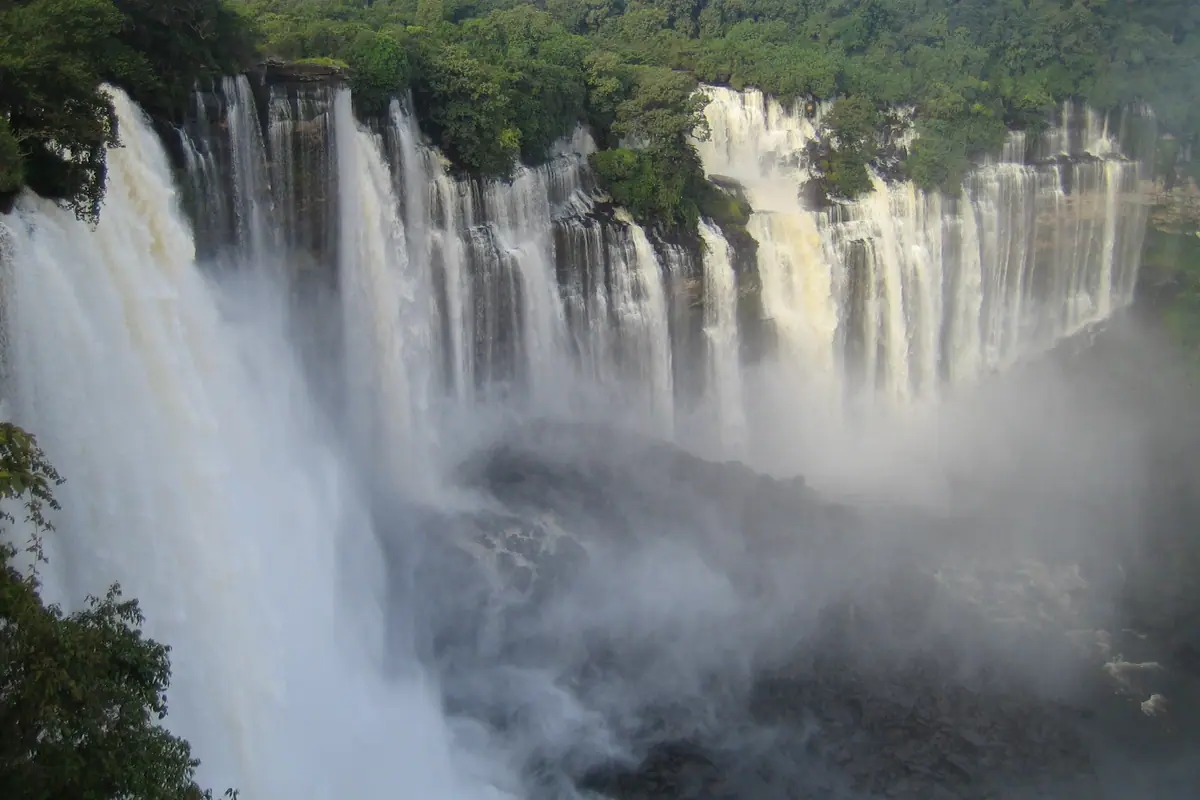
From Malanje, the Kalandula Falls on the Lucala River are about an hour and a half by road. Roughly 100 metres high and several hundred metres wide, they are among the largest waterfalls in Africa and, on a weekday, you may have the whole viewpoint to yourself. The flow is at its most violent from roughly February to April, when the river is in spate and the spray soaks the path; in the dry months the water splits into channels and the rock face shows through, which is easier walking but less thunderous. Stay nearby so you can see the falls at both sunset and first light — the light on the water is the whole point.
On the way back toward Malanje, detour to the Pedras Negras de Pungo Andongo, a field of huge black granite boulders rising out of the grassland, one of them balancing impossibly on its tip. It's a place of local legend and old kingdom history, best visited in the cool of the morning. If you have a spare day, the reserve at Cangandala protects the giant sable antelope, an animal found nowhere else on earth.
Day 6 — The Southern Escarpment: Lubango, Serra da Leba and the Tundavala Gap
Fly back through Luanda and continue south the same day or the next morning to Lubango, the highland capital of Huíla province. At around 1,700 metres, the air here is cool and pine-scented — a completely different Angola from the humid coast, and one where you'll want a jacket in the evening. Local operators run day trips from Lubango, and the classic loop takes in the Cristo Rei, a towering statue of Christ with its arms out over the valley, then the Serra da Leba escarpment, where the road corkscrews down the mountainside in a series of hairpin bends that have become the country's signature photograph.
Fifteen minutes further on, the Tundavala Gap is the trip's high point in both senses: a sheer cliff edge at roughly 2,200 metres where the plateau simply stops and the land falls away to the Namibe desert and the coastal plain far below. On a clear morning you can see the Atlantic as a bright line on the horizon. From there the road descends to Namibe — the dry, breezy port town that serves the desert — and onwards to Tômbwa, where the Arco do Namibe, a rock arch carved by wind and sea, stands above a wild shore, and Welwitschia plants older than most nations squat in the gravel plains.
If you have only one day in the south, do the Lubango circuit and the Tundavala Gap and skip the coast; if you have two, fly down to Namibe instead of driving and work back up. The southern airports are served by small aircraft, so travel light and be flexible about timings — afternoon coastal fog can push flights around.
Day 7 — Back to Luanda, and What You Need to Know About Flying Angola
Return to Luanda with a buffer day if you can. The capital's domestic departures and its international connections rarely run with clockwork precision, and a same-day domestic-to-international transfer is a gamble worth avoiding. Use the last day for what you missed: the Museu Nacional de História Militar, the craft stalls at Benfica, or simply a slow lunch on the Ilha do Cabo before the flight home. If your interests lean historical, Mbanza Kongo in the far north — the UNESCO-listed capital of the old Kingdom of Kongo — is a rewarding but logistically demanding extension requiring a flight north and a long road transfer.
Timing matters more than most visitors expect. The dry season from May to September, known locally as the cacimbo, brings cooler, misty days on the coast and clear skies inland — ideal for the southern escarpment and the parks, though the waterfalls are at their thinnest. The rainy months from October to April turn the interior green, fill the Kalandula Falls and make some dirt roads genuinely difficult; plan longer drives and earlier starts. Whenever you come, bring malaria prophylaxis, a yellow fever certificate (required for entry), insect repellent, a wide-brimmed hat and more cash than you think you need.
Finally, the unglamorous essentials: Angola drives on the right, Portuguese is the working language nearly everywhere, and outside Luanda you'll rely on meticais-free kwanza in notes rather than cards. A visa is required for most nationalities and should be arranged before departure. Roads between the main cities are generally decent but distances are huge — Luanda to Malanje is roughly 400 km, and the coastal route south runs well past 1,000 km — which is exactly why this itinerary leans on the country's domestic air network and treats every road as a scenic bonus rather than a necessity.
Frequently asked questions
How do domestic flights work inside Angola?
Almost every route connects through Luanda, so you'll frequently fly out and back to the capital rather than hopping directly between provinces. Services use small jets and turboprops with tight baggage allowances, often 15–20 kg, and schedules change seasonally. Book as far ahead as you can, arrive early, and always build a spare day before an international departure.
What's the best time of year for this itinerary?
The dry season from May to September gives cooler coastal days and clear skies inland, perfect for the Tundavala Gap, Serra da Leba and Quiçama National Park. If the Kalandula Falls are your priority, aim for February to April, when the Lucala River is full — just be prepared for rain, mud and slower road travel.
Do I need a visa or vaccinations to enter Angola?
Most visitors must arrange a visa before travelling, either through the Angolan embassy or, for some nationalities, an online pre-approval. A yellow fever vaccination certificate is required for entry, and antimalarial medication is strongly recommended for the interior and coastal regions. Check current requirements well before booking.
Can I do this itinerary without a car?
Not really. Luanda has taxis and ride-hailing, and the Ilha do Cabo is walkable, but Quiçama, Kalandula and the Lubango circuit all need a vehicle. Hiring a car with a local driver is the simplest option; self-driving is possible on main highways but demands patience with fuel stops, potholes and police checkpoints.
How much money should I carry, and can I use cards?
Angola runs largely on cash. Cards work in larger Luanda hotels, restaurants and some supermarkets, but outside the capital you should assume you'll pay in kwanza notes. Bring enough to cover fuel, park fees, meals and tips, keep small denominations for markets and roadside stops, and use ATMs only in the capital, where they're more reliable.
Sort the rest of your trip
Everything for Angola, in one place
Stay in Angola
Hotels, guesthouses and apartments — compared in one search.
Search hotels
Transfer in Angola
Private driver waiting on arrival — no queues, no surprises.
Book a transfer
Travel insurance
Medical cover, delays and lost baggage — sorted before you go.
Get coveredMore guides in Angola
Best Things to Do in Angola: Waterfalls, Desert Coast and Highland Escarpments
The Best Time to Visit Angola: Seasons, Hotel Timing and Must-See Sights
Best Places to Visit in Angola: Luanda, Kalandula Falls and the Namibe Desert