North Korea is not a destination you stumble into — it is a country you are escorted through, from the bronze statues on Mansu Hill to the freezing rim of Heaven Lake. Every itinerary is fixed in advance, every stop comes with a guide, and almost nothing about the trip feels ordinary. What follows is what a first-time visitor can realistically see, and how to think about the places that matter most.
Why a Trip to North Korea Is Unlike Anywhere Else
The Democratic People's Republic of Korea does not offer independent travel. Visitors arrive on organised tours arranged through licensed operators, are met at the airport or border and are accompanied from morning until night by state guides plus a driver. You stay where you are told, eat where you are told and follow an itinerary approved before you ever left home. That loss of freedom is precisely what makes the country fascinating to some travellers and unacceptable to others.
Most arrivals come by air into Pyongyang on a short flight from a Chinese hub, roughly an hour and a half in the air, or by overnight rail across the Yalu River from Dandong to Sinuiju and on to the capital. Large-scale tourism has been suspended since early 2020, with only limited, tightly controlled reopening in the far north-east, so anyone planning a trip needs to confirm the current situation with a licensed operator rather than assume the door is open.
The ethical question deserves a straight answer. Tourist spending flows overwhelmingly to the state, and visitors are, in effect, part of a curated narrative. Some argue that engagement and human contact matter; others argue that a holiday legitimises the system. Be honest with yourself about which camp you fall into, and travel only if you can accept the discomfort.
Pyongyang: Monuments, Squares and the Deep Metro
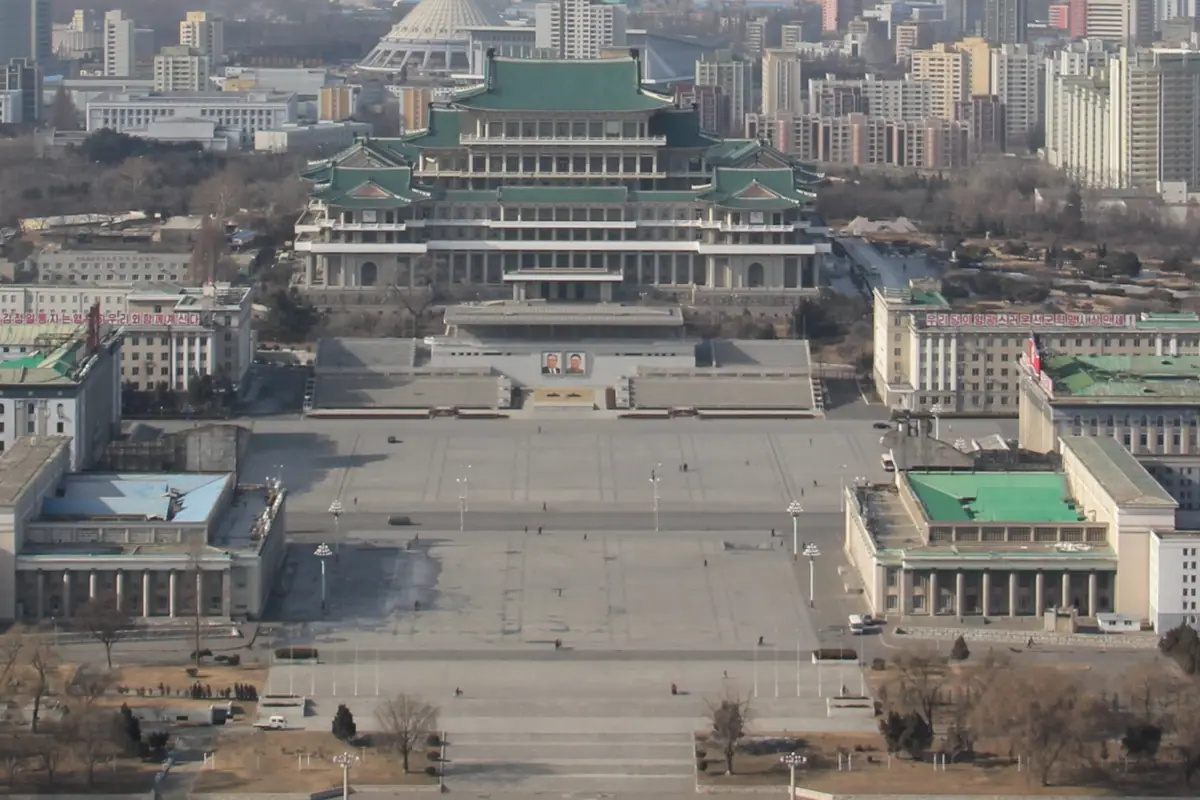
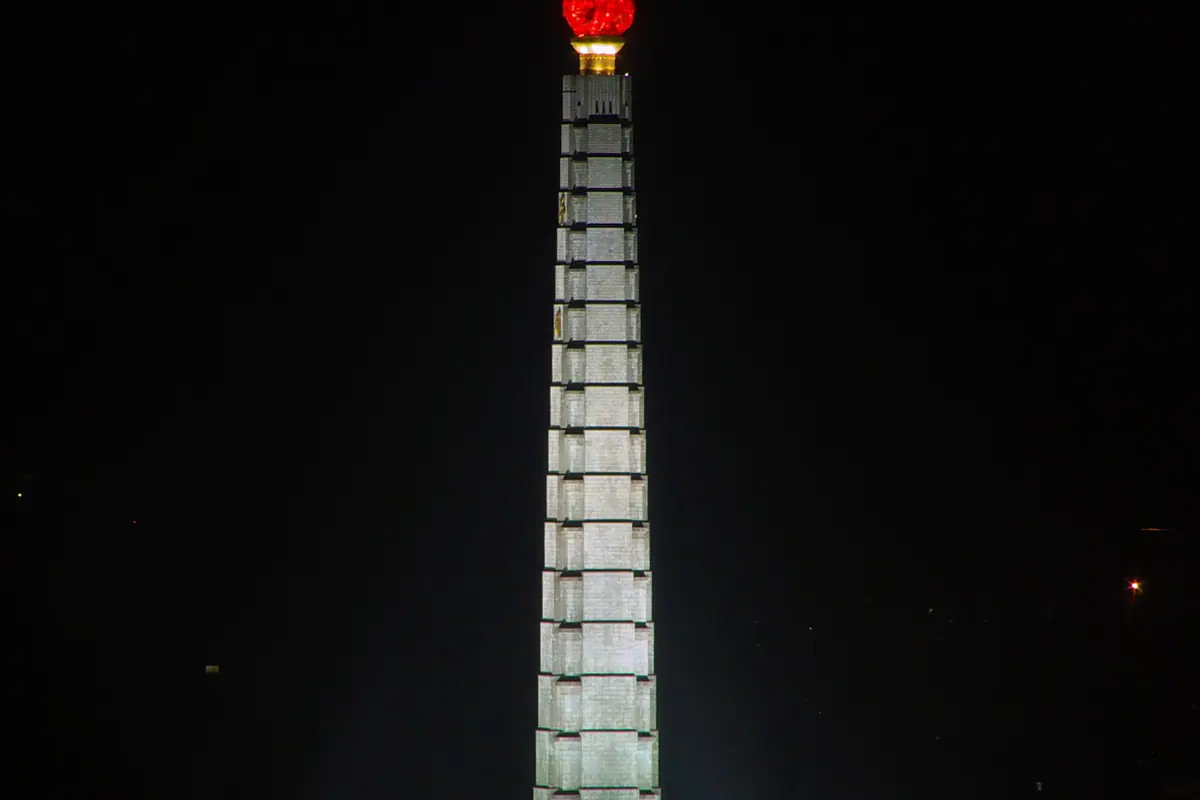
Nearly every trip is anchored in the capital, usually for three or four of a five-day stay. The set pieces are the Mansudae Grand Monument, the towering bronze figures on Mansu Hill where visitors are expected to bow, and Kim Il-sung Square, a vast granite parade ground facing the Taedong River. Across the water, the Juche Tower rises 170 metres, completed in 1982 and topped by a red flame; the Arch of Triumph, at around 60 metres, stands taller than its counterpart in Paris.
The Victorious Fatherland Liberation War Museum is genuinely gripping, especially the captured American spy ship USS Pueblo moored beside it. Elsewhere you may visit the Kumsusan Palace of the Sun, the marble mausoleum where the two late leaders lie in state — formal clothing is required, photography is forbidden and a bow is expected. The Pyongyang Metro is another highlight: two lines and stations buried more than a hundred metres underground, with chandeliers, mosaics and a short ride often permitted between Puhung and Yonggwang.
Beyond the monuments, itineraries fill with the things that make the city legible: the unfinished 105-storey Ryugyong Hotel, still an empty pyramid on the skyline; Mangyongdae, presented as the founder's birthplace; the Chollima statue; a school or a cooperative farm where children perform; and the Party Foundation Monument with its hammer, sickle and writing brush. In some years the mass gymnastics and artistic performances fill the enormous Rungrado 1st of May Stadium, an event that alone justifies the trip for many visitors.
Kaesong and Panmunjom: The Border and a Medieval Capital
The drive south from Pyongyang to Kaesong runs about 160 kilometres on a highway that is almost eerily empty, usually taking two to three hours with a rest stop. The destination is the Joint Security Area at Panmunjom, where blue conference huts straddle the Military Demarcation Line and, when access has been permitted, visitors have been able to briefly step across into the southern side. Opening hours and access to the site have fluctuated sharply with political tension, so treat it as a privilege rather than a guarantee.
Kaesong itself was the capital of the Koryo dynasty from 918 to 1392, and its old core is listed as a World Heritage site. The Koryo Museum occupies the buildings of an old Confucian academy and holds celadon, Buddhist art and historical relics; the Namdaemun gate and the Tomb of King Kongmin, with its carved stone guardians, sit within easy reach. This is also the best place on any itinerary to buy ginseng and handicrafts.
Smaller stops often fold into this day — a traditional village, a stamp shop, a tea house serving insam tea — and the long return leg tends to be the quietest part of the trip. Bring snacks; food stops are scheduled, not spontaneous.
Mount Paektu, Myohyang and the Diamond Mountains
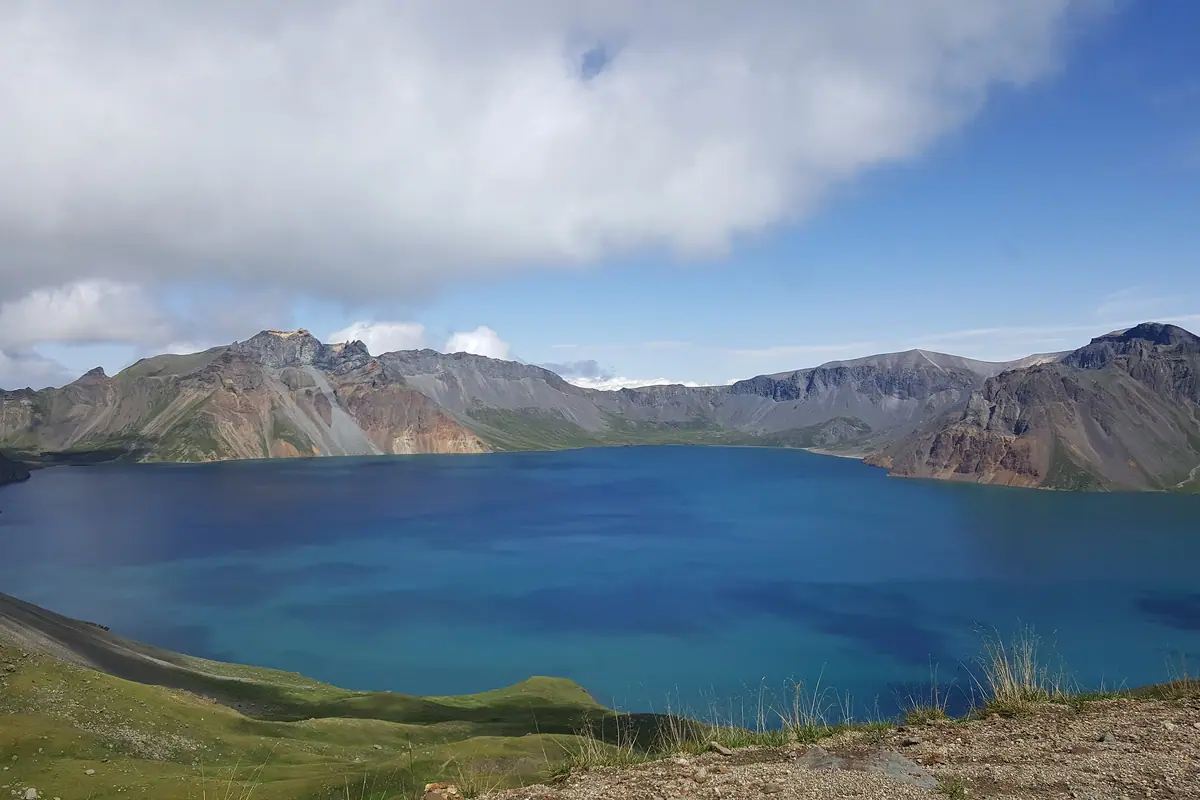
Mount Paektu is the country's highest peak at 2,744 metres and the most dramatic natural site in the north-east, straddling the Chinese border. Its crater holds Heaven Lake, a deep blue expanse at around 2,190 metres, reached by cable car and a final stretch on foot; the best window is July to September, when the snowpack finally clears. In winter the surrounding area becomes a ski destination, and the mountain carries enormous mythological weight as the legendary birthplace of the Korean nation.
Closer to the capital, Mount Myohyang sits roughly 150 kilometres north of Pyongyang and pairs easily with a two-night stay. The International Friendship Exhibition, tunnelled into a hillside, holds the gifts presented to the country's leaders by foreign dignitaries — a surreal and unexpectedly absorbing collection. Nearby stands the eleventh-century Pohyon Temple, and the Manphok Valley offers genuine hiking through quiet forest.
On the south-east coast, the Diamond Mountains — Mount Kumgang — rise as jagged granite peaks above the sea, with Kuryong Falls and the Samilpo lagoon among the highlights. A resort zone developed with South Korean investment in the late 1990s was largely shut down after an incident in 2008, and coastal access remains unpredictable. Further north on the same coast, Wonsan and the Masikryong ski area appear on some longer itineraries, though never count on them.
Rason, Nampo and the Edges of the Map
The Rason special economic zone in the far north-east has been the first area to reopen to outside visitors, typically reached by rail from the Russian border in a few hours for short three- to five-day trips. It is the closest a tourist gets to the country's ordinary commercial life: the market in Rajin is loud, packed and one of the few places where you see trade happening at scale rather than staged for guests.
Near Pyongyang, Nampo is a port city at the mouth of the Taedong River, around 50 kilometres away, best known for the West Sea Barrage — an eight-kilometre sea wall with locks that is usually shown as an engineering triumph. Sinuiju, opposite the Chinese border town of Dandong, features on rail itineraries, while Chongjin in the industrial north-east is reserved for the longest, most bespoke trips.
Understand that these add-ons depend entirely on what can be approved before you arrive. Build slack into your expectations, accept that a site may vanish from the schedule at a day's notice, and you will enjoy the trip far more than someone clinging to a printed plan.
When to Go, How Long to Stay and What to Expect
Late April to June and September to October are the most comfortable windows, with mild temperatures and clear skies. April occasionally coincides with the Pyongyang Marathon, and August with the mass games, but July and August are also hot, humid and monsoon-wet. November to March is brutal — Pyongyang regularly drops below minus ten, and the northern mountains far lower — though a snow-covered Heaven Lake is unforgettable if you can handle the cold.
Short trips run four to five days and cover Pyongyang plus Kaesong and Panmunjom. A week to ten days adds Mount Myohyang and the east coast, while two weeks reaches Samjiyon and Mount Paektu or the Rason region. In cost terms, entry-level group departures resemble a mid-range European holiday per person; tailored itineraries with internal flights and long overland legs run several times that. Visa arrangements are handled by your operator, and the permit is usually issued as a separate document rather than a stamp, depending on your nationality.
Expect no roaming, no independent internet and only occasional arranged international calls; bring euros, US dollars or Chinese yuan, as the local currency is effectively unusable for visitors. Pack modest clothing for the mausoleum, and treat photography rules seriously — no military installations, no construction sites, no unflattering angles, and expect a request to delete images. Movement outside your hotel without a guide is not possible. Finally, check your own government's travel advisory before booking: some countries restrict or prohibit travel on their passports, and consular help if something goes wrong is extremely limited.
Frequently asked questions
Can tourists visit North Korea at the moment?
Large-scale tourism has been suspended since early 2020, with only limited, tightly controlled reopening in the far north-east. There is no reliable public calendar, and access can change quickly, so the only sensible approach is to speak directly to a licensed tour operator and confirm the current situation before making any plans.
How long does a typical trip last?
The shortest trips are four to five days centered on Pyongyang, with a day trip to Kaesong and Panmunjom. Seven to ten days adds Mount Myohyang and the east coast, while ten to fourteen days allows the far north — Samjiyon and Mount Paektu — or the Rason region in the north-east.
What is the best time of year to go?
Late April to June and September to October offer the mildest weather. April sometimes coincides with the Pyongyang Marathon and August with the mass gymnastics performances, but July and August are hot and monsoon-wet. Winter is severe, with Pyongyang often below minus ten and much colder conditions in the mountains.
Can I travel independently or leave my hotel alone?
No. All visitors travel on approved itineraries with state guides and a driver, and are accompanied throughout the day. Wandering off, skipping a scheduled stop or heading out from your hotel unaccompanied is not possible, and attempts to do so create real problems for you and your guides.
Is it safe, and should I be concerned about the ethics?
Street crime against visitors is rare, but the legal risk is serious: if you break the rules, consular access is minimal and a well-publicised case saw a detained visitor returned home in a coma. On ethics, tourist money flows largely to the state and visitors are part of a curated narrative — a genuine argument exists on both sides, and it is worth resolving your own position before you book rather than after.
Plan it — experiences in North Korea
Live search, booked directly with trusted providers.
Sort the rest of your trip
Everything for North Korea, in one place
Stay in North Korea
Hotels, guesthouses and apartments — compared in one search.
Search hotels
Transfer in North Korea
Private driver waiting on arrival — no queues, no surprises.
Book a transfer
Stay online in North Korea
Travel eSIM — data the moment you land, no roaming bills.
Get an eSIM