The Maldives isn't one destination so much as a scatter of nearly 1,200 islands strung across 26 coral atolls, each with its own reef, rhythm and reason to visit. Some travellers come for the underwater world, some for a sandbank that vanishes at high tide, and some for a coral-stone mosque in a capital city that packs more life into two square kilometres than most islands manage in a hundred.
The Reefs That Made the Maldives Famous
The country's reputation was built underwater long before it was built in overwater villas. Start with Banana Reef in North Malé Atoll, one of the oldest protected dive sites in the country: a cluster of coral heads rising from roughly 30 metres to within five metres of the surface, patrolled by napoleon wrasse, grey reef sharks and swirling schools of fusiliers. It's shallow enough to snorkel on calm days and complex enough to fill an entire dive, which is why day boats from Malé and Hulhumalé, and most liveaboards, reach it within an hour.
Divers should put Maaya Thila on the list. This pinnacle in South Ari Atoll is widely considered one of the finest night dives anywhere in the Indian Ocean, when torches pick out whitetip and grey reef sharks hunting, moray eels sliding through the coral and nurse sharks resting on the sand. In daylight the same reef is a blaze of soft coral, anthias and bannerfish, best dived at slack tide.
For something more dramatic, Fotteyo Kandu in Vaavu Atoll is a canyon cut through the reef, with overhangs, swim-throughs and grey reef sharks holding station in the current — dive it on an incoming tide and hold onto your mask. Water temperature sits at a steady 27–29°C all year, visibility often runs 20–40 metres, and most dives last 45–60 minutes.
Giants in Warm Water: Hanifaru Bay and South Ari Atoll
Hanifaru Bay in Baa Atoll is the single most reliable place on earth to watch reef manta rays feed en masse. Each year, roughly from May to November, plankton blooms funnel into this small horseshoe-shaped bay and dozens — sometimes well over a hundred — of mantas arrive to barrel-roll through the soup, often alongside whale sharks. The bay sits inside a protected biosphere reserve, and the rules are strict: snorkelling only, no scuba, a limited number of boats, timed entries and a ban on chasing or touching. Go with a licensed operator from Dharavandhoo or a nearby island and you'll spend around 45 minutes in the water.
For whale sharks, head to the marine protected area off South Ari Atoll, particularly around the long, low island of Dhigurah. Unlike Hanifaru's seasonal spectacle, these sharks — mostly juvenile males — are seen year-round along the western reef edge, cruising near the surface in the early morning. Trips from Dhigurah, Dhangethi and Maamigili run two to three hours, usually leaving at first light to beat both the heat and the crowds. Keep three to four metres away, never block their path, and skip the flash photography.
Malé: Coral-Stone Minarets and a Working Harbour
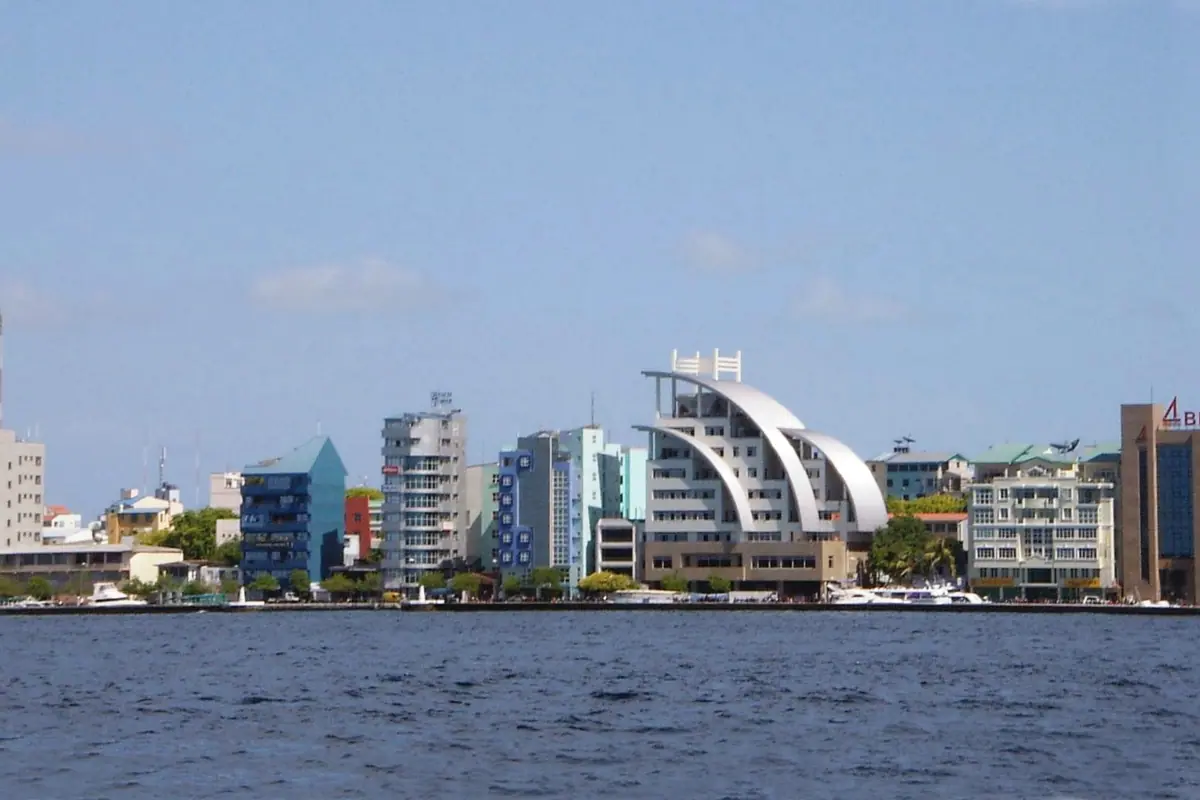
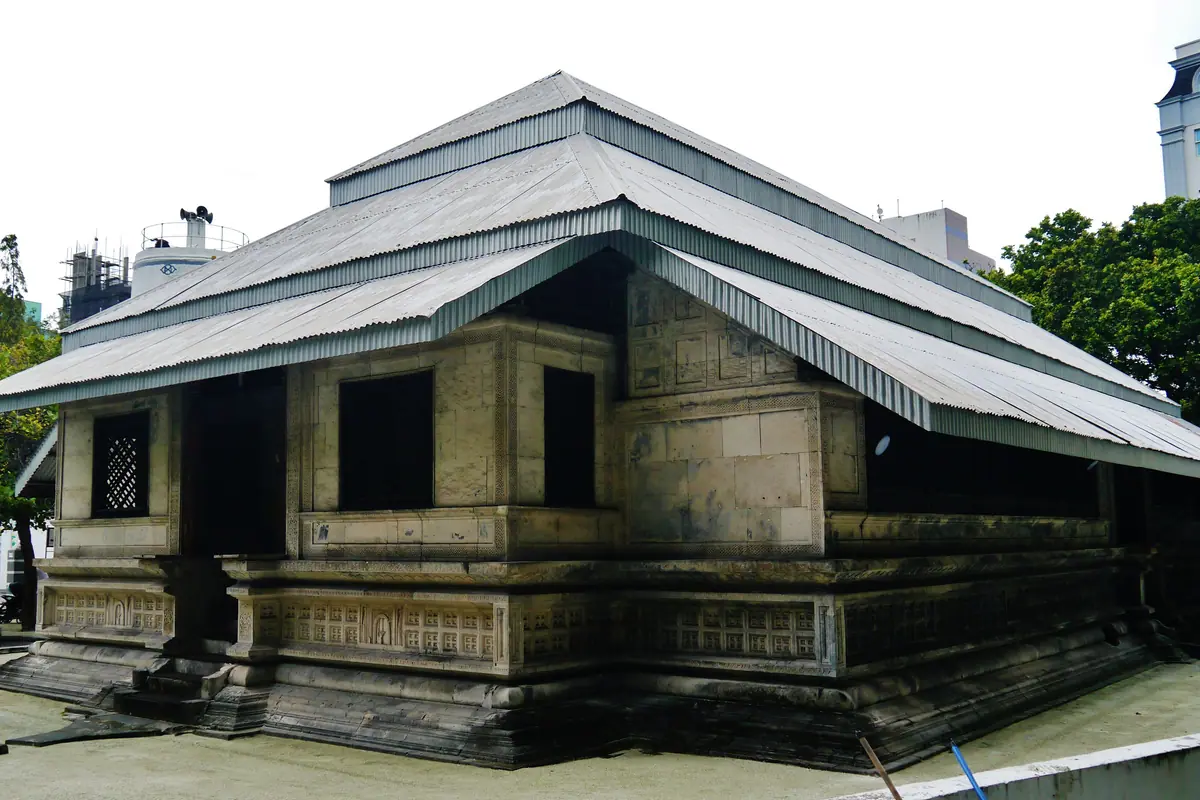
Malé is one of the most densely packed capitals on the planet — roughly two kilometres long and one wide — and it rewards a few hours of wandering. The centrepiece is Hukuru Miskiy, the Old Friday Mosque, built in the 17th century from blocks of carved coral stone and topped by a thatched roof. Inside, the walls carry intricate lacquer work; in the courtyard lie coral tombstones of sultans and their families, some with inscriptions centuries old. Non-Muslim visitors are generally welcome outside prayer times, but dress conservatively, and women should cover their heads.
Near the northern waterfront stands the Grand Friday Mosque, its gold dome and slender minaret the most recognisable landmark in the city. A short walk away, Sultan Park offers rare shade and leads to the National Museum, where you'll find coral-stone artefacts, royal thrones and objects traded across the Indian Ocean centuries ago. The blue-and-white colonial facade of Mulee Aage, the official residence, is a two-minute stroll from there.
Save time for the fish market, where skipjack tuna and reef fish are landed and butchered through the late afternoon — loud, slick and entirely genuine. The adjoining local market sells dried fish, coconut oil and chilli. Finish with sunset along the Artificial Beach, or take the short ferry to Villingili island for a quiet stretch of sand. Half a day is enough; a full day lets you add the Tsunami Monument and the old harbour.
Local Islands, Bikini Beaches and the Sea of Stars
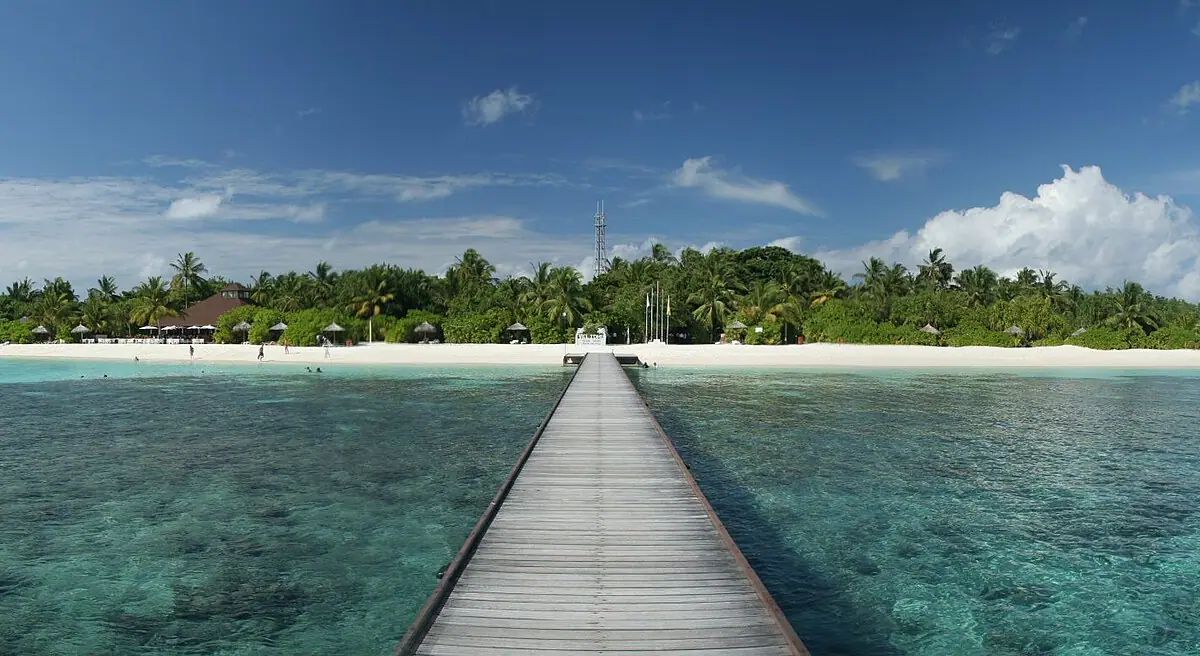
You don't need a resort to see the Maldives at its best. Guesthouses on inhabited islands now make the country affordable, and each island has a personality: Maafushi is the busiest and best connected, with a designated bikini beach and speedboat transfers from Malé in around 30 minutes; Fulidhoo is sleepy, with stingrays and small nurse sharks gliding around the jetty at dusk; Thoddoo grows watermelons and pumpkins in the middle of the island; Ukulhas is famously tidy, with a healthy house reef a few strokes offshore; Rasdhoo sits close to a near-perfect sandbank and a reef drop-off. Remember that outside the marked bikini beaches you should cover shoulders and knees, alcohol isn't sold on inhabited islands, and public ferries are cheap but slow — and they don't run on Fridays.
For a genuine natural oddity, head to Vaadhoo Island in Raa Atoll, where bioluminescent plankton light the shoreline a ghostly electric blue after dark — the so-called Sea of Stars. The glow is strongest on moonless nights, when there's little light to compete with, and it generally shows up most often during the wetter months. Reach it via a domestic flight to Dharavandhoo or Ifuru plus a short speedboat hop, and bring a tripod: the effect is subtle, not the neon spectacle that over-edited photos suggest.
Surfing the Atolls: Cokes, Chickens and Jailbreaks
The Maldives has a genuine surf scene, concentrated in North Malé Atoll but stretching from Huvadhoo in the far south to Laamu. The season runs roughly March to October on southwest monsoon swell, with September and October usually the most consistent. The best-known waves are the pair off Thulusdhoo: Cokes, a fast right-hander named for a soft-drink plant that once operated on the island, and Chickens, a shorter, hollower right nearby. Both break over shallow coral and work best at mid tide, so local knowledge matters more than fitness.
Closer to the capital, Jailbreaks takes its name from the prison that overlooked it, and pairs conveniently with a day trip from Malé. Honky's and Ninjas lie further north in the same atoll, while Sultans offers a longer, softer ride for intermediate surfers. Further afield, the breaks around Veyvah and the outer reefs of Huvadhoo see very few boards — you'll need your own boat charter to reach them. Bring your own board, leash and reef boots, because rental stock outside a few surf camps is thin, and boots are non-negotiable over sharp coral.
Going Deep South: Fuvahmulah and Addu Atoll
The far south is where the Maldives stops being a postcard and starts being an adventure. Fuvahmulah, a single-island atoll just south of the equator, is greener and wetter than the northern atolls, with freshwater wetlands, mango groves and its own dialect. It is also one of the few places in the world where tiger sharks can be seen reliably year-round, gathering in the channel known as Tiger Harbour — big females, sometimes approaching four metres, cruising a shallow ledge in heavy surge. Offshore reefs add thresher sharks and schooling hammerheads. This is serious diving: strong currents, deep water and a need for advanced certification and recent dive experience.
Further south still lies Addu Atoll, the country's southernmost cluster, linked by causeways and fringed with mangroves. Its signature dive is the wreck of an oil tanker torpedoed during the Second World War, now resting between about eight and thirty-three metres and colonised by soft coral, lionfish and schools of snapper — accessible to open-water divers on a good day. Above water, the protected wetlands and mangrove channels of the Addu Nature Park are excellent for birdwatching, particularly herons and terns. Both Fuvahmulah and Addu are around an hour's domestic flight from Malé, and both feel a world away from the resort atolls.
Frequently asked questions
When is the best time to visit the Maldives?
The dry northeast monsoon, roughly November to April, brings the clearest skies, calmest seas and highest prices. May to October is wetter and often cheaper, but it coincides with the plankton bloom that draws mantas to Hanifaru Bay and whale sharks to South Ari Atoll, plus the southwest swell that makes the surf season. Temperatures hover around 27–30°C year-round either way.
Can you visit the Maldives without staying at a resort?
Yes. Guesthouses on inhabited islands such as Maafushi, Fulidhoo, Thoddoo, Ukulhas, Rasdhoo and Dhigurah make it far more affordable, with speedboat transfers from Malé taking 30 minutes to two hours. Expect designated bikini beaches rather than unrestricted swimwear, no alcohol on local islands, and modest dress in villages.
Do you need to be a diver to enjoy the Maldives?
Not at all. Banana Reef in North Malé Atoll, Hanifaru Bay in Baa Atoll and the whale shark area off Dhigurah are all snorkelling sites, and most guesthouses and island resorts sit beside house reefs you can explore straight off the beach. Diving simply adds pinnacles like Maaya Thila and canyon dives such as Fotteyo Kandu.
How do you get between the islands?
Seaplanes cover longer hops but only fly in daylight, so late arrivals usually need a night near the airport. Domestic flights serve the far south, including Fuvahmulah and Addu. Speedboats link Malé with nearby local islands, while public ferries are the cheapest option but slower and generally don't operate on Fridays.
Where can you see whale sharks and manta rays?
Reef mantas gather in Hanifaru Bay in Baa Atoll from roughly May to November, while Manta Point off Lankanfinolhu in North Malé Atoll is a cleaning station best visited between December and April. Whale sharks are seen year-round in the protected waters off South Ari Atoll, especially around Dhigurah.
Plan it — experiences in Maldives
Live search, booked directly with trusted providers.
Sort the rest of your trip
Everything for Maldives, in one place
Stay in Maldives
Hotels, guesthouses and apartments — compared in one search.
Search hotels
Transfer in Maldives
Private driver waiting on arrival — no queues, no surprises.
Book a transfer
Stay online in Maldives
Travel eSIM — data the moment you land, no roaming bills.
Get an eSIM