Australia is a continent pretending to be a country, and a single week here means choosing altitude over distance — hopping between the harbour, the red desert and the reef rather than driving between them. This seven-day route uses three domestic flights to stitch together the icons most first-timers fly halfway around the world to see. Pack light, book early and let the window seat do the work.
Why Flying Is the Only Way to See Australia in Seven Days
Sydney to Perth is roughly 4,000 kilometres — a five-hour flight or a four-day drive across the Nullarbor. Uluru sits almost dead centre of the continent, more than 2,700 kilometres from Sydney, and Cairns is another 2,400 kilometres beyond that. With only seven days, the domestic network is not a shortcut; it is the itinerary. Three short hops — Sydney to the Red Centre, the Red Centre to Cairns, Cairns to Melbourne — turn an impossible road trip into a genuinely relaxed week.
Book domestic legs as early as you can commit, especially for travel between mid-December and late January, and again over the Easter and mid-year school holidays, when seats on the Uluru and Cairns routes sell out and prices climb steeply. Budget fares typically include only a 7-kilogram carry-on; add checked baggage at the time of booking rather than at the airport, where the fee roughly doubles. Allow a comfortable buffer between connections — a single missed link can cost you an entire day on a trip this short.
Timing matters as much as routing. April, May, September and October are the sweet spot: warm but not brutal in the Red Centre, dry and clear over the reef, and mild in the southern cities. January brings 40°C days at Uluru and the tropical wet season in Queensland, while July delivers perfect desert weather but cool, showery days in Melbourne and Sydney. Australia also runs on several clocks at once — during daylight saving, Sydney can sit three hours ahead of Perth and 90 minutes ahead of Darwin.

Days 1–2: Sydney — Harbour Icons and Coastal Walking
Start at Circular Quay, where the two most photographed structures in the country face each other across the water. The Sydney Opera House rewards a closer look — walk the concourse beneath Jørn Utzon's white shells, or join a guided tour that takes you into the concert halls, which run about an hour. From there, follow the shoreline past the Museum of Contemporary Art and into The Rocks, the sandstone quarter where the city began, and which hosts a lively weekend market under the shadow of the Sydney Harbour Bridge.
For the classic postcard view, walk through the Royal Botanic Garden to Mrs Macquarie's Point, where the Opera House and the bridge line up in a single frame. If you have the appetite for it, the BridgeClimb puts you on top of the arch for a genuinely vertiginous panorama. Otherwise, take the ferry from Circular Quay to Manly — a 30-minute harbour cruise for the price of a commute — and spend the afternoon on the ocean-side beach.
Day two belongs to the coast. The Bondi to Coogee coastal walk covers about six kilometres of cliffs, rock pools and beaches and takes two to three hours at an unhurried pace, with plenty of spots to swim along the way. If you would rather swap surf for rainforest, the Blue Mountains are a two-hour train ride inland, where the Three Sisters rock formation at Echo Point and the Jamison Valley lookouts deliver a completely different Australia — eucalypt-covered gorges that turn blue in the haze.

Day 3–4: Fly to the Red Centre for Uluru and Kata Tjuta
A three-and-a-half-hour flight from Sydney lands you at Yulara, the small resort township on the edge of Uluru-Kata Tjuta National Park. Nothing prepares you for the scale of the monolith from the air: a single rust-coloured mass rising 348 metres out of a flat desert plain, more than nine kilometres around its base. Buy the park pass on arrival, check into your accommodation, and head straight for one of the sunset viewing areas, where the rock shifts from ochre to blazing orange to deep purple as the light drops.
Give day four to the park itself. The 10.6-kilometre base walk takes three to four hours and is the single best way to understand the place — you pass waterholes, rock art and the sacred sites that make Uluru far more than a geological curiosity. Climbing the rock has been closed since 2019 at the request of its traditional owners, and the base walk plus the Mala walk and Mutitjulu Waterhole more than compensate. The cultural centre near the entrance is worth an hour before or after, explaining the creation stories tied to the landscape.
In the afternoon, drive the 45 minutes to Kata Tjuta, the other half of the park, where 36 domes of conglomerate rock rise from the desert floor. Walpa Gorge is a gentle 2.6-kilometre return walk between towering walls; the Valley of the Winds is a steeper, seven-kilometre circuit that rewards fit walkers with sweeping views. Start any walking before 9am between October and March, when daytime temperatures routinely exceed 38°C — carry at least three litres of water per person, and never rely on phone signal out there.

Day 5–6: Cairns, the Great Barrier Reef and the Daintree
A two-and-a-half-hour flight (seasonal direct, otherwise via Alice Springs or Brisbane) drops you into tropical Queensland. The Great Barrier Reef begins within an hour of the Cairns marina, and a full-day outer-reef trip is the headline act — pontoons moored over the ribbon reefs offer snorkelling, introductory dives and glass-bottomed viewing for non-swimmers. Visibility peaks from June to October in the dry season. From November to May, marine stingers are present; wear the stinger suits provided and swim inside the netted enclosures at beaches like Palm Cove and Trinity Beach.
Use your second day for the rainforest, which is older than the reef it shadows. The Daintree is the planet's oldest continuously surviving tropical rainforest, and a day trip north over the Daintree River ferry delivers Cape Tribulation, where rainforest meets reef, plus boardwalk trails and a river cruise where estuarine crocodiles bask on the banks. Mossman Gorge, half an hour from Port Douglas, has crystal-clear water and a well-marked walking circuit through the canopy.
If you would rather stay closer to town, the heritage Kuranda Scenic Railway climbs through the Barron Gorge to the mountain village of Kuranda, and the rainforest cableway brings you back down over the treetops. Both take around 90 minutes each way and can be paired easily with a visit to the Tjapukai area or a swim at the Cairns Esplanade lagoon, a free saltwater pool on the city's waterfront that is patrolled year-round.

Day 7: Melbourne — Laneways, Markets and the Great Ocean Road
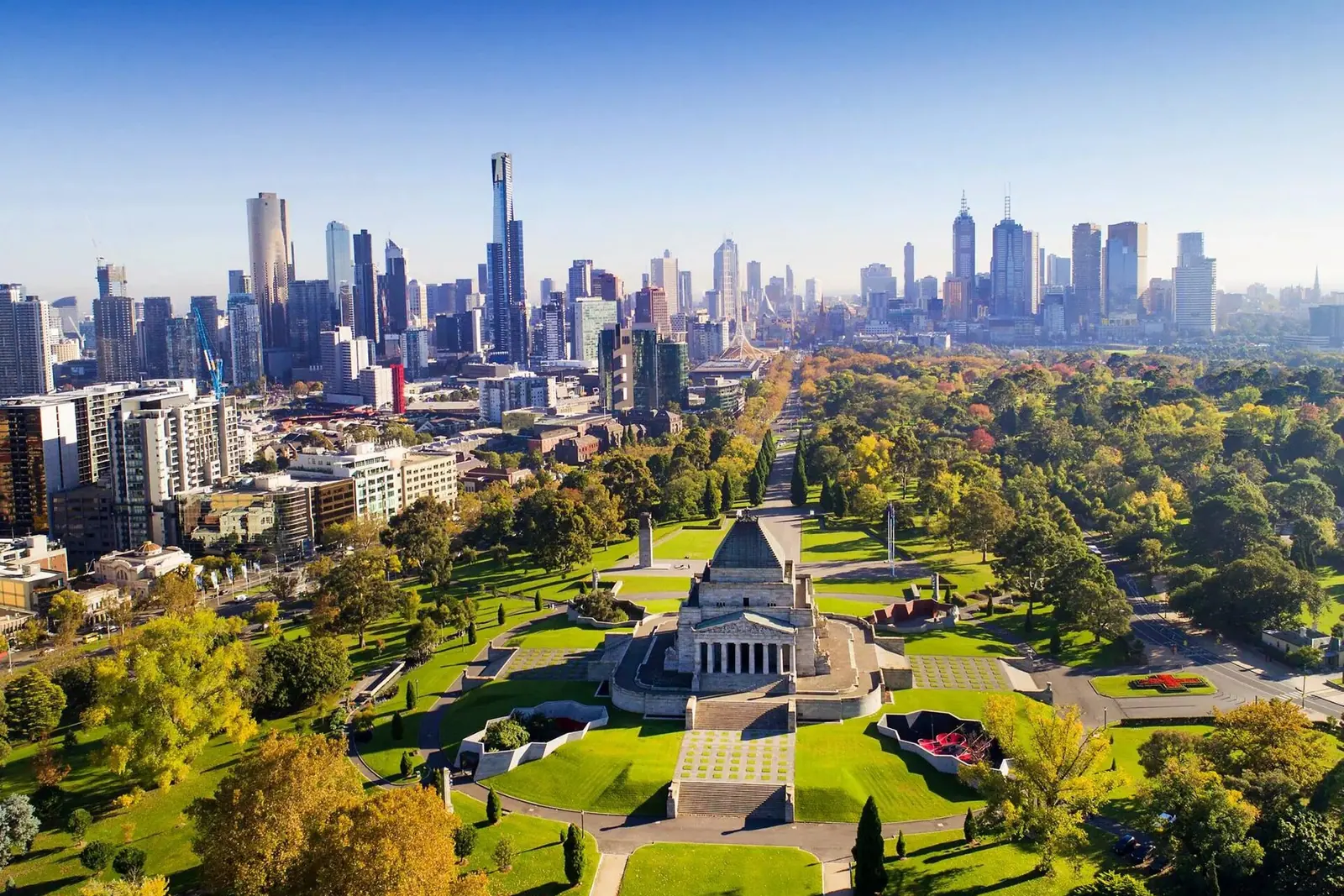
A three-and-a-half-hour flight south brings you to Melbourne, a city that rewards wandering more than sightseeing. Start in the grid of laneways off Flinders Street, where Hosier Lane's ever-changing street art draws a steady crowd, then walk the few blocks to Federation Square and the Royal Botanic Gardens, widely regarded as among the finest in the southern hemisphere. Queen Victoria Market, running since 1878, is the place for a long breakfast, local cheese and souvenirs that are not fridge magnets.
For a bird's-eye view, the Eureka Skydeck on the Southbank puts the whole bay and the ranges beyond in one sweep. Sports fans can tour the Melbourne Cricket Ground, and the National Gallery of Victoria holds the country's most significant art collection with free general admission. If you have an extra day in hand, the Great Ocean Road is best done as an overnight: the Twelve Apostles sea stacks, Loch Ard Gorge and the Otway rainforest are around three hours' drive west, and rushing it as a day trip means six hours in a coach.
If time is tighter, swap Melbourne for a final Sydney day and take the train to the Blue Mountains instead — you will see the Three Sisters, ride the steepest passenger railway in the world at Scenic World, and be back in the city for dinner. Either way, keep your last night near the airport if your international flight leaves before 10am; Australian international terminals are separate buildings from domestic ones, and transfers between them can take 20 minutes by shuttle.
Practical Tips for a One-Week Australian Flight Itinerary
Four flights in seven days sounds frantic, but two of them are under three hours and every route connects to a small, efficient airport. Book the long international legs into Sydney and out of Melbourne (or vice versa) to avoid backtracking, and book all domestic sectors on a single ticket where possible so that a delay on one leg is the airline's problem, not yours. If you are self-connecting, never leave less than three hours between flights at Sydney or Melbourne.
Packing is dictated by three climates in one week: temperate city weather, desert heat and tropical humidity. Layers, a wide-brimmed hat, reef-safe sunscreen and sturdy walking shoes cover almost everything. Australia's UV index is extreme even on overcast days — sunburn here happens in 15 minutes — so reapply sunscreen every two hours and carry a refillable water bottle. Humidity in Cairns will make you want quick-dry clothing, while Uluru's dry heat means a light long-sleeved shirt for sun protection.
Finally, respect the distances and the seasons. Do not book Uluru for less than two nights, and do not attempt the reef and the rainforest on the same day. Factor in that Australia has three main time zones plus daylight saving quirks, which can make a 7am flight feel like a 5am one when you cross from Queensland into South Australia. Most visitors need a visa or electronic travel authority arranged before departure, and travel insurance that covers domestic flight changes is worth every cent on a tightly scheduled week like this.
Frequently asked questions
How many domestic flights do I need for a one-week Australia itinerary?
Three or four is the practical minimum. A typical week uses Sydney to Yulara (Uluru), Yulara to Cairns, and Cairns to Melbourne — all between two and four hours. That gives you two days in Sydney, two in the Red Centre, two in tropical Queensland and a final day in Melbourne, without spending whole days in transit.
What is the best time of year to fly this route?
April, May, September and October are ideal. The Red Centre is warm rather than scorching, the reef is clear and calm before the wet season, and Sydney and Melbourne are mild. Avoid January if you can — Uluru regularly tops 40°C and Cairns is in the middle of its tropical downpours. July is superb at Uluru but cool and changeable in the southern cities.
Can I combine Uluru and the Great Barrier Reef in a single week?
Yes, and flying is the only realistic way. A direct seasonal service links Yulara with Cairns in about two and a half hours; outside that season you will connect through Alice Springs or Brisbane and should allow a full travel day. Book both sectors early, as this is one of the most popular domestic combinations in the country.
Is two nights at Uluru enough?
Two nights is the minimum and works well: arrive early afternoon, catch sunset at a viewing area, then spend the next day on the 10.6-kilometre base walk and an afternoon at Kata Tjuta before flying out. Three nights lets you add a sunrise viewing, the cultural centre at a relaxed pace and the Valley of the Winds walk without rushing.
What should I know about luggage on Australian domestic flights?
Most budget fares include only a 7-kilogram carry-on, with checked allowances of 20 to 23 kilograms sold as an add-on. Buy the baggage at the time of booking rather than at the airport, where it costs considerably more. Liquids, aerosols and gels are generally fine on domestic sectors, but the rules tighten again if you connect to an international flight.
Do I need a visa to visit Australia?
Most visitors need either an electronic travel authority or a visitor visa arranged online before departure, and airlines will check it at check-in. Apply well ahead of your trip, and carry a digital and printed copy. Entry requirements vary by nationality, so confirm your specific situation before booking flights.
Plan it — flights in Australia
Live search, booked directly with trusted providers.
Sort the rest of your trip
Everything for Australia, in one place
Stay in Australia
Hotels, guesthouses and apartments — compared in one search.
Search hotels
Transfer in Australia
Private driver waiting on arrival — no queues, no surprises.
Book a transfer
Travel insurance
Medical cover, delays and lost baggage — sorted before you go.
Get covered