Armenia packs an unreasonable amount into a country you can cross in a day: a capital built from volcanic tuff, monasteries carved into cliffs, a mountain-ringed lake at 1,900 metres and a cable car that floats over a gorge. This seven-day route starts at the airport outside Yerevan and spirals outward, so you see the icons first and the wild edges last.
Landing in Yerevan: Flights, Arrival and Your First Evening
Nearly every trip to Armenia begins at Zvartnots International Airport, about 12 kilometres west of central Yerevan on the road toward Vagharshapat. The terminal is compact and easy to navigate, and because many European and Gulf connections land in the small hours, it is worth deciding in advance how you will reach your bed. Metered taxis and pre-booked transfers take roughly 20 to 30 minutes into the centre depending on traffic; a public bus and minibus also run the same corridor for a fraction of the cost, though they stop running overnight. Change a small amount of cash into Armenian drams at the airport and leave the rest for the better rates in town.
Once you have slept, resist the urge to leave the city immediately. Yerevan rewards a slow first evening. Walk to Republic Square just before sunset, when the tuff facades turn honey-pink and the musical fountains begin their nightly performance, then drift up Northern Avenue with everyone else — families, teenagers, couples — because the evening promenade is genuinely the city's living room. If you have arrived on a red-eye, keep day one deliberately gentle: a long lunch, a wander, an early night.
Timing matters more than most guides admit. Late April through June is close to perfect, with green hills and mild days; September and October are arguably even better, with grape harvests in the Areni wine country and clear views of Mount Ararat. July and August push Yerevan past 35°C, and the high ground becomes a refuge rather than a bonus. Winter is cold and snowy but beautiful, with skiing above Tsaghkadzor and monastery courtyards dusted white.
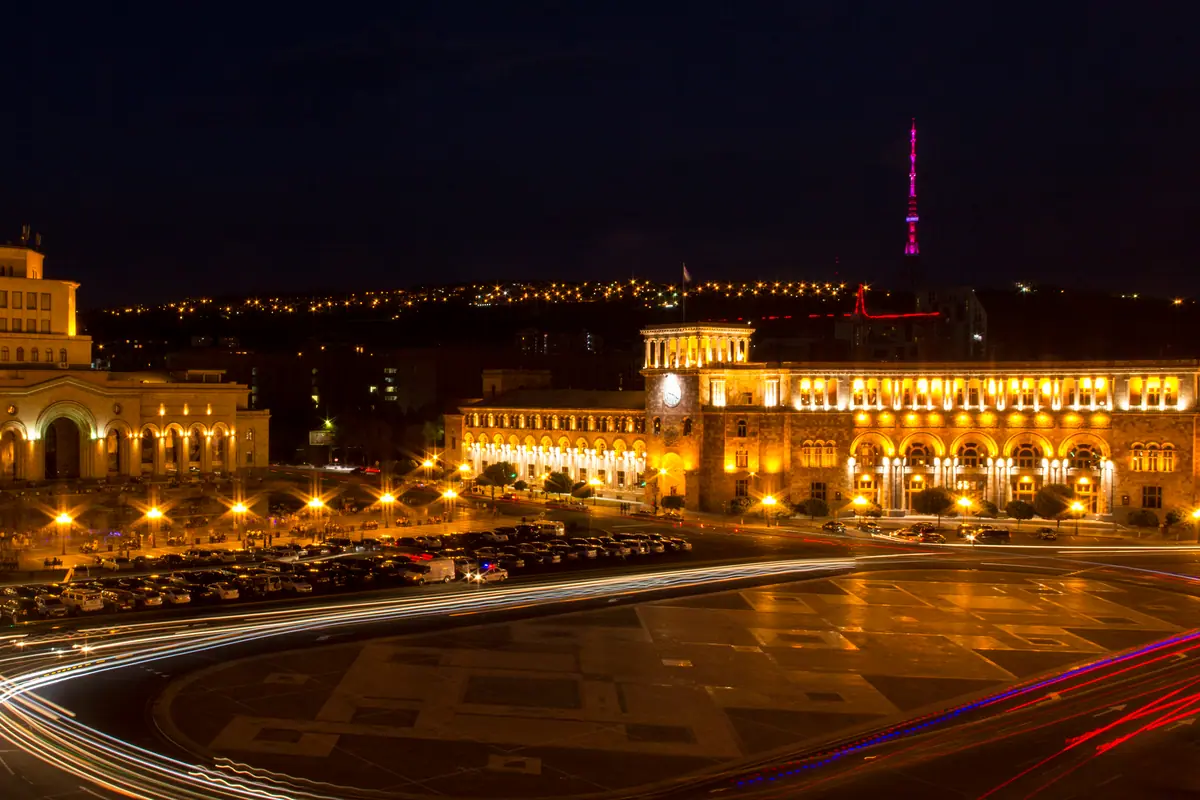
Days 1–2: Yerevan on Foot — the Cascade, Matenadaran and the Pink City
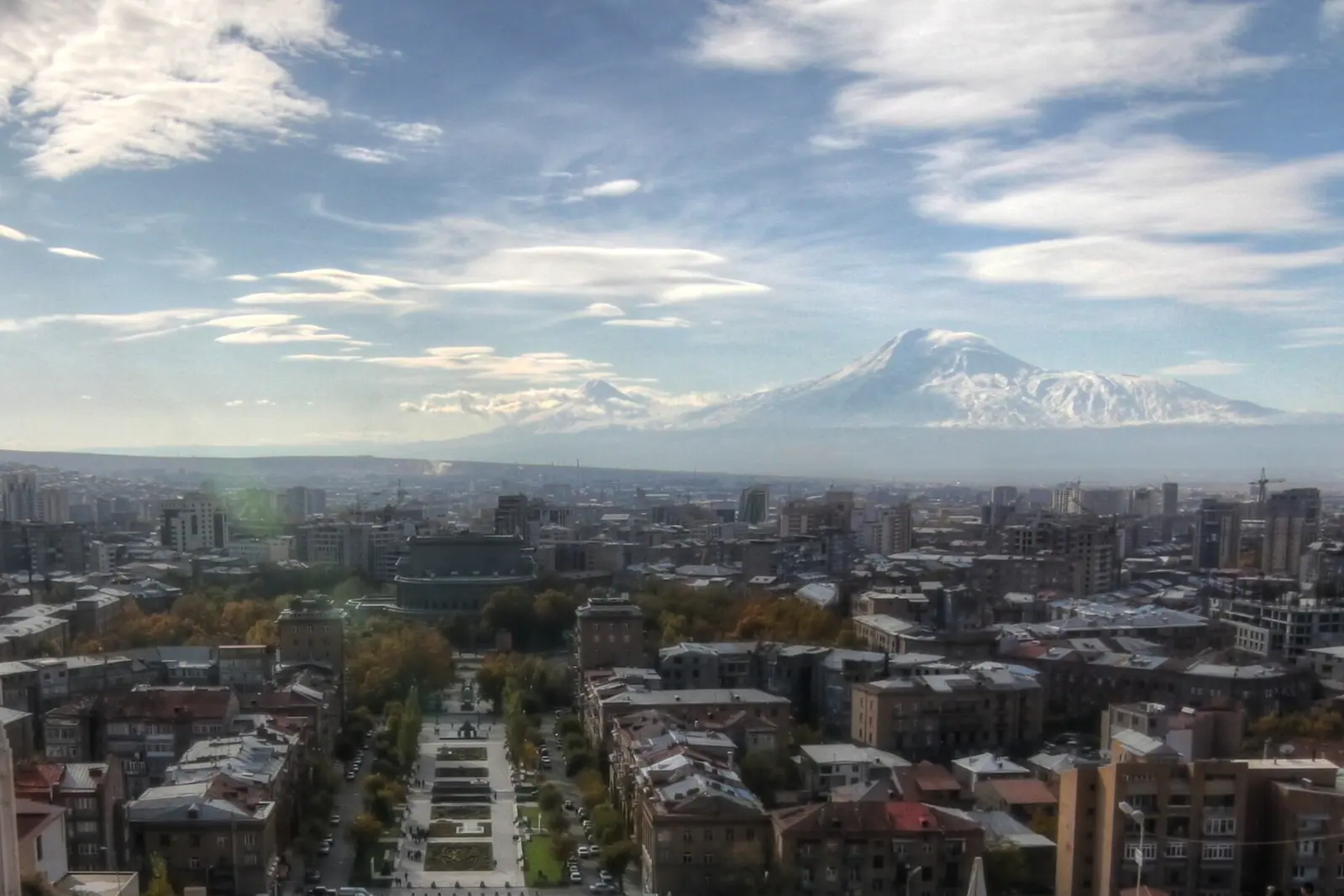
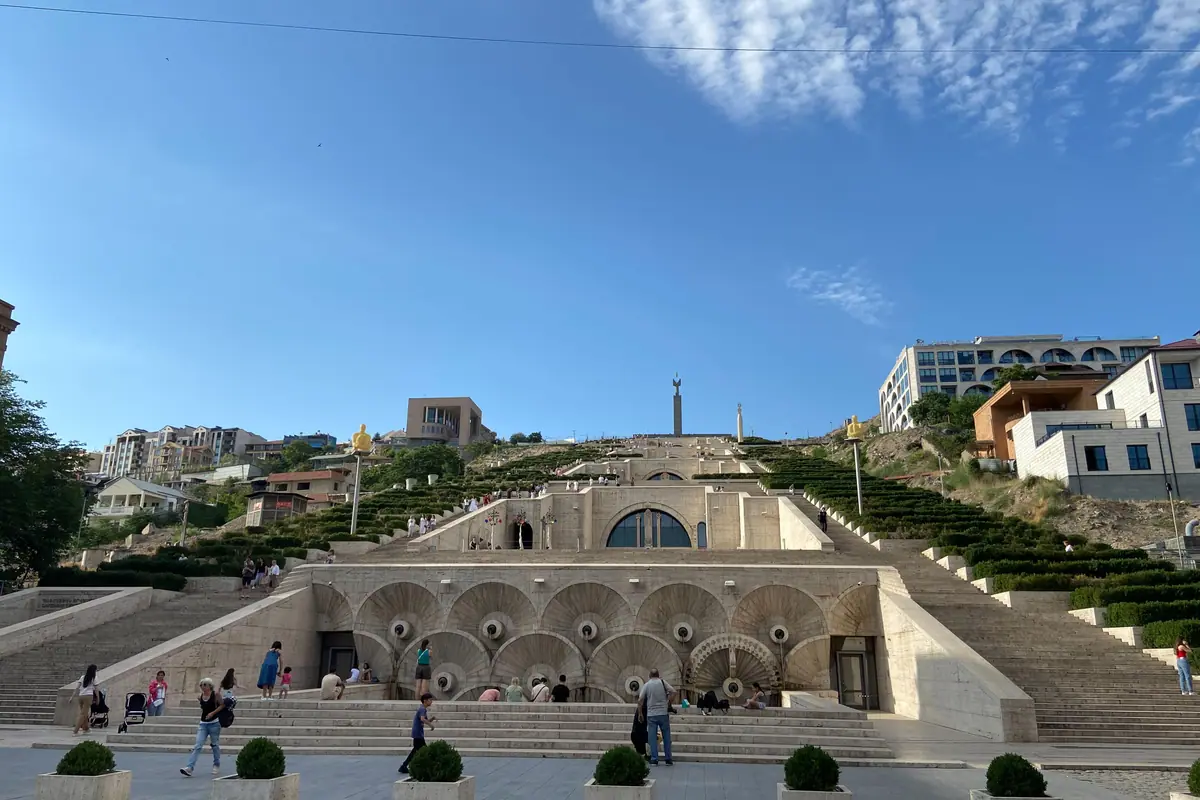
Yerevan is one of the most walkable capitals in the region, and two full days lets you cover it properly. Start at the Cascade Complex, the giant limestone stairway that climbs the hillside above the city centre, its terraces filled with sculpture and its upper levels offering the best free panorama of Yerevan with snowy Ararat hovering behind the rooftops. From there, walk to the Matenadaran, the manuscript repository whose collection of illuminated Armenian texts is one of the great cultural treasures of the Caucasus — the building itself, guarded by statues of scholars, is worth the walk even if you only browse the ground floor.
Next, head for Tsitsernakaberd, the hilltop memorial and museum commemorating the Armenian Genocide. It is sobering, deeply important to Armenians, and best visited in the morning when it is quiet; the eternal flame and the leaning slab of the memorial make a strong impression before you have any other context for the country's history. Round off the day with the Monument to David of Sassoun at the railway station square, or with an evening in the cafés around Saryan Street, where Armenian wine bars have multiplied in recent years.
Leave a half-day for the markets. The Vernissage open-air market near Republic Square on weekends is a sprawling jumble of carpets, silverwork, obsidian, carved wood and Soviet-era curios — go early and expect to bargain. In the covered GUM market, the food hall is the real draw: strings of sujukh (walnut sweets), dried fruit, mountain honey, herbs and a bewildering array of cheeses. End at the Opera House gardens, where chess players and teenagers occupy the same benches, and you will have seen the city as locals use it.
Day 3: Garni Temple, Geghard Monastery and the Symphony of Stones
Day three is the classic day trip east of Yerevan, and it deserves a full day rather than a rushed half. Gampr start with Garni, the only standing Greco-Roman colonnaded temple in Armenia, built in the first century AD on a basalt plateau above the Azat River gorge and dedicated to a sun deity. Twenty-four columns, a stepped podium and a view straight down into the valley make it an unexpectedly Mediterranean sight in a country of domed churches. Nearby, the remains of a Roman bathhouse still carry a mosaic floor inscription reading "we worked without payment" — a joke that has survived nearly two millennia.
Below Garni, a short walk or drive leads to the Symphony of Stones, where the canyon wall has fractured into hundreds of near-perfect hexagonal basalt columns that look almost organ-pipe symmetrical. It is best in late afternoon light, and the walk down through the gorge is steep enough to warrant proper shoes. If you are driving yourself, the roads are good; otherwise a taxi or a day tour from Yerevan handles both sites comfortably.
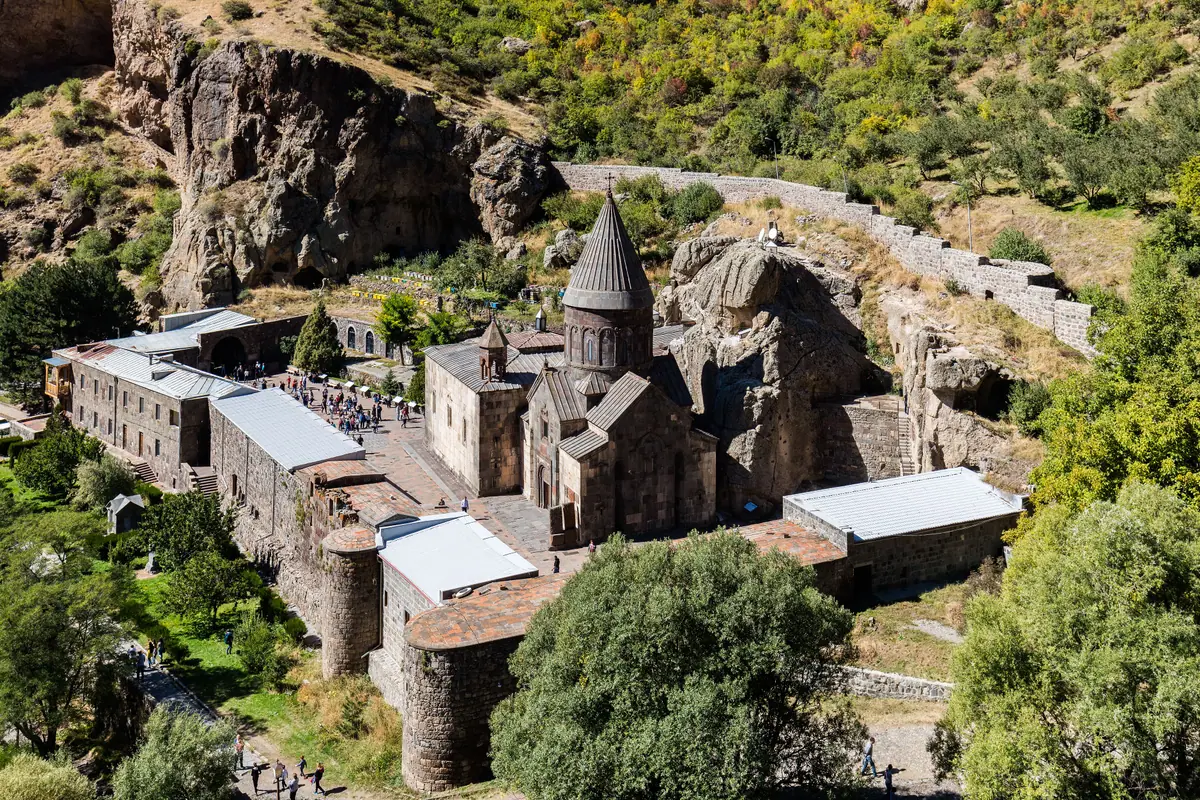
Then comes Geghard Monastery, a UNESCO World Heritage site and the spiritual highlight of the region. Partly carved directly into the cliff face, it was founded in the fourth century and rebuilt over centuries, and its main chapel is hewn from living rock so that light falls through a single oculus onto the stone floor. The acoustics are extraordinary — if you are lucky, a choir will be singing when you arrive. For centuries the monastery safeguarded a relic said to be the lance that pierced Christ, which is why it is called Geghardavank, the Monastery of the Spear. Allow two hours to sit with it rather than photograph and leave.
Day 4: Lake Sevan, Sevanavank and the Forests of Dilijan
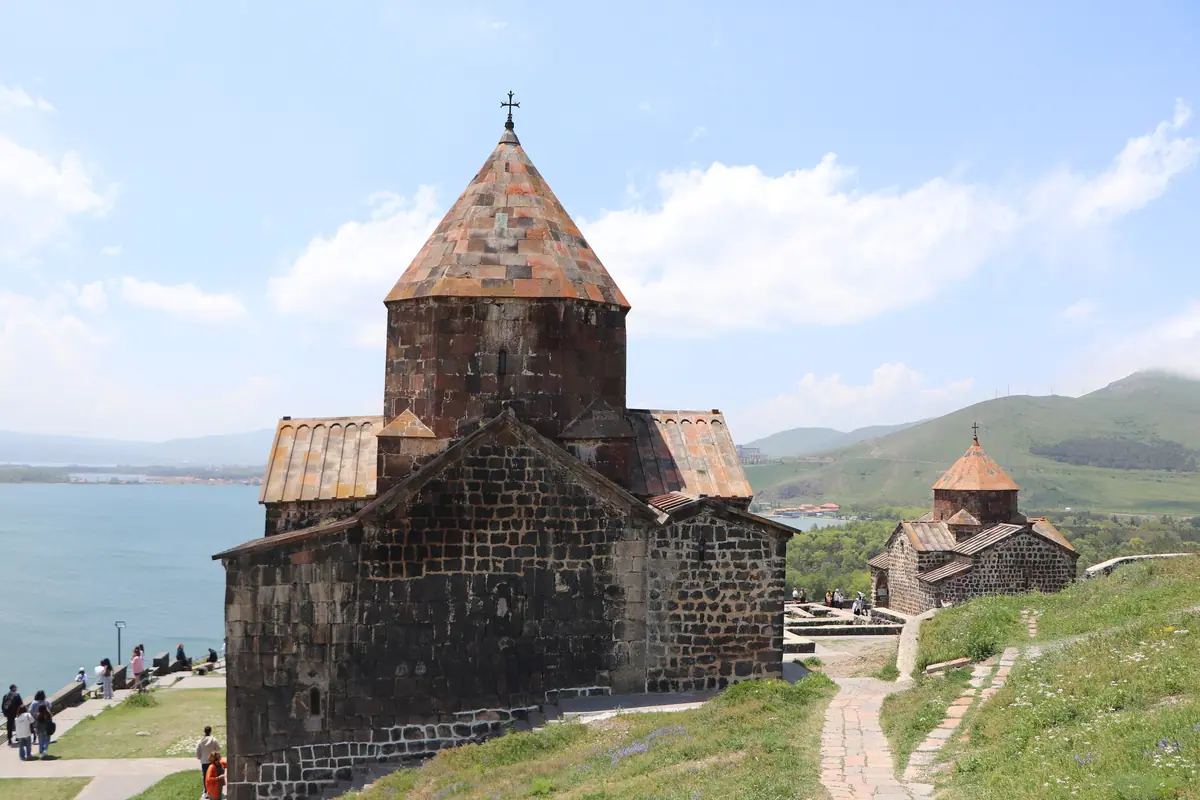
Head northeast on day four for Lake Sevan, one of the largest high-altitude freshwater lakes in the world, sitting at roughly 1,900 metres and changing colour from turquoise to steel grey depending on the wind. The peninsula on the northwestern shore holds Sevanavank, a ninth-century monastery whose black tuff churches stand on a stepped outcrop with water on three sides. Climb the stairs slowly — the altitude is noticeable — and look back across the lake toward the Gegham mountains.
Sevan is also the country's summer playground, and the roadside stalls along the shore sell smoked and grilled ishkhan trout, boiled crayfish, and coffee brewed over gas burners while you wait. In July and August the beaches fill with Yerevan families; in May and September you may have the viewpoints almost to yourself. Either way, eat fish by the water — it is one of the most distinctly Armenian meals you will have.
Continue west into Dilijan National Park, often nicknamed the Armenian Switzerland for its beech forests, mist and half-timbered houses. The town's Old Town, with its restored Sharambeyan Street of craft workshops, is small but charming, and the surrounding woodland hides two remarkable monasteries: Haghartsin, a complex of churches, a refectory and a giant oak tree, and Goshavank, known for its intricate stone carvings and the khachkar (cross-stone) work of a master sculptor. A night in Dilijan breaks up the driving and gives you the forest at dawn, when the mist sits low in the valleys.
Day 5: Khor Virap, Noravank and the Road South to Tatev
If one image defines a first trip to Armenia, it is the view from Khor Virap: a small monastery on a plain with snowcapped Mount Ararat filling the horizon behind it. The site is where Gregory the Illuminator is said to have been imprisoned in a deep pit for thirteen years before converting the king and, in time, the nation. You can climb down a ladder into the pit itself — narrow, dark and unforgettable. Come early, because the mountain is clearest in the morning and clouds often swallow it by afternoon.
From there, press southeast into Vayots Dzor, a region of red rock and vineyards. Noravank Monastery sits at the end of a narrow gorge whose brick-red cliffs glow in the afternoon sun; its two-storey church with a stone staircase carved into the facade is one of the most photographed buildings in the country. Nearby are the cave complexes of Areni, where evidence of winemaking going back some six thousand years has been uncovered, and the village itself, whose pomegranate-red wines you can taste at small family cellars.
The day ends at Tatev, reached by a long, winding road or by a cable car that glides across the Vorotan gorge — one of the longest reversible aerial tramways in the world, and a ride worth doing for the sensation alone. The monastery complex, founded in the ninth century and rebuilt in the eleventh, clings to a plateau above the gorge and once housed a university. Do not miss the Gavazan, a swinging octagonal column that has survived centuries of earthquakes. Because the drive from Yerevan is long, plan to sleep in Goris or near Tatev rather than returning the same night.
Days 6–7: Echmiadzin, Zvartnots Ruins and a Last Look at the Country
Save the religious heartland for the end, because it sits conveniently between Yerevan and the airport. Vagharshapat — better known as Echmiadzin — is home to Etchmiadzin Cathedral, widely regarded as the oldest cathedral in the world, founded in the early fourth century and still the seat of the Armenian Apostolic Church. The treasury holds relics, vestments and illuminated books, and the surrounding complex includes the churches of St Hripsime and St Gayane, both austere and beautiful, with seventh-century stonework that predates most of Europe's cathedrals.
A few kilometres away stand the ruins of Zvartnots Cathedral, a seventh-century circular church that collapsed in an earthquake and is now a UNESCO-listed field of reconstructed columns with Ararat behind them. It is five minutes from the airport, which makes it an ideal final stop before an evening flight — check opening hours, then leave an hour to wander.
If you have a full extra day instead, choose between two directions. West lies Gyumri, Armenia's second city, with its black-tuff Vartanants Square, the looming Black Fortress and a slow, melancholy charm that feels quite different from Yerevan. North lies the slopes of Mount Aragats, where the tenth-century Amberd fortress sits at over 2,000 metres beside the saghmosavank-style cliff monastery of Saghmosavank and the Alphabet Monument, a row of giant carved letters on the highway. Either makes a satisfying last chapter before you head back to Zvartnots — ideally with a bag of sujukh and a bottle of Areni red in your luggage.
Frequently asked questions
How do I get from Zvartnots Airport into central Yerevan?
The airport sits about 12 kilometres west of the centre. A taxi or pre-arranged transfer takes 20–30 minutes depending on traffic and is the simplest option, especially for late-night arrivals. A public bus and minibus also run between the airport and the city for a few hundred drams, but services thin out overnight, so have a backup plan if your flight lands at 3am.
What is the best time of year for a one-week Armenia itinerary?
May, June, September and October are the sweet spots: mild temperatures, green or golden landscapes, and good visibility of Mount Ararat. July and August are hot in Yerevan — often above 35°C — though Lake Sevan and Dilijan stay pleasant. Winter is cold and snowy, with skiing above Tsaghkadzor, but some mountain roads become difficult.
Do I need a car to follow this itinerary?
Not necessarily. Yerevan's centre is walkable, and day tours or private drivers are easy to arrange for Garni, Geghard and Lake Sevan. The southern leg to Khor Virap, Noravank and Tatev is the hardest to do without a vehicle, so most travellers join a tour or hire a driver for that stretch — it also lets you enjoy the Areni wine tastings.
How many days do you need for Armenia?
Seven days is a solid first visit: two days in Yerevan, a day each for Garni and Geghard and for Lake Sevan and Dilijan, a long day or overnight for the south, and a final morning in Echmiadzin. If you can stretch to ten days, add Gyumri, the Amberd fortress on Mount Aragats, and an overnight in Goris to slow the Tatev day down.
Do I need a visa to visit Armenia?
Many nationalities, including most EU countries, the UK, the US, Canada and Australia, can enter visa-free for short tourist stays. Others can apply for an e-visa online before departure or obtain one on arrival. Rules change from time to time, so confirm your own status with the nearest Armenian embassy or consulate before booking flights.
Sort the rest of your trip
Everything for Armenia, in one place
Stay in Armenia
Hotels, guesthouses and apartments — compared in one search.
Search hotels
Transfer in Armenia
Private driver waiting on arrival — no queues, no surprises.
Book a transfer
Travel insurance
Medical cover, delays and lost baggage — sorted before you go.
Get covered