Yemen is not a place you drift into on a whim; it is a place you plan for, and the planning is half the adventure. Between the gingerbread tower houses of Sana'a and the dragon's blood forests of Socotra, the country offers some of the most otherworldly scenery and architecture on earth — reached through a handful of small hotels, restored guesthouses and desert camps.
Before You Book: How Travel to Yemen Actually Works
Large parts of Yemen remain under the most severe travel warnings, several regions are effectively closed, and turn-up-and-go tourism is not realistic. The trips that do happen are arranged through licensed Yemeni operators who secure permits, internal flights and local clearances a solo traveller simply cannot obtain. Expect fixed routes, a driver-guide, and paperwork measured in weeks rather than days.
Timing shapes everything. The comfortable window runs roughly October to April, when the highlands are cool and clear and the Red Sea coast is merely warm. Sana'a sits near 2,200 metres, so December and January nights can approach freezing — pack a real jacket even though you are in Arabia. Socotra follows its own calendar: best from late January to May and again in September and October, with the summer monsoon shutting down flights and camps from June to August.
As for beds, there is no forest of international chains. Instead you find small city hotels, family-run guesthouses in restored tower houses, and simple desert and island camps. Bring clean, untorn foreign notes plus local currency, and expect power cuts, patchy Wi-Fi and the occasional cold shower as part of the bargain.
Sana'a: Sleeping Inside the Old City's Tower Houses
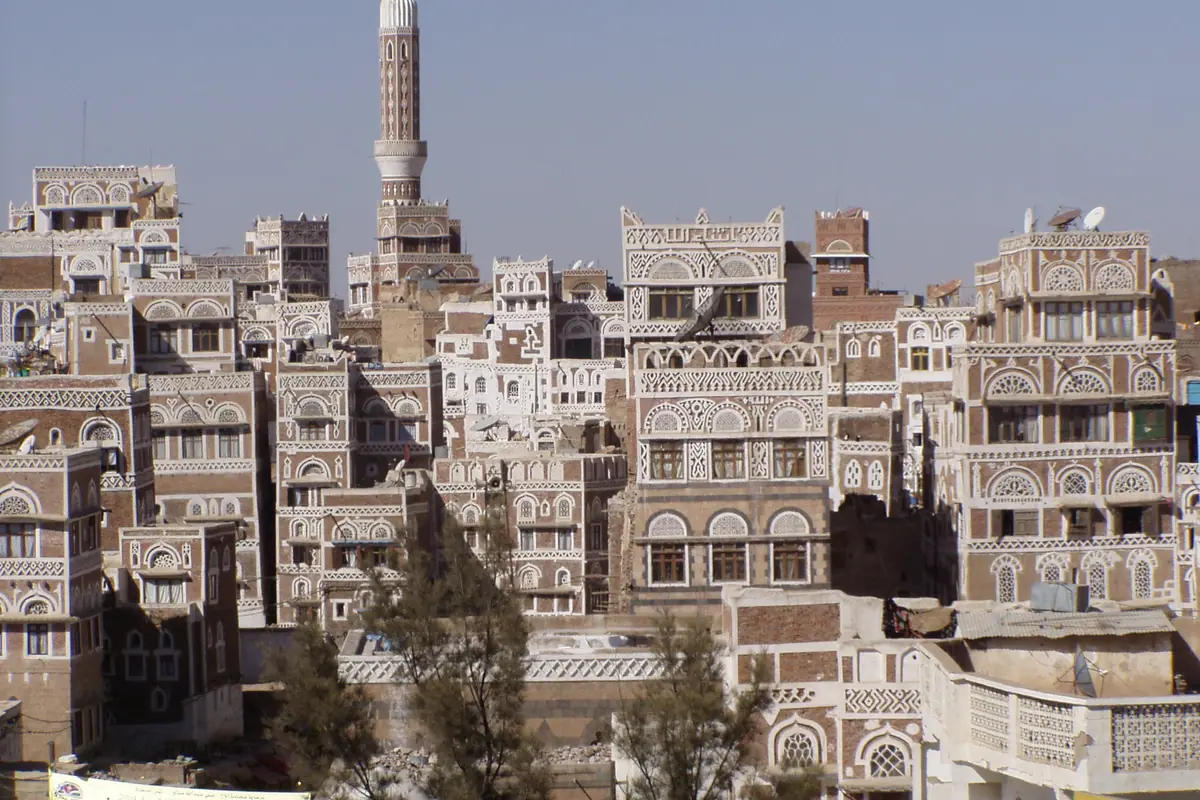
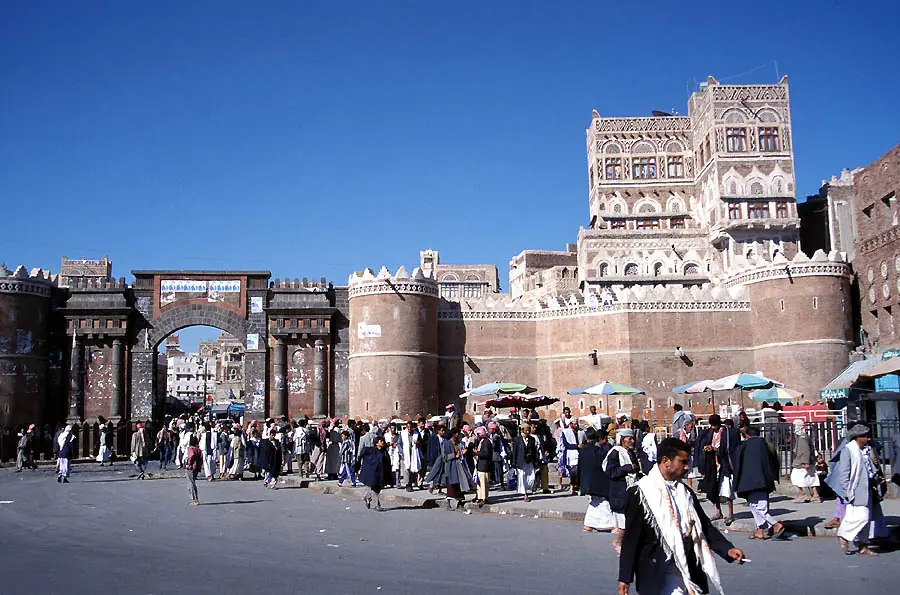
The Old City of Sana'a is why most travellers come, and staying inside its walls is worth rearranging an itinerary for. Walk through Bab al-Yemen, the great southern gate, and you enter a labyrinth of packed-earth towers trimmed with white gypsum friezes and arched qamariya windows — alabaster and stained glass that scatter coloured light across the rooms within. The district holds World Heritage status, and its dusk skyline of minarets and towers is unforgettable.
Guesthouses here occupy restored multi-storey houses with thick walls that hold back the heat, low diwan seating and rooftop terraces where breakfast arrives with honey, flatbread and strong coffee. Rooms are simple and often share bathrooms; the compensation is atmosphere no new build can fake. Standards vary widely, so confirm exactly what is included before you commit.
Nearby sights fill any stay: the Great Mosque of Sana'a, whose foundations reach back to the earliest decades of Islam; the spice and textile stalls of Souq al-Milh; the old hammams; and, on the city's edge, the vast white sweep of Al Saleh Mosque. Some museums and monuments close at short notice, so ask locally the day before rather than trusting a printed plan.
Beyond the Capital: Dar al-Hajar, Wadi Dhar and Marib
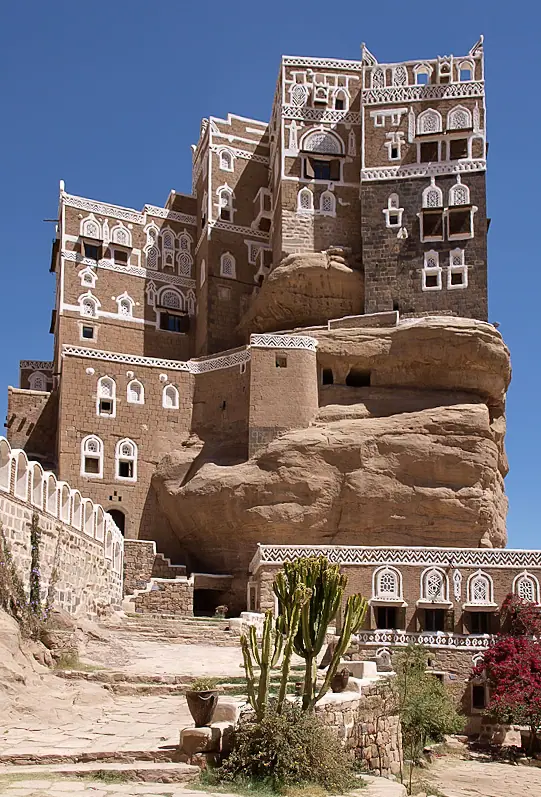
A short drive northwest of Sana'a drops you into Wadi Dhar, a green cleft of terraced vineyards and orchards. At its heart rises Dar al-Hajar, the Rock Palace — a many-storeyed white-and-ochre fantasy built directly on a natural rock pinnacle. It is the country's most photographed building, and the climb to its roof terrace opens a view across the whole valley. The terraces and small villages around Hababa make an easy half day.
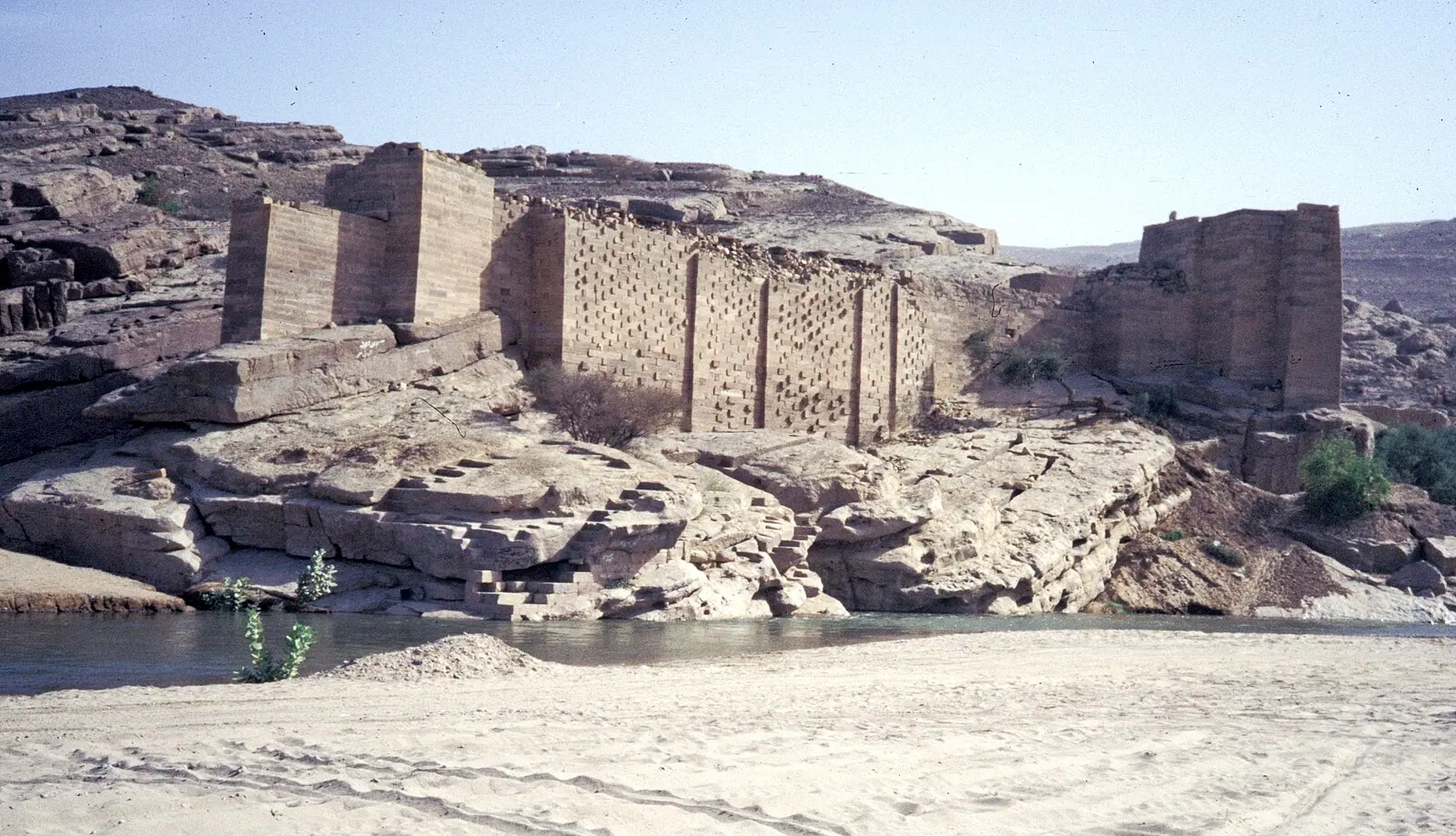
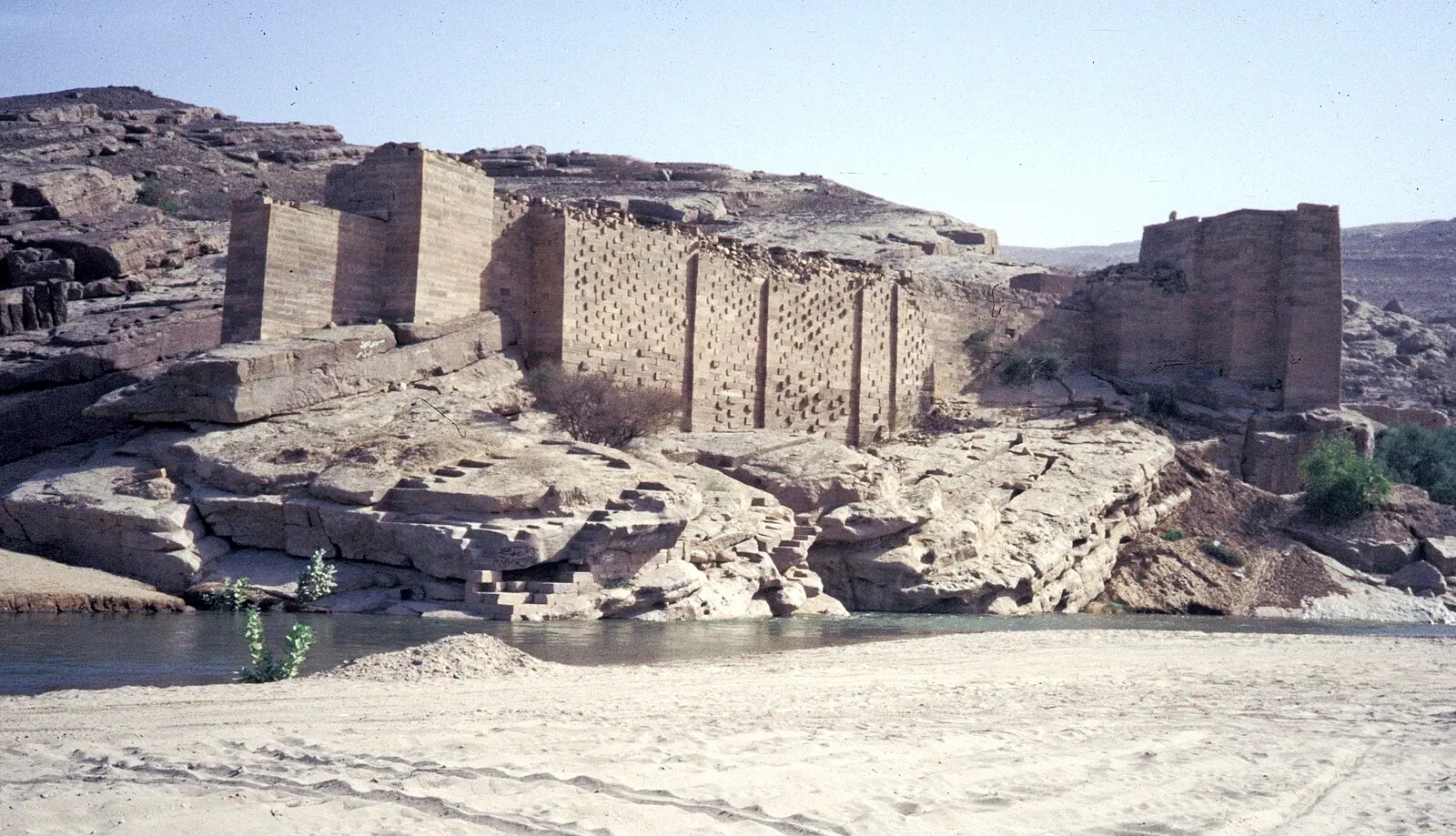
Further east, roughly three hours across the highlands, sits Marib, heartland of the ancient Sabaean kingdom. Here you can walk the remains of the Great Dam of Marib, an engineering marvel of the ancient world, and visit the Barran Temple, often called the Throne of Bilqis, its massive pillars standing alone in the desert. Local lodges here are functional rather than plush — generator power, simple kitchens — but they put you within reach of ruins most of the world has never heard of.
The Hadramaut: Shibam, Seiyun and Tarim
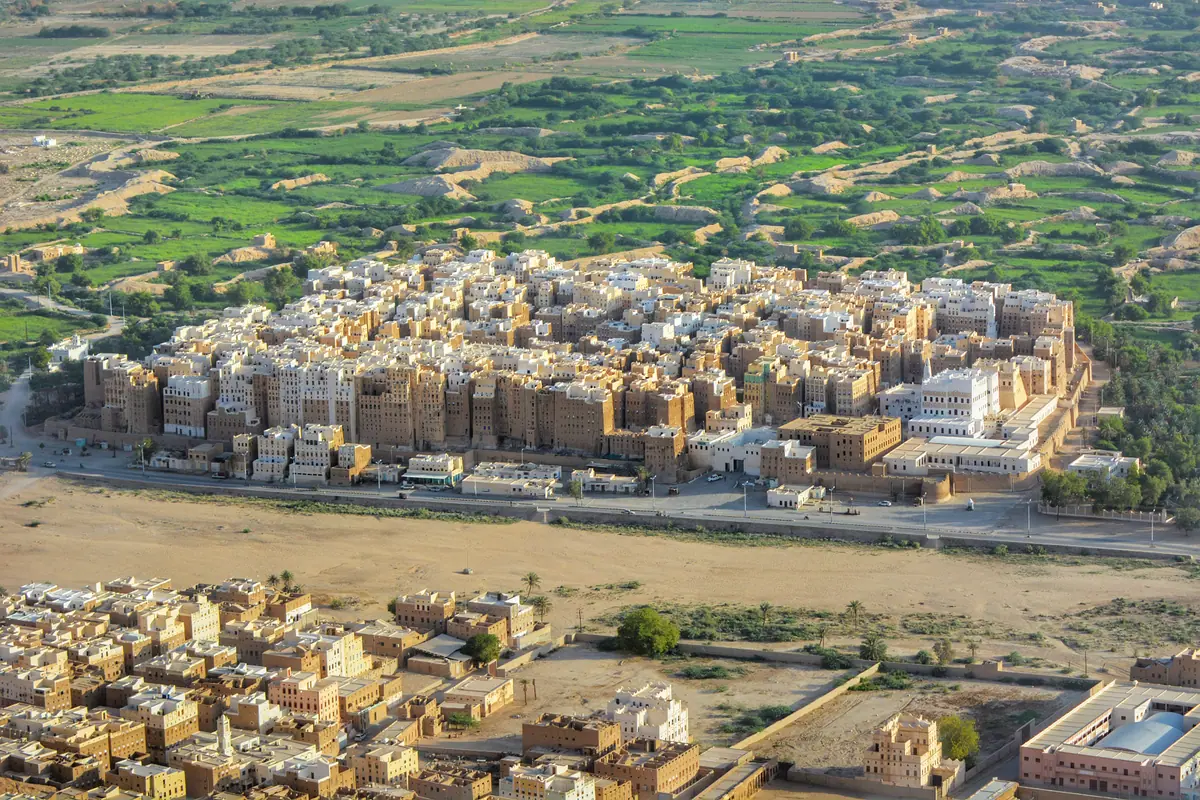
Deep in the eastern valley of the Hadramaut, Shibam rises from the palm groves like a mirage: hundreds of mud-brick towers packed shoulder to shoulder, some seven or eight storeys high, making it the world's oldest skyscraper city and a World Heritage Site. Guesthouses inside and just outside the walls are basic but unforgettable, with rooftop views over the rooftops and the sound of the wadi waking below.
In neighbouring Seiyun, the white, wedding-cake Sultan Al Kathiri Palace holds a museum of regional history and deserves a morning. Tarim, half an hour on, is a town of scholars and minarets, its skyline dominated by the mud-brick minaret of Al-Muhdhar Mosque, which climbs more than fifty metres. The surrounding Wadi Dawan is a ribbon of date palms, honey farms and mud palaces, and the late-afternoon light there is extraordinary.
Hotels in this region are small, locally run and usually arranged as part of a package — firm beds, ceiling fans, and generous Hadrami cooking of rice, spiced lamb and honey with bread. Cash is essential; card machines are rare outside the few larger hotels.
Aden and the Southern Coast
Aden feels like a different country. The old town sits inside the crater of an extinct volcano, its lanes squeezed between basalt walls with the sea glittering at the end of every alley. Above it stands Sira Fortress, guarding the harbour mouth, while the crumbling Tanks of Aden — ancient rainwater cisterns cut into rock — offer one of the finest panoramas over the city and bay.
Accommodation in Aden is the most conventional in Yemen: mid-range city hotels with air conditioning, reliable generators, sea views and restaurants, clustered around Crater, Khormaksar and the corniche. It makes a comfortable base for beaches, fish markets and the old clock tower. Further east, breezy Mukalla on the Arabian Sea is gentler still, its corniche backed by whitewashed houses and the old Sultan's palace overlooking the port — a natural gateway to the Hadramaut coast.
Socotra: Eco-Camps and the Dragon's Blood Forest
Socotra is the trip people dream about for years. Cut off from the mainland for millions of years, the island holds forests of dragon's blood trees — umbrella-shaped, bleeding red sap — alongside cucumber trees and bottle trees found nowhere else on earth. The Diksam Plateau and the Homhil protected area are the classic places to see them, often in near-total silence.
There is nothing resembling a resort. Hadibo, the main town, has simple guesthouses with fans and cold water, while the best nights are spent in eco-camps at Detwah Lagoon, where white sand curves around a turquoise inlet, and at Qalansiyah near the western beaches. Camps supply mattresses, blankets and meals cooked over fire; you bring a torch, water treatment, sun protection and patience.
Reaching the island usually means a chartered flight on a fixed seasonal schedule, so dates are locked in far ahead and itineraries are guided. April is the sweet spot — warm days, calm seas for boat trips, and green hills from winter rain. Treat Socotra as camping with a spectacular view rather than a holiday with room service.
Frequently asked questions
Is it safe to travel to Yemen?
Most of the country sits under the highest level of official travel warning, and several regions are effectively closed. Tourism is limited to specific areas reached through licensed operators, and conditions can shift quickly. Check your own government's current advice, and if you go, travel only with a reputable local operator that provides permits, drivers and up-to-date guidance.
What is the best time of year to visit Yemen?
October to April suits the highlands and mainland, with crisp days and cold Sana'a nights in December and January. Socotra is best from late January to May and again in September and October; the June-to-August monsoon closes flights and camps. Coastal Aden and Mukalla stay hot and humid year-round.
Do I need a visa, and how do I get one?
Yes, and it must be arranged before travel, typically sponsored through a licensed Yemeni tour operator who submits your itinerary and receives the approval on your behalf. Applications without operator sponsorship are rarely successful. Carry printed copies of your visa, permits and passport at all times.
What kinds of hotels can I expect in Yemen?
Small independent hotels and family-run guesthouses dominate: restored tower houses in Sana'a, mud-brick stays in Shibam and Tarim, mid-range air-conditioned city hotels in Aden, simple lodges in Marib, and tented eco-camps on Socotra. International chains have almost no presence, so book through your operator and pay in cash.
Can I combine Socotra with mainland Yemen in one trip?
Sometimes, but it is complicated. Flights to Socotra run on limited seasonal schedules from a few regional hubs, and mainland access depends on permits and current conditions. Many travellers treat the island and the mainland as two separate journeys, booked in different years.
Sort the rest of your trip
Everything for Yemen, in one place
Transfer in Yemen
Private driver waiting on arrival — no queues, no surprises.
Book a transfer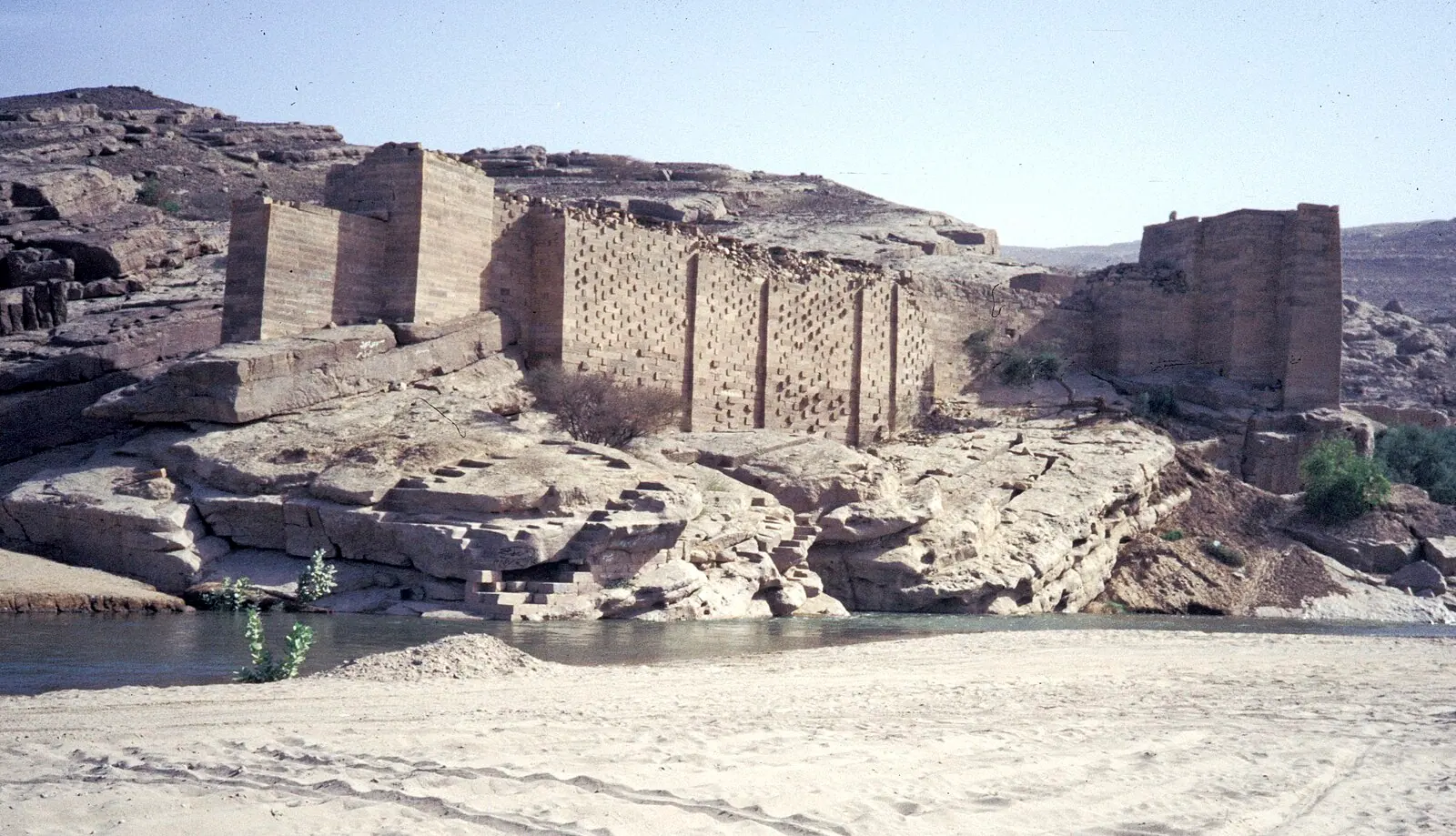
Things to do in Yemen
Skip-the-line tickets, guided tours and standout experiences.
See experiences
Stay online in Yemen
Travel eSIM — data the moment you land, no roaming bills.
Get an eSIM