Yemen is the Arabian Peninsula with its bones showing: honeycomb towers of mud brick, mountainsides combed into coffee terraces, and an island in the Indian Ocean where the trees bleed red resin. Travelling here means being a guest in the oldest sense of the word, and doing it well takes a licensed local guide, a flexible itinerary and an appetite for fenugreek foam at breakfast.
Yemen at a Glance: When to Go and How Travel Actually Works
Yemen folds four landscapes into one country. The western highlands rise to cool, thin-aired plateaus around Sana'a and the Haraz mountains, the Tihama plain on the Red Sea simmers far below, the eastern desert opens toward the Empty Quarter, and some 350 kilometres offshore sits the Socotra archipelago with species found nowhere else on earth. The headline sights — the Old City of Sana'a, Shibam and the Wadi Hadramawt, the Sabaean ruins at Marib, and Socotra's dragon's blood trees — are spread across that entire spread, so most meaningful itineraries run ten days to two weeks on the mainland, plus five to seven more if Socotra is included.
It is also a country where travel does not happen casually. Journeys are almost always arranged through a licensed local operator who sponsors the visa, and several regions require additional permits and an accompanying escort. Areas of the north and the border zones are effectively closed to visitors, and the security picture shifts, sometimes quickly. The practical approach is to speak to an operator with current, on-the-ground knowledge first, check your own government's travel advice before booking anything, and treat any itinerary as provisional until you are on the road.
Timing matters enormously. October to April is the sweet spot for the highlands, when Sana'a — sitting above 2,200 metres — serves bright, mild days and genuinely cold nights, and the Hadramawt desert is bearable. Down on the Tihama coast it stays hot and humid most of the year. Socotra has two windows: roughly April to May, when the frankincense trees and desert roses are in bloom and the sea is calm, and September to October, after the summer monsoon has scrubbed the island green. If your visit overlaps Ramadan, expect daytime restaurants to be shuttered and the evenings to be extraordinary, with long communal iftars and streets that come alive after sunset.
Pack for layers above all: a fleece for highland evenings, sun protection for Marib and the coast, a modest wardrobe with long sleeves and a headscarf for women, and sturdy shoes for wadi floors and mud-brick staircases. Cash is essential; card payment outside a handful of city hotels is rare and ATMs are unreliable, so bring enough local currency for the whole trip, plus a head torch and a water filter for camping stretches on Socotra.
Sana'a: Qamariya Windows, Spice Lanes and the Ritual of Saltah
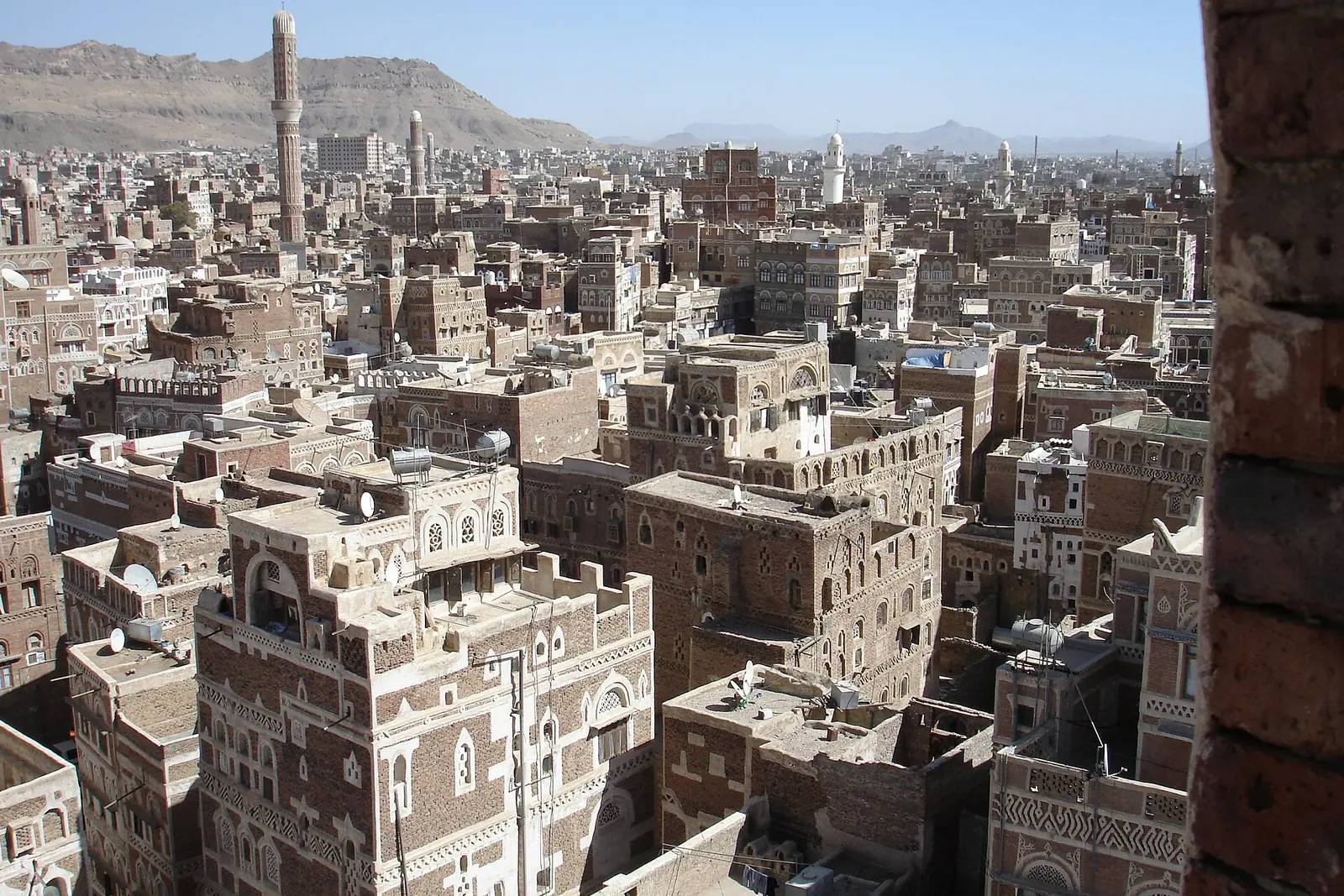
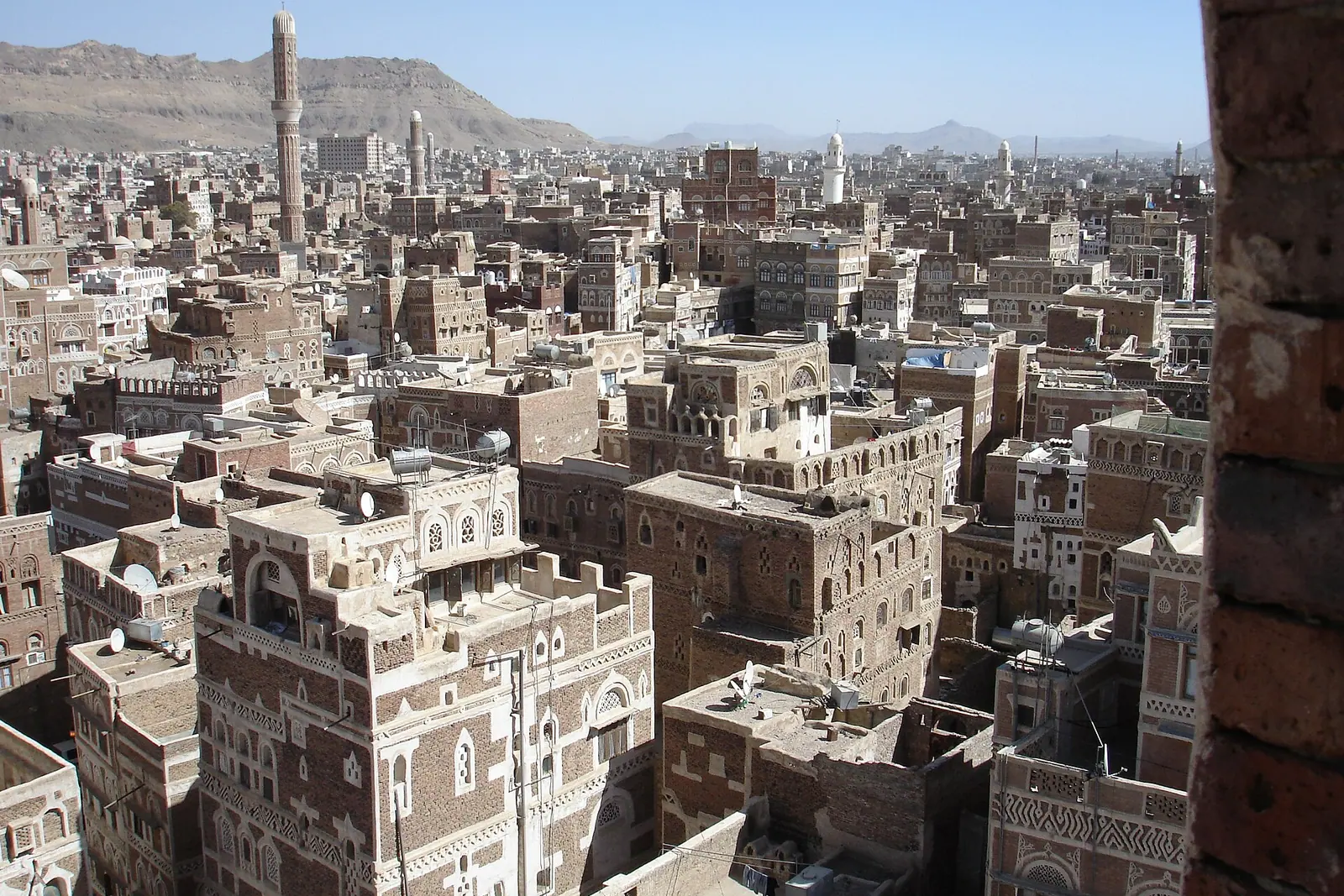
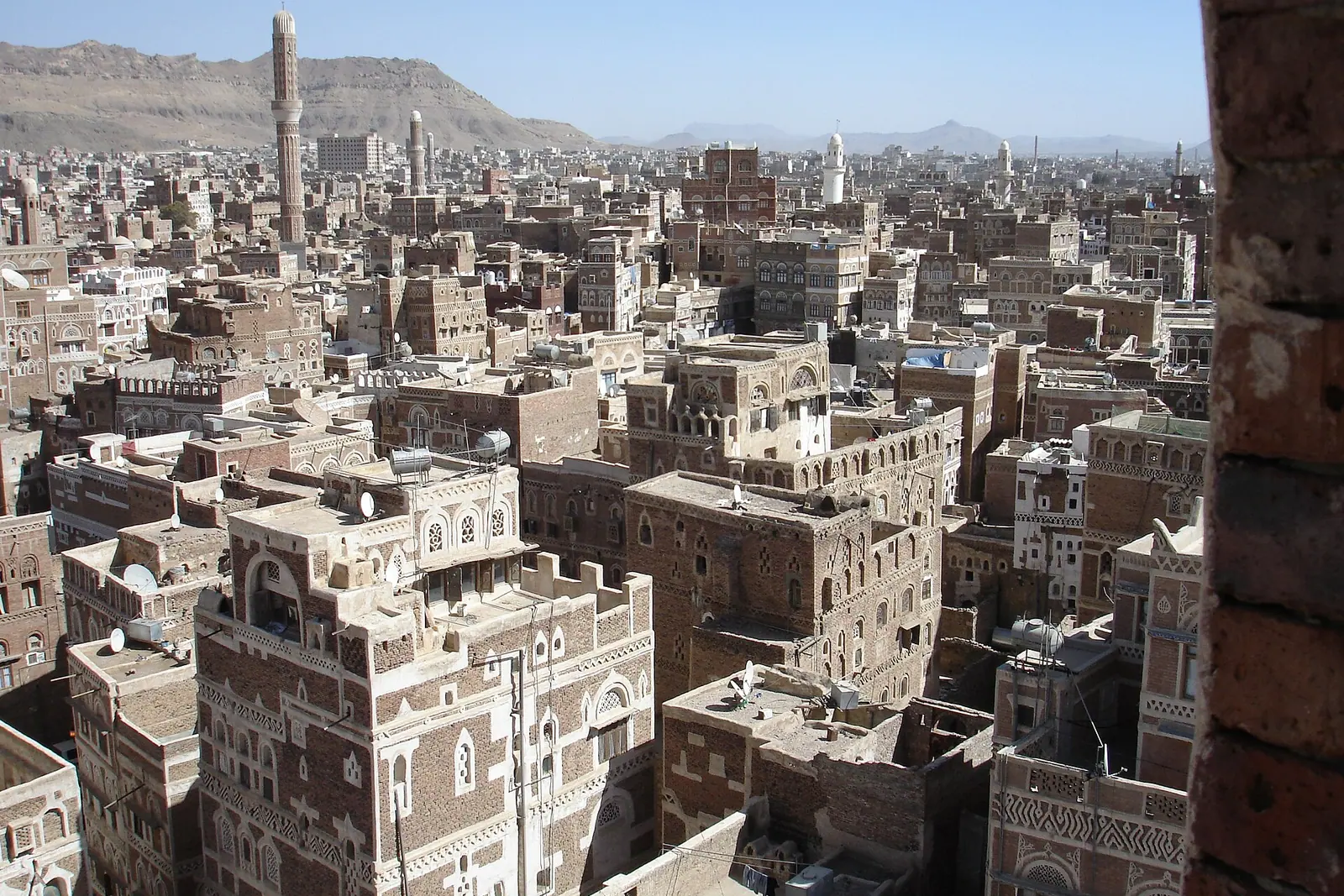
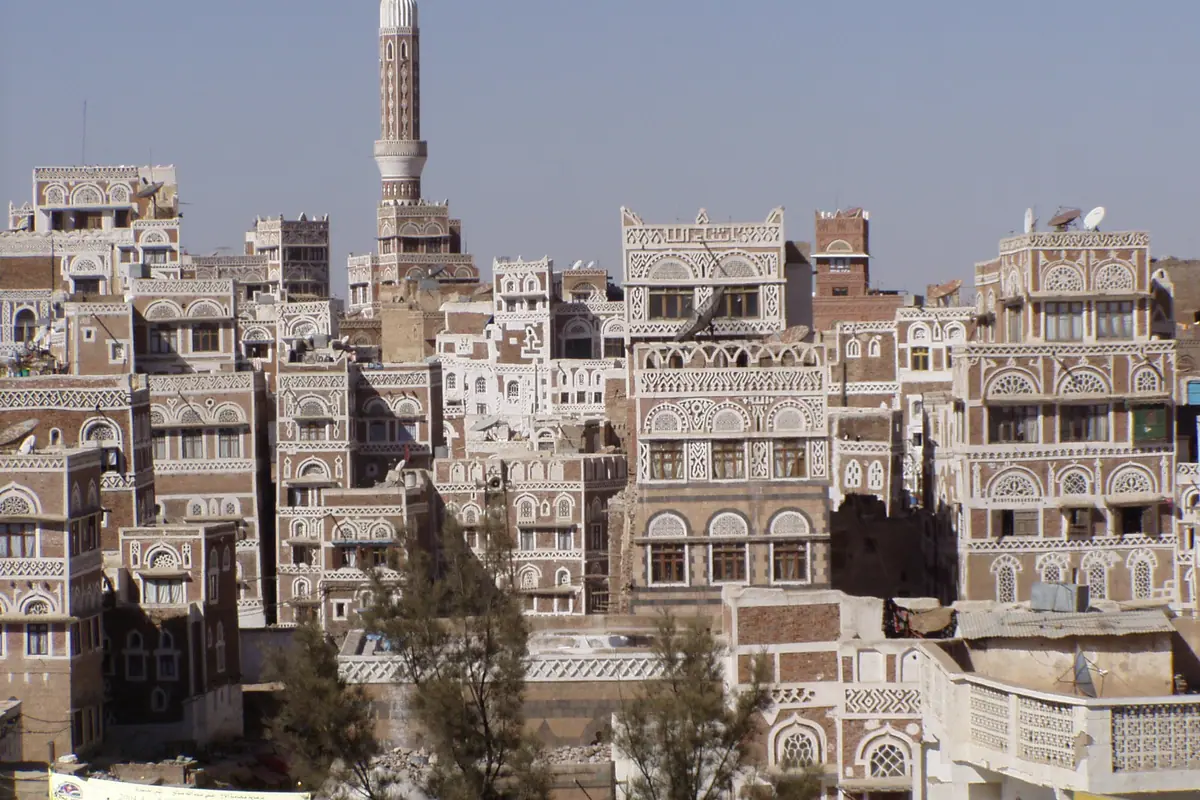
Enter the Old City through Bab al-Yemen, the great gate in the surviving wall, and you walk into a protected world heritage site of some six thousand buildings: gingerbread towers of rammed earth and baked brick, banded with white gypsum, their upper windows filled with qamariya — fanlights of coloured glass set in intricate plaster lattice that throw patterned light across the floor. The lanes braid outward into the Suq al-Milh, the salt market, where stalls weigh cardamom, dried ginger, cumin, henna, frankincense resin and jambiya daggers with rhino-horn-shaped handles. Thread your way to the Great Mosque of Sana'a, one of the oldest in the Muslim world, and finish at the vast white Al-Saleh Mosque on the city's western edge, whose domes and slender minarets glow at dusk.
The food of the capital is the reason many visitors plan a second trip. Saltah is the national dish and the heart of the table: a bubbling stone pot of lamb or chicken stew, sometimes with potato and tomato, crowned with a thick, pale froth of whipped fenugreek called hulba and a spoonful of fierce green sahawiq chilli relish. You tear lahuh, a soft sourdough flatbread, and scoop from the shared pot with your right hand. Breakfast might be ful with eggs and warm bread, or shafout — torn flatbread soaked in tangy buttermilk with herbs and chilli, a highlander's dish that tastes like cool mountain air. Finish with bint al-sahn, paper-thin layers of pastry drowned in honey and nigella seeds, and drink sweet cardamom tea or qishr, an infusion of roasted coffee husks with ginger that Yemenis sip all day.
Eating is inseparable from the mafraj, the upper room with cushions along the walls and windows over the rooftops where the afternoon is passed in talk, tea and the chewing of khat leaves. Khat is a mild stimulant and a deeply rooted social ritual for men in particular; women more often gather separately in their own rooms. As a guest you will be welcomed into the conversation whether or not you chew. Accept the tea, ask questions, and let the afternoon stretch — this is the real rhythm of the city, and rushing it misses the point.
Hadramawt: Shibam, Seiyun and the Towers of the Wadi
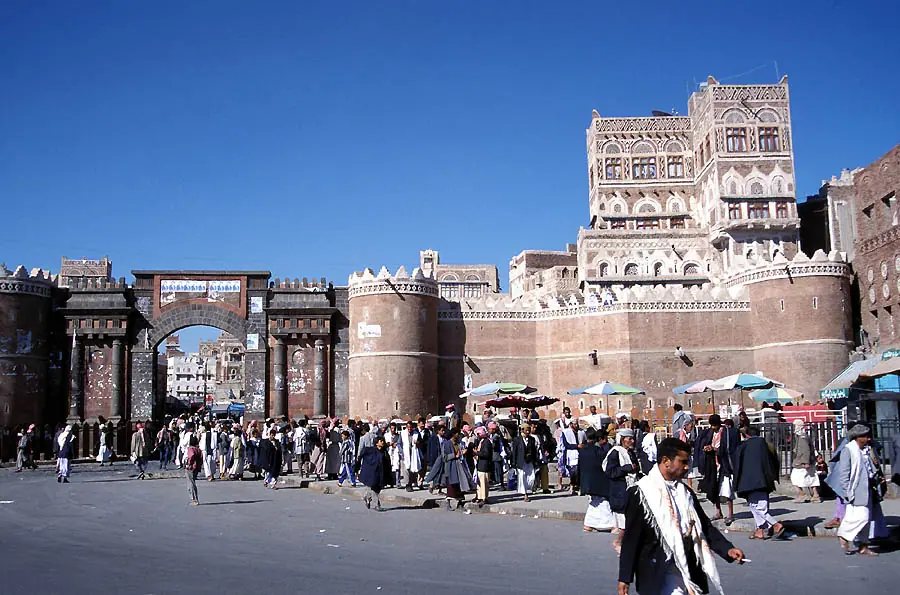
Drive east into Wadi Hadramawt and the landscape turns cinematic: a dry riverbed lined with date palms, sheer walls of pale rock, and settlements that look carved rather than built. Shibam is the showpiece, a cluster of tall mud-brick houses packed shoulder to shoulder inside a walled town, so dense and so vertical that early travellers called it the Manhattan of the desert. Some of its towers reach seven storeys, with grain stores and animal pens at street level and family rooms rising above, all of it coated in mud plaster that the community renews by hand. Nearby, Seiyun's Sultan Al Kathiri Palace rises like a tiered sandcastle over the palm gardens, and Tarim is a town of mud-brick minarets, scholarly courtyards and libraries that have drawn students from across the Indian Ocean for centuries.
Hadhrami cooking is the most travelled cuisine in Yemen, shaped by families who moved to East Africa and Southeast Asia and brought their tastes home. The signature is mandi: lamb or chicken cooked with rice in a sealed earthen pit until the meat falls from the bone and the grains take on smoke. Look out too for zurbian, a festive rice dish studded with meat, potato and raisins, and for the region's extraordinary honey, particularly the dark, resinous sidr honey that is sold by the jar and treated as a luxury. Dates arrive in dozens of varieties, from soft and dark to barely sweet, and the tea is brewed strong and milky, poured from height.
On the coast at Al-Mukalla, the day ends on the corniche with grilled fish pulled straight from the Arabian Sea, and the old town's whitewashed merchant houses catch the last light. This is incense country: frankincense and myrrh from the surrounding hills have been traded through these ports for millennia, and you can buy resin by the scoop in the markets, along with incense burners and Hadhrami honey. If you have time for only one inland stop in Yemen after the capital, make it Shibam at first light, before the tour vehicles arrive and the mud walls turn the colour of warm bread.
Practicalities: travel through the wadi is almost always by 4x4 with a local driver who knows the road conditions and the checkpoints, and the region has its own permits and escort requirements. Wadi floors flood suddenly during rare rain, so ask locally before driving into side valleys.
Marib: Sabaean Temples, the Great Dam and the Queen of Sheba
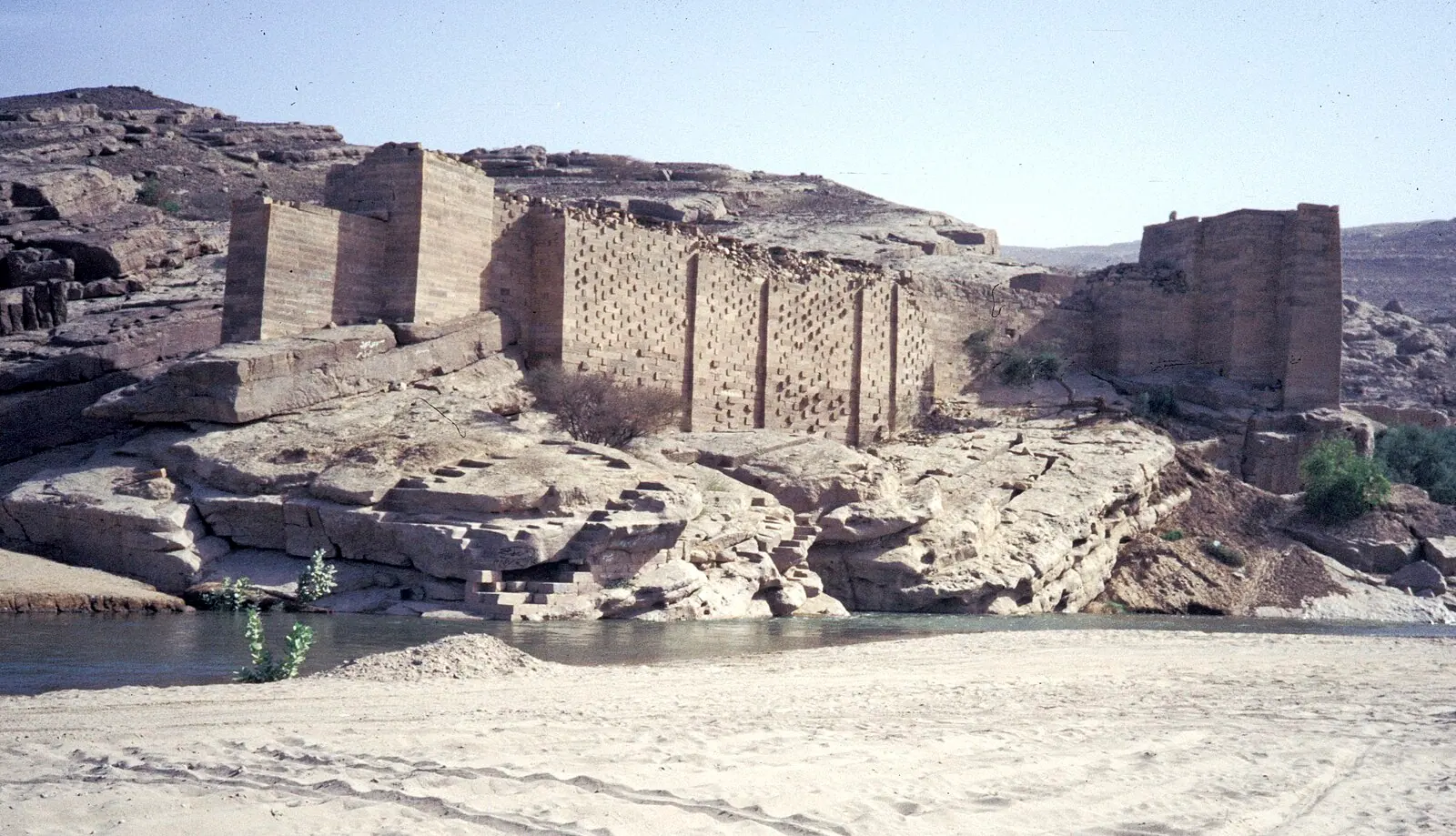
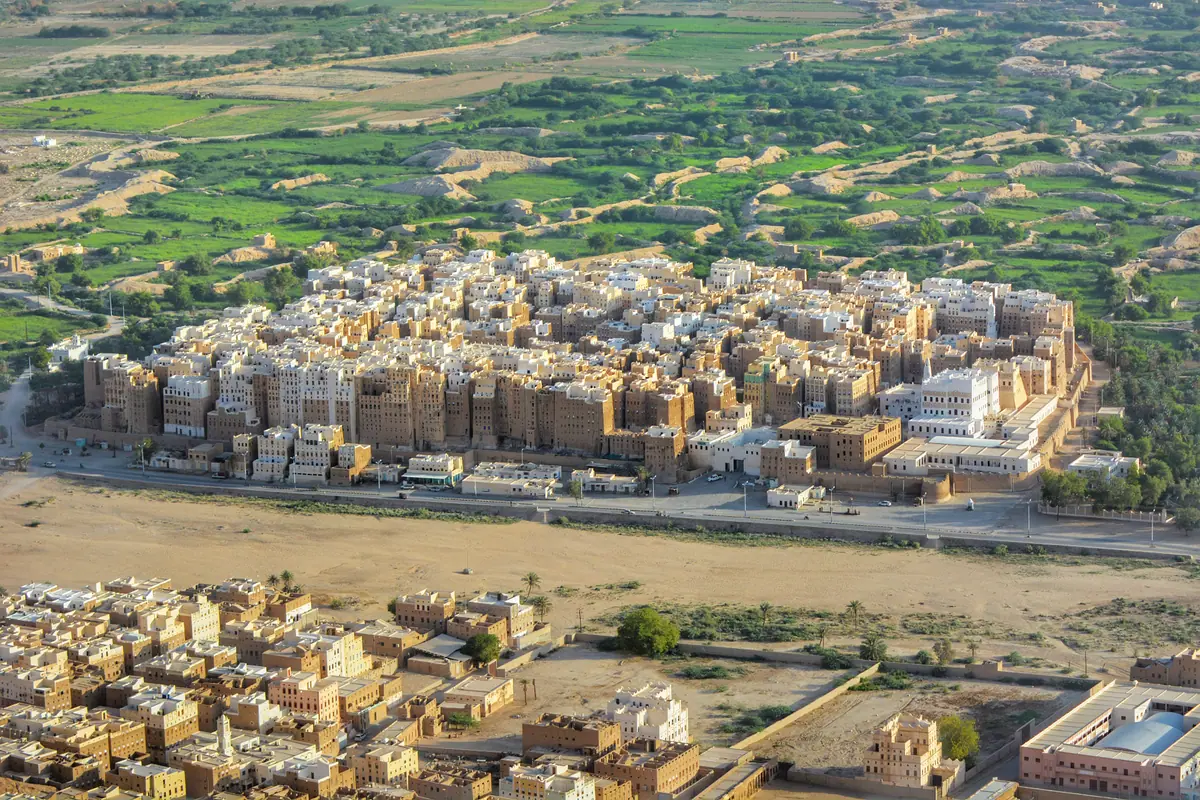
Marib sits on the edge of the desert east of Sana'a, and it is the country's deepest well of history: the capital of the Sabaean kingdom, a civilisation built on irrigation, incense and the caravan trade, and the place most often linked with the legend of the Queen of Sheba. The Great Dam of Marib was the engineering marvel of its age, an earth and stone barrier that captured seasonal floods and pushed water through sluices into fields, sustaining a kingdom for the better part of a millennium. The modern dam nearby is a twentieth-century rebuild, but the ancient abutments and spillways still stand at the site, and the scale of the thing is only obvious when you are standing beside it.
Two temple sites matter most. Barran Temple, also called the Throne of Bilqis, is a platform of monumental limestone blocks with pillars and a great staircase, facing the wadi like a stage set. Awwam Temple, or Mahram Bilqis, lies a short drive away, its oval precinct wall enclosing rows of pillars and a well, with ancient South Arabian inscriptions carved into the stone. Come early: there is no shade, the heat builds fast from mid-morning, and the low light at sunrise is what makes the inscriptions legible and the photographs worth keeping.
Access to Marib requires permits and a local escort, and the route is normally done as a day trip from Sana'a or as an overnight with a simple guesthouse. Wear long trousers, carry more water than you think you need, and take a guide who can read the site rather than just point at it — without the history, these are handsome piles of stone; with it, they are a lost kingdom.
Socotra: Dragon's Blood Trees and the Detwah Lagoon
Socotra is the part of Yemen that feels least like Arabia and most like another planet. The island's signature tree, Dracaena cinnabari, stands on the Diksam Plateau like a fleet of upturned umbrellas, its crown a dense mushroom of spiky leaves and its sap a crimson resin once traded as dragon's blood. The trees are slow-growing and ancient, and the plateau around them is best explored on foot in the early morning, when the light rakes across the rock and the silence is complete. Nearby, the Hoq Cave opens into a hill above the coast, its chambers full of stalactites and old inscriptions left by sailors and pilgrims.
The island's coastline is just as strange. Detwah Lagoon, near the village of Qalansiyah at the western end, is a shallow turquoise basin stranded between white sandbars and limestone cliffs, where the tide reshapes the beach twice a day. Travellers camp here, swim in water warm as a bath, and watch the sun drop into the sea while fishermen bring in the evening catch. Socotri food is simple and good: grilled fish, goat stewed with rice, dates, and honey from wild hives in the limestone. Arabic is spoken alongside Socotri, an ancient South Arabian language quite distinct from Arabic, and it is worth learning a few greetings — they land well.
Getting there means seasonal flights from a small number of regional hubs, a permit, and a 4x4 with a driver-guide, because outside the main town of Hadibo the roads are largely unpaved tracks. Plan five to seven days, bring cash, a water filter and camping gear or arrange it in advance, and take the two weather windows seriously: April to May, and September to October. During the summer monsoon the island is cut off by wind and rough seas, and flights stop. Socotri women are conservative in dress and many cover their faces; ask before photographing anyone anywhere in Yemen, and respect a no. The reward for the effort is a landscape you will not see anywhere else.
Coffee, Honey and the Highland Table: Haraz, Manakhah and Wadi Dhahr
Yemen gave coffee to the world, and the terraces where it all started are still being farmed. In the Haraz mountains and the Bani Matar district west of Sana'a, coffee bushes grow in stone-walled plots stacked up the mountainside between 1,500 and 2,200 metres, shaded by larger trees and irrigated by hand. Harvest runs through the autumn, and the cherries are dried on rooftops in the sun before being hulled and roasted at home. The historic port of Mokha gave its name to the drink, and the Yemeni cup still tastes of it: bright, winey and complex. Locals drink qishr more than coffee itself, an infusion of the dried husks with ginger that is served scalding and sweet at every gathering.
The highlands are also the country's most rewarding place to wander. Manakhah's weekly market pulls farmers and traders down from the terraces with honey, ghee, coffee, grain and pottery, and the drive there through the Haraz is one long series of hairpins and valley views. Further south, in the green hills around Ibb and Jibla, the mosque built in the eleventh century under the orders of Queen Arwa al-Sulayhi still stands as one of the loveliest buildings in Yemen, its white minaret rising over a small town that time seems to have skipped. Near the capital, Wadi Dhahr holds Dar al-Hajar, the famous rock palace perched on a natural outcrop above the orchards, once a summer retreat and now the country's most photographed silhouette. Yemenis picnic here in force on Fridays, and you should join them.
Two edible souvenirs are worth the luggage space. Yemeni honey, especially the dark sidr variety from the Hadramawt and the highland blends sold by beekeepers at roadside stalls, is a serious national obsession and a genuine luxury product. Bint al-sahn travels less well but should be eaten at every opportunity while you are there. Check your home country's customs rules before trying to bring honey, coffee or plant material back, as agricultural imports are restricted in many places.
Frequently asked questions
Is it actually possible to visit Yemen right now?
Travel is possible but heavily conditional. Mainland visits almost always require a visa sponsored by a licensed local operator, plus permits and escorts for areas such as Marib and the Wadi Hadramawt, and several northern and border regions remain closed. Socotra operates more like a contained seasonal destination with its own permits and flights. The situation changes, so speak to an operator with current local knowledge and check your own government's travel advice before committing to anything.
What is Yemen's national dish, and what will I actually eat?
Saltah is the national dish: a bubbling stew of lamb or chicken topped with hulba, a whipped fenugreek foam, and served with sahawiq chilli relish and lahuh flatbread. Beyond that, expect ful and eggs at breakfast, shafout with buttermilk in the highlands, mandi and zurbian rice dishes in the Hadramawt, grilled fish on the coast, and bint al-sahn pastry with honey to finish. Alcohol is effectively unavailable, and cardamom tea and qishr are the everyday drinks.
When is the best time to visit Yemen and Socotra?
October to April suits the highlands, with mild days in Sana'a and cold nights, and comfortable conditions in the Hadramawt and at Marib from November to February. Socotra has two windows, roughly April to May and September to October, and is cut off by wind and rough seas during the summer monsoon. The Red Sea coast is hot and humid most of the year, so plan coastal time for the cooler months.
What is khat, and should I try it?
Khat is a leafy plant chewed slowly over several hours in the afternoon mafraj gathering, and it is a deeply embedded social ritual, particularly among men. It is a stimulant with real effects on sleep and appetite, it is banned or controlled in many countries, and you should never carry it across a border. There is no expectation that a guest joins in; accepting tea and staying for the conversation is welcome and perfectly normal.
How should I dress and behave as a visitor?
Dress modestly and conservatively: long trousers or a long skirt, covered shoulders, and a headscarf for women, especially in rural areas and on Socotra. Always ask before photographing people, and accept a refusal without pressing. Eat and shake hands with your right hand, remove your shoes when entering a home or mosque, and greet people before getting to business. Bring enough cash for the whole trip, as cards are accepted in very few places and ATMs are unreliable outside the main cities.