Yemen is the Arabian Peninsula's great exception: mud-brick skyscrapers older than most European cathedrals, Sabaean temples on a desert plain, and an island so isolated it grows trees that bleed red resin. Covering it in a week means flying — carefully, flexibly, and almost always with a licensed local operator at your side.
Before You Book: How Flying Into Yemen Actually Works
Yemen is a big, ferociously mountainous country, and internal flights aren't a luxury here — they're the only realistic way to see more than one region in a week. The gateways are Sana'a International in the highland capital, Aden International on the southern coast, Riyan Airport serving Al-Mukalla, Seiyun Airport in Wadi Hadramawt, and the tiny airstrip at Hadibu on Socotra. None of them run the dense schedule you'd expect from a normal destination: routings usually pass through Cairo, Amman, Jeddah, Muscat or a Gulf hub, frequencies shift with the political weather, and some services are seasonal.
Independent travel is, for practical purposes, off the table. A tourist visa typically requires sponsorship by a licensed Yemeni operator, and moving between governorates can mean permits, checkpoint formalities and an armed escort arranged in advance. Most foreign ministries advise against all travel to large parts of the country, and several advise against all but essential travel elsewhere. Check the current advisory for your own government before you spend a dinar, and understand that standard travel insurance is usually void the moment you enter an advisory zone — specialist evacuation cover is a separate purchase.
Build slack into everything. Flights are announced late and cancelled often, so plan a week around two or three hops at most, keep a spare day at each end, and accept that your itinerary is a proposal rather than a contract. Small aircraft serving the more remote strips enforce strict baggage weight limits, so pack light and washable. Confirm your permits, your escort and your onward flight in writing a few days before departure, then confirm them again.
Days 1–2: Sana'a and the Tower Houses of the Old City
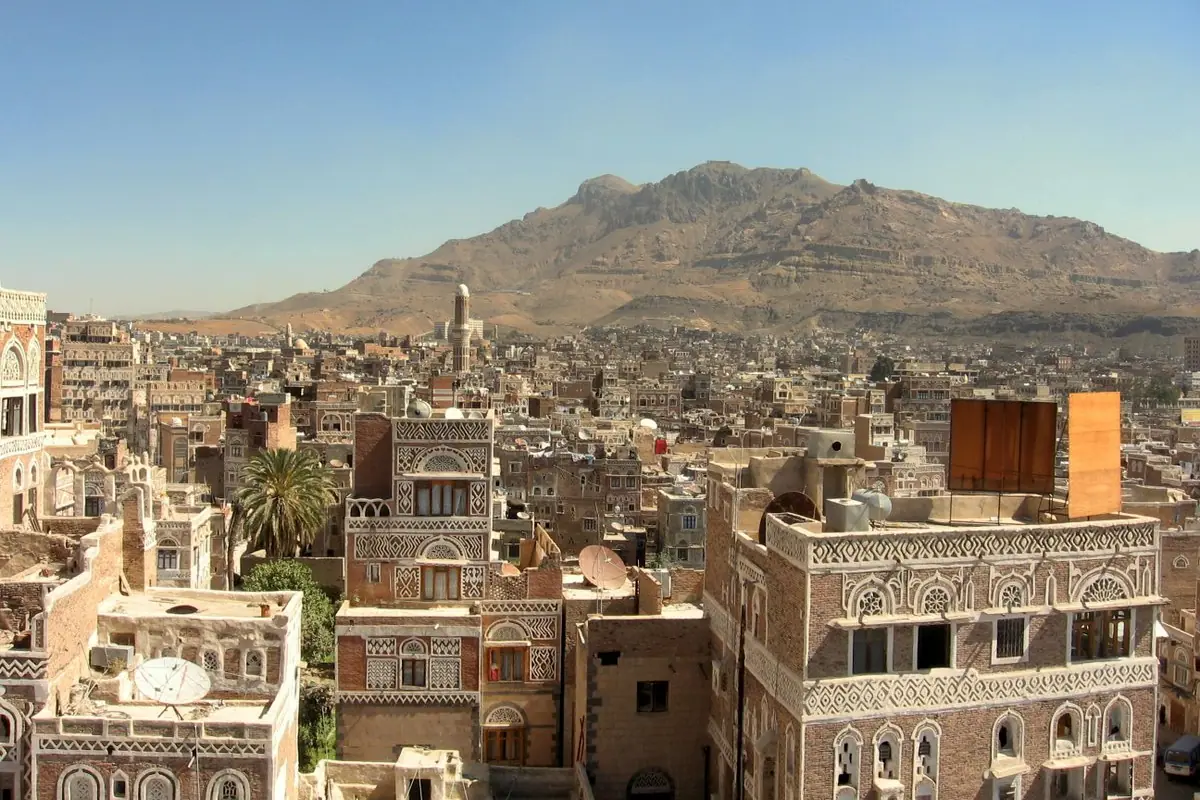
Sana'a sits at roughly 2,250 metres, so treat your first day as an acclimatisation day rather than a sightseeing sprint. Start at Bab al-Yemen, the great gate into the Old City, a World Heritage-listed quarter of mud-brick and gypsum towers that rise six or seven storeys and glow like gingerbread in late light. Look for the qamariya windows — half-moon panels of alabaster and coloured glass — and the white gypsum banding that makes each facade a piece of geometry. Decades of neglect, flood damage and war have taken a toll, but restoration work continues house by house, and the lanes still smell of bread, cardamom and damp clay.
From the gate, wander into Souq al-Milh, the salt market, which sells far more than salt: sacks of cumin and dried limes, frankincense and myrrh, silver-and-coral jewellery, and the curved jambiya daggers that Yemeni men wear tucked into their belts. The Great Mosque of Sana'a, one of the oldest in the Islamic world, is generally closed to non-Muslim visitors, but its exterior and its setting are worth the walk past. Finish on a rooftop terrace as the call to prayer rolls across the rooftops — the sound layered from a dozen minarets at slightly different pitches is the single most memorable thing about the city.
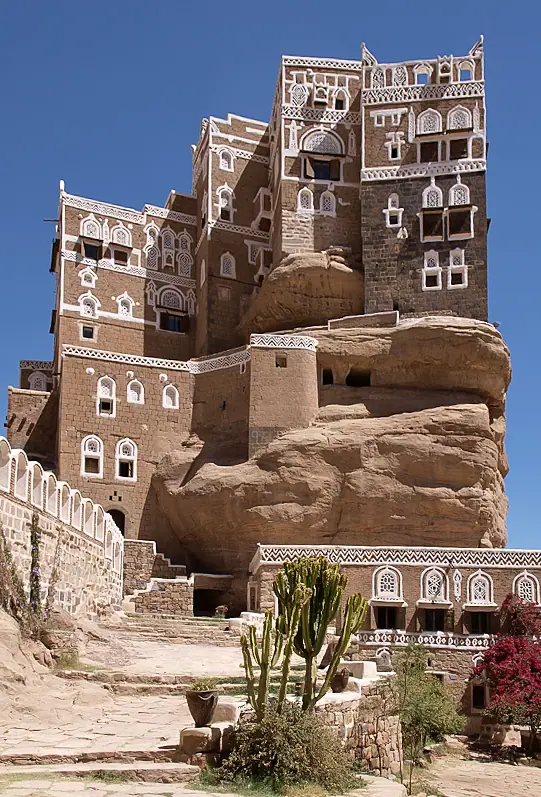
On day two, take the short drive northwest to Wadi Dhahr for Dar al-Hajar, the Rock Palace, a fantastical multi-storey summer residence perched on a natural granite outcrop. Afterwards, the vast modern Al-Saleh Mosque on the capital's ring road, and the old quarter of Bayt Baws, built on a rocky spur, give you two very different versions of the city. If the National Museum in the former Dar al-Shukr palace is open, go — but museum opening hours in Yemen are unpredictable, so treat it as a bonus rather than a plan.
Day 3: Marib, the Great Dam and the Throne of Sheba
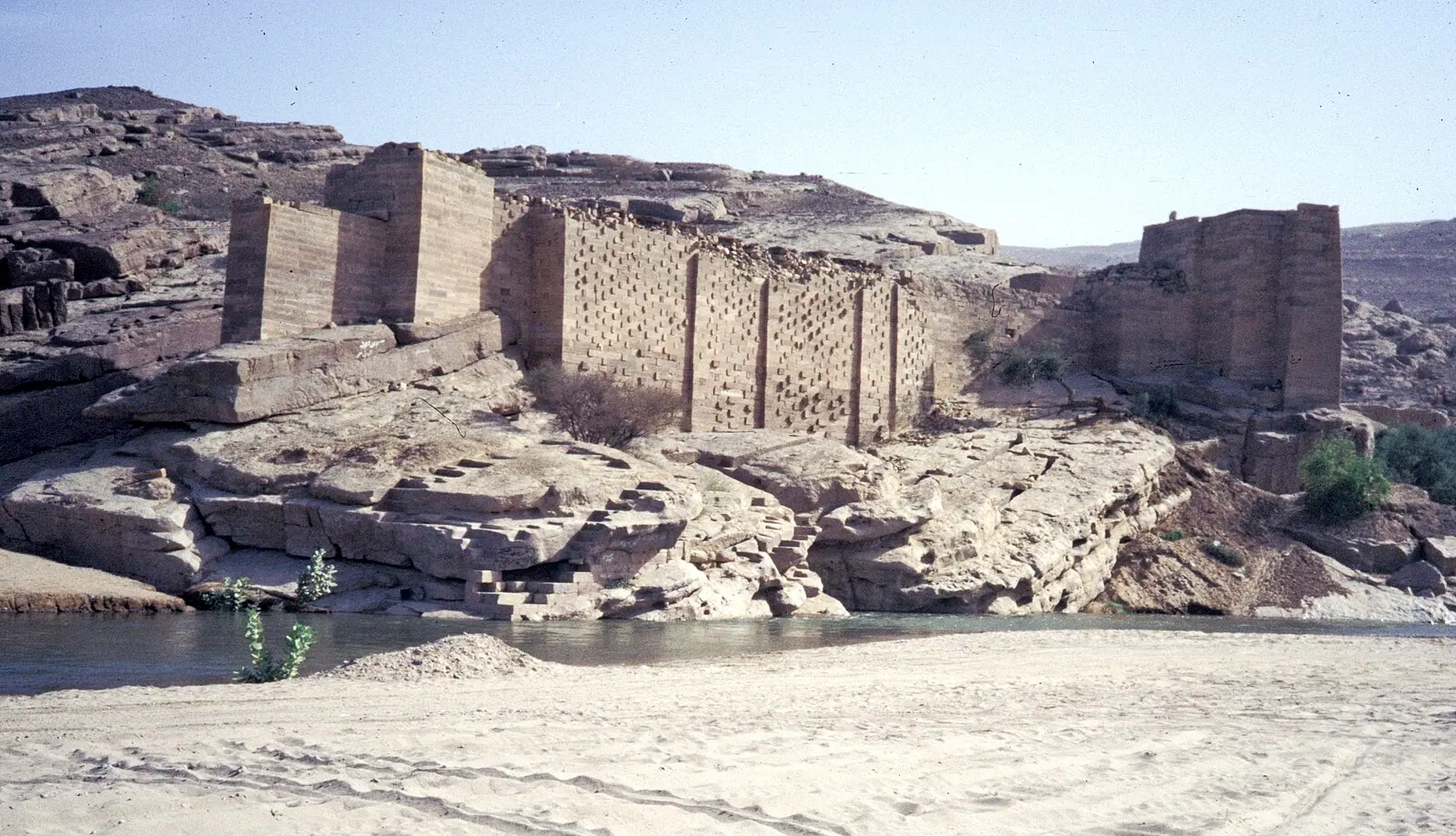
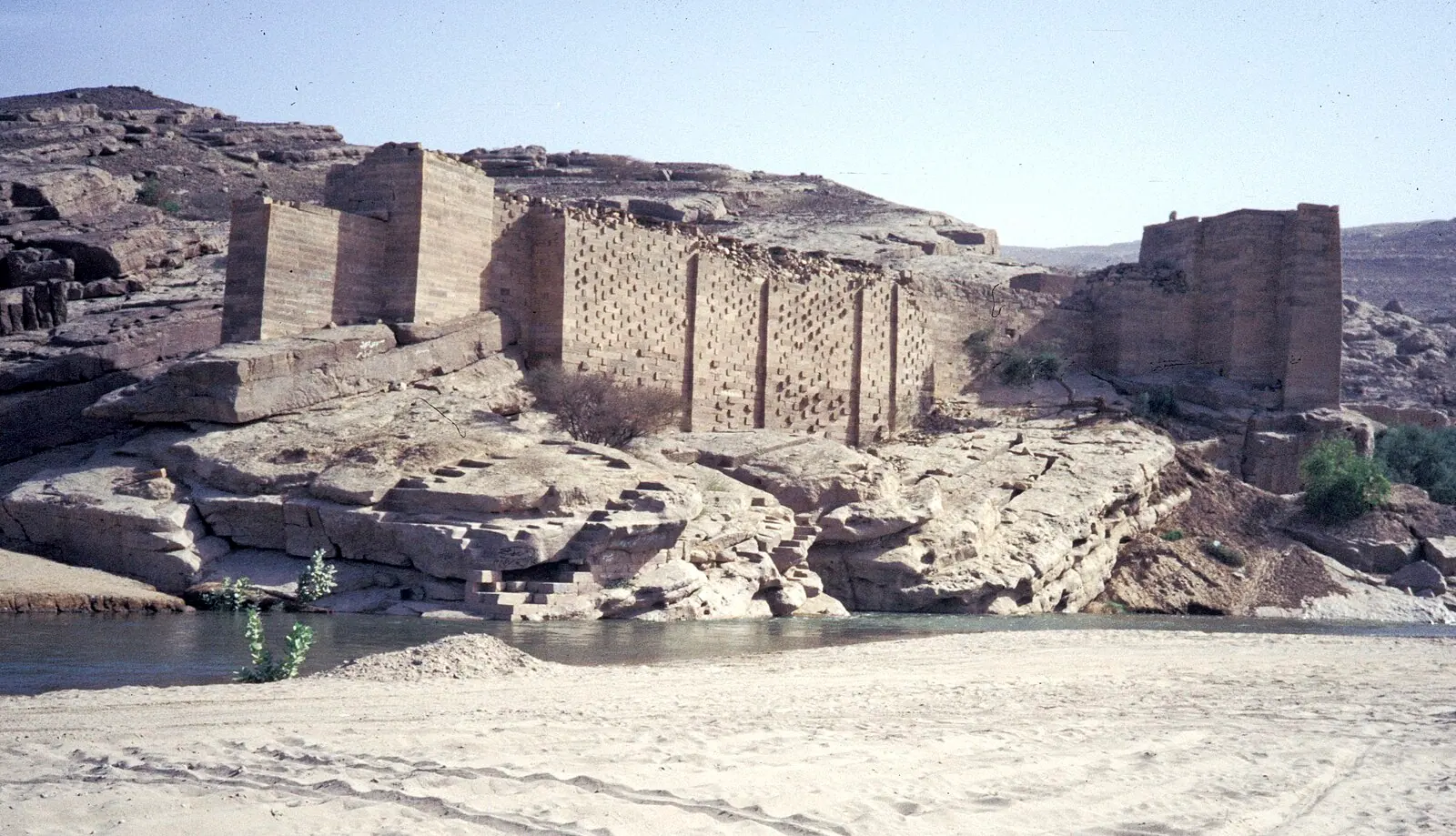
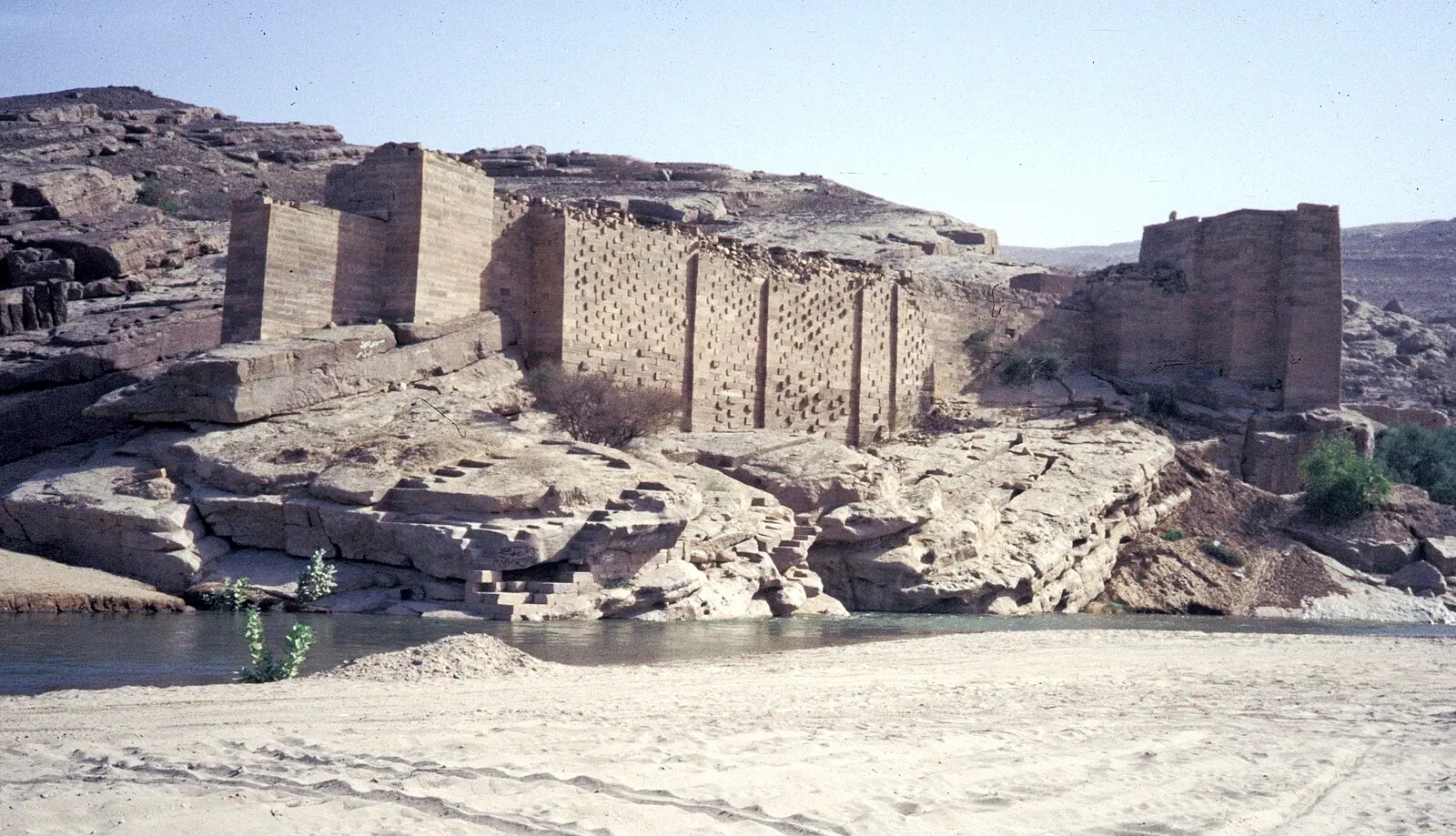
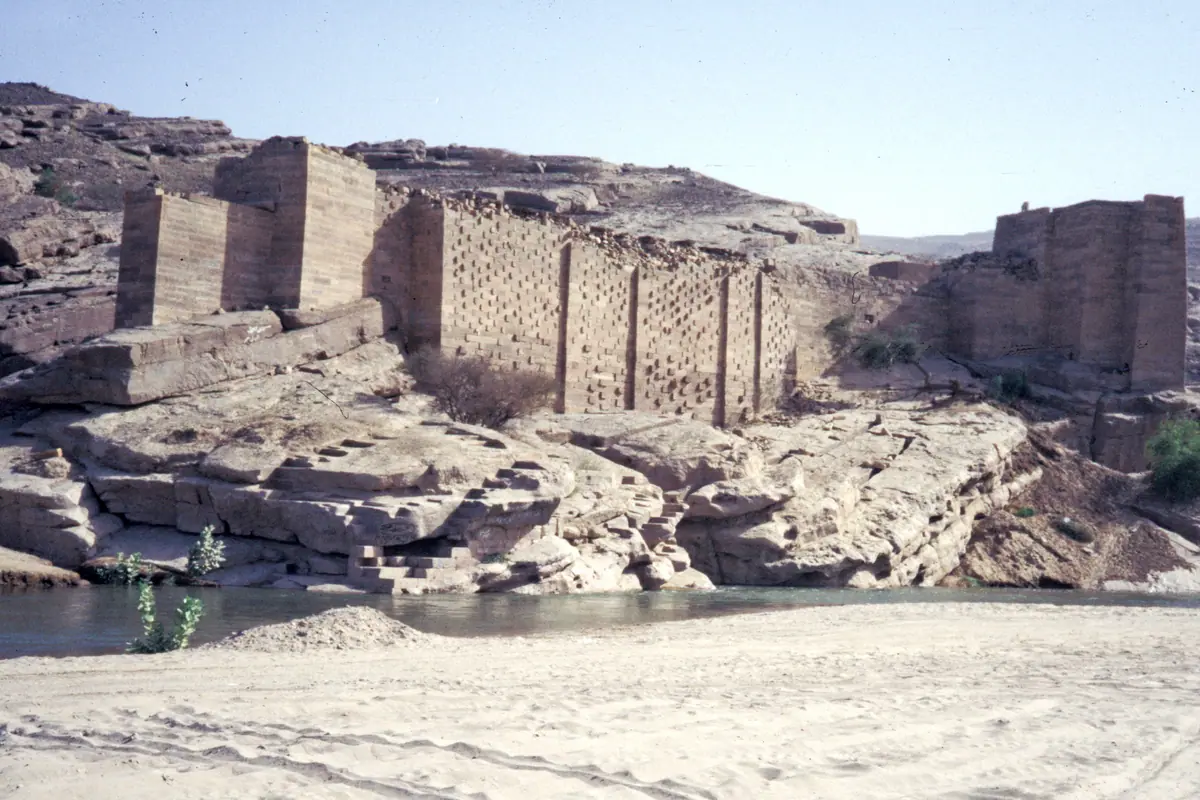
Roughly 120 kilometres east of the capital, where the highlands collapse into desert, lies Marib — the heart of the ancient Sabaean kingdom and one of the most important archaeological landscapes in Arabia. The Sabaeans grew rich on frankincense and myrrh caravans from the eighth century BC, and their engineers tamed the seasonal flood of Wadi Dhana with the Great Dam of Marib, an earth-and-masonry barrage whose sluices and spillways fed an irrigated oasis for more than a thousand years. The surviving sluice gates at Sadd Ma'rib, with their massive stone blocks, are still legible to anyone who has ever looked at a canal.
Nearby stand the two great temple complexes. Barran Temple, popularly known as the throne of Bilqis, the Queen of Sheba, is a monumental platform ringed by the stumps of monolithic pillars, with Sabaean inscriptions carved into the stone. Awwam Temple, or Mahram Bilqis, just outside the oasis, was a pilgrimage sanctuary with an oval precinct and a famous inscription list. The ancient city mound itself, with its remnants of a great oval wall, sits between them. Bring water, a hat and more patience than you think you need — the heat is brutal by mid-morning and there is almost no shade.
Be realistic about access. Marib sits in a region that has repeatedly been a front line, and the sites are only visitable when there's a genuine window of calm, with a local escort and proper permissions. If that window isn't open during your week, substitute the Haraz Mountains instead: the terraced coffee slopes around Manakhah and the hilltop fortress village of Kawkaban give you spectacular scenery, working agriculture and far less risk. Jibla, south of Ibb, with the mosque of Queen Arwa, is another strong alternative.
Days 4–5: Wadi Hadramawt — Shibam, Seiyun and Tarim
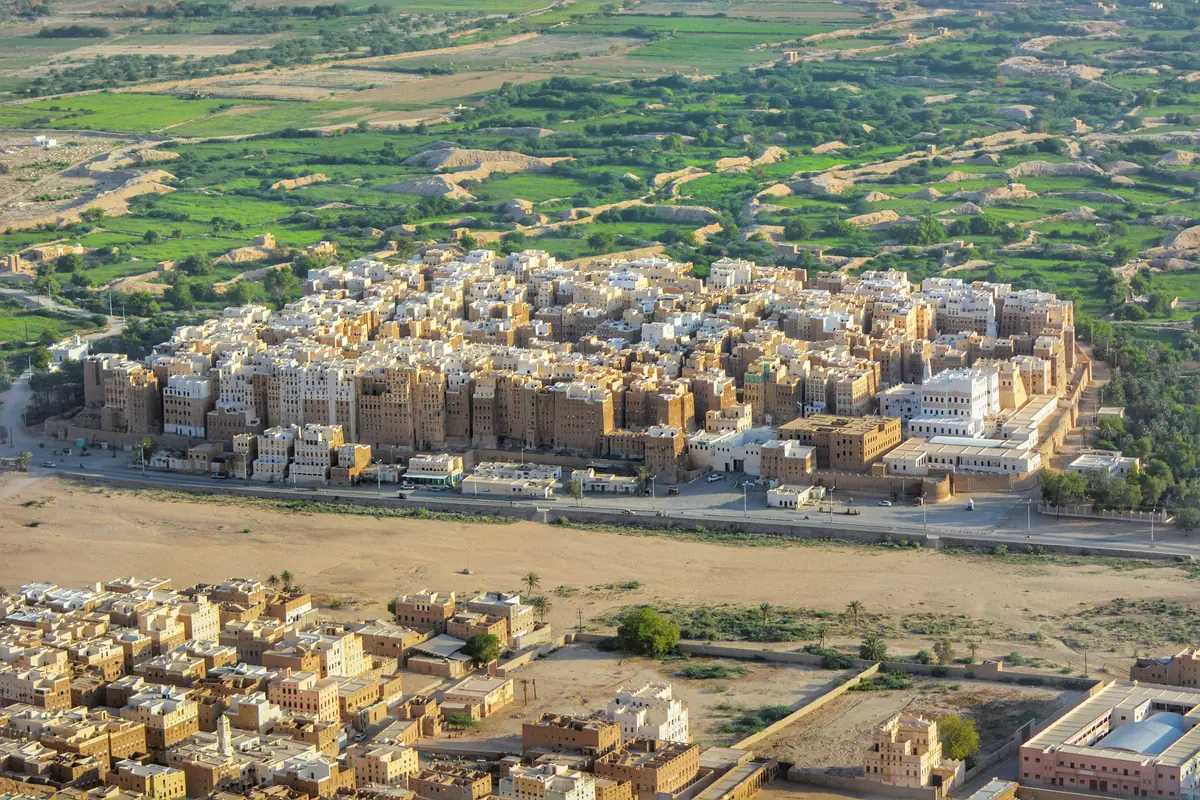
Fly east to Seiyun and you enter Wadi Hadramawt, a dry canyon system cut through a plateau and lined with date palms, mud-brick villages and some of the most astonishing architecture on earth. Shibam is the headline act: a walled town of around five hundred tower houses, some more than thirty metres tall, packed shoulder to shoulder and rebuilt again and again after floods. Nicknamed the Manhattan of the desert, it has been a World Heritage site since the 1980s. Walk the outside of the wall at dawn, when the light rakes across the mud plaster and you can see how the buildings taper as they rise.
Seiyun, the wadi's main town, is home to the Sultan Al Kathiri Palace, a whitewashed, crenellated confection that now houses a museum and looks exactly like a palace should. A short drive away is Tarim, a city of scholars and merchants whose skyline is dominated by the Al-Muhdhar Mosque and its soaring mud-brick minaret — the tallest of its kind anywhere — with geometric brickwork in white and ochre. Tarim's family libraries and teaching houses make it the intellectual capital of the valley, and the villages of Wadi Dawan, further north, are worth an afternoon of slow driving.
If your week allows only one coastal day, spend it in Al-Mukalla, where the old town spills toward the fish market and the corniche, or in Aden at the other end of the country. Aden's volcanic Crater district has the Cisterns of Tawila, great rock-cut tanks attributed to ancient engineers, and Sira Fortress guarding the harbour — a completely different Yemen of heat, sea and colonial-era ruins. Reaching either usually means a road transfer with an escort, so don't try to improvise it.
Days 6–7: Socotra — Dragon's Blood Trees and Detwah Lagoon
From Mukalla or Sana'a, a flight — when one is running — crosses to Hadibu on Socotra, an archipelago so long isolated that a third of its plants grow nowhere else on the planet. It was inscribed as a World Heritage site for exactly that reason. This is the part of the trip that most travellers remember for the rest of their lives: granite peaks, empty beaches, and the umbrella-shaped dragon's blood trees of the Dixam Plateau, whose red resin has been traded as a dye and medicine for millennia.
On the plateau, walk among the dragon's blood groves at first light, then head to the Homhil protected area, where bottle trees and cucumber trees crowd a viewpoint above the Arabian Sea. The three-kilometre-deep Hoq Cave, reached by a scramble and a climb, holds stalactites, a small underground pool and ancient inscriptions left by passing sailors. Birders should watch for the Socotra starling, the Socotra sunbird and the island's endemic sparrows.
West of Hadibu, Detwah Lagoon near Qalansiyah is a tidal flat of impossible turquoise, with rays cruising the shallows and a long white sand spit closing the bay. Further east, the Dihamri Marine Protected Area offers easy snorkelling over coral, and at Arher, white sand dunes pour down to meet the surf. October to May is the season; the June-to-September southwest monsoon shuts the sea down and cuts flights, so build your trip around that window. Even in season, expect your return flight to move.
Practicalities: Seasons, Etiquette and Staying Safe
Timing matters enormously. The highlands, including Sana'a, are pleasant from October to April, with warm days and genuinely cold nights at altitude; April and September are shoulder months; midsummer in the coastal lowlands and Tihama is punishingly hot and humid. Socotra's season runs roughly October to May. Ramadan slows everything down, and Friday afternoons are quiet. Public infrastructure is fragile — power cuts and patchy mobile data are normal, so carry a power bank, downloaded maps and cash in clean, untorn banknotes, because card acceptance is rare and ATMs unreliable.
Etiquette is traditional and largely rural. Dress modestly for both men and women; women will feel more comfortable covering their hair in many areas and should expect handshakes to be offered more readily to men. Ask before photographing people, particularly women, and never photograph checkpoints, officials or military sites. Alcohol is illegal. Afternoon qat chewing is a social institution — it's polite to decline gracefully rather than to comment. Eat and offer with your right hand, remove your shoes before entering a mosque, and remember that non-Muslims generally don't enter mosques at all.
On safety, be blunt with yourself. Rural and former front-line areas contain landmines and unexploded ordnance, and straying off known routes is genuinely dangerous. Kidnapping for tribal leverage has a long history here, and disputes are often resolved through local mediation rather than police. Travel with a vetted operator who knows the local sheikhs, keep your documents and copies on you, register your presence with your embassy where possible, carry a comprehensive medical evacuation policy and any medication you need, and check the advisory situation again in the week before you fly. Yemen rewards preparation — and punishes assumptions.
Frequently asked questions
Can tourists actually fly into Yemen right now?
For most nationalities this is not conventional tourism. Many governments advise against all travel to large parts of the country, and independent travel is effectively impossible. Visits generally happen through a licensed local operator that sponsors your visa and arranges permits and escorts, most commonly to Socotra when flights are running. Check your own government's current advisory and speak to your embassy before committing to anything.
Which airports serve Yemen, and how do I reach Socotra?
The main gateways are Sana'a International, Aden International, Riyan Airport for Al-Mukalla, Seiyun Airport in Wadi Hadramawt, and Hadibu on Socotra. Schedules are thin and change often, with most routings connecting through Cairo, Amman, Jeddah, Muscat or a Gulf hub. Socotra connections are sporadic and often seasonal, usually booked as part of an operator's package.
What is the best time of year to visit Yemen?
October to April is the sweet spot for the highlands and Wadi Hadramawt, with clear, mild days and cold nights at altitude. Socotra's season runs roughly October to May. Avoid the June-to-September southwest monsoon if Socotra is on your list, and avoid midsummer on the Red Sea and Gulf coasts, when heat and humidity are extreme.
How should I pack for a week in Yemen?
Layers are essential: warm clothing for highland nights, light breathable clothes for the desert and coast, a sun hat, high-factor sunscreen and sturdy walking shoes. Add modest clothing and a headscarf, a water filter or purification tablets, a basic medical kit, a power bank, and clean banknotes in small denominations. Expect strict baggage weight limits on the small aircraft serving remote airstrips.
Is it safe to travel as a solo or female traveller?
Solo travel is not advisable anywhere in Yemen at present — you should be with an operator and a guide at all times. Women travellers generally find that conservative dress, a headscarf in rural areas, and travelling with a guide or male companion make interactions easier, and should expect separate seating, greetings and social spaces in many communities. Always defer to local advice on what is and isn't currently safe to visit.