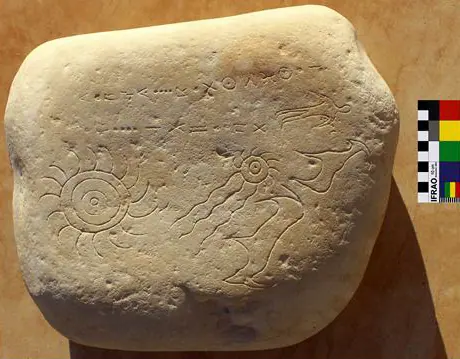
Essaouira smells of salt, thuya wood and grilled sardines, and its whitewashed medina fits inside a walk you can do before breakfast. Where you sleep decides whether your weekend is courtyard breakfasts and rooftop sunsets or barefoot mornings on a wind-whipped Atlantic beach. This guide maps the town's sleeping zones, from Kasbah views to argan-grove hideaways, and explains what to check before you book.
Where to Stay in Essaouira: A Quick Map of the Town
Essaouira is compact enough to cross on foot in twenty minutes, which means the choice of address matters less for logistics than for atmosphere. The walled medina sits on a peninsula with the Atlantic on three sides, and nearly everything you came for — the ramparts, the fishing port, the spice stalls, the long beach — lies within a couple of kilometres of everything else. What changes from one street to the next is the view, the noise, and how many steps you climb to bed.
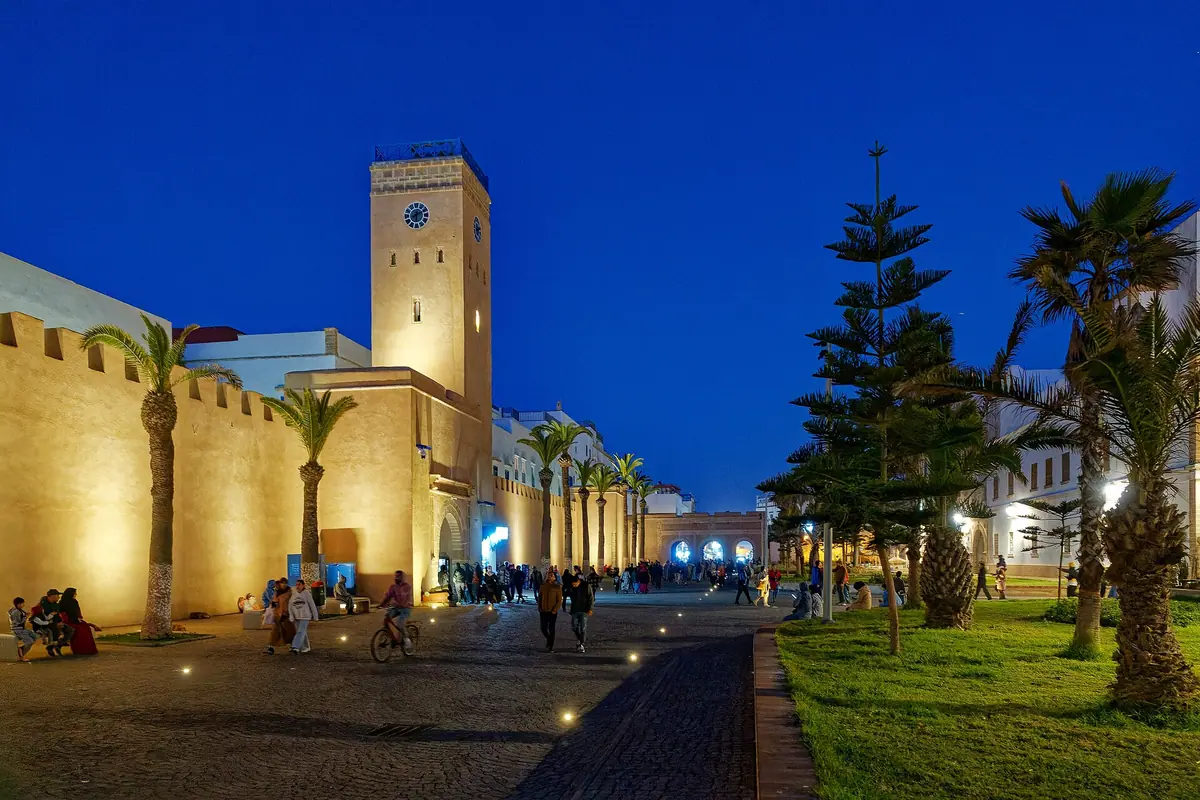
Roughly, the town splits into four sleeping zones. The Kasbah is the seaward quarter inside the walls, closest to the cannon-lined ramparts. The medina proper — the lanes around Bab Marrakech, the old Mellah and the souks — is quieter after dark and best for wandering out to dinner. The wall edge near Bab Doukkala is where simple guesthouses, taxis and easy luggage handling cluster. Then there is the bay: a curve of sand north of the walls, lined with larger hotels and surf schools.
Medina Riads and Dars: Courtyards, Hammams and Rooftops
The signature Essaouira stay is the riad: a traditional house built around an open courtyard, with thick lime-plastered walls that keep out the heat and the street. Because the medina is so dense, riads rarely have big windows onto the lanes; the life of the building happens inside, on the patio and on the roof. Expect carved thuya-wood doors and ceilings — a local craft worked here for centuries — along with zellige tile, wrought iron and low cushioned banquettes. A dar is the smaller, plainer cousin, often a family home turned into three or four rooms.
Certain things come as standard. Breakfast is served on the terrace or in the courtyard: msemen flatbread, amlou made from argan and almonds, olives, mint tea, sometimes eggs. Many houses have a small plunge pool in the patio, a hammam or massage room, and a rooftop with loungers where you can watch seagulls ride the wind above the rooftops. Staff are often family members and will arrange everything from an airport transfer to a cookery session, which is a large part of the appeal.
A word about sound. Courtyards carry noise: the call to prayer from neighbouring mosques, the clatter of breakfast being laid out, footsteps on tiles at midnight, and, on festival weekends, Gnaoua drumming drifting over the walls. If you sleep lightly, request a top-floor room away from the patio and pack earplugs. If stairs are an issue, ask for a ground-floor room — many riads run to four storeys with no lift.
The Kasbah and the Ramparts: Rooms With a Horizon
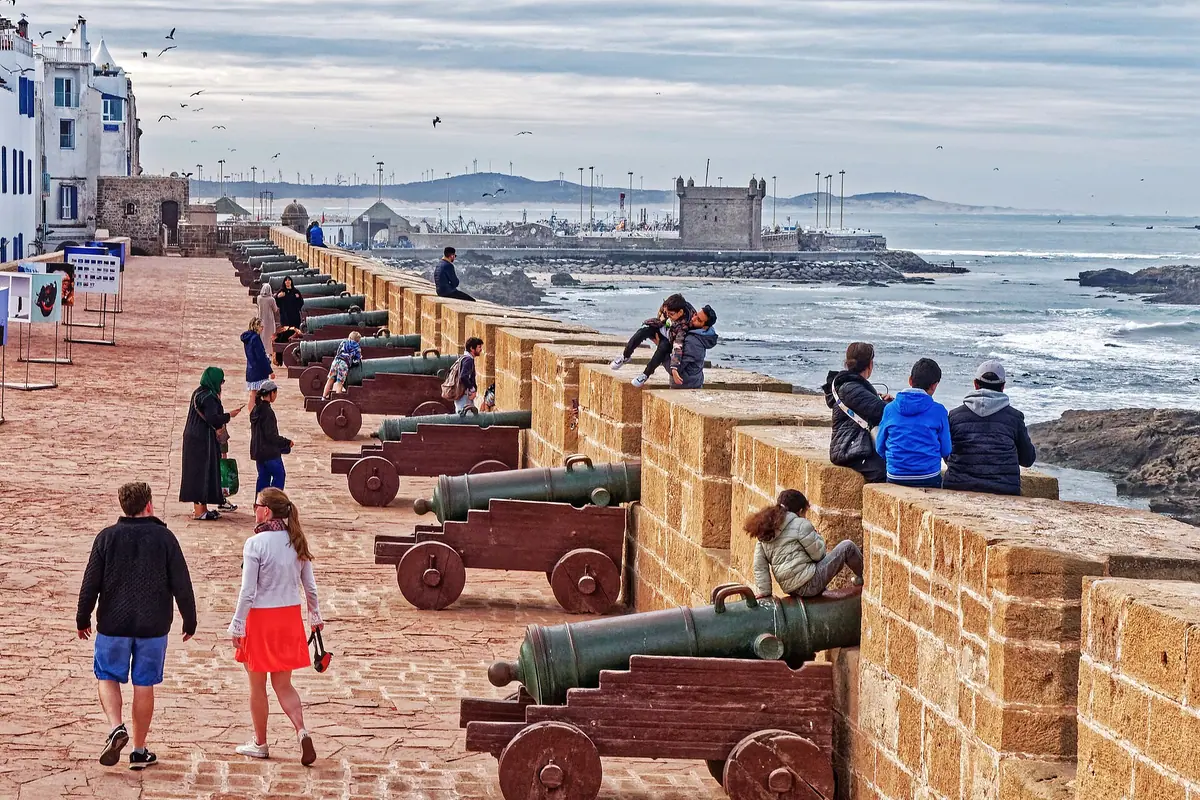
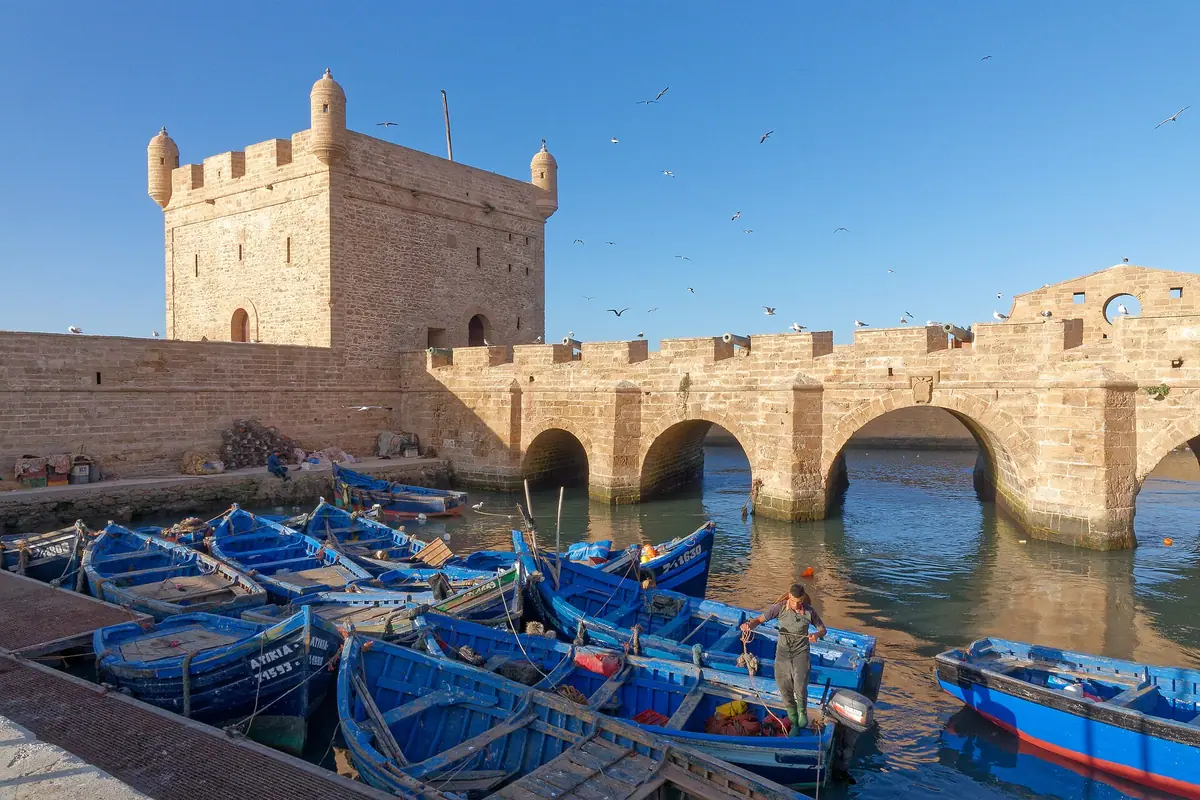
The Kasbah, the quarter pressed against the sea wall, offers something the rest of the medina cannot: a horizon. From a rooftop or a corner room here you look over the Skala de la Ville — the rampart lined with row after row of old Portuguese cannons — towards the offshore island and the open Atlantic beyond. Sunsets from this side are Essaouira's postcard image, and staying in the Kasbah means you can step out and catch one in two minutes, then be back for dinner.
Be realistic about what a sea view means in a walled town. Plenty of rooms advertised as having one frame a sliver of grey-blue water between rooftops and satellite dishes; others look straight at the ramparts, which is arguably better. Ask which floor the room is on, and weigh up whether you want the ocean-facing side at all: it is windier, damper and louder than the sheltered lanes once the afternoon trade winds arrive. What you gain is light — a room full of moving Atlantic brightness, and the sound of surf all night.
Beachfront Hotels, Surf Camps and Argan-Grove Hideaways
Essaouira's beach is a broad, breezy arc about two kilometres north of the walls, and the hotels along it trade medina charm for space: bigger rooms, gardens, pools, parking, family suites and direct access to the sand. You are twenty to thirty minutes' walk from the medina gates, or a very short taxi ride, so this works well if you want a lazy beach morning between sightseeing, or you are travelling with children who need somewhere to run.
Beyond town, two other options suit particular weekends. A few kilometres south, Diabat sits where the river meets the sea, with low-key guesthouses, wind-bent trees and the ruins of a palace a certain 1960s rock guitarist is said to have daydreamed about. Further south around Sidi Kaouki, surf camps and simple beach lodges fill with people chasing waves and wind. Inland, among the argan groves near Ghazoua, converted farmhouses offer quiet, pools and enormous night skies — but you will need a car or a driver, because taxis do not cruise out there. The trade-off is simple: inside the walls, the whole town is your living room after dark; out on the bay or in the groves, every meal needs a plan.
What to Check Before You Book an Essaouira Hotel
Access is the first thing. Most medina riads cannot be reached by car — vehicles stop at the nearest gate, and you walk the last stretch over cobbles and steps, often with a porter handling luggage. Ask in advance how far the walk is and whether someone will meet you; arriving after dark in a maze of unlit lanes is no fun with a suitcase. If mobility matters, a ground-floor room in the medina or a beachfront hotel with a lift will make the weekend far easier.
Bring cash. Smaller guesthouses sometimes prefer dirhams to cards, and the medina's cash machines can run dry, particularly at weekends and around public holidays. Ask about heating in winter, too: these old houses are gloriously cool in summer and distinctly chilly in January, so a heater, thick blankets and hot water bottles make a real difference. In summer, the reverse applies — shutters, fans and a shaded courtyard matter more than air conditioning.
Finally, ask the small questions that shape a short stay. Is breakfast included, and what time does it start? Can the riad hold your bags after check-out if you have a late coach? Can they book a hammam, a kitesurfing lesson or a car to Sidi Kaouki? Is your room under the terrace where chairs are scraped across tiles at dawn? Two nights is a short window, so a couple of emails before you arrive is time well spent.
A Weekend Rhythm: Friday to Sunday, and the Best Time to Go
A comfortable weekend writes itself. Arrive on Friday, drop your bags, and walk the ramparts as the light softens, finishing with grilled sardines or the day's catch down at the port. Saturday is the medina: the spice stalls and workshops around Bab Marrakech, thuya-wood marquetry, the small museum of music and local life, a slow lunch, then the beach for a kitesurfing or windsurfing taster, a horse ride along the sand, or simply a long walk to watch the windsurfers carve the bay. Book a hammam for late afternoon and eat in a courtyard while musicians play.
Sunday is for leaving town. Head south to Sidi Kaouki for surf and empty sand, or north into the argan groves to see a women's cooperative pressing oil the traditional way, with goats famously climbing the trees in season. If your departure is late, a long rooftop breakfast and one last loop of the souks is a perfectly good use of the morning.
Timing shapes everything. April to June and September to October give the kindest mix of warm days, gentler wind and manageable crowds. July and August are hot and reliably windy — great for watersports, busy with Moroccan holidaymakers, and the sea fog often burns off by midday. Winter brings mild, bright afternoons, cold nights, occasional rain and the year's best value, though you will want a heater. The June Gnaoua music festival fills every bed in town, so book months ahead if those dates matter to you.
Frequently asked questions
Which part of Essaouira is best for a first weekend stay?
For two nights, the medina inside the walls — ideally between Bab Marrakech and the Kasbah — gives you the classic experience: courtyard riads, rooftop sunsets and dinner a short stroll away. Choose the beachfront instead if you prioritise pools, space and easy parking over atmosphere.
Can cars reach riads inside the Essaouira medina?
Mostly no. Vehicles stop at the nearest gate and you continue on foot over cobbles and steps, sometimes ten minutes or more. Ask your accommodation to arrange a meeting point or porter, especially if you arrive after dark or have heavy bags.
When is the best time to visit Essaouira for a weekend?
April to June and September to October offer the best balance of warm weather, moderate wind and comfortable crowds. Summer is windier, hotter and busier, while winter is mild by day but genuinely cold at night, when old riads need extra blankets and heating.
Is Essaouira very windy, and does that affect where I should stay?
The trade winds blow hard for much of the year, which is why the bay is a watersports hub. Ocean-facing rooms are windier and mistier than sheltered lanes, and shutters can rattle at night; if that bothers you, book a room facing inland or deeper into the medina.
How do I get to Essaouira, and how long does it take?
Most visitors arrive overland from Marrakesh, a drive of roughly two and a half to three hours, or by coach on the same route. The small airport just outside town handles seasonal flights from Europe. Once you are in Essaouira, everything in the medina is walkable and short taxi hops cover the beach.
Sort the rest of your trip
Everything for Essaouira, in one place
Transfer in Essaouira
Private driver waiting on arrival — no queues, no surprises.
Book a transfer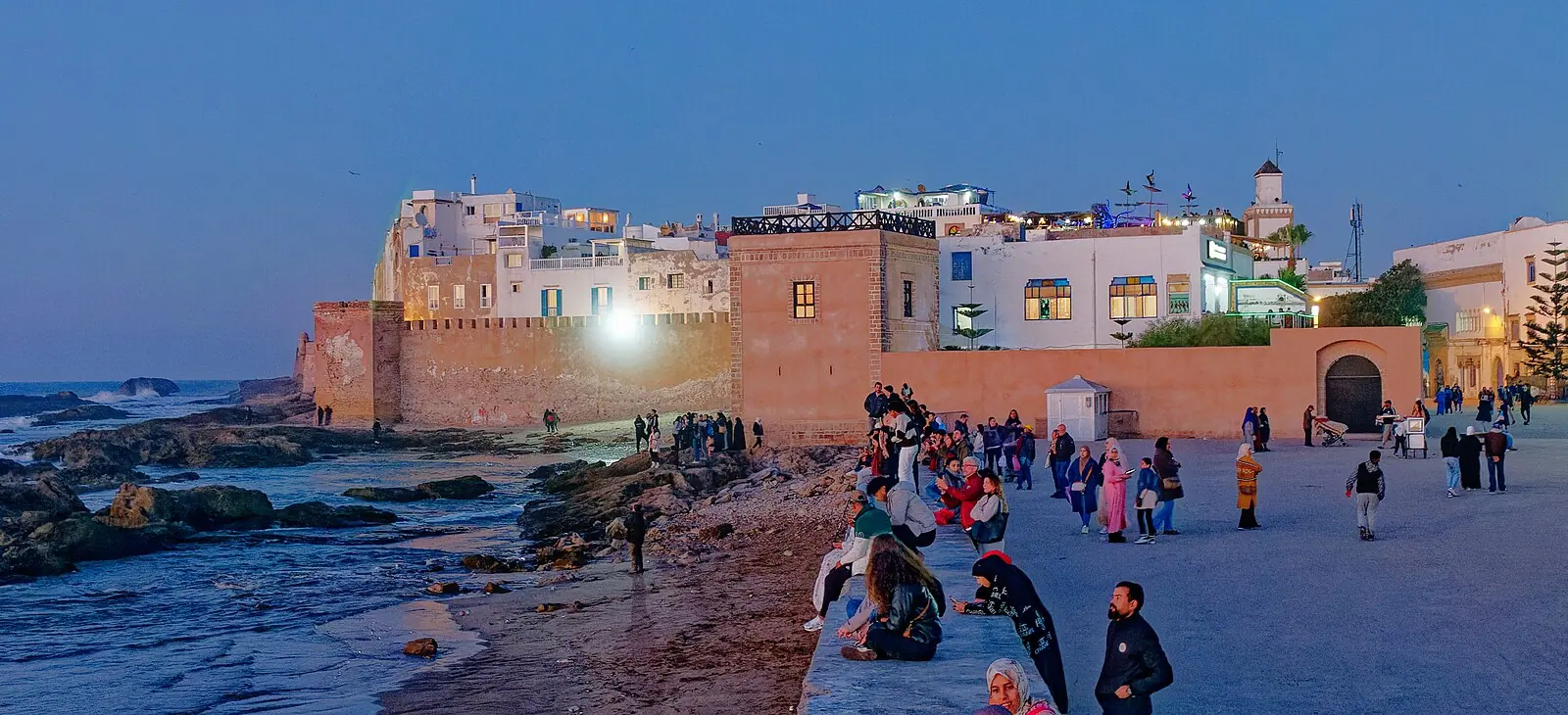
Things to do in Essaouira
Skip-the-line tickets, guided tours and standout experiences.
See experiences
Stay online in Morocco
Travel eSIM — data the moment you land, no roaming bills.
Get an eSIM