Morocco is a country of four climates stitched into one border, which means the best month to sleep in a Marrakech courtyard riad is rarely the best month to sleep under canvas in the Sahara. Get the season right and you gain warm terraces, clear desert skies and quiet medina alleys; get it wrong and you're either chasing shade or shivering in a room built to stay cool.
How Morocco's Seasons Shape Where You Sleep
Morocco's weather is dictated less by the calendar than by geography. The Atlantic coast from Essaouira down to Agadir stays mild and breezy almost year-round, the Rif mountains in the north catch the Mediterranean's rain, the Middle and High Atlas freeze and snow above roughly 2,000 metres, and the pre-Saharan south swings from blistering summer days to genuinely cold winter nights. A single week in April could put you in a sunny Marrakech courtyard, a rain-flecked Chefchaouen rooftop and a near-freezing desert camp outside Merzouga.
That variety is why accommodation choice matters as much as timing. Traditional riads are built around open courtyards with thick earthen walls: they stay deliciously cool in July but can be chilly and damp in January, so in winter it's worth seeking out a riad with proper heating, thick rugs and south-facing terraces rather than one relying on blankets alone. Desert camps are the opposite problem — summer tents can be unbearable by mid-morning, while winter nights regularly drop close to freezing, so ask about insulated tents, real beds and wood stoves before booking.
Broadly, the sweet spots are spring (March to May) and autumn (September to November), when daytime temperatures sit comfortably in the low twenties to high twenties Celsius across most of the country. These are also the busiest and most expensive windows, especially around Easter and the October half-term weeks. If your dates are flexible, the shoulder edges of those seasons — early March, late November — offer nearly the same weather with noticeably thinner crowds.
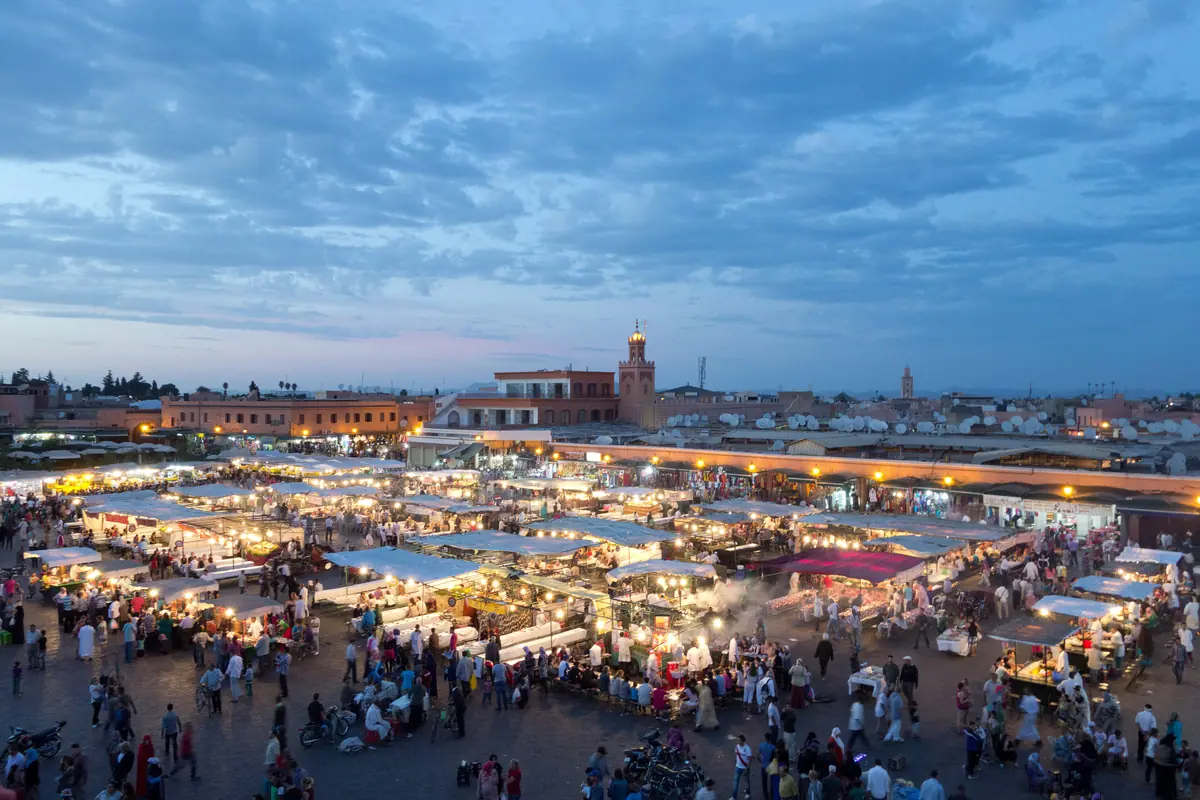
Spring: The Country's Golden Window (March to May)
Spring is when Morocco looks its best and when the classic circuit works flawlessly. In Marrakech, March and April bring daytime highs around 22–26°C — warm enough for the rooftop pools and garden terraces of the medina's guesthouses, cool enough to spend whole afternoons wandering. This is the season to linger at Jemaa el-Fnaa as the food stalls and storytellers assemble at dusk, to walk the cobalt-and-majorelle blues of the Majorelle Garden, to admire the carved cedar ceilings and tiled courtyards of the Bahia Palace, and to climb the Koutoubia Mosque's surrounding gardens when the orange blossom is out.
Beyond the city, spring unlocks the mountains and the south. The Tizi n'Tichka pass over the High Atlas is usually clear of snow, making the drive to the UNESCO-listed earthen ksar of Ait Benhaddou and the palm-filled Dadès and Todra gorges genuinely enjoyable rather than a white-knuckle affair. In the Dadès Valley near Kelaat M'Gouna, the rose harvest in early May fills the air and the distilleries with scent, and the almond blossom around Tafraoute in late February and early March turns the Anti-Atlas pink.
For hotels, spring is peak season and the calendar to watch is Easter, when European families arrive en masse and riad rates in Marrakech, Fes and Essaouira can double. Book two to three months ahead for the best courtyard rooms, and consider splitting your stay: a few nights in a medina riad, then a night or two in a kasbah-style hotel near the gorges where the stars are brighter and the air cooler.
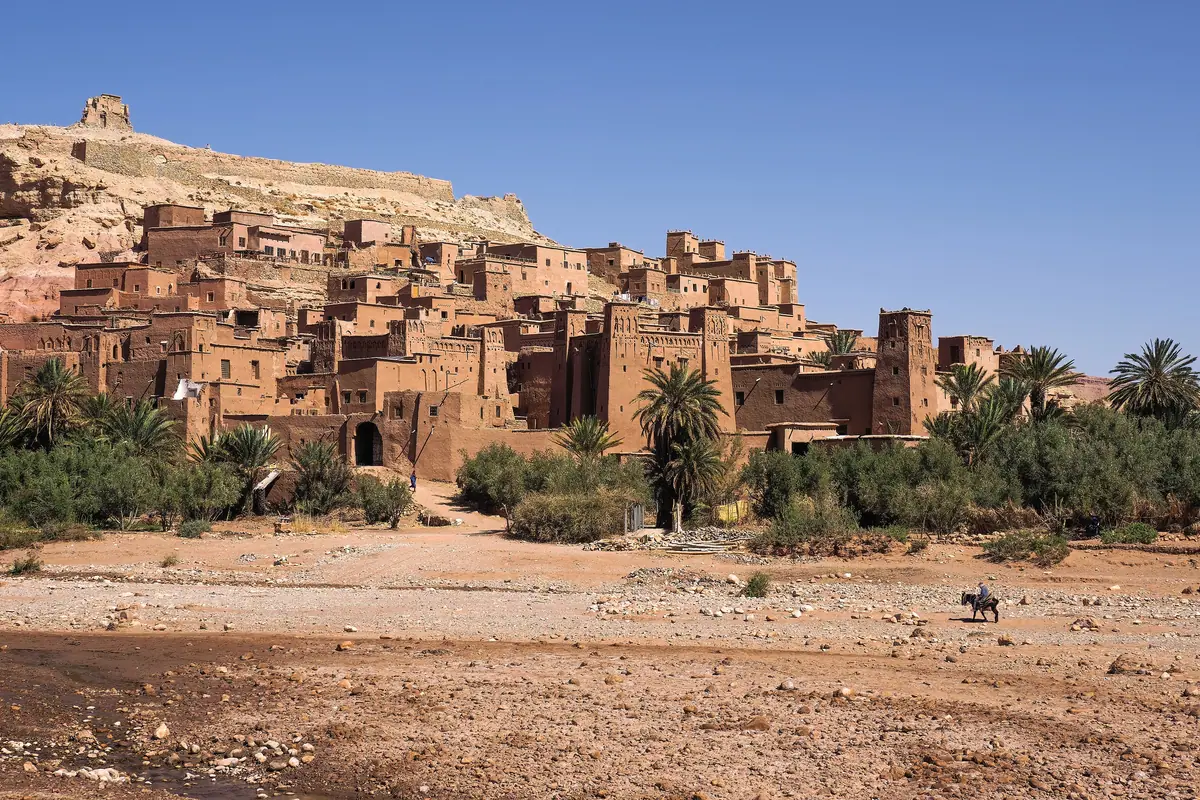
Autumn: Desert Nights and Medina Mornings (September to November)
Autumn is arguably the connoisseur's choice. The ferocious summer heat has broken, the Atlantic has warmed to its annual peak, and the light across the medinas turns long and golden. October in particular is close to perfect: Marrakech and Fes sit in the mid-to-high twenties, the Sahara around Merzouga and Zagora becomes genuinely pleasant for camel treks and dune walks, and nights are cool enough for a fire outside your tent without being punishing.
This is the season for Morocco's most storied sights. In Fes, the labyrinth of Fes el-Bali — the vast car-free medina with its tanneries, souks and the exquisitely tiled Al-Attarine Madrasa — is bearable to explore on foot from morning to late afternoon, with the ornate Bab Bou Jeloud gate as your natural entry point. Further north, the Roman mosaics and triumphal arch of Volubilis stand in open countryside that's mercifully free of summer glare, and the blue-washed lanes of Chefchaouen in the Rif are at their most photogenic under autumn light.
Hotel-wise, autumn is peak again but with a gentler rhythm than spring. November, after the European half-term break, is a quiet gem: prices dip, riads still have their terraces open, and desert camps begin adding heavy blankets and stoves for the coming cold. If your dream is a night in the dunes, target late September through early November — after that, the nights bite hard.
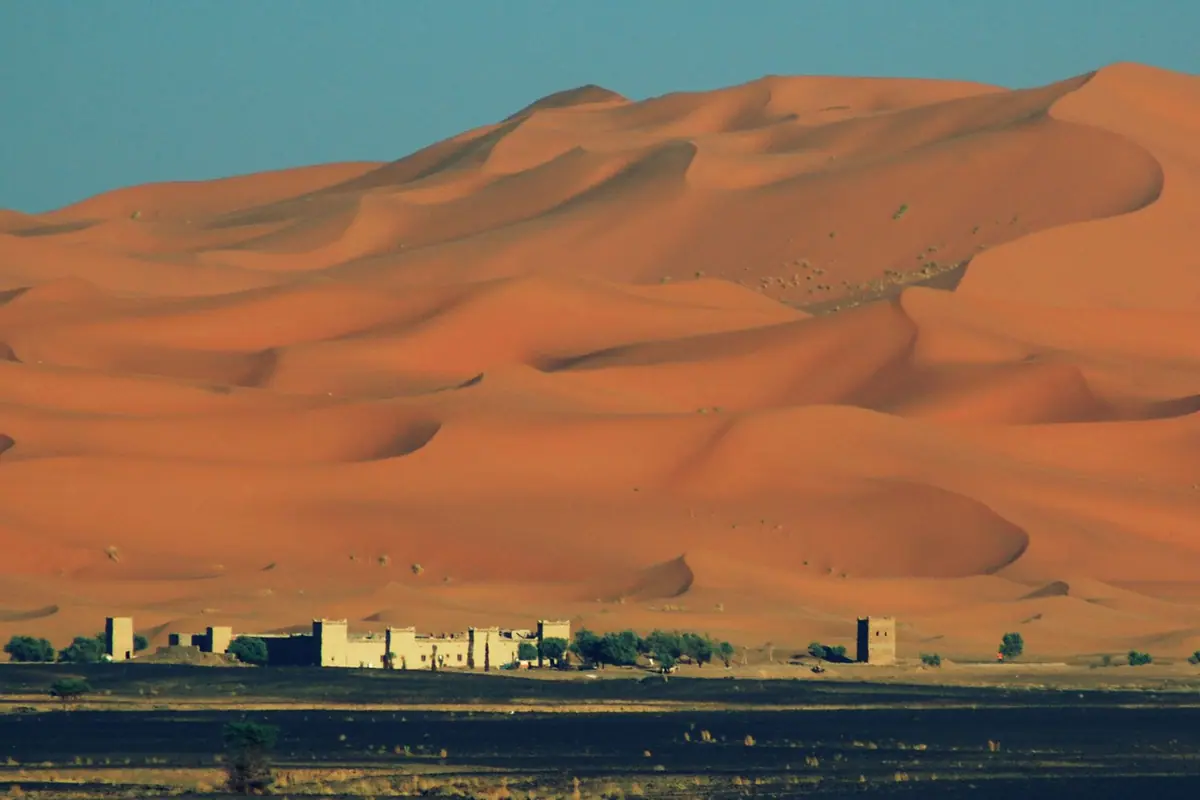
Winter: Coastal Mildness and Cold, Clear Desert Skies (December to February)
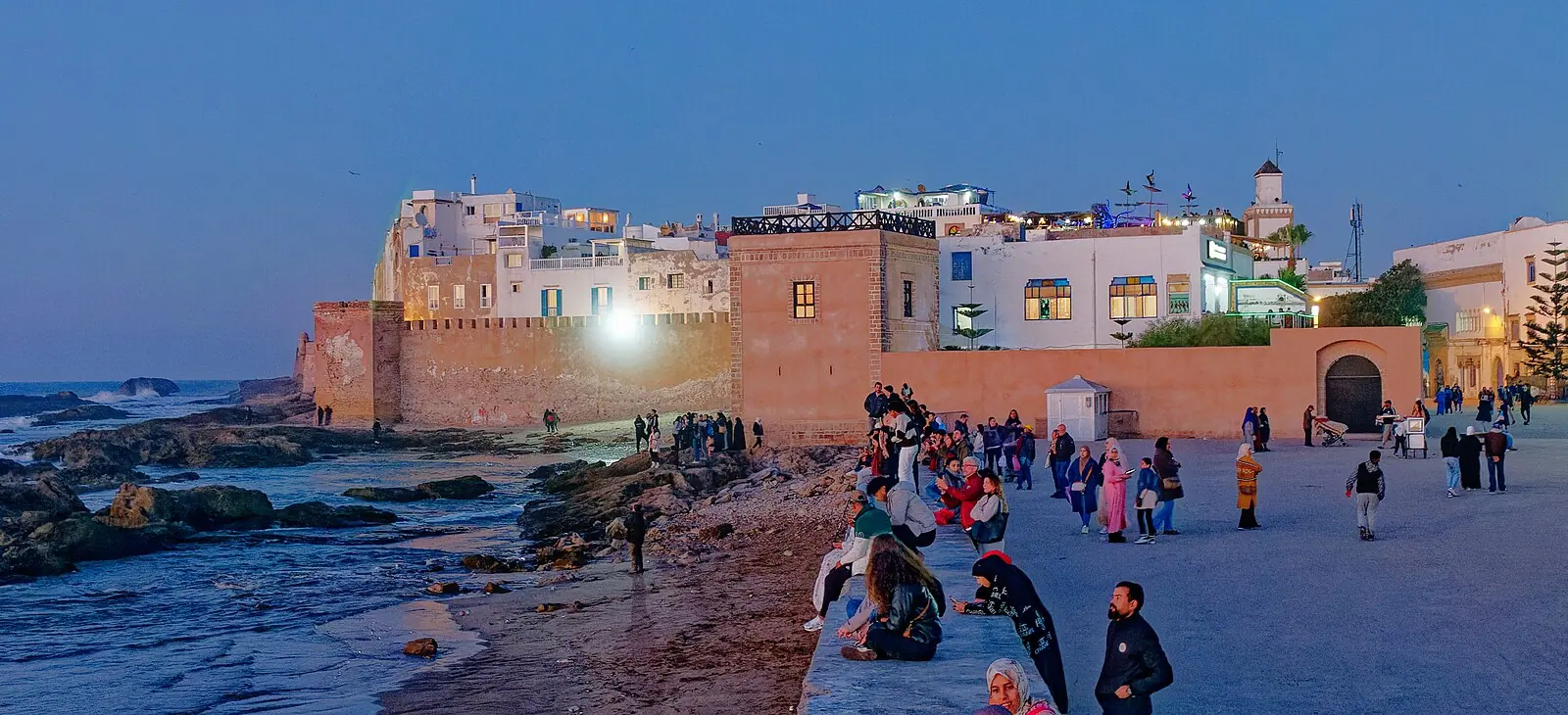
Winter splits Morocco in two. Along the Atlantic, Essaouira and Agadir remain mild and largely rain-free, with daytime temperatures in the high teens to low twenties — pleasant for wandering the whitewashed, wind-battered ramparts of Essaouira's UNESCO-listed medina or for beach time in Agadir and Taroudant's red-walled souks. Inland, though, Marrakech days hover around 18–20°C while nights can fall to 5°C or below, and the High Atlas around Toubkal is under serious snow. The Sahara is dry and sunny by day but near freezing after dark.
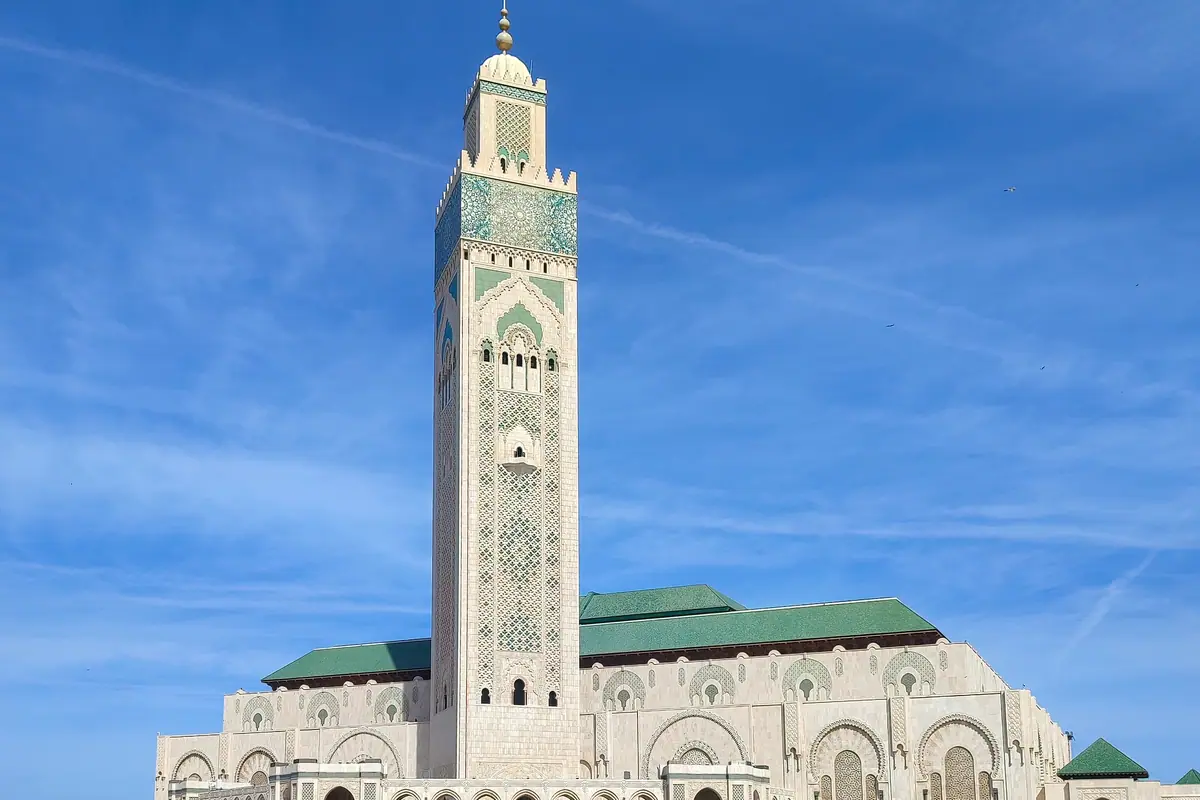
That contrast shapes your hotel choices more than any other season. In Marrakech, Fes and Chefchaouen, look for riads with underfloor heating, thick blankets and sun-trap roof terraces, and be honest about how much you'll use an unheated plunge pool. In the desert, a budget camp without insulation can be deeply uncomfortable in January; a well-run camp with proper beds, carpets and a heated communal tent is worth every extra dirham. Meanwhile, the coast becomes the smart base — Casablanca's monumental Hassan II Mosque, with its ocean-facing minaret and vast carved prayer hall, is open to visitors on guided tours and makes an excellent rainy-day stop.
Winter is also the quietest, cheapest season outside the Christmas and New Year rush. Sightseeing is blissfully uncrowded, guides have time to talk, and the light is clean and low. Pack layers rather than a single heavy coat: a clear January afternoon in Marrakech feels like spring, and by nine in the evening you'll want a jacket and a hammam.
Summer: Fleeing the Heat in the Rif and the High Atlas (June to August)
Summer is the season to be strategic. Marrakech regularly hits 38–40°C and Fes can be similarly punishing, which is why medina hotels empty out and prices fall sharply. If you do visit, adopt local habits: sightsee before nine in the morning and after six in the evening, spend the middle of the day in a courtyard riad, a hammam or a museum, and treat the Ourika Valley or the Cascades d'Ouzoud as all-day escapes where water and shade do the work.
The genuinely comfortable summer destinations are elsewhere. Chefchaouen, folded into the Rif at around 600 metres, stays warm but not savage, and its blue alleys and Spanish-mosque lookout are best explored in the long summer evenings. Tangier and Asilah on the northern coast catch Atlantic breezes, Essaouira is famous for its summer trade winds — superb for kitesurfing, less so for sunbathing — and the mountain town of Ifrane, with its Alpine-style architecture and cedar forests, offers real relief at 1,600 metres.
Coastal hotels in Essaouira, Agadir and Taghazout book out early for July and August, largely with Moroccan families escaping the interior heat and surfers chasing the swell. Reserve well ahead, favour properties with sea-facing terraces rather than inland courtyards, and expect windy afternoons. In the mountains, family-run guesthouses in the High Atlas valleys are cheap, cool and often the highlight of a summer trip.
Timing Your Trip Around Ramadan, Festivals and the Booking Calendar
Two moving targets can make or break a Moroccan hotel booking. The first is Ramadan, which shifts roughly eleven days earlier each year and lasts a lunar month. During it, many restaurants close in daylight hours, opening hours shorten, and the nightly iftar meal becomes a joyful, crowded affair — but some desert camps and rural guesthouses scale back services, and alcohol is harder to find outside tourist hotels. It's a fascinating time to visit if you're respectful and flexible; just confirm that your accommodation serves breakfast and dinner as usual.
The second is the festival calendar. The Fes Festival of World Sacred Music and Rabat's Mawazine rhythms fill June with music and hotel demand, Marrakech's international film festival draws crowds to the city in late autumn, and major religious holidays such as Eid al-Fitr and Eid al-Adha see domestic travel spike and many shops shut for several days. If your trip coincides with a large event, book accommodation three to four months out, not three weeks.
General booking logic for Morocco: reserve riads and desert camps two to three months ahead for March–May and September–November, one month ahead is usually fine for June–August in Marrakech and Fes, and you can often book coastal hotels on shorter notice in winter. Wherever you stay, confirm three things in writing — heating or air conditioning as appropriate, whether the room has an exterior window (many riad rooms don't, which is a blessing in summer and a drawback in winter), and how you'll be met and guided in, since medina addresses are famously impossible to find alone.
Frequently asked questions
What is the best month to visit Morocco overall?
April and October are the most reliably pleasant months across the whole country — warm, dry days in Marrakech and Fes, comfortable desert temperatures, and clear conditions for the Atlas passes. Late November and early March offer nearly the same weather with fewer visitors.
When is the best time for a Sahara desert camp near Merzouga?
Late September to early November and late February to April are ideal: warm days, cool but manageable nights and clear skies for stargazing. December and January bring near-freezing nights, so choose a camp with insulated tents and heating, and avoid July and August entirely.
Which season suits a riad stay in Marrakech or Fes?
Spring and autumn are the classic riad seasons, when rooftop terraces and courtyards are at their best. In winter, prioritise riads with real heating and thick walls, since traditional courtyard buildings are designed to stay cool and can feel cold and damp in January.
Is summer a bad time to visit Morocco?
Not if you choose the right region. Head for Chefchaouen, Tangier, Asilah, Essaouira or the High Atlas valleys such as Ifrane and the Ourika Valley. Inland cities like Marrakech and Fes are extremely hot, though hotel prices drop noticeably.
How far ahead should I book hotels in Morocco?
For March to May and September to November, book riads and desert camps two to three months ahead, and three to four months if your dates overlap Ramadan-adjacent holidays, Eid, or a major music or film festival. Coastal resorts in July and August also sell out early with domestic travellers.
Sort the rest of your trip
Everything for Morocco, in one place
Transfer in Morocco
Private driver waiting on arrival — no queues, no surprises.
Book a transfer
Things to do in Morocco
Skip-the-line tickets, guided tours and standout experiences.
See experiences
Stay online in Morocco
Travel eSIM — data the moment you land, no roaming bills.
Get an eSIMMore guides in Morocco
Top Things to Do in Morocco: Landmarks, Medinas and Sahara Nights
Where to Stay in Essaouira: Riads, Kasbah Hideaways and Beach Hotels for a Weekend

Chefchaouen Airport Transfers & Getting Around: Buses, Grand Taxis and the Blue Medina
