Morocco compresses an improbable amount into one country: snow-dusted peaks an hour from palm oases, a thousand-year-old medina that swallows you whole, dunes that turn rose-gold at sunset, and an Atlantic coast where gulls circle a Portuguese-era rampart. The trick isn't deciding whether to go — it's choosing which corners to give your days to, and in which order.
Marrakech: Jemaa el-Fnaa, Palaces and the Souks
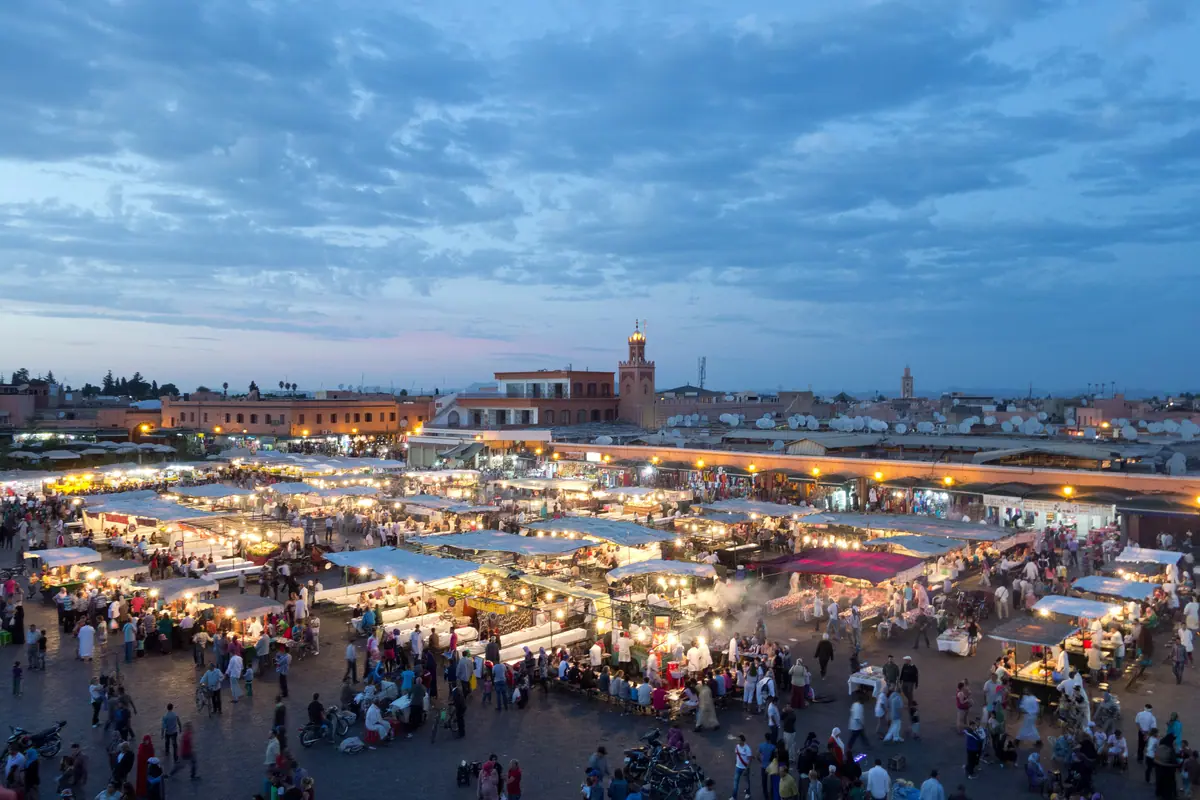
Marrakech is the loud, sunburnt gateway most travellers meet first, and Jemaa el-Fnaa is its beating heart. Arrive before dusk and watch the square transform: juice carts and dried-fruit stalls give way to Gnaoua drummers, acrobats, henna artists and open-air grills sending up smoke from kebabs and spiced tagines. Behind it all stands the Koutoubia Mosque, its 77-metre minaret visible from almost every rooftop terrace — the building that set the template for Moroccan towers, including the one in Seville. Non-Muslims can't enter, but the gardens and the sunset view from a terrace café opposite are worth the mint tea.
Spend a morning on the monuments: the Bahia Palace with its painted cedar ceilings and tiled courtyards, the Saadian Tombs tucked behind a wall near the Kasbah, and the romantic ruin of El Badi Palace, where storks nest on the ramparts. Then head north to the Jardin Majorelle, a cobalt-blue studio-villa surrounded by cactus beds and bamboo — go at opening time, as midday crowds are heavy and timed entry slots sell out in high season.
The souks north of Jemaa el-Fnaa are the real Marrakech: Semmarine's lanterns and slippers, the dyers' quarter with its wool hanging like storm clouds, and the spice square of Rahba Kedima. Getting lost is inevitable and part of the pleasure. Prices are negotiable and starting points are ambitious; agree on a figure before anything is wrapped. Spring (March–May) and autumn (September–November) are ideal, with days around 25°C; July and August routinely push past 40°C, when you'll want to sightsee early and nap through the afternoon.
Fes el-Bali: The Great Medieval Maze
If Marrakech performs, Fes withholds. Fes el-Bali is the largest car-free urban area on earth — a dense knot of lanes, blind alleys, donkeys carrying gas canisters and doorways that open into palaces. At its centre sits al-Qarawiyyin, a mosque and teaching institution founded in the ninth century and counted among the oldest continuously operating universities anywhere. Nearby, the Bou Inania and al-Attarine madrasas show what Moroccan craft can do at full tilt: carved stucco, zellij mosaic, honeycombed cedar ceilings.
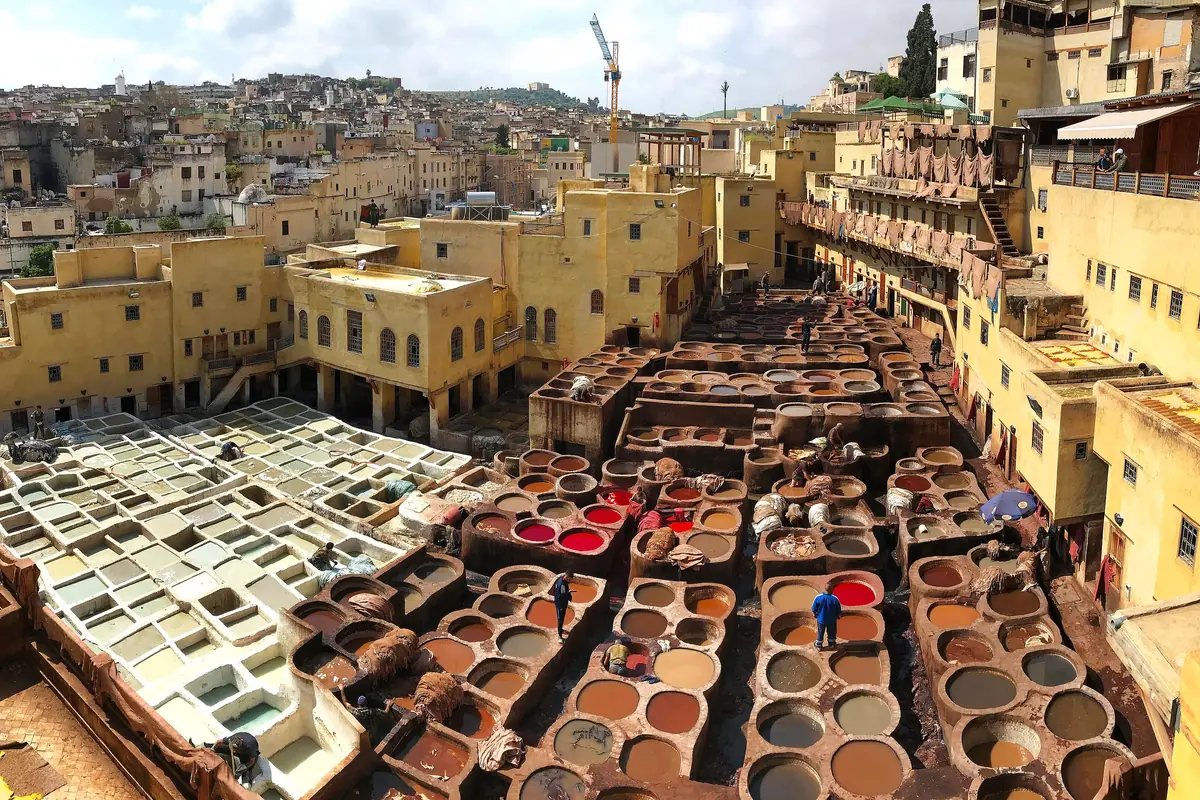
The Chouara tanneries are Fes's most photographed sight — stone vats of dye, lime and pigeon droppings worked the same way for centuries. You view them from the terraces of leather shops, which will hand you a sprig of mint against the smell and expect you to browse on the way out. Mornings are best, both for light and for the actual work in progress. Afterwards, follow the sound of hammering to the brass and copper souk, or watch tiles being chipped by hand in the pottery quarter outside the walls.
Fes rewards patience and a good guide on day one. The blue gate of Bab Bou Jeloud makes a handy landmark, and the Andalusian side of the medina around Place R'cif is quieter than the main artery of Talaa Kebira. Allow two or three nights in a medina riad rather than a rushed day trip; many monuments and workshops close on Fridays, and summer heat in the narrow lanes can be stifling, so April, May and October are the sweet spots.
The Sahara: Erg Chebbi, Merzouga and the Draa Valley
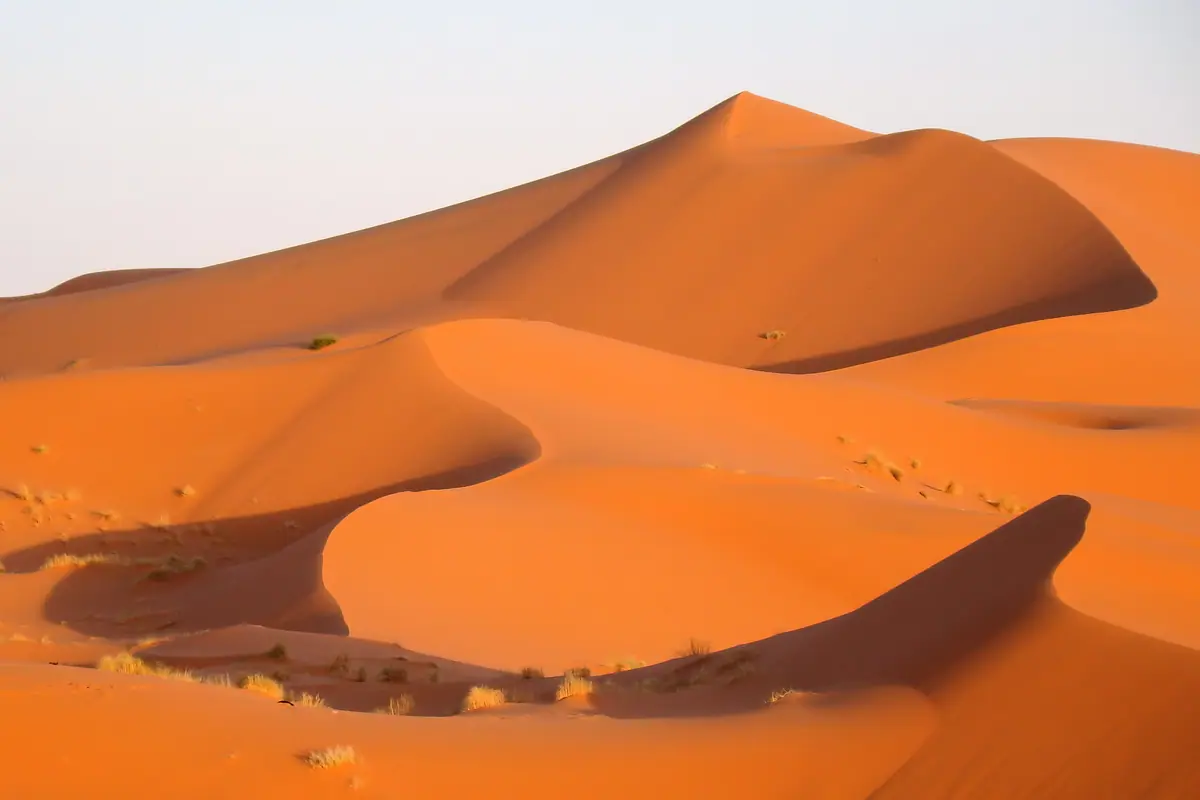
Nothing in Morocco prepares you for Erg Chebbi, the great orange dune sea beside the village of Merzouga. The ridges rise high enough to hide a caravan, and the light shifts from cream to apricot to deep violet within an hour of sunset. Most travellers arrive by road in the late afternoon, swap a 4x4 for a camel, and ride out to a tented camp among the dunes for tagine, drumming and a night sky unbothered by any town. Camps range from simple Berber blankets to proper beds with hot showers, so it's worth checking what you're booking.
The classic approach from Marrakech takes two days and crosses the Tizi n'Tichka pass, the kasbah of Ait Benhaddou, the Valley of the Roses and the Dades and Todra gorges — a route that is arguably the best road trip in the country. From Fes the drive runs south through Midelt and the palm-studded Ziz Valley, and can be done in a long single day. Whichever way you come, plan on at least two nights in the desert: one to arrive and watch the sunset, one to wake for sunrise.
October to April is the season here, with warm days and genuinely cold nights in December and January — bring a fleece and a hat. June to August is punishing, with daytime temperatures commonly above 40°C. If you want the dunes without the crowds, Erg Chigaga, reached only by 4x4 from M'Hamid, is wilder, larger and far quieter, but demands a sturdier vehicle and more time.
Chefchaouen and the Rif Mountains
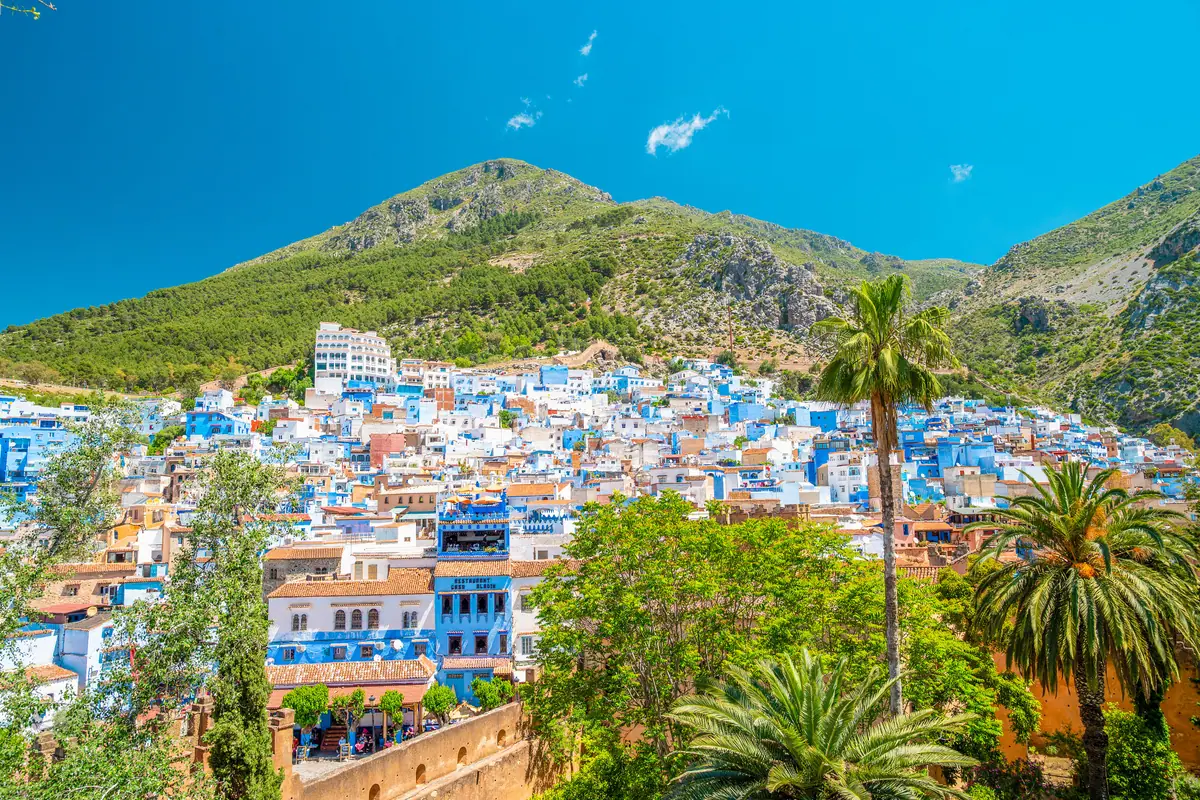
Chefchaouen is the country's most photogenic town and its most restful. Every lane of the old quarter is washed in blue, from powdery sky tones to deep indigo, a tradition said to have been reinforced by refugees from Andalusia and kept alive ever since. The heart is Plaza Uta el-Hammam, ringed by cafés under a huge plane tree, with the small kasbah museum and its Andalusian garden just off one corner. Make the 20-minute climb to the Spanish Mosque above town for sunset: the call to prayer rolls up from below and the blue rooftops glow.
Give yourself two or three days rather than a flying visit. The Rif around Chefchaouen is superb walking country, and the trails to the Akchour waterfalls and the natural rock arch known as God's Bridge wind through the Talassemtane hills past holm oak, oleander and hidden pools. It's also the coolest major town in Morocco in summer, which makes it a fine escape from Marrakech or Fes in July.
Chefchaouen is easily reached from Tangier by road in about two and a half hours, and it makes a relaxed first or last stop on a northern loop. Spring brings wildflowers to the hillsides and autumn brings clear, stable weather; winter can be cold, wet and occasionally snowy on the higher slopes, though the town itself stays mild and wonderfully quiet.
The High Atlas, Ait Benhaddou and the Kasbah Road
The High Atlas is Morocco's spine, rising to Jebel Toubkal at 4,167 metres — the highest point in North Africa. The trekking base is Imlil, a village of walnut trees and mule tracks about 90 minutes from Marrakech, from where you can walk to waterfalls and Berber hamlets in a day or attempt the summit over two or three. The climbing season runs roughly April to October; from November to March the peaks hold serious snow and crampons are needed. Closer to the city, the Ourika Valley offers seven-tiered falls and riverside tea houses that fill up on weekends.
South of the mountains, the landscape switches to bare rock and earthen architecture. Ait Benhaddou is the showpiece: a fortified ksar of mud-brick towers stacked up a hillside above a dry riverbed, so cinematic that it has stood in for Tibet, Arabia and ancient Rome on screen. Across the valley, Ouarzazate is the kasbah road's hub, with the vast Kasbah Taourirt in its centre and film studios on the edge of town.
Continue east and the gorges begin: the Dades, with its switchback road and monkey-finger rock formations, and the Todra, a 300-metre slot of vertical limestone where local boys swim and climbers rig routes. The Valley of the Roses blooms in late April and early May, when the whole valley smells of damask and distills its crop into rose water. This region is best in spring and autumn — midsummer is blisteringly hot, and winter nights in the kasbah country drop near freezing.
The Atlantic Coast and Imperial Cities
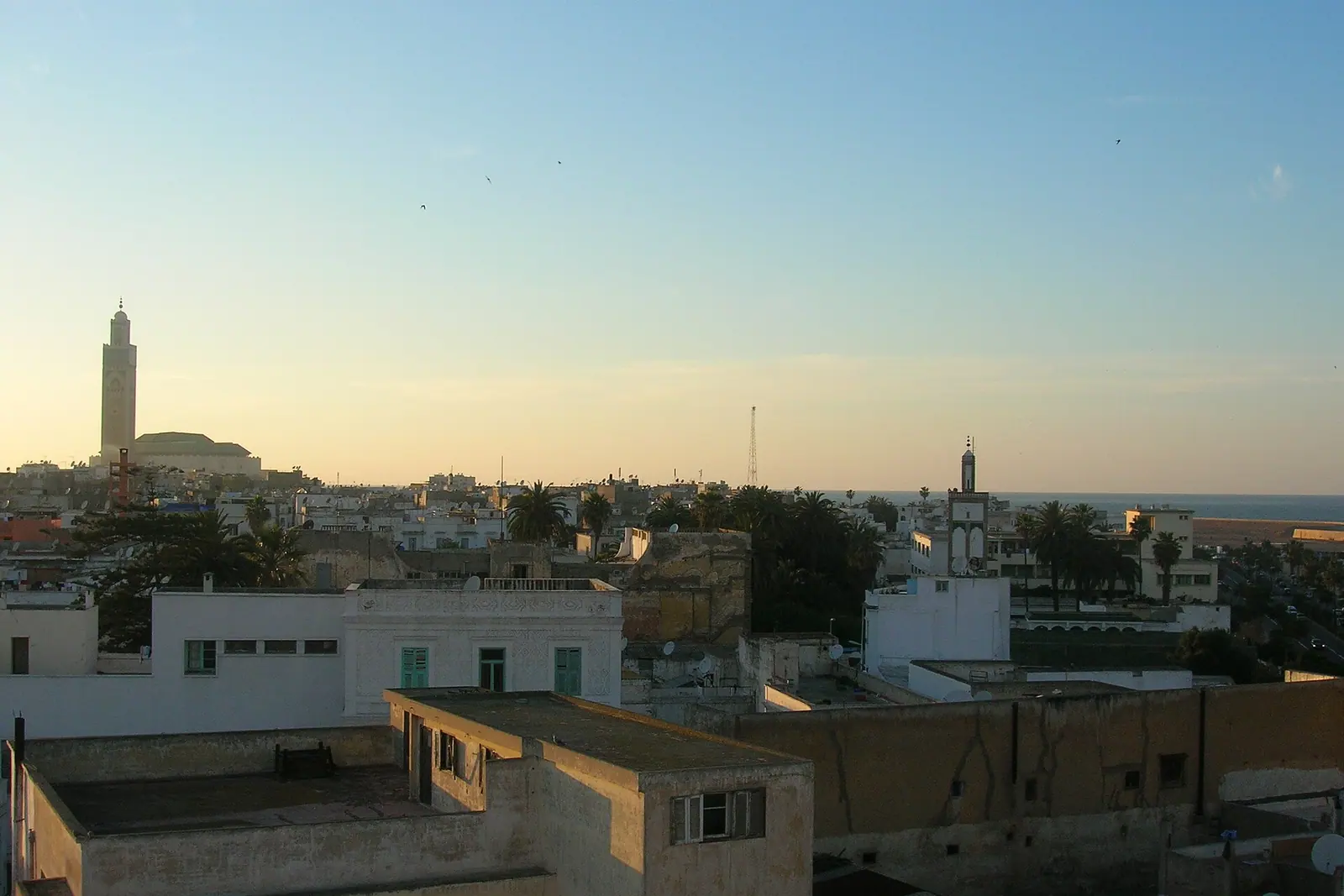
Casablanca is loud, commercial and often skipped too quickly, but the Hassan II Mosque justifies the stop on its own. Built partly over the ocean, its minaret reaches 210 metres and it is one of the few mosques in Morocco open to non-Muslim visitors on guided tours — check times on arrival, as they are limited and outside prayer hours. Beyond it, the Habous quarter and the faded Art Deco facades of the old centre reward a half-day of wandering.
Rabat, the capital, is calmer and easier than its reputation suggests. The Kasbah of the Udayas is a blue-and-white citadel above the river mouth, the Hassan Tower and the Mausoleum of Mohammed V sit on a plateau of broken columns, and the Chellah necropolis mixes Roman ruins with Merinid walls and a resident population of storks. An hour away, Meknes pairs the monumental Bab Mansour gate and the vast Heri es-Souani granaries with the Roman site of Volubilis, whose mosaics are still vivid underfoot.
Down the coast, Essaouira is the antidote to medina fatigue: whitewashed, wind-whipped and walkable, with the Skala de la Ville ramparts where cannons point out to sea and fishing boats unload sardines every afternoon. The trade winds make it a kitesurfing and windsurfing base from spring to autumn, and the town's Gnaoua music festival fills the squares each June. Trains link Marrakech, Casablanca, Rabat, Fes and Tangier comfortably, but Essaouira and the desert are road territory — budget a driver or shared transport for those legs.
Frequently asked questions
How many days do you need in Morocco?
Ten to fourteen days is the sweet spot for a first trip: three nights in Marrakech, two or three in Fes, two in the Sahara around Merzouga, and a couple split between Chefchaouen, Rabat or Essaouira. With only a week, pick either the north (Fes, Chefchaouen, Rabat) or the south (Marrakech, Ait Benhaddou, the desert) and resist the urge to loop the whole country.
What is the best time of year to visit Morocco?
March to May and September to November give the most comfortable conditions almost everywhere, with mild days and cool evenings. The Sahara is best from October to April. Coastal towns like Essaouira stay breezy and pleasant through summer, while Marrakech and Fes can exceed 40°C in July and August. Winter is cold in the Atlas and at desert camps, where nights can drop below freezing.
Is Morocco easy to get around without a car?
Yes, with planning. The rail network connects Tangier, Rabat, Casablanca, Marrakech and Fes reliably, and fares are low. Beyond those cities you'll rely on shared vans, buses or hired cars with drivers. For the desert and the kasbah road, most travellers book a multi-day private or small-group transfer rather than self-driving, since mountain passes and long desert stretches demand local knowledge.
Do you need a guided tour for the Sahara?
For Erg Chebbi and Merzouga, yes in practice — access to the dunes and camps is arranged through local operators, usually including a camel or 4x4 transfer and dinner. Erg Chigaga, near M'Hamid, is only reachable by 4x4 and needs a proper operator. Two nights is the minimum to make the long journey worthwhile; one night leaves you exhausted and rushed.
What should visitors know about dress and etiquette?
Modest clothing that covers shoulders and knees makes daily life easier, especially in medinas and rural areas, and a scarf is handy for sun and dust. Always ask before photographing people, and expect a small tip if they agree. Many shops and some monuments close on Fridays, and during Ramadan opening hours shrink and daytime eating in public is best kept discreet.
Plan it — experiences in Morocco
Live search, booked directly with trusted providers.
Sort the rest of your trip
Everything for Morocco, in one place
Stay in Morocco
Hotels, guesthouses and apartments — compared in one search.
Search hotels
Transfer in Morocco
Private driver waiting on arrival — no queues, no surprises.
Book a transfer
Stay online in Morocco
Travel eSIM — data the moment you land, no roaming bills.
Get an eSIMMore guides in Morocco

Top Things to Do in Morocco: Landmarks, Medinas and Sahara Nights

Best Time to Visit Morocco for Hotels: A Season-by-Season Guide
Where to Stay in Essaouira: Riads, Kasbah Hideaways and Beach Hotels for a Weekend
Chefchaouen Airport Transfers & Getting Around: Buses, Grand Taxis and the Blue Medina