Morocco packs a continent into one country: snow-streaked Atlas peaks, cedar forests full of Barbary macaques, blue-washed mountain towns, Roman mosaics standing in olive groves, and a Sahara so quiet you can hear your own pulse. Between the imperial cities and the Atlantic surf, the trick is not to rush the middle distances, because the best of Morocco happens on the road between the postcards.
Marrakech: Jemaa el-Fna, Palaces and the Koutoubia
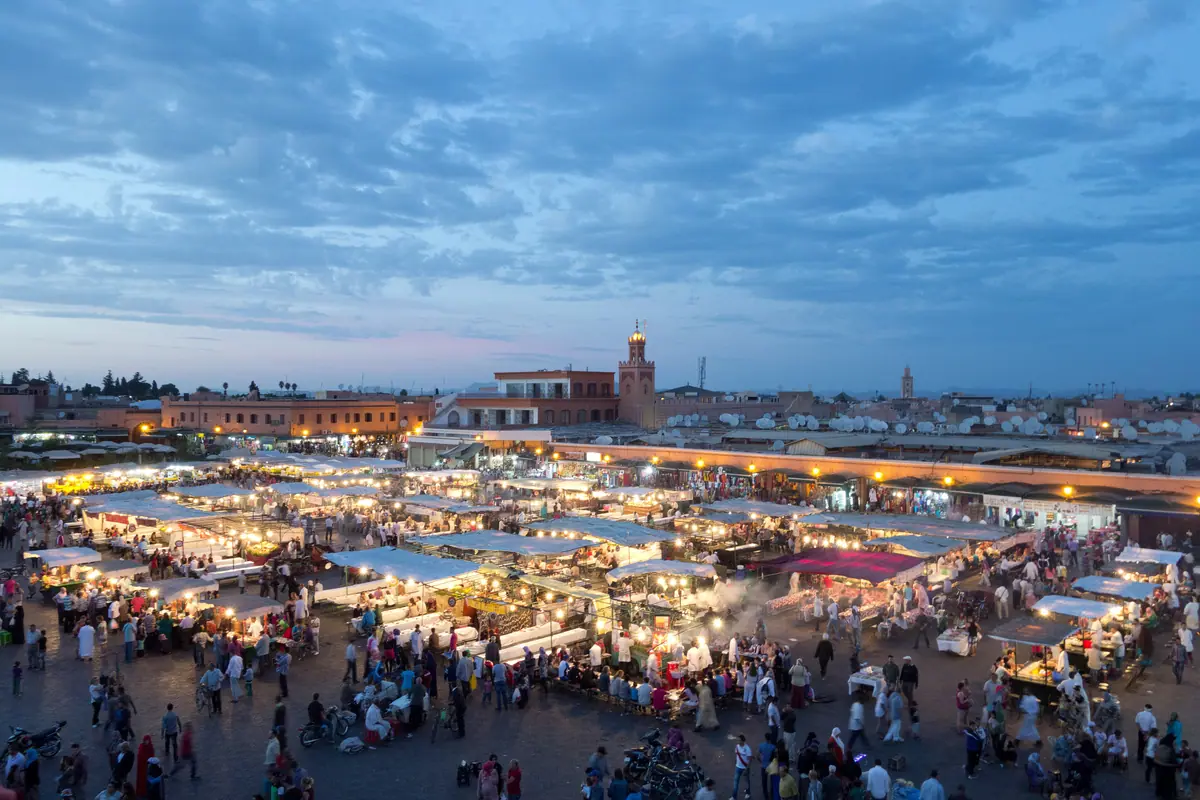
Marrakech is the loudest possible introduction to the country, and Jemaa el-Fna is its beating heart. As the light drops, the square transforms: rows of food stalls fire up grills, Gnaoua drum troupes circle their amplifiers, henna artists and juice sellers work the crowd, and the smoke from a hundred braziers turns orange above the heads. Standing over it all is the Koutoubia, the city's 12th-century minaret, roughly 77 metres of carved stone that glows amber at sunset. Non-Muslims cannot enter Moroccan mosques, but the gardens around the Koutoubia and its silhouette from any riad rooftop are worth the walk.
The daytime Marrakech circuit is a tight cluster of masterpieces. The Bahia Palace, built in the late 19th century, unfurls room after room of zellige tile, painted cedar ceilings and open courtyards. The Saadian Tombs, walled up for centuries and rediscovered in 1917, hold some of the finest carved stucco in the country. Nearby, the Ben Youssef Madrasa, restored and reopened after years of careful work, lets you climb into the tiny student cells ringing its courtyard. The Majorelle Garden, a cobalt-blue villa and cactus garden, is best at opening time, when the tour groups have not yet arrived.
Give Marrakech two or three full days and work with the heat rather than against it: sights in the morning, hammam, pool or souk browsing in the afternoon, and the square after dark. The souks north of Jemaa el-Fna are a genuine maze of copper, leather, lanterns and rugs, and the Semmarine covered street is the classic entry point. July and August are punishing, with highs pushing past 40C, while March to May and October to November are close to perfect.
Fes el-Bali and the Imperial North
Fes el-Bali is the largest car-free urban area on earth and the most convincing medieval city you will ever get lost in. Founded in the 9th century, it holds thousands of lanes, and somewhere inside sits Al-Qarawiyyin, founded in 859 by Fatima al-Fihri and often described as the oldest continuously operating place of learning in the world. The Bou Inania Madrasa, built in the 1350s, is a riot of carved plaster and green-tiled roofs, with a medieval water clock still facing the street outside. Enter through Bab Bou Jeloud, the blue gate, and expect to hire a local guide on your first morning, because your phone will lose you.
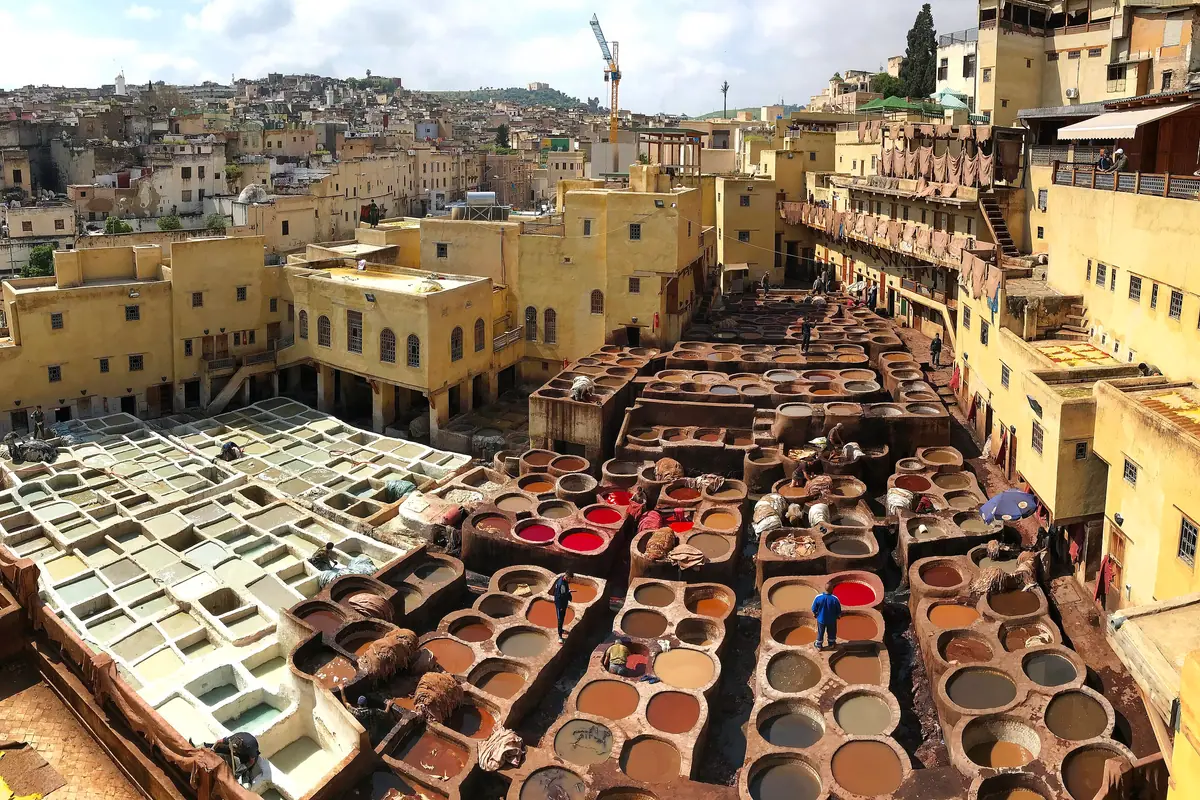
The Chouara tannery is Fes at its most visceral: dozens of stone vats filled with dyes, lime and pigeon droppings, men working hides the way their ancestors did. Terraces above the pits hand out sprigs of mint to hold against your nose, and the best light falls mid-morning. Beyond Fes, the north rewards a loop: the Roman ruins of Volubilis, with its mosaics and triumphal arch set among olive groves; the pilgrimage town of Moulay Idriss tumbling down two hills; and Meknes, quieter than its siblings, where the monumental Bab Mansour gate opens onto the vast, echoing granaries of Heri es-Souani.
Fes is a city for early starts. Shops open around 9am, close for a long lunch, and reopen in the late afternoon; in summer, the souks are most pleasant before 11am. Two days covers the essentials, three lets you slow down for a rooftop dinner and a proper hammam. Between October and April the mornings can be genuinely cold, so pack a jacket even if Marrakech was sweltering.
Chefchaouen and the Northern Coast
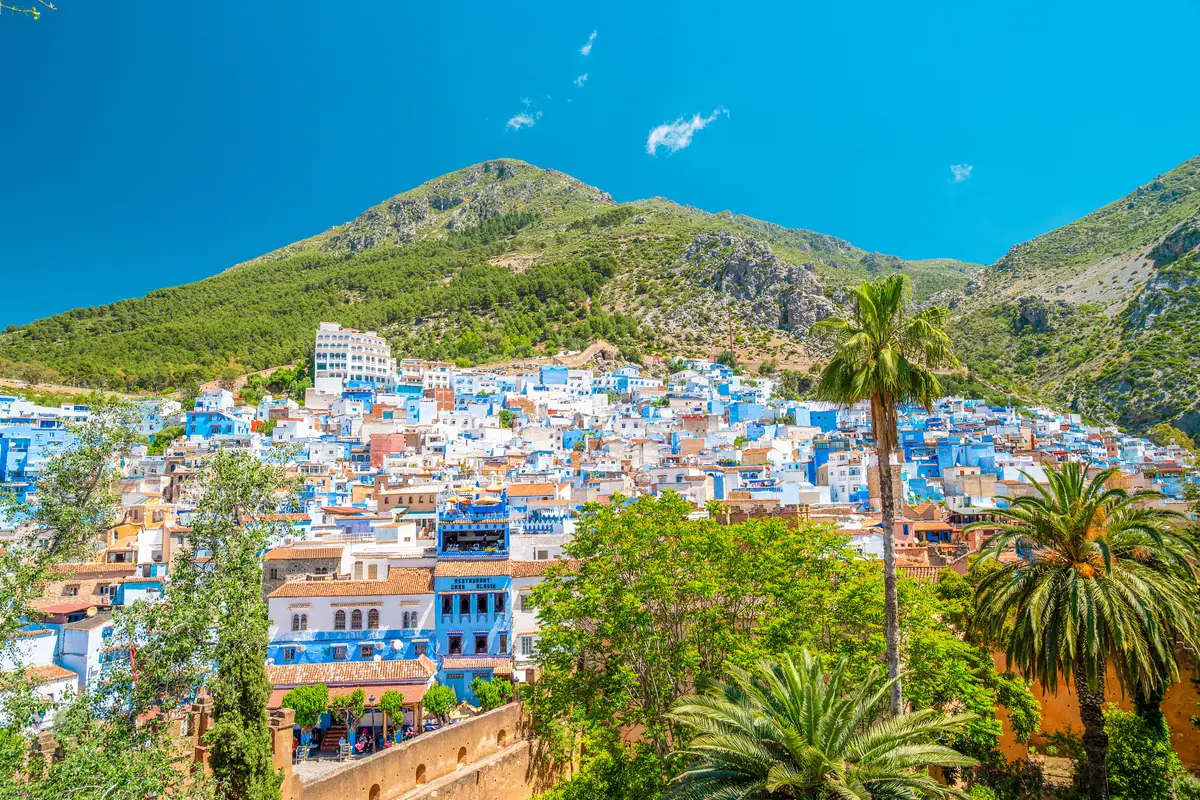
Chefchaouen, folded into the Rif mountains, is the country's most photographed town, and it earns the attention. Founded in the 15th century by refugees from the Iberian peninsula, its medina is washed in a hundred shades of blue - indigo at the doors, powder blue on the stairwells, cobalt down the alleys. Climb to the Spanish Mosque on the ridge for sunset, where the call to prayer rolls across the valley and the whole town turns mauve, and detour to the small Kasbah museum and the Ras el-Maa spring where locals wash rugs in the rushing water. Two nights is ideal; the surrounding hills offer excellent day hikes and, in spring, wildflowers and waterfalls.
Further north, Tangier has reinvented itself as a breezy, cultured port. The Kasbah sits above the medina, the Grand Socco and Petit Socco are good for mint tea and people-watching, and out along the coast, Cap Spartel marks the point where the Atlantic meets the Mediterranean, with the Caves of Hercules a short drive away. South of Tangier, whitewashed Asilah decorates its walls with murals each summer and has a long, empty beach a short walk from the ramparts.
The north runs cooler and wetter than the south: expect rain between November and March, green hills in April, and pleasant, breezy summers. Buses and shared taxis connect Tangier, Chefchaouen and Fes, and the scenery on that route is half the reason to go. Bring layers, decent walking shoes for the cobbles, and cash, since smaller mountain towns have fewer card machines.
Over the High Atlas: Kasbahs, Gorges and Ait Benhaddou
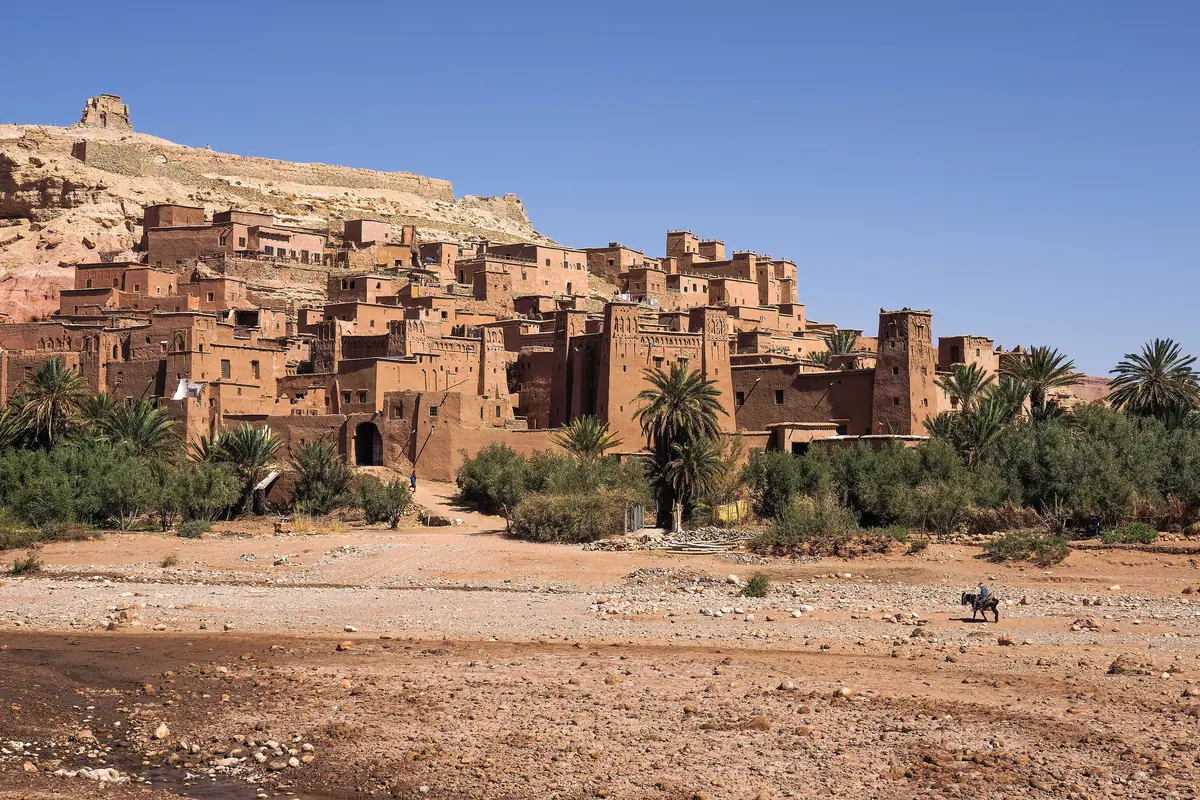
The Tizi n'Tichka pass, at about 2,260 metres, carries you over the High Atlas from Marrakech into a completely different Morocco - dry, ochre and studded with earthen forts. The headline sight is Ait Benhaddou, a fortified ksar of packed clay and straw rising from a riverbed, its houses stacked up the hillside behind a defensive wall. The village has been settled for centuries, and its ochre towers have stood in for half the ancient world on screen. Cross the stepping stones, climb to the agadir at the top, and time your visit for early morning or late afternoon, when the walls turn gold.
Nearby Ouarzazate is the gateway to the south, ringed by film studios and desert plateaus, while the Dades Valley twists through a series of hairpin bends above green oases and kasbahs. Further east, the Todra Gorge at Tinghir slices 300 metres into limestone, so narrow in places you can touch both walls. Walk the riverbed in the morning, when sunlight reaches only the upper cliffs, and stay overnight in one of the small guesthouses in the villages below rather than racing back.
For something wilder, head to Imlil and trek toward Jebel Toubkal, at 4,167 metres the highest peak in North Africa - a two to three day round trip that needs no technical climbing in summer but does need a guide and an early start. Closer to Marrakech, the Ourika Valley and the 110-metre Ouzoud Falls make easy day trips, the latter complete with Barbary macaques and rainbow spray. June to September is the dependable window for high mountain walking; winter brings snow and closed passes.
Into the Sahara: Merzouga, Erg Chebbi and the Dunes
The Sahara is the memory most travellers carry home. Merzouga sits at the edge of Erg Chebbi, a sea of dunes that rises to about 150 metres, and the ritual is simple: meet your camel team in the late afternoon, sway out past the last guesthouses, and climb a dune crest as the sand shifts from gold to apricot to deep rose. Camps range from simple Berber tents with shared bathrooms to luxurious desert camps with proper beds, hot showers and dinner served under the stars. After dark, someone always brings out a drum, and the Milky Way arrives with a density you will not have seen before.
For more isolation, Erg Chigaga near M'Hamid is bigger, softer and reached only by 4x4 or a long camel trek, while Zagora offers a shorter, cheaper taste of the sand. Whatever you choose, plan around the calendar: October to April brings clear days and cold, sometimes near-freezing nights, while May to September is brutal, with daytime temperatures soaring past 45C. Avoid the full moon if stargazing matters to you, and note that the drive from Marrakech to Merzouga runs eight to ten hours, so break it with a night in the Dades Valley or Todra Gorge.
Mornings in the desert are the quietest, best hour. Wake before sunrise, walk up the nearest ridge in bare feet, and watch the shadows retreat across the sand. Add a 4x4 excursion to the fossil workshops around Rissani, a visit to a Gnaoua music village, or sandboarding down the steeper flanks. Carry more water than you think you need, and keep a scarf handy for the wind.
Atlantic Morocco: Casablanca, Rabat and Essaouira
Casablanca is a working port city with one unmissable sight: the Hassan II Mosque, its 210-metre minaret rising above the ocean and part of its floor built out over the water. It is one of the few mosques in the country open to non-Muslim visitors, with guided tours running through the morning, though Friday is reserved for prayer. Beyond it, the Art Deco centre, the old medina and the corniche make for a pleasant half-day; most travellers pass through rather than linger.
Rabat, the capital, is calmer and quietly rewarding. The Kasbah of the Udayas is a blue-and-white maze above the river mouth, the Hassan Tower stands unfinished and enormous beside the ornate Mausoleum of Mohammed V, and the Chellah necropolis mixes Roman ruins with medieval walls and a colony of storks. It is a walkable, uncrowded city and an easy stop on the coastal rail line between Tangier and Marrakech.
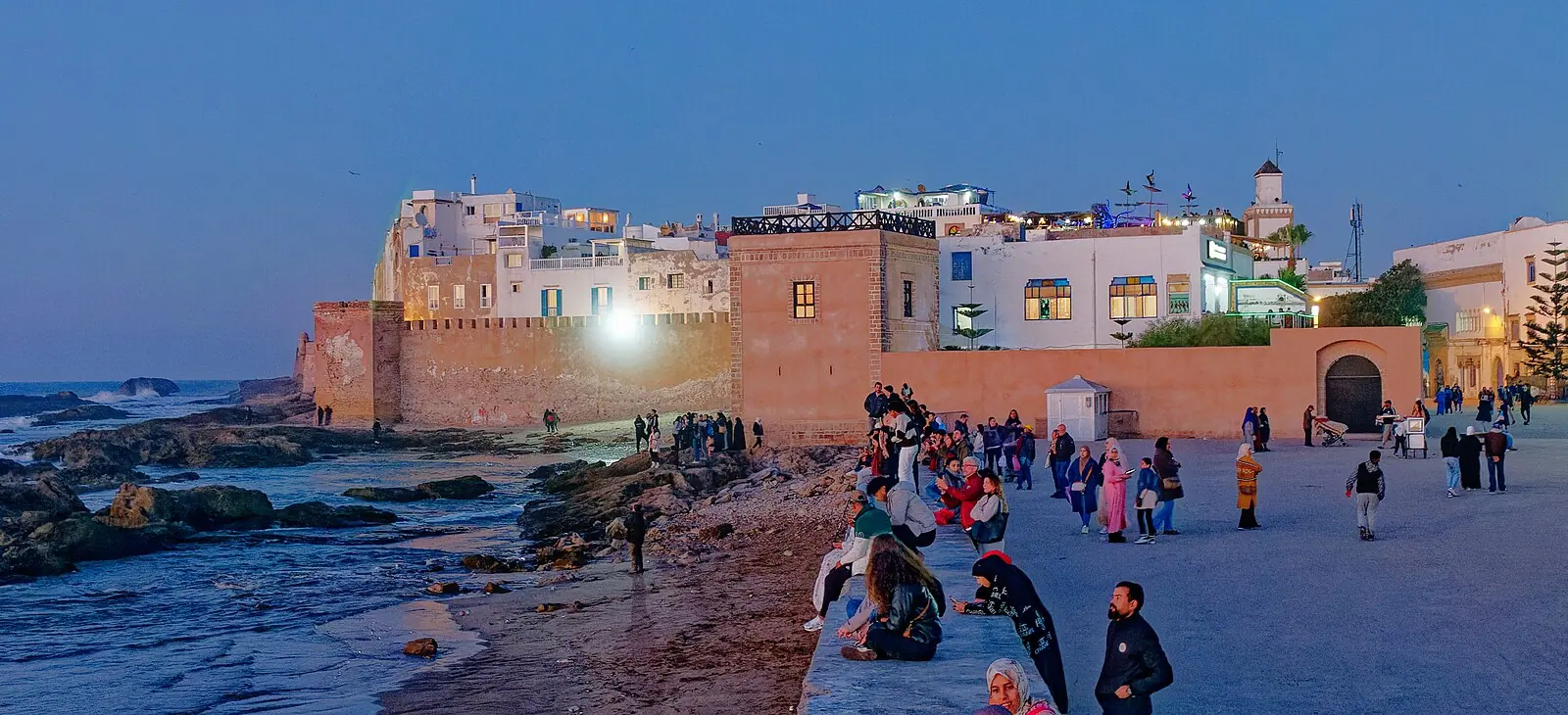
Two and a half hours west of Marrakech, Essaouira trades heat for wind. Its Skala de la Ville ramparts bristle with cannon and look down on a fishing port packed with blue boats, while the wide beach is a magnet for kitesurfers and windsurfers most of the year. Eat grilled sardines by the harbour, wander the whitewashed medina, and if you are there in June, catch the Gnaoua music festival that fills the squares. Further south, Agadir and Taghazout offer warmer water and reliable surf breaks between October and March.
Frequently asked questions
How many days do I need for a first trip to Morocco?
Ten to fourteen days lets you see the imperial cities properly plus the Sahara. With only a week, choose one loop: Marrakech, the High Atlas and Essaouira, or Fes, Chefchaouen and the north. A three-night desert add-on from Marrakech realistically needs four days of travel on its own.
When is the best time to visit Morocco?
March to May and September to November are the sweet spots, with warm days and cool nights everywhere from the coast to the desert. The Sahara is best between October and April. Avoid July and August in Marrakech, Fes and the deep south, when temperatures routinely exceed 40C, and expect rain in the northern Rif between November and March.
Can I get around Morocco without hiring a car?
Yes. The coastal rail network links Tangier, Rabat, Casablanca and Marrakech comfortably, and long-distance buses reach almost everywhere else. For the desert, gorges and mountain valleys, most travellers use a private driver or join a small group tour, since public transport there is slow and infrequent. Shared grand taxis cover short regional hops.
What should I know about visiting mosques and travelling during Ramadan?
Non-Muslims generally cannot enter Moroccan mosques, with the Hassan II Mosque in Casablanca a notable exception, along with several historic madrasas. Dress modestly, cover shoulders and knees, and ask before photographing people. During Ramadan, many restaurants close in daylight hours and opening times shift, but evenings are lively and the atmosphere is worth experiencing.
How does bargaining and tipping work in the souks?
Prices in souks and markets are negotiable; in shops with fixed prices they are not. Start well below the asking price, stay friendly, and be willing to walk away. Tipping is expected for small services: a few dirhams for a guide's assistant or a toilet attendant, ten to twenty for a short taxi or luggage hand, and around ten percent in restaurants if service is not already included.
Plan it — experiences in Morocco
Live search, booked directly with trusted providers.
Sort the rest of your trip
Everything for Morocco, in one place
Stay in Morocco
Hotels, guesthouses and apartments — compared in one search.
Search hotels
Transfer in Morocco
Private driver waiting on arrival — no queues, no surprises.
Book a transfer
Stay online in Morocco
Travel eSIM — data the moment you land, no roaming bills.
Get an eSIMMore guides in Morocco
Best Time to Visit Morocco for Hotels: A Season-by-Season Guide
Where to Stay in Essaouira: Riads, Kasbah Hideaways and Beach Hotels for a Weekend

Chefchaouen Airport Transfers & Getting Around: Buses, Grand Taxis and the Blue Medina
