Uganda rewards the traveller who lands with a plan: within a single week you can watch the Nile squeeze through a seven-metre gorge, sit metres from wild chimpanzees, and lock eyes with a mountain gorilla in a misted forest. This seven-day route threads the country's unmissable sights together in a loop that starts at Entebbe's lakeshore and ends deep in the southwest.
Day 1: Landing at Entebbe and the Shores of Lake Victoria
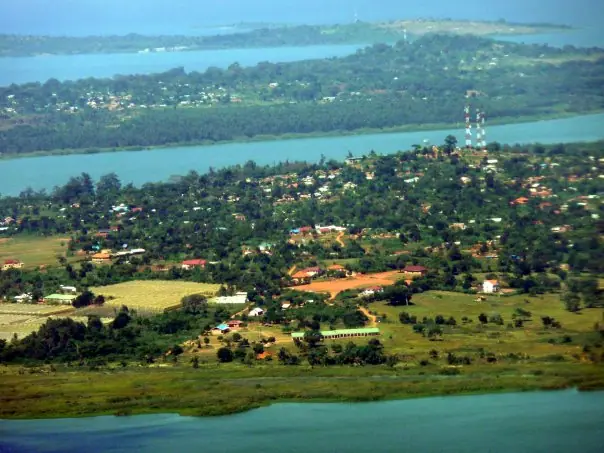
Almost every international arrival touches down at Entebbe International Airport, a compact, low-rise terminal about 40 kilometres south of Kampala on a peninsula that juts into Lake Victoria. Most travellers arrive on overnight flights from Europe or the Middle East and land in the small hours, so book a night near Entebbe rather than pushing straight into the capital's traffic. The lake air is humid and green-smelling, and the first impression is of a country that is far more lush than the postcard image of East Africa suggests.
Spend the first morning gently. The Entebbe Botanical Gardens, laid out in the 1890s, spill down to the water and are alive with vervet monkeys, hornbills and turacos; a walk here takes about an hour and costs almost nothing. Next door, the Uganda Wildlife Education Centre rescues and rehabilitates animals and gives you a first, calm introduction to shoebills, lions and chimpanzees before you meet them in the wild. If you have an afternoon spare, take a boat out to Ngamba Island, a sanctuary on Lake Victoria where orphaned chimpanzees live on a forested island.
Resist the temptation to rush north immediately. Jet lag and equatorial heat are a poor combination, and a relaxed first day means you hit Murchison Falls refreshed rather than wrecked. Note that you will need a yellow fever vaccination certificate to enter, and that Ugandan shillings are useful for markets, tips and roadside stalls, even though lodges accept cards.
Day 2–3: Kampala's Royal Tombs, Ziwa Rhinos and Murchison Falls
Kampala is built over seven hills and moves at a loud, cheerful pace. Before leaving the city, give it half a day: the Kasubi Tombs, a UNESCO-listed site on Kasubi Hill, is the burial place of four kabakas (kings of Buganda) and one of the most important cultural monuments in the country. The thatched main building, the Muzibu Azaala Mpanga, is a masterpiece of vegetal architecture. Nearby, the Uganda National Mosque on Old Kampala Hill offers panoramic views over the city from its minaret, and Nakasero Market is the place to taste jackfruit, matoke and roasted groundnuts.
Then point the car north-west towards Murchison Falls National Park, roughly a five to six-hour drive. Break the journey at the Ziwa Rhino Sanctuary, where you can walk on foot with reintroduced white rhinos — the only place in Uganda to do so. It is a strange and thrilling hour, tracking an animal the size of a small car through open bush without a vehicle between you.
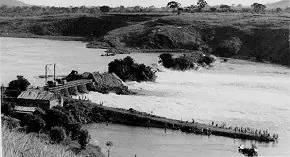
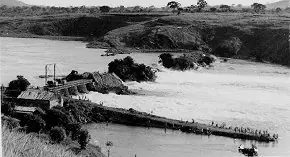
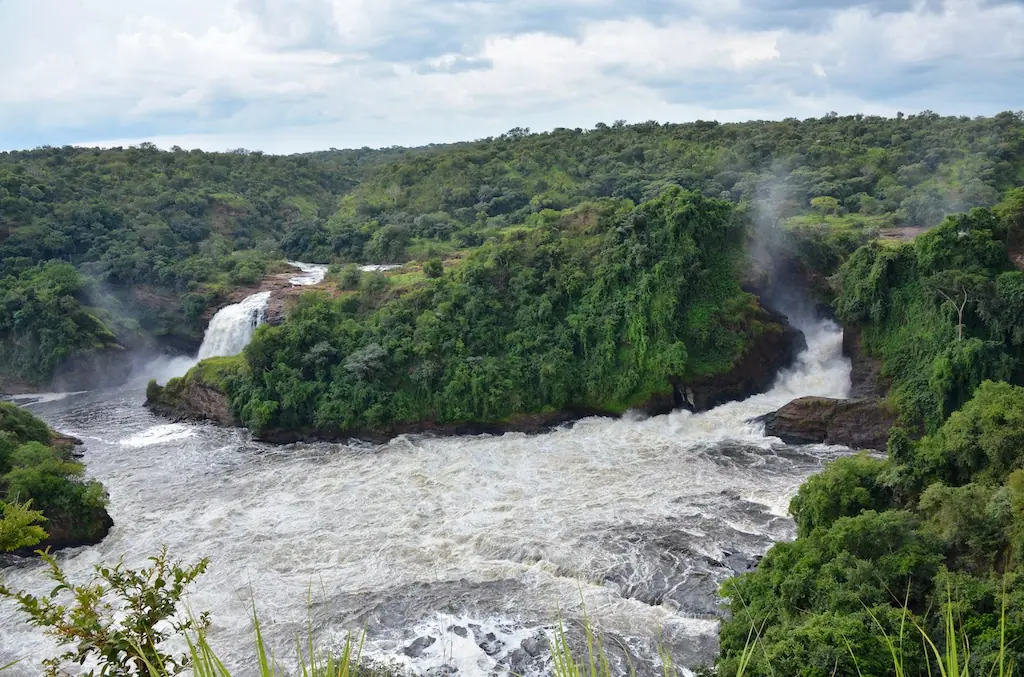
At Murchison itself, two experiences define the visit. The first is standing at the Top of the Falls, where the entire Victoria Nile forces itself through a gap only about seven metres wide before exploding into a cauldron of spray. The second is the boat cruise upstream from Paraa, which drifts past yawning hippos, Nile crocodiles, elephants and buffalo to the base of the falls — and, with luck, the shoebill stork that lurks in the papyrus. A northern-bank game drive the following dawn is the classic way to find lions, giraffes and Uganda kob.
Day 4: Chimpanzees in Kibale Forest and the Crater Lakes
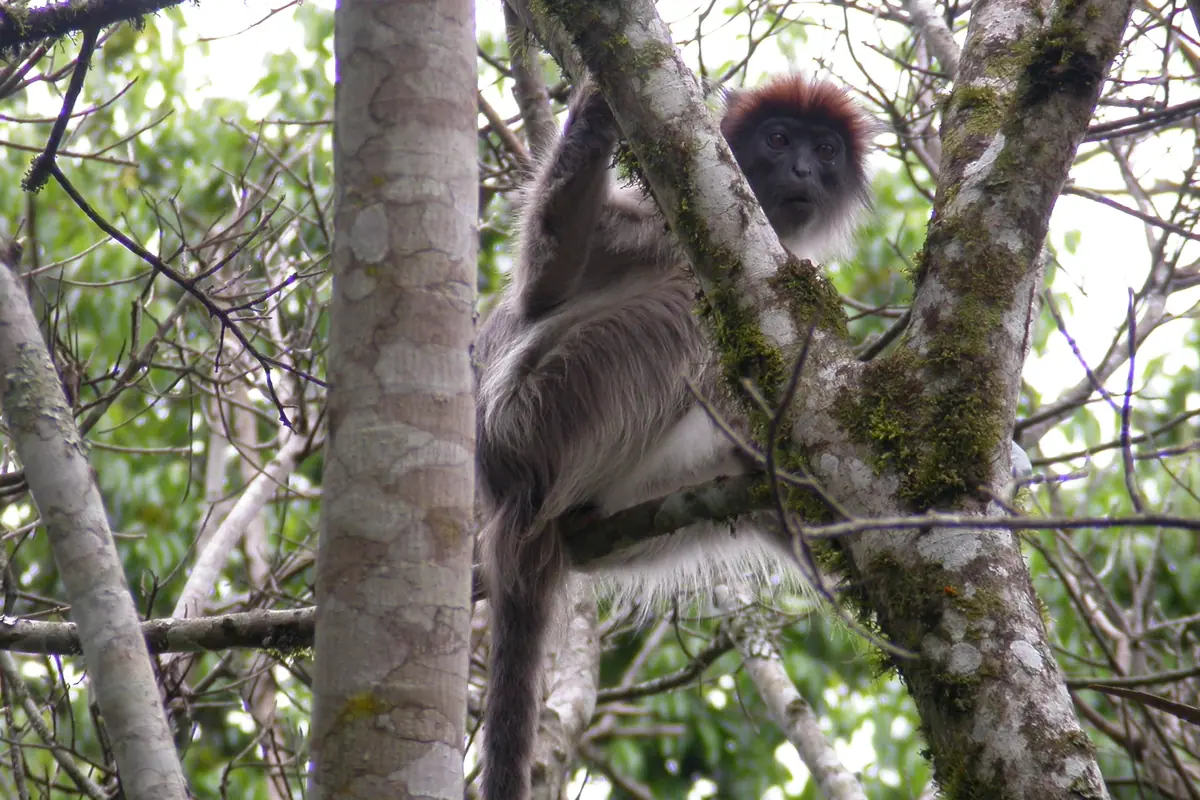
Drive south through tea estates and papyrus swamps to Kibale National Park, the most reliable place in East Africa to see wild chimpanzees. The forest holds one of the densest primate populations anywhere, with thirteen species in total, including red colobus, black-and-white colobus and grey-cheeked mangabeys. Chimpanzee tracking usually begins early, lasts two to four hours once you enter the forest, and puts you within a few metres of a habituated community as it feeds, squabbles and hurls fruit through the canopy.
For something more immersive, a chimpanzee habituation experience means spending most of a day with researchers and following the group from nest to nest. It is not for the faint-hearted — the pace is dictated by the apes — but it is unforgettable. Permits for both activities are limited and should be arranged well before you travel, particularly in the dry months.
Afterwards, the Ndali-Kasenda crater lakes offer a gentler afternoon. These are flooded volcanic cones, ringed with steep green walls and small farms, and the drive between them is one of the prettiest in Uganda. Bigodi Wetland Sanctuary, a community-run swamp walk near Kibale, is a superb hour or two for birders: great blue turacos, papyrus gonoleks and countless weavers.
Day 5–6: Queen Elizabeth National Park and the Kazinga Channel
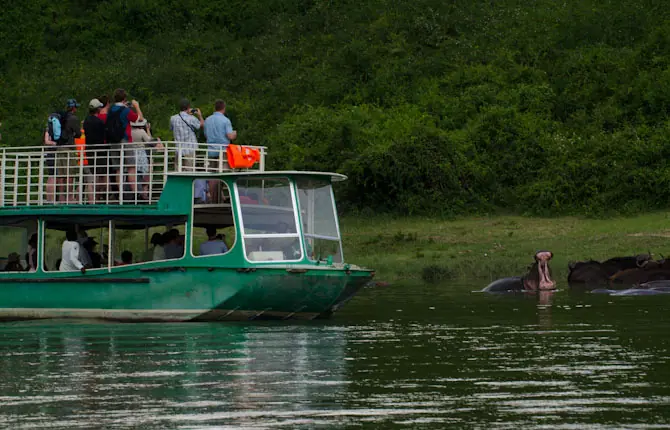
Head south along the Rwenzori foothills to Queen Elizabeth National Park, arguably Uganda's most varied reserve. The signature outing is the Kazinga Channel cruise, a two-hour boat trip linking Lake George and Lake Edward, where elephants wade, buffalo herds line the banks and fish eagles hunt overhead. It is one of the highest concentrations of hippos on earth, and the birdlife — kingfishers, bee-eaters, skimmers — is relentless.
On land, the Kasenyi plains deliver classic savannah game drives with lions, kob and warthogs, while the Maramagambo Forest and Kyambura Gorge add a darker, more mysterious note. Kyambura, a deep chasm cut into the plateau, shelters a small community of habituated chimpanzees; trekking here is steep and sweaty but far less crowded than Kibale. Do not miss the Explosion Crater Drive, a track that threads between dozens of craters, some holding lakes, others thick with forest.
In the far south, the Ishasha sector is famous for its tree-climbing lions, which drape themselves over fig branches in the afternoon heat. Give yourself a night here if you can — the sector is quiet, and the light at dusk across the savannah is extraordinary. Expect warm days, cool nights and brief afternoon showers even in the dry season.
Day 7: Gorillas in Bwindi Impenetrable National Park
The final act is Bwindi Impenetrable National Park, a 331-square-kilometre stretch of ancient montane rainforest in the far south-west and home to roughly half the world's remaining mountain gorillas. Trekking is the reason most visitors come to Uganda at all. Groups of up to eight people are assigned to a habituated family, and a ranger leads you into the undergrowth — sometimes for forty minutes, sometimes for six hours, depending on where the family nested the night before.
When you find them, you have one hour. That hour is unlike any other wildlife encounter on the continent: infants tumbling off vines, a silverback tearing through bamboo, a mother nursing while tourists whisper behind a wall of leaves. The terrain is steep, muddy and often nettle-strewn, so bring sturdy boots, long trousers, gardening gloves and a walking stick, which local porters will happily supply. Hiring a porter is both practical and a genuine benefit to the community.
Bwindi has four trailheads — Buhoma, Ruhija, Rushaga and Nkuringo — and your permit dictates which one you use. Nearby, Mgahinga Gorilla National Park protects a second gorilla family plus the Virunga volcanoes, and Lake Bunyonyi, a deep, terraced lake dotted with islands, is the perfect place to decompress on your last night before flying back to Entebbe.
Flights, Seasons and the Practicalities of a Ugandan Week
Entebbe is the main international gateway, with direct overnight services from Europe, the Middle East and other African hubs, plus a growing number of regional connections. If a one-week loop feels rushed, domestic flights between Entebbe and airstrips near Kasese, Kihihi and Pakuba can cut long road journeys to under an hour and a half, though you sacrifice the scenery and pay a premium for luggage allowances. Road distances in Uganda are modest on paper but slow in practice, so avoid planning more than four hours of driving in a single day.
Timing matters enormously. The dry seasons — roughly December to February and June to September — bring firmer tracks, easier forest walking and better game viewing, which also makes them the busiest and most expensive windows. The long rains from March to May and the shorter wet spell around October and November mean lower lodge rates, dramatic green landscapes and excellent birding, but muddier trails and a harder time finding gorillas high on the slopes. Gorilla and chimpanzee permits are capped daily and sell out months ahead in peak season, so commit to your dates early.
Pack for two climates: light layers and sun protection for the savannah, and a waterproof shell, quick-dry trousers and insect repellent for the forests. Bring a valid yellow fever certificate, antimalarials, a head torch for lodges that run on generator power, and cash in small shilling notes for tips and craft markets. Uganda is generally safe for visitors travelling with organised guides, but travel between regions is best done in daylight, and a reputable local operator will handle permits, park fees and the paperwork that comes with them.
Frequently asked questions
How many days do you need in Uganda to see gorillas?
Seven days is a realistic minimum for a first trip that combines gorilla trekking in Bwindi with chimpanzees in Kibale and a savannah park such as Queen Elizabeth or Murchison Falls. If gorillas are your only goal, four or five days is enough — fly or drive straight to the south-west, trek, and return.
When is the best time of year to visit Uganda?
The dry seasons from December to February and June to September offer the firmest trails, easiest forest walking and best game viewing, but they are also the busiest. The wetter months of March to May and October to November bring lower rates, lush scenery and superb birding at the cost of mud and occasional heavy downpours.
Do I need a permit for gorilla trekking in Bwindi?
Yes. Every trekker needs a permit issued for a specific date and one of Bwindi's four trailheads — Buhoma, Ruhija, Rushaga or Nkuringo. Numbers are capped per gorilla family per day, so permits for the peak dry months should be secured several months in advance, usually through a licensed local operator.
Is it safe to fly into Entebbe and travel around Uganda?
Entebbe International Airport is the standard international gateway and the journey onward is straightforward. Uganda is generally considered safe for visitors on organised itineraries, but road conditions and long drives make daylight travel advisable, and it is wise to arrange transport and park fees through a reputable in-country operator.
What should I pack for a week in Uganda?
Pack lightweight layers and sun protection for the savannah, plus a waterproof jacket, quick-dry trousers, sturdy broken-in boots and gardening gloves for gorilla trekking in nettle-heavy forest. Add insect repellent, antimalarials, a head torch, binoculars and small-denomination shillings for tips and market purchases.
Sort the rest of your trip
Everything for Uganda, in one place
Stay in Uganda
Hotels, guesthouses and apartments — compared in one search.
Search hotels
Transfer in Uganda
Private driver waiting on arrival — no queues, no surprises.
Book a transfer
Travel insurance
Medical cover, delays and lost baggage — sorted before you go.
Get covered