Uganda packs an improbable amount into a country you can cross in a day's drive: snow-capped equatorial peaks, one of the world's great rivers squeezed through a seven-metre rock cleft, and rainforest where you come face to face with mountain gorillas. This is the Pearl of Africa as travellers imagine it — lush, loud with birds, and still gloriously uncrowded.
Gorilla Trekking in Bwindi Impenetrable National Park
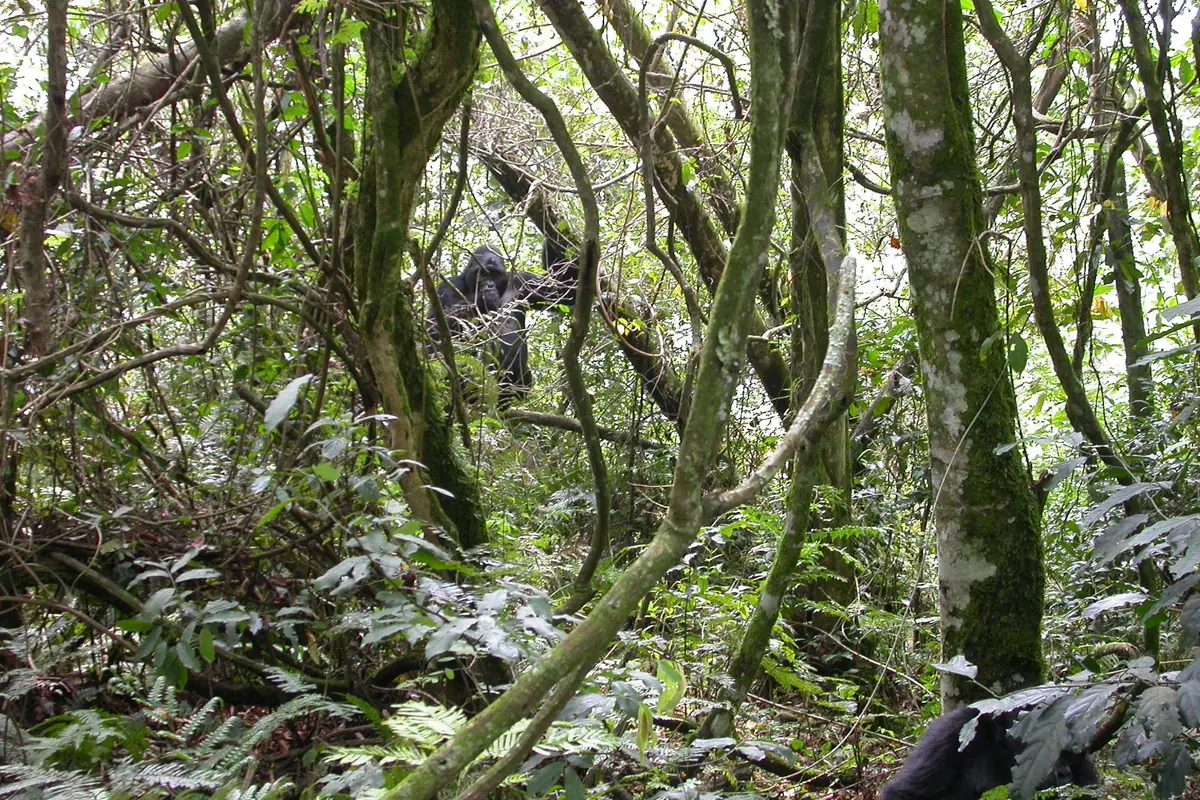
The single experience that draws most visitors to Uganda happens in Bwindi Impenetrable National Park, a 330-square-kilometre knot of ancient rainforest in the southwest that shelters roughly half of the world's remaining mountain gorillas. Trekking starts early — you'll be at a trailhead before dawn for a briefing, then split into groups of no more than eight per habituated gorilla family. The walk itself can last anywhere from one hour to six, depending on where the family nested the night before, and it climbs and plunges through nettles, vines and slick clay at altitudes up to 2,600 metres.
Once you find them, you get a strictly enforced hour in their company: a silverback stripping bark, juveniles tumbling down a slope, an infant riding its mother's back. Hiring a porter is money well spent — they carry your daypack and effectively haul you up the steepest sections. Permits are limited and sell out months ahead in the June-to-September and December-to-February dry seasons, so lock yours in well before you book flights. Bring long trousers, gardening gloves for the nettles, a rain jacket and sturdy boots.
Just south of Bwindi, Mgahinga Gorilla National Park protects the Ugandan slopes of the Virunga volcanoes and offers a gentler, less crowded alternative: golden monkey tracking through bamboo forest, and guided walks with Batwa communities that put the forest's human history in context. The volcano scenery alone justifies the detour.
Savanna Safaris at Murchison Falls and Queen Elizabeth National Park
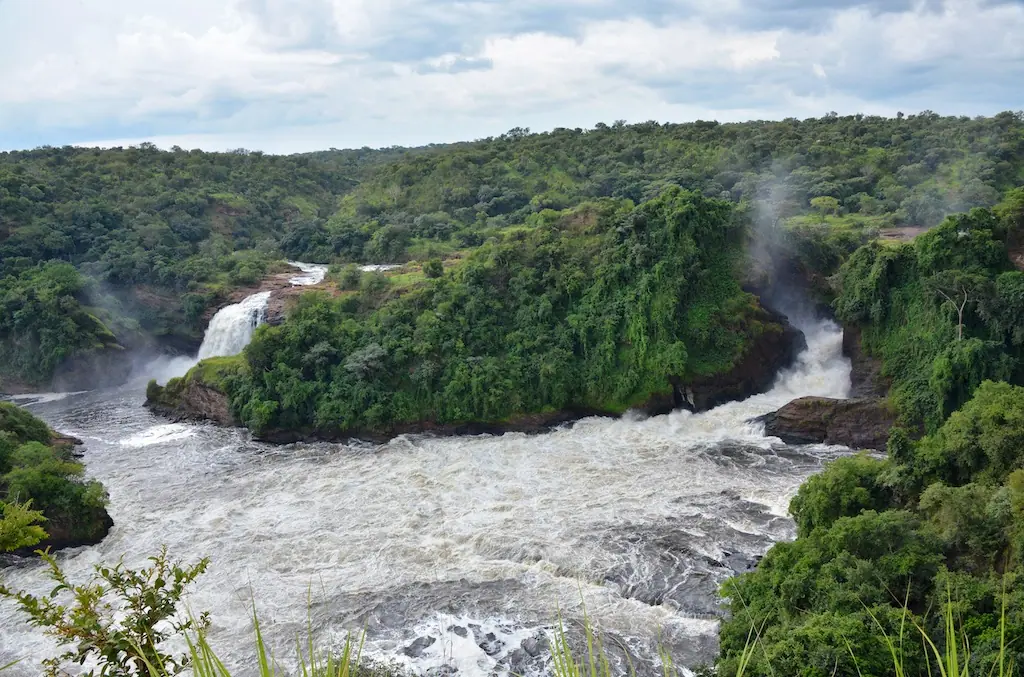
Murchison Falls National Park is Uganda's oldest and largest protected area, and its centrepiece is the point where the Victoria Nile is forced through a cleft barely seven metres wide before exploding downwards in a permanent roar of spray. Take the launch trip upstream to the base of the falls, then drive to the top for the view over the gorge and the rainbow that hangs above it. On the northern bank, game drives deliver elephants, buffalo, Jackson's hartebeest, Uganda kob, and lions; the park is also one of the best places in the country to see Rothschild's giraffes.
Queen Elizabeth National Park spreads along the Kazinga Channel, a 40-kilometre natural waterway linking Lake George and Lake Edward. The boat safari here is the highlight — hippos in dense pods, elephants drinking at the shoreline, kingfishers and fish eagles working the banks. In the remote Ishasha sector to the south, lions famously drape themselves across fig branches, and the crater drive near Fort Portal offers a landscape of grassy hollows and small lakes formed by ancient volcanic activity.
En route from Entebbe or Kampala to Murchison, most itineraries stop at the Ziwa Rhino Sanctuary, where you walk on foot to within metres of reintroduced white rhinos — a rare chance to track big game on foot in Uganda. Allow two to three nights per park; anything less and you're mostly driving.
Chimpanzees and Forest Canopies in Kibale Forest National Park
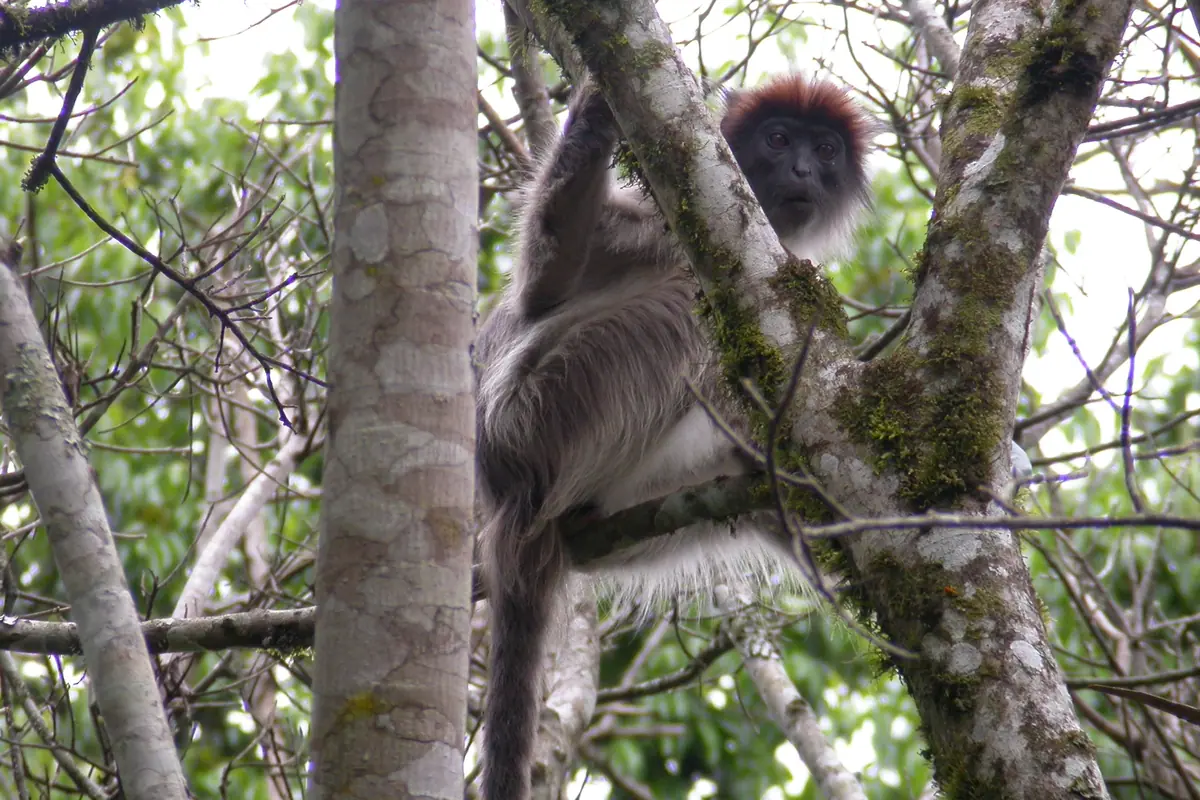
Kibale Forest National Park holds the densest concentration of primates in East Africa — thirteen species in all, including red colobus, black-and-white colobus, grey-cheeked mangabeys and L'Hoest's monkeys. Chimpanzee tracking starts from the Kanyanchu area, where habituated communities are followed by small groups through tangled forest. The chimps are loud before they're visible: calls, screams and the crash of branches as they move through the canopy.
If you want more than the standard hour with them, the full-day habituation experience begins before dawn and follows a community from the moment they wake up in their nests, with researchers documenting behaviour as you go. It's a long, humid, often muddy day and utterly absorbing.
Afterwards, the Bigodi Wetland Sanctuary walk on the park's edge is a lovely, gentle contrast — papyrus swamp, great blue turacos, and community-run tourism that puts money directly into local villages. Further north near Murchison, Budongo Forest offers an alternative chimp-tracking site and the shaded Royal Mile, one of the most productive birding walks in the country.
The Source of the Nile, Jinja and Lakeside Escapes
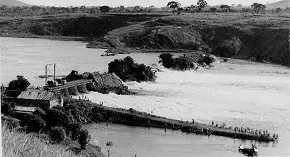
At Jinja, the Nile finally leaves Lake Victoria and begins its 6,600-kilometre journey to the Mediterranean. A boat ride out to the spot where the river starts is pleasantly low-key, but the real draw here is adrenaline: some of the finest white-water rafting in Africa, with grade IV and V rapids, plus kayaking, stand-up paddleboarding, quad biking and bungee jumps over the water. Itanda Falls, downstream of the town, is a thundering set of rapids worth the rough drive.
West of the country, Lake Bunyonyi near Kabale is one of Africa's deepest lakes, scattered with dozens of steep-sided islands and terraced hills. There are no hippos or crocodiles here, so swimming is safe, and canoeing between islands is the best way to spend an afternoon. It's a natural rest stop between gorilla trekking and the savanna parks.
On Lake Victoria itself, the Ssese Islands offer forest walks, quiet beaches and a slow ferry journey that feels a world away from Kampala. Closer to the capital, Lake Mburo National Park is the easiest safari to combine with a city stay — zebras, impala, boat safaris and guided walking safaris in acacia woodland.
Mountains, Waterfalls and the Remote Northeast
The Rwenzori Mountains — the fabled Mountains of the Moon — rise on the border with the Democratic Republic of the Congo and hold Margherita Peak at 5,109 metres, one of the few places on Earth where you can climb to equatorial glaciers. Full summit expeditions run seven to twelve days through moss-draped valleys and giant lobelia, while shorter treks reach the lower huts for a taste of the range. In the east, Mount Elgon's slopes fall away into the three-tiered Sipi Falls, set among coffee gardens and cliffs; abseiling beside the main drop is a popular afternoon activity, and the walk between the falls takes a few hours.
Uganda's wildest frontier is Kidepo Valley National Park, tucked into the far northeast against the South Sudan border. It's a long, rough journey or a short flight to reach, and the reward is genuine isolation: Narus Valley herds of buffalo and elephant, ostriches, and — unusually for Uganda — cheetah. The Apoka area has simple lodging, and guided walks with Karamojong communities offer a culture that feels distinct from anywhere else in the country.
Further west, Semuliki National Park's hot springs bubble up from the forest floor, and the surrounding birdlife is more typical of the Congo Basin than East Africa. It's a specialist's stop, but a memorable one.
Kampala and Entebbe: Culture, Tombs and Craft Markets
Kampala rewards a day or two. The Kasubi Tombs, a UNESCO World Heritage Site on a hill west of the centre, is the burial ground of Buganda kings and one of the country's most significant cultural landmarks, built from thatch, reed and timber in a tradition that has lasted generations. Combine it with a stop at the Uganda Museum for ethnographic collections and musical instruments you're encouraged to play, and the Uganda National Mosque on Kampala Hill, whose minaret offers the best panorama over the city's seven hills.
The Baha'i House of Worship on Kikaaya Hill, with its nine-sided dome and tranquil gardens, is one of only a handful of its kind in the world and open to visitors of any faith. Evening cultural performances — drumming, dance and storytelling from Uganda's many regions — are the best introduction to the country's diversity.
In Entebbe, the Botanical Gardens on the shore of Lake Victoria are a haven for birds, monkeys and century-old trees, and the Uganda Wildlife Education Centre shelters rescued wildlife and explains conservation work. Ngamba Island, a short boat ride into the lake, is a sanctuary for orphaned chimpanzees. Before flying out, browse the craft markets for bark cloth, basketry and beadwork — a fitting last stop.
Frequently asked questions
When is the best time to visit Uganda?
The driest and most popular windows are December to February and June to September, when forest trails are firmer and game is easier to spot around water sources. March to May and October to November bring heavy rain, lower lodge rates and lush green landscapes, but gorilla trekking becomes muddier and overland roads slower. Uganda sits on the equator, so temperatures stay warm year-round; altitude in the southwest makes evenings cool enough for a fleece.
How far in advance should I arrange gorilla trekking?
Permits are limited to a small number of visitors per habituated gorilla family per day and are allocated on a first-come basis, so book three to six months ahead for the peak dry seasons — longer if you have fixed dates or want a specific trailhead such as Buhoma, Ruhija, Rushaga or Nkuringo. Arrange your permit before booking international flights, since availability drives everything else in a Uganda itinerary.
How many days do you need in Uganda?
Seven to ten days covers gorilla trekking, one savanna park and a night in Kampala or Entebbe without feeling rushed. Two weeks lets you add Kibale for chimpanzees, Queen Elizabeth National Park and Lake Bunyonyi. Add another three to four days if Kidepo Valley or a Rwenzori trek is on your list, since both involve long transfers or domestic flights.
What should I pack for gorilla trekking?
Sturdy waterproof boots with ankle support, long trousers tucked into socks, a long-sleeved shirt, gardening gloves for nettles and thorns, a light rain jacket, a wide-brimmed hat, insect repellent and at least two litres of water. Cameras are welcome but flash is forbidden around the gorillas, and you'll be asked to keep a seven-metre distance. Porters at the trailhead will carry your bag for a small tip and are a genuine help on the steep sections.
Is Uganda safe and easy to travel around?
Uganda is generally a welcoming and well-established destination for visitors, and park areas are well managed. Travel with a registered driver-guide in a 4x4, avoid driving after dark outside towns, and keep valuables out of sight in busy markets. A yellow fever vaccination certificate is required for entry, and malaria prophylaxis is recommended for most of the country. Distances between parks are long and roads can be slow, so plan for travel days rather than trying to see everything in one loop.
Plan it — experiences in Uganda
Live search, booked directly with trusted providers.
Sort the rest of your trip
Everything for Uganda, in one place
Stay in Uganda
Hotels, guesthouses and apartments — compared in one search.
Search hotels
Transfer in Uganda
Private driver waiting on arrival — no queues, no surprises.
Book a transfer
Stay online in Uganda
Travel eSIM — data the moment you land, no roaming bills.
Get an eSIM