Togo is a country you can cross in a single long day's drive, yet it packs palm-fringed beaches, highland waterfalls, Muslim trading towns and UNESCO-listed tower houses into its slender 700-kilometre frame. Where you sleep shapes the trip here more than in most places, because comfort is concentrated in the capital and then thins out into guesthouses, mission stays and village campements. This guide maps the country's main stops, the neighbourhoods worth booking, and the sights that justify each detour.
Togo's Accommodation Map: What to Expect, Region by Region
Togo runs north from the Gulf of Guinea for roughly 700 kilometres, never wider than about 150 kilometres, squeezed between Ghana and Benin. That geography explains the accommodation scene: Lomé, the capital, holds the overwhelming majority of the country's genuinely comfortable rooms — international-standard hotels with pools, gyms and steady generators, plus a deep bench of mid-range business hotels. Once you leave the coast, the register shifts to family-run guesthouses in Kpalimé and Atakpamé, simple but clean hotels in Sokodé and Kara, community-run campements in the Koutammakou hills, and a park lodge or two near the big reserves.
Rooms differ as much as regions. In Lomé expect split air conditioning, hot water, Wi-Fi that comes and goes, and a generator that kicks in during outages — a detail worth asking about before you commit, because the grid is not always reliable. In the highlands around Kpalimé the altitude does the work of an air conditioner, and ceiling fans are usually enough. Up north, air conditioning matters again, and the harmattan dust of December to February settles on everything, so a room with screened windows and a working shower is a small luxury. Cash in West African CFA francs is king outside the capital; mobile money is widely used, cards much less so.
Availability moves with the calendar. Book well ahead for Lomé around Christmas and New Year, when the diaspora returns in force. In July, the Kabye initiation ceremonies and wrestling festivals fill Kara's modest hotels with families and officials. In September, the sacred-stone ceremony at Glidji near Aného draws crowds to a coastline with very few beds. Outside those windows, you can usually turn up in the afternoon and find something decent by dusk — but the best rooms in the best locations go to those who planned.
Lomé: Capital Comfort, Neighbourhood by Neighbourhood
Lomé stretches along the Atlantic in a long, low ribbon, and where you sleep changes the feel of your stay. The administrative and Bè districts, close to the beachfront boulevards, concentrate the large international hotels — think sea-facing towers, pool decks and quiet, guarded compounds favoured by business travellers and delegations. Kodjoviakopé, near the Ghana border, is the social quarter: small hotels and guesthouses surrounded by restaurants, bars and live music, a five-minute hop from the frontier post. Tokoin is the practical choice for a one-night arrival, sitting close to the airport with dependable mid-range rooms, while the blocks around the Grand Marché offer the cheapest beds and the loudest mornings.
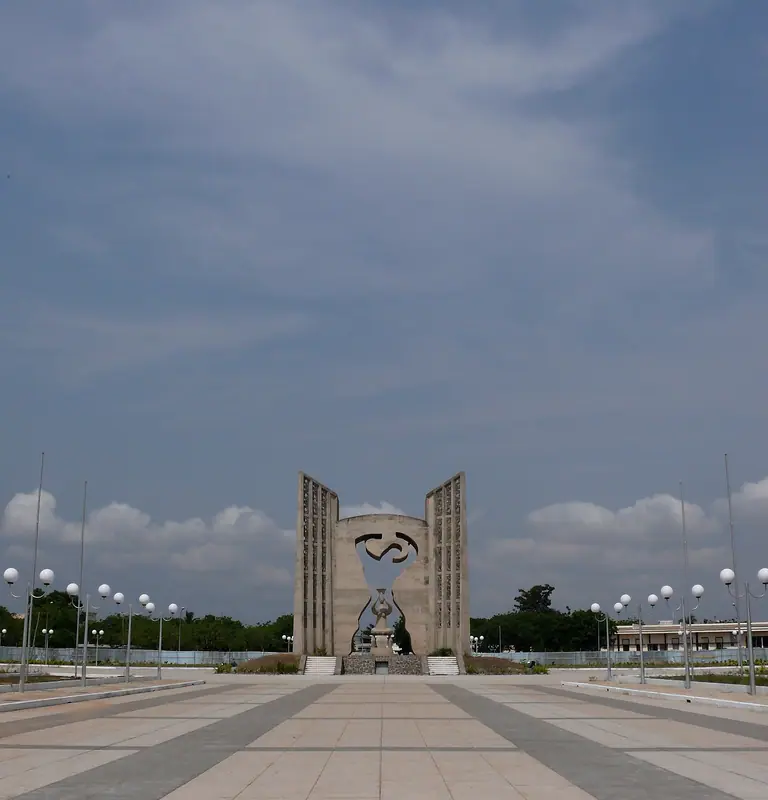
The city rewards walking between sights, though the distances are deceptive in the heat. Start at the Monument de l'Indépendance on the Place de l'Indépendance, the squat, monolithic landmark at the heart of national ceremony. From there the Grand Marché de Lomé — locally called Assigamé — is a multi-storey hive of wax-print cloth, beads and household goods, still famous for the formidable women traders known as the Nana Benz. Nearby, the Akodessewa Fetish Market, the largest voodoo market in the region, is both confronting and fascinating, with rows of dried skulls, charms and herbal remedies; go with a local guide and ask before photographing.
Two stops round out a first visit. The National Museum, housed in a colonial-era building, gathers masks, drums, textiles and archaeology in a compact collection, while the Palais de Lomé — the restored former governor's residence set in gardens above the sea — has become the country's most elegant contemporary art space. Add the red-brick Lomé Cathedral and the coconut-lined beach east of the centre, and you have a full day. To move around, flag a zémidjan, the ubiquitous motorcycle taxi; agree the fare before you climb on, and expect any cross-town run to take fifteen to twenty-five minutes.
The Eastern Coast and Lake Togo: Beach Lodges and Colonial Ghosts
East of the capital, the coast softens into fishing villages and coconut groves, and the accommodation turns low-rise and leisurely. Baguida, roughly fifteen kilometres from central Lomé, is the classic weekend escape: a string of beach guesthouses and small resorts with bungalows facing the surf, grilled fish at sunset and little else to do but swim and read. Rooms here are simple, often fan-cooled, and quiet — the trade-off for charm is a certain amount of improvisation, so bring a torch, a power bank and patience with water pressure.
Continue east and the history deepens. Agbodrafo, once a Portuguese trading post, preserves the House of the Slaves, a sombre walled compound where captives were held before shipment across the Atlantic. Beyond it lies Aného, a crumbling gem of Afro-Brazilian architecture that served as a colonial capital, with faded verandas, a haunting old cemetery and the sacred Glidji grove nearby, where the Epé-Ékpé ceremony in September centres on a venerated stone. Accommodation in Aného is scarce and basic; most travellers base themselves in Lomé or Baguida and visit on a day trip.
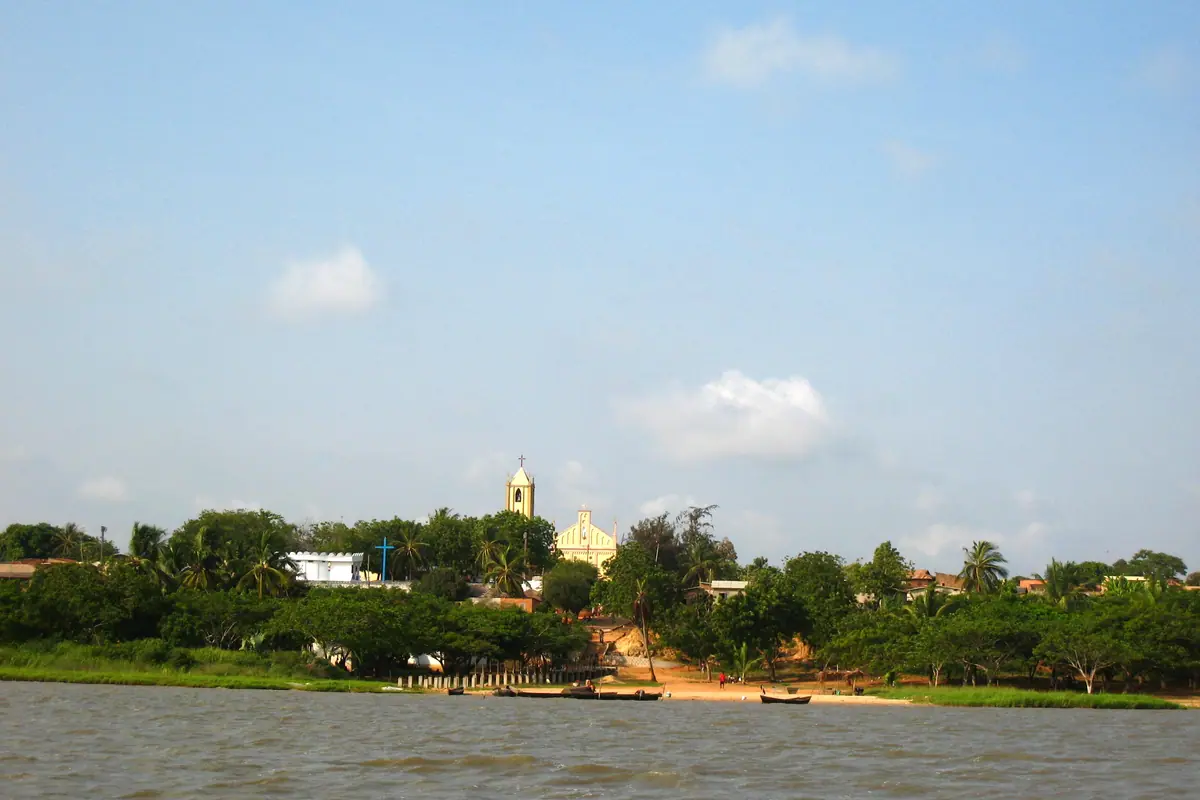
Across the water, Togoville is reached by pirogue across Lake Togo, a crossing that takes around half an hour and costs little. The town is a pilgrimage site, home to the sanctuary of Our Lady of the Lake, and historically where a protectorate treaty was signed in 1884 — a fact the small local museum recounts with pride. There is a handful of very simple guesthouses here and at Agbodrafo, plus a couple of mission-run stays where you eat with the community. If you want a beach base with more comfort and a shorter transfer, book in Baguida and take day trips.
Kpalimé and the Plateaux: Waterfalls, Coffee Slopes and Cool Nights
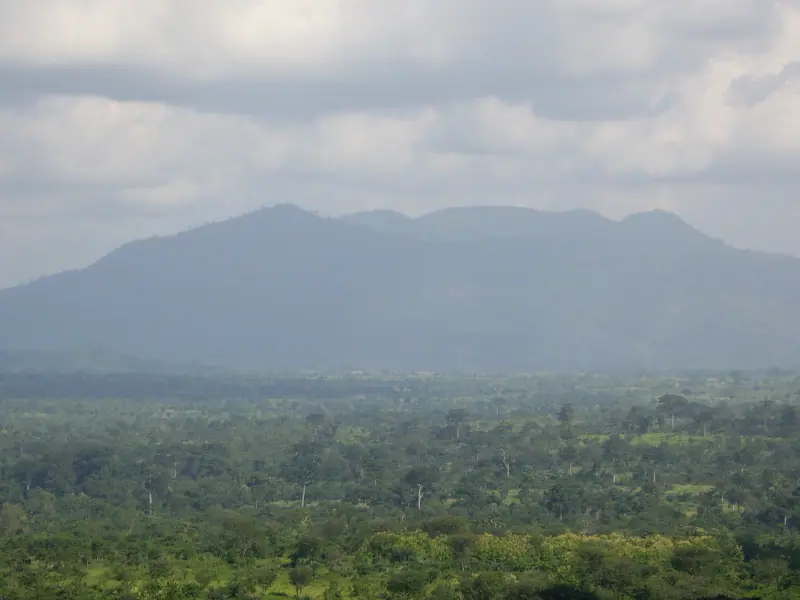
Two hours northwest of Lomé on good tar, Kpalimé sits in the green Plateaux region at the foot of Mount Agou, Togo's highest peak at around 986 metres. The town is the country's craft capital — batik workshops, weaving studios and small galleries spill out of the centre — and the gateway to a genuinely walkable landscape of coffee and cocoa farms, forest remnants and waterfalls. Because of the altitude, evenings are cool enough that a fan is plenty, and many guesthouses lean into the setting with gardens, terraces and hammocks rather than air conditioning and glass.
The headline excursions are the cascades. Cascade de Kpimé is the most accessible: a short, guided walk from the village brings you to a cool pool below a rock chute, with local guides and a small campsite at the trailhead. Further out, Cascade de Womé and the falls at Tomegbe reward longer hikes through farmland and forest, while the climb up Mount Agou takes three to five hours return and delivers views across the plateau towards Ghana on a clear day. The slopes of Mont Klouto, above the town, are laced with paths through plantations where you can taste coffee at the source.
Accommodation ranges from smart eco-lodges with hot showers and reliable power to very cheap rooms above bars, plus a scattering of campsites for those carrying tents. Bring a light rain shell between April and October. If you are heading north, Atakpamé — the city of the seven hills, about three hours further along the highway — makes a sensible overnight break, with a few workable hotels and the forested hills around Akpaka offering a taste of the transition from humid south to drier interior.
Heading North: Sokodé, Kara and the Tower Houses of Koutammakou
North of Atakpamé the country opens up and the culture changes. Sokodé, a predominantly Muslim trading town, has a lively Grand Marché and a cluster of simple hotels used by travellers breaking the long drive; this is the heartland of the Tem people, and the mosques and cattle markets are the main draw. Further on, Kara is the base for Kabye country, where the July Evala wrestling ceremonies — a rite of passage for young men — turn the hillsides into arenas of drumming and dust. Kara's hotels are modest but comfortable, with air conditioning, cold drinks and secure parking, which matters if you are travelling with a vehicle.
The region's unmissable sight is Koutammakou, a UNESCO World Heritage landscape of the Batammariba people, where earthen Tata Somba tower houses — fortresses and granaries combined — rise out of the savanna. Villages such as those around Nadoba and Koutougou welcome visitors with local guides; you walk between compounds, climb to rooftops for the view, and learn how the architecture encodes family, harvest and defence. Staying overnight in a community campement here is one of the most memorable experiences in West Africa: basic rooms or rooftops under a vast starry sky, meals cooked over fire, and no electricity to speak of.
Wildlife is the other reason to come north. Fazao-Malfakassa National Park, the country's largest protected area, covers rolling hills and savanna between Sokodé and Bassar, with elephants, buffalo and antelope, best explored with a guide and a four-wheel-drive in the dry season. Far to the north near the Benin border, Kéran National Park offers similar savanna country around Mango, and Dapaong at the very top of the country has caves, rock paintings and a frontier-town market atmosphere. Distances are long: Lomé to Kara is around eight hours by road, so plan on at least one overnight en route, and two if you want to enjoy it.
Practical Togo: When to Go, Getting Around and Booking Smart
Timing decides a lot. The southern coast has two dry windows — roughly November to February and a shorter one in August — and two rainy seasons, the heavy one from April to July and a lighter one in September and October. The north has a single wet season from about June to September, with dry, dusty harmattan winds from December to February that haze the horizon but keep the skies bright. For a trip that covers both halves of the country, aim for late November to January: warm days, cool nights in the highlands, and mostly dry roads.
Getting around is straightforward but slow. The N1 highway runs the length of the country, served by buses and shared taxis that leave when full; for flexibility in the north, hiring a car with a driver is worth the expense, especially for Koutammakou and Fazao-Malfakassa, where public transport is thin. In cities, zémidjan motorcycle taxis are cheap and everywhere. Carry CFA francs in cash, keep small notes for fares, and treat ATMs outside Lomé as unreliable rather than guaranteed.
On the practical side, a yellow fever vaccination certificate is required for entry, malaria prophylaxis is strongly advised, and bottled or filtered water is the sensible default. Book your first night or two in Lomé before you fly, choosing a room away from the main boulevards if you value sleep, and confirm directly that air conditioning, hot water and a backup generator are working. Further afield, the best approach is to ask your guesthouse to recommend the next one — Togo's hospitality runs on personal introductions, and a phone call from your host in Kpalimé will often secure you the last good room in Kara.
Frequently asked questions
Where do most visitors stay in Togo?
The vast majority of comfortable hotels are in Lomé, particularly in the Bè and administrative districts near the beachfront boulevards, in Kodjoviakopé near the Ghana border, and around Tokoin near the airport. Outside the capital, most travellers base themselves in Kpalimé for the waterfalls and highlands, then use Sokodé or Kara as overnight stops on the long haul north towards Koutammakou and the national parks.
What is the best time of year to visit Togo?
Late November to January suits a trip covering both the coast and the north: the south is dry, the highlands are pleasantly cool at night, and the northern harmattan haze has not yet thickened. The southern coast also gets a short dry spell in August. Avoid the heavy rains from April to July in the south, and expect a single wet season in the north from June to September.
How much do hotels in Togo cost?
Lomé is the most expensive place to sleep, with international-standard hotels charging rates comparable to mid-range European city accommodation, and cheaper business hotels and guesthouses costing a fraction of that. In Kpalimé, Sokodé and Kara you can find clean, air-conditioned rooms for very little, while community campements in Koutammakou and beach bungalows near Baguida are cheaper still. Cash in CFA francs is expected almost everywhere outside the capital.
Do I need a visa and vaccinations for Togo?
Most visitors arrange a visa online before travelling, and a yellow fever vaccination certificate is required for entry. Malaria is present throughout the country, so prophylaxis is strongly recommended, and it is wise to stick to bottled or filtered water. Travel insurance that covers medical evacuation is a sensible addition given the distances involved.
Is it safe to travel around Togo?
Togo is generally calm and welcoming, with the main risks being petty theft in markets and on crowded transport, so keep valuables discreet and agree taxi fares in advance. Take extra care in the far north near the Burkina Faso border, where regional security concerns apply, and check current advice before heading to Dapaong or Kéran National Park. Road travel after dark is best avoided everywhere outside Lomé.
Sort the rest of your trip
Everything for Togo, in one place
Transfer in Togo
Private driver waiting on arrival — no queues, no surprises.
Book a transfer
Things to do in Togo
Skip-the-line tickets, guided tours and standout experiences.
See experiences
Stay online in Togo
Travel eSIM — data the moment you land, no roaming bills.
Get an eSIM