Togo is a sliver of West Africa that packs an improbable amount into 600 kilometres: Atlantic surf, misted coffee hills, lagoon-side cathedrals and a northern valley of earthen tower-houses that looks like nothing else on the continent. It is small enough to cross in a long day, yet varied enough that you will feel you have travelled through three countries by the time you reach the savannah.
Lomé: Grand Marché, the Fetish Market and the Independence Monument
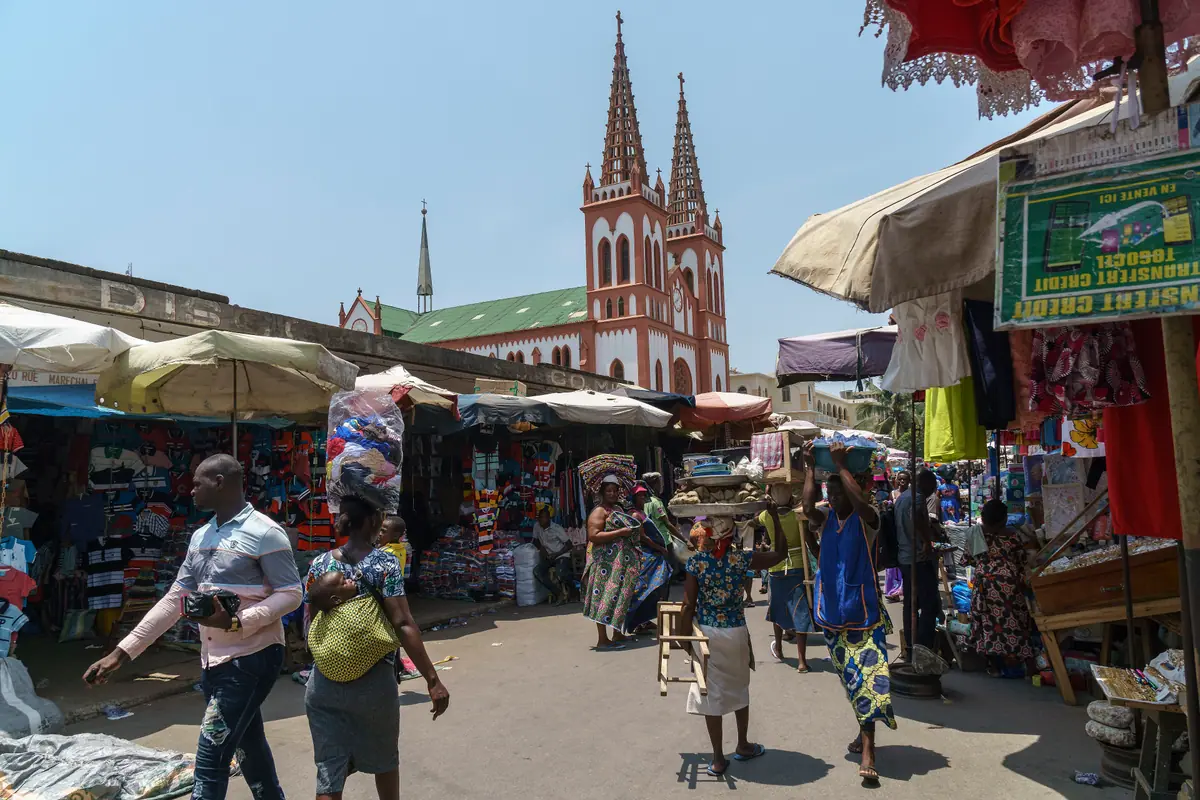
Begin in Lomé, where the city's commercial heart sits right beside the sea. The Grand Marché (known locally as Assigamé) is a two-storey labyrinth of wax-print cloth, beadwork, leather and produce, and the traders here — the famously sharp-witted cloth merchants who built fortunes on Dutch-designed textiles — will happily spend twenty minutes re-folding a dozen patterns before letting you choose. A few blocks west, the Independence Monument lifts its fist above the wide junction of Boulevard du 13 Janvier, the artery that stitches the capital together, and the Sacred Heart Cathedral's twin towers topple over the downtown rooflines in red brick and white trim.
Do not leave the capital without a visit to the Marché des Féticheurs, the fetish market near the Grand Marché. This is not a tourist performance but a working supplier of herbs, bones, dried animal parts, charms and carved figures for practitioners of vodun. Stallholders are accustomed to visitors and usually welcome them, but the rules are simple: ask before you photograph anything or anyone, keep your voice low, and treat a small purchase or tip as the courtesy it is. It is, for many travellers, the single most memorable hour of their trip.
Round off the day with the National Museum, whose modest collections of masks, drums, royal regalia and instruments make an excellent primer on the country's ethnic patchwork, then walk the Corniche along the Gulf of Guinea. Beach life here is informal and unglamorous in the best way: horses, football matches at dusk, grilled fish and beer on the sand, and the easy rhythm of a city that faces the water.
Kpalimé, Mount Agou and the Waterfalls of the Southwest
Two hours northwest of Lomé the land rises, the air cools and the road begins to switchback through coffee, cocoa and banana farms. Kpalimé is the gateway to Togo's highland southwest, a friendly market town with a craft centre where you can watch batik being waxed and dyed, woodcarvers shaping stools, and weavers working strip looms. It is the best base for a few days of walking.
The prize is Mount Agou, at 986 metres the highest point in the country. The climb is a steady three to four hours up through shaded plantations and open ridge, and on a clear morning the view runs across the Ghanaian border towards the distant inland hills. Also on the Agou massif are the ruins of the Château de Klouto, a squatted, moss-eaten colonial-era folly on the Klouto plateau that has become an unofficial lookout and picnic spot. Nearby villages on the Danyi plateau welcome visitors into coffee cooperatives where the beans are still dried on bamboo racks.
Then there are the waterfalls. Cascade de Kpimé tumbles into a pool roughly forty-five minutes' walk from Kpimé village through forest and maize plots, while Cascade de Womé offers a taller, more dramatic curtain of water. Both are at their fullest from June to October; by February and March they can thin to a trickle, so if waterfalls are your priority, plan the southwest for the months after the rains. Wear shoes with grip, take a local guide from the village — it funds the trail maintenance — and carry cash, as nothing up here takes cards.
Lake Togo, Togoville and the Slave Coast at Agbodrafo and Aného
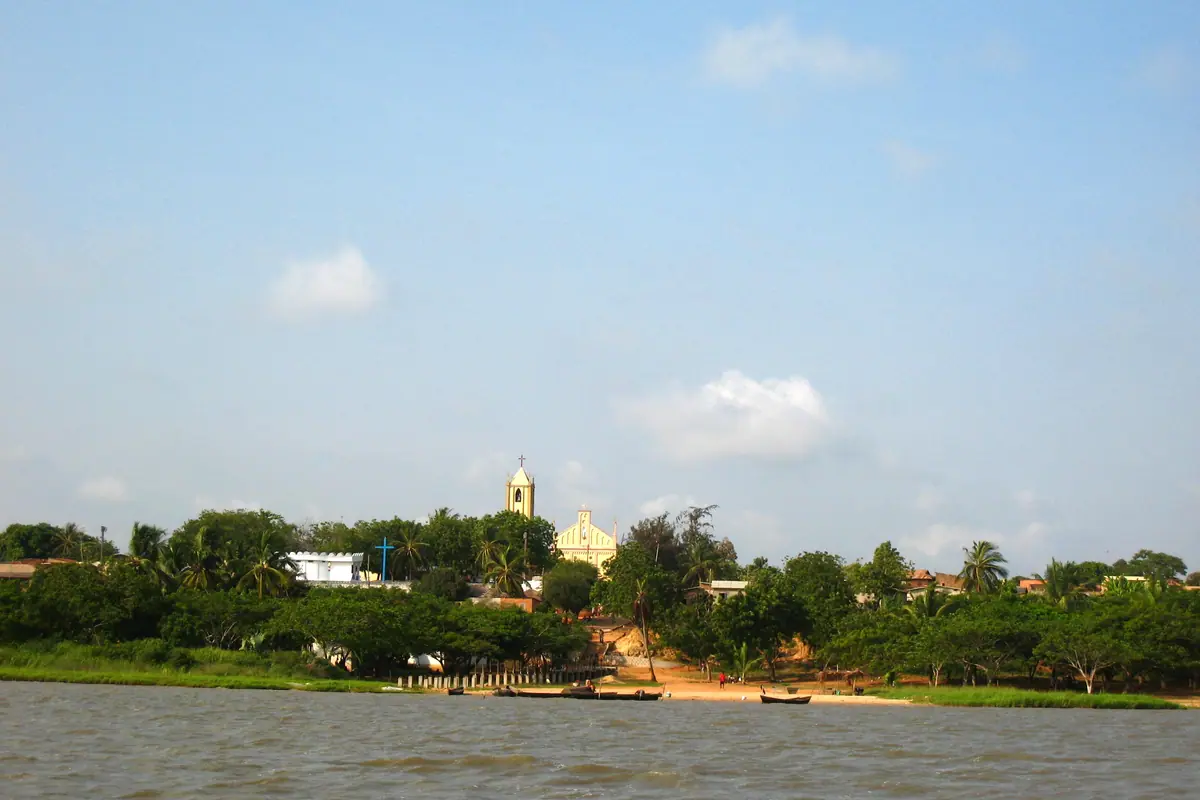
East of Lomé the coastline opens into a chain of lagoons. A pirogue ride across Lake Togo lands you at Togoville, the lakeside town where a German explorer signed a treaty with the local chief in 1884 that turned the region into a protectorate — a document that reshaped the map of West Africa. The town's cathedral, dedicated to Our Lady of the Lake, holds a pilgrimage shrine where Catholic devotion and vodun practice sit comfortably side by side, and the surrounding shrines and sacred trees are still very much in use.
Further east along the coast lies Agbodrafo, once a Portuguese trading post, where the Maison des Esclaves — a small, low-ceilinged house with a holding cellar — is one of the region's most quietly affecting memorials to the transatlantic slave trade. A short drive on, Aného is a faded colonial town of Afro-Brazilian verandas, German-era warehouses and an old cemetery, all crumbling photogenically against a long, empty beach. It was once a major slaving port and later a colonial capital; today it is sleepy, salt-bleached and atmospheric.
Inland near Vogan, the weekly Friday market is one of the largest in the country and a genuine sight — livestock, cloth, produce and ritual goods spread across an enormous open ground, with vodun priests among the shoppers. It is chaotic, good-humoured and absolutely worth timing your trip around.
Koutammakou: The Tata Somba and the Batammariba Country
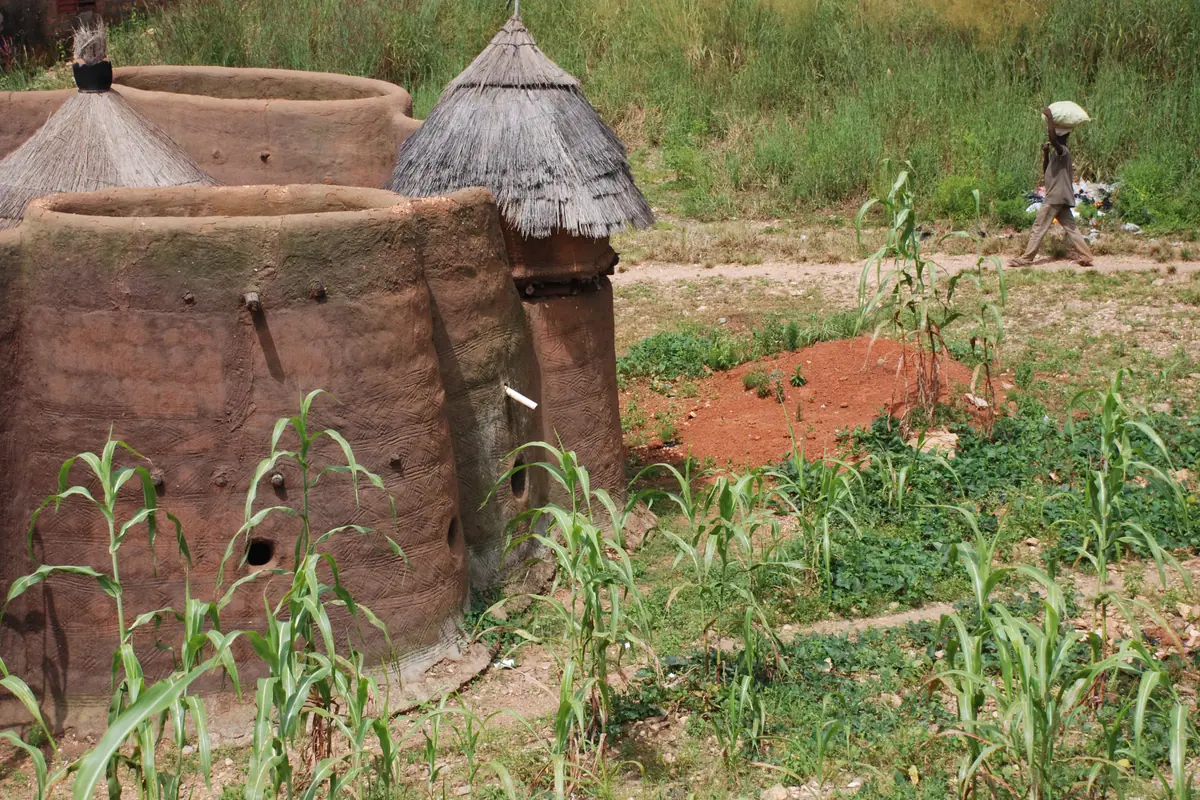
The image most travellers carry home from Togo is the tata somba: two-storey earthen tower-houses, with flat roofs, granaries, turrets and rounded crenellations, clustered in family compounds across the Koutammakou landscape north of Kara. Built by the Batammariba people — historically called Somba or Tamberma — these houses are simultaneously dwelling, fortress, granary and shrine, and their construction and repair is a craft passed down through generations. The wider area is recognised as a protected cultural landscape of global importance, and walking from village to village around Nadoba and Warengo is the definitive Togolese experience.
Go with a local guide arranged in Nadoba or through your accommodation in Kara, and always ask permission from the head of a compound before entering or photographing. A small gift of kola nuts or a modest contribution is the expected form. Some compounds have replaced their thatch with corrugated metal in recent years, which changes the silhouette — ask your guide to show you the finest surviving examples rather than the first ones on the road.
Kara itself makes a comfortable base, roughly eight hours by road from Lomé, and is the heart of Kabyè country. If you are here in July you will collide with Evala, the wrestling initiation ceremonies in which young men compete before drumming, dancing and all-night feasting; it is a genuine cultural event rather than a staged one, and one of the most electrifying spectacles in West Africa.
Fazao-Malfakassa National Park and the Iron Country of Bassar
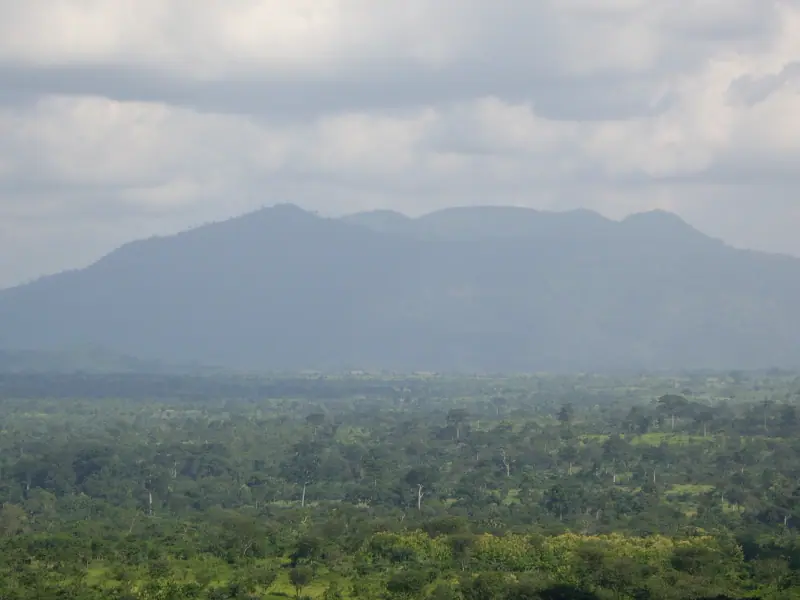
In the centre of the country, Fazao-Malfakassa is Togo's largest protected area: a rolling patchwork of savannah, forest galleries, rocky inselbergs and seasonal waterfalls where elephants, buffalo, antelope, monkeys and a long bird list still hold on. Facilities are minimal and wildlife is skittish, so treat this as a walking and landscape destination rather than a big-game safari. The dry season from December to April is by far the best window — tracks are passable, the vegetation thins and animals gather around water.
North of Fazao, Bassar was for centuries one of West Africa's great iron-smelting centres, and the surrounding hills are still littered with slag heaps and furnace remains. Local blacksmiths continue the trade, and the drive through the Bassar hills is one of the prettiest in the country. Continue to Sokodé, a large, predominantly Muslim northern town of Kotokoli and Fulani communities, with a bustling market, weaving workshops and a markedly different feel from the Ewé south.
Between Lomé and the highlands, the town of Notsé is worth a detour for the remains of its ancient wall — central to the origin story of the Ewé people — and for the Agbogboza festival held in August, when the town fills with drumming, processions and ceremony. It is an easy, rewarding stop if you are driving north anyway.
When to Go, How Long You Need and What to Expect
The cleanest window is November to February, when the south is dry and the north is bearable. December and January bring the harmattan — a dry, dusty haze that softens horizons in the north but keeps temperatures down. From February the heat builds to a fierce peak before the rains. Southern Togo has two wet seasons, roughly April to July and a shorter spell in September and October; the north has a single rainy season from June to September. If you want waterfalls and green hills, come just after the rains; if you want dry roads and clear mountain views, come between November and February.
Distances are modest but roads are slow. Lomé to Kpalimé takes about two hours, Lomé to Kara around eight, and Kara to the Koutammakou villages another hour and a half. A sensible itinerary gives you two or three days in Lomé, two in Kpalimé, a day or two for Togoville, Agbodrafo and Aného, three or four for Kara and the tata somba, and two for Fazao-Malfakassa — roughly a fortnight for the whole country. Shared taxis and buses cover the main corridors cheaply; for the north and the park, hiring a car with a driver is worth every franc.
Culture is not a museum piece here. Vodun is a living, everyday practice, French is the official language with Ewé spoken in the south and Kabiyè in the north, and the currency is the West African CFA franc. Carry cash outside the capital, pack a yellow-fever vaccination certificate, dress modestly in the north and around shrines, and always ask before pointing a camera at people, ceremonies or sacred sites. Get those courtesies right and Togo will open itself up to you in ways few West African destinations still do.
Frequently asked questions
What are the must-see landmarks in Togo for a first visit?
Prioritise the Grand Marché and Marché des Féticheurs in Lomé, the Independence Monument and the Corniche seafront, then head northwest to Mount Agou and the Cascade de Kpimé, and east to Togoville, Agbodrafo's Maison des Esclaves and Aného. Further north, the tata somba tower-houses of Koutammakou and Fazao-Malfakassa National Park are the country's two great set pieces. Evala in Kara in July and the Glidji ceremony at Aného in September are the standout cultural events.
What is the best time of year to visit Togo?
November to February is the sweet spot: dry roads, clear views and cooler temperatures, with the harmattan haze arriving in December and January. The south rains from April to July and again briefly in September and October, while the north has one wet season from June to September. Come in the weeks after the rains if waterfalls and green landscapes matter more to you than perfectly dry hiking trails.
How long do you need to see Togo properly?
Around two weeks lets you cover the country without rushing: two to three days in Lomé, two in Kpalimé, a day or two around Lake Togo, Togoville, Agbodrafo and Aného, three to four days based in Kara for Koutammakou, and two in Fazao-Malfakassa. If you only have a week, choose either the southern loop or fly or drive straight north and concentrate on Kara and the tata somba.
Do you need a guide to visit Koutammakou and the tata somba houses?
Yes, in practice. The villages around Nadoba and Warengo are living communities rather than open-air museums, so a local guide arranged in the villages or through accommodation in Kara will introduce you, translate, and secure permission from each compound head. A small gift such as kola nuts is customary. Guides also know which compounds still have traditional thatched roofs rather than corrugated metal.
Is it appropriate to visit the fetish market and vodun shrines in Togo?
Visitors are generally welcomed at the Marché des Féticheurs in Lomé, at Togoville's shrines and at the big Friday market near Vogan, but vodun is a practising religion, not an attraction. Ask before photographing people, stalls or shrines, keep a respectful distance during rituals, avoid touching objects without invitation, and expect to give a small tip or make a purchase. Modest dress and a low, unhurried manner go a long way.
How do you get around Togo, and what should you carry?
Shared taxis and buses link Lomé with Kpalimé, Sokodé and Kara cheaply, though journeys are slow and crowded; for the north and for Fazao-Malfakassa, hiring a car with a driver is far more comfortable. Carry West African CFA francs in cash, since cards are accepted almost nowhere outside the capital, along with a yellow-fever vaccination certificate for entry, a headlamp, and modest clothing for the Muslim north and for shrine visits.