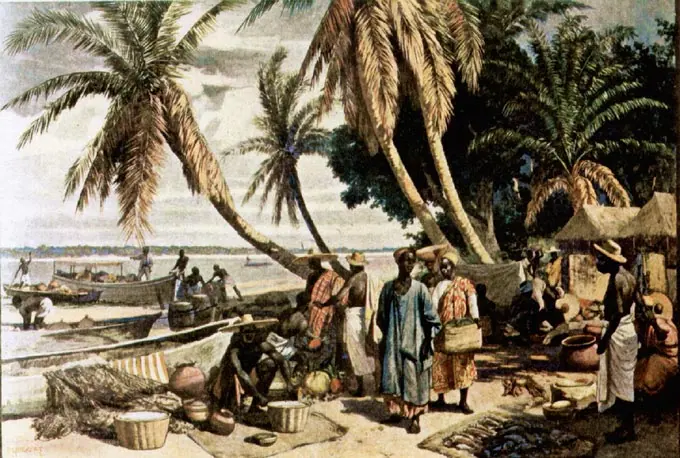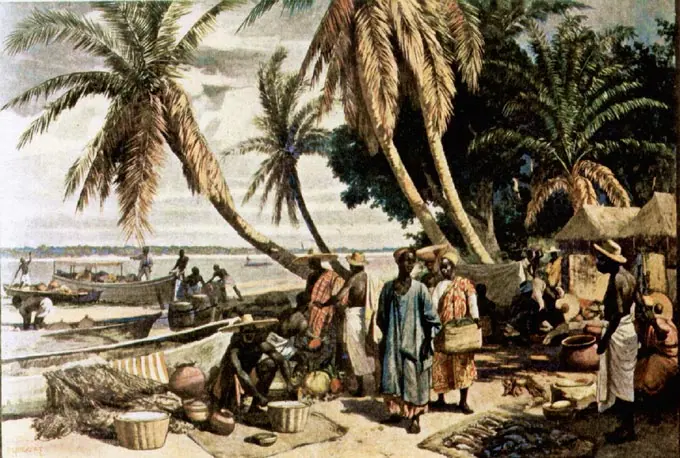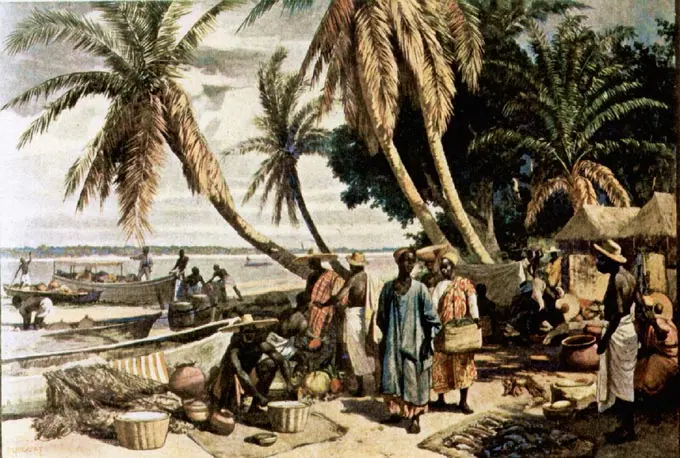
Togo is a country you can cross in one long day of driving, yet it holds more than places ten times its size: Atlantic beaches, waterfall country, mud-castle villages and a capital where Vodun priests and wax-print traders work the same few blocks. Come for the food and the festivals as much as the landscapes — this is a country that rewards travellers who slow down, eat what they are offered and ask before they raise a camera.
Lomé First: Grand Marché, the Nana Benz and the City's Landmarks
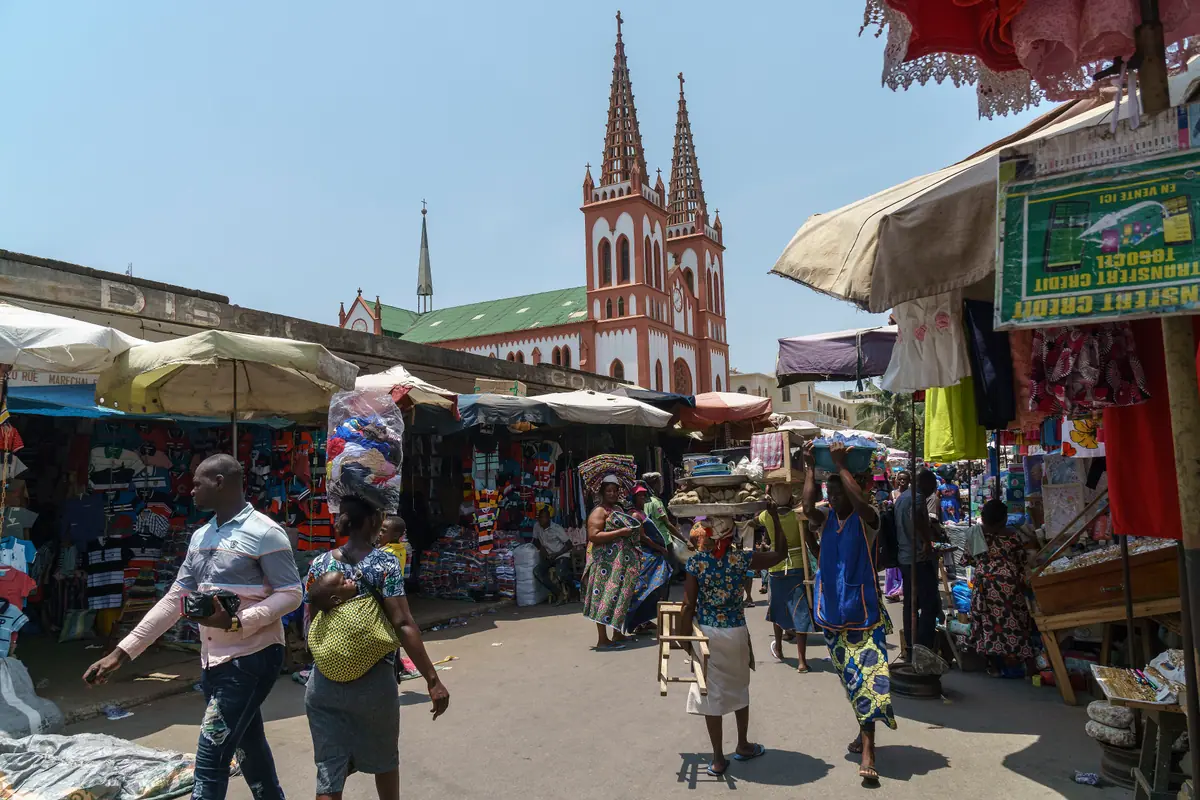
Start in the capital's commercial heart, the Grand Marché de Lomé, a stacked labyrinth of stalls a few streets back from the ocean. Climb to the upper floors where cloth is sold and you enter the world of the Nana Benz, the Togolese women who built fortunes in wax-print textiles decades ago and were nicknamed for the cars they drove. Buy a few metres of fabric and a tailor in the surrounding lanes can have a shirt or a dress ready within a day or two; bargaining is expected, and a smile does more than a hard line.
Lomé's monuments tell the country's compressed history. On the wide Place de l'Indépendance, the Independence Monument commemorates 1960, while the Cathedral of the Sacred Heart, dating to the early 1900s, sits near the old colonial grid. Don't miss the Palais de Lomé, a restored German-era governor's residence turned art museum, whose gardens and terraces are among the calmest places in the city, or the National Museum of Togo, where drums, masks, chieftaincy regalia and iron-smelting relics give context for everything you will see upcountry.
Evenings belong to the coast road and the Boulevard du Mono, where grills fire up, motorbike taxis weave through traffic and children chant the sing-song 'yovo yovo bonsoir' at passing visitors. Coco Beach, a short ride east, is the easiest place for a swim and a cold drink.
Akodessewa Fetish Market: Vodun as a Living Practice
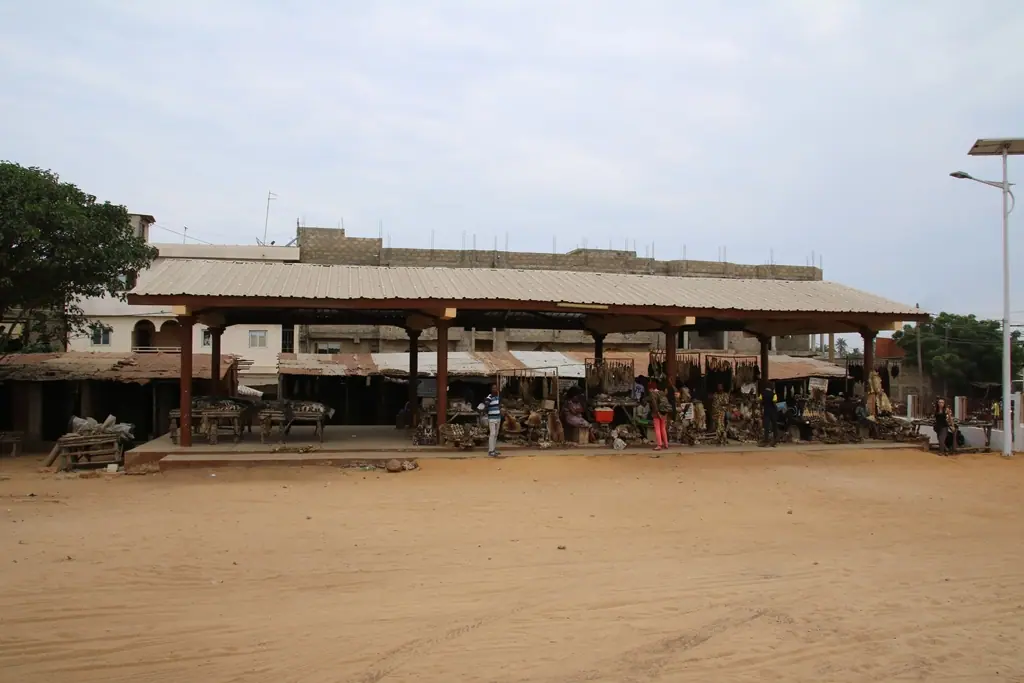
In the Akodessewa quarter, close to the Grand Marché, the Marché des Féticheurs — the fetish market — is the single most memorable stop in Lomé. It is not a museum: rows of stalls sell dried herbs, roots, kola nuts, animal skulls, feathers, carved figures and iron objects used by Vodun practitioners across the region. Priests and healers come here to stock up, and ordinary customers come for remedies, protections and answers to family problems.
Vodun is a recognised faith in Togo, practised openly alongside Christianity and Islam, and many families blend all three. The etiquette matters more than the entry: ask before photographing people, stalls or shrines, and accept that some parts of the market are private. Visiting with a local guide makes the difference between a confusing bazaar and an afternoon of genuine explanation, and it puts money where it should go — into the hands of the vendors themselves.
If your trip coincides with a ceremony, the calendar shapes everything. The Epe-Ekpe festival at Glidji, near Aného, brings crowds each September for the presentation of the sacred stone, while drumming and possession dances can be seen in villages around Togoville and in the north throughout the dry season.
What Togo Tastes Like: Fufu, Djenkoume and Northern Wagashi
The Togolese table is built on a starch and a sauce. Fufu — pounded yam, cassava or maize — arrives as a soft white dome eaten with the right hand and dunked into groundnut soup, palm-nut stew or a spiced okra sauce. Akpan, a fermented maize pudding, is a breakfast staple with milk and sugar, while djenkoume, cornmeal cooked with palm oil and pepper, usually comes with grilled chicken and is a national favourite. Ablo, a lightly sweet steamed corn cake, shows up at markets, and gboma dessi — dark greens simmered with tomato, chilli and fish or meat — is the dish most visitors end up craving later.
Street food is where Togo gets playful. Look for yovo doko, small fried dough balls sold from roadside tables and named with a cheeky nod to colonial-era visitors, along with grilled maize dusted with coconut, koliko (fried yam with peppery sauce) and bean fritters. On the coast, poisson braisé — whole grilled tilapia or sea bream rubbed with chilli and lime — with a mound of fufu is the meal to plan an evening around. Grasscutter is a prized delicacy at weekend grills, and koklo mémé, a marinated grilled chicken, is a favourite for celebrations.
In the north, seek out wagashi, the fresh cheese made by Fulani herders and sold fried at roadsides around Kara and Dapaong. Palm wine and sodabi, its distilled cousin, flow in the south; tchoukoutou, a cloudy millet beer served from calabashes, is the north's social drink. Bissap, a deep-red hibiscus infusion, and fiery ginger juice are everywhere.
Lake Togo, Togoville and the Slave Route at Agbodrafo and Aného
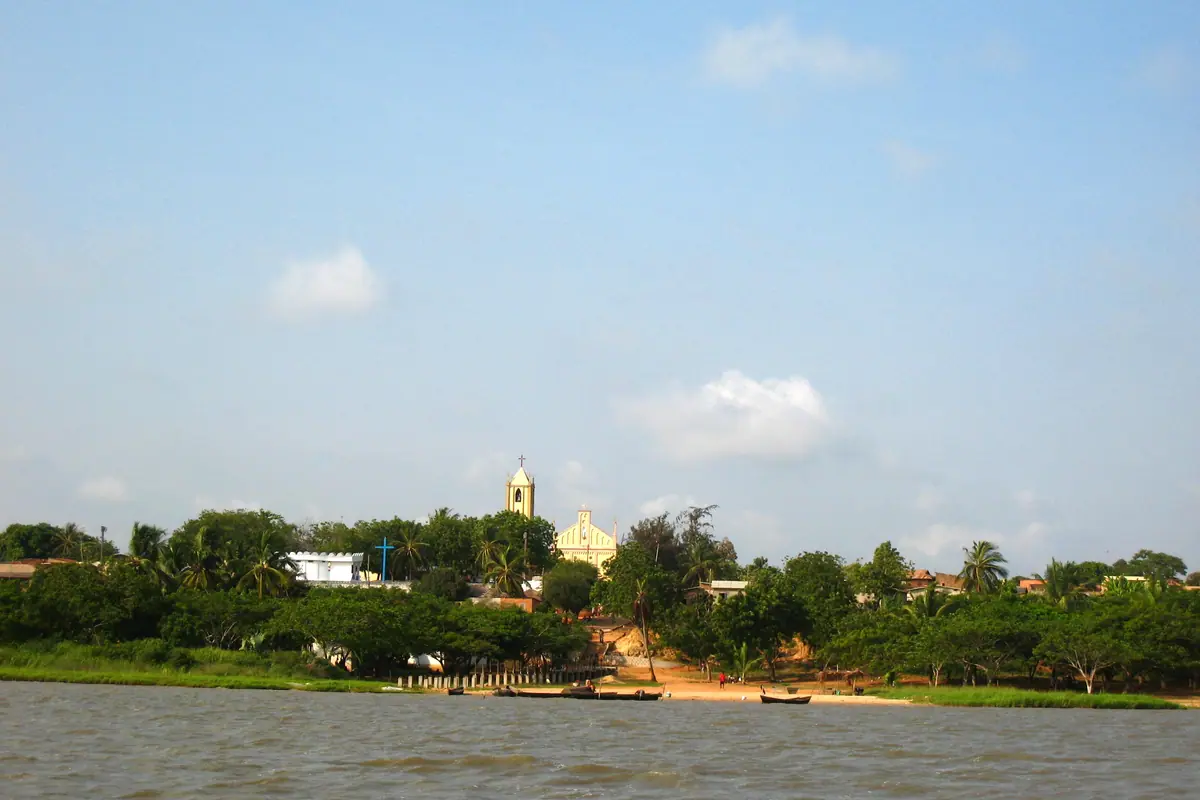
An hour east of Lomé, the coast turns quiet and the history gets heavier. From the lakeside village of Agbodrafo you can paddle across Lake Togo by pirogue to Togoville, a town that encapsulates the country's layered story: it was here in 1884 that a German explorer signed a protectorate treaty with a local chief, and here also that a Marian apparition was reported in 1973. The lakeside cathedral, with its shrine and painted panels, sits a few steps from Vodun shrines, and that proximity says more about Togo than any museum label.
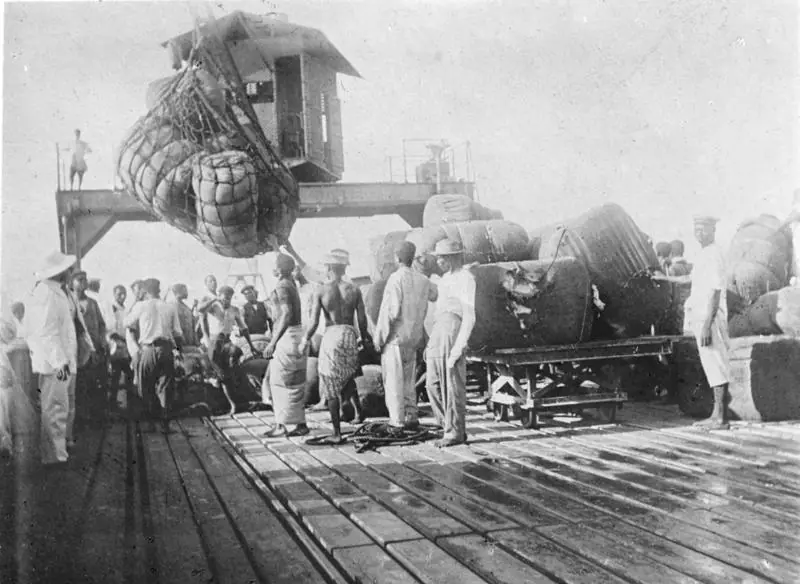
Back on the coast, Agbodrafo's Maison Wood is one of the most affecting sites in the country — a nineteenth-century trading house with a cellar where captives were once held before being shipped across the Atlantic. Tours are guided and sober, and a small entry contribution supports the upkeep. Continue to Aného, the elegant, faded former colonial capital, where crumbling merchant houses face the sea and the Glidji sacred forest lies just inland.
Allow a full day, or stay the night and eat grilled fish beside the lake at sunset. A pirogue crossing takes about half an hour, and guides can be arranged in Agbodrafo or through your guesthouse; boats normally stop running after dark, so plan the return before late afternoon.
Kpalimé, Mount Agou and the Waterfalls of the Southwest
The green hills northwest of Lomé are Togo's craft and hiking country. Kpalimé is the base: batik studios, woodcarving workshops and pottery stalls fill the streets, and cocoa, coffee and banana plantations climb the slopes behind town. This is also where the country's high point stands — Mount Agou, at just under a thousand metres, a sweaty two-to-three-hour climb rewarded with views into Ghana on clear days.
Waterfalls are the region's other draw. Cascades de Womé, Kpimé and Tomegbe are all reachable on half-day walks from Kpalimé, each with a natural pool cold enough to make the hike worthwhile. Local guides are easy to hire in town, and their rates usually include the small community fees paid at each site; the paths get slippery in the rains, so proper shoes matter more than any other piece of kit.
With a vehicle and a spare day, push north to Fazao-Malfakassa National Park, Togo's largest protected area, a rolling mosaic of savannah, forest galleries and rocky hills where elephants, buffalo and antelope survive. Roads are rough and wildlife sightings are never guaranteed, but the landscapes alone justify the detour. Kpalimé's own yam festival and the harvest celebrations of the Adélé hills, both in the August-to-September window, add drumming, dancing and an enormous amount of food to the equation.
Koutammakou and Kara: Tata Somba Houses and Evala Wrestling
In the far north, the Koutammakou landscape — a UNESCO World Heritage site — is the image most travellers carry home. Here the Batammariba people build tata somba, two-storey mud tower houses with thatched caps, rooftop terraces for sleeping in the heat, granaries, altars and courtyards, all organised around clan and spirit life. Villages such as Nadoba and Kanté are visited with local guides who explain which structures are sacred, where you may walk and why a house is as much a shrine as a dwelling.
Kara is the gateway to the north and, in the second week of July, the stage for Evala, a wrestling festival that marks the passage of young Kabye men into adulthood. Over several days, bouts draw huge crowds of family and neighbours, drummers circle the arena and the whole region seems to travel. Outside festival time, Kara makes a comfortable stop for the Kéran National Park, a wildlife reserve of savannah and hills, and for Bassar, where the remains of historic iron-smelting furnaces attest to a sophisticated local industry centuries old.
Getting there is part of the experience: the drive north on the main highway passes the Faille d'Alédjo, a dramatic road cut through an escarpment where you can stop for photos and roasted maize. Expect long days in the car — Lomé to Kara is roughly eight to nine hours — and fuel up on wagashi and millet beer once you arrive. The dry months from November to March are the most comfortable for this route, though the Harmattan haze of December and January softens the views.
Frequently asked questions
When is the best time to visit Togo?
The dry season from November to March is the most comfortable, with cooler evenings and easier roads upcountry — though December and January bring Harmattan dust haze. The main rains run from April to July, with a shorter wet spell in September and October in the south. Time a trip for July to catch Evala wrestling around Kara, or September for the Epe-Ekpe festival near Aného.
How many days do I need in Togo?
Eight to ten days covers the essentials: two or three nights in Lomé, a day trip to Lake Togo, Togoville, Agbodrafo and Aného, two nights around Kpalimé for waterfalls and Mount Agou, then three nights in the north for Koutammakou and Kara. Add days if you want Fazao-Malfakassa National Park or the far north around Dapaong.
Is Togo safe and easy to travel around?
Togo is generally calm and welcoming, and tourist areas see little crime beyond petty theft. Travel in daylight on rural roads, use reputable drivers or registered guides for long distances and ask permission before photographing people, shrines or markets. Moto-taxis are the fastest way around Lomé but agree the fare before you set off.
What language and currency should I expect?
French is the official language, with Ewe, Kabye and many other languages spoken locally; English is limited outside hotels, so a few French phrases go a long way. The currency is the CFA franc, and cash is essential outside Lomé — withdraw in the capital or Kara before heading to villages. Arrange an e-visa before arrival for the smoothest entry.
Do I need a guide to visit Koutammakou and the north?
You can reach Kara independently, but Koutammakou villages are best visited with a local guide who can negotiate access to compounds, explain which houses and altars are sacred and arrange a stay in a basic campement. Bring small notes for community fees, dress modestly and accept that the best experiences here are slow ones.