Uruguay is small enough to cross in a day and layered enough to keep you busy for two weeks — a country of Atlantic dunes, colonial cobbles, cattle country and a capital that sips mate on a 20-kilometre waterfront. It rewards slow travel: long lunches, late sunsets, and landmarks that rarely require a queue. Here's where to point yourself first.
Montevideo: Ciudad Vieja, the Rambla and the Mercado del Puerto
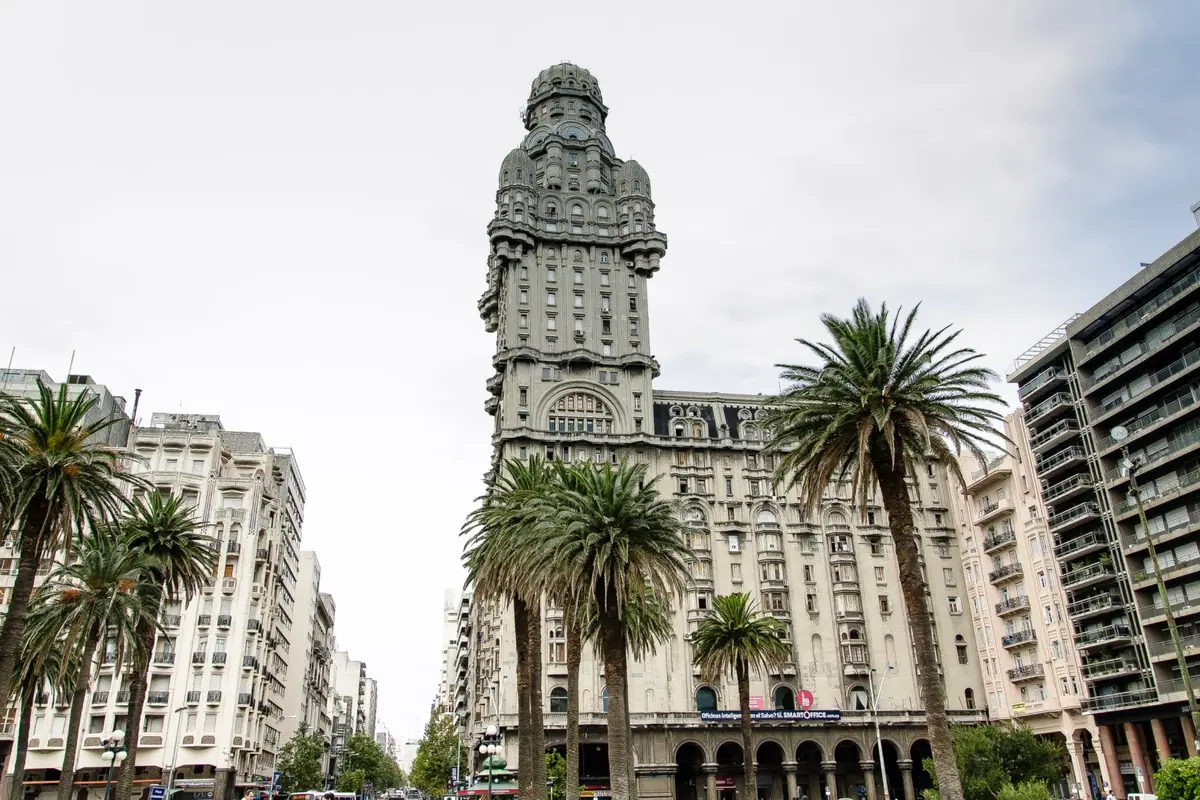
Start in the capital, where the old town crowds around Plaza Independencia, anchored by the art deco silhouette of the Palacio Salvo and the remains of the original city gate. Walk down peatonal Sarandí past the Teatro Solís, one of South America's oldest working theatres, into the Plaza Constitución, and you'll find the city's colonial bones under the cafe awnings. The Mercado del Puerto, a cast-iron market hall by the docks, is the classic first stop for grilled meat and a glass of wine at midday — arrive before one o'clock if you want a seat on a weekend.
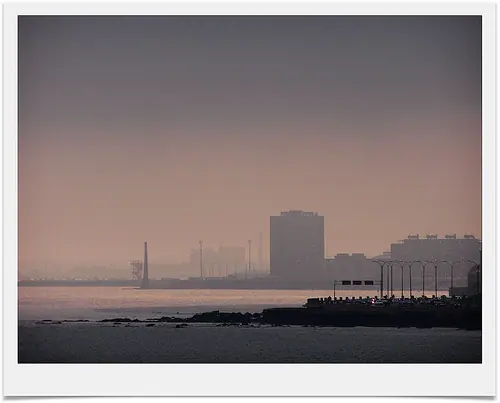
Then head to the Rambla, the coastal promenade that threads the whole city from the Ciudad Vieja around to Carrasco. It's where Montevideo actually lives: cyclists at dawn, anglers on the rocks, groups passing a thermos of mate hand to hand at sunset. The stretch through Parque Rodó and Pocitos is the easiest taste of it, with beaches that are genuinely swimmable in summer despite the river-brown water.
For a different register, the Mercado Agrícola in the north of the city pairs produce stalls with small kitchens, and the Barrio Sur and Palermo neighbourhoods keep the drumming tradition of candombe alive — nowhere more loudly than during the February Llamadas parade, when comparsas drum up Isla de Flores street.
Colonia del Sacramento: Cobblestones, a Lighthouse and River Sunsets
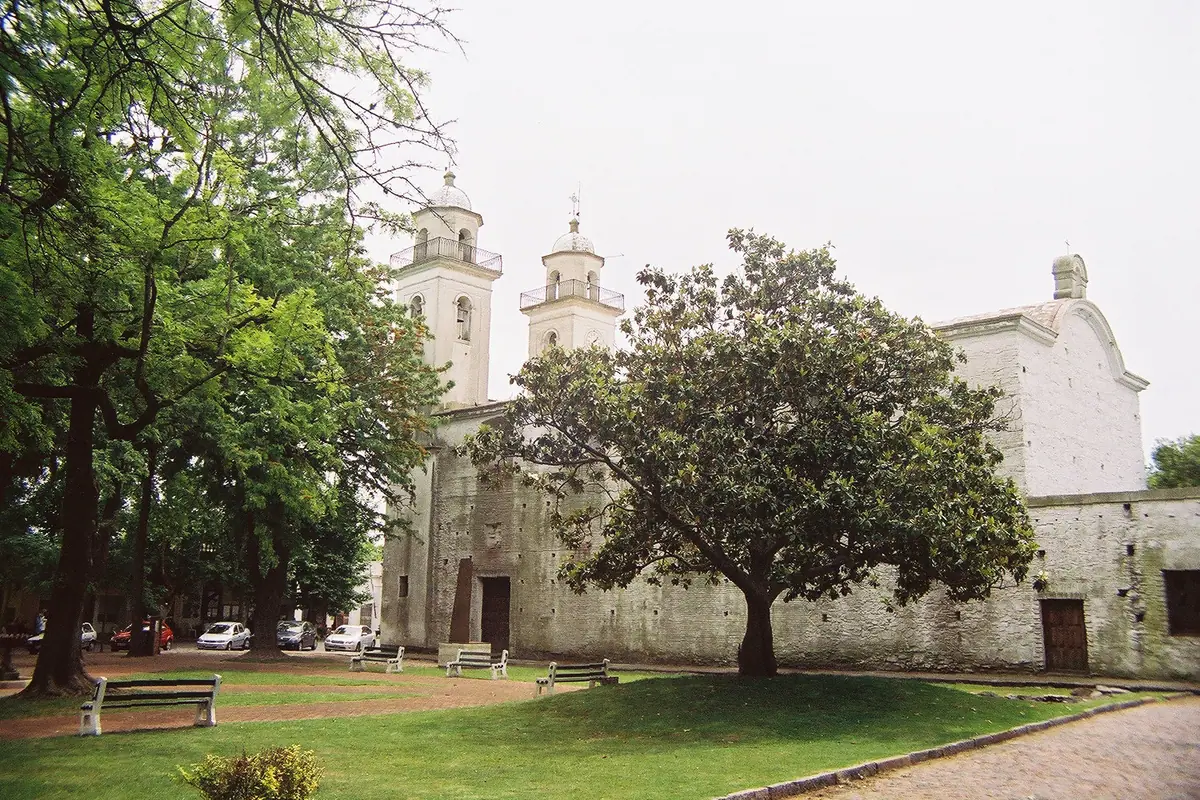
A ninety-minute ferry ride from Buenos Aires, Colonia del Sacramento is the country's most photogenic small town and its only UNESCO-listed historic quarter apart from the Fray Bentos industrial site. The Barrio Histórico is a grid of Portuguese and Spanish colonial lanes that end at the water, and its most famous address, the Calle de los Suspiros, is a narrow, uneven street of low houses that draws a steady trickle of visitors most of the day.
Climb the Faro, the 19th-century lighthouse built over the ruins of a convent, for the best view over the river and the Basílica del Santísimo Sacramento, the oldest church in the country. The Puerta de la Ciudadela and the surviving bastions — San Miguel, San Pedro — hint at the town's history as a contested smuggling port between empires.
Most people day-trip, which is a mistake. Stay the night and the town empties out after the last ferry, leaving the cobbles and one of the widest, most theatrical sunsets on the Río de la Plata largely to you. On the edge of town, the abandoned Real de San Carlos bullring and its old waterfront rambla are worth the short walk or bike ride.
The Atlantic Coast: Punta del Este, Casapueblo and José Ignacio
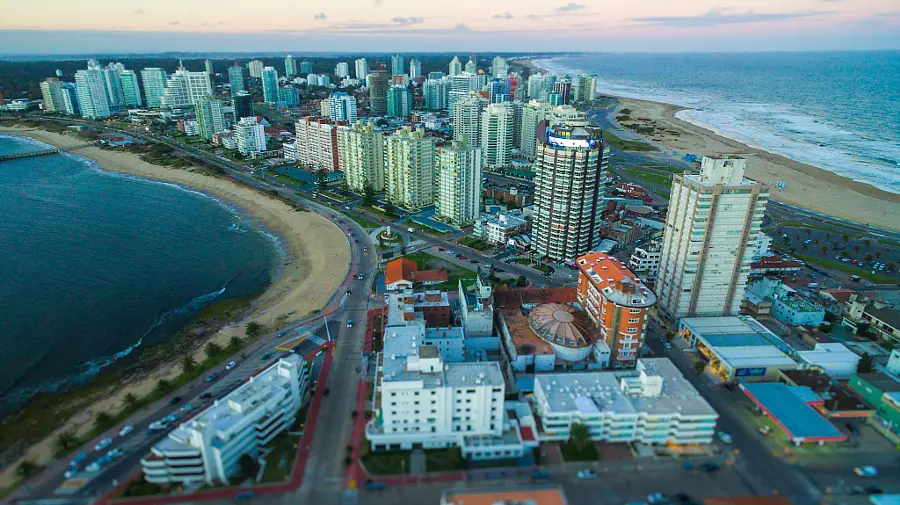
Punta del Este is Uruguay's glamour postcode, and its most photographed landmark is La Mano — a giant concrete hand emerging from the sand on Playa Brava, sculpted in the 1980s and now the coast's unofficial emblem. The peninsula splits the water into two moods: the calm, family-friendly Playa Mansa on the river side and the surf-pounded Brava facing the open Atlantic. In January and February the town is packed and hotel rates spike; in November or March you get the same beaches with breathing room.
West of town, at Punta Ballena, Casapueblo is a whitewashed, cave-like complex cascading down a cliff — part gallery, part hotel, and the setting for the region's most celebrated sunset. Boat trips run from Punta del Este harbour to Isla de Lobos, a rocky outcrop holding one of the largest sea lion colonies in the Americas.
Further east, the pace slackens. José Ignacio is a former fishing village turned low-key chic, marked by its squat white lighthouse and beach shacks serving fresh catch; nearby Garzón and the circular Laguna Garzón bridge have become the coast's design-and-wine corner. Note that in winter (June to September) southern right whales are occasionally spotted offshore from the Maldonado headlands — a very different reason to visit.
Wild Rocha: Cabo Polonio, Punta del Diablo and Santa Teresa
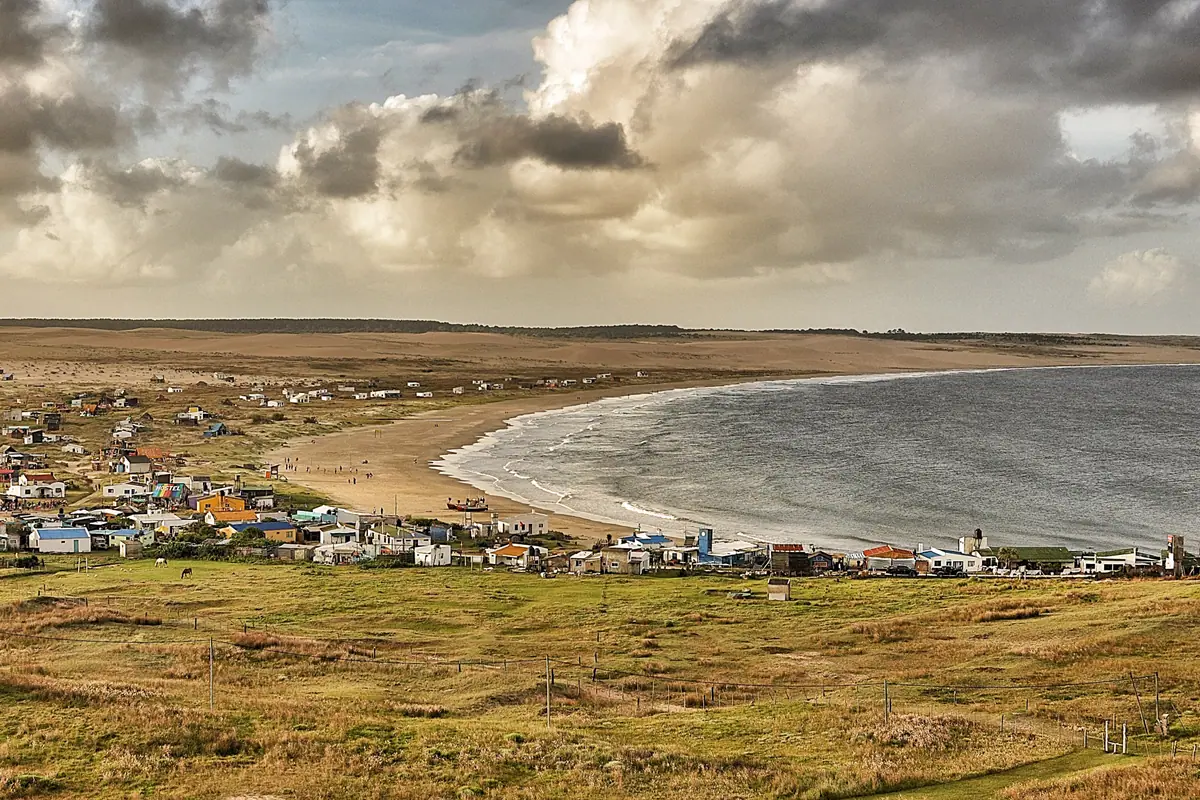
The department of Rocha is where Uruguay turns untamed. Cabo Polonio sits on a sand peninsula reachable only by 4x4 across the dunes or a long walk from the road, with no grid electricity, a scatter of wooden shacks, and a lighthouse overlooking a sea lion colony on the rocks below. Nights here are genuinely dark, and the stars are the attraction as much as the beach.
Punta del Diablo is the more comfortable counterpoint — a village of fishing boats, low houses and long beaches, with surf breaks, good value guesthouses and a lively but unpretentious summer scene. Between them, Barra de Valizas and its dunes, and the tiny settlement of La Pedrera, fill in the gaps for travellers with time.
Inland from the coast, Parque Nacional Santa Teresa protects Atlantic forest, sandy tracks and the star-shaped Fortaleza de Santa Teresa, a Portuguese-built fortress from the 1760s that you can walk through and around. Combine it with the lagoon at Laguna de Rocha, a protected reserve for birds and capybara, for a full day away from the sand.
Hot Springs, Gaucho Country and the Working Interior
Uruguay's interior is farmland, thermal water and cattle culture. In the northwest around Salto, the hot springs at Termas del Daymán and Termas de Arapey feed large pools that stay warm year-round, which makes them a genuinely appealing winter destination rather than a summer-only one. Termas de Guaviyú, further north, is the quietest of the trio, with camping and a more local crowd.
On the Uruguay River, Fray Bentos holds a UNESCO-listed former meatpacking complex — an entire industrial town, from the slaughterhouse to the managers' houses and the football pitch, preserved as a museum. It's an unexpectedly absorbing half-day and one of the country's most distinctive historic sites.
For landscape, head to Quebrada de los Cuervos in the east, a steep forested gorge with walking trails and lookout points, or the Valle del Lunarejo in the north, where basalt cliffs and palm groves sit in a protected biosphere reserve. In March, Tacuarembó hosts the Fiesta de la Patria Gaucha, a multi-day gathering of horsemen, traditional dress, music and asado that is the best window into rural Uruguayan identity you'll find.
When to Go, and How Uruguayans Actually Spend Their Days
High season on the coast runs from mid-December to the end of February, with prices at their peak over New Year and the first half of January. Late October, November, March and April are the sweet spots: warm enough to swim, quiet enough to book late, and mild for city sightseeing. Winter is cool and damp in Montevideo but ideal for hot springs, whale watching, estancia stays and cheap coastal walks.
Carnaval in Montevideo is one of the longest in the world, stretching over weeks from late January, with murga troupes performing in outdoor tablados across the city. Semana Criolla, held around Easter week, brings gaucho displays and rodeo to the Prado area, and the drumming Llamadas parade fills Barrio Sur in February. Elsewhere, rural festivals and country fairs pepper the calendar most weekends.
Food and ritual matter here. An asado is a slow, social affair rather than a quick meal, mate is carried everywhere in a thermos under the arm, and evening starts late — dinner at nine or ten is normal. Learn the rhythm rather than fight it, and a week in Uruguay feels far longer than its map suggests.
Frequently asked questions
How many days do you need in Uruguay?
Five to seven days covers Montevideo, Colonia del Sacramento and the coast comfortably. Ten days to two weeks lets you add Rocha's wild beaches, the Salto hot springs and a working estancia without spending every day in transit — distances are short but roads away from the main highways slow you down.
What is the best time of year to visit Uruguay?
November, March and April offer warm weather, fewer crowds and better availability than the December-to-February peak. If you want beach weather and festival energy, go in January or February and book accommodation well ahead. June to September is cool and quiet — the season for hot springs, whale sightings off the Maldonado coast and city culture.
Which landmarks should a first-time visitor not miss?
The essentials are Montevideo's Plaza Independencia and Mercado del Puerto, the historic quarter and lighthouse of Colonia del Sacramento, La Mano and Casapueblo around Punta del Este, and the Cabo Polonio lighthouse on the Rocha coast. If you have time, add the Fortaleza de Santa Teresa, the Fray Bentos industrial site and the Termas del Daymán.
Is it easy to get around Uruguay without a car?
The main route — Montevideo, Colonia and the coastal resorts — is well served by intercity buses, and ferries link Colonia and Montevideo with Buenos Aires. Reaching Cabo Polonio, Punta del Diablo, the hot springs and rural estancias is much easier with your own vehicle, though shuttle services and guided transfers exist in summer.
What should I know about money and etiquette in Uruguay?
Cards are widely accepted in cities and resorts, but carry some cash for beach villages, markets and small eateries, especially outside high season when some places close entirely. Tipping is modest and usually added at restaurants. Locals greet with a kiss on the cheek, drink mate constantly, and eat dinner late — adjusting your schedule makes the trip smoother.
Plan it — experiences in Uruguay
Live search, booked directly with trusted providers.
Sort the rest of your trip
Everything for Uruguay, in one place
Stay in Uruguay
Hotels, guesthouses and apartments — compared in one search.
Search hotels
Transfer in Uruguay
Private driver waiting on arrival — no queues, no surprises.
Book a transfer
Stay online in Uruguay
Travel eSIM — data the moment you land, no roaming bills.
Get an eSIM