South Africa packs an absurd amount into one country: a flat-topped mountain rising straight out of a city, penguins on a suburban beach, vineyards folded into granite valleys, and bushveld where lions drink at dusk. It is a place where you can watch whales from a cliff path in the morning and taste Cape Dutch wine by afternoon. This guide maps the landmarks and experiences a first-time visitor should not miss — and when to go for each.
Cape Town and the Cape Peninsula: The Essential First Stop
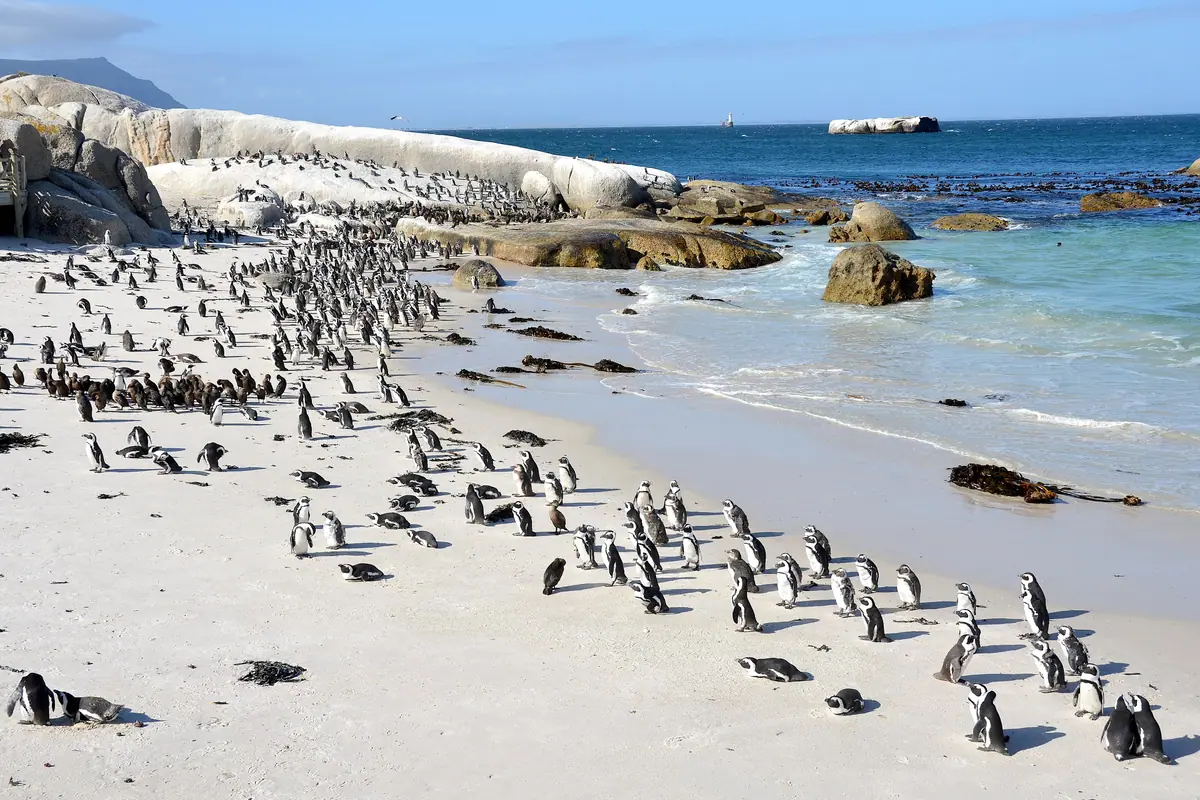
Then take the peninsula drive south. Chapman's Peak Drive carves a ledge between Hout Bay and Noordhoek, with pull-offs engineered for photographs, and continues to Cape Point and the Cape of Good Hope, where a funicular climbs to the old lighthouse and baboons patrol the parking areas. At Boulders Beach near Simon's Town, a colony of African penguins waddles between the sand and the boardwalks — go early, keep your distance and never feed them. On the way back, Kirstenbosch National Botanical Garden spills up the eastern slopes of the mountain, with a treetop canopy walkway that puts you above the fynbos.
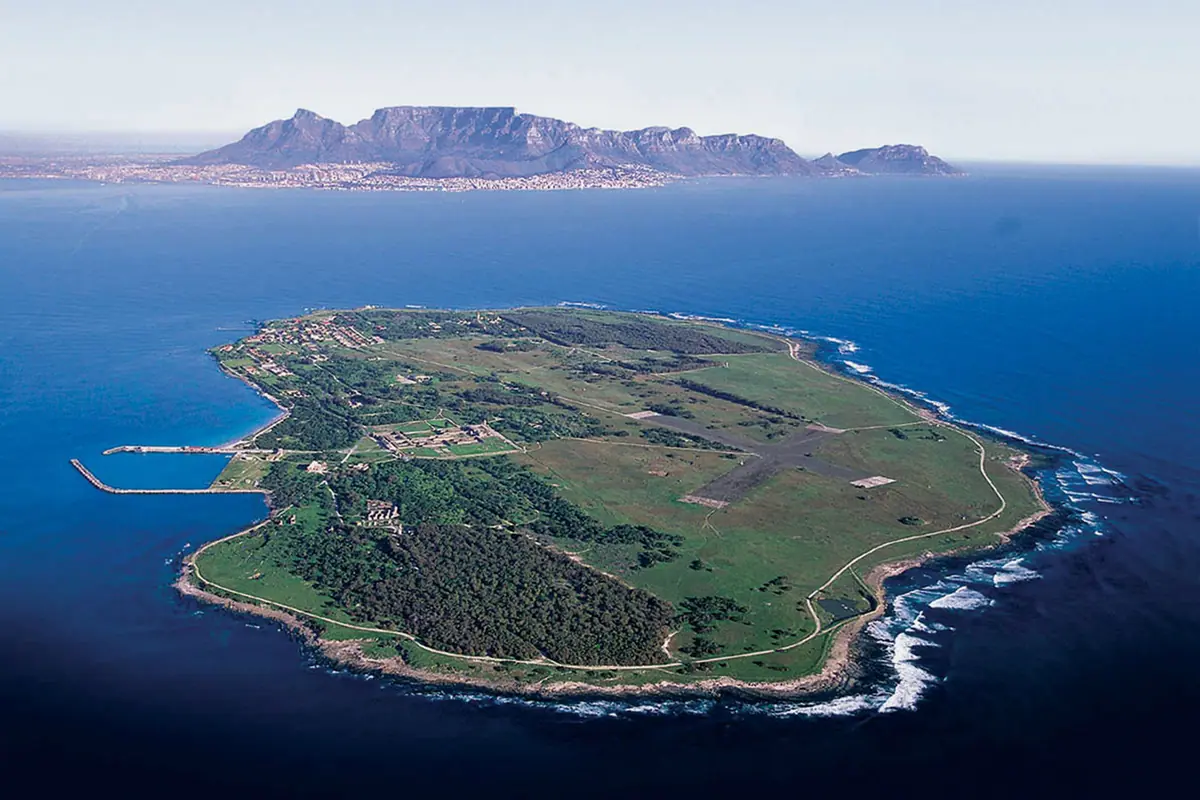
Robben Island, the Waterfront and When to Come
Timing matters more here than almost anywhere in the country. Cape Town's dry summer runs roughly November to March, with long, bright, windy days; February and March are marginally calmer and less crowded than the December school-holiday crush. Winter, June to August, brings rain, snow on the peaks and dramatic storms — cheaper, moodier, and still full of clear days between fronts.
The Cape Winelands and the Whale Coast
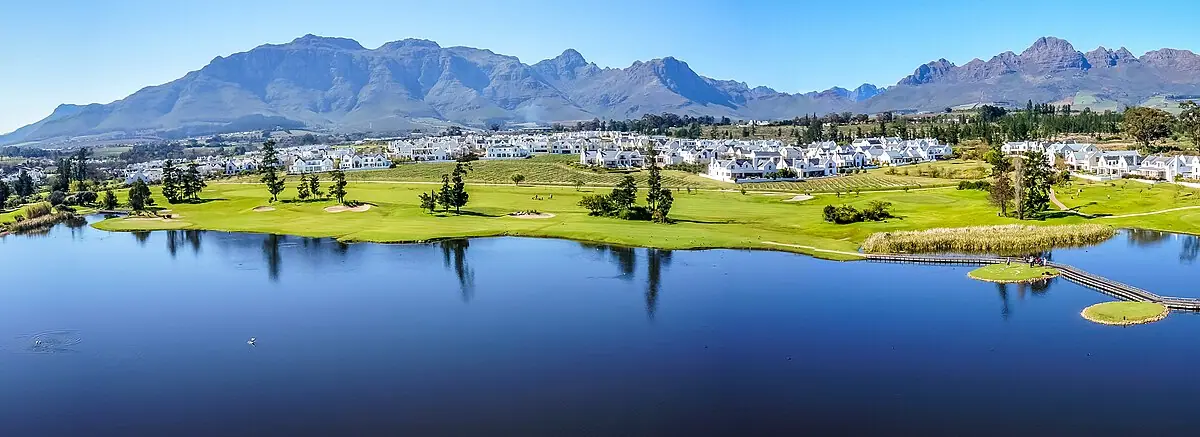
An hour inland from the city, the Cape Winelands begin. Stellenbosch is a university town of oak-lined streets and whitewashed Cape Dutch gables, with estates climbing into the mountains on every side. Franschhoek, settled by French Huguenots, is the culinary capital of the region — its valley floor is threaded by a wine route you can hop between by tram, and the Franschhoek Pass delivers one of the finest valley views in the country. Constantia, closer to Cape Town, is where the wine story began in the 1680s, while Paarl and Wellington round out the classic route. Most estates offer tastings without booking, but the famous ones fill up on weekends, so reserve lunch in advance.
Safari Country: Kruger, Sabi Sand and the Eastern Cape
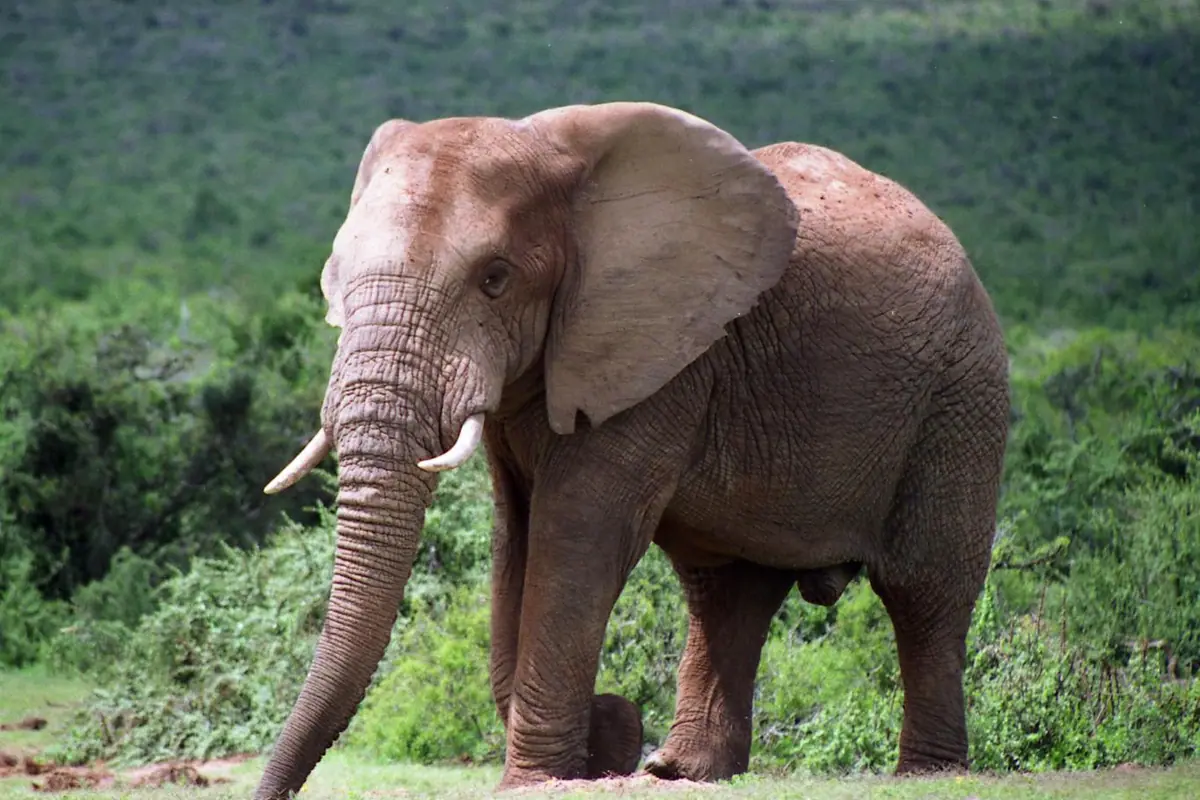
Sharing an unfenced border with Kruger, the private reserves of the Sabi Sand area allow off-road tracking and night drives, which is why they have such a strong leopard reputation — at a much higher cost. Elsewhere, Addo Elephant National Park near Gqeberha (Port Elizabeth) is a malaria-free, big-seven park that is easy to combine with the coast, and Hluhluwe-iMfolozi in KwaZulu-Natal is one of the continent's oldest proclaimed reserves, rolling green hillsides thick with white rhino. In the far north-west, the Kgalagadi Transfrontier Park trades lush bush for red dunes and black-maned lions, while Madikwe and Pilanesberg offer malaria-free safari within a few hours of Johannesburg.
The Garden Route and the Wild Coast
Beyond the Garden Route, the Wild Coast is South Africa at its most raw: Xhosa villages, cattle on the beach, and dirt roads that hug cliffs between Coffee Bay and the offshore rock arch of Hole in the Wall. It is slower, cheaper and far less polished than the Cape — perfect if you have a week to spare. Surfers should detour to Jeffreys Bay, one of the world's great right-hand point breaks, and whale watchers can catch southern right whales breaching in Algoa Bay from roughly June to November.
Johannesburg, Soweto and the Cradle of Humankind
North-west of the city, the Cradle of Humankind is a UNESCO-listed landscape of dolomitic caves where some of the oldest hominin fossils on earth have been found. The Sterkfontein Caves take you underground with a guide, and the Maropeng visitor centre explains the science in engaging, family-friendly exhibits. Add a day in Pretoria for the Union Buildings, with its terraced gardens and sweeping city views, and the granite Voortrekker Monument, and you have a rounded inland circuit.
The Drakensberg, Panorama Route and Far Corners
For travellers with time, the seasonal spectacles are worth building a trip around. In August and September, Namaqualand erupts into carpets of orange and white wildflowers around Springbok and the West Coast. The Augrabies Falls thunder on the Orange River, the flowers of the Kalahari bloom after rain, and the Golden Gate Highlands glow amber at sunset. The trick with all of it is distance: roads are good but long, and a South African itinerary that looks modest on a map can easily mean five hours of driving, so plan fewer stops and stay longer.
Frequently asked questions
How many days do you need in South Africa?
Two weeks is the realistic minimum for a first trip: roughly four to five days in Cape Town and the Winelands, three to four on the Garden Route, and three to four on safari. Three weeks lets you add the Drakensberg, the Wild Coast or the Kalahari without spending every second day in a car. Distances are long — Cape Town to the Garden Route is a four-hour drive, and Johannesburg to Kruger takes about five hours — so build in travel days.
What is the best time of year to visit South Africa?
It depends on what you are chasing. Cape Town is best from November to March (dry, sunny, windy); safari is best in the dry winter from May to September, when vegetation thins and animals gather at waterholes; southern right whales are visible from the Hermanus cliff path from roughly June to November, peaking in September and October; and Namaqualand's wildflowers bloom in August and September. April, May, September and October are the sweet-spot shoulder months for combining coast and bush.
Do I need malaria tablets for Kruger?
The lowveld, including Kruger and neighbouring private reserves, is a malaria-risk area, so most travel clinics recommend prophylactics for that part of a trip — start them before you arrive and follow the prescribed course. Cape Town, the Garden Route, Addo, Johannesburg and the malaria-free reserves such as Madikwe and Pilanesberg generally do not require medication. Use repellent at dusk, wear long sleeves after dark and sleep under a net or in screened accommodation.
Is it safe to travel around South Africa?
The tourist routes are well trodden and millions visit safely each year, but crime is opportunistic and concentrated in cities. Don't walk isolated streets after dark, keep phones and cameras out of sight, use arranged transfers at night, and book guided tours in townships and downtown Johannesburg rather than wandering alone. National parks, the Winelands and coastal towns are generally relaxed, and the biggest genuine risks on the road are long-distance driving fatigue and wildlife on the road at dusk.
Should I self-drive or book guided tours?
Self-driving is easy — traffic keeps left, roads are generally good, and the Garden Route and Cape Peninsula are ideal by car, giving you the freedom to stop at viewpoints. For Kruger, a guided open-vehicle drive usually beats self-driving because guides track animals by radio and know the waterholes; many people self-drive the park by day and add a guided sunset drive. Use guided operators for Soweto, the Cradle of Humankind caves and any 4x4 route such as Sani Pass.
Plan it — experiences in South Africa
Live search, booked directly with trusted providers.
Sort the rest of your trip
Everything for South Africa, in one place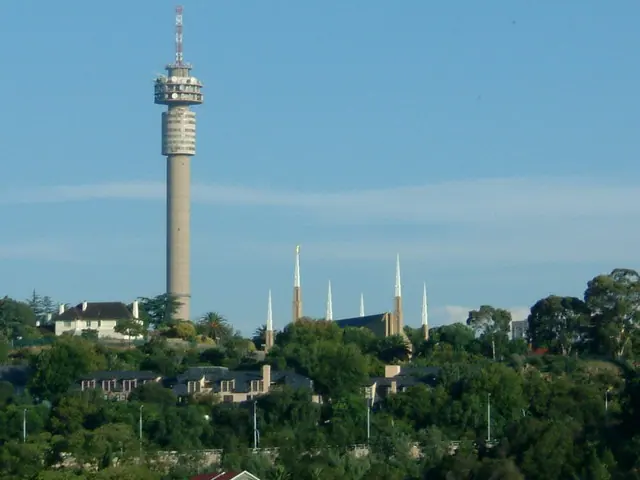
Stay in South Africa
Hotels, guesthouses and apartments — compared in one search.
Search hotels
Transfer in South Africa
Private driver waiting on arrival — no queues, no surprises.
Book a transfer
Stay online in South Africa
Travel eSIM — data the moment you land, no roaming bills.
Get an eSIM