Russia unfolds across eleven time zones, from the candy-swirl domes of Red Square to the smoking volcanoes of Kamchatka and the blue ice of Lake Baikal. It rewards travellers who plan in seasons rather than in days, because the country looks like an entirely different place under June's white nights and February's deep snow. Here is how to see the landmarks that matter most, and the experiences that make the distances worth crossing.
Moscow: Red Square, the Kremlin and the Palaces Underground
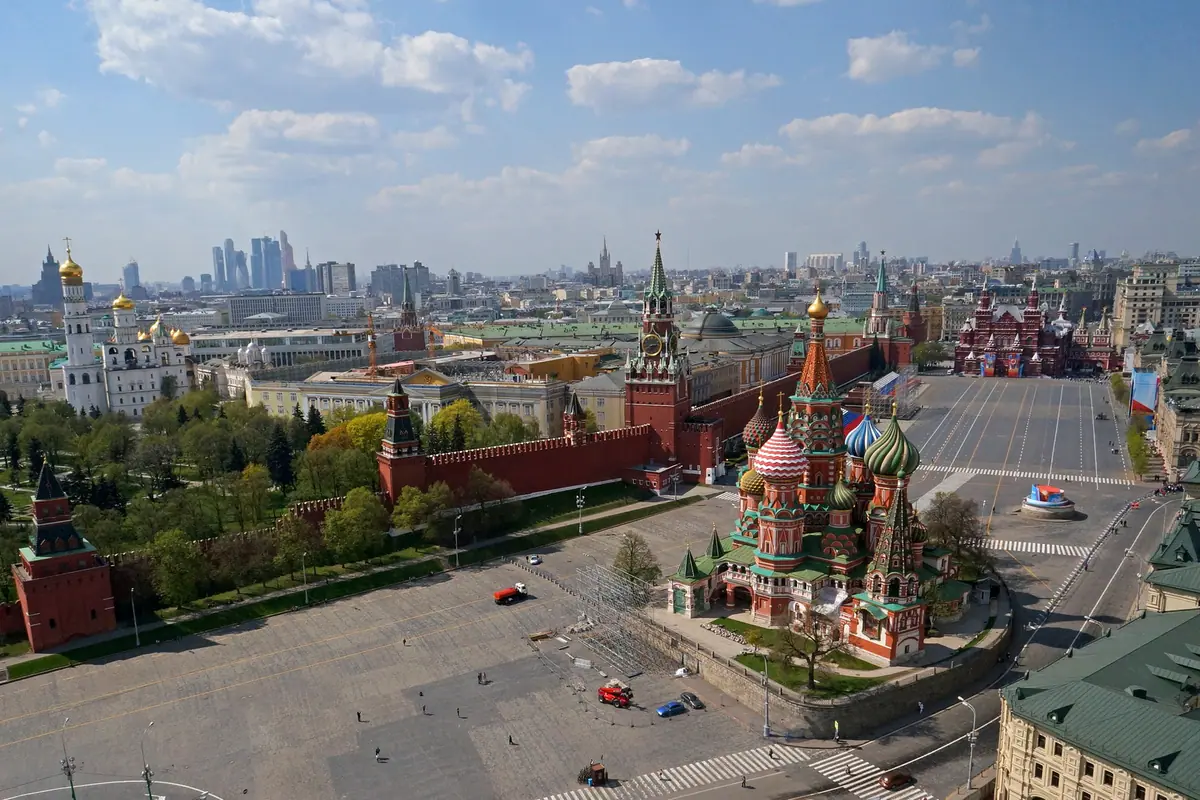
Start where every Russian journey starts: Red Square, a cobbled slope that gathers the country's most recognisable silhouettes into one view. St Basil's Cathedral, built in the 16th century for Ivan the Terrible, twists nine chapels into a cluster of painted onion domes; beside it run the red-brick Kremlin wall, the granite slab of Lenin's Mausoleum and the long glass-roofed 19th-century trading arcade that still sells everything from caviar to ice cream. Arrive before nine in the morning for near-empty photographs, or come back after dark when the square is lit like a stage set.
Behind the wall, the Kremlin is a working fortress and an open-air museum of Russian power. The Armoury Chamber holds the imperial regalia, jewelled eggs and coronation coaches, while three cathedrals inside the walls — the Assumption, the Archangel and the Annunciation — hold frescoes, tombs and the coronation church of the tsars. Timed-entry tickets are essential in summer, and the complex closes one day a week, usually Thursday, so build your itinerary around it rather than turning up hopeful.
Then go underground. Moscow's metro was designed as propaganda in marble, and stations such as Komsomolskaya, Mayakovskaya and Novoslobodskaya deliver chandeliers, ceiling mosaics and stained glass for the price of a single ride. Treat two or three of them as a museum circuit, then surface for the Tretyakov Gallery's icons and Russian painting, an evening at the Bolshoi Theatre, or a slow wander through Gorky Park and the old Arbat street.
St Petersburg: The Hermitage, Imperial Palaces and White Nights
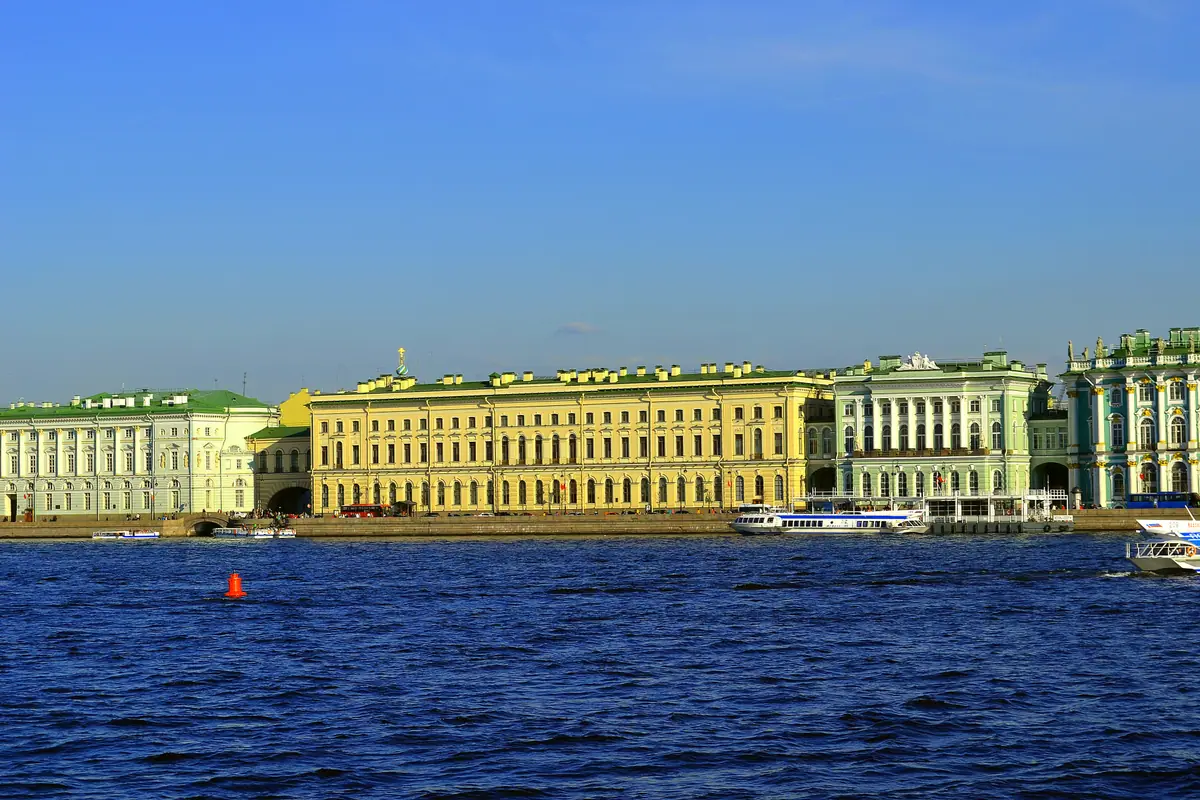
St Petersburg is Russia's most European city and its most beautiful, laid out in canals, embankments and pastel palaces. The State Hermitage Museum fills the Winter Palace on Palace Square, where the Alexander Column marks the spot of imperial parades; its collection runs to millions of objects, but the gilded halls themselves are half the attraction. Give it a full day, choose two or three wings rather than trying to see everything, and book a timed slot in advance — summer queues without one can swallow an entire morning.
Across the Neva, the Peter and Paul Fortress marks the city's birthplace, its needle spire rising above the burial place of the Romanovs, while the Church of the Savior on Spilled Blood lures everyone inside with walls of mosaic that cover almost every surface. Walk Nevsky Prospekt, take a canal boat under the low bridges, and if you are here in the navigation season, stay up for the drawbridges opening over the Neva, a spectacle that pulls crowds onto the embankments in the small hours.
Save days for the satellite palaces. Peterhof, reached by hydrofoil or suburban train, is a cascade of gilded fountains and gardens that works best on a sunny afternoon; Tsarskoye Selo's Catherine Palace holds the reconstructed Amber Room, and Pavlovsk offers a gentler, less crowded version of the same imperial world. From late May to mid-July the White Nights transform the city — around the June solstice it barely gets dark — so reserve accommodation and any ballet tickets at the Mariinsky well ahead, as this is peak season.
The Golden Ring: Suzdal, Vladimir, Sergiev Posad and Old Russia
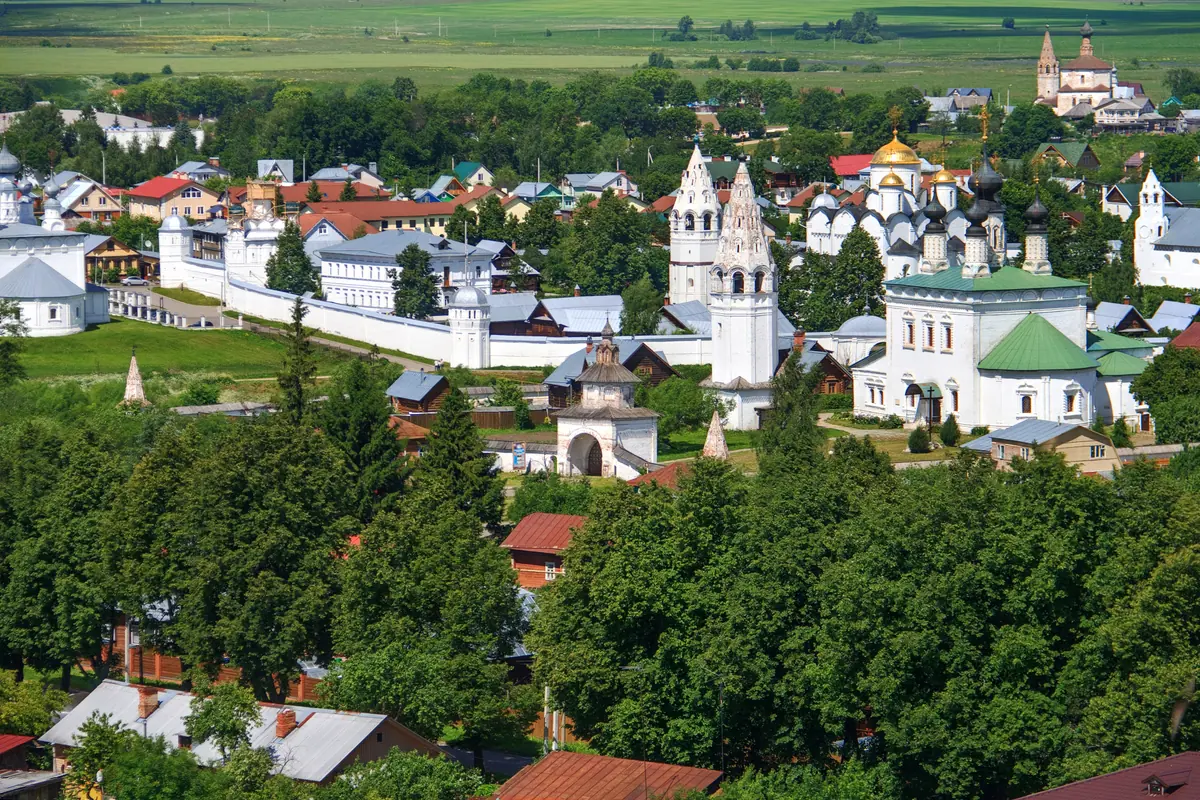
The Golden Ring is a loop of historic towns northeast of Moscow where Russia's oldest architecture survives in something close to its original setting. Suzdal is the jewel of the route: a low-rise town of wooden houses, monastery walls and the blue-domed Nativity Cathedral inside its small Kremlin, with horse carts clattering past the Trade Square and a local honey drink, medovukha, served in almost every doorway. Stay at least one night, because Suzdal is at its best after the day-trippers leave.
Nearby Vladimir pairs the fortified Golden Gate with the Assumption Cathedral, whose interior preserves frescoes by Andrei Rublev, and the compact St Demetrius Cathedral covered in stone carving. Easier still as a day trip from Moscow is Sergiev Posad, home to the Trinity Lavra of St Sergius, the spiritual heart of the Russian Orthodox Church, about seventy kilometres out and reachable by suburban train in roughly an hour and a half — blue-and-gold domes, pilgrims and bell-ringing included.
Push further north and the scale changes. Veliky Novgorod, one of Russia's oldest cities, keeps an 11th-century cathedral inside its Kremlin, while Kizhi Pogost on Lake Onega in Karelia holds a 22-domed Church of the Transfiguration said to have been raised without a single nail. Kizhi is a summer destination, reached by hydrofoil from Petrozavodsk, and it is one of the few places in the country where the wooden Russia of the north survives intact.
The Trans-Siberian Railway and Lake Baikal
Riding the Trans-Siberian is less a transport decision than a way of measuring the country. The full Moscow to Vladivostok line runs roughly nine thousand kilometres and takes six to seven days without stopping; most travellers instead break the journey, adding nights in Kazan for its white-walled Kremlin and Kul Sharif Mosque, in Yekaterinburg for the Church on the Blood, and in Irkutsk, the gateway to Baikal. Second-class compartments sleep four and come with a samovar at the end of the carriage, a conductor who keeps order, and a rhythm of tea, cards and scenery that quickly becomes the point.
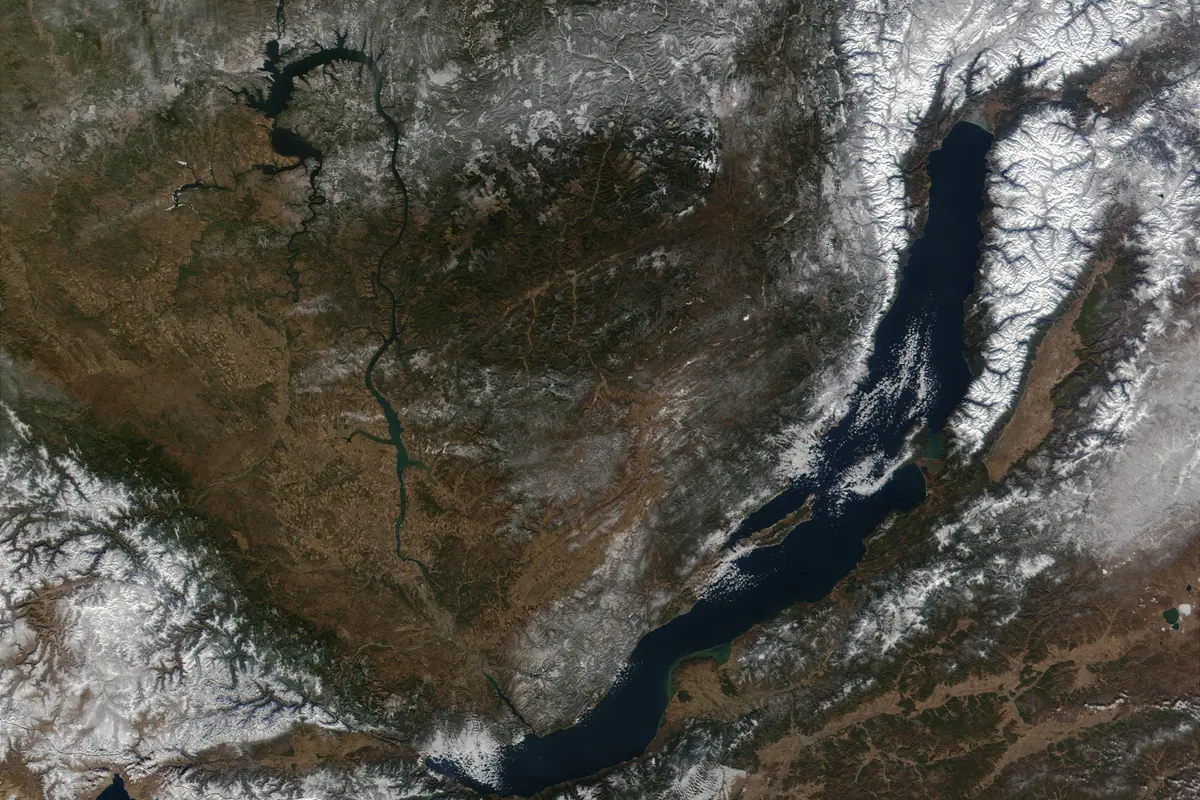
Lake Baikal alone justifies the crossing. It is the deepest and oldest freshwater lake on earth, holding a fifth of the planet's unfrozen fresh water, and it looks different in every season. In summer, Listvyanka village is an easy hour from Irkutsk, the Circum-Baikal Railway runs along the lakeshore, and Olkhon Island offers cliffs, steppe and the sacred Shamanka Rock. In late February and March the lake freezes into turquoise slabs, pressure ridges and bubble-filled ice so clear you can see metres down — cold, but unforgettable, and best explored with a local driver-guide on a hovercraft or a sturdy van.
If you want the crossing without the marathon, choose a stretch rather than the whole line: Moscow to Irkutsk by rail with stops, then fly onward, or run east to Vladivostok and fly back. Book long-distance trains as soon as the booking window opens, generally about three months ahead, because summer compartments on the most scenic sections vanish quickly.
Wild Russia: Kamchatka, the Caucasus, the Altai and the Volga
Russia's wild landscapes rival any on the planet, but they demand commitment. Kamchatka, nine time zones from Moscow, is volcano country: the Valley of the Geysers is usually reached by a long helicopter day trip from Petropavlovsk-Kamchatsky, and the surrounding reserve holds bear-viewing spots that peak between July and September. Treks to the craters of Avachinsky and Mutnovsky are possible for reasonably fit walkers, but weather can cancel flights for days, so leave slack in your schedule rather than a tight connection home.
In the southwest, Mount Elbrus rises to 5,642 metres and remains Europe's highest summit; a cable car carries non-climbers to the high huts for glacier views, while Sochi and Krasnaya Polyana below offer skiing from December to April and hiking the rest of the year. The Altai Mountains, in Siberia's south, are for river rafting on the Katun, horse trekking and long, empty valleys below Mount Belukha.
Closer to the centre, the Volga ties the country together. Multi-night cruises run between Moscow and St Petersburg via lakes and rivers, or down the Volga to Kazan and Nizhny Novgorod, with its own hilltop Kremlin and stepped embankments. These cruises are a gentle way to see provincial Russia without packing and unpacking, and they sell out earliest for the White Nights weeks of June and July.
When to Go and How to Plan a Russia Trip
Seasons shape everything. May to September brings long days, open palaces and the best conditions for Baikal, Kamchatka and the northern wooden churches; June and early July are White Nights in St Petersburg, the busiest and most expensive window of the year. September is the connoisseur's month, with golden birch forests along the Golden Ring and thinner crowds. From December to March the country turns properly Siberian: snow-covered Red Square, New Year fairs, Maslenitsa pancake week in late February or early March, and the frozen-blue spectacle of Baikal's ice.
Logistically, most foreign visitors need a visa arranged before travel, usually with an invitation, and accommodation should register you on arrival — keep the paperwork with your passport. Long-distance rail tickets open for sale roughly ninety days ahead, museum and Kremlin entry often runs on timed slots, and several major sights close one fixed day a week, so check before you lock a city into a two-day stop. Carry some cash for small towns and markets, learn the Cyrillic alphabet well enough to read station names, and accept that English thins out quickly beyond Moscow and St Petersburg.
A sensible first trip is four days in Moscow, four in St Petersburg, connected by a high-speed daytime train, with a Golden Ring overnight if you have a spare day. Add a week for the Trans-Siberian with a Baikal stop, and a further week if Kamchatka or the Caucasus is on your list. Distances are enormous, so fewer places seen properly will always beat a rushed checklist.
Frequently asked questions
How many days do you need to see Russia's main sights?
A first visit works well as eight days: four in Moscow for Red Square, the Kremlin and the Tretyakov Gallery, and four in St Petersburg for the Hermitage, Peter and Paul Fortress and a day trip to Peterhof or Tsarskoye Selo. Add two or three nights for the Golden Ring towns, about a week for the Trans-Siberian with a Lake Baikal stop, and another week if you want Kamchatka or the Caucasus.
What is the best time of year to visit Russia?
Late May to September offers the easiest travel, with June and early July best for the White Nights in St Petersburg. September brings golden autumn colour and fewer visitors. If you want snow, New Year markets and the transparent blue ice of Lake Baikal, come between December and March, with late February and March the peak for Baikal's frozen surface.
Is the Trans-Siberian Railway worth doing, and how long does it take?
Yes, if you treat it as the experience rather than a transfer. Moscow to Vladivostok takes six to seven days non-stop, but most travellers travel in segments and stop in Kazan, Yekaterinburg or Irkutsk, spending one to two weeks in total. Second-class four-berth compartments are the comfortable middle ground; book as soon as the roughly ninety-day booking window opens.
Do you need to speak Russian to travel independently?
Not fluently, but some basics help enormously. Learning Cyrillic lets you read metro and station signs, and translation tools cover menus and tickets. English is common in central Moscow and St Petersburg hotels and museums, but thins out in provincial towns, on trains and in the Altai or Kamchatka, where a local guide or a pre-arranged driver makes life much simpler.
Can you combine Moscow, Lake Baikal and Kamchatka in one trip?
It is possible but stretched. Moscow to Irkutsk is a five-day rail ride or a six-hour flight, and flights onward to Petropavlovsk-Kamchatsky take several hours more with limited frequency. Allow at least three weeks and keep buffer days, since Kamchatka's helicopter trips and volcano hikes are frequently delayed by weather.
Plan it — experiences in Russia
Live search, booked directly with trusted providers.
Sort the rest of your trip
Everything for Russia, in one place
Stay in Russia
Hotels, guesthouses and apartments — compared in one search.
Search hotels
Transfer in Russia
Private driver waiting on arrival — no queues, no surprises.
Book a transfer
Stay online in Russia
Travel eSIM — data the moment you land, no roaming bills.
Get an eSIM