Russia spans eleven time zones, but most first trips orbit two cities — Moscow's fortress-and-dome skyline and St Petersburg's canals and palaces — with detours to the Golden Ring, the Volga, the Black Sea and the frozen vastness of Lake Baikal. Where you sleep quietly decides how much you actually see, because a hotel inside Moscow's Boulevard Ring puts the Kremlin on your breakfast walk, while a log-walled guesthouse in Suzdal trades traffic for church bells. This guide matches the country's unmissable sights to the districts and hotel styles that serve them best.
Moscow: Checking In Beside Red Square and the Kremlin
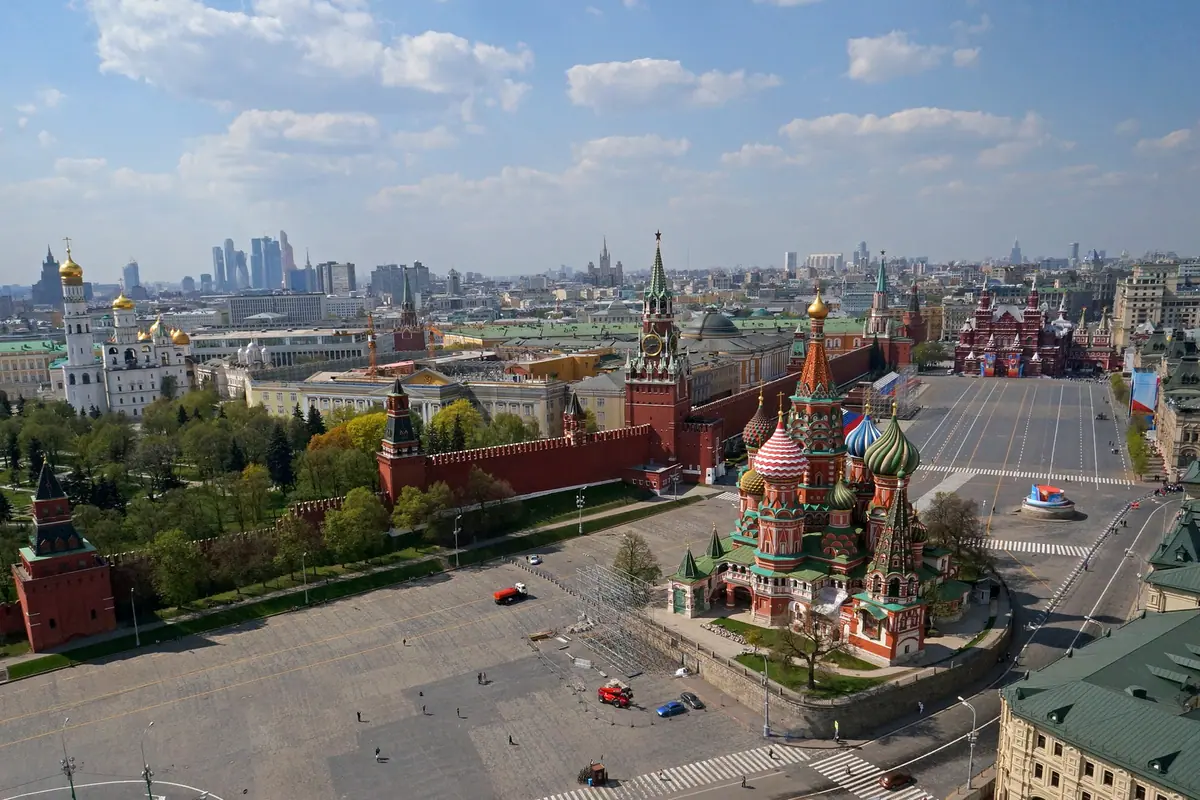
Almost every first visit to Russia begins in Moscow, and almost every first-time visitor wants to wake up within walking distance of Red Square. The historic core — Tverskaya Street, the Okhotny Ryad area and the lanes of Kitay-Gorod — puts you minutes from the red-brick Kremlin walls, the candy-striped onion domes of St Basil's Cathedral, the long arcades of GUM department store and the squat granite of Lenin's Mausoleum. The Bolshoi Theatre is a short stroll north, and a half-hour walk downstream along the river brings you to the Tretyakov Gallery, the definitive collection of Russian painting from medieval icons to the Wanderers.
Beyond the postcard radius, the city splits into useful hotel personalities. Monumental Soviet-era properties with marble lobbies, wide staircases and heavy curtains dominate the main avenues; boutique conversions of 19th-century mansions cluster around Patriarch's Ponds, the setting of Bulgakov's most famous novel; and glass towers in the Moscow City business district offer lower rates at the cost of a metro ride. Wherever you choose, stay within a few minutes of a station, because the metro is an attraction in its own right — Mayakovskaya's mosaic ceilings and Komsomolskaya's baroque vaulting are worth a sightseeing detour.
Timing changes everything. December to February is genuinely cold, often minus ten or lower, so prioritise a hotel with serious heating, a lobby bar and a short indoor route to a metro entrance. June to August brings daylight until well past ten at night, crowded terrace cafés on the Arbat and long golden evenings at the Sparrow Hills viewpoint, where the river bends below Moscow State University's wedding-cake tower. Central rooms cost more, but weekend traffic can turn a cheap suburban address into a slow one.
St Petersburg: Palaces, Courtyards and White Nights
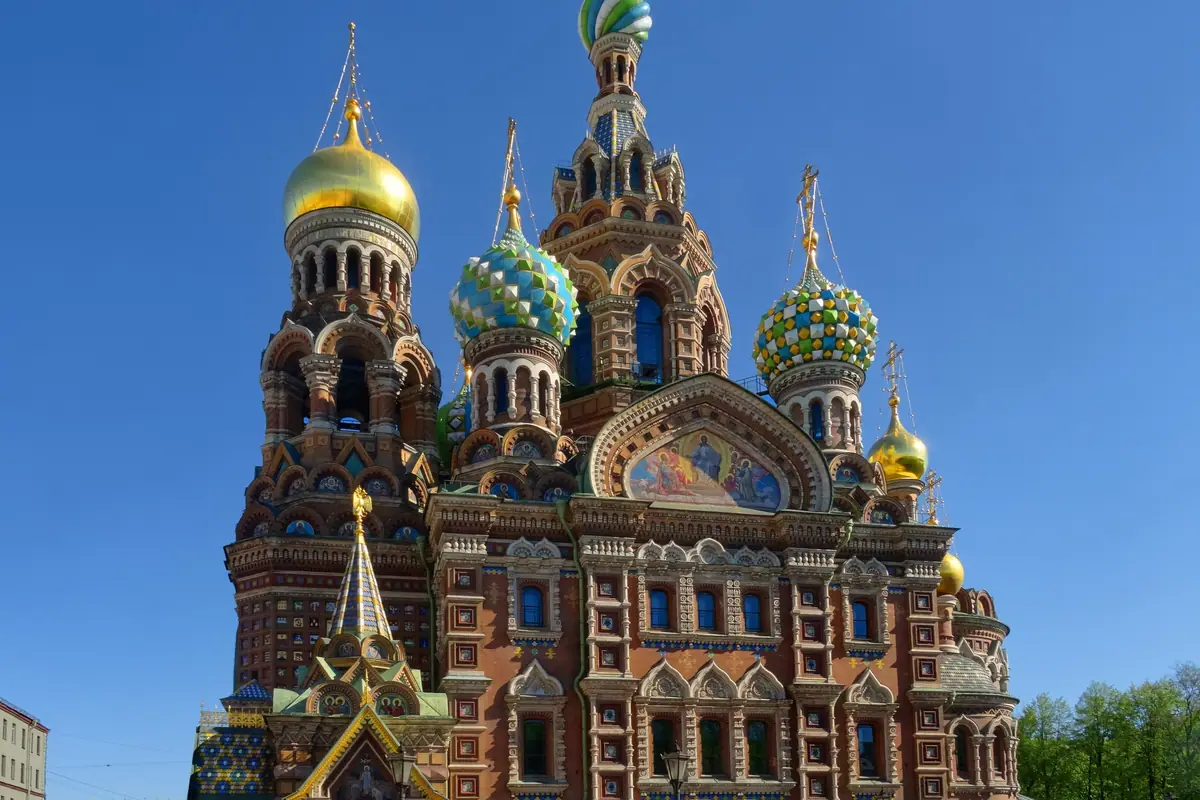
Peter the Great's window on Europe rewards slow walking, so base yourself near Nevsky Prospect, Palace Square or the canal embankments around the Admiralteysky district. From there you can queue early for the Hermitage in the Winter Palace, wander to the mosaic-drenched Church of the Saviour on Spilled Blood, cross the Neva to the Peter and Paul Fortress where the city was founded, and climb the colonnade of St Isaac's Cathedral for a rooftop view over the domes. In the evening, the Mariinsky Theatre is where you go for world-class ballet and opera in a gilded, velvet-lined hall.
Hotel character here is unusually varied. Restored 18th- and 19th-century mansions hide behind archways and inner courtyards — you buzz through a heavy door, cross a cobbled yard and climb to rooms with three-metre ceilings. Smaller design hotels line the Moika and Fontanka embankments, while larger properties gather near the main rail terminals for easy arrivals. Ask for a room facing away from the street unless you sleep through anything: Nevsky Prospect hums all night, and canal-view rooms are charming but noisier than photographs suggest.
The city has two distinct seasons worth planning around. From mid-June to early July the White Nights turn the sky into a permanent dusk, drawing late-night canal cruises, open-air concerts and crowds that fill hotels months in advance. During navigation season the drawbridges lift in the small hours, stranding anyone who lingers on Vasilyevsky Island until roughly half past four. Winter is the opposite bargain: empty museum halls, low room rates, frosted palaces, and the gilded rooms of the Catherine Palace at Tsarskoye Selo still shining an hour south of town.
The Golden Ring: Guesthouses in Suzdal, Vladimir and Sergiev Posad
Two to four hours east of Moscow, the Golden Ring is a loop of medieval towns that once held the political and spiritual weight of the country. Sergiev Posad is built around the Trinity Lavra of St Sergius, a working monastery with blue-and-gold domes and a pilgrim crowd that never quite thins. Vladimir guards 12th-century stone gates and the frescoed Assumption Cathedral. And Suzdal, reached by road rather than rail, is the purest of the lot — a low-rise town of monasteries, the Suzdal Kremlin, the trading arcades and the open-air Museum of Wooden Architecture, with almost no industrial skyline to interrupt it.
This is where you stay in something smaller and warmer. Family-run guesthouses occupy timber houses and restored merchant buildings, often with a banya in the yard, a samovar in the dining room and breakfasts of porridge, pancakes and jam. Suzdal's guesthouses book out for summer weekends and for the town's midsummer cucumber festival, when streets fill with pickles, folk singing and stalls. Vladimir and Sergiev Posad are easier to reach by train and suit a single overnight; Suzdal deserves two nights and a rented bicycle.
Late spring through early autumn is the comfortable window, with warm days, green meadows and long light. Winter here is quiet, cheap and genuinely beautiful — snow on the domes, a frozen river and hot tea after a walk — but buses between towns are less frequent and some guesthouses close. Bring cash for small villages, and expect guesthouse hosts to offer transfers from the nearest rail station for a modest fee.
Kazan, Yekaterinburg and Nizhny Novgorod: Volga and Urals City Hotels
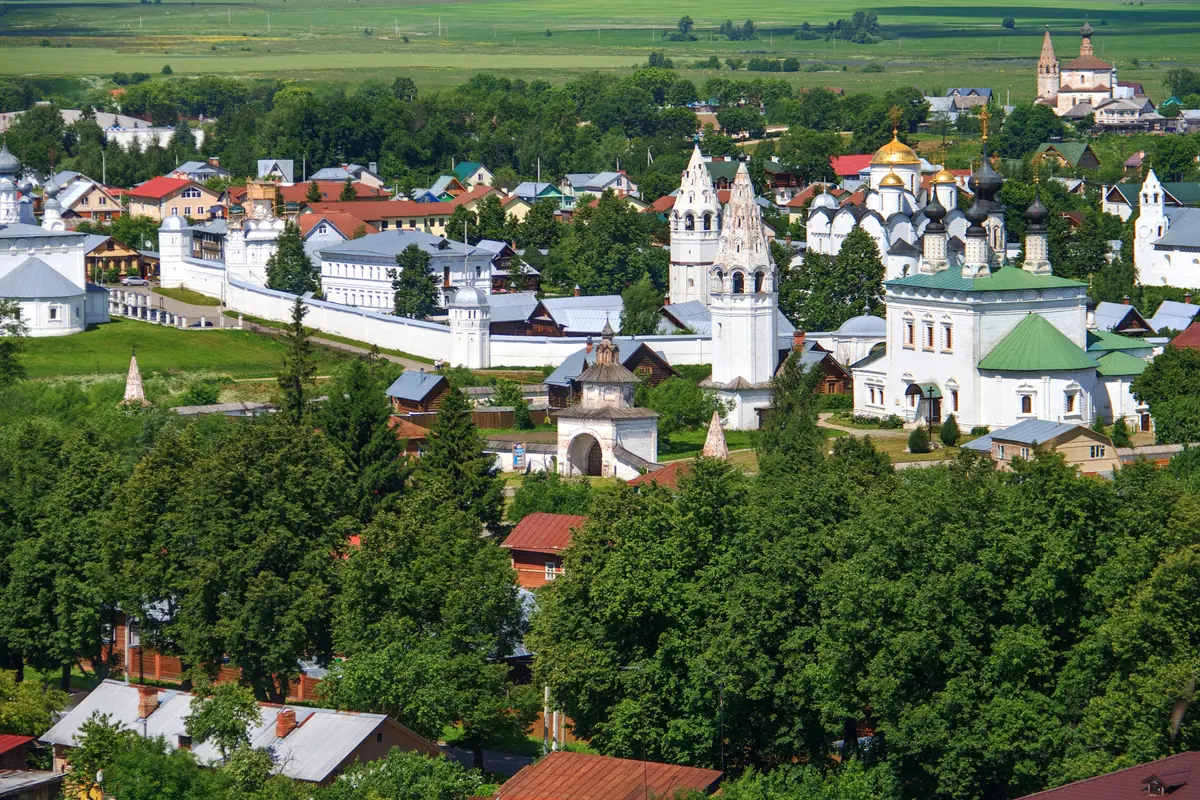
Kazan, capital of Tatarstan and roughly 800 kilometres east of Moscow, is the most rewarding stop on an overnight train heading for the Urals. The white walls of the Kazan Kremlin enclose the turquoise, tulip-topped Kul Sharif Mosque standing almost beside an Orthodox cathedral, with the leaning Soyembika Tower as the skyline's signature. Below it, Bauman Street is a pedestrian artery of cafés, buskers and Tatar pastry shops. Hotels in the historic centre are mostly mid-sized and modern, with a handful of boutique conversions, and booking early matters around major sporting and cultural events.
Yekaterinburg, on the Asian side of the Urals, mixes constructivist buildings, the Church on the Blood built on the site of the Romanovs' final hours, and the sharply designed Boris Yeltsin Presidential Center. The Europe-Asia border marker sits a short drive west, and hotels cluster around Ploshchad 1905, where you can walk to theatres and the city's best restaurants. Nizhny Novgorod, the old trading capital, spreads along the meeting point of the Volga and the Oka, with a kremlin on the bluff and the 560-step Chkalov Stairs tumbling down to the river.
These cities have fewer large international-style hotels than Moscow and St Petersburg, so availability tightens quickly in summer and during holidays. Daytime high-speed trains make Nizhny Novgorod an easy add-on to a Moscow itinerary, while Kazan and Yekaterinburg are natural sleeper-train stops. In all three, look for hotels within walking distance of the kremlin or the main square — that is where the evenings happen.
Sochi and the Black Sea: Resort Hotels, Sanatoriums and Mountain Lodges
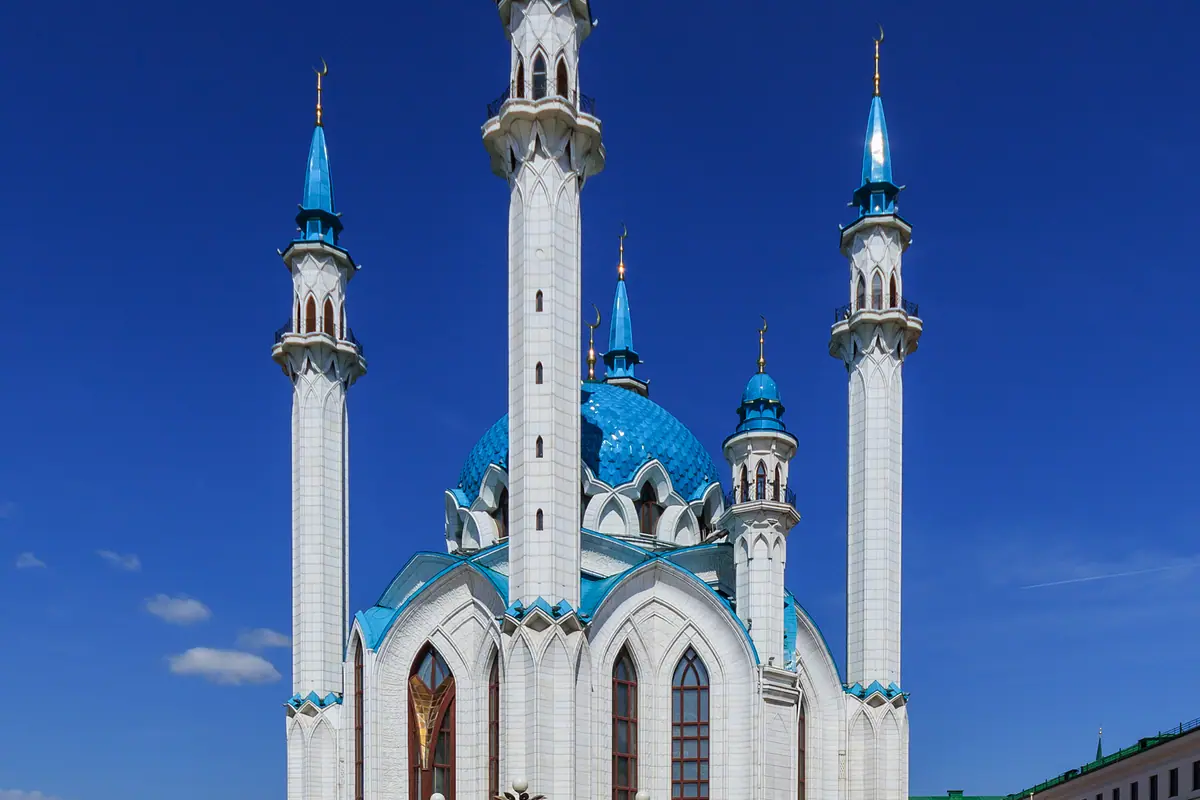
Sochi is a different country in mood: subtropical, palm-lined and pebbly, with the Caucasus rising straight behind the coast. The Olympic legacy sits in Adler, where Fisht Stadium, the Games cauldron and the landscaped Olympic Park draw evening promenades. Central Sochi offers the Riviera Park, the lush Sochi Arboretum and the Akhun Tower viewpoint for a panorama over the sea. Hotel stock ranges from large modern beachfront blocks to the city's proud sanatorium tradition — forested health resorts from the mid-20th century where mineral baths and scheduled rest are part of the package.
Inland, Krasnaya Polyana and the Rosa Khutor resort village sit 40 to 60 minutes from the coast at altitudes from roughly 500 to 2,300 metres. Mountain boutique hotels and apartment lodges put you steps from the lifts, with skiing from December to March, spring snow into April, and green-season hiking, paragliding and river rafting through summer. Families often split a trip between coast and mountain; the altitude change means packing both swimwear and a proper jacket.
The beach season runs from May to October, with the most crowded and expensive weeks in July and August, when domestic demand pushes rates sharply up. Book three to four months ahead for that window, and consider June or September for warm water, open promenades and easier rooms. Winter visitors should check which lifts and restaurants are operating, as some mountain hotels close or reduce service outside the ski calendar.
Lake Baikal, Irkutsk and the Siberian Edge
Siberia is the part of Russia that changes people's sense of scale. Lake Baikal is the deepest and oldest lake on earth and holds around a fifth of the planet's unfrozen fresh water, ringed by taiga and rocky headlands. Most travellers base themselves in Listvyanka, about an hour from Irkutsk along a scenic road, or travel on to Olkhon Island, a six- to eight-hour drive that rewards the effort with steppe, shamanic rock and horizons that look oceanic. The old Circum-Baikal Railway, running along stone viaducts and tunnels on the lake's southern shore, is a day trip in itself.
Irkutsk, founded in the 17th century, is the gateway city, with lace-trimmed wooden houses, merchant mansions and a restored historic quarter of cafés and small museums. Accommodation ranges from Soviet-era blocks with sturdy, functional rooms to converted townhouses and lakeside guesthouses that serve smoked omul and organise ice tours. February and March are the ice months, when the surface turns to transparent turquoise pressure ridges and you can walk, skate or drive across it; July and August are for hiking, boat crossings and warm-weather camping.
From here the country keeps going. The Trans-Siberian route continues east to Vladivostok, where the Golden Bridge and the Russky Bridge frame a hilly Pacific port and the Eagle's Nest viewpoint overlooks the bay. Head north instead and you reach Murmansk, the largest city above the Arctic Circle, a practical base for aurora hunting from September to March and for trips onto the Kola Peninsula. In both cases, book accommodation well ahead — the far edges of the country have far fewer beds than the capitals.
Frequently asked questions
When is the best time of year to visit Russia?
It depends on what you want to see. May to September suits Moscow, St Petersburg and the Golden Ring, with warm days and long light. Mid-June to early July is the White Nights window in St Petersburg, the busiest and most expensive period of the year there. December to February is for deep-winter Moscow, New Year markets and snow-covered monasteries, while February and March are the months for walking on Baikal's clear ice. Sochi's beach season runs from May to October, and its mountain resorts ski from December to March.
Should I base myself in one city or stay in two?
Stay in both capitals if you can. Moscow and St Petersburg are connected by daytime high-speed trains that take around four hours, or by overnight sleepers that save a hotel night. Basing yourself in the centre of each city is far better than commuting, because the main sights — Red Square and the Kremlin in Moscow, Palace Square and the Hermitage in St Petersburg — are within walking distance of the central hotel districts.
What kinds of hotels will I find in Russia?
Anything from monumental Soviet-era hotels with marble lobbies to boutique conversions of 19th-century mansions, modern apart-hotels, family guesthouses in the Golden Ring, Black Sea sanatoriums and mountain lodges near Sochi. Before booking, check the renovation date, whether there is air conditioning for summer, whether the lift works, what breakfast is included and whether the front desk speaks English. Rooms within the same property can vary enormously, so read recent guest comments rather than relying on star ratings.
How far in advance should I book accommodation?
For White Nights in St Petersburg, New Year in Moscow, the May holidays, July and August on the Black Sea coast, and Baikal's ice season, book three to six months ahead — the best-located places sell out first. Outside those peaks, a few weeks is usually enough in the big cities, and last-minute flexibility can work in your favour in winter. Guesthouses in small Golden Ring towns have only a handful of rooms, so treat them like peak-season bookings all year round.
Do hotels help with registration paperwork for foreign guests?
Many hotels handle registration for foreign visitors as part of check-in, particularly larger properties, and will give you a slip to keep with your documents. Ask at the front desk when you arrive rather than assuming, and keep the paper with your passport until you leave the country. Requirements and exemptions change from time to time and depend on the length and type of your stay, so confirm the current rules for your nationality before travelling.
Sort the rest of your trip
Everything for Russia, in one place
Transfer in Russia
Private driver waiting on arrival — no queues, no surprises.
Book a transfer
Things to do in Russia
Skip-the-line tickets, guided tours and standout experiences.
See experiences
Stay online in Russia
Travel eSIM — data the moment you land, no roaming bills.
Get an eSIM