Russia is not one country so much as eleven time zones of them, and the fastest way to understand it is through its table, its bathhouses and its long, unhurried conversations. Move past the postcard image and you find smoked fish markets, samovar tea at a dacha, and metro stations that look like underground palaces.
Why Russia Rewards the Slow, Curious Traveler
Russia is enormous in a way that resists itinerary-making. Moscow and St Petersburg alone could swallow two weeks, and they are only four hours apart by high-speed train. A realistic first trip is ten to fourteen days: three or four in each capital, then one regional leg — the Golden Ring towns, Kazan, or a slice of the Trans-Siberian toward Lake Baikal. Trying to see Moscow, St Petersburg and Vladivostok in one go is how people come home exhausted and remembering only train corridors.
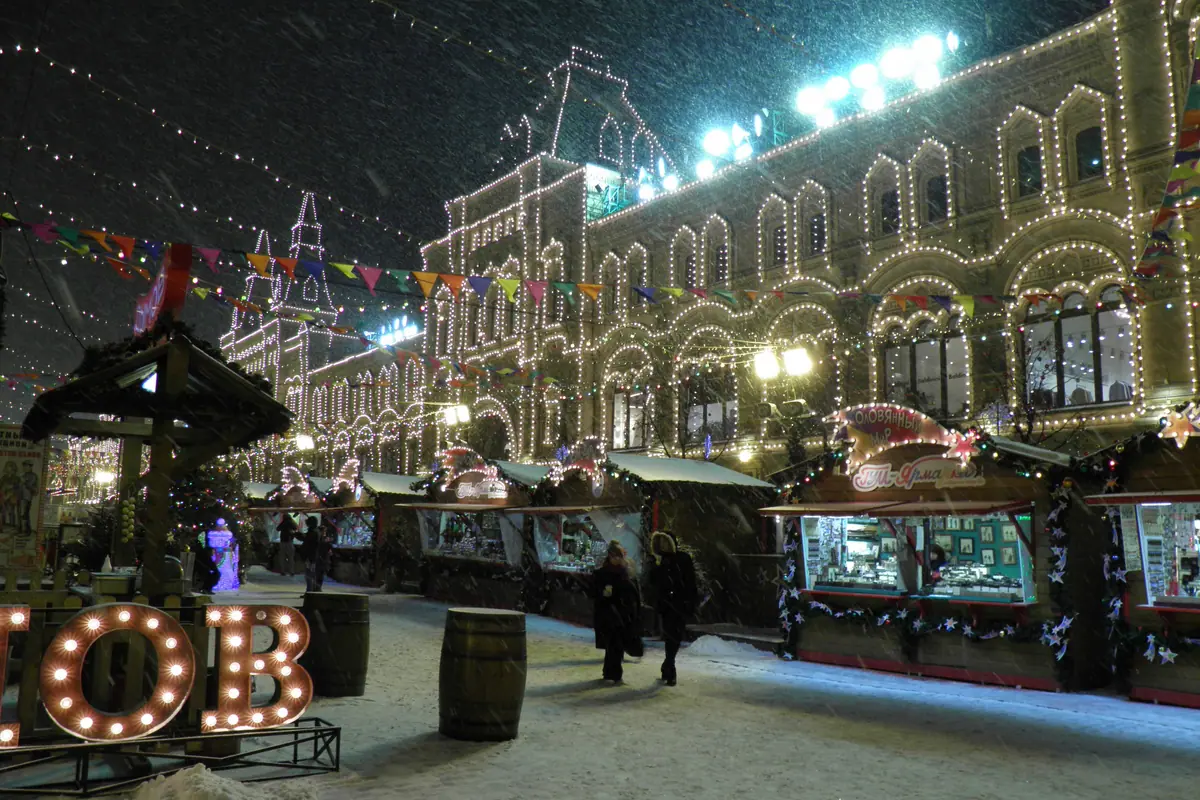
Timing matters more here than in most destinations. Late May and June bring the White Nights to St Petersburg, when the sky barely darkens and the drawbridges rise over the Neva around 1am to a crowd of onlookers. September is the sweet spot for the Golden Ring: warm, golden, harvest-heavy, with far fewer visitors than summer. December through February delivers the storybook version — snow on Red Square, New Year lights, fur hats, and the deepest freeze at Lake Baikal from February into March, when the ice turns turquoise and cracks like gunshots underfoot.
March and April are the least rewarding weeks: the thaw turns parks to mud, fountains are still switched off, and the countryside looks tired. Whenever you come, learn the Cyrillic alphabet before you land. Twenty minutes of study turns metro signs and shopfronts from decorative patterns into readable words, and it changes how confidently you move through the country.
The Russian Table: Borscht, Pelmeni and the Ritual of a Long Meal
Russian food is winter food — built for cold, designed to fill. Start with borscht, the beet soup that arrives with a swirl of smetana (sour cream), a scatter of dill and often a garlic bun on the side. Order shchi, the older cabbage soup, if you want the peasant original, and solyanka when you want something salty, smoky and faintly sour with olives and cured meat. Pelmeni — small Siberian dumplings — come boiled, glossed with butter, with sour cream and vinegar on the table so you can dress them yourself.
Breakfast is where Russia quietly excels. Syrniki, sweet fried quark pancakes, appear with jam or condensed milk; blini are rolled around tvorog, mushrooms, or, on a splurge day, red caviar. At lunch, look for a stolovaya — a canteen-style restaurant where you slide a tray along and point at what you want. It is cheap, fast, deeply local, and the best possible introduction to dishes you have never heard of. Salads like Olivier and dressed herring are staples, not afterthoughts.
The restaurant scene in the big cities is far more cosmopolitan than outsiders expect. Moscow's food halls, especially around Danilovsky Market, mix Georgian khachapuri, Uzbek plov cooked in a giant kazan, Azerbaijani kebabs, Vietnamese pho and Russian pies under one roof. Drink kvass in summer, mors (berry juice) year-round, and tea from a samovar whenever it is offered. If vodka appears, expect toasts — short, sincere, and never with an empty glass in front of you.
Must-Visit Landmarks: Red Square, the Kremlin and the Moscow Metro
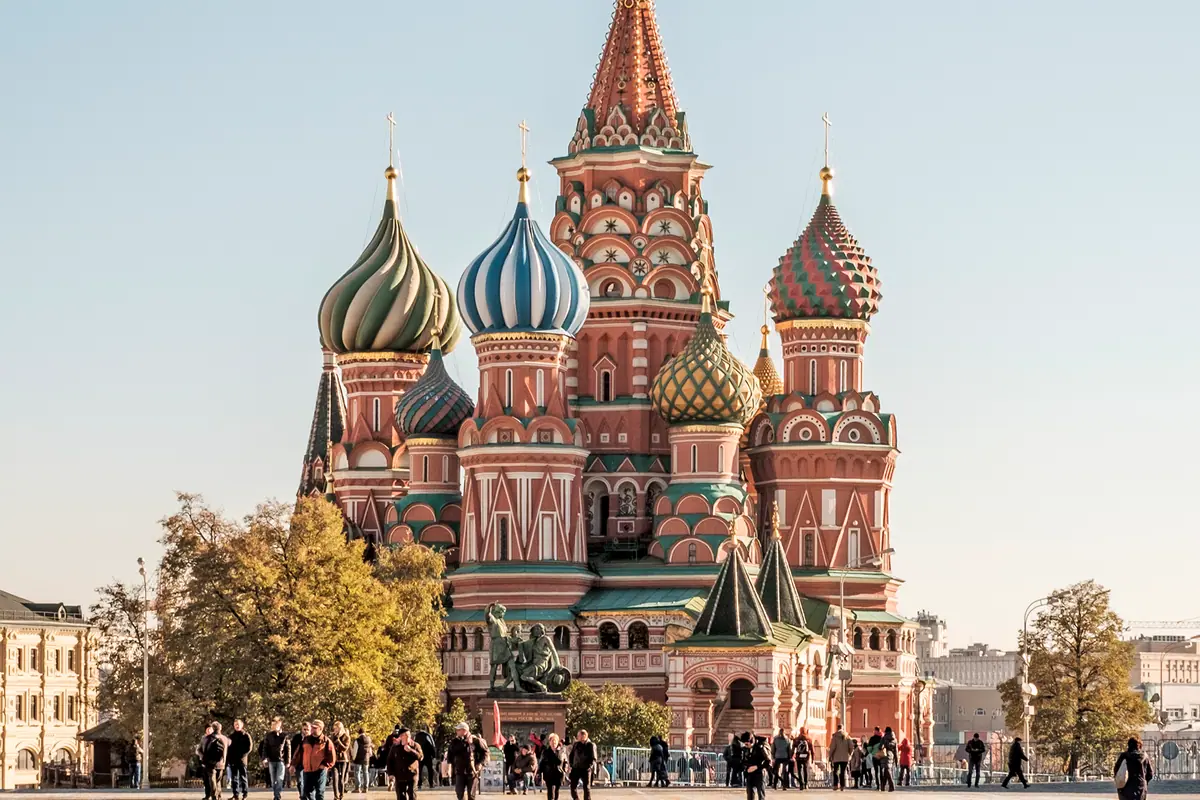
Red Square is the anchor of any Russian itinerary, and it earns the hype. St Basil's Cathedral, with its candy-swirl onion domes, sits at the southern end; the red-brick Kremlin wall and the Spasskaya Tower clock face the length of the square; and the historic trading arcades of GUM run along the eastern side. Allow two to three hours inside the Kremlin itself — the Armoury Chamber, with its imperial carriages and Fabergé eggs, needs a separate timed ticket and is worth booking well ahead.
Do not treat the metro as transport. Moscow's stations are the city's most visited free attraction: Mayakovskaya's mosaic ceilings, Komsomolskaya's baroque ceiling paintings, Novoslobodskaya's stained-glass panels. Ride a loop of the central lines in the middle of a weekday, get off at three or four stations, and look up. A day ticket costs less than a coffee.
For art, the Tretyakov Gallery holds the definitive collection of Russian painting, from medieval icons to nineteenth-century landscapes; the Pushkin Museum covers the European canon. In the evening, the Bolshoi Theatre offers ballet and opera in one of the most opulent halls on earth — tickets sell out months ahead, but standing room and last-minute releases exist. Round out the city with a walk down the old Arbat, the panorama from Sparrow Hills, and the flea market stalls near Izmailovo, where you can buy Soviet-era cameras, lacquer boxes and hand-painted matryoshka dolls directly from the people who make them.
Palaces, Canals and the Hermitage: St Petersburg and Its Outskirts
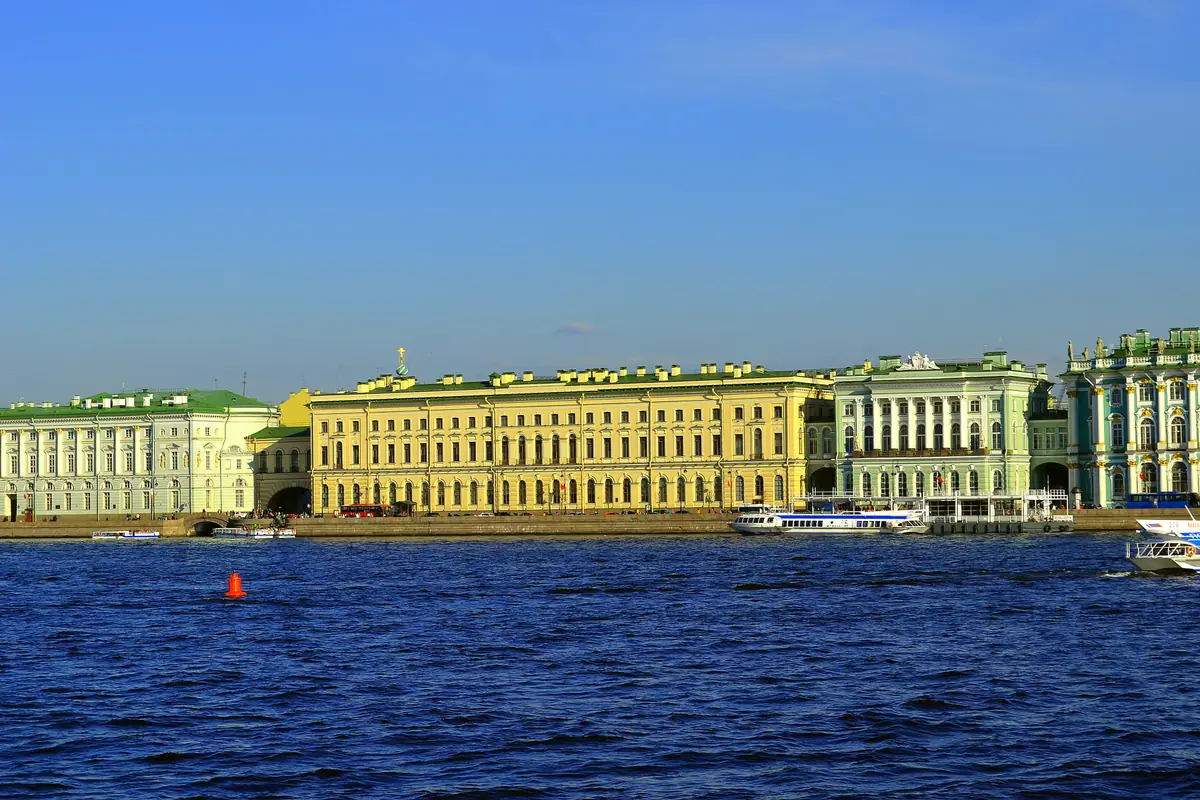
St Petersburg is a different country in spirit — built on water, oriented toward Europe, and best explored on foot along Nevsky Prospect. The Hermitage, housed in the Winter Palace, is the headline act: three million objects spread across hundreds of rooms, where you should pick two or three collections rather than attempt the whole thing. Book an early entry slot, go straight to the Rembrandts and the Impressionists, and accept that you will leave with sore feet and no regrets.
Palace Square outside is the city's great stage, and a ten-minute walk brings you to the Church of the Savior on Spilled Blood, its interior a wall-to-wall mosaic of more than seven thousand square metres. Across the river, the Peter and Paul Fortress holds the tombs of the Romanovs and offers the best rooftop view of the skyline. Come in June and you can wander at midnight in daylight; come in January and the frozen canals have their own severe beauty.
Set aside a full day for the imperial estates outside town. Peterhof, reached by hydrofoil from the city centre in about forty minutes, is famous for its cascade of gilded fountains, switched on from late May to early October. Catherine Palace at Tsarskoye Selo holds the reconstructed Amber Room. In the evening, catch ballet or opera at the Mariinsky Theatre, or simply stand on a bridge and watch the drawbridges open in the small hours.
Beyond the Capitals: Golden Ring, Kazan, Baikal and the Trans-Siberian
The Golden Ring is a loop of ancient towns northeast of Moscow that preserves the country's medieval heart. Sergiev Posad is a working monastery town an hour from the capital, with blue-and-gold domes and a pilgrim crowd that never thins. Vladimir and Suzdal are the pair to build a trip around — Suzdal especially, a low-rise town of wooden churches, a kremlin, and a trading square where you can hear horses clip-clopping past at dusk. Yaroslavl adds the Volga and a handsome merchant old town.
Kazan, on the Volga to the east, is where Orthodox Russia meets Muslim Tatarstan: the white walls of the Kazan Kremlin sit beside the turquoise minarets of Kul Sharif Mosque, and the local food — horse sausage, honey-layered pastries, hearty soups — is entirely its own thing. It is a two-hour flight or an overnight train from Moscow and deserves two or three days.
Then there is Siberia. The Trans-Siberian Railway between Moscow and Irkutsk takes around three days; continuing to Vladivostok stretches it to six. Treat it as a slow-moving village: bring tea, instant coffee, playing cards, and a willingness to share your compartment with strangers who will feed you smoked omul and teach you card games. The reward is Lake Baikal, the deepest lake on earth. Base yourself in Listvyanka for easy access, or push to Olkhon Island for landscapes that feel like the edge of the world. Winter visitors time their trip for the transparent blue ice; summer visitors swim, hike and take the old Circum-Baikal railway.
Local Experiences: Banya, Dacha and the Art of the Long Toast
Nothing teaches you Russia faster than a banya. These bathhouses run on wet heat, not dry: you sit in a steam room, get gently beaten with a venik (a bundle of soaked birch or oak branches), then cool off in a cold plunge pool, a snowbank, or an icy lake. Felt hats protect your ears from the heat; tea with honey and dried fruit waits afterward. Public banyas are social, inexpensive, and split by gender — bring flip-flops, a towel and a sheet, and follow the regulars.
The second essential experience is the dacha — a country cottage with a vegetable patch, a samovar, and a table that never fully clears. If you are invited to one, bring a small gift: chocolates, wine, or flowers. Flowers matter here, and they carry rules: give an odd number, never an even one, since even numbers are for funerals. Do not shake hands across a doorway, and expect the meal to last four hours minimum.
Between banya sessions and dacha feasts, fill your days with the smaller things. Shop a market for pickles, smoked fish and honey; take a pottery or icon-painting class in Suzdal; learn to make pelmeni by hand; browse the lacquer-box workshops of Palekh and Kholui. Learn a handful of phrases — privet, spasibo, pozhaluysta, skolko eto stoit — and use them. Russians are reserved with strangers and warmly generous once the door is open, and a few words in their language is the key that turns the lock.
Frequently asked questions
What is the best time of year to tour Russia?
Late May to early July is ideal for St Petersburg's White Nights and mild weather. September is best for the Golden Ring and Moscow, with warm days, golden parks and fewer crowds. December to February suits anyone chasing snow, New Year lights and frozen Baikal ice, which is thickest from February to early March. Avoid March and April, when the thaw makes parks and country roads muddy.
How many days do I need for a first Russia trip?
Budget ten to fourteen days. That comfortably covers three to four days each in Moscow and St Petersburg plus one regional leg, such as Suzdal and Vladimir or Kazan. If you want to ride the Trans-Siberian to Irkutsk and see Lake Baikal, add at least a week.
What Russian foods should I try first?
Start with borscht and smetana, pelmeni with butter and vinegar, blini, and syrniki for breakfast. Move on to shchi, solyanka, pirozhki and shashlik. Drink kvass in summer and mors year-round. For a cheap, fast introduction, eat at a stolovaya canteen and order by pointing at the trays.
Should I travel Russia independently or with a tour?
Independent travel works well in Moscow and St Petersburg, where the metro is fast and cheap and signage is increasingly bilingual. A guided tour or private driver genuinely helps in the Golden Ring, where towns are small and train connections are slow, and on the Trans-Siberian, where booking compartments and planning stops takes local knowledge.
Do people speak English in Russia?
English is common in central Moscow and St Petersburg hotels, restaurants and museums, but far less so elsewhere. Learning the Cyrillic alphabet and a few basic phrases makes a huge difference. Keep a translation app offline-ready, and photograph addresses in Cyrillic so you can show them to taxi drivers.
Sort the rest of your trip
Everything for Russia, in one place
Stay in Russia
Hotels, guesthouses and apartments — compared in one search.
Search hotels
Transfer in Russia
Private driver waiting on arrival — no queues, no surprises.
Book a transfer
Stay online in Russia
Travel eSIM — data the moment you land, no roaming bills.
Get an eSIM