Russia is too vast for a single trip, but a week of well-timed domestic hops can stitch three of its greatest cities into one seamless loop: golden-domed Moscow, Tatar-flavoured Kazan on the Volga, and St Petersburg, the imperial city of canals. Pack light, learn the Cyrillic alphabet, and let short flights do the heavy lifting across a country that spans eleven time zones.
Why a One-Week Russian Itinerary Works Best by Air
Russia's scale is the first thing any visitor has to reckon with. Moscow to St Petersburg is a manageable 650 kilometres, but Kazan sits roughly 800 kilometres east of the capital, and the distance from Kazan to the Neva is longer still. Surface travel eats days you would rather spend inside the Kremlin or the Hermitage, while domestic flights shrink those gaps to between one hour forty and two and a half hours — short enough to fly in the morning and be sightseeing by early afternoon.
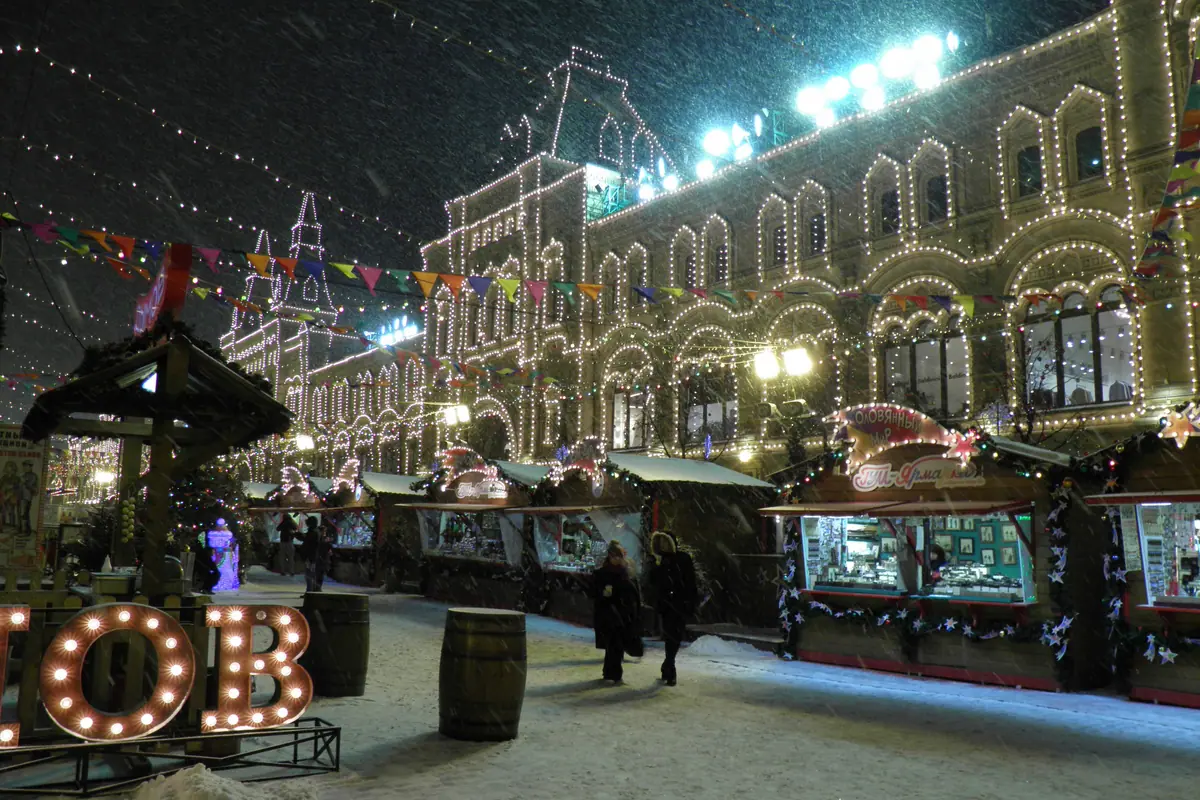
Timing shapes everything. Late May to early July is the sweet spot: St Petersburg's White Nights keep the sky glowing past midnight, parks are green, and the fountains at Peterhof are running. September brings golden birch forests and thinner crowds, while December to February delivers the postcard version of Red Square under snow — beautiful, but with daylight fading by four in the afternoon and temperatures that punish anyone without proper boots, hat and gloves.
Before you fly, sort the paperwork. Most visitors need a visa arranged in advance, and on arrival you receive a migration card that must stay with your passport for the whole trip. Carry cash in rubles, because foreign bank cards frequently fail in Russian shops and ticket offices, and download offline maps plus a translation app. Learning the Cyrillic alphabet takes an evening and pays for itself every time you read a metro sign or a platform number.
Days 1–3: Moscow — Red Square, the Kremlin and the Metro
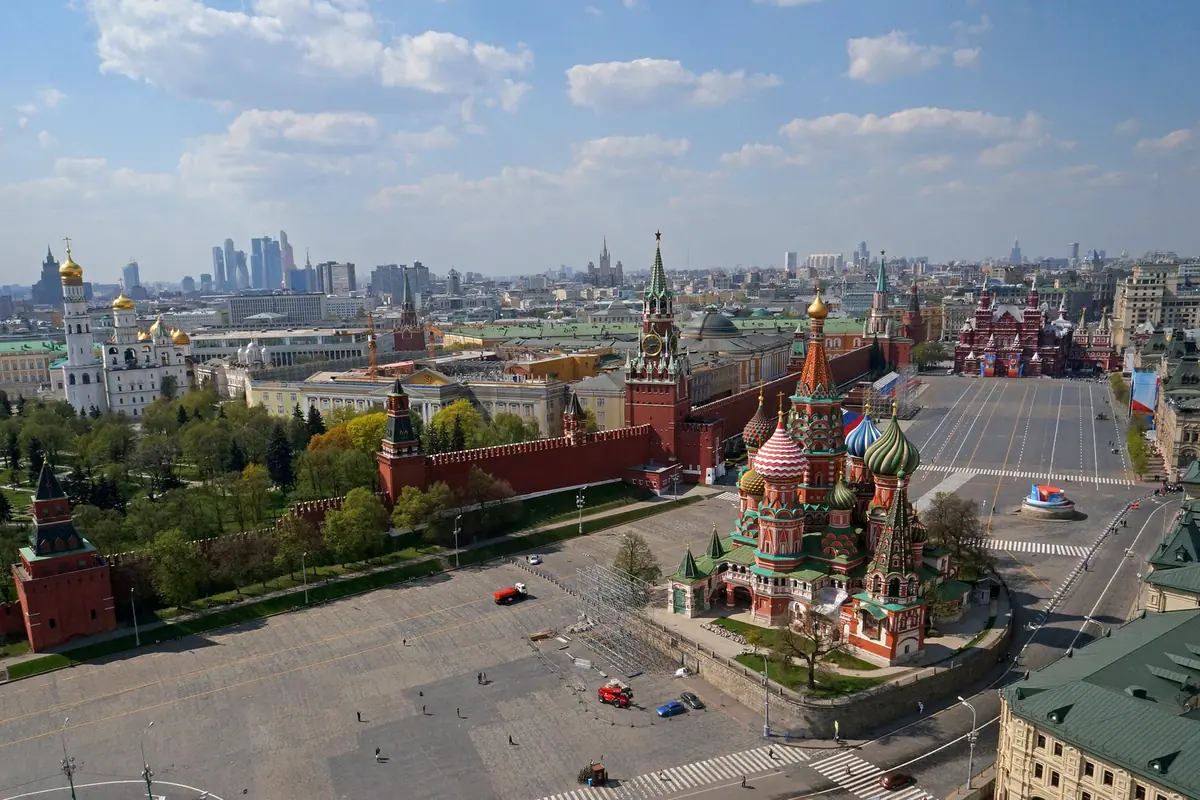
Start where every Russian journey begins: Red Square, the cobbled heart of the capital, framed by the candy-striped onion domes of St Basil's Cathedral at its southern end and the red-brick walls of the Kremlin running along the west. Walk the full length early in the morning before tour groups arrive, then pass through the gates into the Kremlin itself, where the Cathedral of the Assumption, the Ivan the Great Bell Tower and the armoury collection of imperial carriages, Fabergé eggs and coronation robes fill a half-day with ease.
Give your second day to art and architecture. The Tretyakov Gallery holds the definitive collection of Russian painting, from medieval icons to nineteenth-century landscapes, and two hours there feels like a crash course in the national imagination. Afterwards, ride the metro as a sight in its own right — Mayakovskaya's ceiling mosaics and Komsomolskaya's baroque plasterwork make the stations destinations rather than stops. Book an evening at the Bolshoi Theatre if ballet or opera is on, and reserve well ahead.
Keep the third day loose. Wander the Old Arbat's street performers, cross the floating bridge at Zaryadye Park for a panorama back towards the Kremlin, or head to the Sparrow Hills viewpoint for the classic skyline shot over Moscow State University's wedding-cake tower. Finish with a slow dinner of borscht, pelmeni and black bread — you fly east in the morning.
Day 4: Flying East to Kazan and the Kremlin of the Tatars
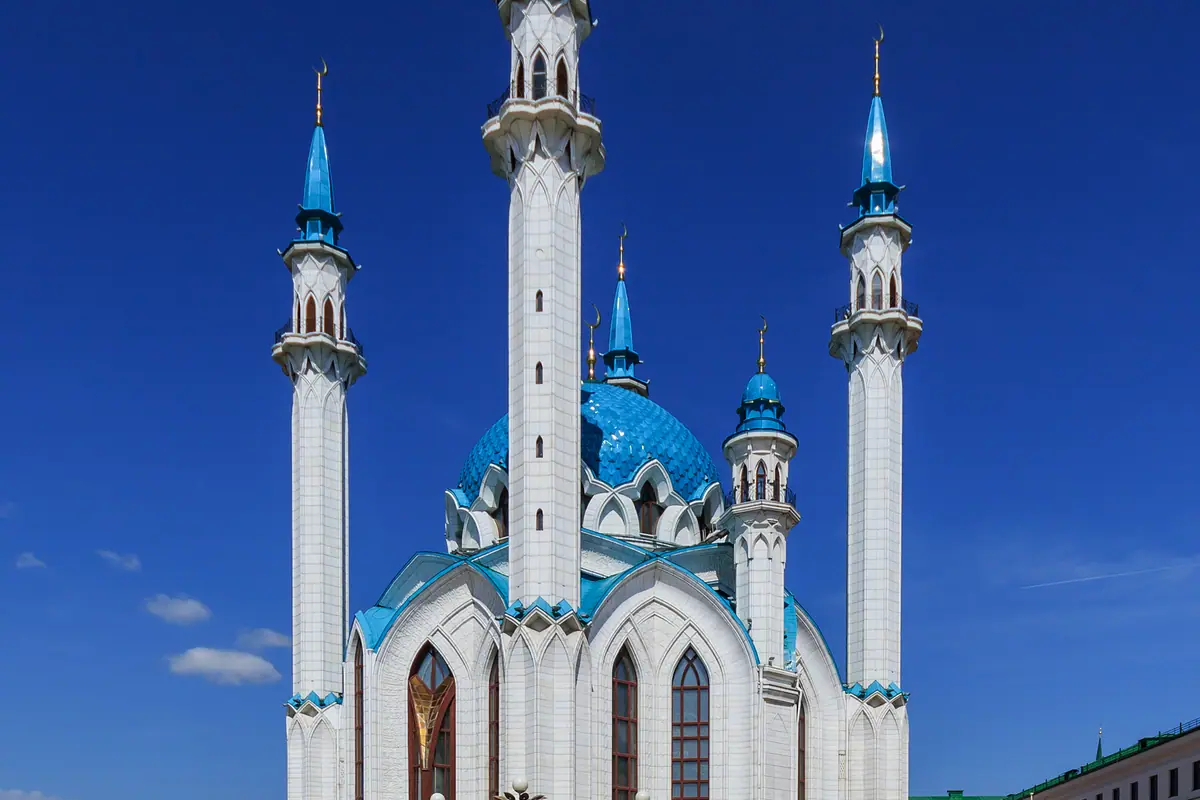
A morning flight carries you east to Kazan, capital of Tatarstan, where Orthodox cathedrals and mosques share a single skyline — a visible reminder that this is where the Slavic and Turkic worlds meet. The UNESCO-listed Kazan Kremlin anchors the city: inside its white walls stand the turquoise domes and slender minarets of the Kul Sharif Mosque, the sixteenth-century Annunciation Cathedral, and the leaning Söyembikä Tower, which tilts noticeably more than you'd expect from a watchtower that has stood for centuries.
Spend the afternoon on Bauman Street, the pedestrian artery of the old town, lined with cafés, buskers and pastel merchant houses, then loop down to the shores of Lake Kaban for an easy sunset walk. This is the moment to eat properly Tatar: echpochmak, a triangular pastry stuffed with meat and potato, noodle soups, and chak-chak, sticky honey-drenched dough, for dessert.
If you have energy left, a short taxi ride across the Kazanka river brings you to the Kazan Family Center, a cauldron-shaped building whose viewing deck gives the best photograph of the Kremlin, the mosque and the river in one frame. Kazan is compact and friendly; a single full day plus an evening genuinely covers its highlights.
Day 5: Kazan's Outskirts, Then North to St Petersburg
Use the morning for something unexpected. The Temple of All Religions in the village of Staroye Arakchino is a whimsical complex of domes, minarets and cupolas representing Orthodox, Islamic, Jewish, Buddhist and other traditions, and it makes a memorable hour before you head to the airport. Alternatively, the Raifa Monastery, set beside a lake in pine forest about thirty kilometres out, offers quiet cloisters and a very different mood.
By early afternoon you board a flight north-west to St Petersburg, arriving in time to see the city lit up along Nevsky Prospekt. Step outside and the difference is immediate: instead of Moscow's monumental sweep, you get canals, bridges and eighteenth-century façades folded around waterways. Buy a transport card for the metro, whose stations here are deep enough to require escalators that seem to descend forever, and take a first evening stroll to Palace Square.

Days 6–7: St Petersburg — Hermitage, Canals and Spilled Blood
Devote a full day to the Hermitage inside the Winter Palace, one of the largest art collections on earth; even a focused visit to the Rembrandts, Matisses and the gilded state rooms takes three to four hours. Palace Square, dominated by the Alexander Column, opens straight onto Nevsky Prospekt, and a few minutes' walk away the Church of the Savior on Spilled Blood rises in a swirl of enamelled onion domes and mosaic-covered interiors — the single most photogenic building in the city.
Cross the Neva to the Peter and Paul Fortress, the city's founding citadel, where the cathedral holds the tombs of the Romanovs and the walls offer a fine view back towards the Winter Palace. Climb the colonnade of St Isaac's Cathedral for a rooftop panorama, then spend your final morning on a boat along the canals or a day trip: Peterhof's golden fountains are reachable by hydrofoil in summer, while the Catherine Palace at Tsarskoye Selo shelters the reconstructed Amber Room.
In White Nights season, do not waste the bright hours sleeping — a late-evening canal cruise as the bridges lift is the quintessential St Petersburg experience. In winter, swap the fountains for the Mariinsky Theatre and the city's cosy dumpling houses.
Practical Tips for Flying Between Russian Cities
Domestic flying here is straightforward but demands punctuality. Check-in counters typically close forty minutes before departure, security queues at Moscow's three airports can be long, and the airports sit well outside the city — allow an hour for the train or taxi. Kazan's airport is about twenty-five kilometres from the centre, and Pulkovo serves St Petersburg roughly twenty kilometres south of Nevsky Prospekt. Keep your passport and migration card accessible at every checkpoint.
A happy quirk of this route: Moscow, Kazan and St Petersburg all run on the same time zone, so there is no jet lag to blunt your mornings. Baggage allowances on domestic fares are often stingy, with a strict cabin weight limit, so weigh your hand luggage before you leave home. Winter flights can be delayed by snow, which is another argument for booking the first departure of the day.
Pack for contrast — smart-casual clothes for Moscow's theatres and restaurants, comfortable waterproof shoes for St Petersburg's rain showers, and a warm layer even in summer evenings. Learn a handful of Russian phrases, keep small notes for tips and tickets, and print your accommodation addresses in Cyrillic for taxi drivers. With that done, a week is enough to taste three very different versions of Russia.
Frequently asked questions
How many flights do I need for one week in Russia?
Three is the sweet spot: fly into Moscow, take one domestic hop to Kazan, then a second to St Petersburg, and depart from there. That keeps you to roughly four hours in the air for the whole trip.
When is the best time to visit Russia for this itinerary?
Late May to early July for the White Nights and running fountains, or September for golden autumn colour and fewer crowds. Winter works if you accept short daylight hours and pack serious cold-weather gear.
Can I combine Moscow and St Petersburg without flying?
Yes — a high-speed day train links the two cities in about four hours, centre to centre. But Kazan is far enough east that flying is the only way to fit it into a one-week trip.
Is English widely spoken in Russia?
In hotels, museums and upmarket restaurants, usually yes. Elsewhere, little. Learning Cyrillic signs, carrying a translation app and having addresses written in Russian makes an enormous difference.
What should I know about money and payments in Russia?
Carry rubles in cash. Foreign-issued bank cards often do not work in shops, cafés or ticket machines, so budget accordingly and withdraw from ATMs when you find one that accepts your card.
Sort the rest of your trip
Everything for Russia, in one place
Stay in Russia
Hotels, guesthouses and apartments — compared in one search.
Search hotels
Transfer in Russia
Private driver waiting on arrival — no queues, no surprises.
Book a transfer
Travel insurance
Medical cover, delays and lost baggage — sorted before you go.
Get covered