Norway is a country that keeps rearranging your sense of scale: a capital you can stroll end to end, then fjords whose walls drop a thousand metres into water so dark it looks poured. Between the Arctic coast and the southern lighthouses lie stave churches, switchback mountain roads and hiking trails that end on a boulder wedged over thin air. Here is how to see the best of it without spending your whole trip in transit.
Oslo: Opera House, Vigeland Park and the Viking Legacy
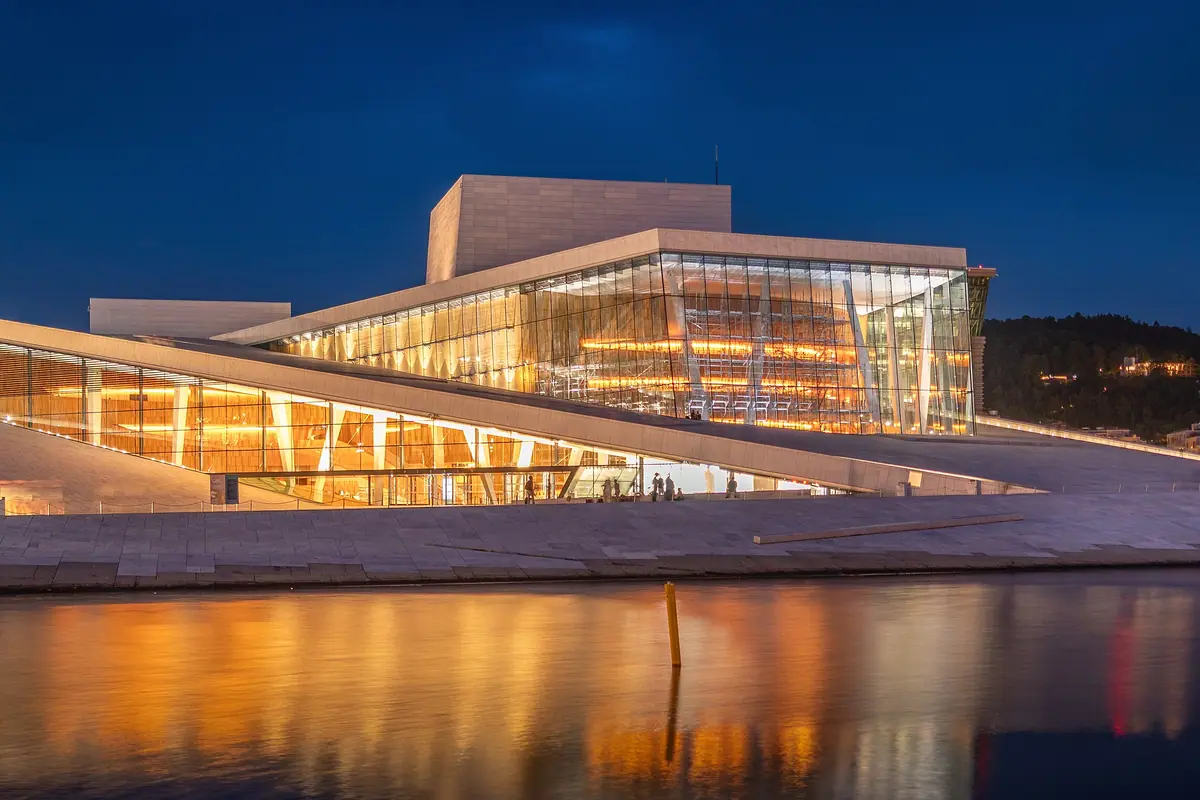
Norway's capital curls around the head of the Oslofjord, and it is compact enough to cross on foot in a long afternoon. Begin at the harbourfront district of Bjørvika, where the Oslo Opera House rises from the water like a white glacier. Its sloping marble roof is designed to be walked on, and climbing it for a view over the fjord islands and the new waterfront skyline is one of the city's free pleasures. Next door, the Munch Museum holds the world's largest collection of Edvard Munch's work, including several versions of The Scream, while the nearby harbour promenade fills with swimmers and sauna goers on sunny evenings.
West of the centre, Vigeland Sculpture Park inside Frogner Park is the most visited sight in Norway and costs nothing at all. More than 200 bronze and granite figures by Gustav Vigeland — squalling infants, tangled families, the soaring Monolith — stand along the lawns with almost no signage, which is entirely intentional. Arrive before eight in the morning for soft light and empty paths; the gates never close, and the snow-covered version in January is just as striking.
On the Bygdøy peninsula, the Museum of the Viking Age is being built around the Oseberg and Gokstad ships, the finest Viking vessels ever excavated, while the open-air Norwegian Museum of Cultural History next door gathers farmsteads and the medieval Gol Stave Church in one walkable village. Finish at Akershus Fortress, whose ramparts overlook the harbour, or ride the metro to Holmenkollen, where the ski jump offers the best panorama of the city and a museum tracing 4,000 years of skiing.
Bergen and the Western Fjords: Bryggen, Fløyen and Nærøyfjord
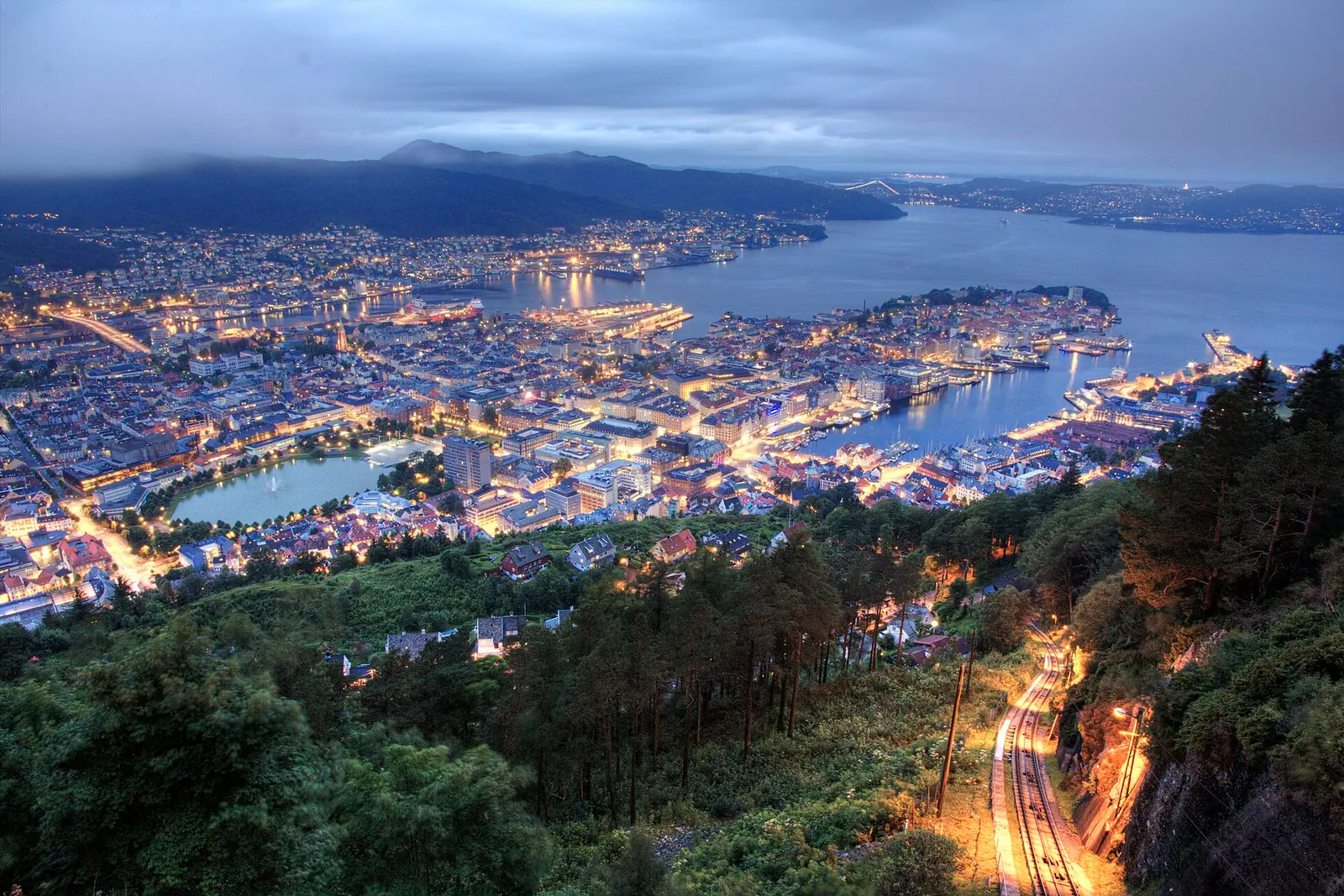
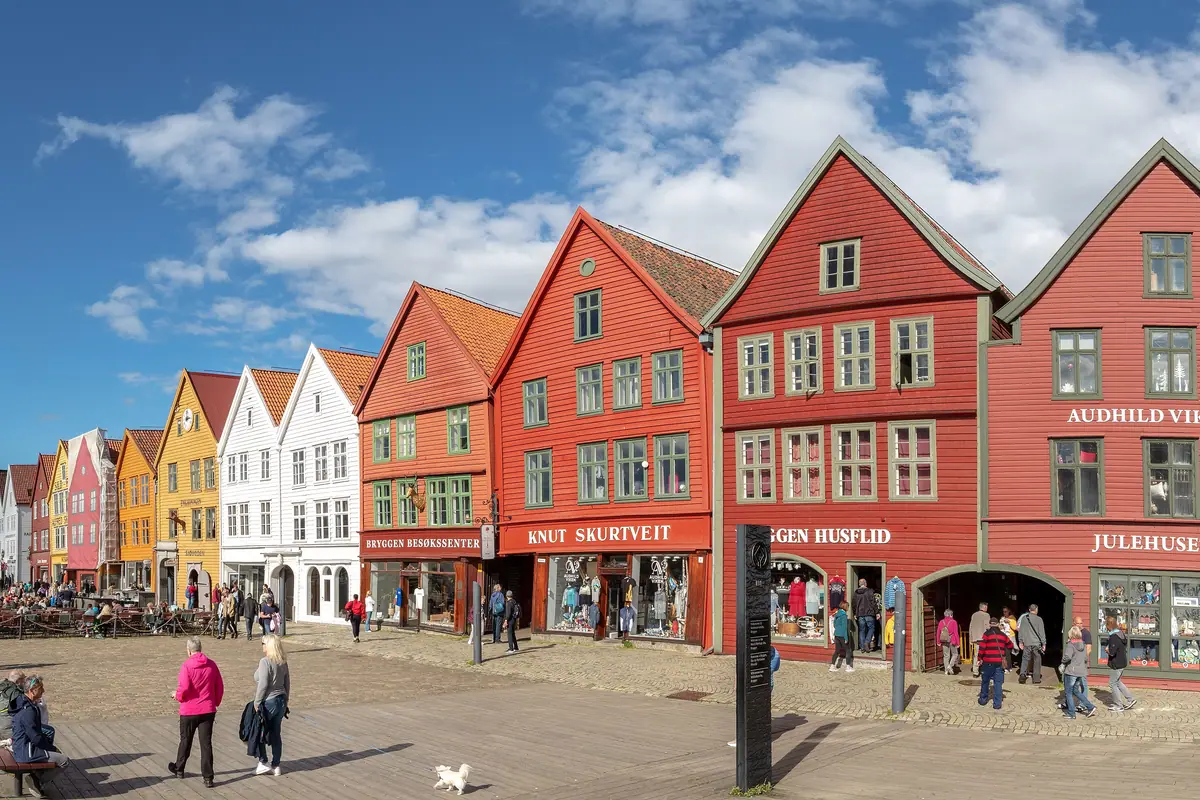
Bergen is the gateway to the fjords and a handsome destination in its own right. The UNESCO-listed Bryggen wharf, a row of crooked, gabled wooden warehouses that once belonged to Hanseatic merchants, leans over the harbour and hides studios, workshops and narrow passageways behind its painted facades. A few steps away, the Fløibanen funicular climbs to the top of Mount Fløyen in about six minutes, from where marked forest trails lead for hours; the cable car up Mount Ulriken gives the wilder, higher view. Add the fish market, the medieval Bergenhus fortress and composer Edvard Grieg's lakeside villa at Troldhaugen, and you have two full days before you even leave town.
The fjords themselves start an hour or so east. Nærøyfjord, a branch of the enormous Sognefjord, is absurdly narrow — barely 250 metres across at its tightest, with cliffs rising more than 1,700 metres, and it shares UNESCO status with Geirangerfjord further north. Take a ferry or a slow boat rather than a bus: the point is to drift past waterfalls, seals and the tiny farms clinging to ledges that can only be reached by water.
Further north, Geirangerfjord delivers the postcard set pieces — the Seven Sisters cascading down one side, the Suitor waterfall opposite — best seen from the water or from the Geiranger Skywalk at Dalsnibba, a viewing platform perched at 1,500 metres with a sheer drop into the valley. The Stegastein viewpoint above Aurlandsfjord, a wooden ramp cantilevered over the void, offers the same dizzying effect with far fewer crowds.
Norway's Great Scenic Journeys: Flåm, Trollstigen and the Atlantic Road
Some of Norway's landmarks are routes rather than places. The Flåm Railway drops nearly 900 metres over 20 kilometres from the mountain station at Myrdal down to the village of Flåm, passing waterfalls and hairpin tunnels; the train pauses at the Kjosfossen falls, where music plays and a figure in red appears on the rocks. The wider Bergen Line from Oslo to Bergen takes around seven hours and crosses the Hardangervidda plateau, Europe's largest mountain plateau, a landscape of bare rock and snow patches even in July. Reserve seats on both well ahead in summer.
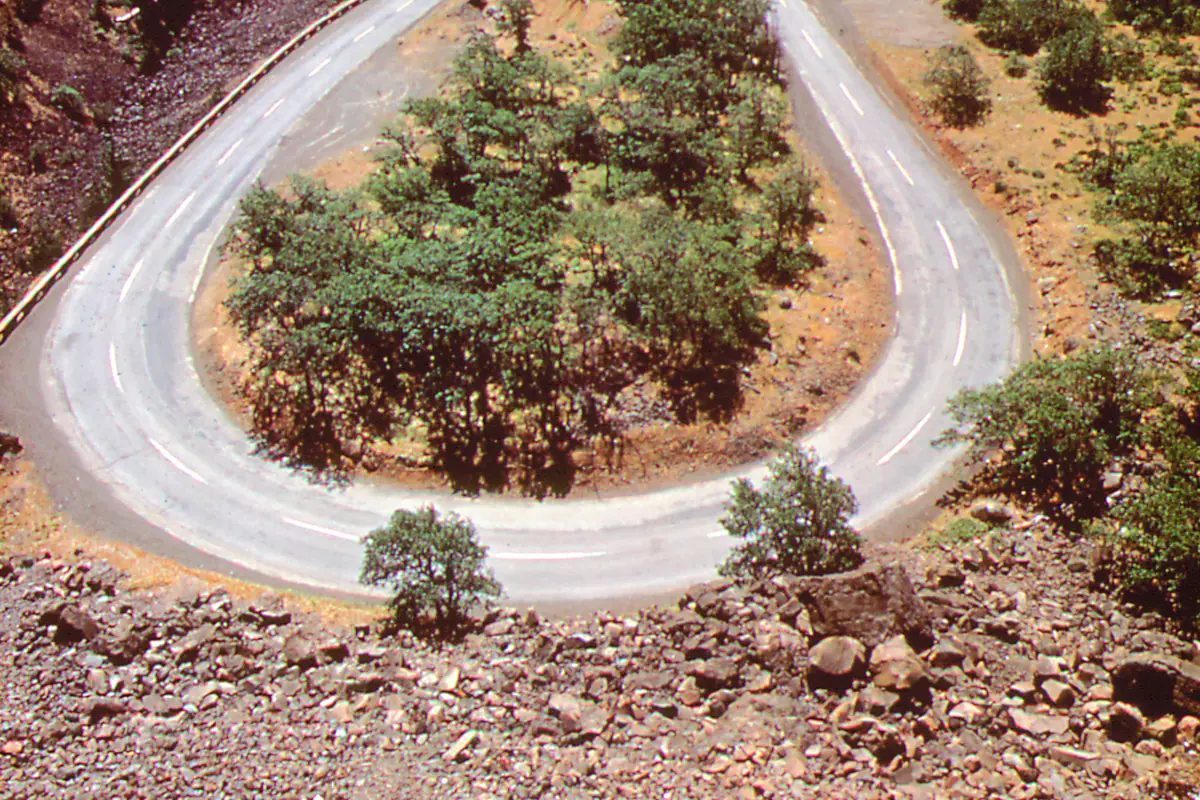
By road, Trollstigen — the Troll's Path — throws eleven hairpin bends up a sheer mountain face in Møre og Romsdal, with a modern viewing platform jutting out over the drop. It is usually open from late May or June until the first snows close it in autumn. Pair it with the ferry crossing of Geirangerfjord and the winding climb to Dalsnibba for a full day of driving that never drops below spectacular.
Out on the coast, the Atlantic Road leaps between small islands on a chain of bridges, the most dramatic being the Storseisundet bridge, which twists in the air so sharply that from certain angles it appears to end in nothing. Pull over at the fishing villages along the way for shrimp sandwiches and a walk on the rocks — the sea here is the main attraction, and the light in the long northern evenings lasts for hours.
Lofoten and the Arctic North: Reine, Tromsø and the Northern Lights
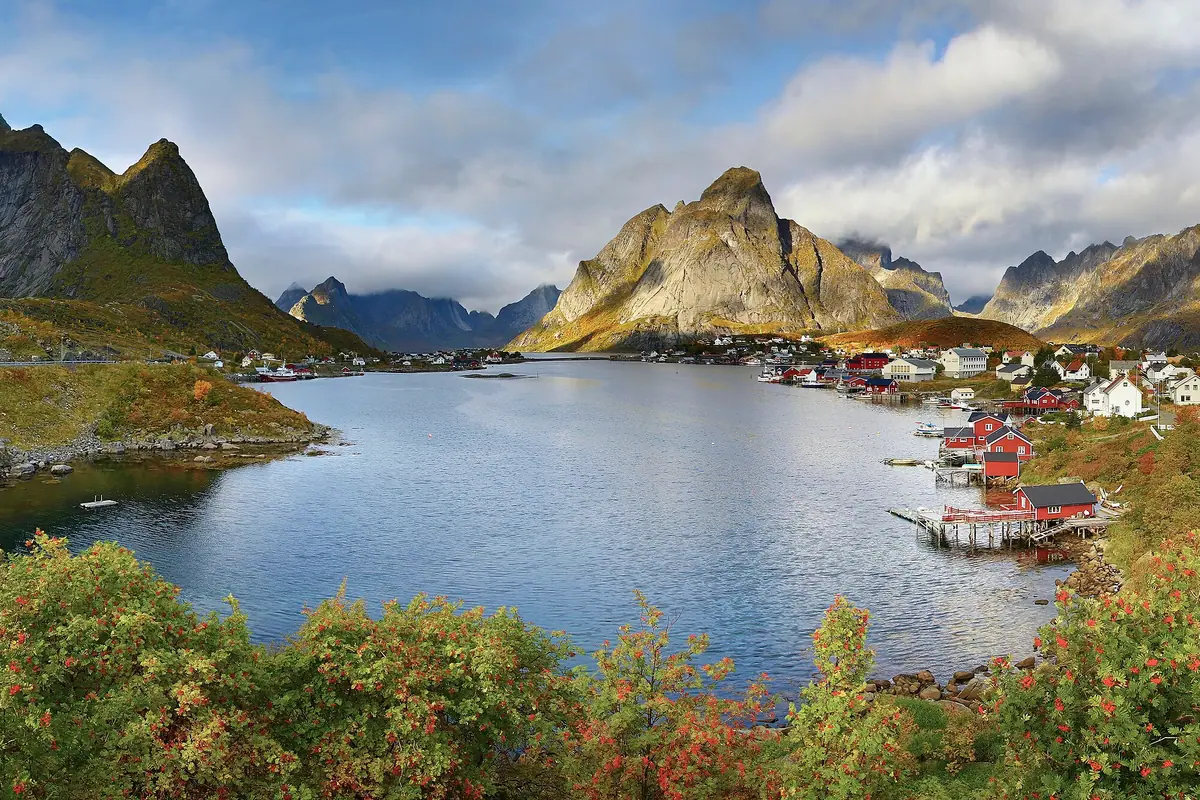
The Lofoten islands look invented: jagged granite peaks rising straight from the sea, red-painted fishermen's cabins on stilts, and beaches of white sand that would pass for the Caribbean if the water weren't freezing. Reine, at the end of the road on Moskenesøya, is the classic photograph, and the stone-stepped trail up Reinebringen rewards an hour of hard climbing with a view over the entire archipelago. Carry on to the village of Å, the far tip of the road, and to Nusfjord, one of the best-preserved fishing hamlets in the country. Summer brings the midnight sun from roughly late May to mid-July; the aurora season runs from September to late March.
The base for Arctic adventures is Tromsø, a lively city above the Arctic Circle. The Arctic Cathedral's white triangular silhouette is visible from across the water, and the Fjellheisen cable car lifts you to Storsteinen for a panorama over the islands and, on clear winter nights, the northern lights. Whale-watching boats follow humpbacks and orcas into the fjords from around November to January, and the Polar Museum tells the unsentimental story of trapping and polar exploration.
Push further north and the road ends at Nordkapp, the North Cape, a 307-metre cliff where the Barents Sea stretches to the pole. From mid-May to late July the sun never sets here, and in winter this is aurora country with almost no light pollution. Even further out, the archipelago of Svalbard, reached via Longyearbyen, offers glaciers, abandoned mining settlements and more polar bears than people — travel there with a guide and a rifle-equipped group, as is required outside the settlements.
Preikestolen, Kjeragbolten and the Big Southern Hikes
The southern fjords are where Norway's hiking reputation was made. Preikestolen, the Pulpit Rock, is a flat-topped plateau hanging 604 metres above the Lysefjord, reachable by a well-marked but genuinely steep eight-kilometre round trip that takes most walkers three to five hours. It is busiest in July, so start before eight in the morning or come in late May and September, when the trail is quieter and the light longer. From the edge you look straight down at ferries crossing the fjord like toys.
The same fjord hides Kjeragbolten, a boulder wedged in a mountain crevice a thousand metres above the water, where visitors queue to stand on a rock with nothing underneath. The hike is longer and rougher than Preikestolen, with chains and some scrambling, and the season is short — generally June to September. Further north, Trolltunga, the Troll's Tongue, juts horizontally out of a cliff above lake Ringedalsvatnet; it is a 27-kilometre round trip with around 1,100 metres of climbing, and while fit walkers do it in ten hours, guided summer trips make the navigation and the early start far easier.
Elsewhere in the south, Vøringsfossen drops 182 metres into the Måbødalen valley near Hardangerfjord, with a staircase and bridge built to let you feel the spray. Inland, the Besseggen ridge in Jotunheimen National Park is a classic day walk between two lakes — one green, one startlingly blue — with a few exposed, hands-on sections. Nearby Galdhøpiggen, at 2,469 metres the highest point in northern Europe, is a guided glacier-edge climb most reasonably fit visitors can manage in a day.
When to Go and How to Move Through Norway
Season decides your itinerary more than anything else. June to August brings the midnight sun, open mountain roads, ferry timetables at full frequency and hiking trails free of snow — but also peak prices and busy car parks. May and September are the sweet spots: quieter, cheaper, and often clear, though some high passes and cable cars may still be closed. For the northern lights, plan between late September and March, and accept that clear skies are luck rather than a booking: allow at least four or five nights in the north, and treat the aurora as a bonus to sledding, skiing and whale safaris rather than a guaranteed show.
Distances deceive. Norway looks narrow on a map, but mountain roads, single-lane tunnels and ferries slow everything down; a route that looks like three hours of driving can easily take five, and ferries across fjords run frequently but not around the clock in winter. Trains are comfortable and scenic on the main lines between Oslo, Bergen, Trondheim and Bodø, and internal flights are often cheaper than you'd expect, which matters because the country is 1,700 kilometres from south to north.
Budget accordingly: Norway is expensive, so self-catering apartments, supermarket picnics and camping cut costs dramatically. The right to roam — allemannsretten — lets you walk and wild camp on uncultivated land, provided you stay at least 150 metres from houses and cabins, leave no trace and close gates behind you. Pack layers and waterproofs whatever the forecast says, because fjord and mountain weather changes within an hour, and book popular trains, mountain huts and Trolltunga or glacier guides well before summer.
Frequently asked questions
What are the must-see landmarks in Norway for a first visit?
Prioritise the Oslo Opera House and Vigeland Sculpture Park in the capital, the UNESCO-listed Bryggen wharf in Bergen, and at least one fjord — Nærøyfjord or Geirangerfjord. Add the Flåm Railway, Preikestolen above the Lysefjord and, if you have a week more, the Lofoten islands and the North Cape. Ten days to two weeks lets you link the south and the Arctic without constant rushing.
When is the best time to see the northern lights in Norway?
The aurora is visible from roughly late September to late March, with the strongest chances between October and February on dark, clear nights between about 6pm and 2am. Tromsø, Alta, the Lofoten islands and the far north near Nordkapp are the most reliable areas. Stay at least four nights in one place, get away from town lights, and check forecasts for solar activity and cloud cover.
How many days do I need for the Norwegian fjords?
Three to four days covers Bergen, the Nærøyfjord and a fjord cruise, or the Geirangerfjord area with the Dalsnibba viewpoint and Trollstigen road. Add a day or two if you want to hike Preikestolen or Kjeragbolten. Fjord scenery is best experienced from the water plus one high viewpoint, so build in both rather than trying to see five fjords in a rush.
Is Norway expensive, and how can I keep costs down?
Yes — food, alcohol and taxis are among the priciest in Europe, though public transport, museum entry and hiking cost little or nothing. Cook in self-catering cabins and apartments, shop in supermarkets, use trains and ferries rather than rental cars where possible, and camp or stay in hostels. Many of the best experiences — Vigeland Park, the coastal viewpoints, almost every hiking trail — are completely free.
Can I see the midnight sun, and where?
The sun stays above the horizon from roughly mid-May to late July at Nordkapp and in Tromsø, and from late May to mid-July in the Lofoten islands. Even in southern cities like Oslo, June nights never go fully dark. Bring an eye mask if you need sleep, since hotels rarely have blackout curtains good enough for a sun that refuses to set.
Plan it — experiences in Norway
Live search, booked directly with trusted providers.
Sort the rest of your trip
Everything for Norway, in one place
Stay in Norway
Hotels, guesthouses and apartments — compared in one search.
Search hotels
Transfer in Norway
Private driver waiting on arrival — no queues, no surprises.
Book a transfer
Stay online in Norway
Travel eSIM — data the moment you land, no roaming bills.
Get an eSIM