Bergen keeps its finest scenery just out of reach — close enough to touch before breakfast, wild enough to feel like a different country by lunch. From the timbered wharf, the fjords, mountain railways, orchards and island communities of western Norway fan out in every direction, and one well-planned day is often all it takes to reach them.
Why Bergen Works So Well as a Day-Trip Base
Squeezed between seven mountains and the wide Byfjord, Bergen sits at the mouth of a network of waterways that reach deep into the interior. Head north and the fjord arms run towards Sogn and the great glacier country; head south and they open into Hardanger, Norway's orchard district. The city's compact centre — the Hanseatic wharf, the fish market, the narrow lanes of the old town — means you can be on a boat, a train or a mountain path within twenty minutes of your hotel door.
Distances here are deceptively short on paper and long in practice. A hundred kilometres can take two and a half hours once you factor in ferries, single-lane tunnels and roads that switchback up and over mountain passes. The sensible rhythm is one big anchor per day — a fjord, a railway, a hike — with the return leg treated as part of the experience rather than dead time.
Bergen is also one of Europe's wettest cities, with rain on well over half the days of an average year. Locals treat this as a feature rather than a flaw: the showers keep the waterfalls thundering and the hillsides a deep, saturated green. Pack accordingly and you will barely notice; a single waterproof shell turns a grey morning into a misty, atmospheric one.
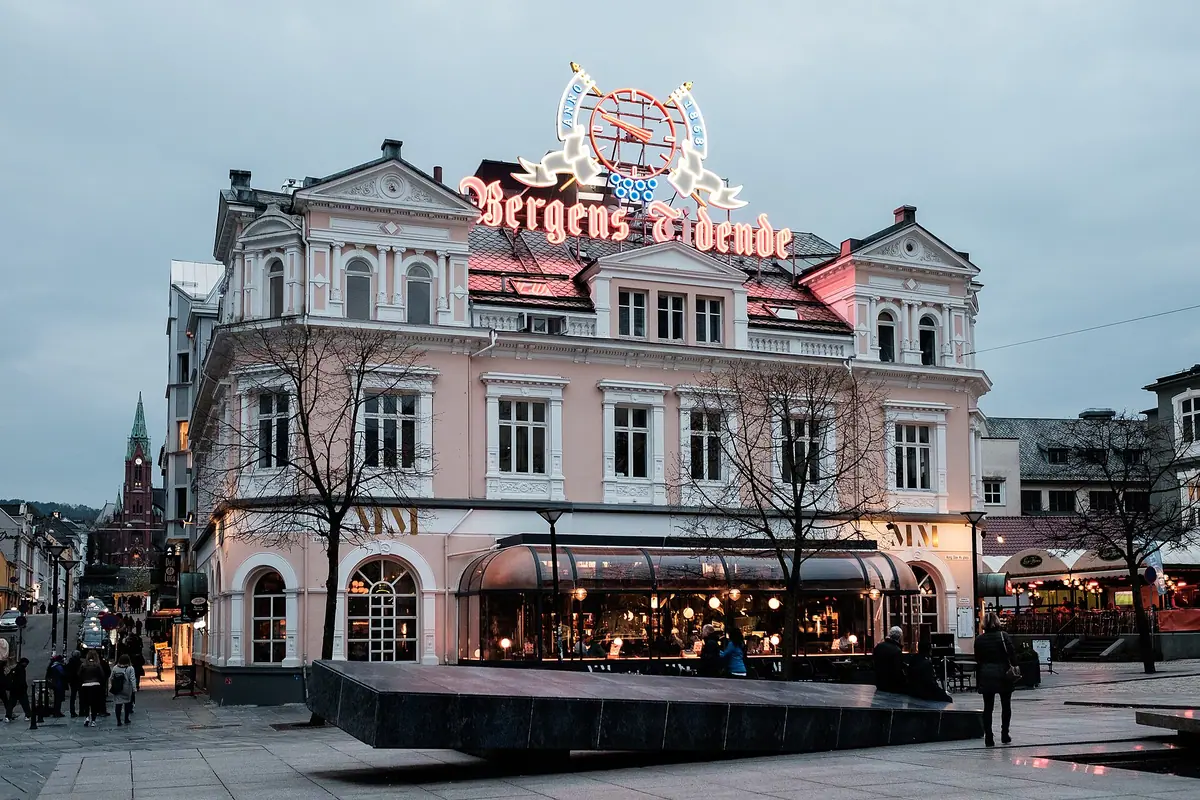
The Nærøyfjord Classic: Flåm, Gudvangen and Stegastein
The signature day out from Bergen is a loop that stitches together rail, water and road in roughly ten to eleven hours. It starts with an early train climbing east out of the city, past lakes and summer farms, up onto the bare, windswept plateau around Finse before dropping to Myrdal at 866 metres. There you change onto the Flåm line, a twenty-kilometre engineering marvel that descends nearly 900 metres in an hour, hugging cliffsides and stopping at the Kjosfossen waterfall, where the water drops in a long white ribbon and, in summer, a figure in red appears on the rocks below the spray.
From Flåm the boat takes over, gliding out through the Aurlandsfjord into the Nærøyfjord — a UNESCO-listed arm barely 250 metres wide at its narrowest, walled by cliffs rising up to 1,800 metres. Small farms cling to ledges, seals haul out on the rocks, and the water is so still on calm days that the mountains seem to fold in on themselves. The boat lands at Gudvangen, where a bus connects to Voss for the train home.
If you have a car or join a road-based tour, add the Stegastein viewpoint, a thirty-metre platform cantilevered about 650 metres above the Aurlandsfjord on the old Snow Road between Aurland and Lærdal. That mountain route is normally open only from late spring until the first heavy snow. Whatever version you choose, book ahead for July and August — the Flåm line and fjord boats fill days in advance — and claim a spot on deck even if the sky is grey.
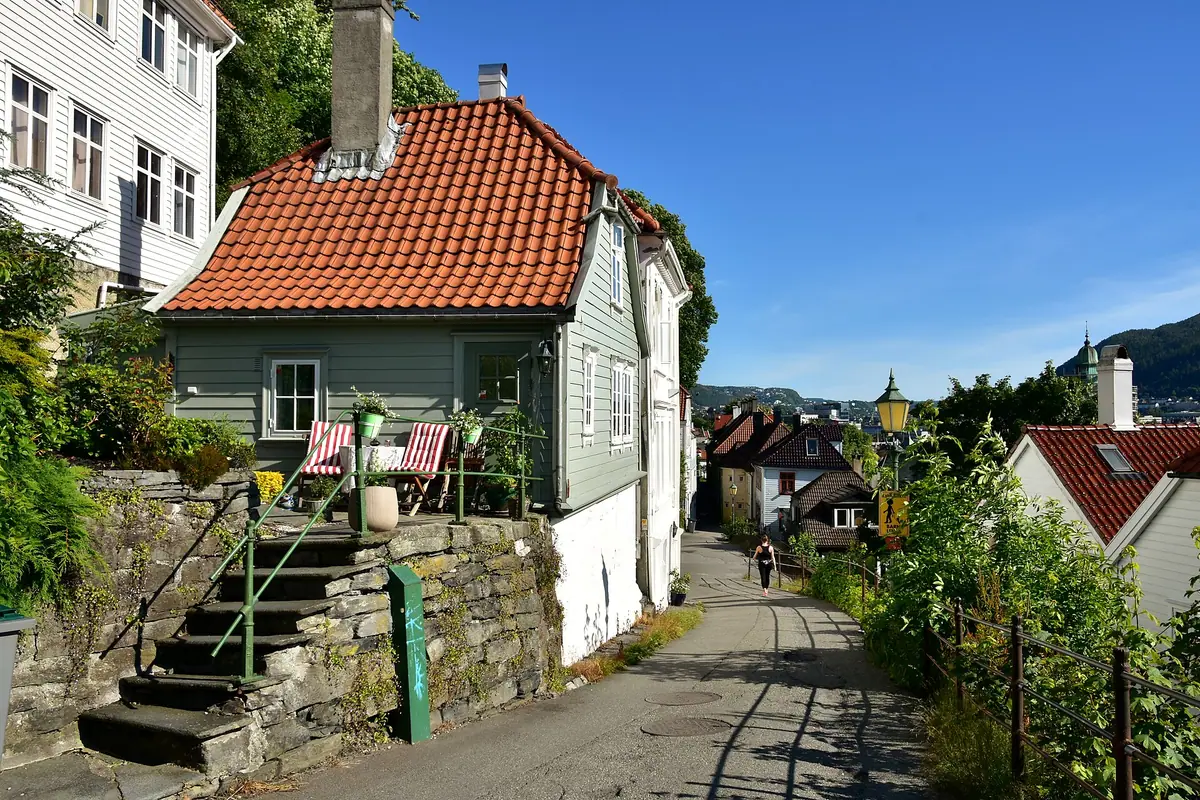
Hardangerfjord: Waterfalls, Cider Farms and a Norwegian Barony
South of the city, Hardangerfjord offers a softer, greener counterpoint to the drama of the north. Driving or touring down, you pass Steinsdalsfossen near Norheimsund, where a wooden walkway lets you step behind the falling water and look out through the curtain — a rare and slightly surreal experience that takes only minutes. Beyond it, the road crosses the Hardanger Bridge, a slender suspension span of some 1,380 metres that has replaced an old ferry crossing and opened the whole fjord to easier day trips.
Further inland, Eidfjord sits at the head of the water beneath the Hardangervidda plateau, one of Europe's largest mountain plateaus. A short drive away, Vøringsfossen tumbles about 182 metres in total, with a free fall of roughly 145 metres, reached by a staircase of stone steps carved into the gorge. It is at its most ferocious during snowmelt in May and June; in midwinter the falls can freeze into pillars of ice.
Hardanger is also Norway's fruit bowl. In May the slopes around Ulvik, Lofthus and Kinsarvik turn white and pink with apple and cherry blossom, and small cider producers open their doors for tastings of dry, apple-forward ciders rarely exported. Rosendal, tucked beneath the Folgefonna glacier, holds the country's only barony — a manor house from the 1660s with a formal rose garden and a doll's-house collection. The boat from Bergen takes about three hours each way, so this is one to do as a guided full day or with a night ashore.
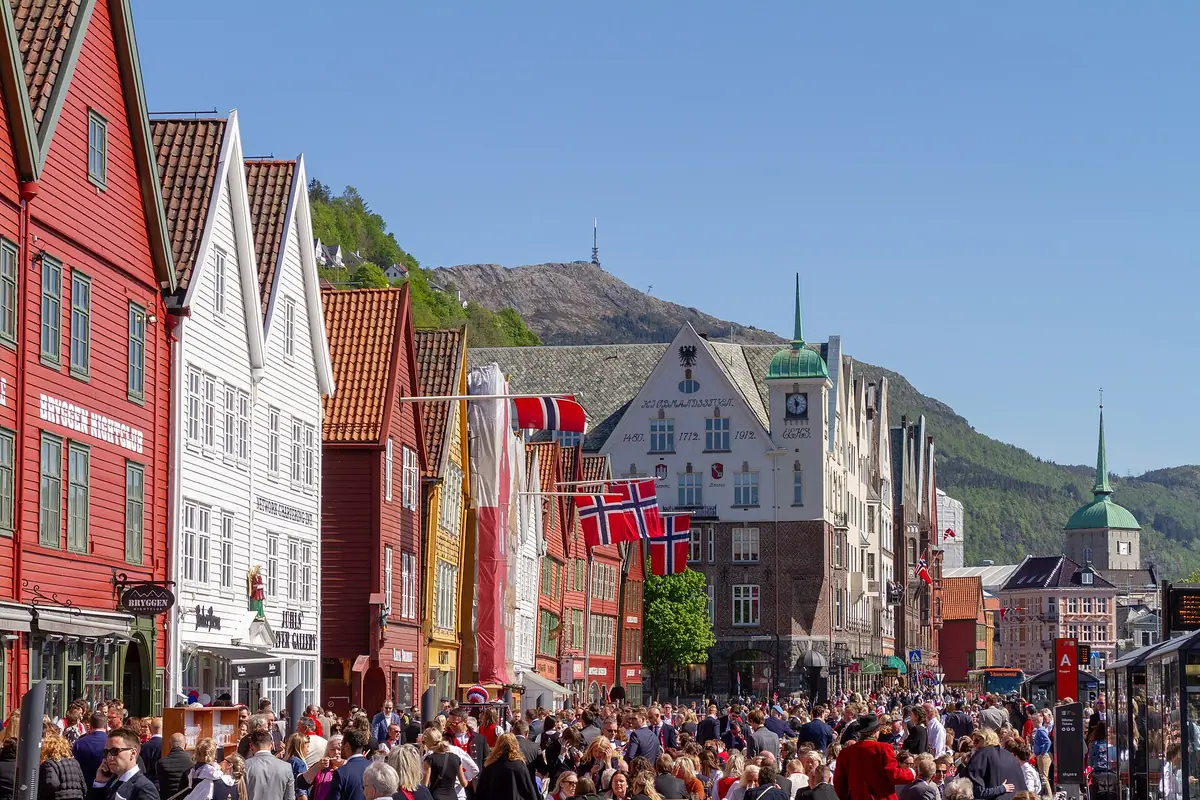
Out on the Water: Osterfjord, Mostraumen and the Island Coast
Not every good day trip requires an early alarm. Half-day cruises leave the inner harbour and thread their way north through the Osterfjord, squeezing through the narrow Mostraumen strait where the cliffs close in on both sides and waterfalls drop almost onto the deck. The round trip takes roughly three to four hours and often calls at Mo, a tiny village at the head of the fjord, before turning back to the city. These sailings run through much of the year, which makes them the reliable choice when a longer tour is booked out or the weather is marginal.
For something more active, sea kayaking gets you at water level beneath the cliffs. Guided paddles of three to four hours run from the city's own fjord and from the villages at the mouth of the Nærøyfjord, where you can glide past Undredal — a hamlet of about 60 people with one of Norway's smallest stave churches and a long tradition of brown goat's cheese. No previous experience is usually needed, but trips depend on wind and swell, so keep a flexible day in your plans.
The outer islands west of Bergen offer a rawer coast altogether. Osterøy, Norway's largest inland island, is reached by a road bridge and has quiet hiking trails and old farm settlements. Further out, places such as Øygarden and Fedje face the open North Sea, with bare rock, weathered fishing stations, lighthouses and a great deal of birdlife. Public ferry connections exist but run thinly outside summer, so check timetables carefully before setting out.
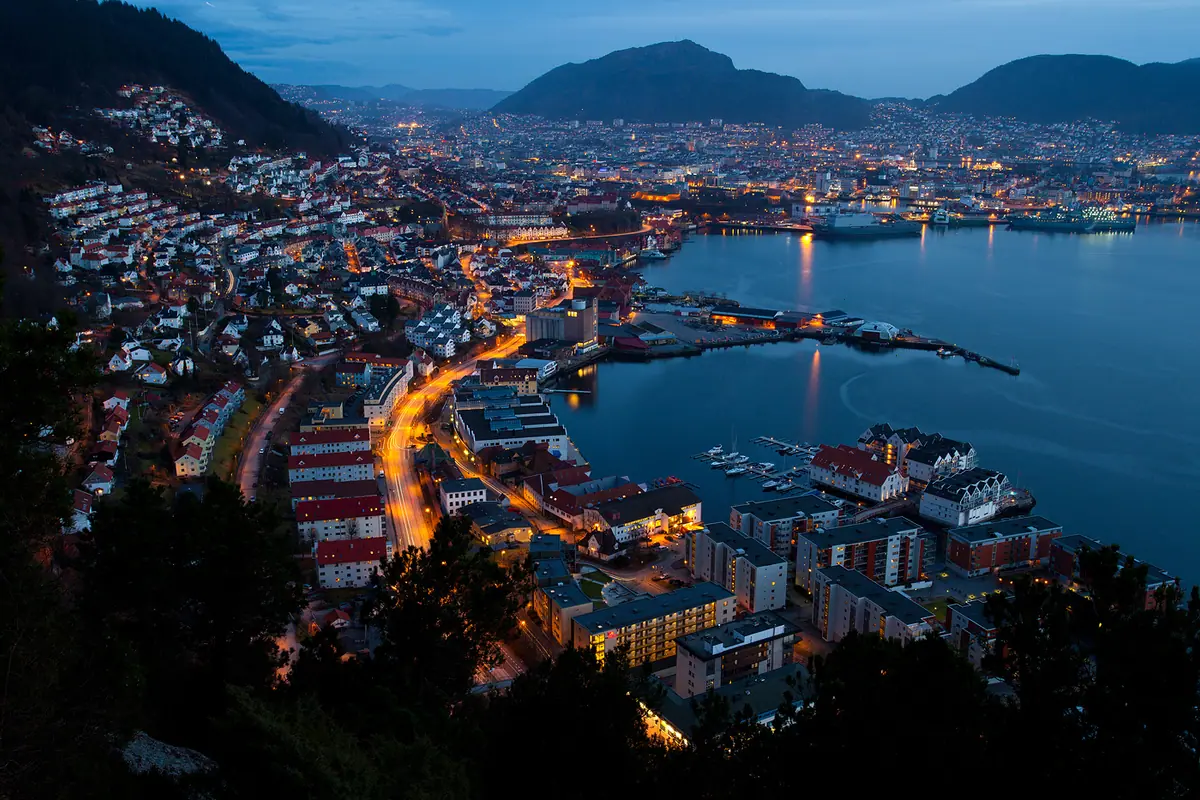
City Mountains: Fløyen, Ulriken and the Vidden Traverse
You do not need to leave Bergen to climb a mountain. A funicular lifts passengers from the centre to Fløyen at 320 metres in about six minutes, delivering a panorama over the harbour, the islands and the fjord beyond. From the top, a network of easy forest paths spreads out, suitable for families and strolls of an hour or two; this is the gentlest introduction to the seven mountains that frame the city.
Mount Ulriken, at 643 metres the highest of them, is reached by cable car in around five minutes, with far-reaching views on clear days. Serious walkers come for the traverse between Ulriken and Fløyen — the Vidden route, roughly thirteen kilometres of rocky, exposed ridge that takes most people four to five hours. There is little shelter and no water on the way, so carry both. Closer to town, the steep stone staircase known as Stoltzekleiven climbs some 900 uneven steps to Sandviksfjellet; locals race up it for exercise, and a fit visitor can manage it in twenty to forty minutes.
Between roughly November and April, snow settles on the peaks while the city below stays green and wet. Crampons or snowshoes are worth carrying, as the upper paths turn to ice, and the cable car and funicular both run in winter, subject to wind. Shoulder-season days in October and April can offer the best of both: crisp, clear air with the trails still quiet.
Longer Hauls Worth the Early Start: Vikings, Glaciers and Trolltunga
At Gudvangen, at the head of the Nærøyfjord, a reconstructed Viking settlement of turf-roofed longhouses hosts craftspeople, market days and demonstrations of rope-making and forging. It pairs naturally with a fjord cruise, and travel between the two by road involves a tunnel so long that it is lit by coloured, cave-like caverns — an attraction in itself, particularly welcome on a rainy afternoon.
Glacier country is reachable but demanding. The Bøyabreen arm of the great Jostedalsbreen ice field, near Fjærland, is a three-and-a-half to four hour drive each way from Bergen, which makes it a long, rushed day and a far better overnight. Guided glacier walks on nearby arms of the ice cap are the only safe way to step onto the blue ice, and they run from late spring through early autumn, subject to conditions.
Then there is Trolltunga, the famous rock ledge jutting over a lake. The hike is roughly 27 to 28 kilometres round trip with 10 to 12 hours of walking, and the season without a guide usually runs from mid-June to mid-September. From Bergen it is about three hours by car each way, so treat it as an overnight in Odda rather than a day trip — anyone promising otherwise is selling you a very long, very tired drive home in the dark.
Frequently asked questions
Can I see fjords without joining an organised tour?
Yes. The half-day cruises through the Osterfjord and Mostraumen leave straight from the city harbour and need no onward travel, and public ferries cross several fjord arms as part of normal commuter routes. The dramatic, narrow Nærøyfjord, however, sits around two hours away by train plus boat, so the combined rail-and-boat loop is the simplest way to see it in a single day.
How long is the classic Nærøyfjord and Flåm day trip from Bergen?
Budget ten to eleven hours door to door. A typical version leaves the city around 08:00 by train, connects to the Flåm line at Myrdal, then continues by boat to Gudvangen and by bus and train back via Voss, arriving in Bergen in the evening. In peak summer, reserve the rail and boat legs well in advance.
What is the best time of year for day trips from Bergen?
Mid-May to early September gives the longest days and the widest choice of fjord sailings and mountain roads. May brings fruit blossom in Hardanger and heavy snowmelt in the waterfalls; July is warmest and busiest; late September brings autumn colour. From November to March the days are short and some mountain routes close, though city cruises, museums and snowy hikes continue.
Is Trolltunga doable as a day trip from Bergen?
Realistically no. The hike itself is about 27 to 28 kilometres with 10 to 12 hours of walking, and the drive from Bergen takes roughly three hours each way. Stay overnight in Odda or Tyssedal, start early, and check whether a guide is required for your dates, since that changes outside the main summer season.
What should I pack for a day trip from Bergen?
A waterproof jacket and overtrousers, warm mid-layers, broken-in walking shoes and a hat, even in July — weather on the fjords and mountains changes fast. Add water, snacks, a power bank for a long day of photos, and a card for ferries and tunnels. If you plan to hike above the tree line in spring or autumn, pack light crampons for ice.
Sort the rest of your trip
Everything for Bergen, in one place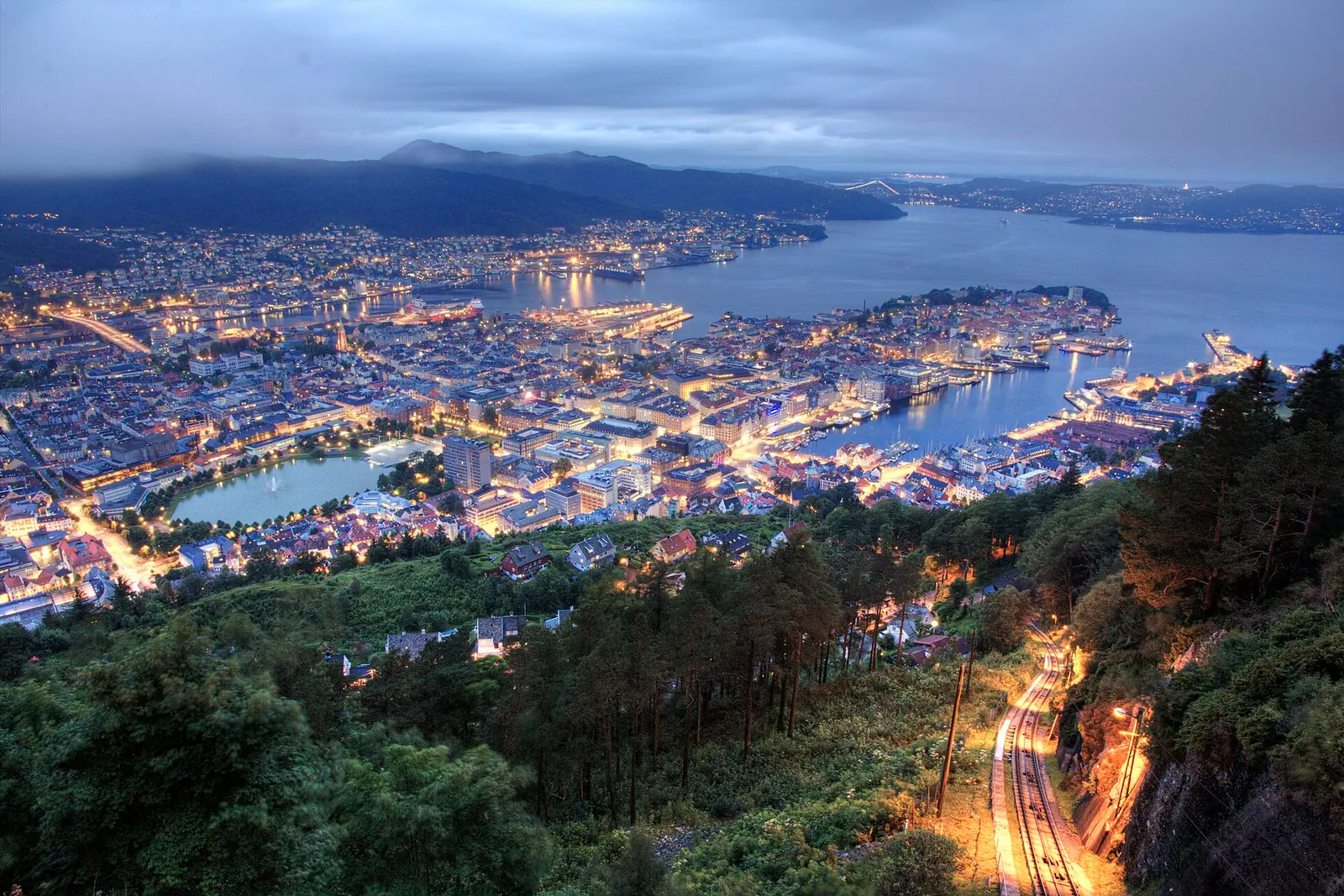
Stay in Bergen
Hotels, guesthouses and apartments — compared in one search.
Search hotels
Transfer in Bergen
Private driver waiting on arrival — no queues, no surprises.
Book a transfer
Stay online in Norway
Travel eSIM — data the moment you land, no roaming bills.
Get an eSIM