Norway stretches more than 1,700 kilometres from the Skagerrak to the Barents Sea, and almost none of it feels the same twice. One day you are walking the slanted roof of an opera house, the next you are standing on a cliff 604 metres above a fjord, watching ferries shrink to specks. This guide maps the places worth building a whole trip around, and when to be there.
Oslo: The Capital That Eases You In
Most journeys start in Oslo, and the city rewards a full day or two before you head west. Begin at Vigelandsparken, the vast open-air sculpture park in Frogner where Gustav Vigeland's bronze and granite figures — more than two hundred of them, from furious toddlers to the towering Monolith — line a bridge and a spiral staircase of bodies. It is free, open around the clock, and best in the soft light of early morning or late evening when the tour groups thin out.
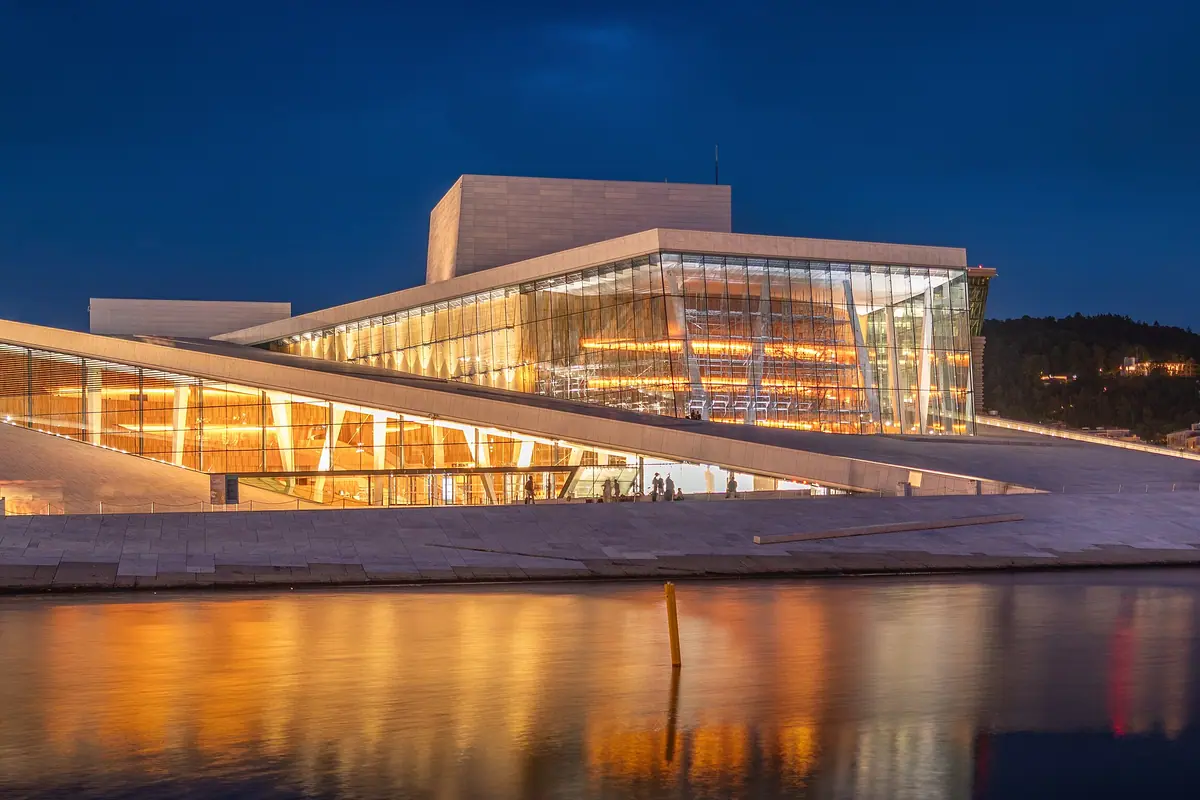
From there, walk the harbourfront at Bjørvika. The Oslo Opera House rises out of the water like a tilted white glacier, and you are encouraged to walk up its marble roof for a view over the fjord. Nearby, the Munch Museum holds the world's largest collection of Edvard Munch's work, including versions of The Scream, while the medieval Akershus Fortress a short stroll away offers courtyards, ramparts and harbour views. If you have a spare half-day, take the ferry to the Bygdøy peninsula for the Fram Museum and the Norwegian Museum of Cultural History, where 19th-century farm buildings and a stave church were rebuilt piece by piece. Round it off with the ski jump at Holmenkollen, reached by metro, for a panorama across the whole city.
Tip: Oslo is compact and walkable, but the 24-hour transit pass pays for itself quickly. May and September bring mild weather with fewer crowds than high summer, and the long June evenings are almost absurdly bright — sunset around 10.30pm, with no real darkness at all.
Fjord Country: Geirangerfjord, Nærøyfjord and Bergen
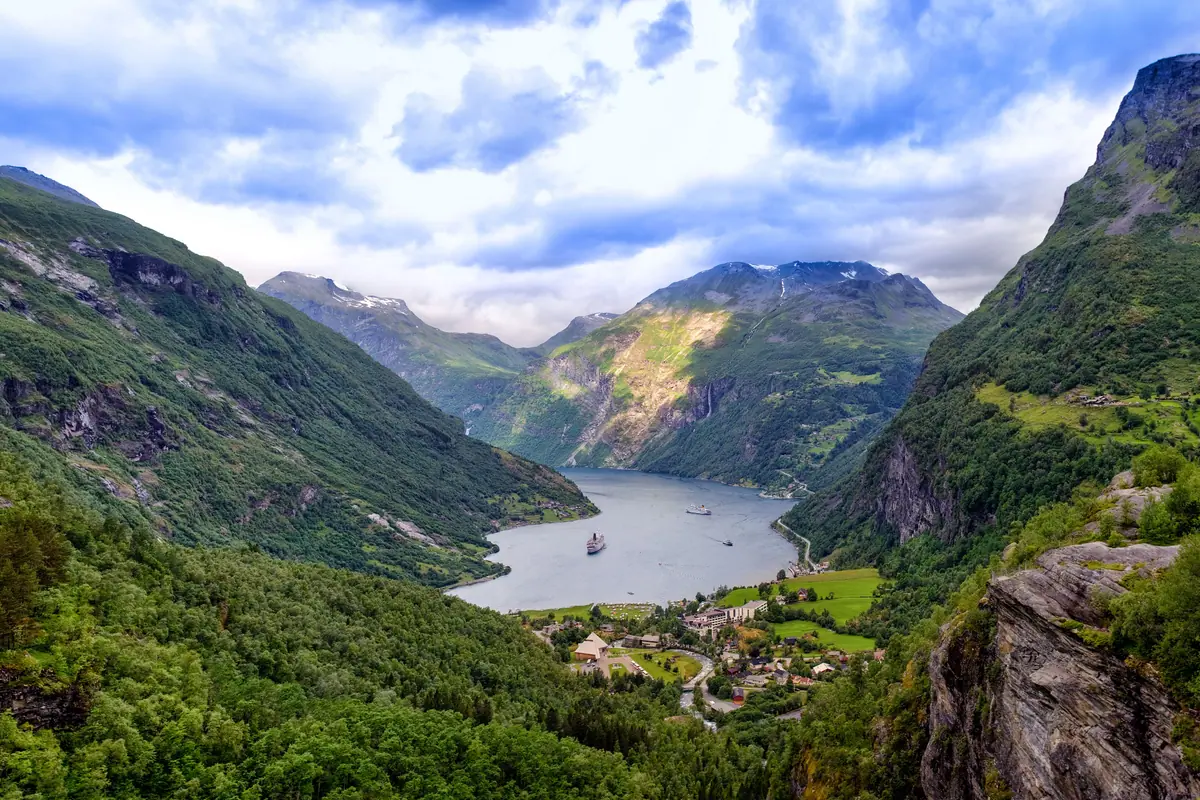
The western fjords are the reason many people come, and two of them carry World Heritage status: Geirangerfjord and Nærøyfjord. Geirangerfjord is the classic — a narrow blue channel walled in by sheer rock, with the Seven Sisters waterfall tumbling in seven thin threads on one side and the Suitor waterfall facing it on the other. The village of Geiranger at its head is tiny, so base yourself there or in the nearby valley and take an early morning boat or kayak before the day-trippers arrive. Above the village, the winding hairpins of the Eagle Road climb to a viewpoint that frames the whole fjord in one shot.
Nærøyfjord, a branch of Sognefjord, is even narrower — in places barely 250 metres wide with cliffs rising over a thousand metres. The village of Flåm at its southern end is the terminus of the Flåm Railway, one of the world's steepest standard-gauge lines: 20 kilometres of switchbacks climbing from sea level to the mountain station at Myrdal in about an hour, pausing at the Kjosfossen waterfall where a figure in red appears on the rocks in summer. Pair it with the Bergen Railway between Oslo and Bergen, roughly seven hours across the Hardangervidda plateau, and you have one of Europe's great train journeys.
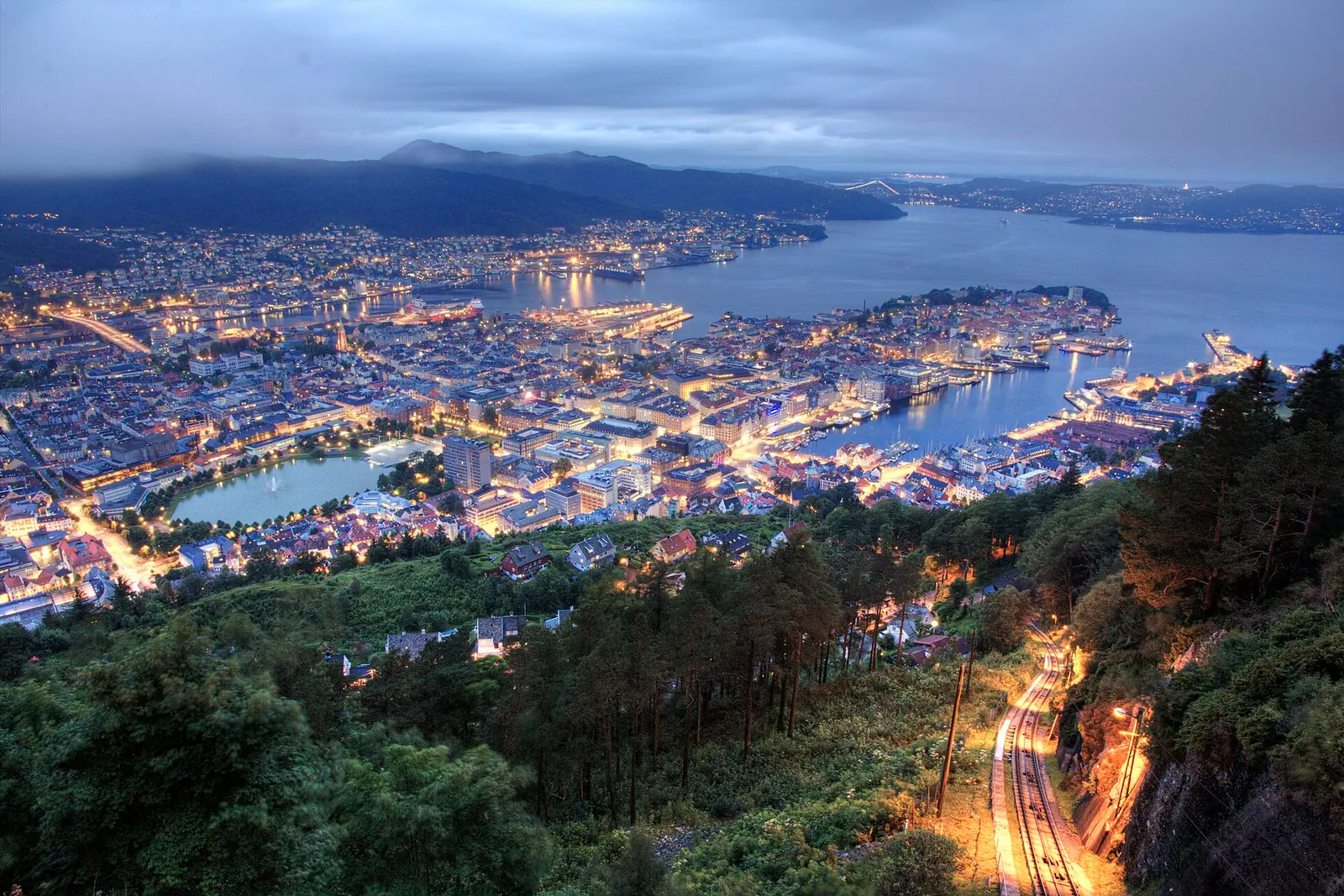
Bergen itself deserves two nights. The wooden wharf of Bryggen, a UNESCO site, leans over the harbour with its gabled merchant houses, and the Fløibanen funicular lifts you to the Mount Fløyen viewpoint in minutes. Down at the waterfront, the fish market is as much theatre as market; better value and better food are a few streets inland. Do not leave without trying a cinnamon skillingsboll from a bakery on the way back down.
The Big Three Hikes: Preikestolen, Kjeragbolten and Trolltunga
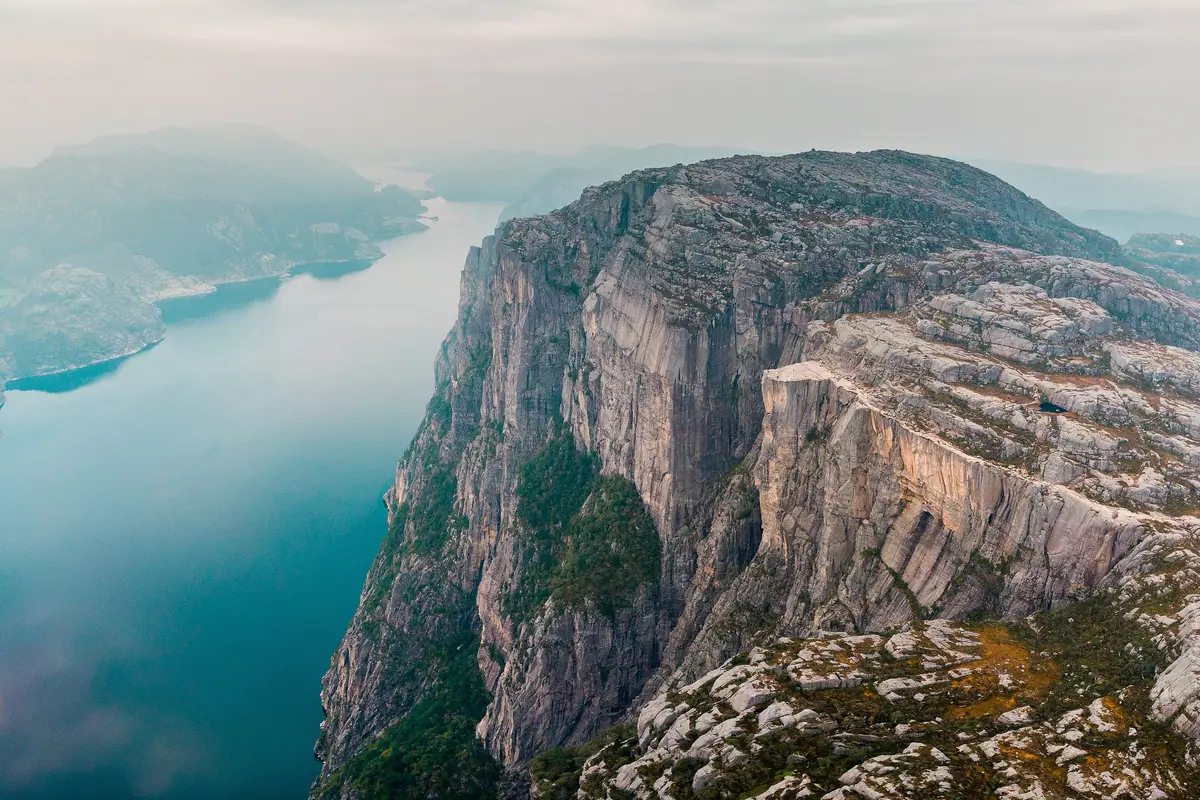
Norway's signature day hikes all hover above deep water, and all three demand respect. Preikestolen (Pulpit Rock) is the easiest and busiest: an 8-kilometre round trip with about 350 metres of ascent, taking most people four to five hours. The reward is a flat, 25-by-25-metre plateau with a sheer 604-metre drop into Lysefjord. Go before 8am or after 5pm in July to avoid a queue for the classic photo, and wear shoes with grip — the rock slabs are polished and slick when wet.
Kjeragbolten, the boulder wedged into a mountain crevasse 984 metres above the same fjord, is a harder proposition: roughly 10 to 12 kilometres round trip and five to seven hours, with three steep scrambles on chains and cables. It is only reliably snow-free from late June to September. Between them, Trolltunga — the rock tongue jutting from a cliff above Ringedalsvatnet near Odda — is the longest: about 27 to 28 kilometres round trip with some 1,100 metres of climbing, typically 10 to 12 hours. Many hikers now split it into two days with a wild camp, which is allowed under Norway's right to roam as long as you keep well away from cabins and farmland.
Practical notes: fuel up properly, carry layers even in July, and check the official trail status before setting out — snow can linger into June. Guided groups run from Stavanger for Kjerag and Preikestolen, and from Odda for Trolltunga, which is the sensible option if you are unsure about navigation in fog.
Lofoten and the Northern Coast
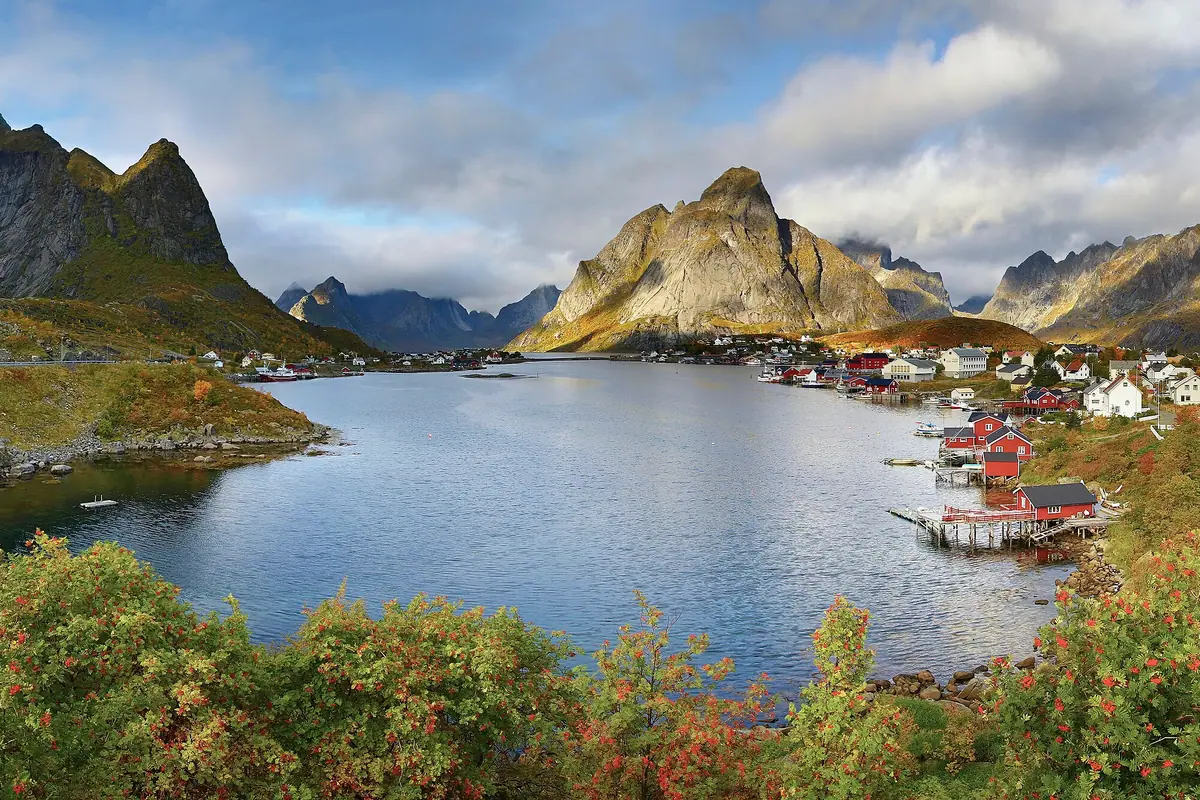
Lofoten is an archipelago that looks invented: granite peaks shooting straight out of turquoise water, red rorbuer fishermen's cabins on stilts, and drying racks full of cod in spring. The village of Reine, on Moskenesøya, is the postcard shot, and the stone stairway up Reinebringen — nearly two thousand steps — delivers the view everyone wants, in one to two hours of steep climbing. Nearby Nusfjord is one of the best-preserved fishing villages in the country, and Henningsvær, built across a scatter of islets, has become a small hub for climbing and coffee.
Further north, the islands of Senja and the Helgeland coast are quieter alternatives with the same drama. Helgeland's Torghatten is a mountain with a natural hole punched clean through it that you can walk into, and the Vega archipelago is a UNESCO-listed cultural landscape of eider duck farming. On the water, sea-eagle safaris from Svolvær run out to the narrow Trollfjord, where the cliffs rise so close you can almost touch them on both sides.
Lofoten's weather is famously fickle — it can be 12°C and raining sideways in July. Pack waterproofs, book accommodation months ahead for June to August, and remember that the midnight sun here means you can hike at 11pm in near-perfect light. Spring brings the cod fisheries and the racks of drying fish; autumn brings storms and the first aurora.
The Arctic: Tromsø, North Cape and Svalbard
Tromsø, 350 kilometres north of the Arctic Circle, is the most accessible launch pad for the northern lights. The aurora season runs from roughly late September to late March, and you need dark, clear skies — which is why guided chases that drive inland toward the Finnish border often succeed when the city is clouded over. Ride the Fjellheisen cable car to the Storsteinen viewpoint for a view over the Arctic Cathedral's striking triangular form, and spend a morning at the Polar Museum or the Arctic–Alpine Botanic Garden, the world's northernmost.
Push further and the landscape empties out. The North Cape plateau at 307 metres is Europe's most famous cliff edge, reached by road through long tunnels and a final drive across a bare headland — the midnight sun here is visible from around mid-May to late July. Near Alta you can see thousands of prehistoric rock carvings, a UNESCO site, and at Kirkenes you can sleep in a snow hotel and go king-crab fishing on the ice in winter.
Svalbard is the true frontier: fly from Tromsø or Oslo to Longyearbyen, where there are more snowmobiles than cars and polar bears outnumber people. Trips outside the settlement require a rifle-equipped guide, and the season splits sharply — dog sledging, snowmobile safaris and aurora from February to May, then midnight-sun boat trips to glaciers and abandoned mining settlements from June to August. It is not a budget destination, and it is not a place to improvise.
Scenic Roads, Mountain Plateaus and Heritage Towns
Norway's driving is an attraction in itself. Trollstigen, the 'Troll's Path', climbs eleven hairpin bends up a wall of rock between Åndalsnes and the Geiranger valley, passing a waterfall you can walk behind; the road is usually open from late May to October, weather permitting. The Atlantic Ocean Road, a zigzag of eight small bridges leaping between islands near Kristiansund, is best on a breezy day when the waves crash against the guardrails. Allow far more time than the map suggests — ferries, tunnels and photo stops all eat into it.
Inland, Jotunheimen is Norway's high alpine playground, home to Galdhøpiggen, the highest peak in northern Europe at 2,469 metres, and to the Besseggen ridge walk: a 13-to-14-kilometre traverse of roughly six to eight hours between two lakes of wildly different colours. Book the ferry across Gjende in advance for July and August. Further south, Vøringsfossen drops 182 metres into the Måbødalen gorge and is an easy stop on the Hardangervidda crossing, the largest mountain plateau in Europe.
For history, head to Trondheim and its Nidaros Cathedral, the Gothic giant where Norwegian kings are consecrated, then to Røros, a UNESCO mining town of black-timbered houses and slag heaps that still looks 18th-century. And make time for at least one stave church — Borgund, Urnes or Heddal — where Viking-era dragon carvings meet Christian timber architecture. In summer, many of these smaller sights keep short hours; check locally rather than assuming.
Frequently asked questions
When is the best time to visit Norway?
For fjord hikes and the midnight sun, late June through August is ideal — trails are snow-free, ferries run frequently and daylight is almost endless. For the northern lights, aim for late September to late March, with the clearest, darkest weeks usually in February and early March. May and September are excellent shoulder months: fewer crowds, lower accommodation rates and still-reasonable weather in the south.
How many days do I need in Norway?
Seven to ten days covers Oslo, the Bergen Railway, Flåm and the Nærøyfjord, plus one big hike such as Preikestolen. Two weeks lets you add Lofoten or Tromsø without spending your whole trip in transit. Add three or four days if Svalbard is on your list, and remember that distances are long and ferries add hours.
Do I need to rent a car in Norway?
Not for the classic Oslo–Bergen–fjord route, which works well by train, express boat and bus. A car is genuinely useful for the Atlantic Ocean Road, Trollstigen, Senja and rural Lofoten, but you should book ferry crossings and tunnels ahead in July, and be ready for narrow, single-lane mountain roads with passing places.
Can I see the northern lights and the midnight sun on one trip?
No — they are seasonally opposite. The midnight sun appears north of the Arctic Circle from roughly mid-May to late July, while aurora viewing requires darkness and runs from late September through March. If both matter to you, plan two separate visits rather than trying to squeeze them into one itinerary.
Is Norway expensive, and what should I know before I go?
It is one of Europe's costliest countries, so budget carefully: self-catering, supermarket picnics and camping or cabin stays make a big difference, and tap water is excellent everywhere. Alcohol is heavily taxed and sold in state-run shops with limited hours. Tipping is not expected, cards are accepted almost universally, and the right to roam lets you walk and wild camp on uncultivated land if you leave no trace.
Plan it — experiences in Norway
Live search, booked directly with trusted providers.
Sort the rest of your trip
Everything for Norway, in one place
Stay in Norway
Hotels, guesthouses and apartments — compared in one search.
Search hotels
Transfer in Norway
Private driver waiting on arrival — no queues, no surprises.
Book a transfer
Stay online in Norway
Travel eSIM — data the moment you land, no roaming bills.
Get an eSIM