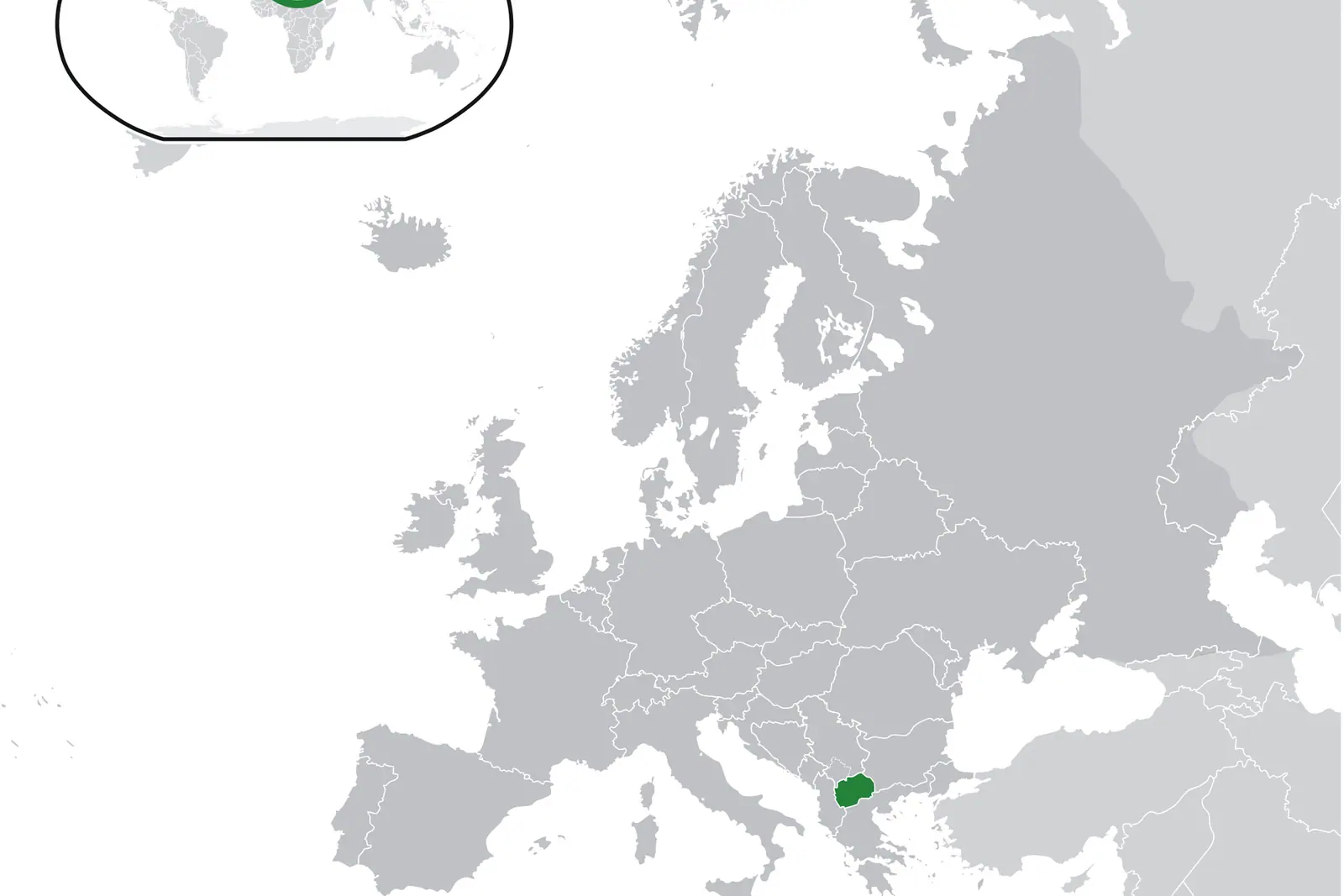
North Macedonia is small enough to cross in a day and layered enough to fill a fortnight — Ottoman bazaars and Byzantine domes in Skopje, a lake so old it predates humanity, and mountains where monasteries cling to cliffs above beech forests. This guide gathers the landmarks and experiences a first-time visitor should not miss, with the seasons and timings that make them work.
Skopje: Old Bazaar, Stone Bridge and Kale Fortress
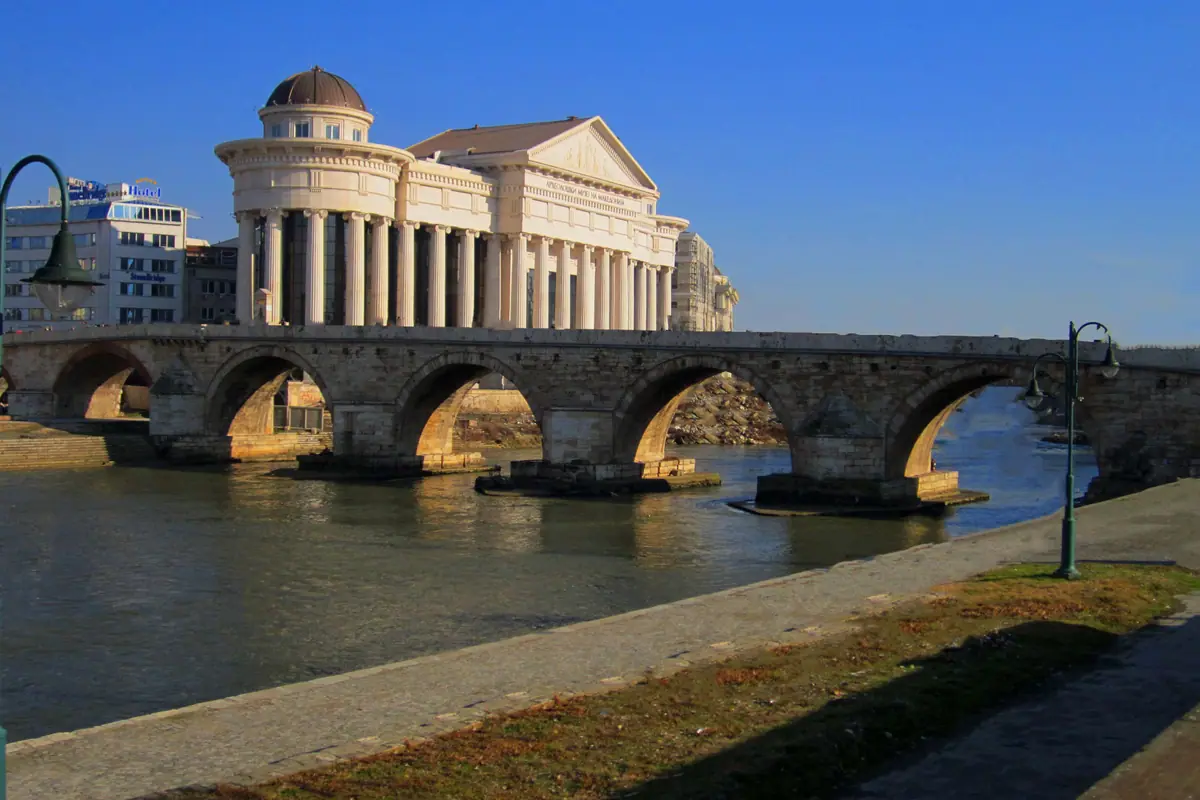
Start in the capital, where the Vardar River divides two very different cities. On the south bank, Macedonia Square is a vast, marble-paved stage of fountains, equestrian statues and monumental neoclassical facades — showy, contentious, and impossible to walk past without stopping. Cross the humpbacked Stone Bridge, an Ottoman-era crossing that has linked the banks since the 15th century, and you step from that theatrical modern square straight into the Old Bazaar.
The Old Bazaar — Čaršija — is the largest surviving bazaar in the Balkans and the true heart of the city: cobbled lanes of jewellers, coppersmiths, barbers and coffee houses, the 15th-century Čifte Hamam bathhouse, the Suli An caravanserai, the clock tower, and the slender minaret of Mustafa Pasha's Mosque. Give it at least half a day. Afterwards climb to Kale Fortress, whose walls and battlements crown the hill above the bazaar and give you the best free sunset view over the city. Down by the river, the Skopje Aqueduct, a short drive north, is a quiet Roman-Byzantine ruin most visitors never reach.
Allow two full days for Skopje. Spring and autumn are the sweet spots; July and August are hot and humid, with afternoon temperatures pushing past 35°C, so plan bazaar wandering for early morning and save museums — including the memorial house dedicated to Skopje-born Mother Teresa — for the middle of the day.
Matka Canyon and the Millennium Cross on Vodno
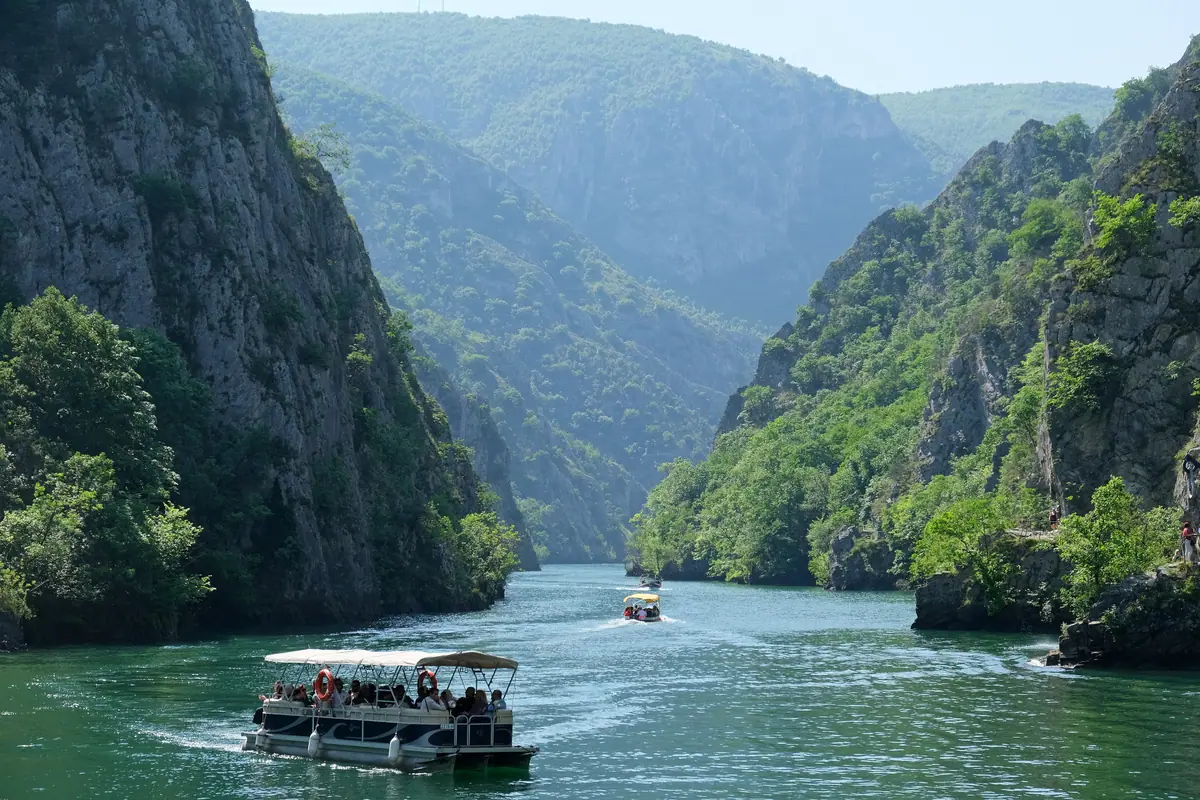
Half an hour from the centre, Matka Canyon cuts a dramatic gorge through the rock where the Treska River widens into a deep, green reservoir. It is the most popular day trip in the country: kayaks for hire, a handful of restaurants on the water, and a network of hiking trails that climb to lookouts above the cliffs. The signature excursion is a short boat ride into Vrelo Cave, one of the deepest underwater caves in the region, with stalactite formations that look like theatrical scenery.
Above the city, Mount Vodno offers the easiest altitude in the Balkans. A cable car lifts you from the foothills to the summit, where the Millennium Cross — one of the tallest crosses in the world, floodlit at night — stands over a panorama that takes in Skopje, the Vardar valley and, on clear days, the Šar mountains on the horizon. Hikers can skip the cable car and walk up through oak forest in around two hours.
Both are half-day trips and combine well with a morning in the bazaar. Come in May, June, September or October for comfortable walking weather; in high summer, start Matka early, before the gorge fills with people and the heat settles into the rock.
Lake Ohrid: Churches Above the Water
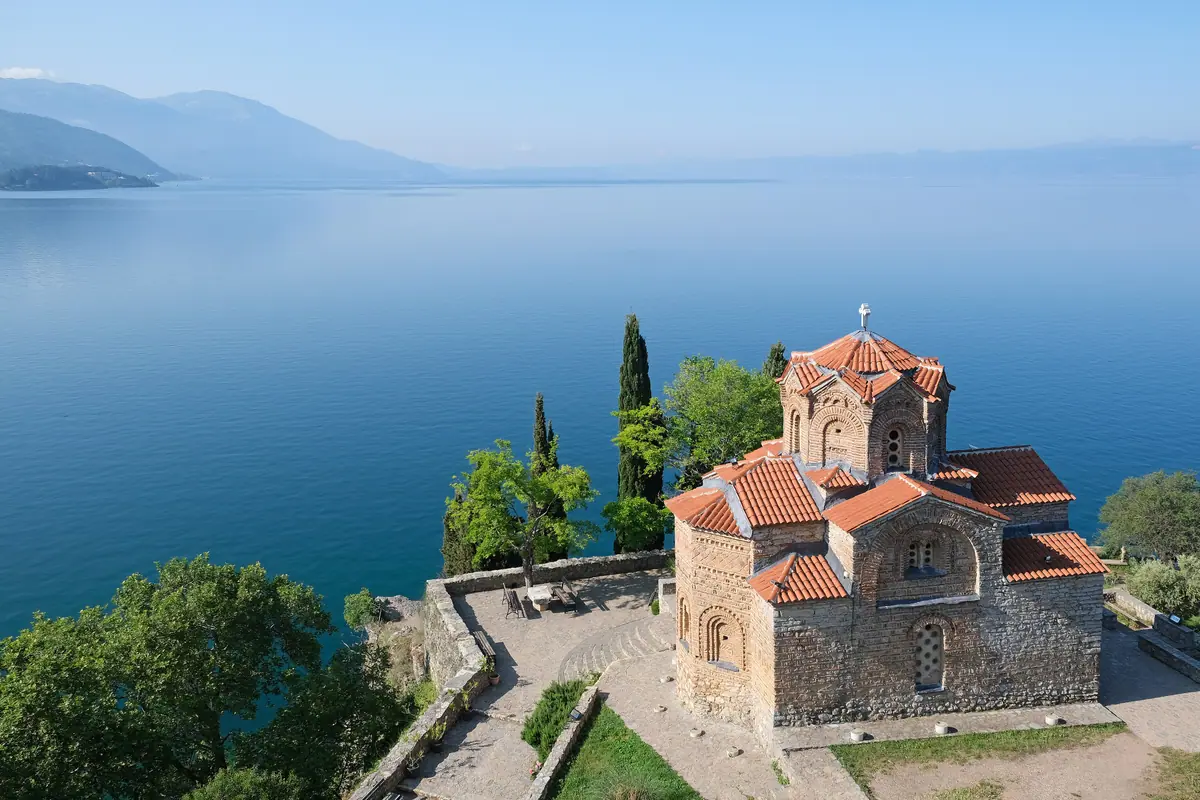
Lake Ohrid is the reason most travellers come, and it earns the fuss. One of Europe's oldest and deepest lakes, its water is so clear that fishing boats appear to hover above the stones, and the whole shoreline is protected as a combined natural and cultural World Heritage site. The town of Ohrid climbs a hillside of narrow lanes, Ottoman houses and more than a hundred churches.
The postcard image is the Church of St John at Kaneo, perched on a promontory above the lake with the water on three sides — go at sunrise or an hour before sunset, when the crowds thin and the light turns gold. Above the town, Samuel's Fortress walls off the hilltop, and on the slope below it stand the Ancient Theatre of Ohrid, a Hellenistic theatre still used for summer concerts, and the archaeological site of Plaošnik with its early Christian basilica mosaics. In the old town, the Church of St Sophia is prized for its 11th-century frescoes.
Swimming season runs roughly from June to September, when the lake is warm and the beaches at Gradište and Ljubaništa fill up. Give Ohrid at least three nights: one for the town, one for a boat trip south along the coast to the monastery at Sveti Naum — with its peacocks, springs and onion-domed church — and one for doing very little on a terrace above the water.
Monasteries and Mountains: Bigorski, Mavrovo and Galičica
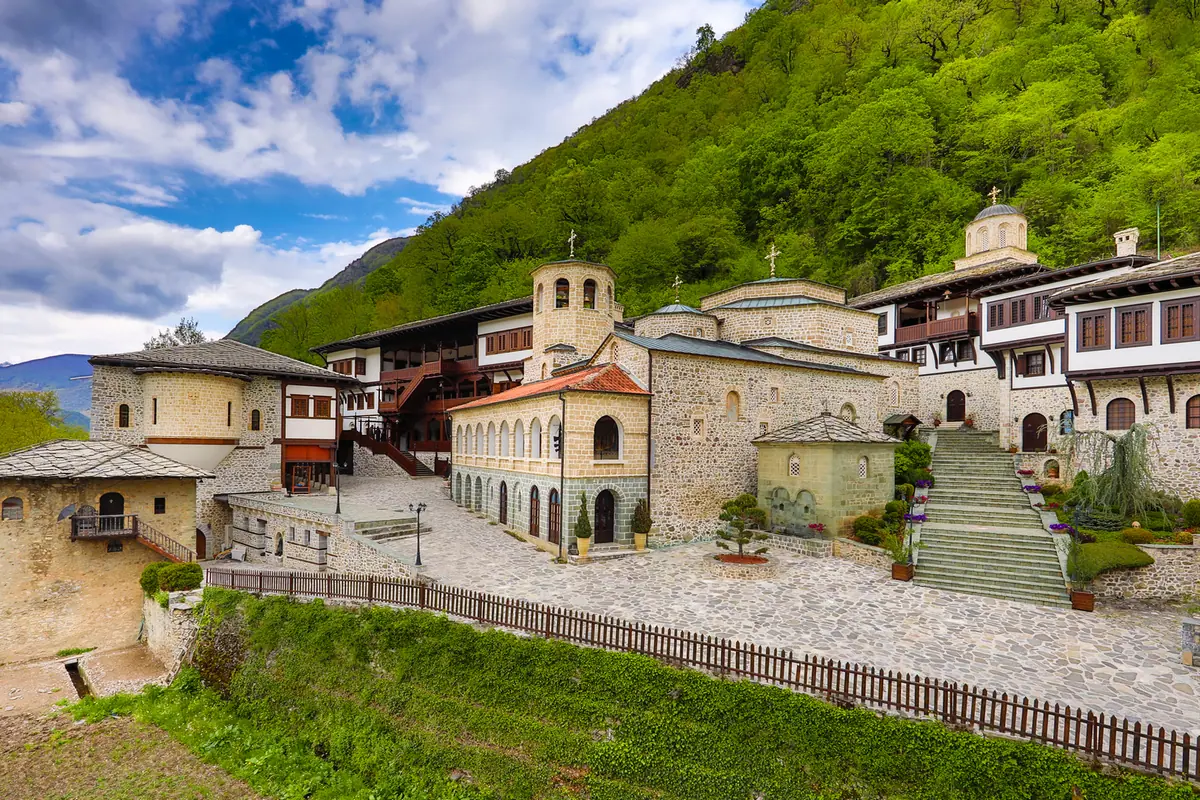
North Macedonia's monasteries are strung through its national parks, and the finest is St Jovan Bigorski, tucked into a wooded ravine above the Radika River in the west. Its reputation rests on an extraordinary carved wooden iconostasis, a filigree of figures and vines worked by 19th-century masters, plus a relic the faithful queue to touch. Dress modestly, keep your voice down, and allow an hour or two for the drive there — the road itself, snaking past Mavrovo Lake and its half-submerged church, is half the experience.
Mavrovo National Park is the country's winter playground, with ski slopes above the village that run from roughly January to March, and hiking trails in summer that lead to glacial lakes and the deep Bistra forests. South of Ohrid, the long spine of Galičica National Park separates Lake Ohrid from Lake Prespa; the drive across its pass delivers the country's most famous viewpoint, looking down on two lakes at once. Below Prespa's shore lies the island of Golem Grad, an uninhabited outcrop of ruins, cormorants and snakes reached only by boat.
The Šar mountains along the northern border and Mount Korab, the highest point in both North Macedonia and neighbouring Albania, suit serious hikers rather than casual walkers. Late June to early October is the window for high trails; snow lingers on Korab into June.
Bitola, Heraclea Lyncestis and the Southern Wine Roads
Bitola is the country's most elegant town, its main pedestrian street — Širok Sokak — lined with Austro-Hungarian facades, cafés and consulates from the Ottoman era. It is also the gateway to Heraclea Lyncestis, a Roman city founded in the 4th century BC whose mosaics are among the finest in the Balkans; the floor of the great basilica, with its peacocks, deer and geometric borders, is worth the trip alone. Come late afternoon, when the light rakes across the ruins and the site empties.
South and east of Bitola, roads run through the Tikveš wine district, where the local Vranec grape produces dark, peppery reds and family cellars around Demir Kapija and Kavadarci open their doors for tastings. On the way, stop at Stobi, a sprawling Roman and early Christian city with a theatre and mosaic-floored villas, and at Prilep, where the ruined Marko's Towers sit on a granite outcrop above the plain, and the Monastery of Treskavec waits higher still.
The mountain town of Kruševo, at around 1,350 metres, is a different climate entirely — wooden houses, a dramatic hilltop memorial, and ski slopes in winter. Base yourself in Bitola for two nights to cover Heraclea, the wine roads and the mountain villages without rushing. October, when the vineyards turn and the light softens, is the connoisseur's month here.
Kokino, Kuklica and Practical Planning
In the northeast, near the Serbian and Bulgarian borders, Kokino is a Bronze Age observatory on a volcanic ridge, with carved thrones and stone markers aligned to the movements of the sun and moon. It is shortlisted as a World Heritage candidate, quiet even in August, and best visited at sunset with a car. Near Kumanovo, the stone pillars of Kuklica — eroded figures locals call the Stone Dolls — rise from a barren slope, and Dojran Lake in the far southeast is a small, warm, cheap summer escape of fishing huts and fish restaurants.
Getting around takes planning. Buses link Skopje, Ohrid and Bitola reliably, but the monasteries, canyons and wineries almost all require a car; renting one from Skopje or Ohrid gives you the country on your own terms. The Skopje–Ohrid run takes about three hours by road, longer through the mountains, and Kokino or Dojran are day trips from the capital rather than stops on a loop.
As a rough itinerary: three nights in Skopje for the bazaar, Matka and Vodno; three or four nights around Ohrid with a day for Sveti Naum and Galičica; two nights in Bitola for Heraclea and the wine roads. May, June, September and October are ideal — warm, dry, uncrowded. July and August suit lake swimming, and January and February suit skiing. The currency is the denar, cards work in cities but not in village cellars, and cash still rules in the mountains.
Frequently asked questions
How many days do I need in North Macedonia?
Seven to ten days is comfortable. A workable plan is three nights in Skopje for the Old Bazaar, Matka Canyon and Mount Vodno, three or four nights around Lake Ohrid with day trips to Sveti Naum and Galičica National Park, and two nights in Bitola for Heraclea Lyncestis and the Tikveš wine roads. If you only have four days, choose Skopje plus Ohrid and accept a fast pace.
When is the best time to visit North Macedonia?
May, June, September and October offer warm, dry weather, open mountain roads and manageable crowds. July and August are best if you want to swim in Lake Ohrid and the Prespa lakes, though inland cities get very hot. January and February are the months for skiing at Mavrovo and Kruševo.
Do I need to rent a car?
For cities and main routes, no — buses connect Skopje, Ohrid, Bitola and Prilep frequently and cheaply. But Matka Canyon, the Bigorski monastery, Galičica's viewpoint, Kokino and the wineries are all far easier with your own vehicle. A small car hired in Skopje or Ohrid is the single biggest upgrade to any trip here.
Is North Macedonia expensive?
It is one of the most affordable destinations in Europe. Guesthouses, local restaurants serving kebapi, tavče gravče and ajvar, and intercity buses all cost a fraction of Western European equivalents. The currency is the denar; bring cash for village monasteries, mountain guesthouses and winery tastings, where cards are often not accepted.
What should I not miss on a first visit?
If you only tick off five things, make them the Old Bazaar and Stone Bridge in Skopje, Matka Canyon, the Church of St John at Kaneo and Samuel's Fortress in Ohrid, Sveti Naum, and the mosaics of Heraclea Lyncestis in Bitola. Add Kokino at sunset if you have a car and an extra day.
Plan it — experiences in North Macedonia
Live search, booked directly with trusted providers.
Sort the rest of your trip
Everything for North Macedonia, in one place
Stay in North Macedonia
Hotels, guesthouses and apartments — compared in one search.
Search hotels
Transfer in North Macedonia
Private driver waiting on arrival — no queues, no surprises.
Book a transfer
Stay online in North Macedonia
Travel eSIM — data the moment you land, no roaming bills.
Get an eSIM