A week in North Macedonia folds a whole Balkan story into a single loop: Ottoman bazaars, Byzantine frescoes, Roman mosaics and a lake so old it has species found nowhere else on earth. Drive it slowly, stop often, and you will cover the country's greatest hits without ever feeling like you are rushing.
Days 1–2: Skopje — Fortresses, Bazaars and the Millennium Cross
Most travellers land at Skopje International Airport, roughly 20 kilometres east of the capital and connected by low-cost flights from a dozen European cities. Ohrid's St. Paul the Apostle Airport handles seasonal summer charters but goes quiet in winter, so unless you are arriving in high season, Skopje is your gateway. Collect a rental car, get used to the Cyrillic road signs, and give the capital two unhurried days before heading for the mountains.
Spend your first full day on foot. Macedonia Square, with its colossal equestrian monument and fountain shows, is the flamboyant heart of the city; from there the Stone Bridge — the Ottoman spine of Skopje, rebuilt many times over the centuries — carries you across the Vardar River into the Old Bazaar. This is the largest surviving bazaar in the Balkans: cobbled lanes of goldsmiths and coffee houses, the domed fifteenth-century Daut Pasha Hamam and the Čifte Hamam, and caravanserais such as Suli An where a Turkish coffee costs less than a bus ticket. Above it all, the ramparts of Kale Fortress give you the entire city in one sweep, best an hour before sunset.
On day two, ride the cable car up Mount Vodno to the Millennium Cross, a 66-metre steel cross that dominates the skyline and looks out across the whole Skopje Valley. Then drive fifteen minutes southwest to Matka Canyon, where the Treska River has carved a gorge between limestone cliffs. Take a small boat into Vrelo Cave, one of Europe's deepest underwater cave systems, or rent a kayak and paddle beneath the medieval churches of St. Andrew and St. Nicholas. Riverside terraces grill fresh trout; book ahead at weekends in summer.
Day 3: Tetovo's Painted Mosque and the Wilds of Mavrovo
Head west on the motorway to Tetovo, less than an hour away, and find the Šarena Džamija — the Painted Mosque — tucked beside the Pena River. Built at the end of the fifteenth century and repainted several times since, its facade erupts in floral frescoes and landscapes, an exuberant oddity in Islamic architecture. A short walk uphill brings you to the Arabati Baba Teḱe, a whitewashed Sufi lodge with rose gardens and a tranquillity that feels miles from the traffic below.
From Tetovo the road climbs into Mavrovo National Park, through beech forest and shepherd country in the Šar Mountains. Stop at the Monastery of St. Jovan Bigorski, a foundation with roots in the eleventh century and a church rebuilt in the 1800s around an iconostasis carved from walnut by the celebrated Miyak woodcarvers — an extraordinary wall of vines, dragons and saints. Monks still live here, so dress modestly: shoulders and knees covered.
Spend the night in or around Mavrovo village, on the shore of the artificial lake. When water levels drop, the roofline of the submerged Church of St. Nicholas reappears above the surface, a melancholy and much-photographed sight. In winter this is ski country, with lifts above the village; in summer the same slopes become hiking and cycling terrain, and the lake road makes an easy, beautiful late-afternoon drive.
Day 4: Over the Mountains to Lake Ohrid, via Struga and Vevčani
Two routes lead south to Ohrid. The fast one follows the motorway through Gostivar and Kičevo and takes under three hours. The slow one, which you should take if you have the time, threads through Debar and along the Black Drin valley, past roadside stands selling honey and mountain cheese, with Albania's peaks visible across the water. Either way, break the journey properly.
Detour first to Vevčani Springs, a cluster of karst springs and old stone mills above Struga, where water simply pours out of the hillside. The village is famous for its mid-winter carnival, but on an ordinary afternoon it is all wooden balconies and cold, clear pools. Then follow the lake down to Struga, where the Black Drin flows out of Lake Ohrid and the riverbanks fill with cafés in the evening.
If you have a spare half day, Galičica National Park — the mountain ridge squeezed between Lake Ohrid and Lake Prespa — is the highlight of the region. Drive the pass from Ohrid towards the Prespa shore for panoramic views over both lakes at once, or hike to Magaro peak at 2,255 metres for a full-day, properly strenuous version. Arrive in Ohrid by dusk and find a room in the old town rather than the modern strip.
Days 5–6: Ohrid — Churches, Fortress and a Two-Million-Year-Old Lake
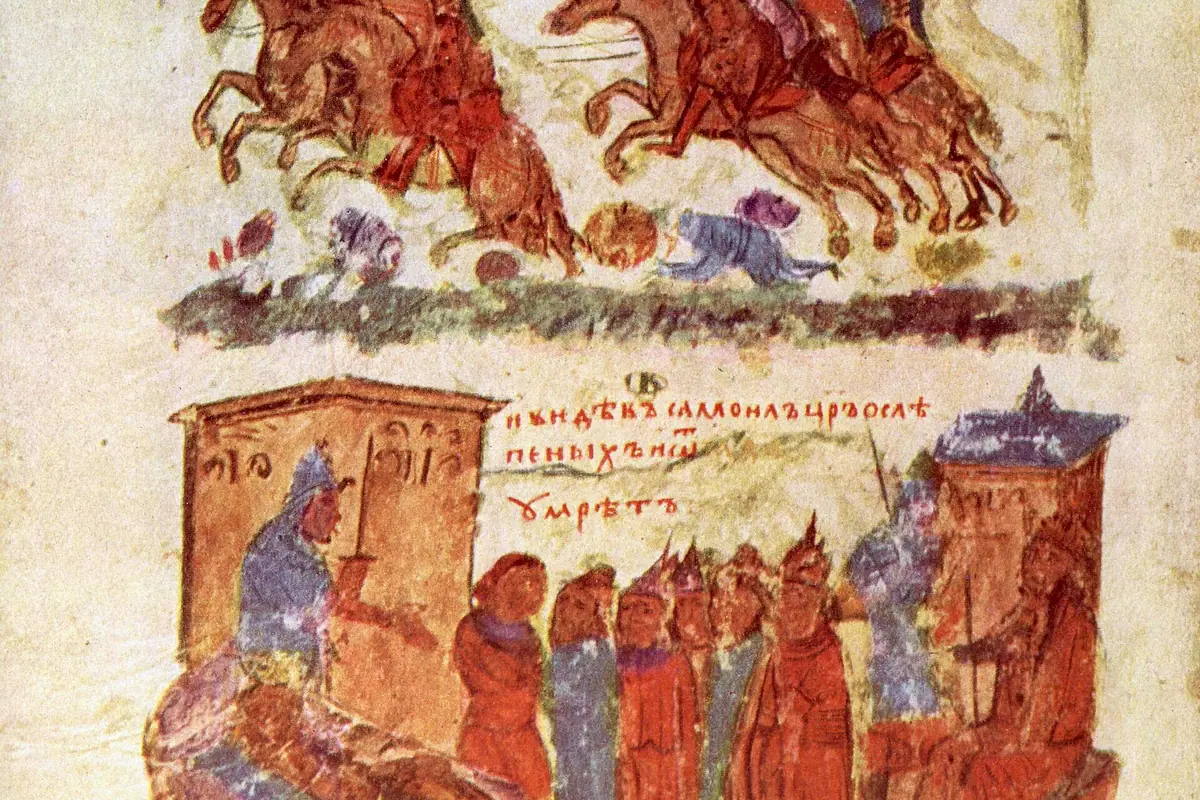
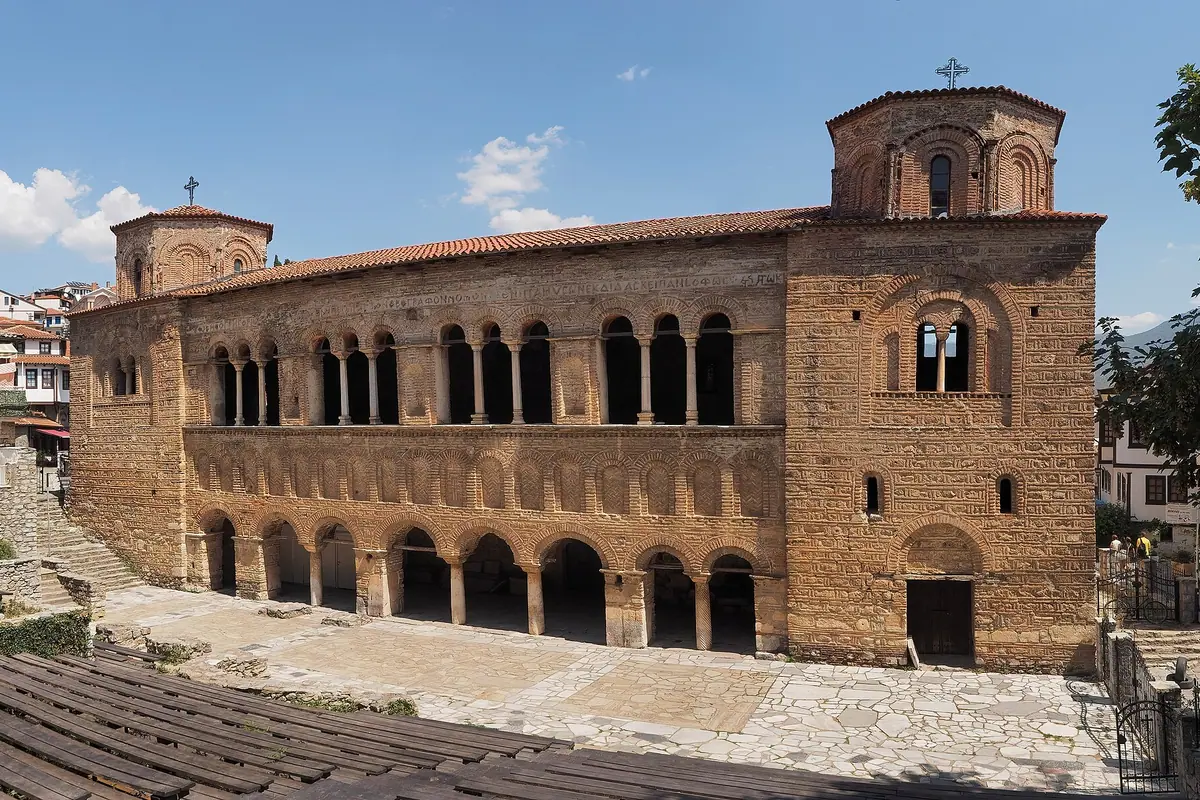
Ohrid's old town climbs a steep hill above the water, and every lane seems to end at a church. The UNESCO-listed core holds the Church of St. Sophia, whose eleventh-century frescoes are among the finest in the Balkans, the Hellenistic Ancient Theatre that still hosts concerts during the Ohrid Summer Festival in July and August, and Plaošnik, the site of St. Clement's early Christian basilica, rebuilt as the Church of St. Panteleimon. At the very top, Samuel's Fortress gives you the lake spread out like a map.
Walk down from the fortress to the Church of St. John at Kaneo, balanced on a cliff above the water — the image everyone brings home from North Macedonia. Below it, the rocks make one of the best swimming spots in town. Take a boat south to the Museum on Water at the Bay of Bones, a reconstructed pile-dwelling settlement on a prehistoric site, and continue to the Monastery of St. Naum at the lake's southern tip, where peacocks strut and the springs bubble up from the lakebed so clearly you can see the sand churn.
Evenings belong to the promenade: grilled Ohrid trout, shops demonstrating the local technique of making pearls from fish scales, glasses of rakija, and the smell of the lake. Two nights is the minimum; three is better, especially if you want a lazy day of swimming and a boat trip to the quieter eastern shore beaches near Trpejca and Ljubaništa.
Day 7: Bitola, Heraclea Lyncestis and the Road Home
Drive south over the Galičica ridge or around the lake's eastern shore to Bitola, the country's second city and its most elegant. Širok Sokak, the pedestrian boulevard, is lined with nineteenth-century neoclassical facades, consulates and cake shops — hence the city's old nickname, the city of consuls. It is a good place for a slow breakfast before the ruins.
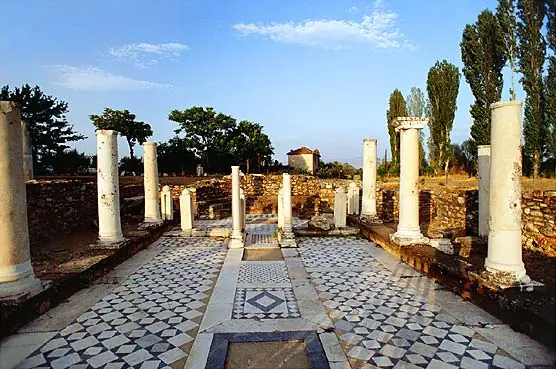
On the edge of town, Heraclea Lyncestis was founded in the fourth century BC by Philip II of Macedon. Romans later added baths and a theatre, but the star turn is the mosaic floor of the Great Basilica, with its birds, deer and famously intricate tree-of-life panels, protected under cover and wonderfully uncrowded. Just beyond Bitola lies Pelister National Park, home to the rare five-needle Macedonian pine and a network of mountain trails.
Return north on the motorway and break the trip at Stobi, a Roman city near Gradsko with a theatre, mosaic floors and the remains of a synagogue, or push on to the Kokino megalithic observatory near Kumanovo if you are chasing something stranger. Drop the car at Skopje airport for an evening flight, or stay one last night in the capital and eat tavče gravče and šopska salad in the Old Bazaar.
When to Go, How to Drive and What to Eat
May, June, September and early October are the sweet spots: warm, green and quiet, with vineyards in the Tikveš and Demir Kapija regions at their best. July and August push into the mid-30s and fill Ohrid's old town with festival crowds, though the lake warms up enough for long swims. Winter is for skiing above Mavrovo and on the Šar slopes, and for cheap city breaks in Skopje.
A car turns this itinerary from a series of bus timetables into a proper road trip; rent at the airport, drive on the right, and keep small cash for motorway tolls and for mountain guesthouses that do not take cards. The mountain roads over Galičica and up to Mavrovo are winding, occasionally shared with sheep, and utterly worth it. If you would rather not drive, daily buses link Skopje, Ohrid and Bitola comfortably, and a train runs from the capital down to Bitola.
Eat what the country eats: tavče gravče, the baked-bean casserole served in earthenware; ajvar made from autumn peppers; burek for breakfast; kajmak; and grilled meats with raw onion and bread. Lake Ohrid supplies its own trout, and the wine regions to the south produce reds that rarely leave the country. Learn a few words of Macedonian or Albanian, carry a light scarf for monastery visits, and the week will run effortlessly.
Frequently asked questions
How many days do you need in North Macedonia?
Seven days is ideal for the classic loop: two nights in Skopje with a Matka Canyon day trip, one night in Mavrovo, two or three nights in Ohrid, and a final day around Bitola and Heraclea Lyncestis on the way back. Five days is enough if you cut Mavrovo and take the motorway straight to the lake.
Which airport should I fly into?
Skopje International Airport serves the capital year-round and is the safest bet, about 20 minutes from the centre. Ohrid's St. Paul the Apostle Airport only handles seasonal summer flights, so if you are travelling outside peak months, fly into Skopje and drive south.
Do I need to rent a car?
It is not essential — daily buses connect Skopje, Ohrid and Bitola, and a train runs south from the capital — but a car makes the trip far richer, letting you stop at Bigorski Monastery, Vevčani Springs and Galičica on your own schedule. Rent at the airport, drive on the right, and carry cash for tolls.
What is the best time of year to visit?
Late May, June, September and early October offer warm days, green landscapes and manageable crowds. July and August are hot and busiest at Ohrid, though perfect for swimming and the Ohrid Summer Festival. Winter suits skiers heading to Mavrovo and the Šar Mountains.
Is Ohrid worth more than a day?
Absolutely — give it at least two nights, three if you can. The old town alone holds Samuel's Fortress, the Ancient Theatre, Plaošnik and the Church of St. Sophia, and you will want time for the Church of St. John at Kaneo, a boat trip to the Bay of Bones and the Monastery of St. Naum, plus a swim off the rocks.
Plan it — flights in North Macedonia
Live search, booked directly with trusted providers.
Sort the rest of your trip
Everything for North Macedonia, in one place
Stay in North Macedonia
Hotels, guesthouses and apartments — compared in one search.
Search hotels
Transfer in North Macedonia
Private driver waiting on arrival — no queues, no surprises.
Book a transfer
Travel insurance
Medical cover, delays and lost baggage — sorted before you go.
Get covered