Nepal compresses eight of the world's ten highest mountains, seven UNESCO-listed monument zones and a subtropical jungle full of rhinos into a country you could cross in a fortnight. The hard part is choosing which landmarks earn your days, and which season to give them. This is the shortlist that first-time visitors almost never regret.
Kathmandu's Must-Visit Landmarks: Durbar Square, Swayambhunath and Boudhanath
The Kathmandu Valley is where every Nepal trip begins, and its headline sights sit within a few kilometres of one another. Kathmandu Durbar Square is the historic royal plaza: the Hanuman Dhoka palace complex, the timber Kasthamandap pavilion that gave the city its name, and the Kumari Ghar, home to the living goddess Kumari, whose carved wooden balconies and window lattices are among the finest examples of Newari craft anywhere in the valley. Post-earthquake restoration is still visible in places, which makes a slow, curious walk more rewarding than a quick photo stop.
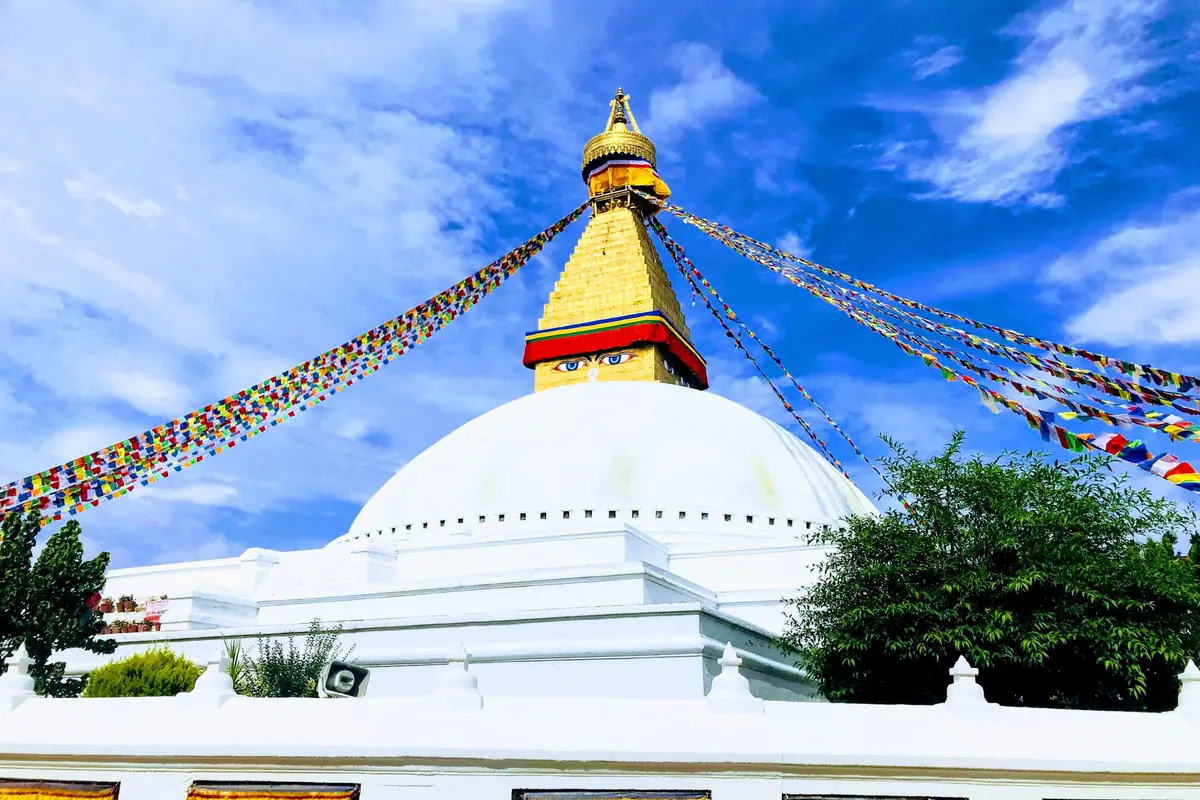
West of the centre, Swayambhunath, universally known as the Monkey Temple, crowns a hill reached by a long flight of worn stone steps. At the top, a gilded spire is painted with the all-seeing Buddha eyes and strung about with prayer flags; troops of rhesus macaques patrol the terraces. Sunrise is the magic hour, when mist still fills the valley and pilgrims begin their clockwise circuits. Boudhanath Stupa, east of the city, is one of the largest Buddhist monuments on earth, its whitewashed dome ringed by Tibetan monasteries, butter-lamp shops and rooftop cafés. Join the evening kora, walking clockwise with the crowd, and the whole place hums.
Pashupatinath, on the Bagmati river, is Nepal's holiest Hindu site: a pagoda-roofed temple to Shiva surrounded by cremation ghats where ceremonies take place daily, ash-smeared sadhus, and rows of stone shrines. Non-Hindus cannot enter the inner courtyard but can watch respectfully from the eastern bank. Give the complex at least half a day, dress modestly, and ask before photographing anyone at the ghats.
Beyond the Capital: Patan, Bhaktapur, Nagarkot and the Bhote Koshi
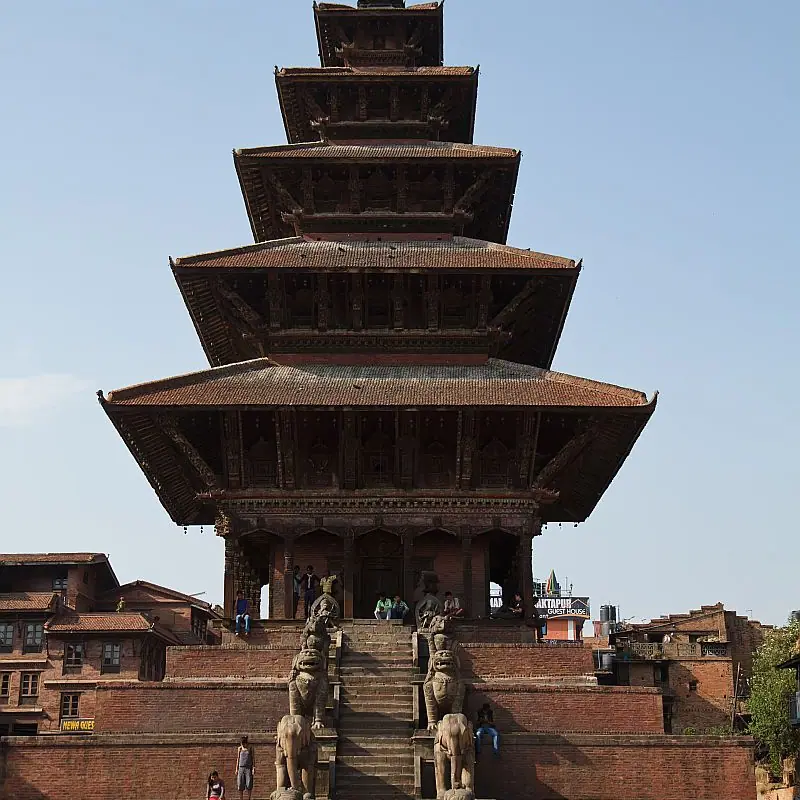
Two more royal squares lie within an hour of Kathmandu, and both are worth their own day. Patan Durbar Square centres on the stone Krishna Mandir, its 21 pinnacles carved with scenes from the epics, alongside the beautifully restored Patan Museum and the gilded courtyard temple of Hiranya Varna Mahavihar. Bhaktapur is even more atmospheric: a largely car-free grid of brick lanes, the 55-Window Palace, the towering five-storey Nyatapola Temple, and Pottery Square, where clay pots dry in rows in the sun. Try juju dhau, the thick buffalo-milk curd known locally as king curd.
Further east, Nagarkot is the valley's classic sunrise viewpoint, with a Himalayan panorama running from Annapurna across to Everest on genuinely clear mornings. Pair it with Changu Narayan, the oldest Hindu shrine in the valley, whose courtyard holds fifth-century stone inscriptions and some of the earliest dated sculpture in the country. A night in Nagarkot between October and December offers the best odds of a cloudless dawn.
This is also the part of Nepal where adrenaline takes over. Day rafting on the Trishuli suits beginners, while the Bhote Koshi, closer to the Tibetan border, runs faster and steeper when the snowmelt peaks in spring. Multi-day trips on the Sun Koshi are a slower, wilder alternative, camping on river beaches. Near the border you will also find one of the world's highest commercial bungee jumps, a 160-metre plunge into a forested gorge, plus canyoning and long zip lines. Most trips can be arranged in Kathmandu a day ahead.
Everest Base Camp and the Khumbu: The Trek Most People Come For
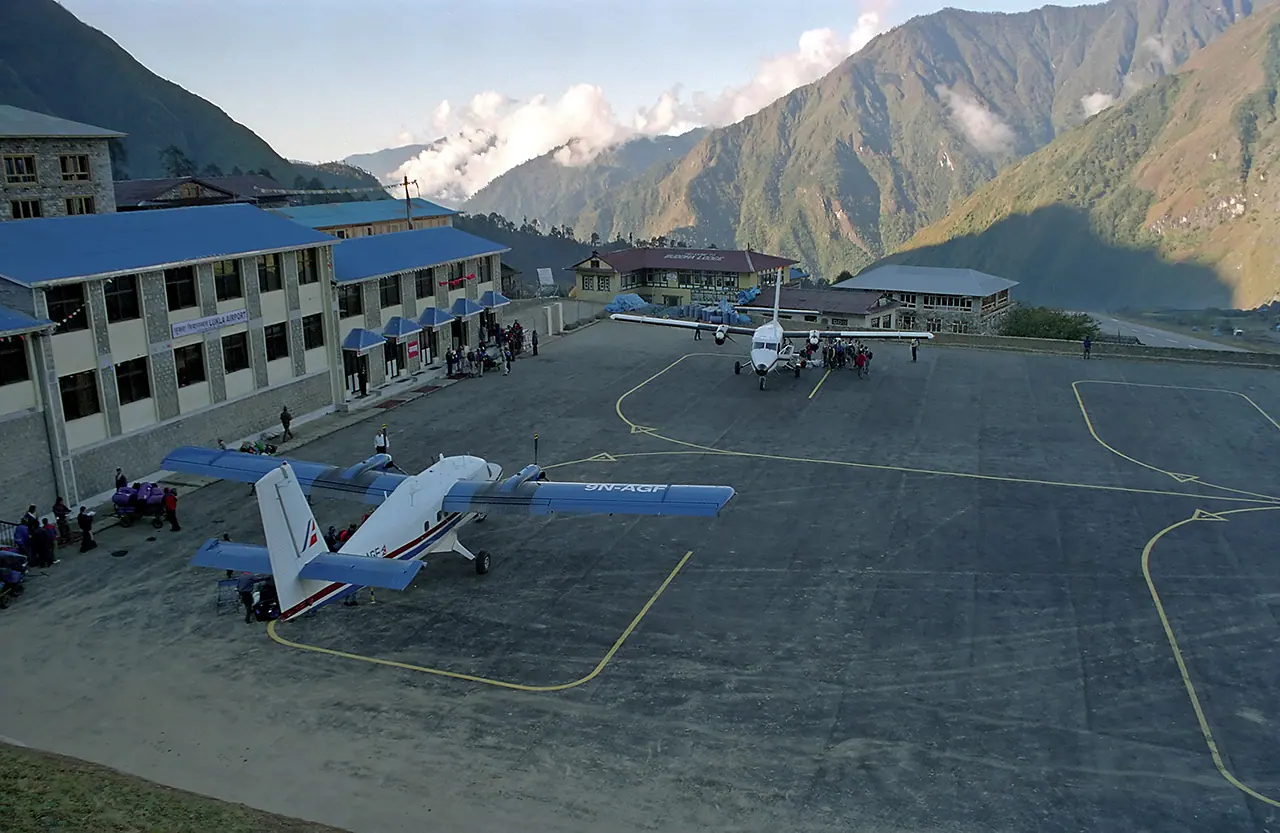
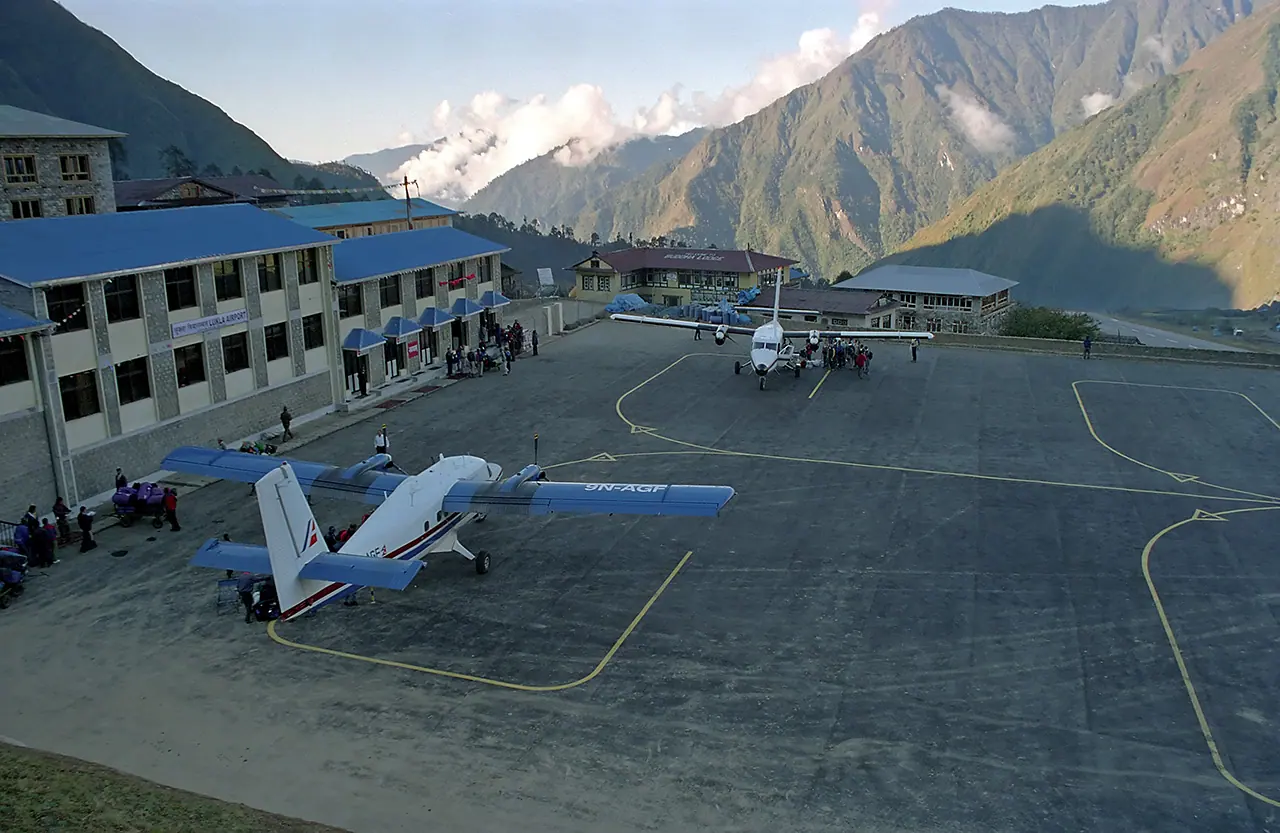
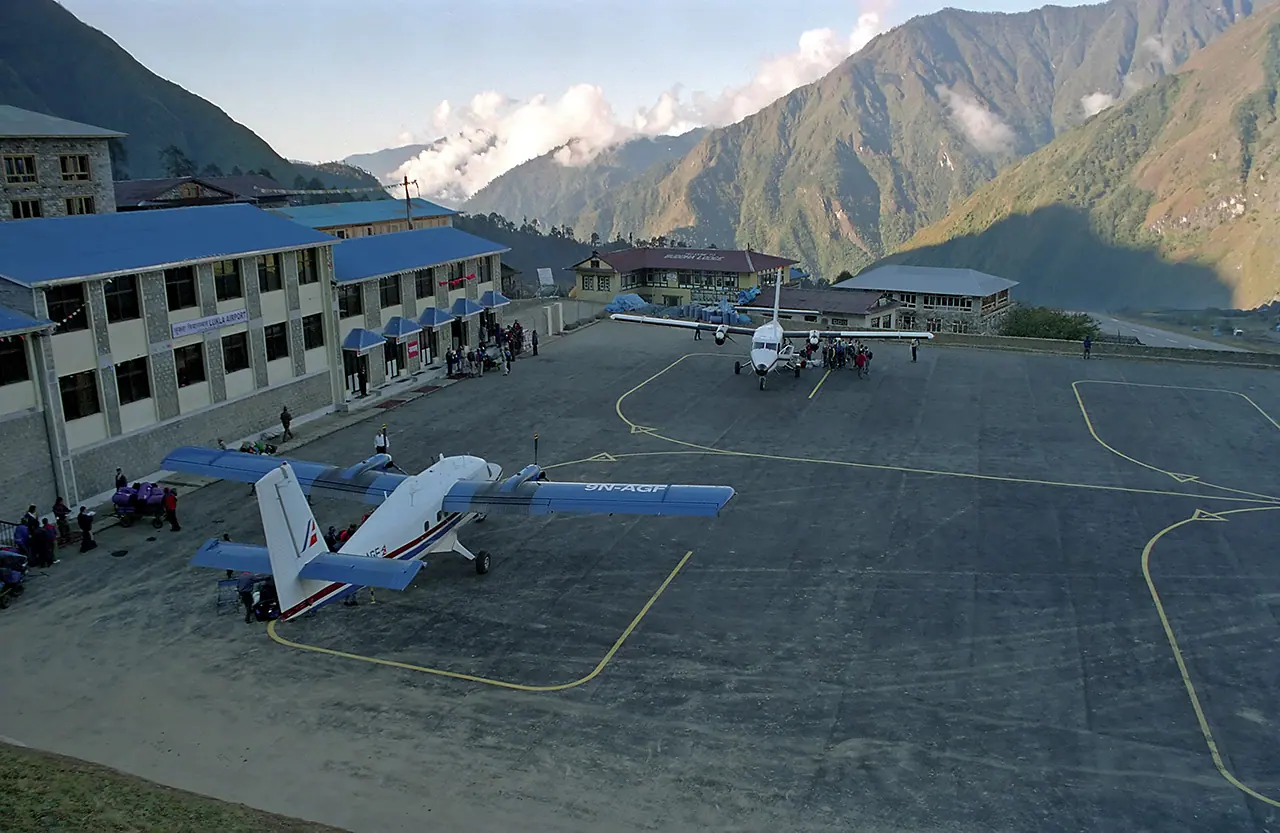
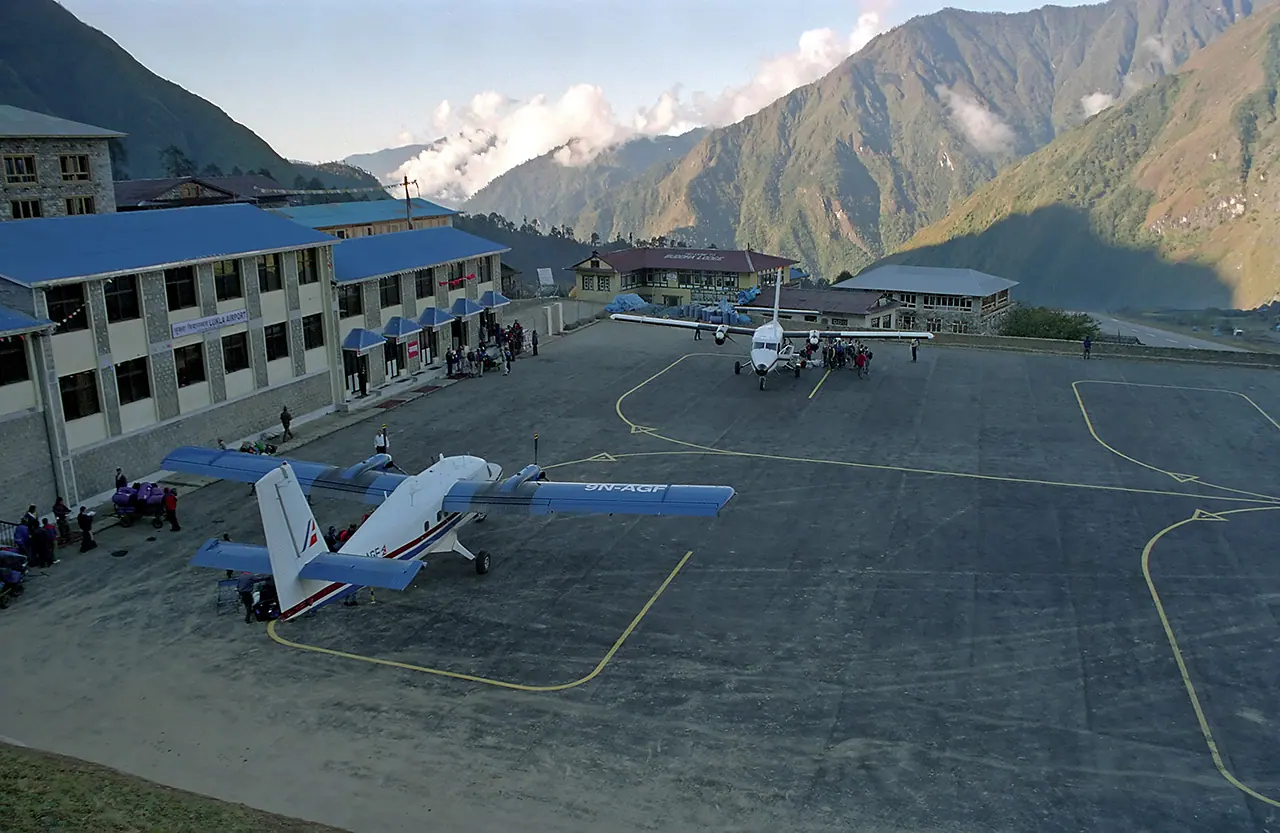
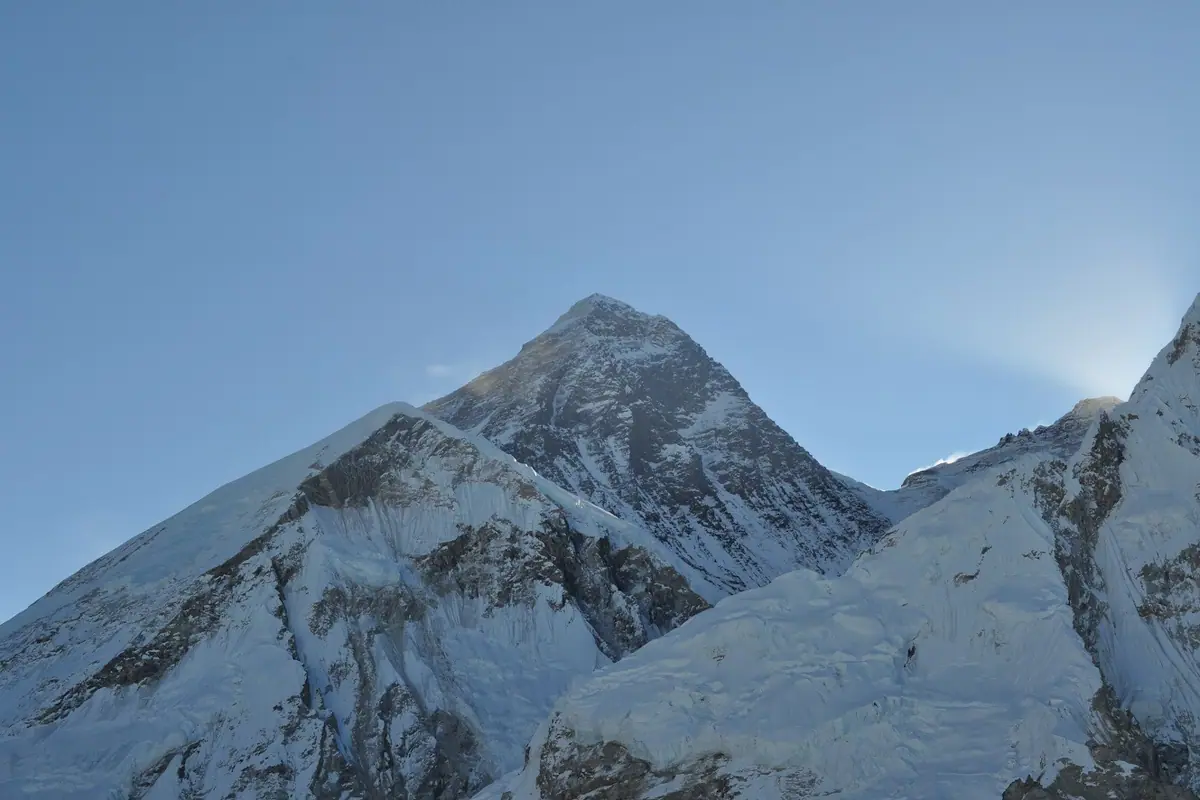
The classic route begins with a short, notoriously weather-dependent flight to Lukla and then walks north through Sagarmatha National Park, a UNESCO-listed landscape of pine forest, mani walls and Sherpa villages. Most itineraries take 12 to 14 days round trip, with a rest day in Namche Bazaar at 3,440 metres to acclimatise, a stop at Tengboche Monastery beneath the vast face of Ama Dablam, and onward stages through Dingboche, Lobuche and Gorak Shep. The sunrise climb of Kala Patthar, at 5,545 metres, is the view everyone carries home: the Khumbu Glacier below and Everest's south face catching first light. Base camp itself sits on the glacier and is more about the achievement than the panorama.
Altitude, not distance, is what defeats people. Ascend slowly, build in the rest days your itinerary suggests rather than skipping them, drink far more water than feels reasonable, and turn around if headaches, nausea or breathlessness at rest get worse. Trekking permits and national park entry are checked along the route, and a licensed guide or porter is required on most trails.
Late March to May and October to November bring the most stable skies and the busiest lodges; winter is cold but quiet and startlingly clear; the monsoon from June to September brings cloud, mud and frequent flight cancellations. If you have neither the time nor the knees, a one-hour mountain flight from Kathmandu delivers the whole range at sunrise, and a short trek to the Everest View above Namche still puts you face to face with the peaks.
Pokhara and the Annapurnas: Lakes, Sunrise and Base Camp
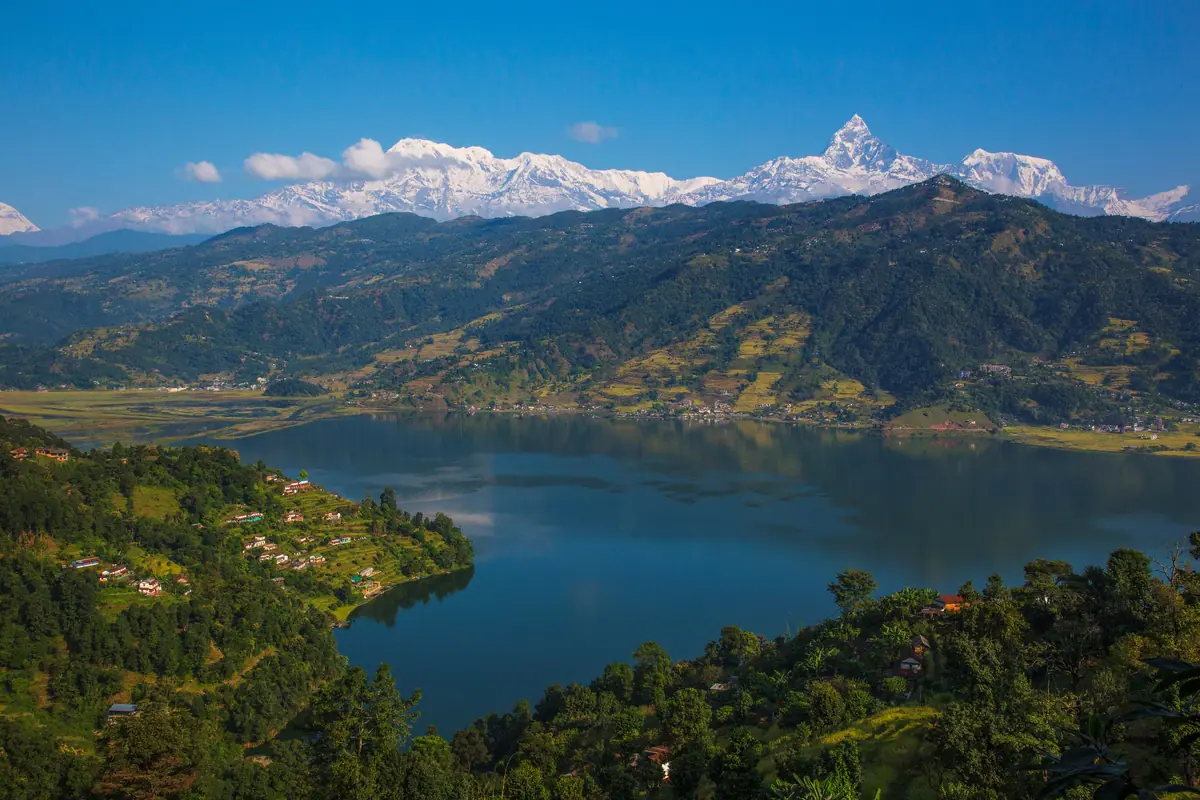
Pokhara is Nepal's easygoing second city, set beside Phewa Lake with the fishtail summit of Machhapuchhre rising straight out of the water on clear days. Row a wooden boat out to Tal Barahi Temple on its little island, hike or drive up to the World Peace Pagoda on the ridge above the lake, and be at Sarangkot before dawn, when the sun ignites Annapurna, Dhaulagiri and the surrounding wall of peaks. The Lakeside district is where trekkers rest, eat and swap route notes.
The Annapurna region offers the widest range of walks in the country. Ghorepani and Poon Hill make a satisfying four to five day loop with a sunrise viewpoint that punches well above its altitude. The Annapurna Base Camp trek, seven to twelve days depending on your route and pace, climbs into the sanctuary below Annapurna I through bamboo forest and terraced villages. The full Annapurna Circuit crosses Thorong La at 5,416 metres and drops into the wind-scoured valley of the Kali Gandaki, the deepest gorge on earth, with a detour to Muktinath's 108 water spouts and eternal flame.
Adventure here is gentler on the nerves than in the Khumbu: paragliding from Sarangkot over the lake, ultralight flights beside the Annapurnas, and one of the world's longest zip lines. October and November reward you with the clearest skies; March and April bring rhododendrons in bloom across the hillsides just below the snow line.
Chitwan National Park and Lumbini: Nepal's Subtropical South
Nepal's first national park, and its first natural World Heritage site, protects a pocket of Terai jungle and grassland where greater one-horned rhinos graze beside the Rapti river. Chitwan also shelters gharial crocodiles, sloth bears, leopards and a resident Bengal tiger population, though sightings are never guaranteed. Jeep safaris, dugout canoe trips, guided jungle walks with licensed naturalists and evening Tharu stick dances fill a two or three night stay; choose lodges that do not offer elephant rides, as the practice is widely discouraged. The best wildlife viewing falls between February and April, when the grass is short, water is scarce and animals gather at the river.
Three hours further west, Lumbini is the birthplace of the Buddha and a place of genuine pilgrimage rather than spectacle. The Maya Devi Temple marks the exact spot, with a marker stone and the sacred pond where, by tradition, his mother bathed. Beside it stands the Ashoka Pillar, inscribed in 249 BC, and beyond that a monastic zone where countries from Thailand to Germany have built temples in their own architectural styles. The site is large and flat, so rent a bicycle and give it a full day.
Winter is the season for this region: November to February is dry and pleasant, while April and May push past 40°C and the monsoon turns the park green, humid and partly closed. Most visitors travel overland from Pokhara or fly into Bharatpur or Bhairahawa and continue by road.
Festivals, Food and When to Go
Nepal's calendar is crowded with celebrations worth planning around. Dashain, in September or October, is the biggest: fifteen days of family reunions, kite flying and feasting, when domestic transport and lodges fill fast. Tihar follows with oil lamps, marigold garlands and days devoted to crows, dogs and cows. In Kathmandu, Indra Jatra brings masked dancers and the chariot procession of the living goddess through the old streets, while Bhaktapur's Bisket Jatra involves a thunderous chariot tug-of-war and the raising of a towering lingo pole. Holi colours the spring streets, Losar marks Tibetan New Year, and Tengboche hosts the masked Mani Rimdu dances in the Everest region.
The food is simple, cheap and deeply comforting. Dal bhat, rice with lentil soup and curried vegetables, is eaten twice a day by many Nepalis and comes with free refills in most local places. Momos, steamed or fried dumplings, appear everywhere from street stalls to trekking lodges, and Newari kitchens in Kathmandu serve bara, chatamari and spiced buffalo. In the mountains, look for thukpa noodle soup, yak cheese, apple pie and the millet beer known as tongba, sipped through a wooden straw from a heated vessel.
For trekking, October and November are unbeatable for clarity, followed closely by March and April; both are busy, so book lodges and flights early. December to February is cold at altitude but quiet, with superb valley views. June to September means monsoon rain, landslides, leeches and cancelled mountain flights, offset by green terraces and empty trails. The Terai and the Kathmandu Valley, meanwhile, are at their best in the dry winter months, when the plains cool down and pilgrimage season begins.
Frequently asked questions
When is the best time to visit Nepal?
October and November offer the clearest mountain skies and the most reliable trekking conditions, followed by late March to May, when rhododendrons bloom and temperatures are mild. December to February is cold in the high mountains but excellent for the Kathmandu Valley and the Terai, while June to September brings monsoon rain, landslides and frequent flight cancellations.
How many days do I need in Nepal?
A week covers Kathmandu's Durbar Squares, Boudhanath and Pashupatinath plus a short trip to Pokhara or Nagarkot. Two weeks allows a proper trek such as Ghorepani and Poon Hill or the Annapurna Base Camp route. Three weeks is realistic for Everest Base Camp, including acclimatisation days and buffer time for delayed mountain flights.
Do I need permits to trek in Nepal?
Yes. Most routes require a trekking permit and, where relevant, national park or conservation area entry, which are checked at posts along the trail. Independent trekking is restricted in some areas and a licensed guide is mandatory on several routes, so arrange permits in Kathmandu or Pokhara before you set off.
How serious is altitude sickness on Everest Base Camp treks?
It is the main reason people fail to reach base camp. Symptoms usually appear above 3,000 metres and are managed by ascending slowly, taking the acclimatisation days your itinerary includes, drinking plenty of water and avoiding alcohol. If headaches, nausea or breathlessness at rest worsen, descend rather than push higher, and seek medical advice before using any medication.
What can I do in Nepal if I do not want to trek?
Plenty. Take a mountain flight over the Everest range at sunrise, tour the valley's temples and royal squares, watch wildlife in Chitwan National Park, go paragliding or boating in Pokhara, and visit Lumbini's monastic zone. Rafting day trips and short hikes of two to three hours are easy to add without committing to a multi-day trek.
Plan it — experiences in Nepal
Live search, booked directly with trusted providers.