Nepal packs a continent's worth of landscapes into a country the size of England, and where you sleep shapes what you see. A rooftop room in Kathmandu, a lakeside balcony in Pokhara and a timber teahouse beneath the Annapurnas are three entirely different holidays — here's how to choose between them.
Kathmandu: Heritage Hotels, Rooftop Views and the Thamel Hustle
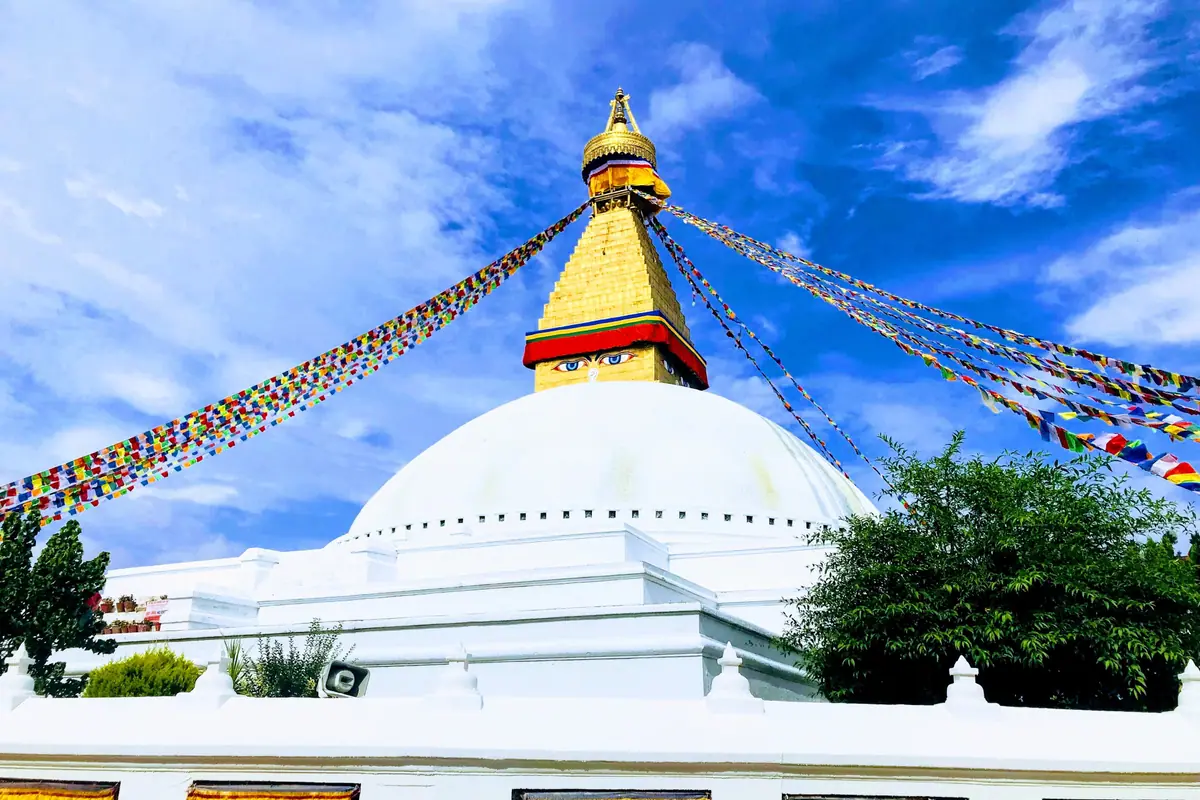
Most journeys begin in the Kathmandu Valley, and the city rewards anyone who treats accommodation as part of the sightseeing rather than a place to collapse. The backpacker heartland is Thamel, a knot of lanes where family-run guesthouses sit above trekking shops and coffee roasters; rooms are small but cheap, and the location puts you within walking distance of Kathmandu Durbar Square, with its carved Hanuman Dhoka palace complex and the Kumari Ghar, home of the living goddess. If you'd rather wake up to temple bells than traffic, base yourself near Boudhanath Stupa, where the giant white dome and its painted eyes are circled by pilgrims from dawn, or in quieter Patan across the river.
For a splurge, the embassy district around Lazimpat and Durbar Marg holds the valley's grand old addresses — converted Rana palaces with lawns, brick colonnades and high-ceilinged rooms that make a night's sleep feel like a small museum visit. Mid-range travellers do well in the streets between Thamel and the Garden of Dreams, a restored neoclassical garden that is the closest thing central Kathmandu has to a park. Allow three to five days in the valley: one for the Durbar Square area, one for Swayambhunath, the hilltop 'Monkey Temple' with its painted stupa and valley-wide panorama, one for Boudhanath and nearby Pashupatinath, the riverside Hindu cremation complex, plus a day trip out to Bhaktapur or Nagarkot.
Pokhara: Lakeside Rooms Beneath the Annapurnas
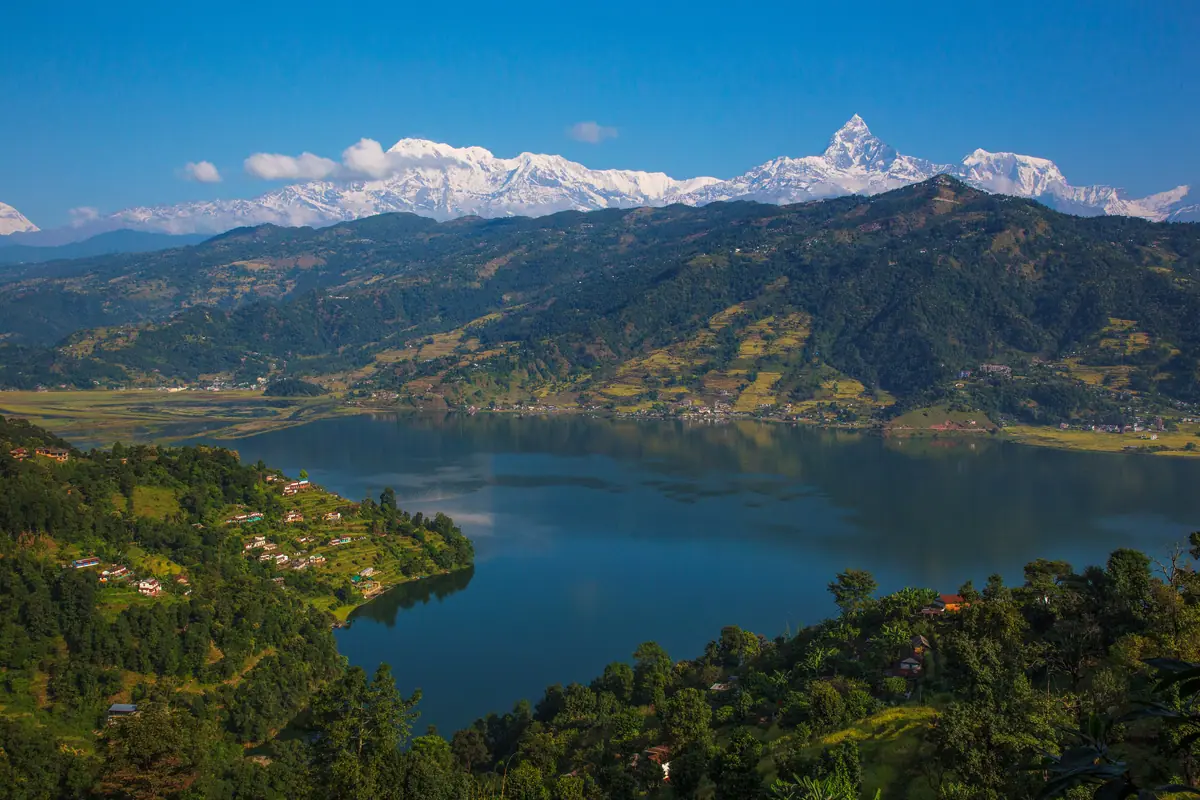
Pokhara is Nepal's second city and its most comfortable one, strung along the shore of Phewa Lake with the Annapurna range standing flat across the water like a stage set. Almost every hotel is either in Lakeside, the tourist strip of Baidam, or in Old Pokhara near the bazaar, and the difference matters: Lakeside means lake-view balconies, easy boat hire to the little Tal Barahi Temple on its island, and dozens of cafés. Choose a room on the upper floors facing north and you can watch Machhapuchhre turn pink at sunrise without leaving your duvet.
Beyond the lake there is more than most people expect. Hire a boat or walk up to the World Peace Pagoda on the ridge opposite for the classic view back over the water, drive to Sarangkot before dawn for a Himalayan sunrise and paragliding launches, and spend an afternoon at Devi's Falls, the Gupteshwor Cave and the International Mountain Museum, which explains the geology and climbing history of the peaks you're staring at. Pokhara is also the gateway to the Annapurna trekking circuits and the trailhead for Ghorepani, Poon Hill and Annapurna Base Camp, so many hotels double as trekking lodges with gear storage, and will happily keep a bag for you while you walk. The dry months from October to November and March to April give the clearest mountain views; from June to September the peaks hide behind cloud.
Bhaktapur and Patan: Sleeping Inside Living Museums
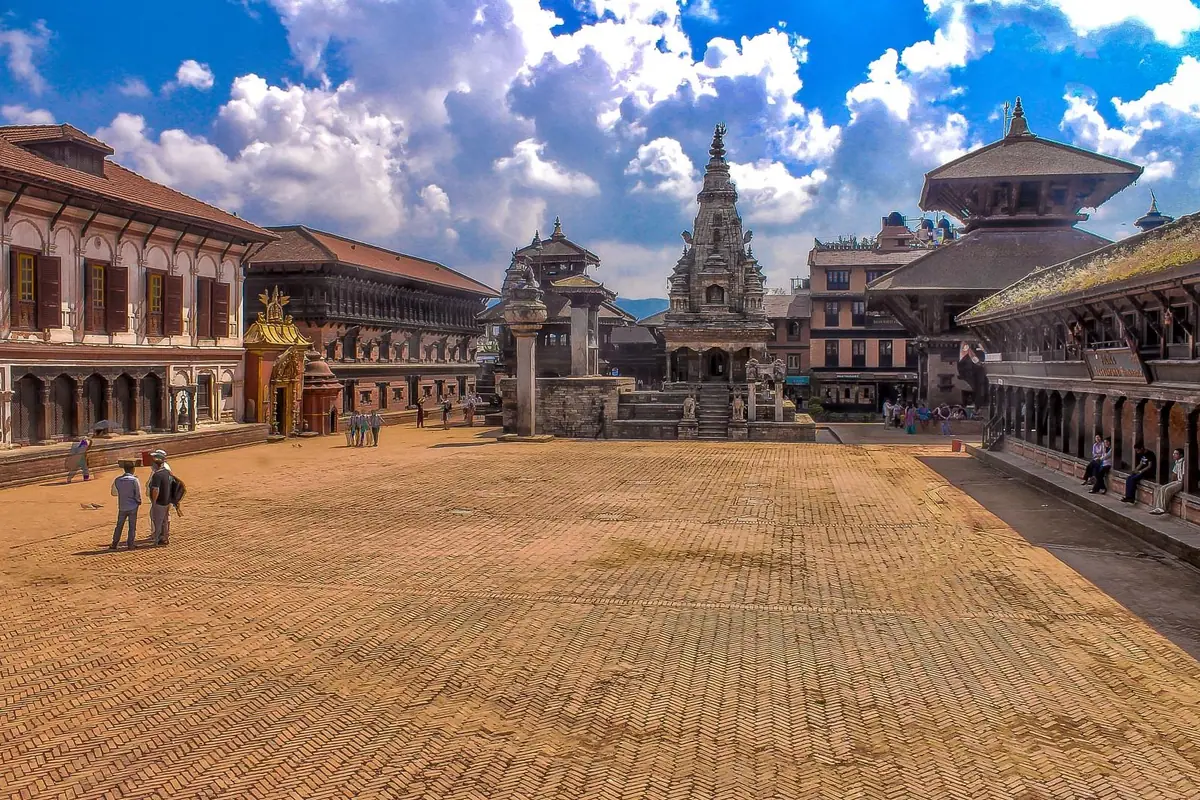
The two old royal cities on the valley rim offer the most atmospheric accommodation in Nepal. Bhaktapur Durbar Square, a UNESCO-listed ensemble of brick and carved timber, contains the Golden Gate, the 55-Window Palace and the squat Nyatapola Temple, the tallest pagoda in the country, standing over Taumadhi Square. Staying inside the old town — often in a restored Newari house with a courtyard, low doorways and a rooftop terrace — means you get the squares to yourself in the early morning and after the day-trippers leave, when pigeons lift off the paving stones and the whole place turns amber.
Patan, formally Lalitpur, is just across the Bagmati from central Kathmandu and has a Durbar Square of its own, anchored by the stone Krishna Mandir and the excellent Patan Museum inside the old palace. Its lanes are full of metalworkers and Buddhist courtyards such as the Golden Temple, and a handful of boutique conversions have turned ancient brick buildings into small, beautiful hotels. A short drive uphill from either city, Nagarkot offers simpler hillside resorts where the point is the dawn view: on a clear winter or autumn morning the Himalayan skyline stretches from the Annapurnas to Everest. It is a popular overnight for travellers who want one big mountain panorama without a trek.
Chitwan, Bardia and Lumbini: Jungle Lodges and Pilgrimage Inns
Drop south into the Terai plain and the accommodation changes character entirely. Chitwan National Park, reached from the lakeside town of Sauraha, is the country's classic wildlife destination, where community-run jungle lodges arrange jeep safaris, canoe trips down the Rapti River and guided walks in search of greater one-horned rhinos, sloth bears, crocodiles and, if you are lucky, a tiger. Lodges range from simple thatched cottages to polished riverside resorts with pools, and the best are on the park's edge, so you hear the jungle at night. The quieter alternative is Bardia National Park in the far west, with fewer visitors and a wilder feel.
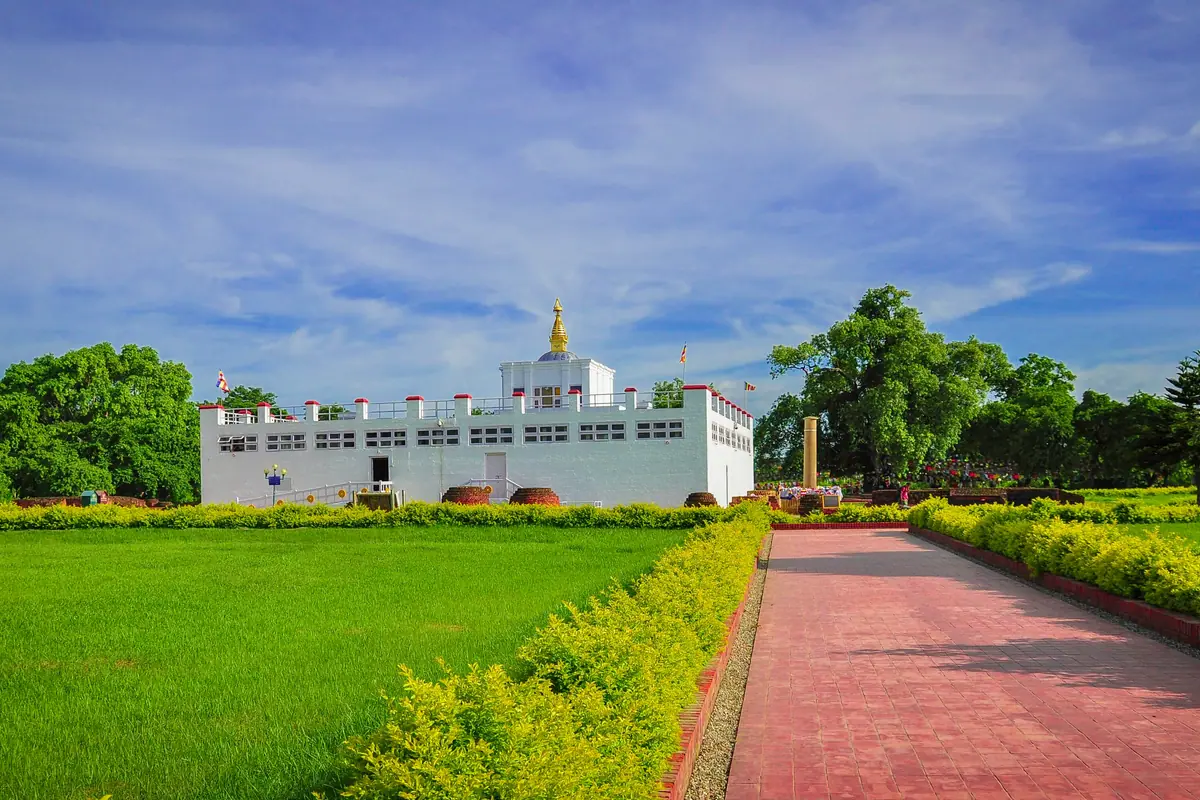
Lumbini, in the southern plains near the Indian border, is one of Buddhism's holiest sites: the Maya Devi Temple marks the traditional birthplace of the Buddha, with the Ashoka Pillar and the sacred garden pond beside it. The surrounding monastic zone has been built up by Buddhist communities from across Asia, each with its own temple and often a guesthouse attached, so you can sleep in Korean, Thai, Chinese or German-designed surroundings. Rooms here are simple, purpose-built and quiet, and the whole area is best explored by bicycle at dawn or dusk, when the gardens are cool and the chanting starts.
Teahouses and Mountain Lodges: Sleeping on the Trekking Routes
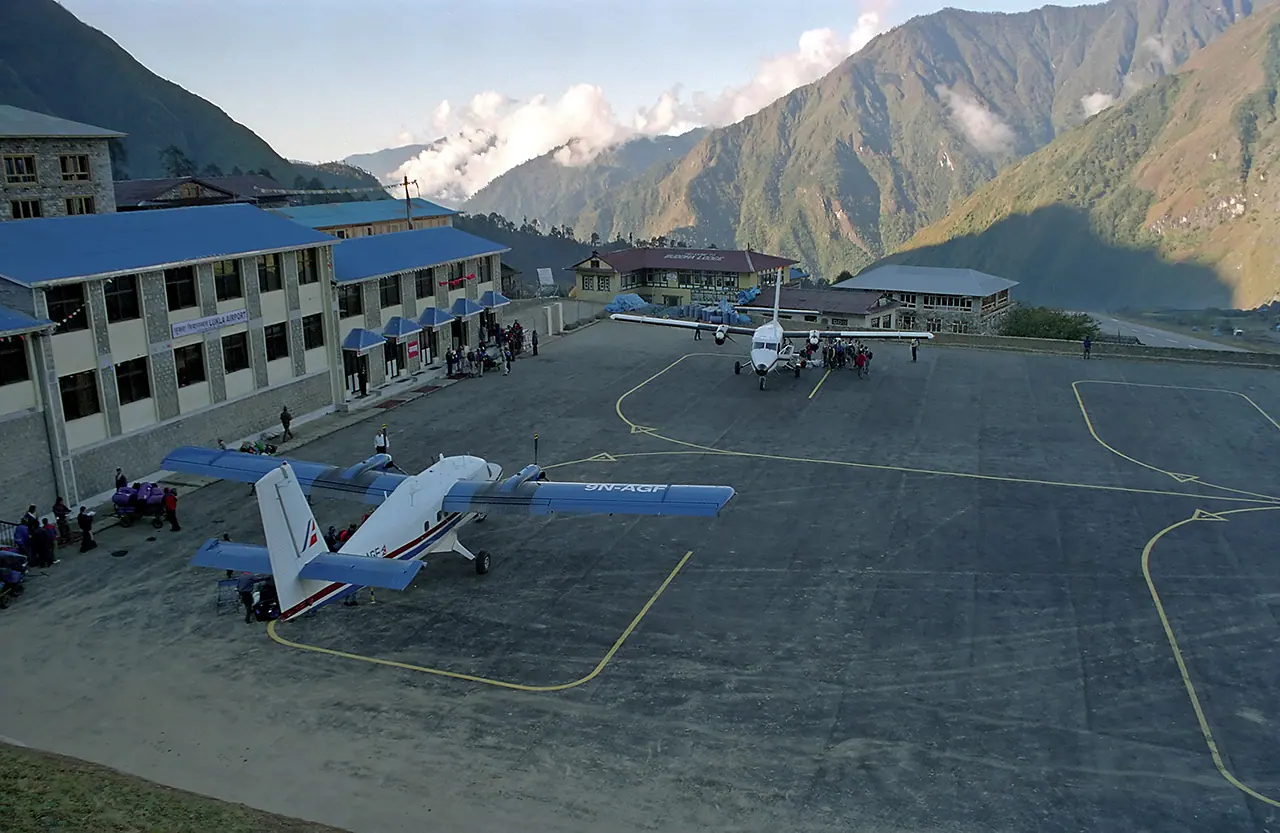
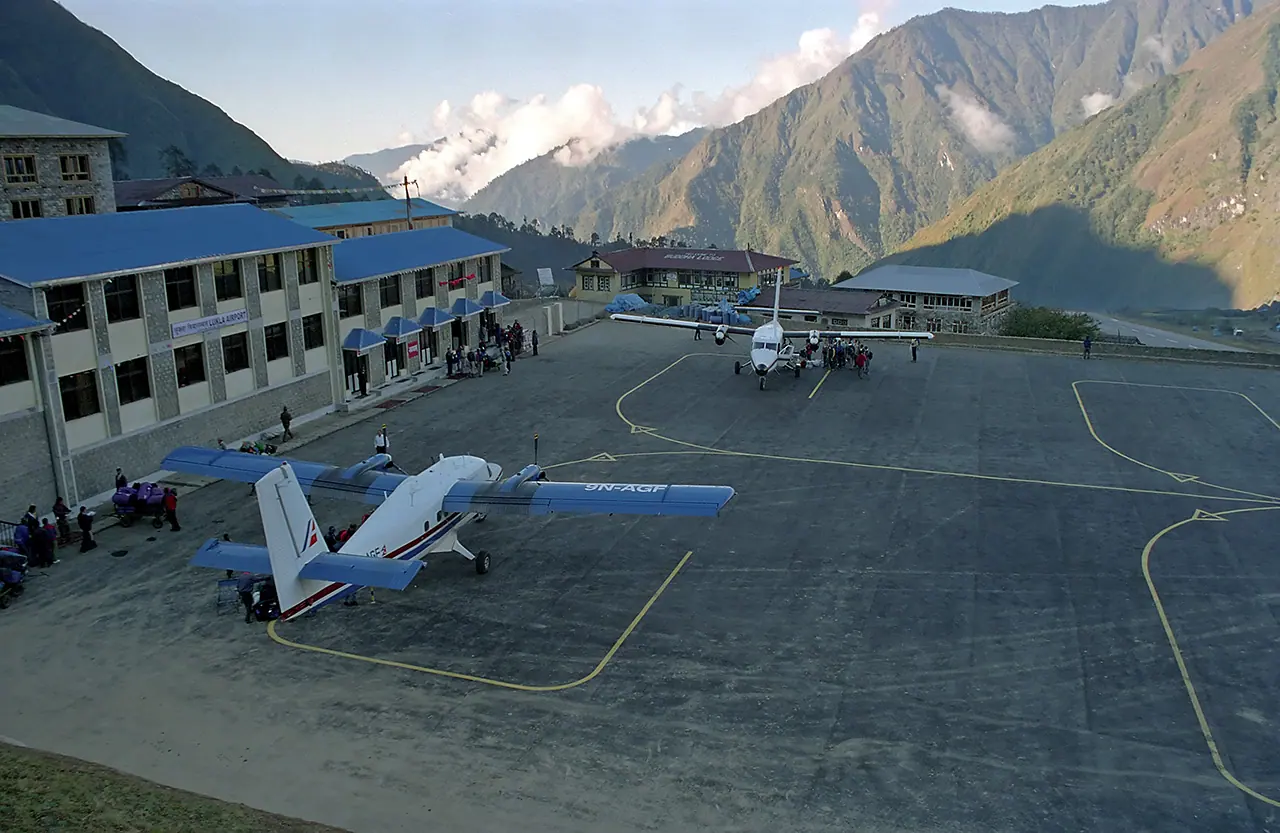
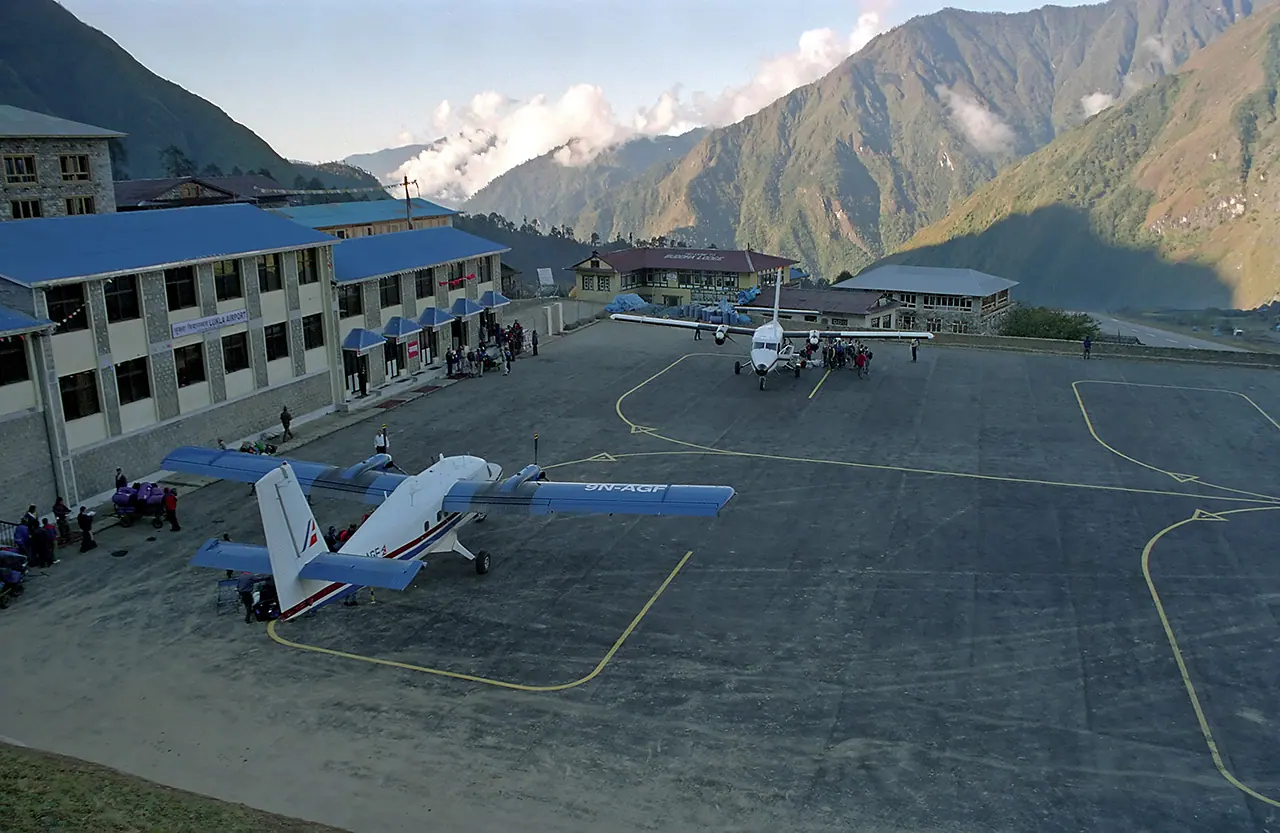
Above the road network, Nepal's accommodation becomes a network of family teahouses strung along the trails. In the Everest region, they begin in Lukla and continue through Phakding to Namche Bazaar, the Sherpa capital stacked in a bowl at 3,440 metres, and on to Tengboche with its monastery and mountain-framed gompa. Higher still come Dingboche, Lobuche and Gorak Shep, base for Kala Patthar and Everest Base Camp. Expect twin rooms with plywood walls, blankets, shared squat toilets that become increasingly basic with altitude, and a communal stove room burning yak dung where everyone eats dal bhat and plays cards while the temperature drops outside.
The Annapurna region has the same system, from the orchards of Ghandruk and the rhododendron ridges of Ghorepani and Poon Hill to the high lodges at Machhapuchhre Base Camp and Annapurna Base Camp, while Langtang and Manaslu offer quieter versions of the same experience. Two things to remember: hot showers, charging and wi-fi are charged separately and get pricier as you climb, because everything arrives by porter or mule; and single rooms are rare in peak October, when you may be asked to share. Book through a trekking agency for the popular Everest and Annapurna routes in high season, or simply walk in and ask — outside October, November and April there is usually space.
When to Go and How to Choose Your Room
Timing drives everything in Nepal. October and November bring crisp, stable air and the year's clearest mountain views, followed by a second good window in March and April when rhododendrons bloom on the mid-hills. December and January are cold but sunny and quiet, with snow closing some high passes; the monsoon from June to September brings leeches on lower trails, cancellations on mountain flights and green, misty valleys. In Kathmandu the winter mornings can be foggy and chilly, so a room with proper heating or an electric blanket is worth paying extra for.
Altitude deserves respect when choosing mountain beds. Sleep low where you can, build rest days into the itinerary — Namche and Dingboche are the classic acclimatisation stops — and treat a headache that will not shift as a signal to descend rather than push on. In the cities, weigh location against comfort: a Thamel guesthouse puts you in the middle of everything but guarantees noise, while a Patan or Boudhanath hotel trades nightlife for calm and a ten-minute taxi into the centre.
Finally, carry cash. Cards work in Kathmandu, Pokhara and larger Chitwan lodges, but teahouses, rural guesthouses and Lumbini's monastic stays run on rupees, and ATMs thin out fast outside the cities. Book your first two nights before you fly so you arrive somewhere warm with a shower, then let the rest of the trip unfold — in Nepal, the best rooms are often the ones you find by walking up a lane and asking.
Frequently asked questions
What is the best time of year to visit Nepal?
October and November are the sweet spot, with stable weather, clear Himalayan views and the biggest crowds. March and April are the strong second choice, warmer with rhododendron blossom on the mid-hills. December and January are cold but quiet, while the monsoon months from June to September bring rain, cloud and leeches on lower trekking trails.
Do I need to book hotels in Nepal in advance?
For your first two nights in Kathmandu or Pokhara, yes — arriving with a confirmed room saves a lot of hassle. During peak October and November, book teahouses on the Everest and Annapurna routes through a trekking agency, as beds genuinely run out. Outside those months, most guesthouses and lodges have space and walk-ins are normal.
What is the difference between a hotel, a guesthouse and a teahouse?
Hotels in Kathmandu, Pokhara and Chitwan offer private bathrooms, heating and restaurants. Guesthouses, especially in Bhaktapur, Patan and Lumbini, are simpler family-run places, often in historic buildings. Teahouses are mountain lodges on trekking trails: twin rooms, shared bathrooms, a communal dining stove room, and extra charges for hot showers, device charging and wi-fi.
Is altitude sickness a concern for mountain accommodation?
Yes, above roughly 2,500 metres. Sleep low where possible, add rest days at places like Namche Bazaar and Dingboche, drink plenty of water and avoid alcohol at altitude. If a headache, nausea or breathlessness gets worse rather than better overnight, descend — the quickest cure for altitude illness is losing height.
How many days should I allow for the Kathmandu Valley?
Three to five days covers it comfortably: Kathmandu Durbar Square and Thamel, Swayambhunath, Boudhanath and Pashupatinath, plus day trips to Bhaktapur or Patan and an overnight in Nagarkot if you want a Himalayan sunrise without a trek. Add two to four days for Pokhara, and longer if you plan to walk any of the Annapurna or Everest routes.
Sort the rest of your trip
Everything for Nepal, in one place
Transfer in Nepal
Private driver waiting on arrival — no queues, no surprises.
Book a transfer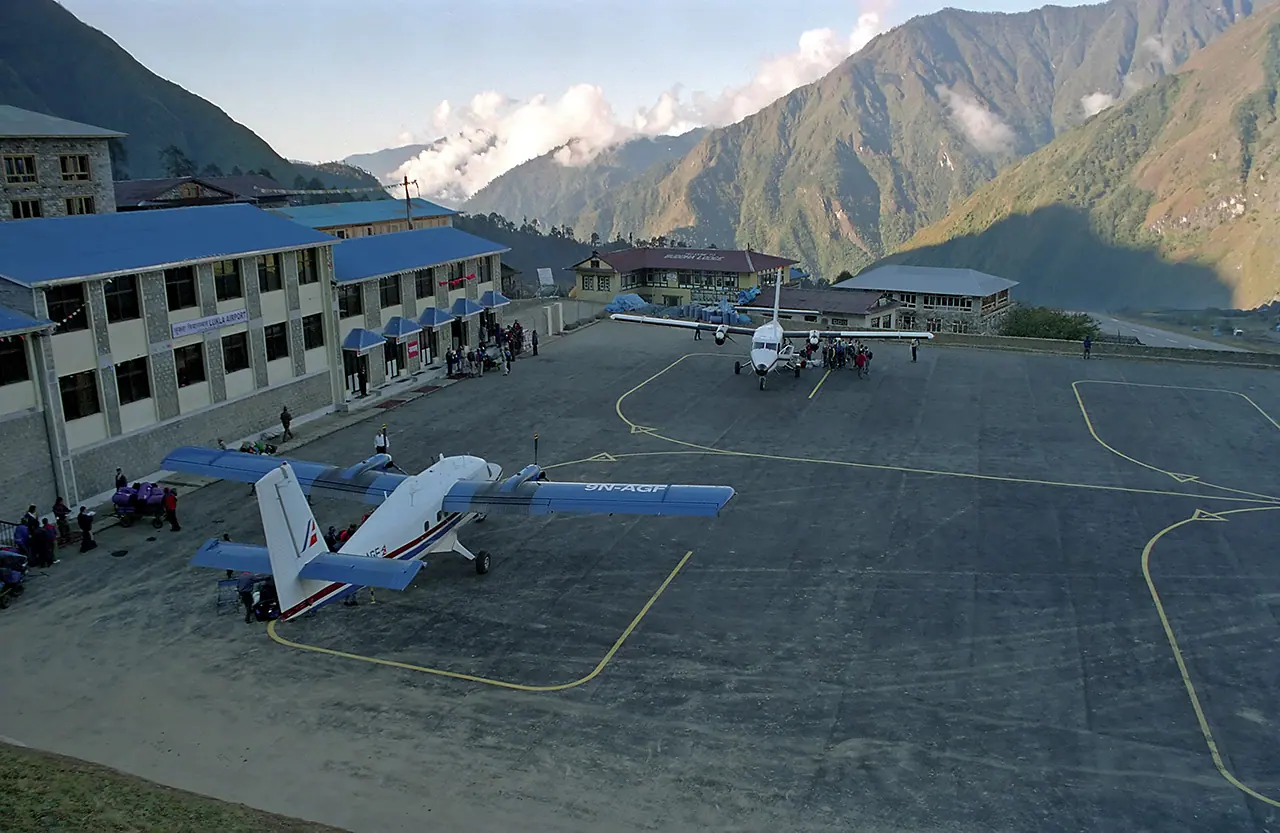
Things to do in Nepal
Skip-the-line tickets, guided tours and standout experiences.
See experiences
Stay online in Nepal
Travel eSIM — data the moment you land, no roaming bills.
Get an eSIM