Myanmar moves to the sound of temple bells and the slap of bare feet on warm marble — a country where a single gilded stupa can dominate a skyline and an entire plain can bristle with brick towers. Travel here is slow, luminous and deeply ceremonial, and the rewards come to those who take their time between sunrise and sunset. These are the experiences and landmarks no first-time visitor should miss.
Shwedagon Pagoda and the Golden Heart of Yangon
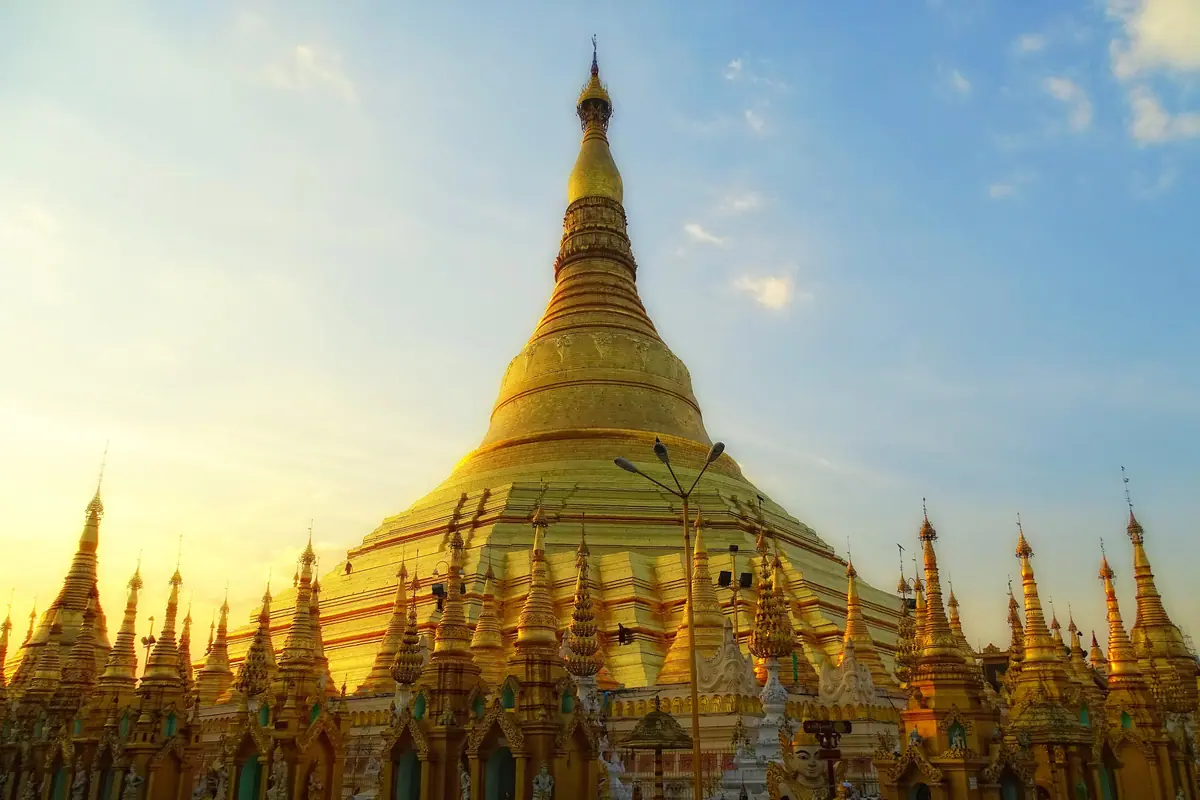
Start in Yangon, where the Shwedagon Pagoda sits on Singuttara Hill like a held flame. The main stupa rises close to 100 metres, sheathed in gold plates and crowned with a hti encrusted with diamonds and rubies, and the surrounding terrace is a small city of shrines, prayer halls and planetary posts where worshippers pour water and offer flowers. Go at dawn, when the gold catches the first light and the marble is still cool, or after dark, when spotlights turn the whole complex into a lantern. Shoes and socks come off at the gate, and shoulders and knees stay covered — a longyi is the easiest solution and can be bought cheaply nearby.
Yangon's second act is its downtown grid, where the Sule Pagoda occupies a roundabout ringed with faded colonial buildings, and the streets around Pansodan and Strand Road reward a slow, aimless walk. The Chaukhtatgyi Reclining Buddha stretches some 65 metres under an open-sided shelter, its enormous face serene and its feet inlaid with intricate designs. For texture rather than grandeur, take the circular train out through the northern suburbs — a three-hour loop through markets, rice fields and shanty towns that shows you the city as locals ride it every day.
Round off a Yangon day at Bogyoke Aung San Market, a maze of lacquerware, jade, longyis and thanaka wood, then walk to Kandawgyi Lake for sunset, where the golden Karaweik barge floats on the water with the Shwedagon rising behind it. Two full days is enough for the essentials; three lets you slow down, eat mohinga for breakfast and stop treating the city as a transit lounge.
Bagan: Dawn Over the Temple Plains
Bagan is the image that sells Myanmar, and it still exceeds the postcard. Across a dusty plain beside the Irrawaddy, more than two thousand temples, stupas and monasteries survive from the 11th to 13th centuries, some brick-bare, some whitewashed, a few still gleaming with gold. Sunrise and sunset are the ritual hours: mist settles in the hollows, hot-air balloons drift over the towers between mid-October and March, and the light turns everything the colour of fired clay.
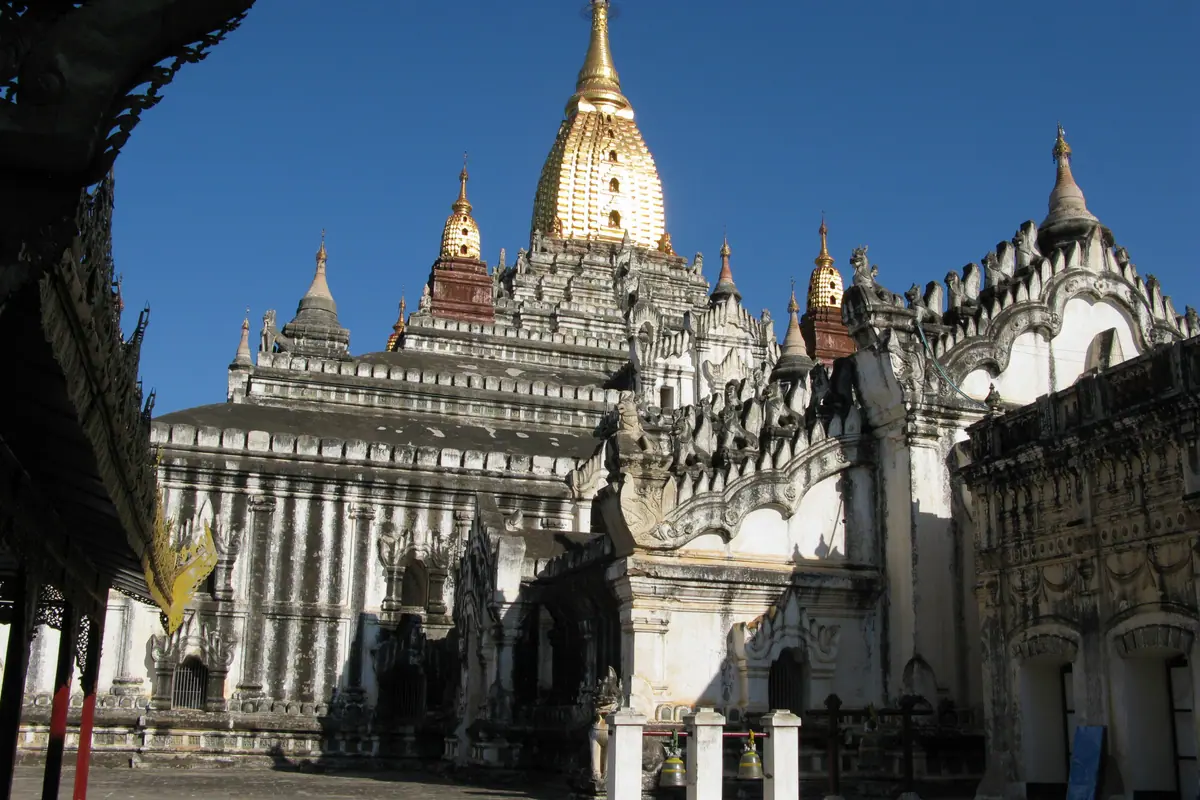
The must-see monuments are spread across the plain. Ananda Temple is the masterpiece, a cruciform white structure with four towering standing Buddhas and teak doors carved centuries ago. Thatbyinnyu soars as the tallest of the temples, Dhammayangyi impresses with its sheer brutal mass and brickwork so tight a needle supposedly would not fit between the joints, and the elegant Sulamani and Htilominlo reward a slower look. In Nyaung U, the Shwezigon Pagoda is a working pilgrimage site, busiest during the November festival season.
Climbing on the ancient monuments is now prohibited, so plan sunrise and sunset from designated viewing mounds, rooftop terraces or the quieter riverside. Rent an e-bike to link the sites yourself, or hire a horse cart and a driver who knows which temples are actually open. Bases differ in character: Nyaung U is lively and full of guesthouses, Old Bagan is closest to the big sights, and New Bagan is quiet and green. Allow at least two full days, and add a sunset boat on the Irrawaddy to see the plain from the water.
Mandalay, Amarapura and the Last Royal Capital
Mandalay is more work than Bagan and gives more back. The climb up Mandalay Hill is a pilgrimage in itself, roughly 1,700 covered steps past resting Buddhas and fortune-tellers' stalls to a terrace with the whole city, the Irrawaddy and the Shan hills laid out below — go late afternoon. At the foot of the hill, Kuthodaw Pagoda holds 729 marble slabs inscribed with Buddhist texts, each housed in its own small white shrine and often called the world's largest book, while the Mahamuni Buddha draws a constant stream of pilgrims pressing gold leaf onto its already lumpy image.
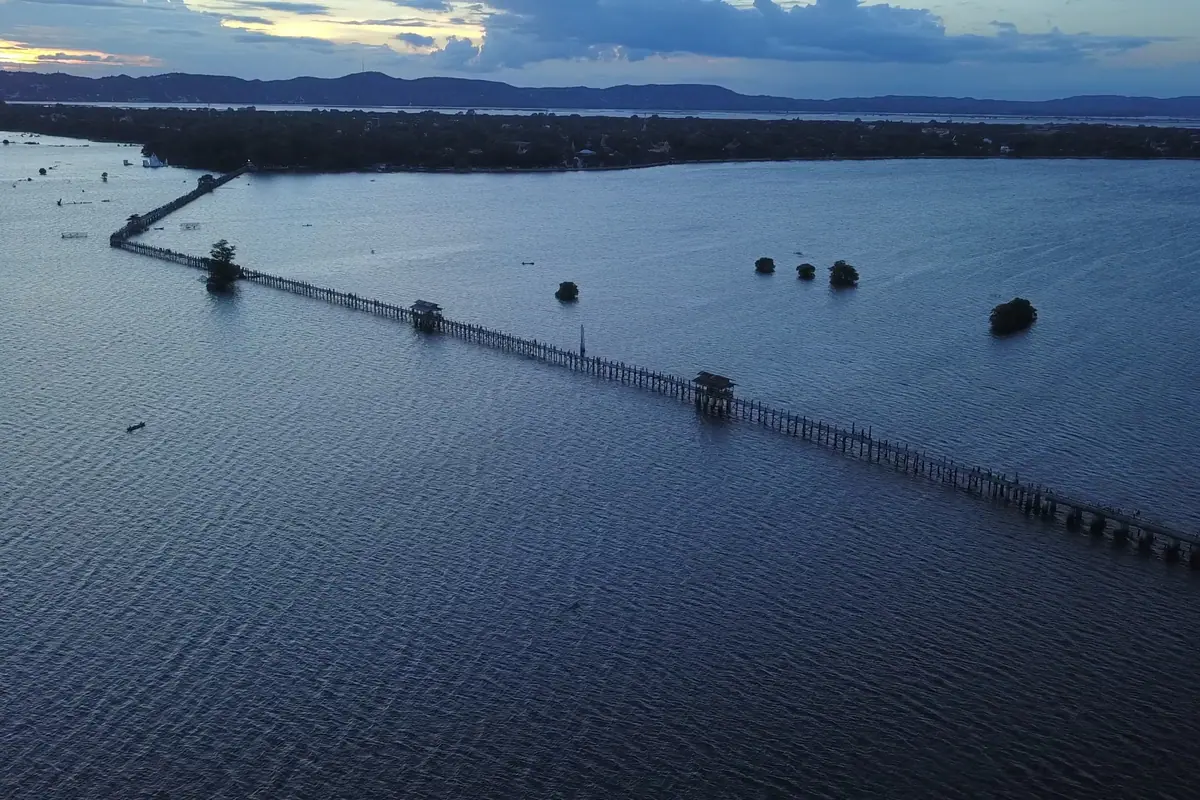
Teak architecture survives at the Shwenandaw Monastery, a carved royal building that was dismantled and moved here, and the rebuilt palace complex gives a sense of the court that ruled upper Burma until the 1880s. Beyond the city, the old capitals sit within an hour's drive: Amarapura's U Bein Bridge, a 1.2-kilometre teak footbridge across Taungthaman Lake, is best at sunrise or sunset when monks and farmers cross in silhouette; Inwa is toured by horse cart past crumbling watchtowers; and Sagaing Hill rises in a ridge of white and gold pagodas above the river.
Across the Irrawaddy, Mingun is a short boat ride away and worth half a day: the colossal unfinished Pahtodawgyi, cracked by an earthquake, the enormous bronze Mingun Bell, and the wedding-cake terraces of the white Hsinbyume Pagoda. Two or three nights in Mandalay covers all of this comfortably. Evenings belong to marionette theatre, tea shops, and the sprawling Zegyo Market, where jade, textiles and thanaka paste change hands under strip lights.
Inle Lake and the Shan Hills
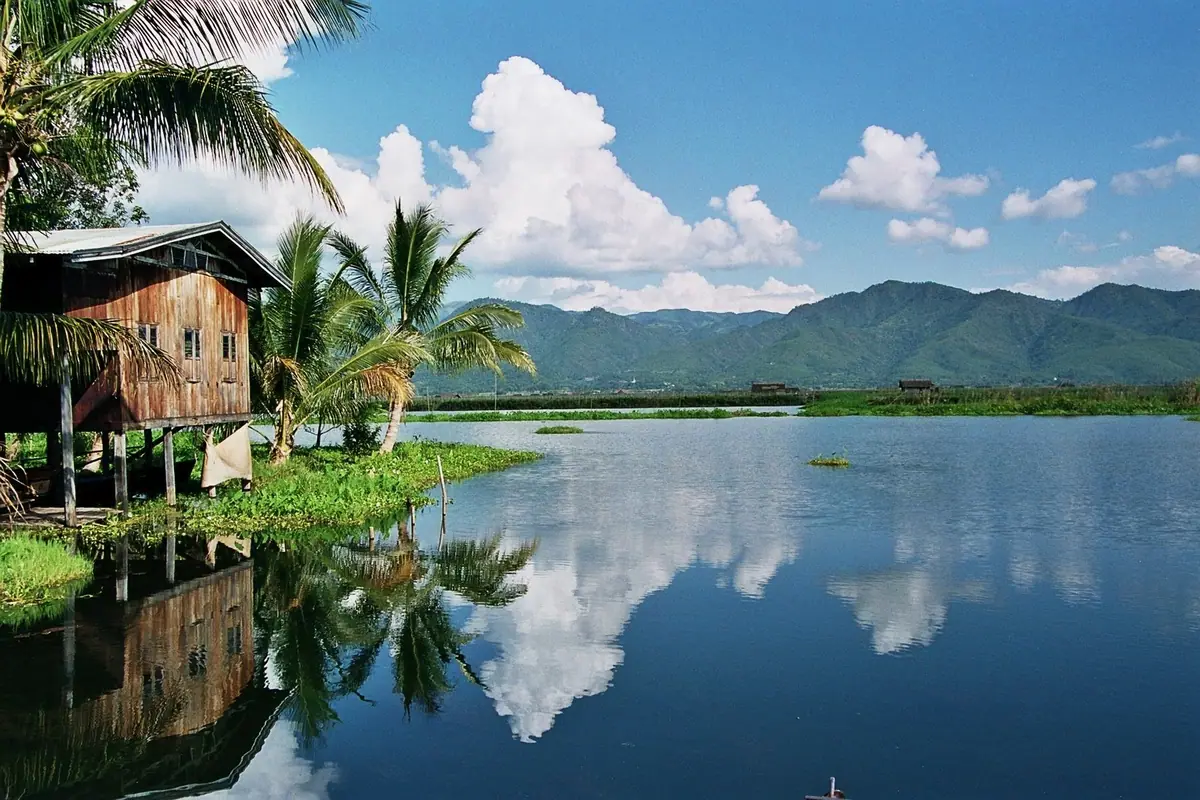
Inle Lake sits at around 900 metres in the Shan Hills, a shallow, reed-fringed expanse where the Intha people live on stilted villages and tend floating gardens of tomatoes and flowers. The signature image is the leg-rowing fisherman, balancing on one leg on the stern of a wooden boat while wrapping the other around the oar — a technique born of needing both hands free for the net. Boat trips from Nyaungshwe are the way to see it: the five gilded Buddhas at Phaung Daw Oo Pagoda, the teak monastery of Nga Hpe Kyaung with its famously leaping cats, and workshops making silk, lotus-thread fabric, cheroots and silver.
The lake is the centrepiece, not the whole story. In the surrounding hills, the Pindaya Caves hold thousands of Buddha images stacked in limestone chambers, and near Taunggyi the Kakku site gathers hundreds of closely packed stupas in a quiet field. Trekkers can walk between Kalaw and Inle over two or three days through Pa-O villages, tea plantations and farmland, sleeping in monastery guest rooms and family homes. Nyaungshwe itself makes a relaxed base, with bicycles, cooking classes and a few hillside vineyards producing surprisingly drinkable wine.
Nights get genuinely cold here from December to February, so bring a fleece. The lake is at its clearest and most photogenic in the cool season, and the festival calendar peaks with the Phaung Daw Oo procession, when the sacred images are paraded around the lake on an ornate barge. Give Inle three nights; two feels rushed if you want both the water and the hills.
Sacred Rocks, Karst Country and the Coast
The Kyaiktiyo Pagoda, known to most travellers as the Golden Rock, is one of Southeast Asia's strangest sights: a small stupa perched on a gilded boulder that appears to balance on the very edge of a cliff. It sits at around 1,100 metres, reached from the base camp by open truck up a winding road and then by a steep walk. Pilgrims camp out on the platform, and the atmosphere at dawn and dusk — incense, chanting, candlelight on gold — is worth the awkward journey. Pair it with Mount Popa, an extinct volcano whose monastery sits on a plug of rock reached by 777 steps, guarded by a troop of mischievous macaques that will absolutely steal your snacks.
In the south-east, Hpa-An has become the base for kayaking and cave-hunting among dramatic limestone karst. Mount Zwegabin's ridge is a stiff, sun-exposed climb to a hilltop monastery, while Saddan Cave is a vast cavern you can walk through, exiting onto a lake where boats wait to ferry you back. The countryside here is rice paddies, bat caves and hot springs, and it is far quieter than the classic loop.
For beach time, Ngapali on the Bay of Bengal offers a long sweep of pale sand, fishing villages and seafood shacks between roughly November and April, when the water is calm and clear. Diving and island-hopping in the remote Myeik Archipelago take real planning and a good local operator. Always check current regional conditions before heading to border areas — parts of the country are subject to restrictions that change at short notice.
When to Go, How to Move, and How to Behave
The cool dry season from November to February is the sweet spot: comfortable temperatures, clear skies, and the best light for Bagan and the Shan Hills. March to May turns brutally hot — Bagan regularly pushes past 40°C — though it is quiet and cheap. The monsoon runs roughly June to October, greening the countryside and dropping prices, but flooding can close roads, hill treks get slippery, and many beach resorts simply shut. Whichever season you choose, build in early starts; temples and markets are best before 10am.
Distances are long and roads slow, so most travellers fly between Yangon, Bagan, Mandalay and Heho (the gateway to Inle) on domestic airlines, then use private cars, shared pickups, overnight buses or boats for the rest. Trains exist but are slow and often delayed. A classic two-week itinerary — Yangon, Bagan, Mandalay with day trips, and Inle Lake — is realistic without feeling frantic; ten days means cutting something. Book internal flights early in peak season, when the good seats vanish.
Etiquette matters more here than in most of Asia. Remove shoes and socks before entering any pagoda or monastery, cover shoulders and knees, and never point your feet toward a Buddha image. Women should not touch monks or hand items directly to them, and public displays of affection are frowned upon. Cash in kyat is still king — bring clean, unmarked, high-denomination notes, expect ATMs outside the main cities to be unreliable, and carry small change for temple donations. Drones need permits, and photography of military sites or personnel is a serious matter. Learn a few words of Burmese, smile often, and accept the offered green tea.
Frequently asked questions
What is the best time of year to visit Myanmar?
November to February is the sweet spot, with cool, dry weather, clear skies and ideal conditions for Bagan, Mandalay and hill trekking. March to May is very hot, and the monsoon from roughly June to October brings rain, green landscapes, lower prices and occasional road closures.
How many days do you need in Myanmar?
Ten days is the minimum for Yangon, Bagan, Mandalay and Inle Lake without constant rushing. Two weeks is far more comfortable and lets you add a side trip such as Kyaiktiyo's Golden Rock, Hpa-An, or a Kalaw-to-Inle trek.
What are the absolute must-see landmarks in Myanmar?
Shwedagon Pagoda in Yangon, the temple plains of Bagan led by Ananda Temple, Mandalay Hill and U Bein Bridge, the stilt villages and leg-rowing fishermen of Inle Lake, and the gravity-defying Golden Rock at Kyaiktiyo. Ngapali Beach and the karst caves of Hpa-An are the standout additions if you have extra time.
What should I wear and how should I behave at temples?
Remove shoes and socks at every pagoda and monastery entrance, keep shoulders and knees covered, and avoid pointing your feet at Buddha images. A longyi, bought locally, is the simplest way to dress respectfully in the heat, and women should not touch monks or hand objects directly to them.
Is it easy to get around Myanmar, and should I carry cash?
Domestic flights link Yangon, Bagan, Mandalay and Heho quickly, while buses, private cars, shared pickups and river boats cover the rest — but road journeys are slow. Carry kyat in clean, unmarked notes, since ATMs outside the main cities are unreliable and cards are mostly useful only in hotels.
Plan it — experiences in Myanmar
Live search, booked directly with trusted providers.
Sort the rest of your trip
Everything for Myanmar, in one place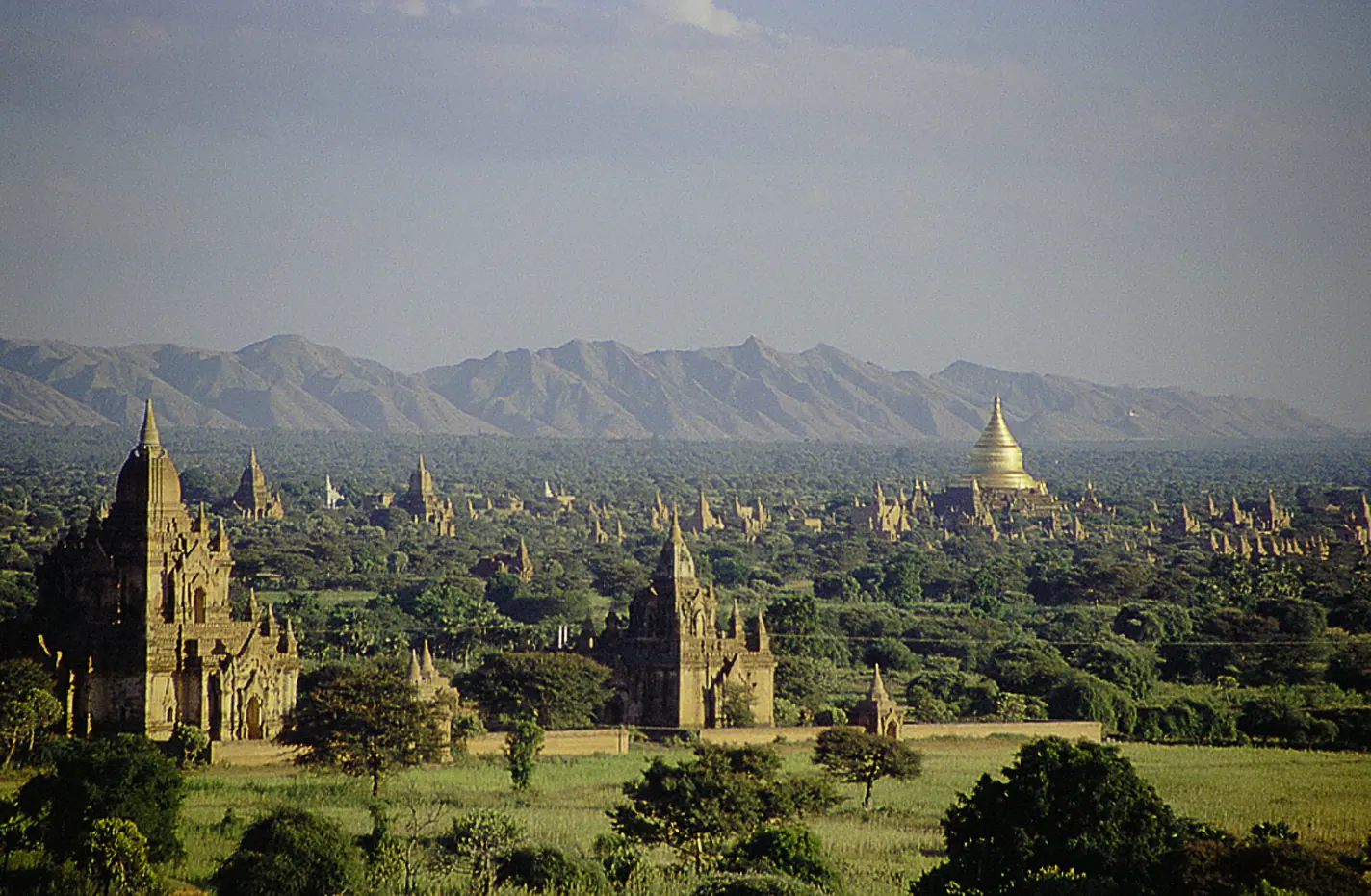
Stay in Myanmar
Hotels, guesthouses and apartments — compared in one search.
Search hotels
Transfer in Myanmar
Private driver waiting on arrival — no queues, no surprises.
Book a transfer
Stay online in Myanmar
Travel eSIM — data the moment you land, no roaming bills.
Get an eSIM