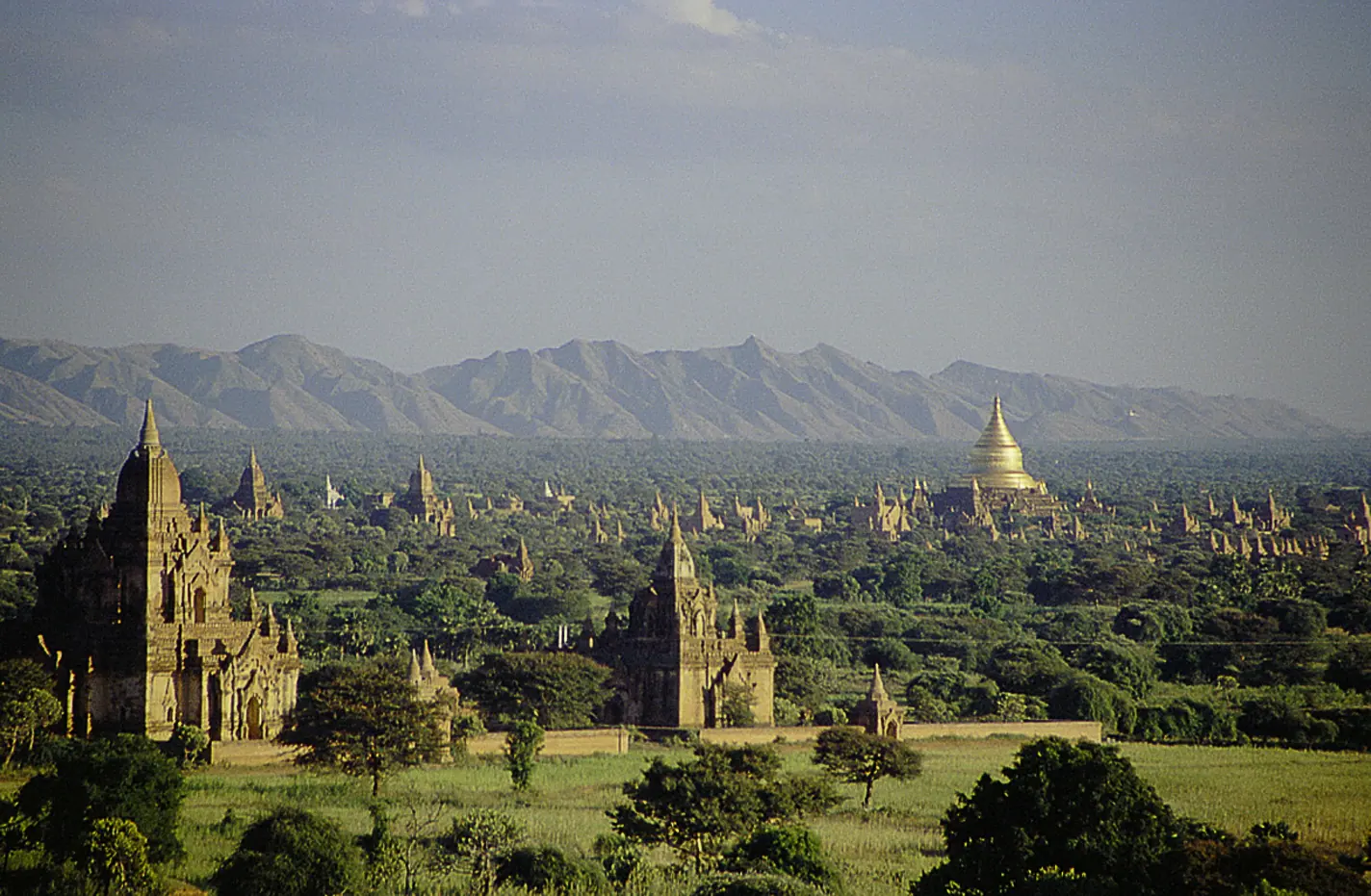
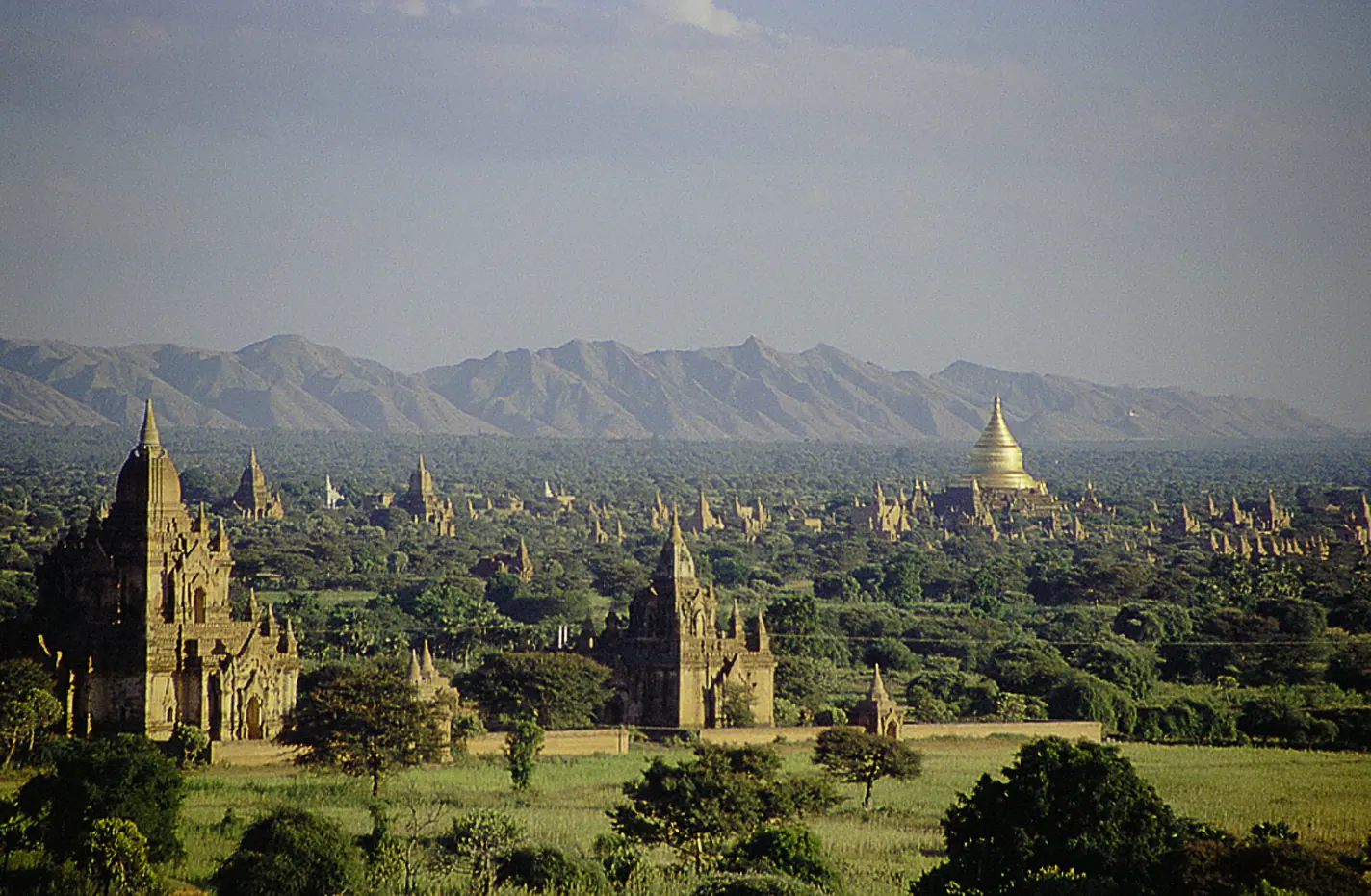
Myanmar arrives in layers: the gold-leaf hush of Yangon at dusk, the bell-chime and dust of Bagan's temple plain at first light, and the waterborne villages of Inle Lake where fishermen row with one leg wrapped round an oar. It is a country that rewards slow travel — long bus rides, longer conversations over green tea — and the places below are the ones a first-time visitor should build a route around.
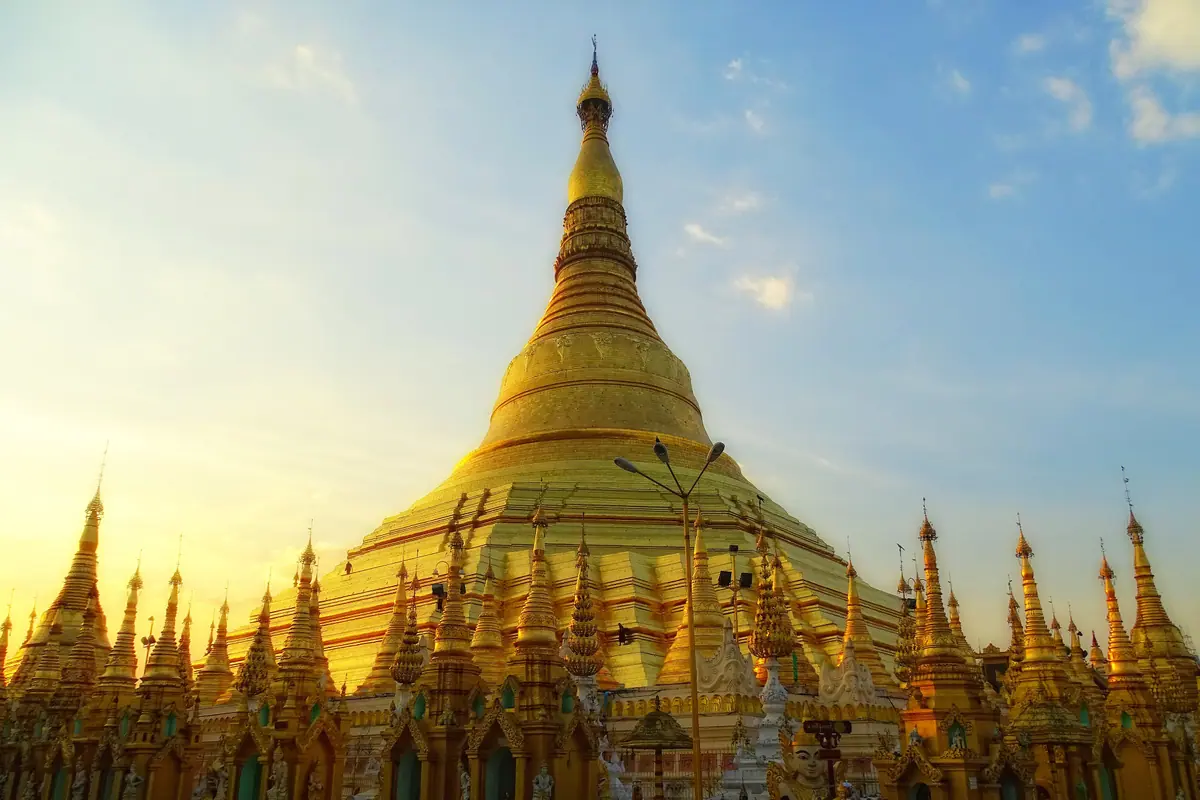
Yangon and the Shwedagon Pagoda: The Golden First Impression
Almost every journey begins in Yangon, a steamy, tree-lined city of faded colonial facades, street-side tea shops and traffic that moves in patient surges. Its heart, in every sense, is the Shwedagon Pagoda, a 98-metre gilded stupa crowning Singuttara Hill. Legend traces it back some 2,500 years to a relic of four Buddhas, and the real thing is overwhelming up close: thousands of gold plates, a spire tipped with diamonds, and a marble platform where families picnic, monks chant and the light shifts from white-hot to amber as the sun drops. Go barefoot — socks are not allowed either — dress so your shoulders and knees are covered, and sit with your feet tucked away from any Buddha image. Late afternoon gives you two hours of changing colour for the price of one visit.
Beyond the main stupa, Yangon rewards a day of wandering. Walk the downtown grid to Sule Pagoda, which sits on a roundabout ringed by crumbling merchant buildings, then browse Bogyoke Aung San Market for lacquerware, longyis and jade. Kandawgyi Lake offers the classic postcard reflection of Shwedagon across the water, especially at sunset from the boardwalk. For something less monumental, ride the Circular Train for a couple of hours and watch the city turn into vegetable plots and khaki-weed marsh. Two nights is usually enough before flying onward to Bagan, Mandalay or Heho for the lake country.
Bagan: Two Thousand Temples on the Irrawaddy Plain
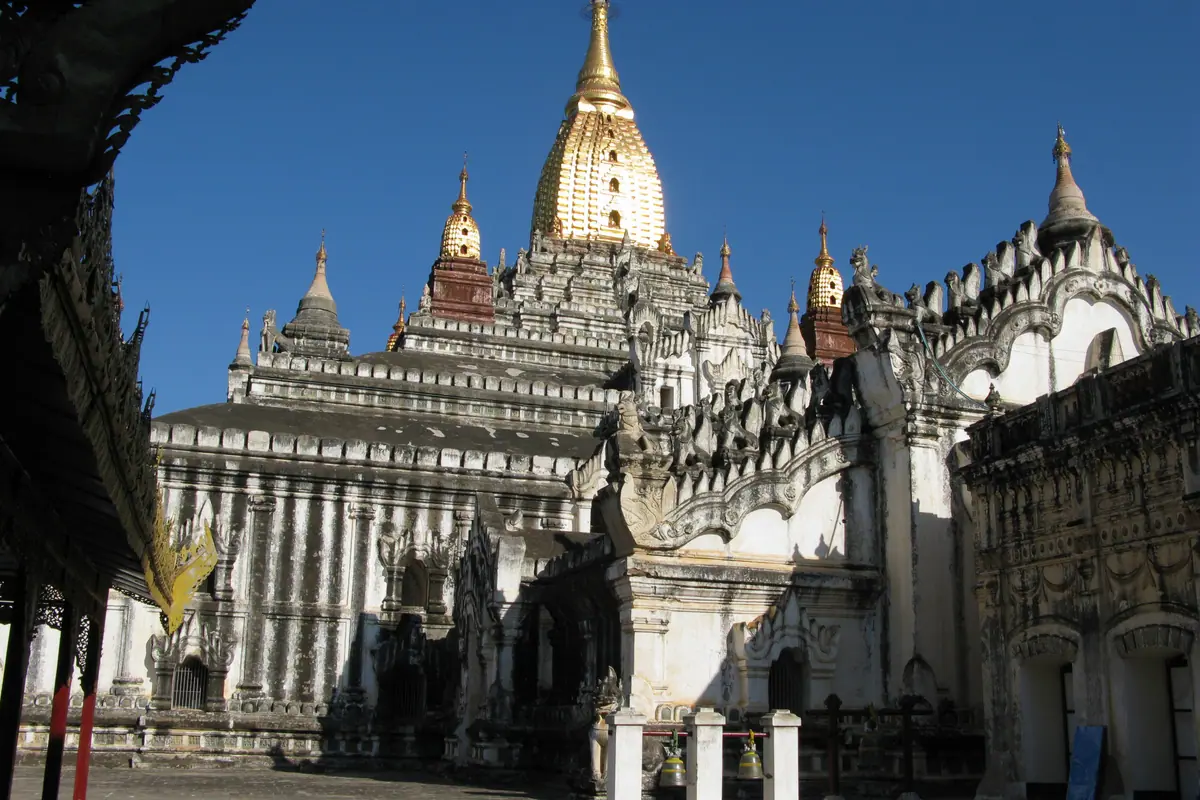
Bagan is the image most travellers carry home: a dry, dusty plain beside the Irrawaddy River, scattered with more than two thousand brick-and-stucco monuments built between the 11th and 13th centuries, when this was the capital of a Buddhist empire. The great names are worth planning around. Ananda Temple, with its four towering standing Buddhas and whitewashed corridors, is the most beautiful. Thatbyinnyu is the tallest, Dhammayangyi the most massive and, by legend, the least finished. Sulamani and Htilominlo show off fine plasterwork, and Shwezigon in the village of Nyaung U glows gold at night.
Sunrise and sunset are the ritual here, though many staircases have been closed to protect the monuments, so rather than climbing any temple you like, ask your driver or guesthouse which designated viewing mounds and terraces are currently open. Balloon flights drift over the plain from roughly October to March and are the one way to see the whole sprawl at once. On the ground, an electric scooter is the classic freedom machine for confident riders, horse carts and cars with a local guide suit everyone else. Distances between clusters are bigger than they look on a map, and midday heat between March and May is punishing, so split your days into early morning and late afternoon.
Practicalities are simple but worth knowing. An archaeological-zone ticket covers the main sites for several days, and Nyaung U is the transport and guesthouse hub. Bagan is about seventy minutes by air from Yangon, or a long overnight bus ride, and around four hours by road from Mandalay. If you have a spare half-day, Mount Popa — a volcanic plug topped by a monastery, reached by 777 covered steps — makes a popular excursion about an hour southeast.
Mandalay, Amarapura and the Old Royal Capitals
Mandalay is a working city rather than a showpiece, but it holds some of the country's most rewarding sights. Mandalay Hill rises above the moat of the royal palace, and the covered stairway up — or a vehicle to the top — ends in a terrace with a sweeping view of the plain and the Irrawaddy beyond. At its foot, Kuthodaw Pagoda shelters 729 marble slabs inscribed with Buddhist texts, often described as the world's largest book, each one housed in its own small white shrine. Nearby, Shwenandaw Monastery is a masterpiece of carved teak, and the Mahamuni Buddha image in the south of the city is layered so thickly in gold leaf that its proportions have changed over centuries; only men may apply the leaf.
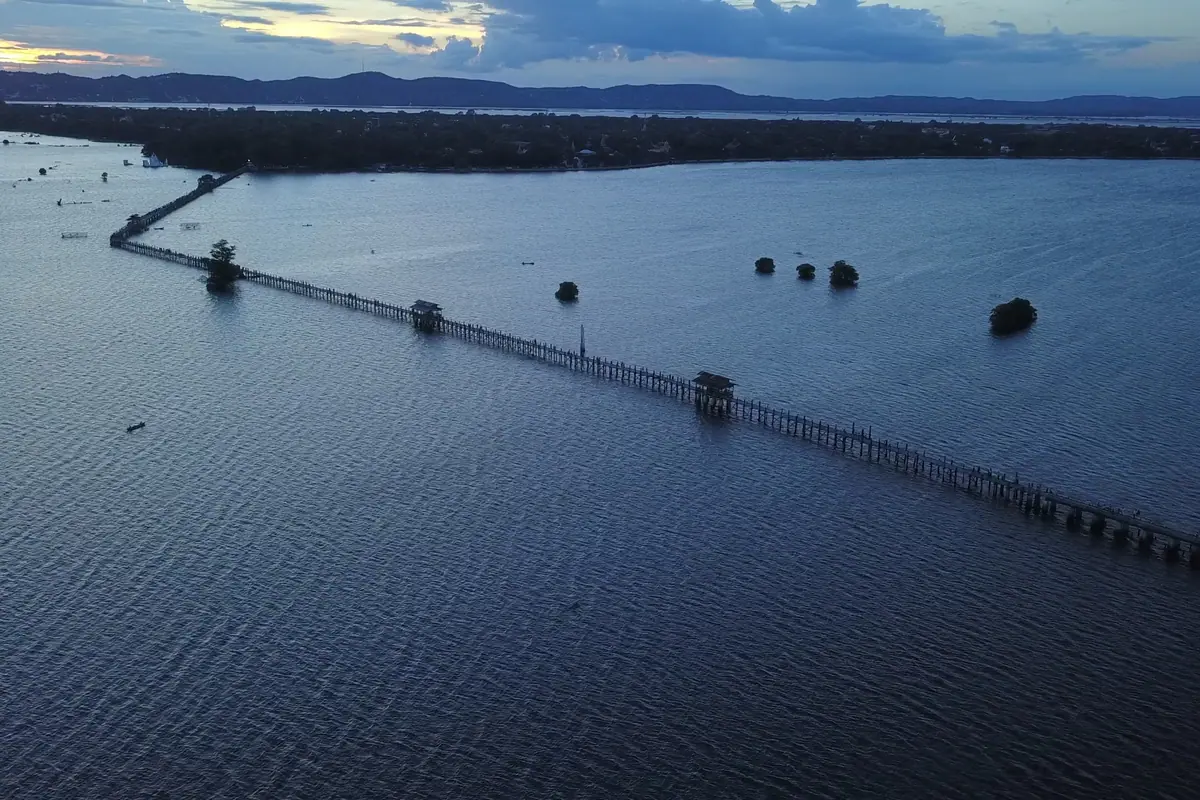
The old capitals around Mandalay are the reason to give this region two or three nights. U Bein Bridge at Amarapura, a teak footbridge stretching roughly 1.2 kilometres across Taungthaman Lake, is best at sunrise or sunset when silhouettes of monks and farmers cross against the water. Inwa, reached by a short ferry and then by horse cart, has a leaning brick watchtower and crumbling monastery. Sagaing Hill, across the river, is dotted with white stupas and convents, while Mingun upriver holds the enormous unfinished base of a pagoda and the 90-tonne Mingun Bell, which you can strike with a wooden mallet.
Mandalay is also the northern hinge of the country's transport. Boats run down the Irrawaddy to Bagan, taking a leisurely day or two depending on the service, and the railway to Hsipaw crosses the vertiginous Gokteik Viaduct, a gorge-spanning relic of the colonial era that makes the slow train the attraction itself.
Inle Lake and the Shan Hills
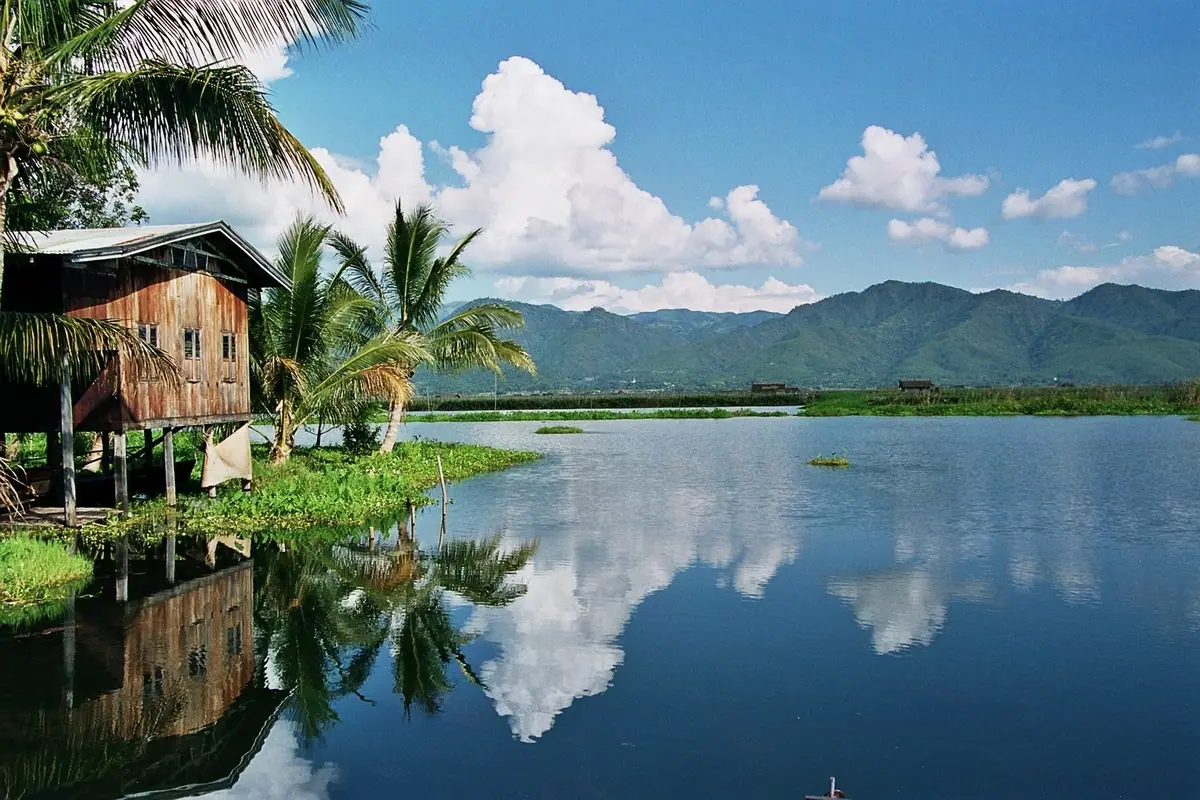
Inle Lake sits in a shallow bowl of the Shan Plateau, and life happens on the water. Fishermen balance on the stern of narrow boats and row with one leg coiled around the oar in a motion unique to the lake. Whole villages stand on stilts, tomatoes grow in floating gardens stitched from weed and mud, and workshops turn lotus stems into thread and silk into cloth. Boats are hired by the day from Nyaungshwe, the main town, and the smart move is to leave at first light while the lake is still under mist.
The landmarks are scattered along the waterways rather than in one place. Phaung Daw Oo Pagoda holds five small gilded Buddha images so thick with gold leaf that they resemble rounded stones, and it hosts a famous festival that draws leg-rowed boats in procession. A short canal leads to Indein, where hundreds of weathered stupas climb a hillside beside a covered stairway. The teak monastery of Nga Hpe Kyaung is another standard stop, with its collection of antique Buddha images and, reputedly, cats. In the hills around, Kalaw is the base for two- and three-day treks between Pa-O, Danu and Shan villages, while Pindaya Caves hold thousands of Buddha images and Kakku is a dense forest of stupas best visited with a local guide.
Beyond the Loop: Golden Rock, Hpa-An, Mrauk U and the Coast
Once the classic four are ticked off, Myanmar keeps giving. The Kyaiktiyo Pagoda, better known as the Golden Rock, is a gravity-defying boulder covered in gold leaf, balanced on the edge of a cliff with a small stupa on top and a hair relic said to hold it in place. Pilgrims ride open trucks from the base town of Kinpun up the eleven-kilometre hill, then walk the final stretch; women are not permitted onto the boulder itself, though everyone shares the platform views. Full-moon nights bring enormous, candlelit crowds.
Kayin State's capital, Hpa-An, is a pocket of karst peaks and rice fields with Mount Zwegabin looming behind it, plus the vast Sadan Cave, where you can walk through and float out the far side in a canoe, and the photogenic limestone pinnacle of Kyauk Ka Lat rising from a lake. Further afield, Mrauk U in Rakhine State has a haunting temple complex, but access and permits vary with local conditions and should be checked before you commit. On the coast, Ngapali Beach near Thandwe offers soft sand, seafood and quiet — reached by a short flight from Yangon — while the far-southern Mergui Archipelago is a world of uninhabited islands for divers, generally visited by liveaboard boats from Kawthaung under special arrangements.
When to Go, How to Move, and What to Know
Timing shapes everything. The cool, clear dry season from November to February is the sweet spot, with comfortable days and cold mornings at Inle and in the hills. March to May turns fiercely hot — Bagan can nudge 40°C — so you shift to dawn and dusk sightseeing and an afternoon swim. The southwest monsoon runs roughly June to October, bringing heavy rain to Yangon and the coast, thinner crowds and lower rates; the temple plain often stays workable between showers. Thingyan, the mid-April water festival, shuts down transport and businesses for several days and drenches everyone in range, which is either a highlight or a logistical headache depending on your plans.
Moving around is the main logistical puzzle. Domestic flights link Yangon, Bagan, Mandalay and Heho and save days of road time; overnight buses are cheap and surprisingly comfortable; trains are slow, characterful and often late. Boats work well on the Irrawaddy and around Inle. Some regions require permits for foreigners, and overland routes can close without notice, so build slack into any tight itinerary.
Finally, the practicals that catch people out. Carry cash in kyat — ATMs are unreliable outside the big cities and cards are largely limited to hotels and larger restaurants, so bring clean, untorn foreign notes to exchange. An e-visa arranged in advance covers most nationalities. At pagodas, always remove shoes and socks, cover shoulders and knees, and avoid pointing your feet at Buddha images; ask before photographing monks or people at prayer. Travel conditions can change, so check your government's current advice and carry insurance that covers medical evacuation before you book.
Frequently asked questions
How many days do I need in Myanmar?
Ten to fourteen days covers the classic route comfortably: two nights in Yangon, three around Bagan, two or three in Mandalay with day trips to Amarapura, Inwa and Sagaing, and two or three at Inle Lake. Add a day or two at each end for travel, since domestic flights and buses eat into sightseeing time.
When is the best time to visit Bagan and Myanmar overall?
November to February brings cool, dry, clear weather and is the most comfortable window everywhere, including the Shan Hills. Balloon flights over Bagan usually run from about October to March. March to May is very hot, and June to October is monsoon season — quieter and greener, with rain heaviest on the coast.
Can you still climb the temples in Bagan?
Many staircases have been closed to protect the monuments, so you generally cannot climb whatever temple you like any more. Instead, ask locally which designated viewing mounds and terraces are currently open for sunrise and sunset. A balloon flight is the reliable way to get the aerial view of the plain.
Is it safe to travel around Myanmar, and are there restricted areas?
The main tourist circuit — Yangon, Bagan, Mandalay, Inle Lake, Ngapali Beach and Hpa-An — is well established, but parts of Rakhine State, northern Shan State and several border regions require permits or are closed entirely. Conditions can change quickly, so check your government's current travel advice, avoid overland routes that cross restricted zones, and make sure your insurance covers medical evacuation.
Should I carry cash or rely on cards in Myanmar?
Carry cash in kyat. Cards are accepted at many hotels and some larger restaurants in cities, but ATMs outside Yangon and Mandalay are unreliable and often have low withdrawal limits. Bring clean, untorn, relatively new foreign banknotes to exchange, since damaged or heavily folded notes are frequently refused.
Plan it — experiences in Myanmar
Live search, booked directly with trusted providers.
Sort the rest of your trip
Everything for Myanmar, in one place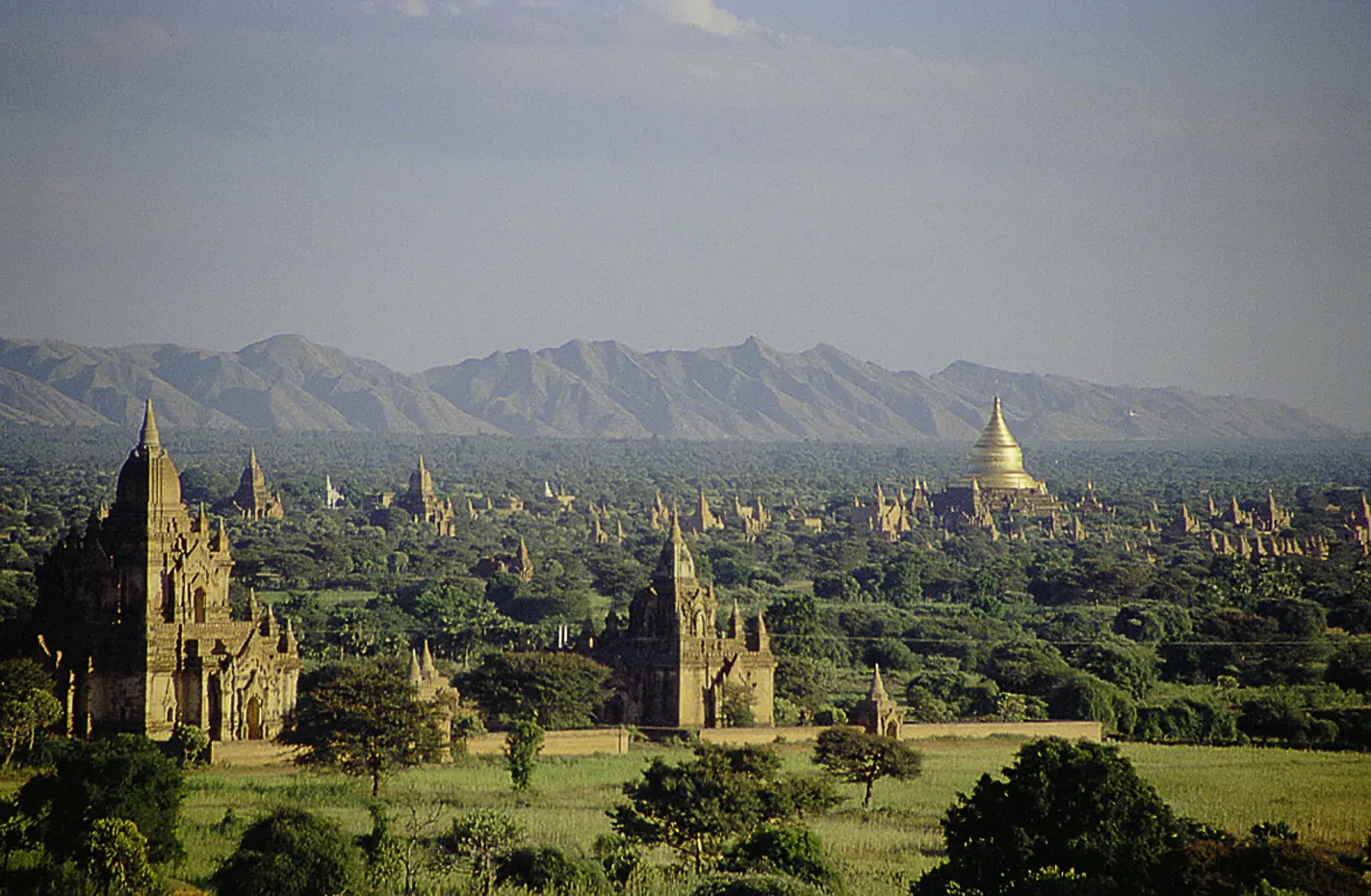
Stay in Myanmar
Hotels, guesthouses and apartments — compared in one search.
Search hotels
Transfer in Myanmar
Private driver waiting on arrival — no queues, no surprises.
Book a transfer
Stay online in Myanmar
Travel eSIM — data the moment you land, no roaming bills.
Get an eSIM