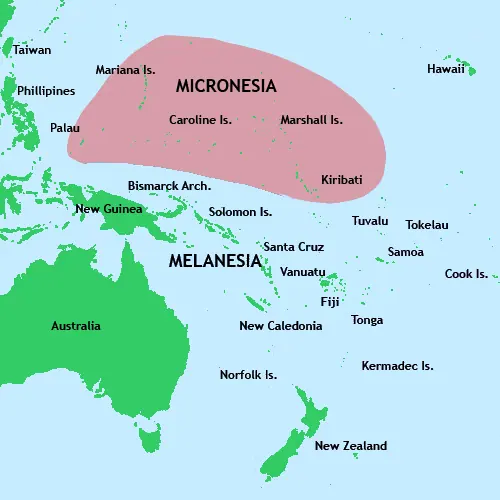
Micronesia is not one place but hundreds — a scatter of coral atolls and volcanic peaks spread across a swathe of the western Pacific so wide that it swallows time zones whole. Here you can paddle around the canals of a basalt city built eight centuries ago, drop onto a Japanese freighter resting upright in warm turquoise water, and watch a manta ray bank through a channel while villagers still trade in discs of limestone hauled from another island.
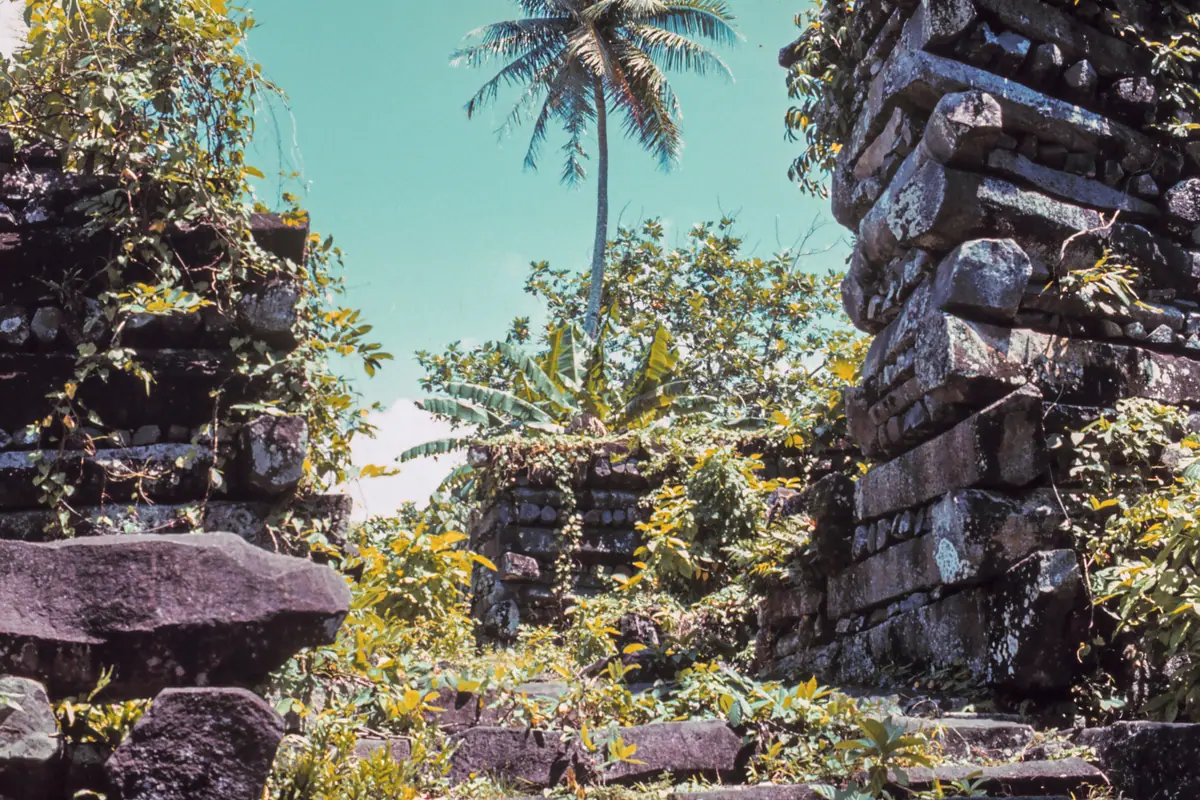
Nan Madol: The Basalt City of Pohnpei
On the reef flats off Temwen Island, just across the lagoon from the town of Kolonia, sits Nan Madol — a ruined city of nearly a hundred artificial islets threaded together by tidal canals. Built from columnar basalt logs stacked like firewood, its walls rise in places to several metres, enclosing tombs, ceremonial platforms and the sunken throne of the Saudeleur dynasty that ruled Pohnpei for centuries before the island's fierce warrior culture broke it apart. The scale is uncanny: the stone was quarried kilometres away and moved without wheels, mortar or metal.
Getting there is part of the experience. You take a small boat from the mangroves near the village of Awak, then wade ashore and walk the coral paths between walls. Because much of the site sits on privately held land, visitors go with local guides who know both the route and the etiquette — and who can point out the burial vaults of Nahnmwarki chiefs and the spot where, on certain tides, you can hear water sighing through the canals. Go early in the morning, when the light is flat and the heat has not yet built.
Pohnpei itself rewards another two days. Hike to the twin cascades of Liduduhniap Falls south of Kolonia, or make the short trek to Kepirohi Waterfall where a pool the size of a swimming hole waits beneath the flow. Above the town, Sokehs Rock looms over the harbour — a sheer volcanic headland with a rough trail to the top for panoramic views of the lagoon. This is one of the rainiest inhabited places on earth, so bring quick-drying clothes and treat every downpour as a temporary inconvenience rather than a spoiled day.
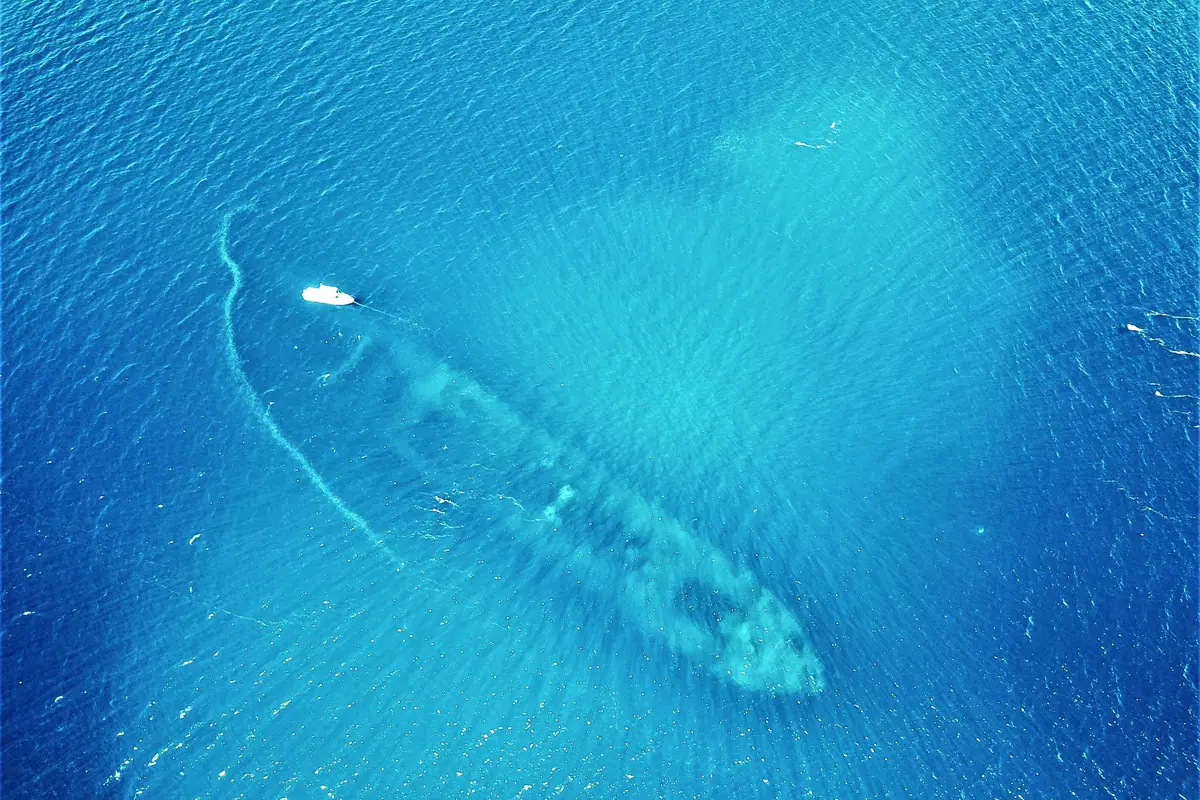
Chuuk Lagoon: Diving a Ghost Fleet
Chuuk Lagoon — long known as Truk — holds the densest collection of diveable shipwrecks in the world. In early 1944 a carrier strike caught the Japanese fleet at anchor here, and more than fifty vessels and aircraft went down in the sheltered lagoon, where warm, still water has preserved them remarkably. The Fujikawa Maru, a freighter, is the classic introduction: you drop onto its deck, drift past a coral-draped anti-aircraft gun and drop into a cargo hold still holding aircraft parts and boxes of supplies.
Deeper and more atmospheric is the San Francisco Maru, sitting upright around forty metres down with tanks and trucks lashed to its deck, though at that depth you'll want advanced training and a careful eye on your air. The Shinkoku Maru offers one of the most haunting swims of all — through a vast engine room and a cramped hospital space with porcelain fittings intact. There are also aircraft to find, a submarine, and shallow wrecks suitable for newer divers. Visibility is often excellent, and the water hovers around a bath-warm twenty-eight degrees.
Weno, the lagoon's main island, is where you base yourself. Dive operators run day boats to the closer wrecks, while liveaboards reach the outer fleet over a week. Between dives, walk up to the Japanese lighthouse or the overlook above the harbour. December to April brings the steadiest conditions, but diving continues year-round, with the odd rough spell from July onward.
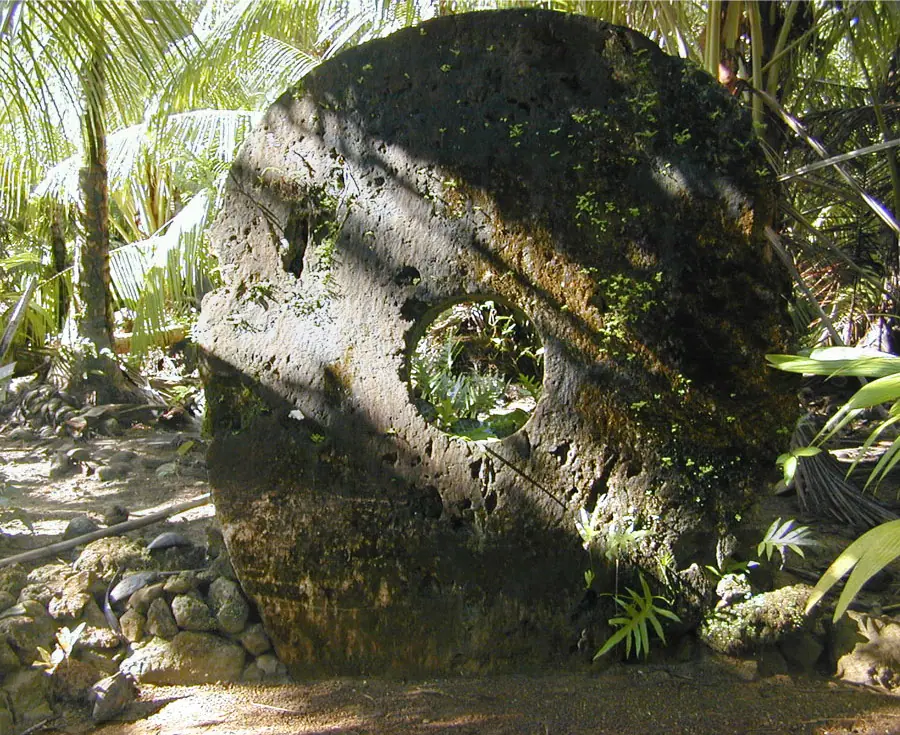
Yap: Stone Money, Manta Rays and Living Tradition
Yap is the Micronesia of the postcard imagination — reef-fringed, low-slung and profoundly itself. Its most famous landmarks are its currency: enormous discs of crystalline limestone called rai, some standing taller than a person, lined up along village paths and in front of meeting houses. The stones were quarried hundreds of kilometres away and paddled home on outrigger canoes; some sank in transit and remained valuable anyway, their worth fixed by communal memory rather than possession. A stone money bank near Balabat or in the villages around Colonia is a genuine must-see, not a museum piece.
Yap's cultural landscape is equally compelling. Traditional men's houses, with their high thatched roofs and stacked coconut-fibre lashings, still stand in the villages, and the island's caste of chiefs remains an active force in daily life. The Yap Living History Museum, just outside Colonia, gathers model dwellings, weaving and betel-nut traditions in one walkable place and often stages dance performances. Ask before photographing people, buildings or ceremonies; permission is expected and freely given when sought.
The diving here is famous for a different reason: manta rays. The channels cutting through Yap's reef — Miil and Goofnuw among them — act as cleaning stations where rays queue to be groomed by small reef fish. Sightings are frequent year-round, with the mating season from December to April bringing the most dramatic displays. Between dives, explore the mangrove channels by kayak, or take a boat out to the outer reef for uninhabited beaches and exceptional snorkelling.
Kosrae: Ruins, Cloud Forest and Mangrove Channels
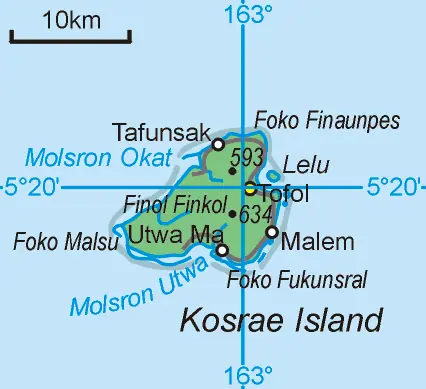
Kosrae is the quietest of the four states, a single mountainous island shaped vaguely like a sleeping woman, with one road looping most of its coast in a couple of hours. Its great archaeological site is Lelu Ruins, the former royal city of the Kosraean kings — a complex of basalt walls, causeways and burial enclosures built on an islet beside the main island. Wander it with a guide to understand how the enclosing walls create corridors of shadow, and continue to the smaller Menke Ruins nearby for a sense of how far these royal compounds once spread.
Inland, the island rises to Mount Finkol, its highest peak, climbed on a long, muddy, magnificent trail through cloud forest that rewards you with views straight down over the reef. Elsewhere, the Yela Ka Forest preserves stands of towering ka trees, their buttressed trunks like cathedral columns, and the Utwe-Walung Marine Park protects a vast mangrove system you can explore by kayak along silty channels where the light turns green.
Underwater, Kosrae is a wall-diving destination: sheer drop-offs close to shore, corals in good condition and very few other people in the water. Snorkellers can find plenty at the Blue Hole near Lelu and off the reef passes. The island's pace suits travellers who want one base, one hire car and long, unhurried days.
The Wider Region: Palau, the Marshalls, Guam and Kiribati
Micronesia as a geographic region stretches far beyond the four states. Palau — usually treated as its own destination but part of the same island world — is celebrated for the Rock Islands, a maze of forested limestone humps floating in impossibly clear water, and for Jellyfish Lake, where snorkellers swim among stingless jellyfish. Its reefs at Blue Corner and the Big Drop Off rank among the finest drift dives anywhere, and the stone monoliths at Badrulchau on Babeldaob give a glimpse of an older island culture.
North-east across the equator, the Marshall Islands offer a very different draw: Majuro's long, narrow islets, the easy boat ride to Arno's beaches at Laura, and, for the very committed, Bikini Atoll, whose nuclear history and sunken warships make it a place of memory as much as adventure. Far to the west, Guam mixes the resort calm of Tumon Bay with the clifftop views at Two Lovers Point, the latte stone pillars of ancient Chamorro houses and the wartime sites preserved at the War in the Pacific park. Kiribati, spreading across the equator, offers Tarawa's poignant WWII beaches and the enormous, bird-rich lagoons of Kiritimati.
Practicalities: When to Go and How to Move Between Islands
The dry months from December to April are the most comfortable window across most of Micronesia, with steadier seas and clearer water. The wetter, typhoon-prone stretch from roughly July to November brings heavy showers, occasional storm systems and some schedule disruptions, though travel continues and prices don't swing as wildly as in other tropical regions. Pohnpei is wet in almost any month, so plan hikes for mornings and keep a flexible afternoon.
Getting between islands is the real logistical task. Compact island-hopper flights connect the main hubs and continue onward to Guam, Honolulu and parts of Asia, while a handful of government-subsidised cargo ships link the outer atolls on slow, irregular runs that can take weeks. Within islands, you'll rely on local taxis, rental cars on Pohnpei and Kosrae, and boats for anything offshore. Book dive and boat trips in advance during peak season, and carry cash — card acceptance thins out fast away from the main towns.
Pack for sun and rain at once: reef shoes, a rash guard, a dry bag, strong insect repellent and modest clothing for village visits. Bring plenty of patience for schedules, and bring respect — ask before entering private land or photographing people, accept a cup of sakau in Pohnpei if it's offered, and never touch the stone money in Yap. The rewards for that courtesy are considerable: reefs with no crowd, ruins with no queue and an island world that still runs on its own terms.
Frequently asked questions
What are the absolute must-see landmarks in Micronesia?
Nan Madol on Pohnpei and the rai stone money banks of Yap are the region's iconic cultural sights, while Chuuk Lagoon's WWII shipwrecks are its most famous underwater attraction. Lelu Ruins on Kosrae and Palau's Rock Islands round out a first-timer's list.
When is the best time to visit Micronesia?
December to April generally offers the driest weather, calmest seas and clearest diving visibility. July to November is wetter and can bring tropical storms, though travel and diving continue year-round — Pohnpei stays rainy in almost every month.
How do you get between the islands of Micronesia?
Small island-hopper flights connect the main hubs such as Pohnpei, Chuuk, Yap, Kosrae, Palau, Guam and Majuro, often with stops at several atolls in a single journey. Subsidised cargo ships serve outer islands but run on slow, irregular schedules, so plan extra buffer days.
Is Micronesia good for diving and snorkelling?
It is exceptional. Chuuk Lagoon is the world's premier wreck-diving destination, Yap is known for manta ray cleaning stations in its reef channels, and Kosrae, Pohnpei and Palau all offer healthy reefs, drop-offs and lagoon snorkelling. Water stays warm enough for a rash guard year-round.
What should visitors know about local customs?
Village land is usually privately owned, so ask permission before walking through or photographing it. Dress modestly away from resorts, remove shoes before entering homes, never handle the stone money in Yap, and treat ceremonial offers such as a cup of sakau on Pohnpei as a genuine honour.
Plan it — experiences in Micronesia
Live search, booked directly with trusted providers.
Sort the rest of your trip
Everything for Micronesia, in one place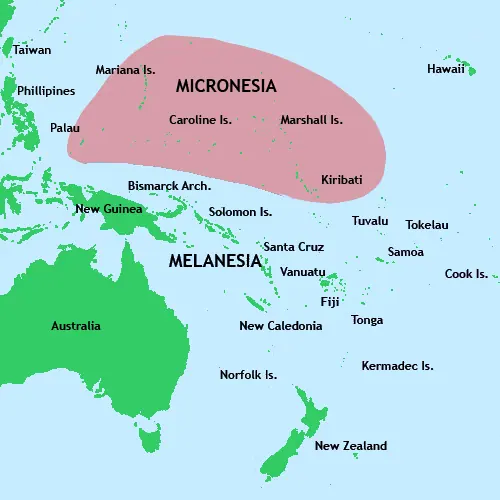
Stay in Micronesia
Hotels, guesthouses and apartments — compared in one search.
Search hotels
Transfer in Micronesia
Private driver waiting on arrival — no queues, no surprises.
Book a transfer
Stay online in Micronesia
Travel eSIM — data the moment you land, no roaming bills.
Get an eSIM