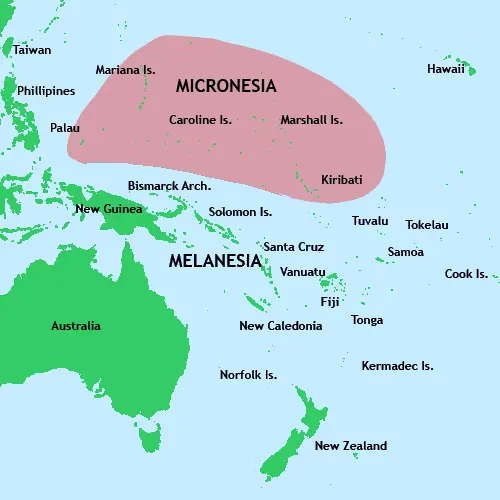
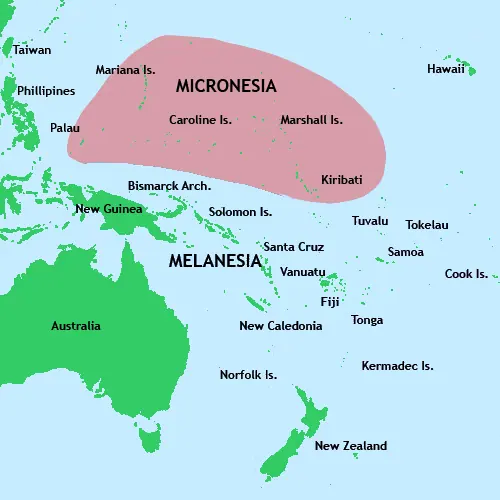
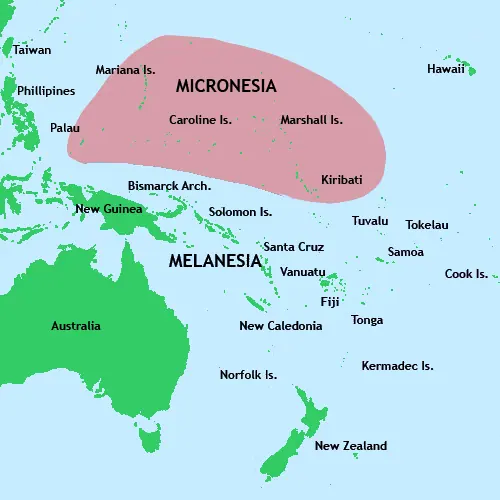
Micronesia is not one place but a constellation of coral atolls and volcanic peaks flung across an ocean basin the size of a continent — and the only way to taste it in a week is by air, hopping from lagoon to lagoon on small planes that skim the reef line. Pack light, embrace the layover, and let the flight map become the itinerary.
Why Micronesia Is a Flyover Destination — and How the Route Works
Micronesia covers roughly two thousand islands scattered over thousands of kilometres of the western Pacific. For a one-week trip, four pieces matter most: the Federated States of Micronesia, whose four states — Pohnpei, Chuuk, Yap and Kosrae — are themselves wildly far apart; Palau, with its limestone Rock Islands; Guam, the region's transport hub; and the Marshall Islands to the east. There are no ferries linking these places in any practical sense. Aviation is the road network.
The spine of the region is the island-hopper service that threads Guam, Chuuk, Pohnpei, Kosrae, Majuro, Kwajalein and onward toward Honolulu, often landing four or five times in a single day at airports that are little more than a strip of coral-fringed tarmac. Because these flights operate only a few times a week on each leg, and because Palau and Yap hang off separate spokes from Guam, your week has to be built around timetables rather than preference. Book early, accept that a missed connection costs you two days, and treat every unscheduled stop as scenery.
Timing decides everything. December through April brings the dry season: dependable trade winds, glassy lagoons and the clearest diving visibility of the year, plus the peak season for Yap's manta rays. May to November is hotter, stickier and wetter, with short violent afternoon squalls rather than all-day rain. Typhoon risk exists but the islands sit mostly south of the main storm track, and water stays warm enough for diving year-round. Whatever month you choose, allow a buffer day before your international departure.
Days 1–2: Pohnpei, Nan Madol and the Green Cathedral
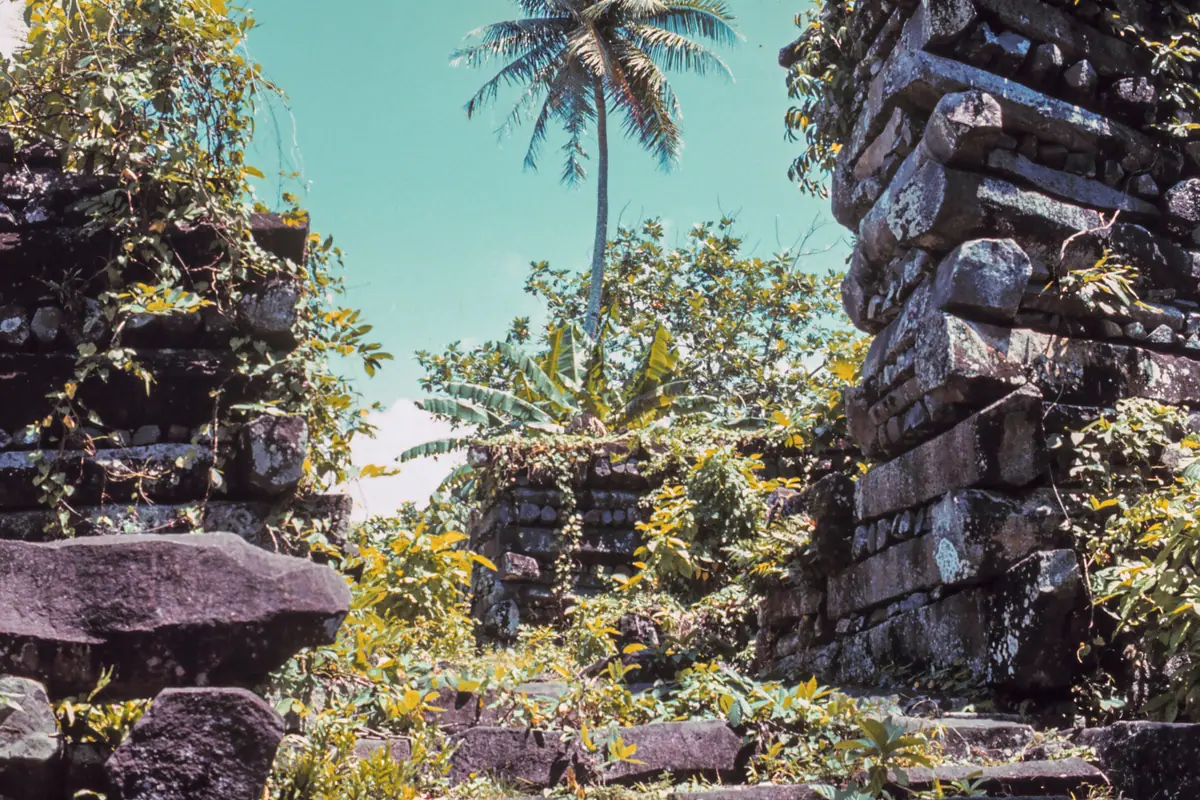
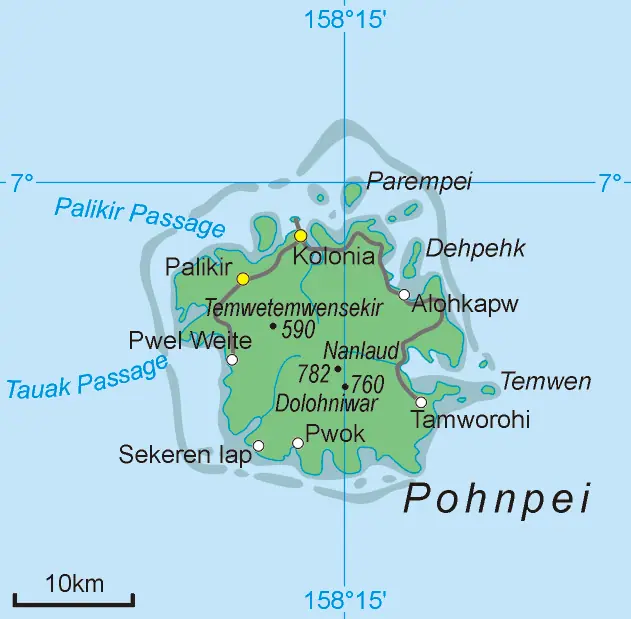
Arrive on Pohnpei from Guam or Honolulu and you land in one of the wettest inhabited places on earth — a single volcanic peak wrapped in cloud forest, cut by rivers and waterfalls. The island's headline sight is Nan Madol, a ruined city of around ninety artificial islets built from stacked basalt logs on the reef flat beside Temwen Island. Constructed between roughly the twelfth and seventeenth centuries as the seat of the Saudeleur dynasty, it is reachable only by boat, usually from the village of Panape, and a guided half-day is the minimum. Wear reef shoes; the coral causeways are slick.
Water is the other theme. Kepirohi Waterfall tumbles into a swimmable pool a short walk from the road, while Liduduhniap Falls, closer to the main town of Kolonia, is a twin cascade with a natural bathing basin. Above the harbour, Sokehs Rock rises as a sheer black cliff and offers the island's best short hike, with Japanese-era gun emplacements from the Second World War still rusting on the ridge. If you have a spare afternoon, boat trips run to uninhabited Ant Atoll, a ring of sand and shallow lagoon where the snorkelling is superb.
Base yourself in or near Kolonia, where small hotels and family guesthouses cluster near the airport and the produce market. Roads are slow and unpaved in places, so a rental car or a hired taxi is worth arranging for a day. Two nights is a tight but workable introduction before you fly onward — and you will likely leave vowing to return for the island's interior trek to Mount Nahnalaud.
Day 3: Chuuk Lagoon and the Ghost Fleet
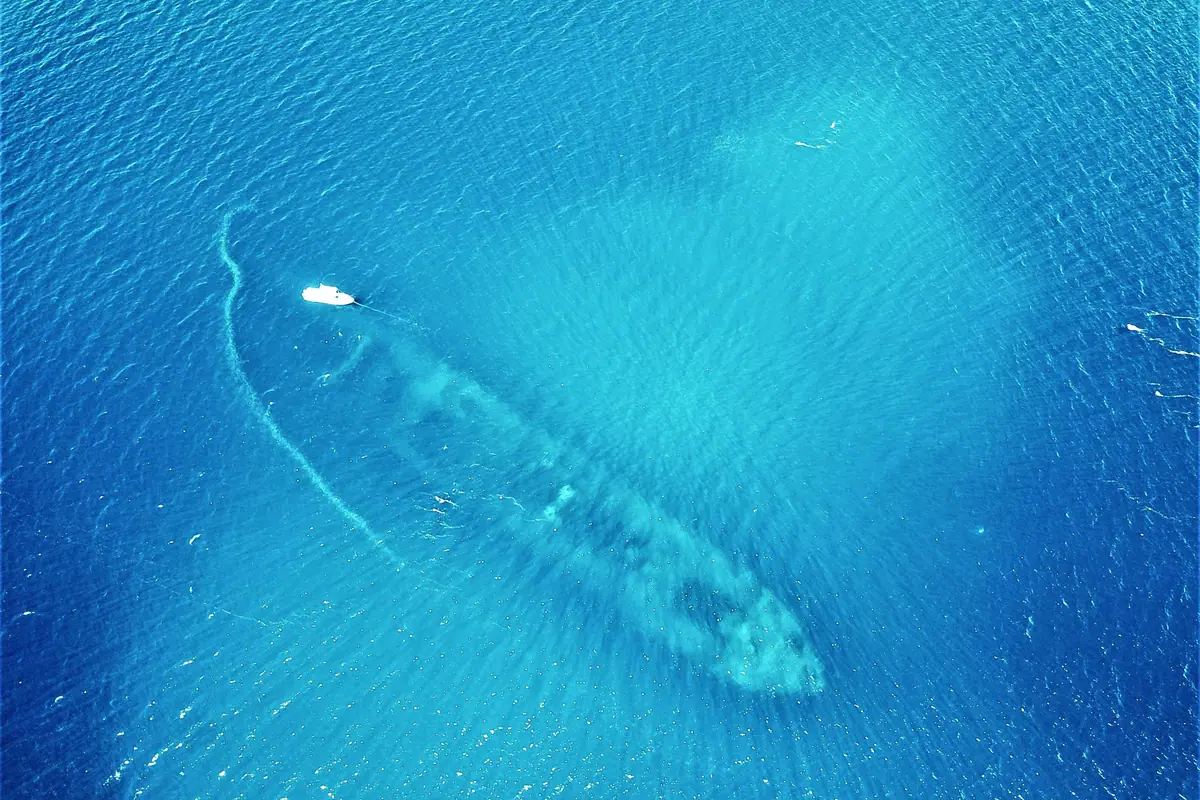
A short flight from Pohnpei drops you on Weno, the busy little island at the heart of Chuuk Lagoon, and into the world's most celebrated wreck-diving destination. In February 1944 an entire Japanese fleet was caught at anchor here and sunk; more than fifty vessels and aircraft still rest on the lagoon floor, many in water clear enough to see them from the surface. Even a single day of diving — the standard two-tank morning trip — is enough to understand why people plan entire months around this place.
The greatest hits are spread across a manageable area. The Fujikawa Maru is the classic first dive: a freighter with aircraft components still in its holds and a well-preserved engine room. The Shinkoku Maru, a tanker, is furred in soft coral and swarming with glassfish. The San Francisco Maru, deeper and known for its cargo of tanks, lorries and mines, rewards experienced divers, while a shallow wrecked Betty bomber and the Fujisan Maru suit those who prefer to stay in the light. Depths run from snorkel-friendly to technical, and local dive operators on Weno can match sites to your certification.
Non-divers are not stranded. Mount Tonachau, on the main island, offers a sweaty hike to a viewpoint over the whole lagoon, and the ruins of a colonial-era mission school, a Japanese lighthouse and several sea caves and reef passes around Weno and neighbouring Uman keep a day full. Be honest with yourself about the timing: a single day in Chuuk is a tasting menu, not a meal. Many travellers end up extending.
Day 4: Yap, Stone Money and Manta Rays
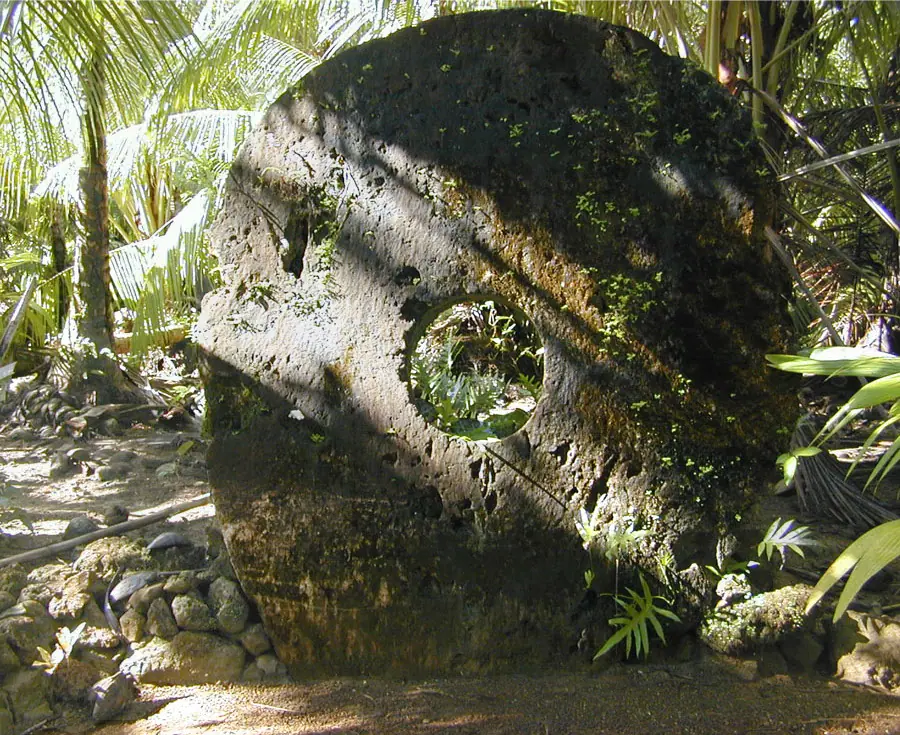
Yap is the most culturally intact of the Micronesian states, and it announces itself the moment you leave the airport: enormous limestone discs, some taller than a person, propped against meeting houses and lining village paths. This is stone money, quarried centuries ago from aragonite caves in Palau and hauled across open ocean in canoes — currency so heavy it never moves, only its ownership does. The best-known banks sit at Balabat and in villages near Colonia, and a local guide will explain the genealogies of the stones that stand there.
Elsewhere you will see the structures that anchor Yapese life: the pebai, a raised stone platform for village councils, and the faluw, the men's house where traditions are still taught. Wanyan and Bechiyal villages, the tidal fish traps along the coast and the small state museum in Colonia all reward a slow day. Ask before photographing people or entering a village, dress modestly, and hire a guide — this is a living culture, not an open-air exhibit.
Divers come for a different reason. Yap's channels, particularly Miil and Goofnuw, host resident manta rays that cruise into cleaning stations where small reef fish pick them clean; the season peaks from December to April, when sightings are near-guaranteed. Outside the season the reefs and drop-offs are still pristine and largely uncrowded. Flights between Yap, Chuuk and Guam are infrequent, so check schedules before committing to a single overnight.
Days 5–6: Palau, the Rock Islands and Jellyfish Lake
Palau is the photogenic showpiece of the region. From Koror, boats thread the Rock Islands Southern Lagoon, a UNESCO-listed maze of some four hundred mushroom-shaped limestone islets capped in jungle and undercut by turquoise water. Days here are spent snorkelling, kayaking between hidden beaches and stopping at sandbars that appear only at low tide. It is the part of Micronesia that fills camera rolls.
Two experiences stand out. Jellyfish Lake, on Eil Malk island, is a marine lake where millions of stingless jellyfish drift in clouds around snorkellers — a phenomenon so unusual that access is regulated and occasionally suspended to protect the population, so confirm locally before planning your day around it. Offshore, Blue Corner is the region's signature drift dive, where grey reef sharks, Napoleon wrasse and bumphead parrotfish gather in current-swept coral, while German Channel, the Big Drop Off and the Milky Way mud baths round out a full diving day.
Give yourself time on land too. Babeldaob, the big island north of Koror, hides Ngardmau Waterfall at the end of a jungle trail, the weathered stone monoliths of Badrulchau, and the coastal road up to Palau's hilltop capitol complex. Permits for the Rock Islands are issued locally and funds go to conservation, so budget for them. With two nights you can dive one day and take a boat tour the next — a satisfying, if rushed, introduction.
Day 7: Kosrae, Guam or Majuro — Picking Your Final Stop
If your hopper route swings east, spend the last full day on Kosrae, the quietest and most beautiful of the four Micronesian states. The Lelu Ruins are a royal compound of colossal basalt walls and tombs built on an artificial island between the thirteenth and fourteenth centuries, and unlike many sites in the region you can walk right through them. Beyond, the Utwe-Walung Marine Park protects mangroves, seagrass beds and coral gardens ideal for easy snorkelling, the Yela Ka Forest shelters towering ka trees, and the hike up Mount Finkol is a full, muddy, magnificent day for the fit.
If your schedule instead funnels back through Guam, you have a comfortable American-style stopover with real sightseeing. Two Lovers Point delivers the classic cliff-and-sea panorama, Tumon Bay offers calm swimming and reef snorkelling, and the War in the Pacific National Historical Park at Asan and Agat beaches interprets the 1944 landings with guns and bunkers still in place. In Hagåtña, Latte Stone Park preserves the carved stone pillars of ancient Chamorro buildings, and Ritidian Point at the island's northern tip is a wildlife refuge with one of the loveliest beaches anywhere in the Pacific.
The Marshall Islands, if the hopper takes you that way, offer Majuro's long thin atoll, the small Alele Museum of Marshallese culture and history, and the calm lagoon beaches out toward Laura. Note that some atolls remain off-limits or accessible only by arrangement. Wherever you finish, remember that inter-island departures are often brutally early, check-in is slow, and a misread timetable can strand you for days — reconfirm every flight the day before and keep a buffer night before flying home.
Frequently asked questions
How many Micronesian islands can I realistically cover in one week?
Three comfortably, four if the schedules cooperate. Inter-island flights on the island-hopper network and the Guam spokes run only a few times a week, so a realistic week pairs Pohnpei with Chuuk, or Palau with Yap, and treats anything more as a bonus. Trying to squeeze in Chuuuk, Pohnpei, Kosrae and Palau in seven days usually means seeing airports rather than reefs.
What is the best time of year to fly around Micronesia?
December through April is the sweet spot: dry season, steady trade winds, calm lagoons and the clearest diving visibility, plus peak manta ray sightings in Yap. May to November is hotter and wetter with short heavy squalls, and typhoon risk rises late in that window, so flexible tickets are sensible. Sea temperatures stay warm enough for diving all year.
Do I need a visa for Micronesia?
Entry rules differ by country, so check each one separately. Citizens of the United States can generally enter the Federated States of Micronesia and the Marshall Islands without a visa under long-standing free-association arrangements, and receive extended stays in Palau. Most other nationalities get visa-free entry for a limited number of days, with proof of onward travel and accommodation usually required.
How strict are baggage limits on inter-island flights?
Very. You are flying small aircraft with tight weight and balance limits, so expect a checked allowance in the region of thirty to forty pounds plus one small carry-on, and be prepared to pay for excess. Pack soft-sided bags, leave the heavy camera rigs and multiple dive sets at home and rent locally — it is cheaper and far less stressful.
Is Micronesia expensive to travel around?
Yes, mostly because of the flying. Seats are limited, competition is minimal and short hops add up fast, so airfare will dominate your budget. On the ground, accommodation ranges from simple family guesthouses to mid-range island hotels, and food and fuel cost more than you might expect since nearly everything is imported. Book flights and dive trips well ahead to avoid paying premiums later.
Plan it — flights in Micronesia
Live search, booked directly with trusted providers.
Sort the rest of your trip
Everything for Micronesia, in one place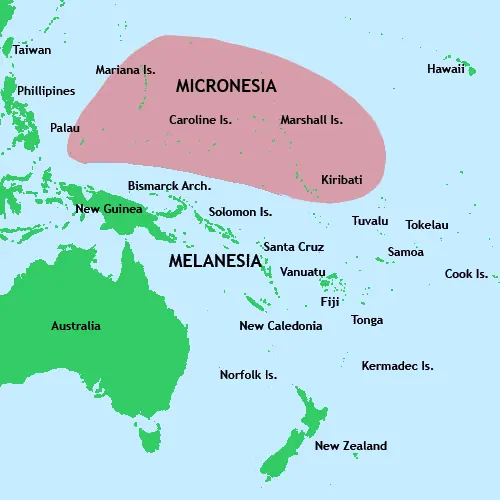
Stay in Micronesia
Hotels, guesthouses and apartments — compared in one search.
Search hotels
Transfer in Micronesia
Private driver waiting on arrival — no queues, no surprises.
Book a transfer
Travel insurance
Medical cover, delays and lost baggage — sorted before you go.
Get covered