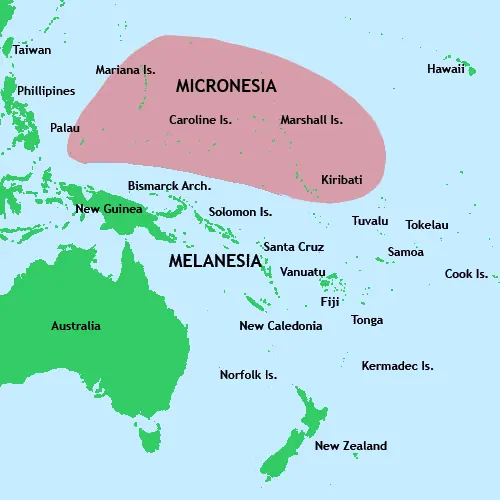
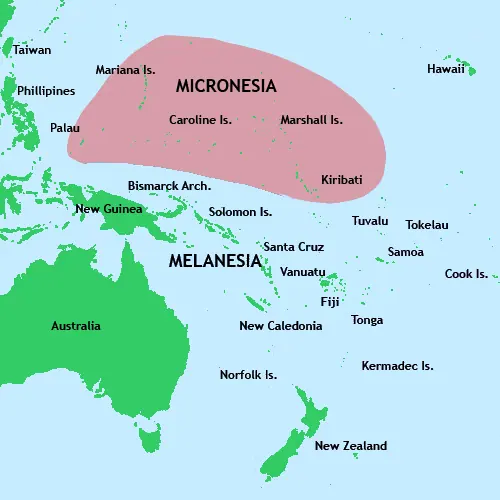
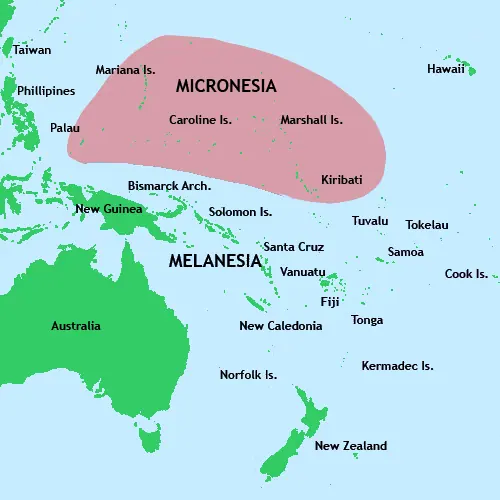
Micronesia is not one island but a scatter of basalt peaks, coral atolls and wartime wrecks spread across an ocean the size of a continent. Its festivals, foods and ceremonies are tied to the tide, the taro patch and the church calendar. Travel here slowly — this is a place you visit island by island, not country by country.
Four States, One Ocean: Planning a Trip Through Micronesia
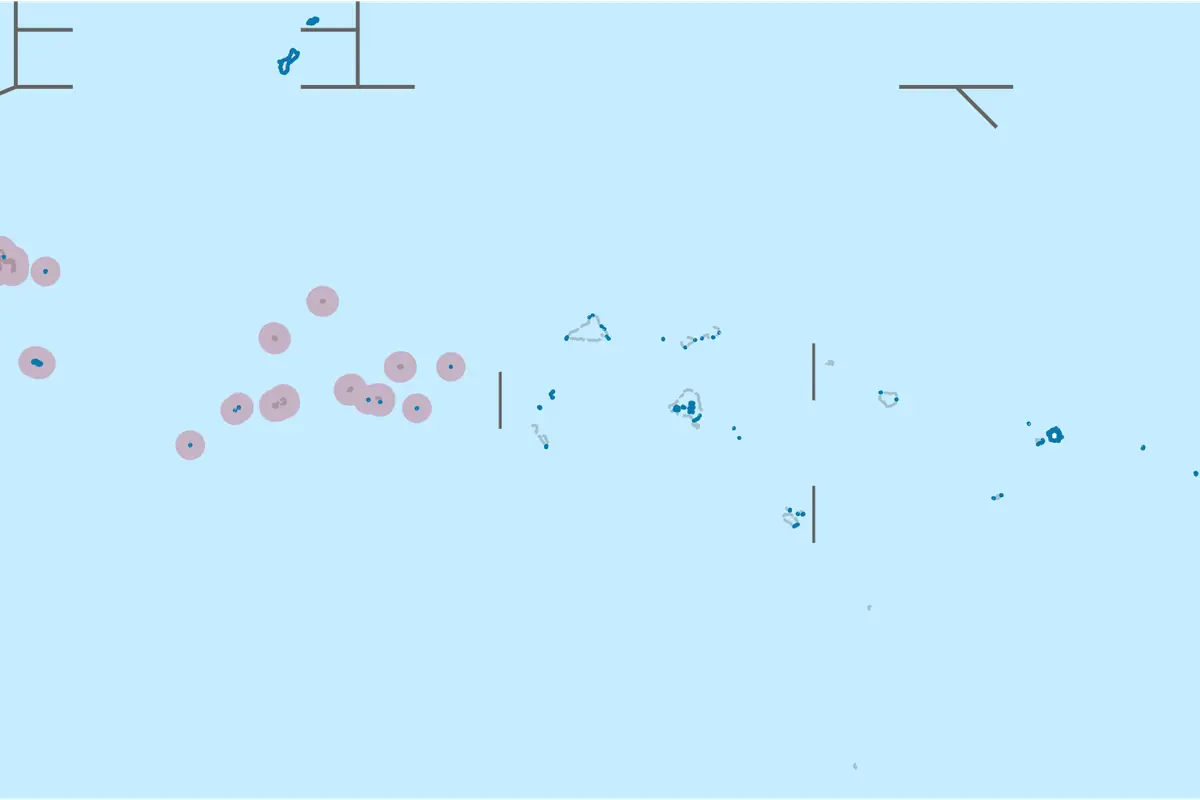
The Federated States of Micronesia form the spine of most itineraries: four states — Yap, Chuuk, Pohnpei and Kosrae — strung west to east across thousands of kilometres, with the capital at Palikir on Pohnpei. Greater Micronesia adds Palau, the Marshall Islands, Guam, Nauru and Kiribati, all sharing the same ocean and much the same pantry. English is widely spoken alongside Yapese, Chuukese, Pohnpeian, Kosraean, Palauan and Marshallese, and the US dollar is the everyday currency almost everywhere you go.
Getting between the islands is the real planning job. Small regional aircraft hop between Guam, Chuuk, Pohnpei, Kosrae and Honolulu, so most travellers stitch together two or three states in a two- to four-week trip. Government field-trip ships reach the outer atolls, but they run on island time and shifts in weather or maintenance can move a sailing by days. Build slack into the schedule and treat every delay as an unplanned day on a reef.
Aim for the dry season, roughly December to April, when seas calm down, diving visibility peaks and the festival calendar fills up. Yap Day on 1 and 2 March is the region's finest cultural showcase; Constitution Day on 10 May and the various state liberation and charter days bring dancing and feasting later in the year. From around July to November the heat and humidity climb and typhoon season arrives — not a deal-breaker, but worth knowing before you book a liveaboard.
Pohnpei: Nan Madol, Cloud Forest and Sakau Nights
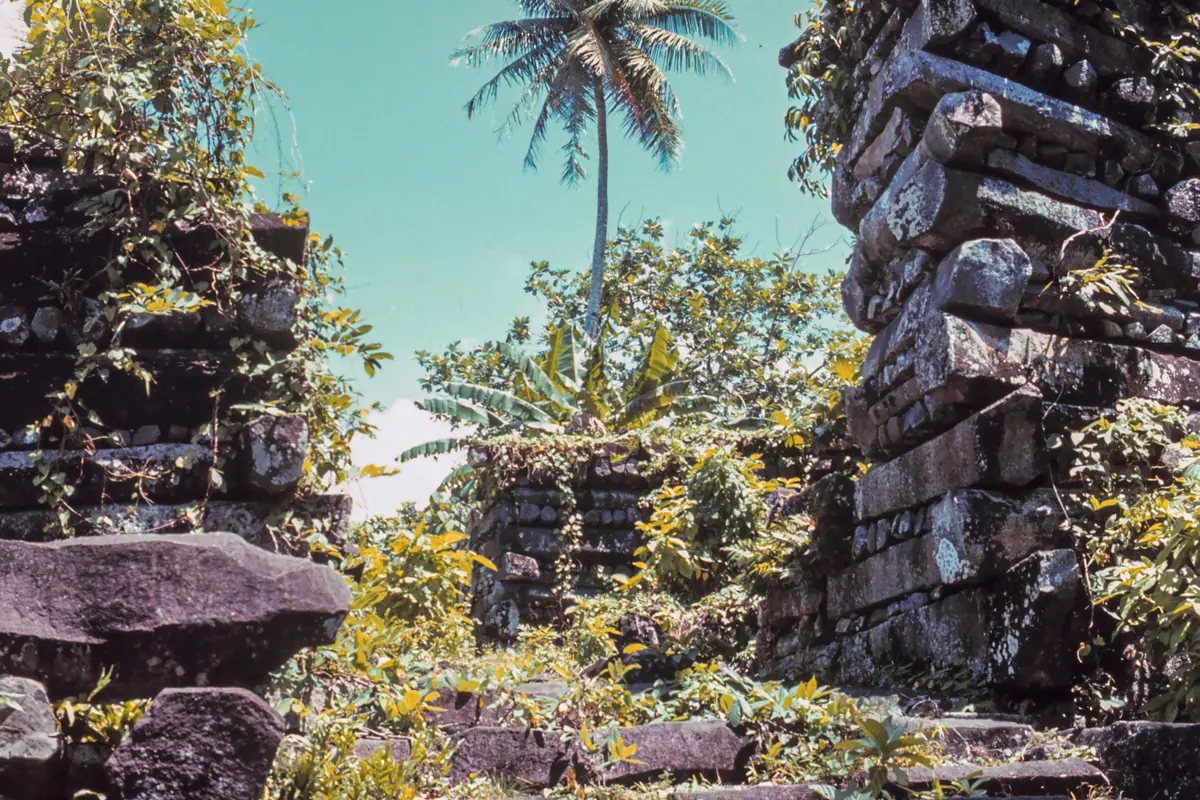
Pohnpei's headline act is Nan Madol, a ruined city of 92 artificial islets built from stacked basalt logs off Temwen Island between roughly 1200 and 1500 CE. You reach it by boat and on foot with a local guide — the site sits on traditional land and access is arranged through the island's paramount chief. Walk the walls, swim in the royal pools, and never pocket a stone. Kepirohi Falls, a single cascade tumbling into a swimmable pool, sits on the same road and pairs perfectly with an afternoon at the ruins.
Inland, the island turns green and vertical. Liduduhniap Falls in Nett is a twin cascade reached by a short, muddy trail; the Pohnpaip petroglyphs are etched into a riverbank rock; and the cloud forest on Mount Nahnalaud, at 782 metres the highest point in the country, is a genuinely mossy, leech-friendly guided trek for the fit. Above Kolonia, Sokehs Rock looms over the lagoon, and the ridge trail behind it passes rusting Japanese coastal guns from the Second World War. The Spanish Wall, a crumbling 1887 remnant in Kolonia, is a reminder of how many empires passed through these islands.
Evenings belong to sakau, Pohnpei's own version of kava. The root is pounded on a flat basalt slab, wrung through hibiscus bark into a coconut-shell cup, and drunk in a nahs meeting house by anyone who wants to sit down. Clap once, take the cup, drink it in one go. The taste is earthy and the effect slow and numbing — and the ceremony is the social heart of the island.
Yap: Stone Money, Traditional Canoes and Mantas
Yap is the most traditional island in the region, and it wears its history in plain sight. Discs of crystalline limestone — rai, or stone money — stand outside villages and along the main street of Colonia, some taller than a person. They were quarried hundreds of kilometres away in Palau and paddled home by canoe, and their worth lies in the story of their voyage rather than their size. Photograph them, walk around them, but never sit on or move them.
Yap Day on 1 and 2 March draws villages into Colonia for days of standing and sitting dances, backstrap-loom weaving in banana fibre, coconut husking, earth-oven cooking and betel-nut chewing. It is a competition as much as a celebration, and the best single introduction to Micronesian culture you will find anywhere. The rest of the year, the Living History Museum, the long pebai (men's meeting house) at Bechiyal village and the outrigger canoes still sailed by wayfinding give the island its texture. Dress modestly, ask before entering a village, and remember that tradition here is living, not staged.
Below the water, Miil Channel is a manta ray cleaning station where divers kneel on sand at around 15 metres while mantas hover overhead; December to April is the most reliable window, though the rays are present year-round. The outer atolls — Ulithi, Woleai, Lamotrek — are for serious adventurers, reached by supply ship and welcoming in a quiet, orderly way.
Chuuk Lagoon: Diving the Ghost Fleet
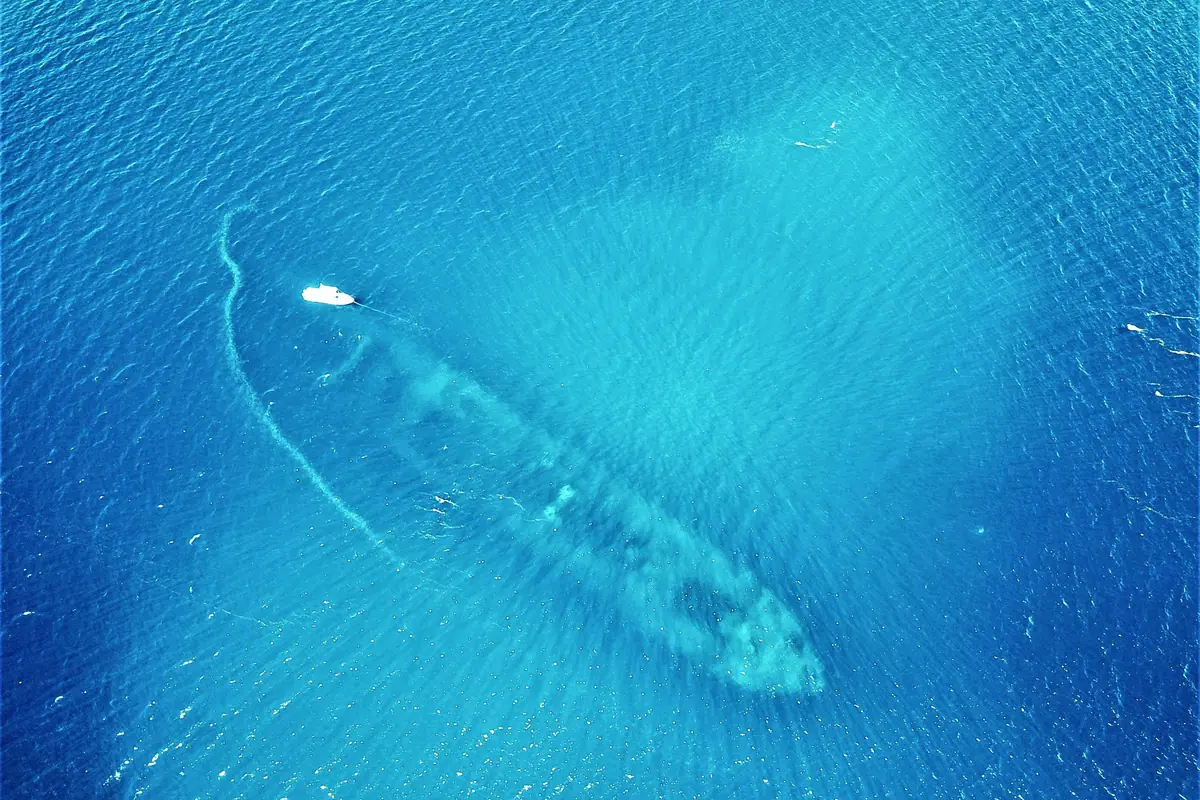
Chuuk Lagoon holds the greatest concentration of diveable wrecks on earth: the Japanese Fourth Fleet, sent to the bottom in February 1944 and never salvaged. More than 50 vessels lie in warm, mostly calm water, many of them within recreational depth. The Fujikawa Maru, resting between about 18 and 34 metres, is the classic first dive — aircraft fuselages in the hold, cargo still stacked, soft coral and reef fish coating every surface. The Shinkoku Maru and Nippo Maru add tanks, trucks and more sobering human traces.
Deeper and more demanding is the San Francisco Maru, holding mining trucks and torpedoes at technical depths. Aircraft, too, litter the lagoon floor, including a Betty bomber and an Emily flying boat. Visibility is good to excellent and the water stays around a bath-warm 28°C, so most divers travel in shorties. December to April brings the calmest seas and the clearest water, which matters when you are holding a decompression stop.
Above the surface, Weno is a busy island town of markets, family eateries and church bells, and the lagoon's outer atolls — Namoluk, Satawal — remain among the Pacific's great sailing cultures, where navigators still read swell and stars rather than screens. Treat the wrecks as what they are: graves and monuments. Local guides set the rules on penetration, touching and photography, and following them keeps these sites open to visitors.
Kosrae: Lelu Ruins and the Mangrove Wilderness
Kosrae, the easternmost state, is green, steep and quiet, and its ancient capital is the reason to come. Lelu Ruins, a walled city of stacked basalt, was built on Lelu Island in the fourteenth century for the Kosraean royal line; the causeway, walls and burial enclosures are still legible against the ferns, and a guide will read the site for you in an hour or two. Nearby, the island's other treasure is the water: the Utwe–Walung Marine Park protects mangrove channels, seagrass beds and the Blue Hole, best explored by kayak at high tide.
Inland, the Yela Ka Forest preserves stands of towering ka trees at the foot of Mount Finkol, the island's 629-metre summit, and the hike to Sipyen Falls runs through taro terraces and dripping rainforest. Kosrae sees the fewest visitors of the four states and rewards slow travel — family-run guesthouses, borrowed bicycles, reef fish caught that morning.
Expect a deeply church-going society here. Sunday is for worship and rest, most businesses shut, and modest dress away from the beach is both expected and appreciated. Learn a few words of Kosraean, accept the food you are offered, and you will be treated less like a tourist and more like a guest.
What Micronesians Eat — and How to Join In
Breadfruit, taro and coconut are the foundation of the plate. Breadfruit is roasted over embers, fried into chips or pounded; giant swamp taro is boiled and mashed; taro leaves are stewed slowly in coconut milk. In Palau, taro leaf soup known as demok is a national comfort food, and coconut crab — a protected species with strict harvest limits — appears at feasts and family gatherings. Fish is the everyday protein: yellowfin and skipjack, grilled, cured in lime and coconut, or sliced as sashimi straight off the boat.
Pounding is the region's signature technique. Kosrae's fafa, pounded taro served with coconut cream, is the local staple; the Marshall Islands has jukjuk, breadfruit pounded with coconut; Pohnpei pairs pounded root crops with fresh tuna and a squeeze of lime. Further west in the Marianas, kelaguen — meat or fish cured with lime, chilli and coconut — sits beside red rice and finadene, a sharp soy, vinegar and chilli sauce that goes on everything.
Eating out is casual and inexpensive by Pacific standards. Local eateries serve plate lunches of rice, a protein and a side, and small stores sell imported goods at import prices, so fresh reef fish and market produce are always the better buy. Two customs matter. Sunday closes most of the region for church, so plan meals around it. And betel nut — chewed with pepper leaf and slaked lime across Yap, Pohnpei and Palau — is offered as a greeting and leaves its red mark on pavements and plazas; accept politely, decline politely, and never spit where people walk. Never arrive empty-handed at a village meal: a bag of rice, a few tins of fish or a bundle of betel nut speaks volumes.
Frequently asked questions
When is the best time to visit Micronesia?
December to April is the sweet spot: calmer seas, better diving visibility and a packed festival calendar, including Yap Day on 1–2 March. July to November brings higher humidity and typhoon season, so build flexibility into any liveaboard or outer-atoll plans.
Do I need a guide to visit Nan Madol?
Yes. Nan Madol sits on traditional land on Pohnpei and access is arranged through the paramount chief, usually via a local guide who provides a boat from Temwen Island. Expect a small entry fee, keep to the paths, and never remove or climb on the basalt stones — they are ancestral and protected.
What food should I try in Micronesia?
Breadfruit roasted or fried, pounded taro such as Kosrae's fafa, taro leaves stewed in coconut milk, and just-caught tuna as sashimi or lime-cured kelaguen. In Palau, look for demok and, at feasts, coconut crab. Note that most of the region shuts down on Sundays for church.
How do I travel between the islands of Micronesia?
Small regional aircraft link Guam, Chuuk, Pohnpei, Kosrae and Honolulu, and government field-trip ships serve the outer atolls. Flights and sailings are frequently delayed by weather or maintenance, so allow buffer days between connections and never schedule a tight onward international flight.
Is Micronesia worth visiting for diving?
It is one of the world's great dive regions. Chuuk Lagoon offers dozens of Second World War wrecks in warm, clear water, Yap's Miil Channel has resident manta rays with a December-to-April peak, and Palau adds reef walls and its famous marine lake. Dive operators are small, so book ahead in high season.
Sort the rest of your trip
Everything for Micronesia, in one place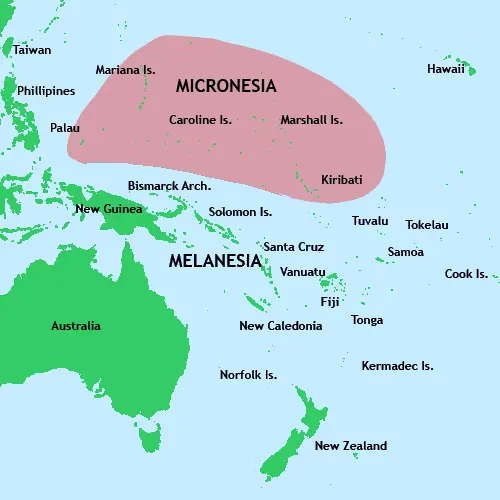
Stay in Micronesia
Hotels, guesthouses and apartments — compared in one search.
Search hotels
Transfer in Micronesia
Private driver waiting on arrival — no queues, no surprises.
Book a transfer
Stay online in Micronesia
Travel eSIM — data the moment you land, no roaming bills.
Get an eSIM