Mauritania is a country of two horizons: the Atlantic breaking against a shipwrecked coast, and the Sahara rolling east into a silence broken only by wind, camels and the call to prayer. Between them stand stone ksour half-swallowed by dunes, a two-kilometre ore train, and canyon oases where a spring pulls palm shade out of bare rock. These are the places a first-time visitor should build a trip around.
Chinguetti: the desert city that kept its manuscripts
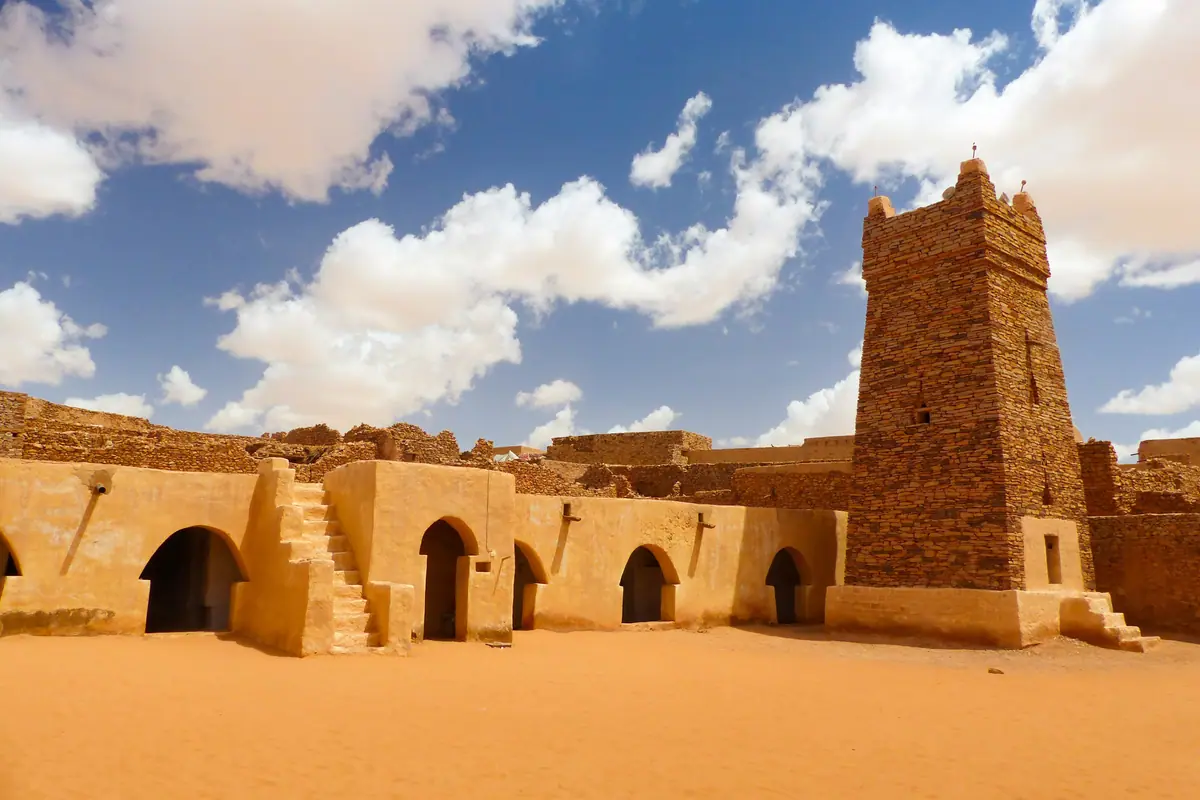
Chinguetti rises from the Adrar plateau as a tight knot of dry-stone houses whose lanes are half-filled with sand that residents shovel aside week after week. At its heart stands the Friday mosque, one of the oldest continuously used in the Sahara, with a plain tapering minaret crowned by ostrich-egg finials and a carved wooden door worn smooth by centuries of hands. The old ksar is inscribed on the World Heritage list alongside three other Mauritanian caravan towns, and the view from the dune ridge just west of town at sunset is the classic first photograph of the country.
What keeps scholars talking about Chinguetti is its libraries. Families here have guarded handwritten Qur'ans and treatises on astronomy, medicine, grammar and Islamic law for generations, and some of the volumes reach back to the 13th and 15th centuries, when the town was a staging post for pilgrims and a meeting point for desert scholarship. Visitors are usually received on a carpet in a cool room, handed glasses of tea, and shown a manuscript unfolded across a clean cloth. These collections are private, so arrangements are made through local guides and guesthouse owners, and a small donation is expected.
Chinguetti is roughly an hour and a half by road from Atar, which makes it the most accessible of the desert towns. Accommodation is simple: courtyards, cold showers, mattresses on the roof for sleeping under the stars. Go between November and February for mild days and genuinely cold nights, bring cash because card machines are rare, and dress modestly, with a scarf for women. Always ask before photographing people, and expect a friendly negotiation about price rather than a refusal.
Ouadane, the Eye of the Sahara and the far-eastern ksour
Ouadane sits on a rocky promontory above a palm oasis, a ruined stone town of narrow lanes and collapsing houses that once handled caravans carrying salt, gold and dates across the western Sahara. Its old mosque, with a squat square minaret, still anchors the settlement, and a long staircase drops from the ridge down to the palms and gardens below. Come in the late afternoon, when the light turns the stone honey-coloured, then stay for dinner in one of the small guesthouses in the newer village.
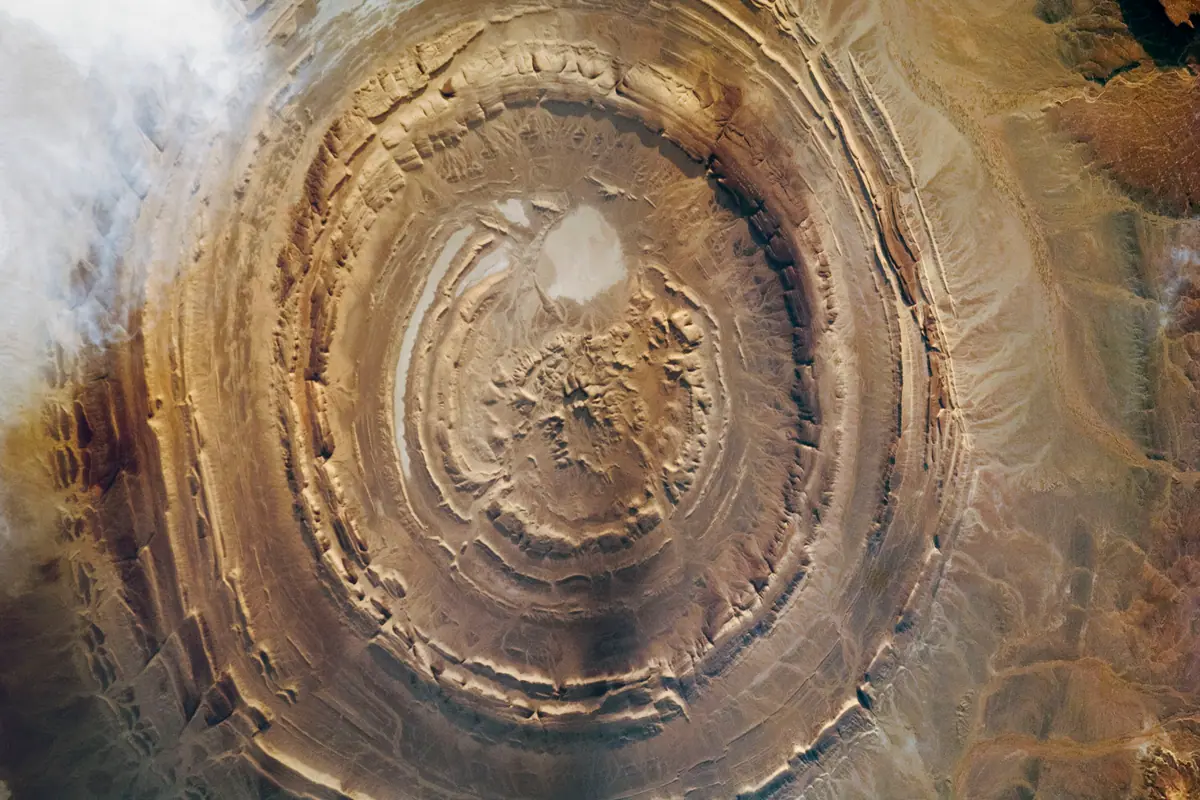
The main reason travellers push this far is the Guelb er Richât, better known as the Eye of the Sahara: a set of concentric rock rings about 40 kilometres across, so symmetrical and so vast that it reads as a bullseye from space. Reaching it means leaving the tarmac for a piste, with a 4x4 and a driver who knows the tracks, generally two to three hours from Ouadane. There is no shade and no water, so carry more than you think you need, start at first light for the best photographs, and consider camping nearby with a nomad family for one of the darkest night skies in the region.
Two more ksour complete the desert circuit, and both demand real commitment. Oualata, far to the southeast near Néma, is famous for its houses painted with geometric designs that local women repaint after the rains, a tradition maintained for centuries. Tichitt clings to the edge of the Tagant escarpment, its stone houses stacked along the cliff with rock art and palaeolithic sites scattered through the surrounding plateau. Neither has comfortable infrastructure, both require a sturdy vehicle and a guide, and the drive from the capital is measured in long days rather than hours.
The Adrar: Atar, Terjit oasis and the Amogjar pass
Atar is the practical base for the whole Adrar region: a small market town with a handful of guesthouses, a lively market selling camel gear, tea glasses and rough silver jewellery, and enough mechanics and fuel to get a desert expedition moving. Most visitors arrive by road or on a short internal flight, then hire a 4x4 with a driver-guide for the days that follow, because the routes to Chinguetti, Ouadane and the surrounding gueltas are sand, gravel and steep-sided wadis. Evenings here are for sweet tea and slow conversation on the pavement.
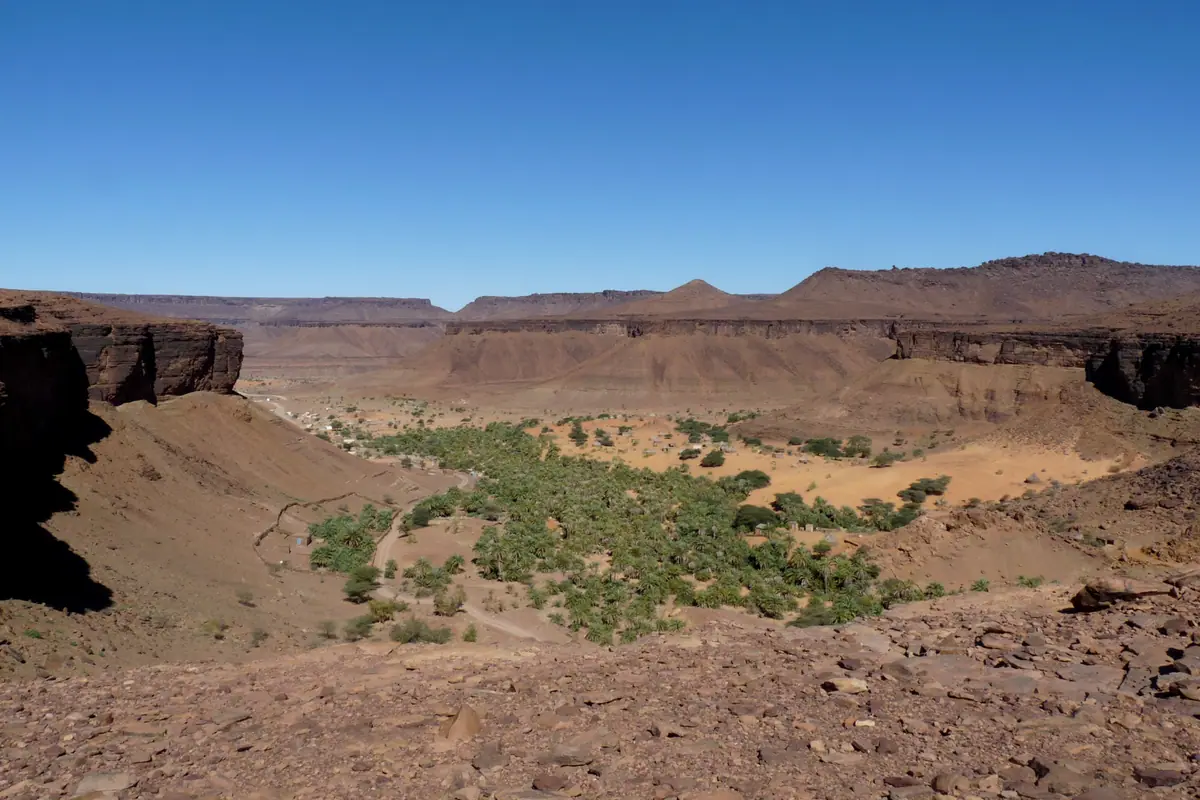
Terjit is the region's gentle reward: a canyon oasis a short drive south of Atar where a warm spring seeps through the rock and feeds shallow pools between date palms. It is cool, green and almost absurdly calm after hours of stony plateau, with simple campsites on raised platforms and small pools for washing. Local custom keeps separate bathing hours for men and women, bathing suits are sensible rather than bikinis, and a small entry fee goes to the village that maintains the site. Go early or in the late afternoon, when the canyon walls throw shade across the water.
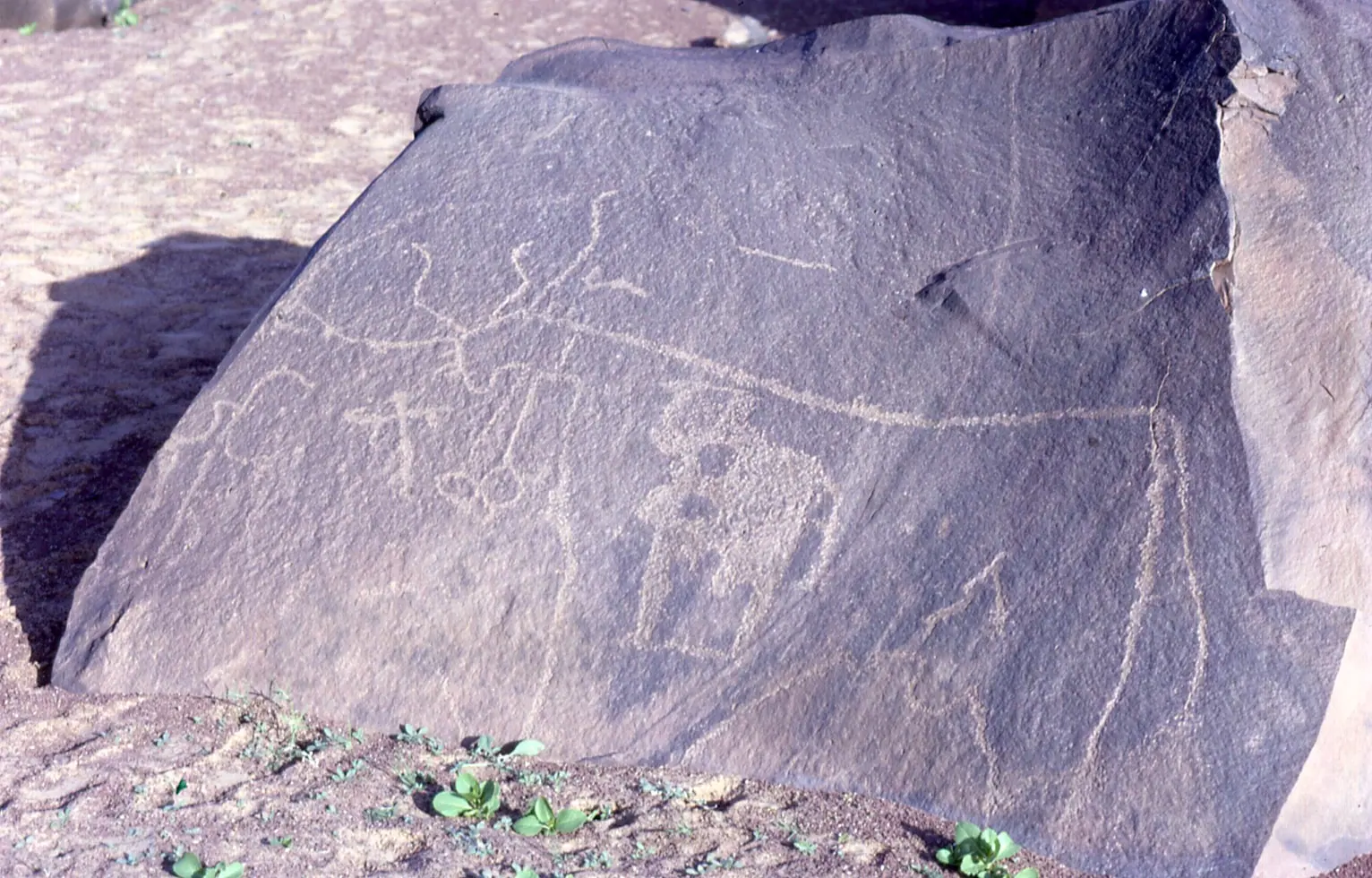
Between Atar and Chinguetti, the Amogjar pass cuts through a gorge where Neolithic engravings of cattle, giraffes and ostriches are pecked into the rock, evidence of a time when this was savannah rather than sand. Above the pass stand the crumbling walls of a colonial-era fort, just a short scramble from the road, and from the ridge you get a wide panorama of black plateaus and ochre dunes. It is an easy stop of an hour or two, and a fine place for a picnic if you bring everything with you.
Banc d'Arguin, Cap Blanc and the Atlantic edge
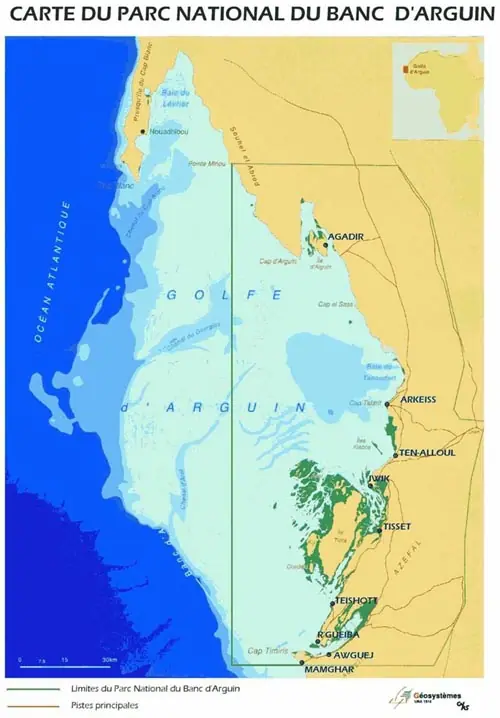
Banc d'Arguin National Park protects around 12,000 square kilometres of shallow sea, mudflats, seagrass beds and sandbanks along the coast north of Nouakchott, and it is one of the most important wintering grounds for wading birds on the entire Atlantic seaboard of Africa. Curlews, godwits, flamingos, spoonbills and pelicans arrive in enormous numbers between November and March, feeding on the flats at low tide. The park is also home to the Imraguen, fishing communities who work from traditional wooden sailing boats under long-standing local rules, netting mullet in the shallows in a way that has changed remarkably little.
Access is usually via the village of Iwik, reached by 4x4 along the coast or by boat, and permits are arranged in advance through the park's offices in Nouakchott. There is little in the way of formal accommodation, so most visitors come with a vehicle, water, food and a plan to camp or return the same day. Bring binoculars, a hat and long sleeves, expect wind, and be prepared for mosquitoes near the shore in the humid months; the dry, cool weeks from November to February are by far the best time to see birds and to travel comfortably.
Farther north, the Cap Blanc peninsula near Nouadhibou ends in cliffs above deep water, where one of the last significant colonies of Mediterranean monk seals hauls out on the beaches below. They are easiest to spot from the clifftop in the early morning, through binoculars, with a local guide who knows the access rules. The bay behind Nouadhibou is also a graveyard of rusting trawlers abandoned in the shallows, an eerie and photogenic counterpoint to the busy commercial port, and the sheltered water makes this stretch of coast popular with wind and kite surfers.
Riding the iron ore train and the monolith at Ben Amera
Mauritania runs one of the longest trains on earth, a snaking chain of more than 200 wagons that hauls iron ore from the mines at Zouérat to the port at Nouadhibou, roughly 700 kilometres across the desert. It is a freight service, not a passenger one, which means there are no seats, no timetable you can rely on and no tickets to book: travellers simply ride in an empty ore wagon, often for around 20 hours. You will need goggles, a scarf for your face, a blanket for the freezing night, more water than seems reasonable, and food you can eat with dusty hands. Departures shift with loading, so ask locally and be ready to wait a day.
The reward is a slow, hypnotic crossing of the Sahara that no road journey matches. You pass the mining escarpment, then long gravel plains where camels drift past the rails, then the coastal desert as the train runs down towards the Atlantic. Ride it at night and you get cold and grit; ride it by day and you get heat, glare and an enormous horizon. Either way, take a head torch, keep your bag zipped, and treat the whole thing as an adventure rather than transport.
Off the railway corridor lies Ben Amera, a granite monolith rising from flat desert and often described as one of the largest single rocks on the planet. It is a detour of several hours by 4x4 from the Zouérat area, usually done with a guide and a night of camping among nomads who graze goats nearby. Climbers come for the routes on its face, stargazers come for the darkness, and almost everyone comes back saying the scale is impossible to photograph. Zouérat itself has minimal lodging, so plan the loop carefully and carry fuel and spare water.
Nouakchott's markets, and the right season to go
Nouakchott is a low, sandy capital of wide boulevards and scattered districts, and it rewards half a day of wandering. The fishing port, known simply as the Port de Pêche, is the best early-morning spectacle: brightly painted pirogues slide in with the night's catch, porters run boxes of fish across the sand, and gulls quarrel overhead. The capital's market is the place for silver jewellery, leatherwork, incense, tea glasses and indigo fabric, while the camel market on the city's edge fills with animals, traders and pickup trucks shortly after dawn. The national museum gives useful context on the country's archaeology and nomadic heritage, and the Grand Mosque's minarets are the city's most recognisable landmark.
Timing shapes everything here. November to February brings the most comfortable weather, with warm days, cold desert nights and clear skies, though the harmattan can veil the horizon in dust. From March to May the heat builds, and daytime temperatures in the Adrar regularly push past 40 degrees Celsius, which means early starts, long siestas and no unnecessary walking at noon. June to October is the hivernage: humid, with rain and dramatic green growth in the south around the Senegal River valley and its bird-rich wetlands, while the northern desert simply becomes a furnace.
Practical habits matter more than gear. Off the asphalt, travel with a 4x4 and a driver who knows the pistes, keep the tank topped up whenever you can, and carry drinking water as if the next well might be dry. Carry cash in local currency; ATMs are unreliable outside the capital, and cards are accepted almost nowhere in the interior. Dress modestly, cover shoulders and knees, and women will find a light scarf useful for sun and for entering mosques and shrines. Fridays are quiet, alcohol is heavily restricted, and the pace of life slows to tea, conversation and prayer, so build slack into every itinerary.
Frequently asked questions
What is the best time of year to visit Mauritania?
November to February is the sweet spot: mild days, cold desert nights and clear skies, plus peak bird numbers at Banc d'Arguin. March to May is punishingly hot in the Adrar, and June to October brings humid heat and rain in the south, though the Senegal River valley turns green and teems with wildlife then.
Do I need a 4x4 and a guide to see the desert sights?
For Chinguetti, Ouadane and the Amogjar pass you can usually reach the towns on regular roads and hire a vehicle locally. For the Eye of the Sahara, the deeper Adrar tracks, Tichitt, Ben Amera and Banc d'Arguin, a 4x4 with a driver-guide is essential, and some areas require permits arranged in advance.
How do you ride the iron ore train?
There are no tickets or passenger carriages. You turn up at Zouérat or Nouadhibou, ask about the next ore departure, and ride in an empty wagon, a journey of roughly 20 hours. Pack goggles, a face scarf, a blanket, food and several litres of water, and be prepared for delays.
Is Chinguetti or Ouadane easier to visit?
Chinguetti is the easier of the two, about an hour and a half from Atar, with several guesthouses and reliable access. Ouadane is a further long drive northwest but pairs naturally with the Eye of the Sahara, so most travellers do both over two or three days based in Atar or in the desert itself.
What should I pack and how should I dress in Mauritania?
Loose, light, long clothing that covers shoulders and knees, a scarf, a wide-brimmed hat, strong sunscreen, a head torch, a refillable water bottle and cash in local currency. Evenings in the desert get surprisingly cold in winter, so add a warm layer, and always ask permission before photographing people.
Plan it — experiences in Mauritania
Live search, booked directly with trusted providers.
Sort the rest of your trip
Everything for Mauritania, in one place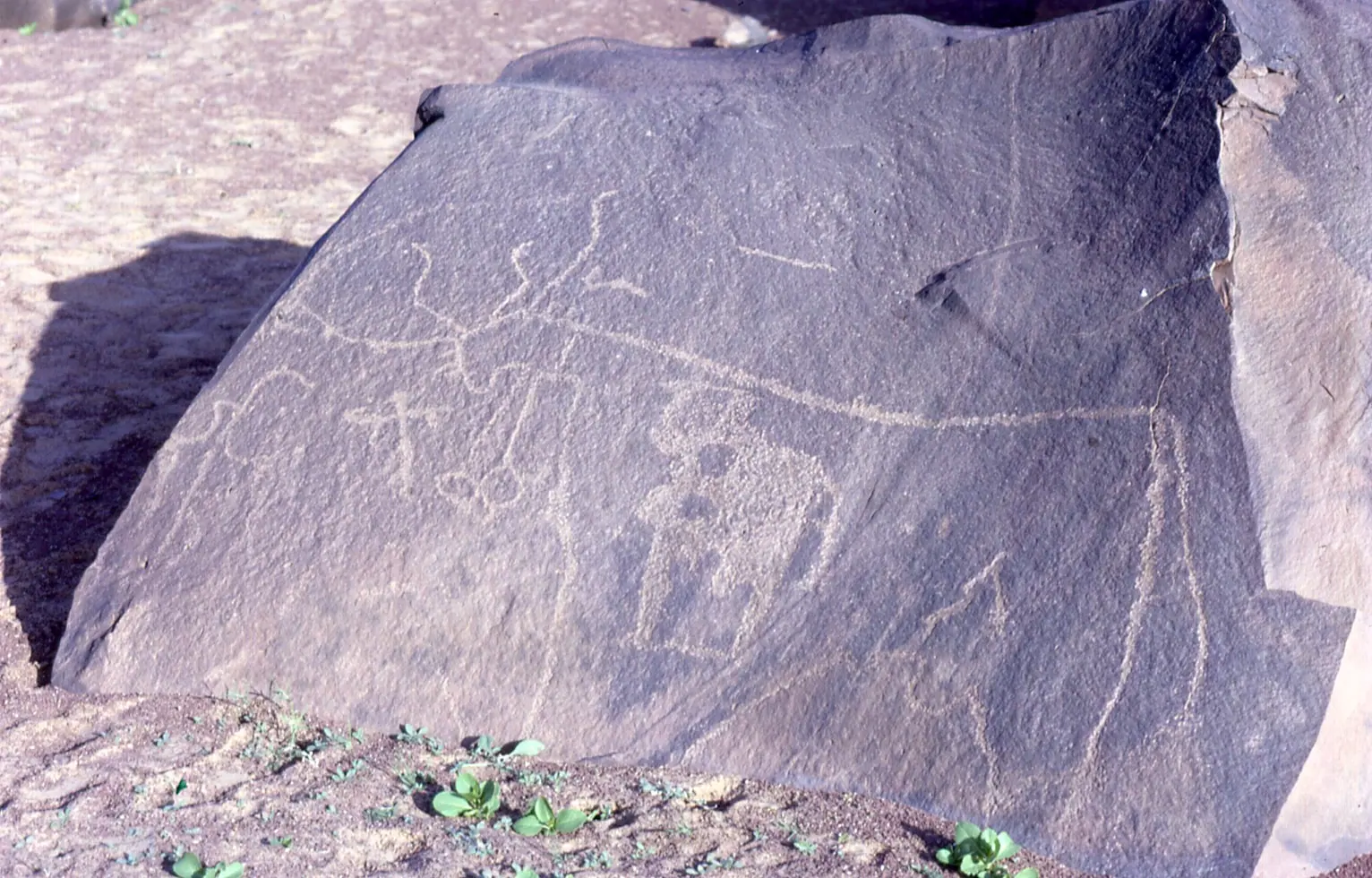
Stay in Mauritania
Hotels, guesthouses and apartments — compared in one search.
Search hotels
Transfer in Mauritania
Private driver waiting on arrival — no queues, no surprises.
Book a transfer
Stay online in Mauritania
Travel eSIM — data the moment you land, no roaming bills.
Get an eSIM