Mauritania is where the Atlantic ends and the Sahara truly begins — a country of fog-wrapped fishing ports, sandstone caravan towns and tea poured from a height into tiny glasses. Travel here slowly, and the desert opens itself through its kitchens, its libraries and its long, unhurried conversations.
Sand, Sea and Stone: Why Mauritania Rewards Slow Travel
Mauritania stretches across roughly a thousand kilometres of Atlantic coastline before dissolving into the dunes, plateaus and dry riverbeds of the western Sahara. Its population is tiny for its size, which means long drives between one remarkable place and the next — but also nights with no light pollution, markets where you may be the only visitor, and hospitality that assumes you have time to sit down.
A sensible two-week arc begins in the capital, Nouakchott, then pushes east to the Adrar plateau for the caravan towns of Chinguetti, Ouadane and the oasis of Terjit, before looping back west to the coastal wilderness of Banc d'Arguin and the port city of Nouadhibou. Travellers with more time head south along the Senegal River to the wetlands of Diawling. Main highways between the capital, Atar and Nouadhibou are paved; almost everything beyond them is sand, gravel or a track you should not attempt alone.
Timing matters enormously. November to March is the comfortable window, with December and February the sweet spot — Adrar days around 25–30°C and desert nights cold enough for a fleece. From June to September the interior bakes past 40°C and the dust haze thickens; the coast stays breezier but rarely cool. Coastal fog and wind are a year-round feature, so pack a light windproof layer even in the desert.
Thieboudienne, Camel Meat and Camel Milk: Eating in Mauritania
Mauritania's national dish is thieboudienne, a generous mound of rice cooked in a tomato and onion base with fish tucked inside — you will find it everywhere, from roadside stalls to family tables, sometimes made with dried fish for a deeper, smokier flavour. In the south, where Pulaar, Soninke and Wolof communities live along the river, the kitchen shifts towards mafé, a slow peanut stew, and yassa, sharp with onion and lemon. Meals usually arrive on one large communal platter, and you eat with your right hand from the section nearest you.
In the Adrar, the signature taste is camel: skewered and grilled over charcoal, or simmered until tender with dates and spices. Breakfast is often lakh, a warm millet porridge dressed with sour milk, and flatbread baked quickly in hot sand or embers. Camel milk, known as zrig, is served fresh or lightly fermented — sour, saline and oddly refreshing in the heat — and the dates of the Adrar oases are among the finest in the region, chewy and honey-dark.
The ritual that ties it together is tea. Green tea with mint and a lot of sugar is brewed and poured three times from a great height to build a foam, and each glass is drunk in turn: the first bitter, the second sweet, the third gentle. It takes the better part of an hour, and accepting it is the easiest way to be welcomed. In the south, look for chilled bissap (hibiscus) and bouye (baobab) juices; along the coast, the day ends with grilled fish, lemon and raw onion.
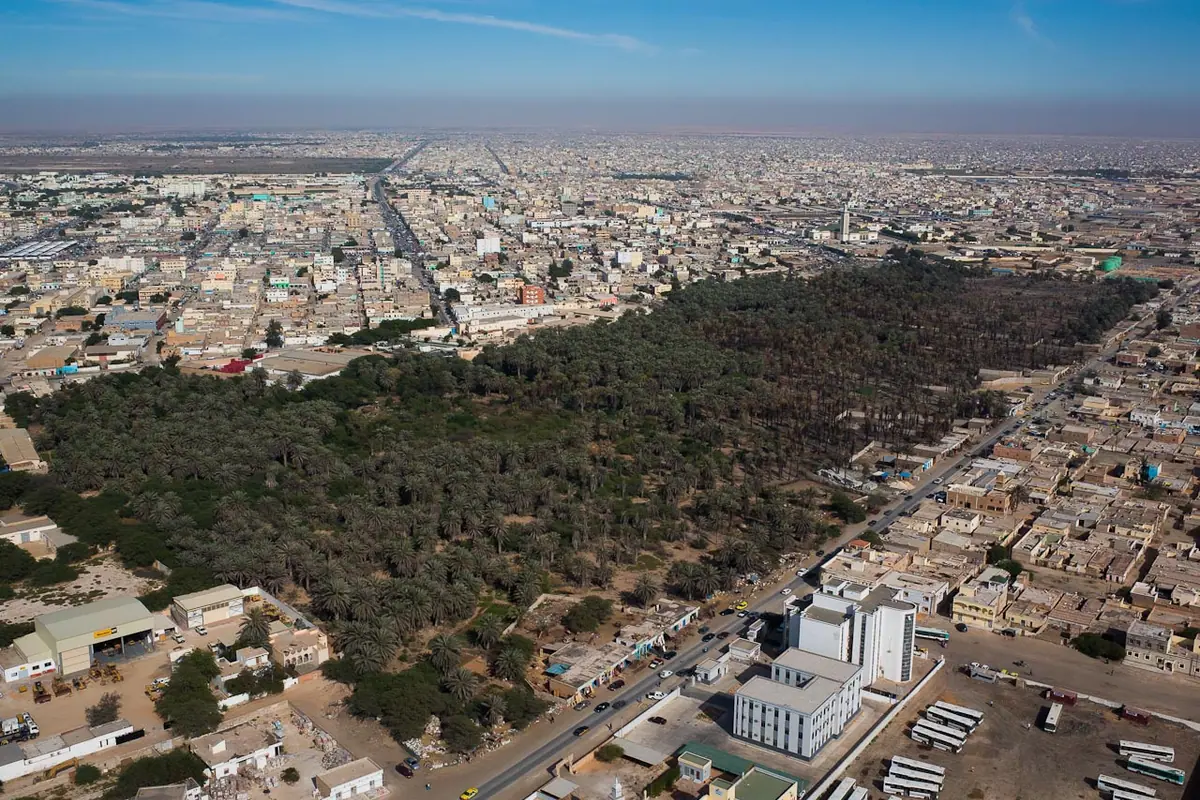
Nouakchott: Fish Smoke, Silver and Camels at the Edge of the City
Nouakchott began as a small coastal settlement and grew into a sprawling capital of low white buildings, sand-blown streets and a long ocean road. Its beating heart for food is the fishing port known simply as Port de Pêche, where brightly painted pirogues ride in through the surf in the late afternoon. Arrive between roughly five and seven in the evening to watch the catch unloaded, then eat it minutes later — grilled over charcoal, with lemon, onion and bread, at benches set between the boats.
Inland, the Marché Capitale is the place to lose an hour or two among silver jewellery, indigo and embroidered melhafa cloth, incense, tea glasses and battered suitcases. Bargaining is expected and conversational; a slow, friendly negotiation usually lands better than a hard one. The national museum offers a compact introduction to the country's archaeological past, its textiles and its instruments, and is a useful primer before you head into the interior.
North of the city, the camel market gathers herds and traders in the early morning — animals inspected, discussed and exchanged with great seriousness while the day is still cool. It is a working market rather than a show, so go with a local guide, keep a respectful distance, and ask before lifting a camera. Nouakchott is also the practical hub of any trip: guides, 4x4s, permits and supplies for the Adrar are all arranged here.
Chinguetti, Ouadane and Oualata: The Caravan Towns of the Adrar
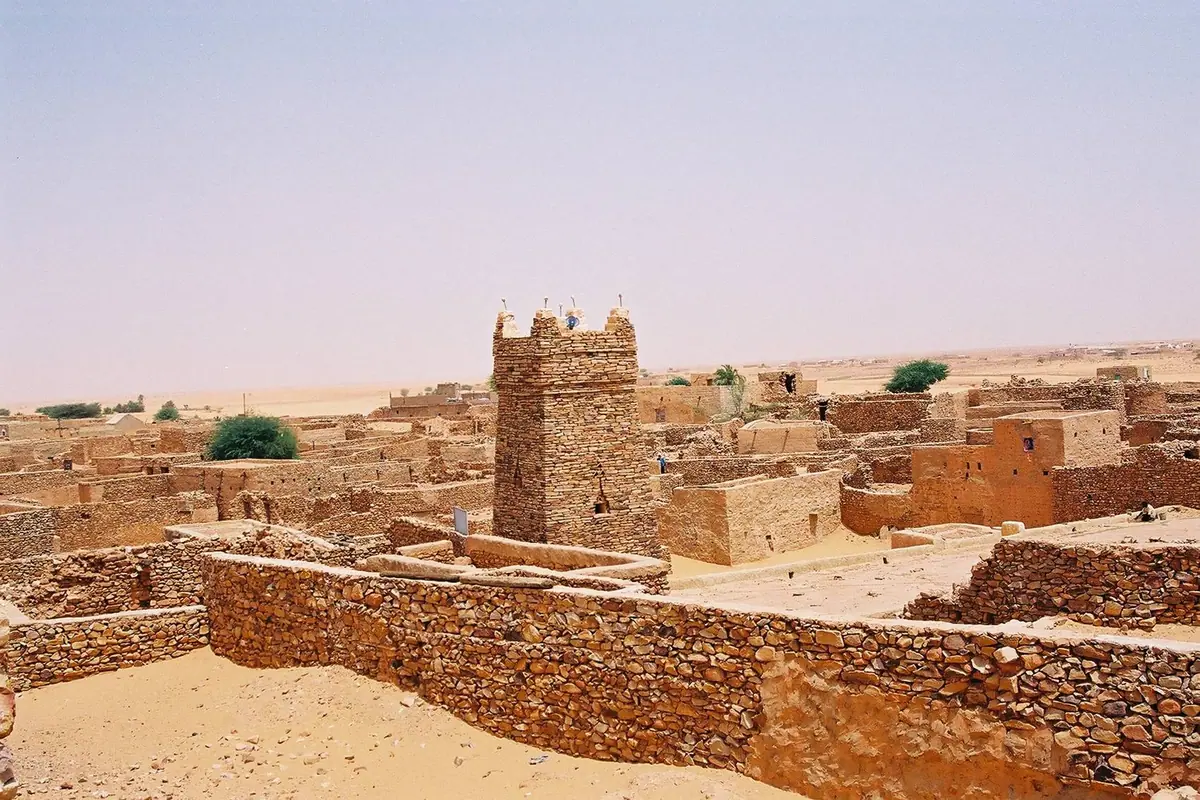
Chinguetti, once a staging post for pilgrims and caravans crossing the Sahara, is the emblem of Mauritanian heritage. Its old quarter is a tight weave of dry-stone houses and date-palm beams, watched over by the Friday Mosque and its square minaret, and the dunes are steadily claiming the western edge of town. What makes Chinguetti extraordinary are its family manuscript libraries — centuries-old collections of Qur'ans, astronomy, law and poetry kept in wooden trunks and passed down through generations. Visits are arranged through local custodians, and a small contribution is customary.
A short drive away, Ouadane sits on a rocky promontory above a green oasis, its 12th-century stone town half-ruined and utterly silent at sunset — one of the most atmospheric places in the country. Between the two lies the oasis of Terjit, a narrow gorge of palms and cool shade where a warm spring trickles over rocks; it is a wonderful place to rest, wash off the dust and drink tea in the shade. The nearby Amogjar Pass hides rock engravings, and the ruins of Azougui recall the Almoravid era.
Far to the southeast, Oualata is a different world: a small desert town of houses painted in geometric blocks of ochre, white and red, the designs renewed by women after rains or celebrations. It is remote, expensive to reach and worth the effort for the handful of travellers who make it. Base yourself in Atar, move in the early mornings and late afternoons, and hire a guide who can open doors — quite literally — to libraries, family kitchens and compounds.
Eye of the Sahara, Banc d'Arguin and the Iron Ore Train
The Guelb er Richât, widely known as the Eye of the Sahara, is a colossal bullseye of concentric rock rings roughly forty kilometres across, visible from orbit and genuinely astonishing on the ground. Reached from Atar via Ouadane over rough tracks, it takes a long day with a 4x4 and a driver who knows the route. There is no shade, no facilities and no mobile signal — carry water, fuel and patience, and go early.
West on the coast, Banc d'Arguin National Park protects a maze of shallow seagrass flats, sandbanks and island bird colonies where hundreds of thousands of migratory birds winter between roughly November and February. The Imraguen fishing communities here still sail traditional boats and are permitted to fish by hand-net under the park's rules, which keeps the waters exceptionally rich. Île aux Oiseaux, with its breeding colonies, and the windswept village of Iwik are the classic stops; a guide and advance arrangements are essential.
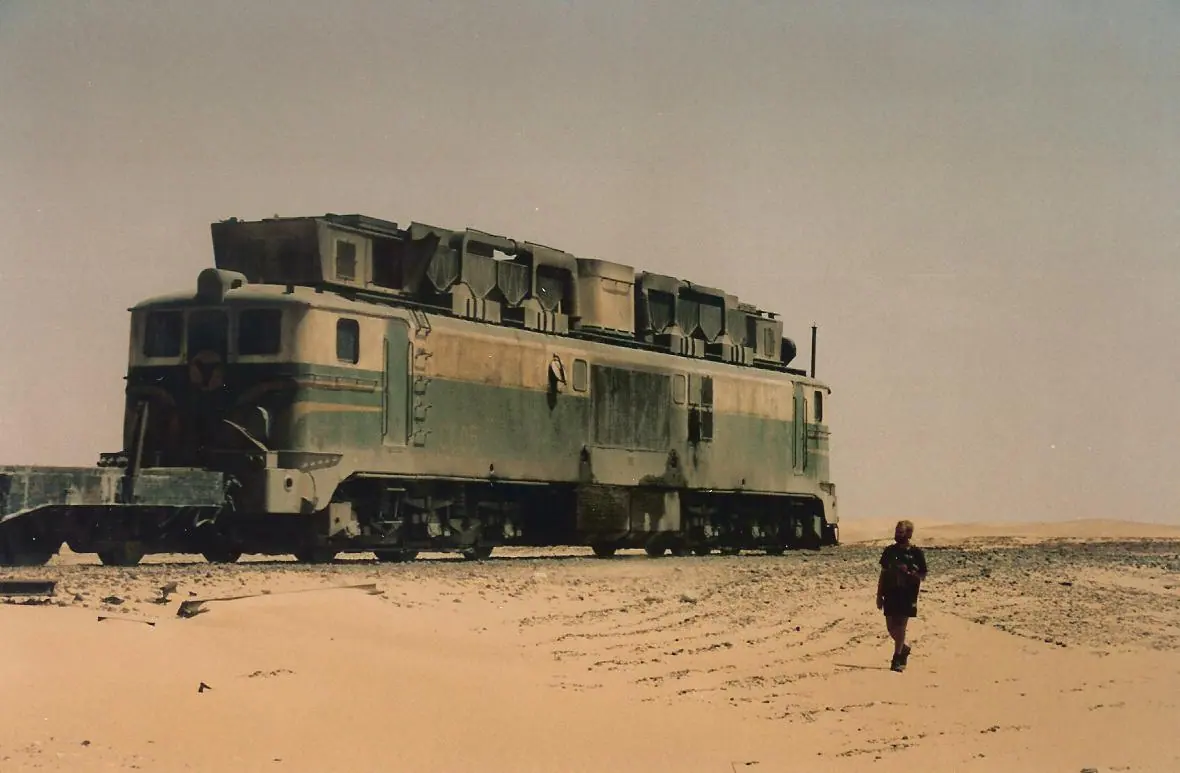
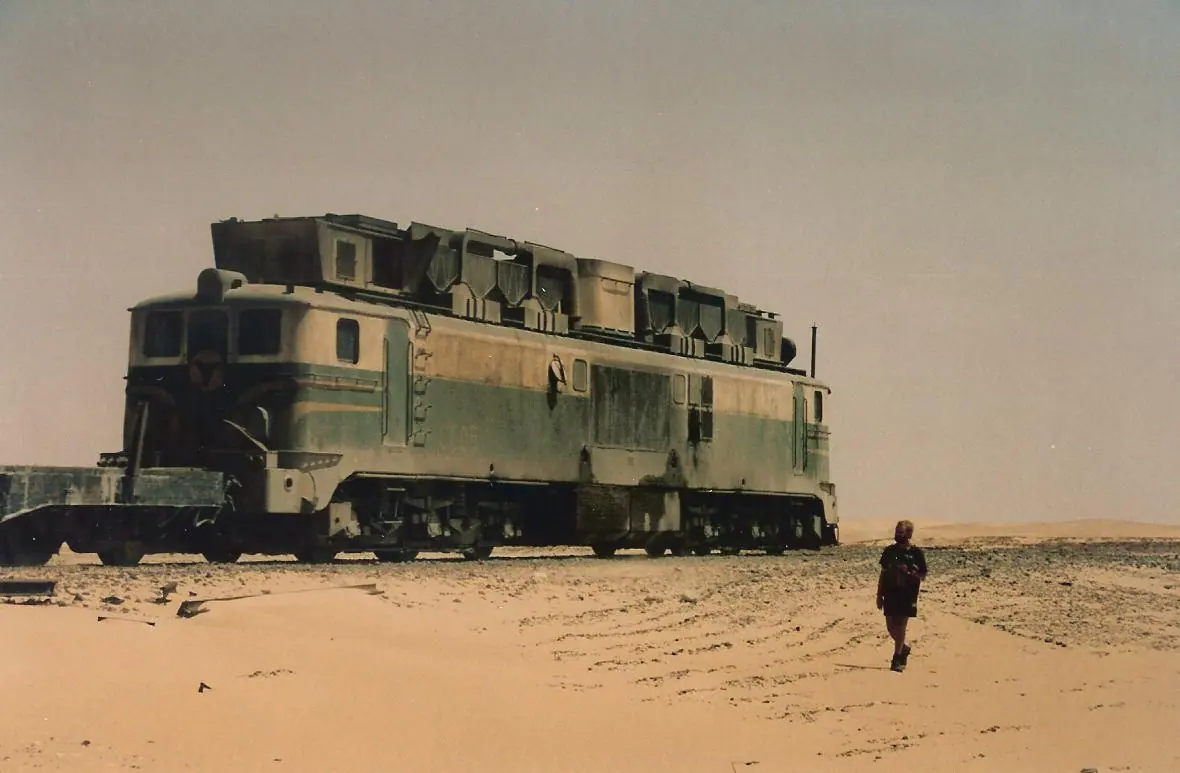
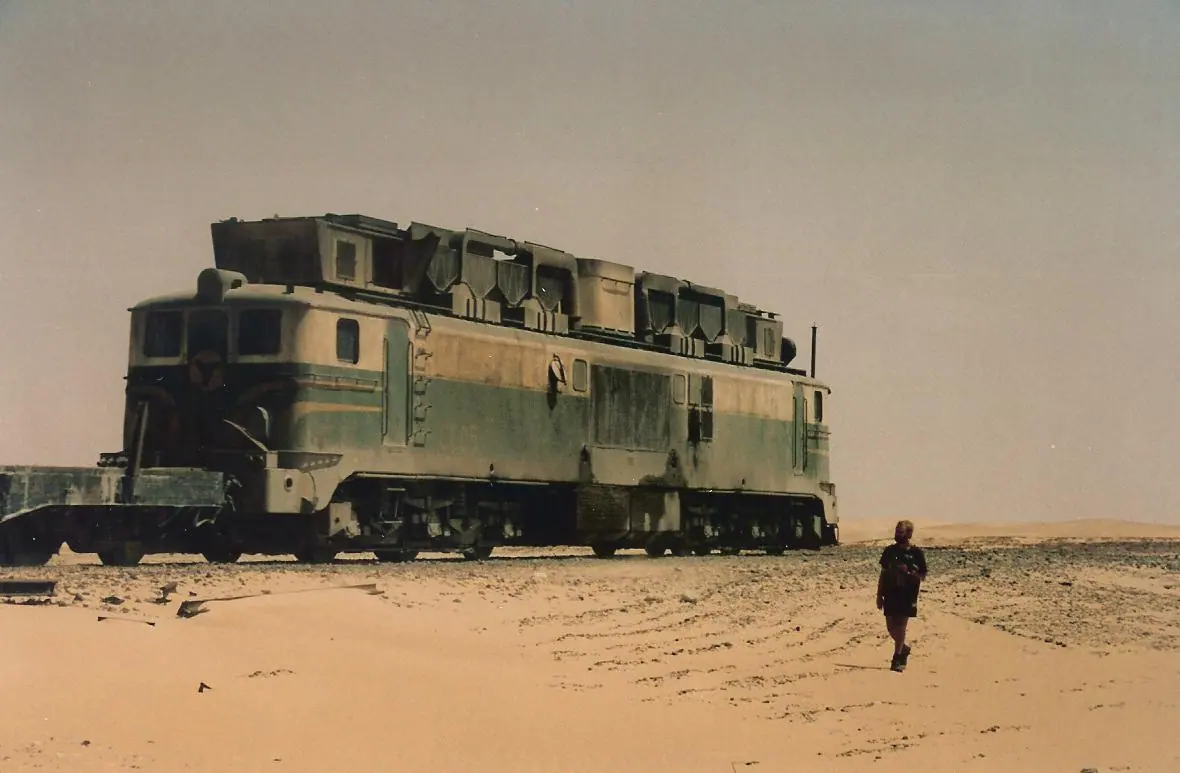
For sheer oddity, ride part of the iron ore train that hauls from the mines near Zouérat down to the coast at Nouadhibou — among the longest trains in the world, grinding across the desert for around twenty hours, with passengers sometimes hitching a lift in the wagons. Near Nouadhibou, the Cap Blanc peninsula shelters one of the last populations of Mediterranean monk seals. And in the far south, Diawling National Park offers boat trips through mangroves, pelicans and river villages.
Travelling Well: Etiquette, Seasons and the Practical Rhythm
Mauritanian society is warm but courteous, and greetings carry real weight — a handshake, a hand to the heart, and a genuine enquiry about family are the price of entry. Use your right hand for eating and for passing anything, remove your shoes inside homes, and dress modestly with long sleeves and trousers or a skirt below the knee; women will feel more comfortable with a scarf for rural areas. Always ask before photographing people, and put the camera away at markets until you have permission. During Ramadan, eating and drinking openly in the street during daylight is best avoided.
Practicalities reward preparation. Many areas outside the capital, particularly in the Adrar and the far north, are best visited with an authorised local guide, and some routes require paperwork arranged in advance through an agency. Four-wheel drive with a driver is the norm beyond the highways, and distances are deceptive — a 200-kilometre track can take all day. Carry cash in ouguiya, as card acceptance is rare and ATMs outside Nouakchott are unreliable, plus more drinking water than feels necessary.
Alcohol is effectively unavailable, so plan around tea and juice. Travel insurance that covers remote evacuation, a well-stocked first-aid kit and dust protection for eyes and lungs are sensible investments. Finally, build slack into the itinerary: checkpoints, sandstorms and spontaneous invitations to share a meal will all slow you down, and in Mauritania that is usually the point.
Frequently asked questions
What is the best time of year to tour Mauritania?
November to March is by far the most comfortable window, with December and February offering mild desert days and cold nights in the Adrar. June to September is punishingly hot inland, often above 40°C, and the coastal fog is constant but the temperatures are more bearable.
How long do I need to see Mauritania properly?
Ten days is a realistic minimum for Nouakchott, the Adrar caravan towns of Chinguetti and Ouadane, and the oasis of Terjit. Two weeks lets you add Banc d'Arguin and Nouadhibou, or head south to the wetlands of Diawling.
Can vegetarians and fussy eaters manage in Mauritania?
Yes, with planning. Rice, millet porridge, dates, flatbread, vegetable couscous and bean dishes are widely available, and the south's peanut and onion-based stews are easy to serve meat-free. Meals are shared from one platter, so explain your needs to your guide or host in advance.
Do I need a guide in Mauritania?
For the Adrar, the Guelb er Richât and Banc d'Arguin, yes — a local guide and 4x4 driver are close to essential, and some areas require advance authorisation. Independently, guides also unlock manuscript libraries, family meals and market access that you would otherwise walk straight past.
What should I pack for a Mauritanian tour?
Loose, modest clothing that covers shoulders and knees, a scarf or hat, sunglasses and dust protection, a warm layer for freezing desert nights, a head torch, water-treatment tablets, and enough cash in local currency for the days when no ATM works.
Sort the rest of your trip
Everything for Mauritania, in one place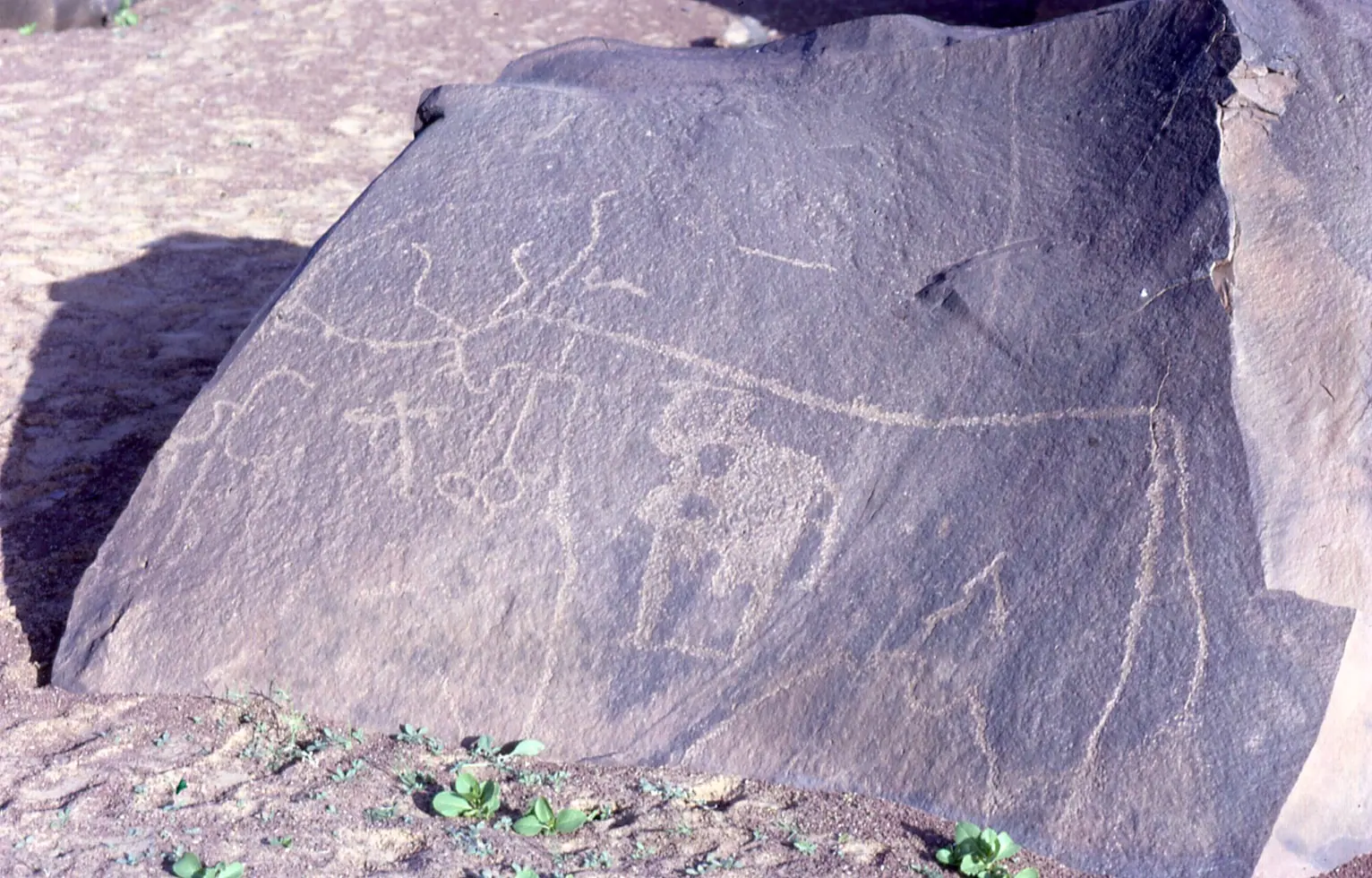
Stay in Mauritania
Hotels, guesthouses and apartments — compared in one search.
Search hotels
Transfer in Mauritania
Private driver waiting on arrival — no queues, no surprises.
Book a transfer
Stay online in Mauritania
Travel eSIM — data the moment you land, no roaming bills.
Get an eSIM