Lithuania is a small country with an outsized sense of place: baroque streets that end in castle towers, a red-brick island fortress floating on a lake, and a thin ribbon of giant dunes that separates the Baltic Sea from a lagoon. Travel a couple of hours in any direction and the landscape, the architecture and even the food change completely.
Vilnius Old Town: A Baroque Labyrinth Worth Two Days
Start where the country does, in the cobbled heart of Vilnius, one of the largest surviving old towns in this part of Europe. Cathedral Square opens the show, with its white neoclassical basilica and the freestanding bell tower that has watched over coronations and protests alike. From there, Gediminas' Tower crowns the green hill above the city — climb the path or ride the funicular at the back of the hill for the classic rooftop panorama across tiled roofs and church spires.
Wander uphill along Pilies Street past the courtyards of Vilnius University, then duck into St. Anne's Church, a flamboyant Gothic confection of lace-like brickwork that Napoleon reportedly admired enough to want to carry home in his palm. Further south, the Gate of Dawn still straddles a street as the last remnant of the city walls, with its revered painted Madonna above the arch. Cross the river into Užupis, a bohemian quarter that declared itself an independent republic, complete with a constitution printed on mirrored tiles along Paupio Street.
Give Vilnius at least a full day on foot and a second morning for the Hill of Three Crosses, the Bernardine Garden and the quieter courtyards of the old Jewish quarter. In summer, hot-air balloons drift over the old town at sunrise and again in the evening — an unusual way to see the skyline. Wear shoes with grip; the cobbles and stairways are charming but unforgiving.
Trakai Island Castle and the Lakeland Around It
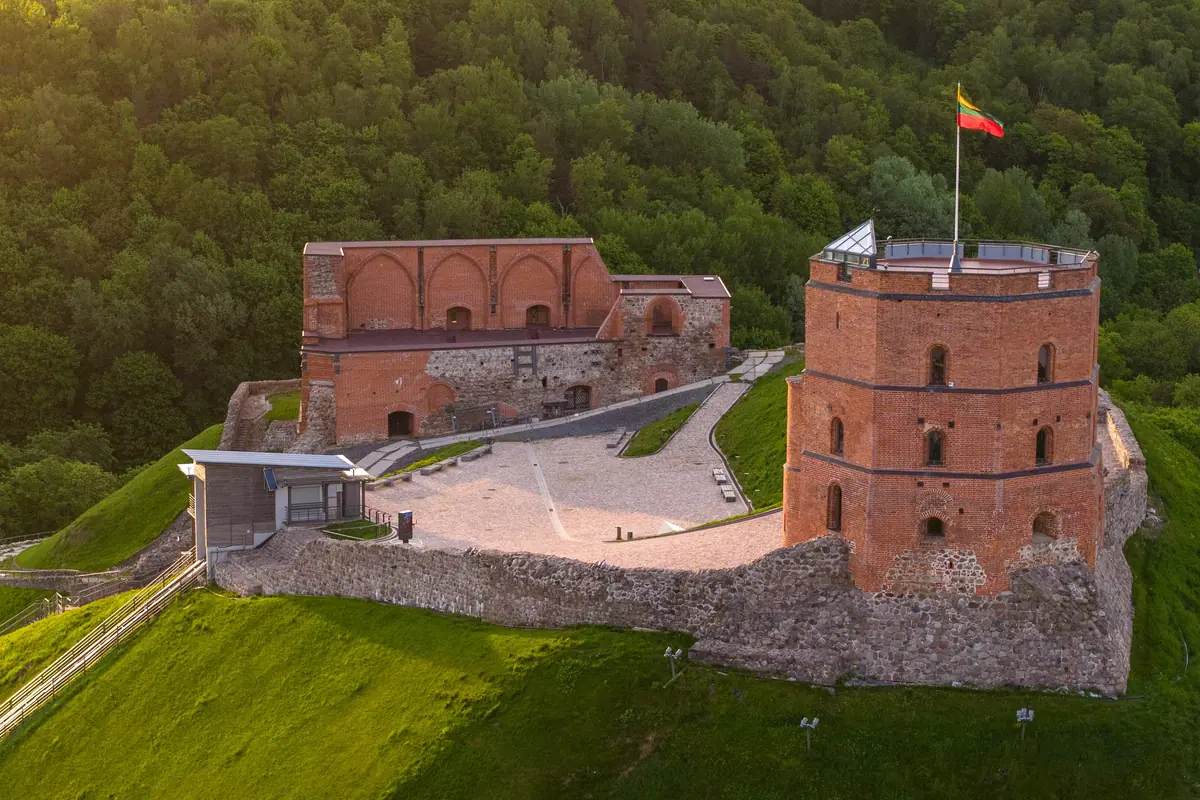
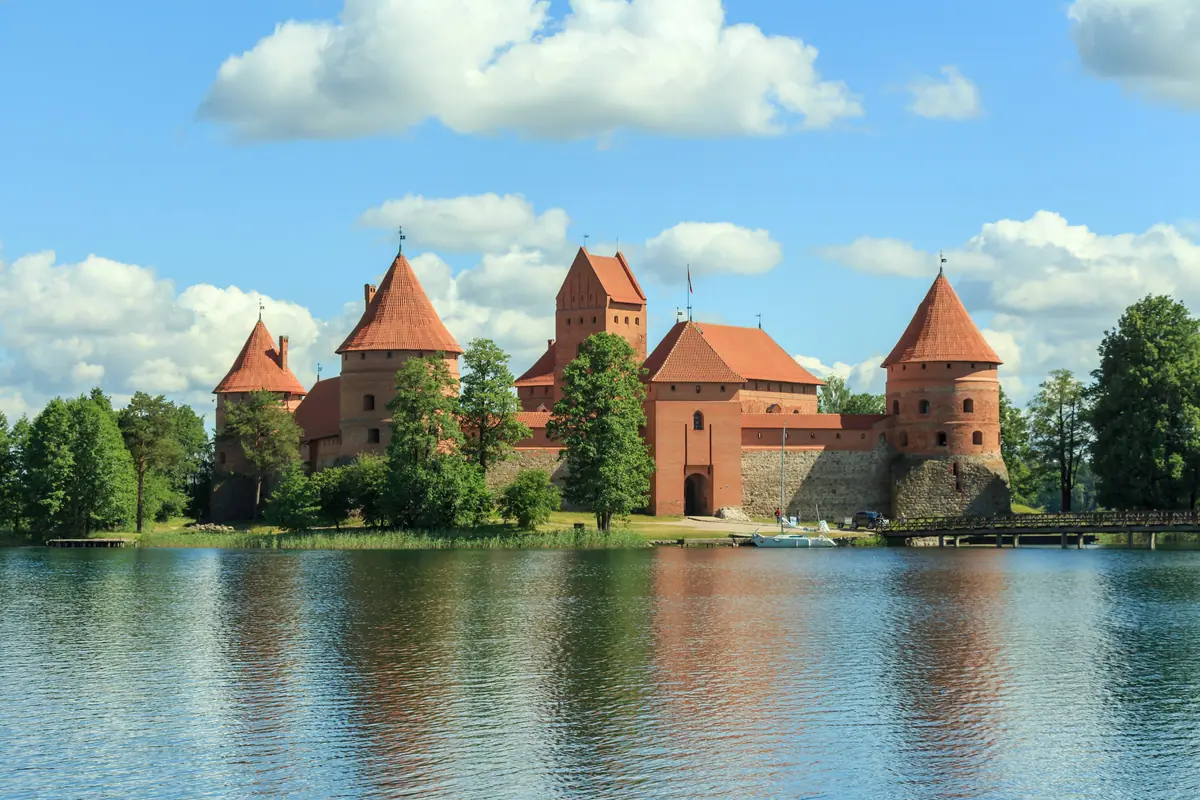
Half an hour by train or a short drive west of the capital, Trakai Island Castle rises from the middle of Lake Galvė on a small island, reached by a pair of wooden footbridges. Built in the 14th century and later restored, it is the country's most photographed building for a reason: red brick towers, a moat-like expanse of water and reflections that change with the light. Inside you'll find exhibition rooms on the Grand Duchy's history and a courtyard used for summer concerts.
Plan two to three hours for the castle itself, then stay for the lake. Rowboats take visitors out onto Galvė and neighbouring lakes, and the shoreline paths make an easy, flat walk between viewpoints. The town's other attraction is its Karaite heritage — a small Turkic community settled here centuries ago as castle guards, whose legacy survives in the wooden houses along Karaimų Street and in the local specialty, kibinai, savoury pastries stuffed with meat or vegetables.
Go early in the morning in July and August, when coach groups arrive by mid-morning and the footbridges become a slow-moving queue. May, June and September are calmer and often warmer than visitors expect. Trakai also sits inside a protected historic national park of islands, forests and villages, so it repays a slow afternoon rather than a rushed stop.
Kaunas: Interwar Streets, a Hilltop Monastery and a Sobering Fort
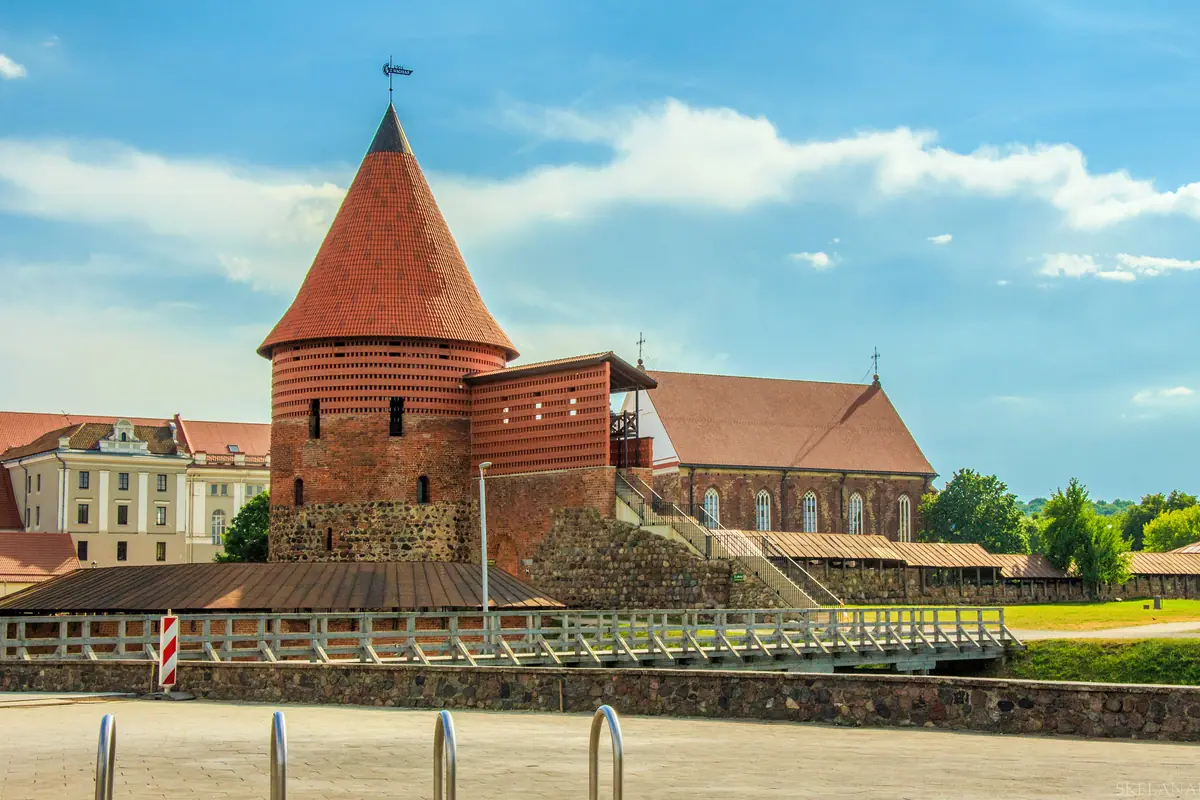
Lithuania's second city has reinvented itself as the country's design and student capital, and it is compact enough to cover in a day. Laisvės Alėja, a long pedestrian boulevard lined with linden trees, cafés and interwar buildings, runs from the New Town to the Old Town, where Kaunas Castle sits at the meeting point of the Nemunas and Neris rivers. The Cathedral Basilica of St. Peter and St. Paul, the oldest church in the city, anchors the old streets nearby.
Two funiculars still creak up the hillsides — one to Aleksotas for the best terrace view of the confluence, another to Žaliakalnis — and both are attractions in their own right. On the eastern edge of the city, Pažaislis Monastery is a baroque masterpiece of domes, frescoes and quiet courtyards, while the Ninth Fort on the northern outskirts preserves a stark and moving memorial to the wartime history of the region. Allow time for reflection there rather than ticking it off a list.
Kaunas is about an hour from Vilnius by frequent train, which makes it an easy day trip, but an overnight stay lets you catch the city after dark, when the boulevard fills up and the student bars open. Note that some sights, including parts of the old town and the monastery, are best reached with a short taxi or bus ride.
The Curonian Spit: Dunes, Fishing Villages and the Baltic Sea
The Curonian Spit is a 98-kilometre sandbar shared with neighbouring Latvia, and it is unlike anywhere else in the country. From the port city of Klaipėda — itself worth a wander for its half-timbered old town and Theatre Square — a short ferry crosses to Smiltynė, where the spit begins. Vehicles pay an ecological fee to enter, and in peak summer the number of cars allowed per day is capped, so book your crossing slot well ahead and sleep on the spit if you can.
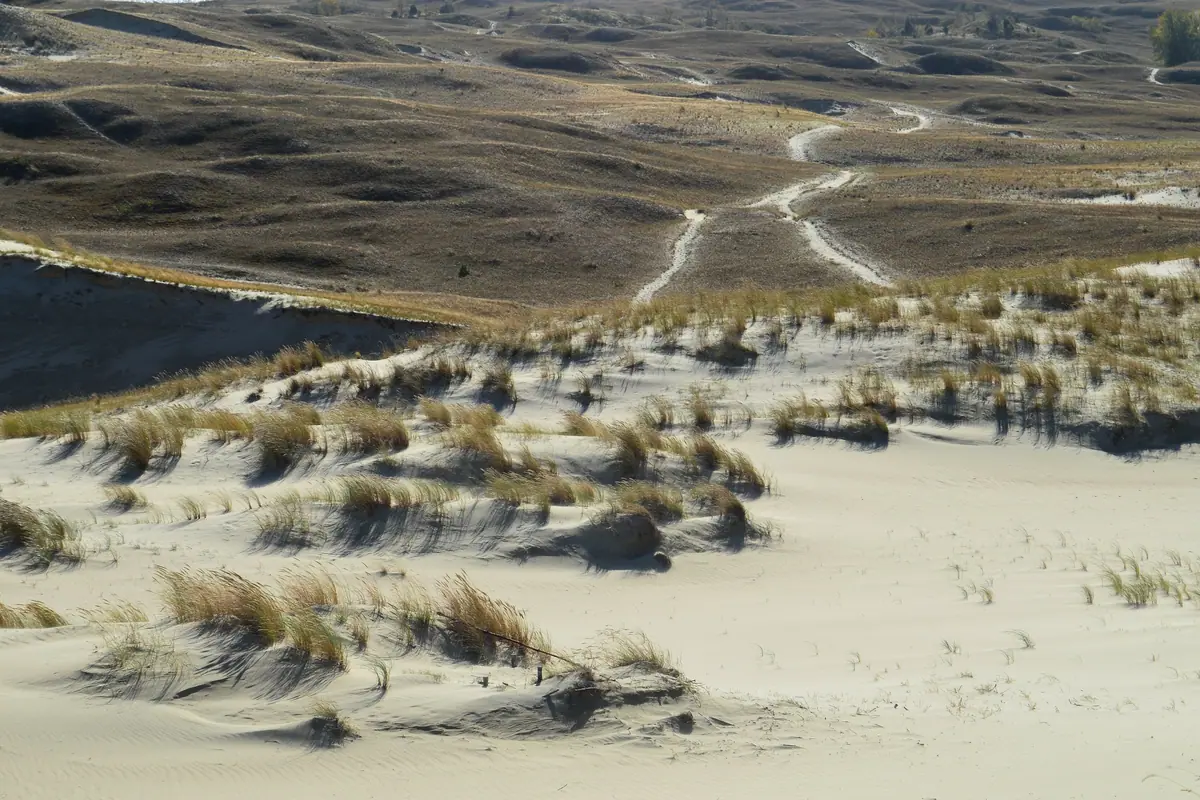
At Nida, the largest settlement, wooden fishing houses with carved weather vanes cluster around the harbour. Climb the Parnidis dune for a sundial that doubles as a viewpoint over drifting sand and the lagoon, then walk the marked trail across the Dead Dunes, where entire villages were once buried. North of Nida lies Juodkrantė, home to an eerie hillside of carved wooden figures, and further still the bird-migration point at the lagoon's edge. Cyclists use a flat asphalt path that links the villages for dozens of kilometres.
The spit rewards two or three nights, especially in June and September when the light is long and the crowds thinner. Bring layers and mosquito repellent for summer evenings near the lagoon, and expect strong sun on the open dunes even on breezy days. Along the mainland coast, Palanga adds a long pier, a botanical park and an amber museum housed in a former palace — a good wet-weather stop.
Hill of Crosses, Kernavė and the Aukštaitija Lakelands
North of the town of Šiauliai, the Hill of Crosses is one of the strangest and most affecting sights in the country: thousands of crosses, crucifixes, rosaries and small votive offerings packed onto a low mound in the middle of flat farmland. Pilgrims have planted crosses here for generations, including during periods when doing so was forbidden. Allow an hour or two, and time your visit for early morning or late afternoon when the light rakes across the metal and wood and the tour buses have gone.
Closer to Vilnius, the archaeological site of Kernavė sits above a bend in the Neris river, where five hillforts and a valley of wooden houses mark what was once an early seat of power. Combine it with a day in the Aukštaitija National Park, a landscape of connected lakes and pine forest best explored by canoe or kayak from the village of Palūšė, with its little wooden church. Viewpoints such as Ladakalnis give you six lakes in a single sweep.
Further east, Anykščiai has a treetop walking path that swings above the canopy, plus the enormous Puntukas boulder and a narrow-gauge railway through the countryside. This region is rural and spread out, so a car — or patience with occasional buses — makes the days flow better. May through September is the season for swimming and boating; October brings the birch forests into full colour.
Lithuanian Flavours, Festivals and Practical Rhythms
Food here is hearty and unpretentious. Cepelinai — fat potato dumplings named after zeppelins, filled with meat or curd and topped with sour cream — are the national dish, best eaten at a plain wooden table. Cold beetroot soup, shockingly pink and served with hot potatoes, is the taste of Lithuanian summer; in winter, look for kugelis potato bake and smoked fish from the Curonian Lagoon. Kibinai in Trakai, dark rye bread with honey, and gira, a lightly fermented rye drink, round out a very reasonably priced eating culture.
The calendar shapes the trip. Late June brings the shortest nights of the year, celebrated with bonfires, wreaths floated on rivers and the midsummer feast of St. John's Eve. Winter is quiet and cold, but Vilnius lays on a Christmas market in Cathedral Square with mulled wine and amber stalls, and early November sees families place thousands of candles on graves for All Souls' Day — a striking, solemn sight if you happen to be there.
Vilnius, Kaunas and the coastal resorts are well linked by trains and buses, and a car helps for the national parks. Distances are short: the country is roughly the size of a long day's drive end to end. Learn a few words of Lithuanian, bring a waterproof layer whatever the forecast, and expect cool, changeable weather even in July. The locals are reserved at first and generous once you show genuine interest in their country.
Frequently asked questions
How many days do I need in Lithuania?
Five to seven days covers the essentials comfortably: two days in Vilnius, a half-day trip to Trakai, a day in Kaunas, and two or three nights on the Curonian Spit. A ten-day trip adds the Hill of Crosses, Kernavė and the Aukštaitija lakes without feeling rushed.
What is the best time to visit Lithuania?
Late May to early September offers warm days, long evenings and the fullest festival calendar. June and September are the sweet spots for fewer crowds. December brings Christmas markets in Vilnius, while October is best for autumn colour in the forests and national parks.
Is the Curonian Spit worth the trip, and do I need to book?
Yes — the dunes, fishing villages and cycling paths are among the country's highlights. In July and August the daily number of vehicles allowed onto the spit is limited and an ecological fee applies, so reserve your entry slot and accommodation well in advance.
How do I get to the Hill of Crosses?
It sits about 12 kilometres north of Šiauliai, reachable by train or bus from Vilnius and Kaunas followed by a short local bus or taxi ride. Most visitors spend one to two hours there, and there is no admission charge.
What should I eat and drink in Lithuania?
Try cepelinai potato dumplings, cold beetroot soup with hot potatoes, kugelis potato bake, Trakai kibinai pastries and smoked fish from the lagoon. Wash it down with gira, a fermented rye drink, or local amber-coloured beer, and finish with šakotis, a towering spit-roasted cake.
Plan it — experiences in Lithuania
Live search, booked directly with trusted providers.
Sort the rest of your trip
Everything for Lithuania, in one place
Stay in Lithuania
Hotels, guesthouses and apartments — compared in one search.
Search hotels
Transfer in Lithuania
Private driver waiting on arrival — no queues, no surprises.
Book a transfer
Stay online in Lithuania
Travel eSIM — data the moment you land, no roaming bills.
Get an eSIM