Lithuania is a country you can drive across before lunch and still spend two weeks unpeeling — Baroque old towns, pine forests loud with birdsong, a sand-spit that looks borrowed from the Sahara, and a table that runs on rye bread, beetroot and smoked fish. This is a tour built around eating, walking and listening rather than ticking off monuments, though the monuments here happen to be extraordinary.
A Small Country That Packs In Big Experiences
Lithuania sits at the southern edge of the Baltic states, and its compactness is its greatest gift to a visitor. You can start a morning in the cobbled lanes of the capital, eat lunch beside a lake-side red-brick castle, and watch the sun go down over dunes on the coast — all in a single, unhurried day of driving. The landscape shifts constantly: flat farmland and stork nests, then dense pine and birch forest, then lake country riddled with more than two thousand bodies of water, then a narrow ribbon of sand separating a lagoon from the open sea.
That geography shapes the culture. Lithuania has a long memory — a medieval Grand Duchy that once stretched far beyond its modern borders, a century of occupations that ended only in 1990, and a stubborn attachment to language, song and family land that survived all of it. You feel it in unexpected places: in the number of people who still keep a vegetable plot, in the reverence for the song festivals where tens of thousands of singers gather, in the way a village baker will tell you exactly which field the rye came from. Lithuanians can seem reserved on first meeting and generous by the second evening — a shared plate of cheese and a glass of something herbal usually settles it.
For a first tour, aim for five days at minimum and ten if you want the coast. The prime window is May to September, when days are long and outdoor markets, lake swimming and beer gardens are all in play. December brings frost, mulled drinks and candlelit Christmas markets in the main squares. Late September and October are for mushroom foragers and anyone who prefers golden birch woods and empty trails to crowds.
Vilnius: Baroque Lanes, Užupis and the Market Table
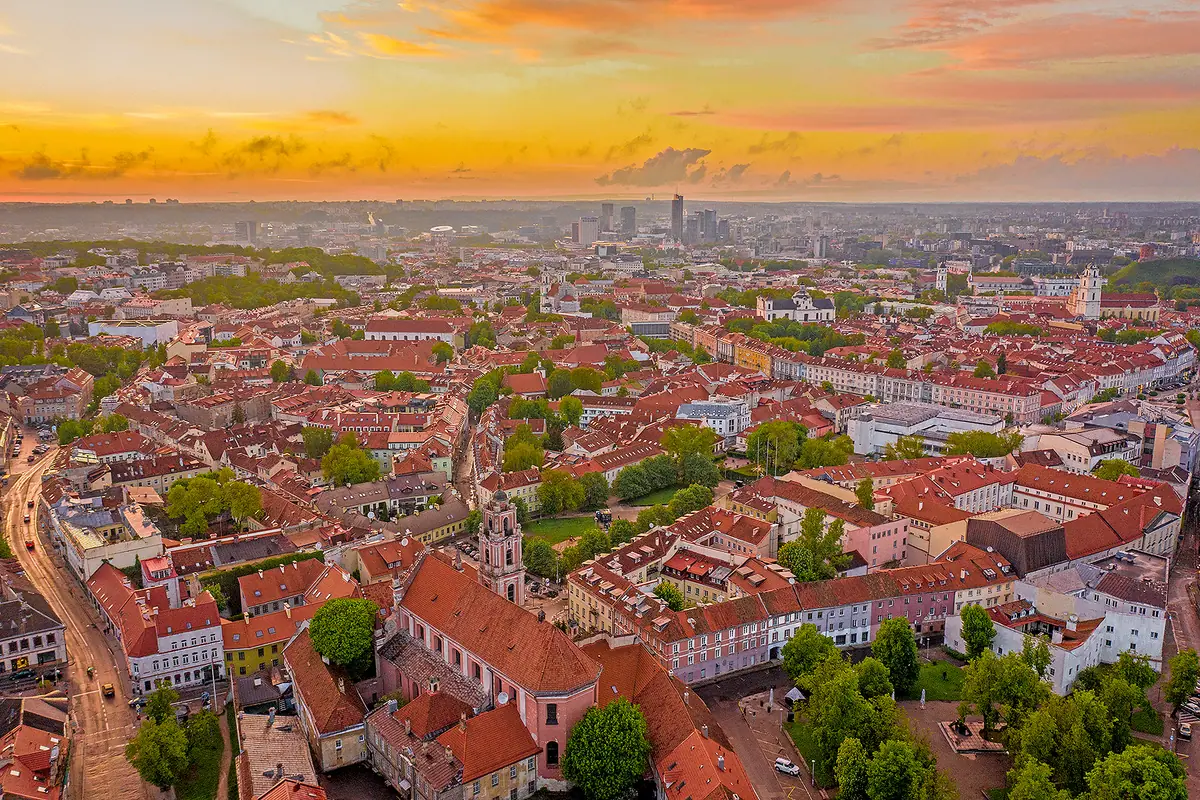
Begin in Vilnius, whose old town is one of the largest surviving Baroque quarters in Europe. The natural first walk starts at Cathedral Square, where the white neoclassical cathedral and its free-standing bell tower sit below the remains of the Grand Duchy's power. Climb the path to Gediminas' Tower on the wooded hill behind it for the classic rooftop panorama, then follow Pilies Street downhill past amber shops and courtyard cafés to St Anne's Church, a knot of flamboyant brick Gothic so intricate that Napoleon supposedly wanted to carry it home in his palm.
Cross the river into Užupis, a scruffy artists' quarter that declared itself an independent republic in the 1990s and nailed a mock constitution to a wall in half a dozen languages. It's the best place in the city for a slow afternoon: gallery hoppers, riverside benches, and the Bernardine Garden looping back toward the centre. Pair that lightness with something heavier — the Museum of Occupations and Freedom Fights, housed in the former Soviet security headquarters on Gedimino Avenue, where the basement cells and deportation records explain the country's twentieth century with a bluntness that stays with you.
Then eat. Start at Halės Market, a covered bazaar on the edge of the old town where stalls sell smoked eel, curd cheese, dark rye loaves, forest honey and mushrooms by the bucket. Vilnius dining swings between cellar restaurants serving hearty peasant cooking and a younger generation reinventing it with foraged herbs and local cider. In early March, Cathedral Square fills with the St Casimir's Fair, a centuries-old market of amber, linen, honey, carved wood and palm fronds — one of the best single introductions to Lithuanian craft you'll find all year.
Day Trips: Trakai, Kernavė and the Hill of Crosses
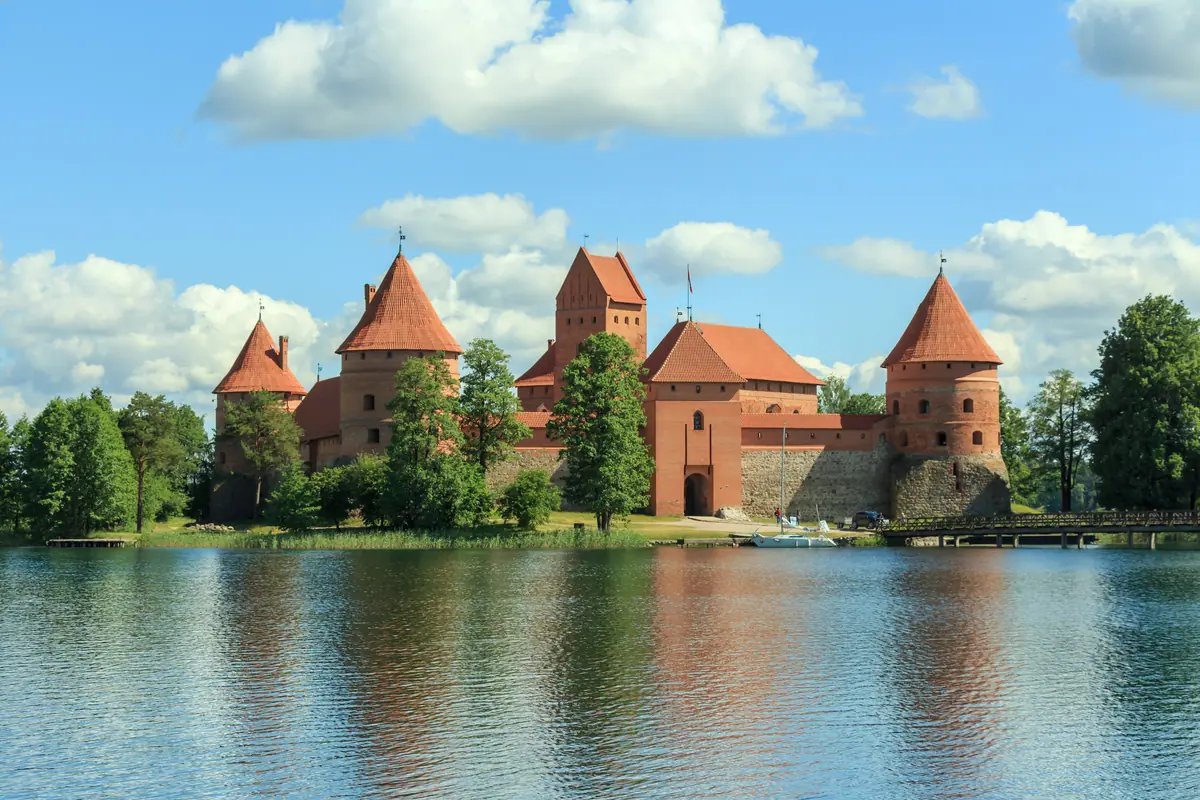
Thirty minutes west of the capital, Trakai Island Castle rises from Lake Galvė on its own small island, reached by a long wooden footbridge and best photographed from a rowing boat in late afternoon light. The town around it is the historic home of Lithuania's Karaim community, Turkish-speaking Jews brought here as castle guards in the fourteenth century, and their legacy is kibinai — flaky half-moon pastries stuffed with lamb or beef — sold from windows all along the main street. Eat them warm, standing up, before the bus back.
For prehistory rather than castles, head to Kernavė, the country's first medieval capital, where five hillfort mounds rise above a bend in the Neris river and the valley floor still holds traces of a buried town. It's a place of grass, wind and archaeology, best visited with a guide on a summer morning. Farther north, near Šiauliai, the Hill of Crosses is Lithuania's most affecting site: a small rise buried under tens of thousands of crosses, rosaries and carved offerings, planted over generations as quiet resistance during the tsarist and Soviet eras. It is genuinely overwhelming, and there is no café, no queue, no ticket booth — just a car park, a path and a field of crosses humming in the wind.
Round the trip out with Kaunas, an hour from Vilnius by train. Its old town has a handsome Town Hall Square and the ruins of Kaunas Castle at the confluence of two rivers, while the Ninth Fort on the city's edge documents the Nazi occupation with a raw concrete memorial. In between, the interwar modernist district — a dense grid of 1930s apartment buildings and cafés — has become the city's most enjoyable quarter for an evening.
West to the Sea: Klaipėda and the Curonian Spit
The road west ends at Klaipėda, a port city whose old town is a tidy grid of half-timbered warehouses along the Dane river, with a sculpture trail, a theatre square and a friendly, seafaring feel. From the ferry terminal beside the castle remains, a boat crosses the narrow strait to the Curonian Spit — a hundred-kilometre ribbon of forest and dune split between Lithuania and Russia, and the single most beautiful landscape in the country. Vehicles pay an environmental fee at the entrance, so sort that before you board.
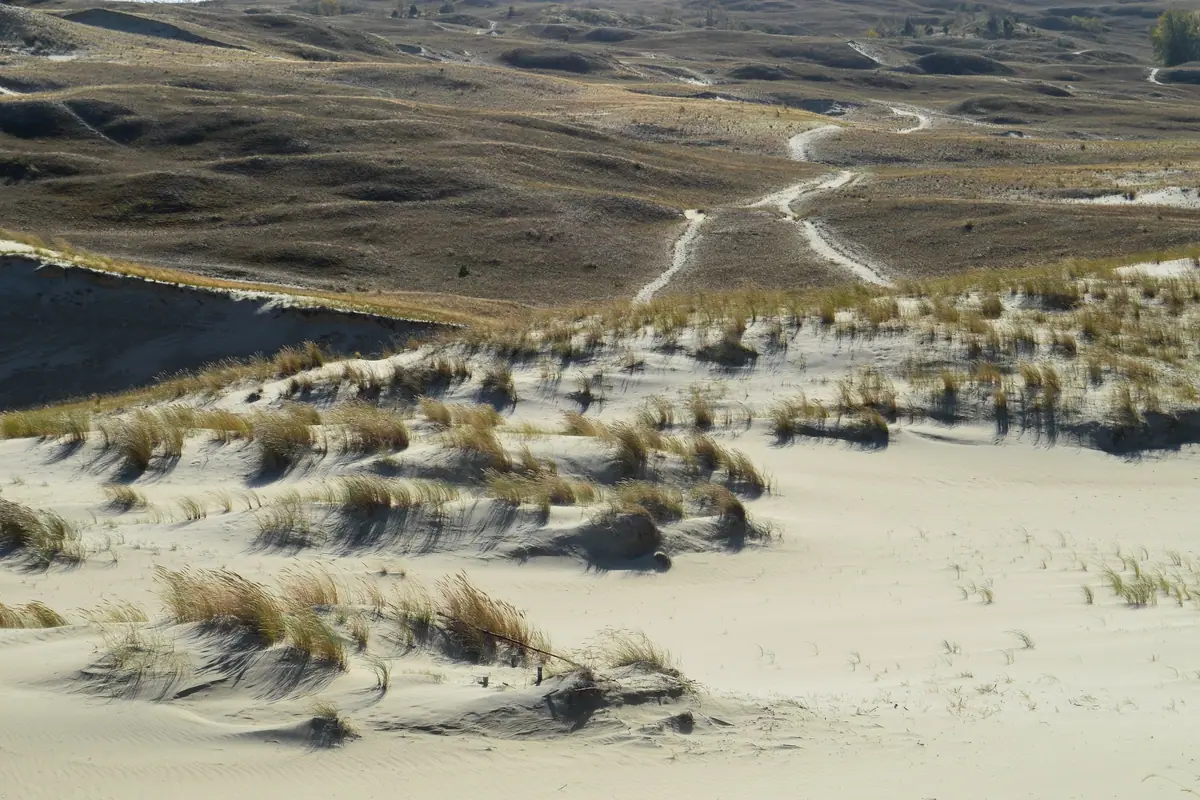
Inside the national park, the village of Nida is the base: wooden houses with carved gables, a lagoon full of sailing boats, and the Parnidis Dune, where a stone sundial stands on a ridge above sand that shifts with every storm. Walk the marked trail to the Dead Dunes near Pervalka in early morning and you'll have nothing but wind, sand ridges and pine forest around you. Birdwatchers should aim for Ventė Cape, where migration seasons in spring and autumn funnel hundreds of thousands of birds through a ringing station on the lagoon shore.
Down the coast, Palanga is Lithuania's seaside resort — a long pier, a botanical park, amber shops and beaches where a brisk west wind will find you even in July. The Baltic is bracing rather than balmy; you swim in short, triumphant bursts. Amber is the regional obsession: found after storms, carved in workshops, sold in every second shop, and best understood at the small museums in Palanga and Klaipėda that explain how fossilised pine resin from a prehistoric forest ended up on these beaches.
What to Eat, Drink and Join In With
Lithuanian cooking is farmhouse food built for cold weather and long days of work. Cepelinai — fat potato dumplings shaped like zeppelins, stuffed with minced meat, curd cheese or mushrooms and drowned in sour cream and bacon — are the national dish and a full meal in themselves. Kugelis is a baked potato pudding, also served with sour cream; vėdarai stuff potato mixture into sausage casings; skilandis is a smoked, cured pork stomach that slices like salami and tastes far better than it sounds. Cold beetroot soup, šaltibarščiai, is the pink, tangy summer counterpart, served with hot boiled potatoes and usually eaten at lunch in weather that justifies it.
Bread is the quiet hero: dense, dark rye, sometimes baked with caraway or molasses, used as a base for everything from herring to honey. Try šakotis, the tall tree-shaped spit cake with a hundred golden spikes, at a wedding or market; kastinys, a whipped butter-and-sour-cream dip from Samogitia; and buckwheat porridge with mushrooms in autumn. To drink, order gira, a lightly fermented rye kvass sold from street barrels in summer, or midus, a honey mead, and finish with a glass of the country's herb-infused bitter liqueur, poured in every bar and reputed to cure everything.
The best local experiences are the events rather than the restaurants. On the night of 23 June, the whole country leaves for the countryside to celebrate Joninės — bonfires, flower wreaths, singing, cheese with caraway and a search for the mythical fern blossom at midnight. Autumn is mushroom season, when families fan out into the forests with buckets and knives and roadside vendors sell porcini from garden tables. And in any rural village, look for a sodyba, a farmstead guesthouse where you can sleep in a wooden house, take a birch-whisk sauna and eat whatever was picked that morning.
Practical Rhythms: When to Go and How to Move
Think of Lithuania as a May-to-September country, with two exceptions worth planning around. June and early July bring the longest days and the best atmosphere, but also the busiest coast. September is dry, golden and much quieter, and it's the month for forest walks. December turns the old towns into candlelit Christmas markets and is genuinely charming if you accept early darkness and temperatures near freezing. January and February are properly cold, snowy and cheap — museum time rather than outdoors time, though a walk over a frozen lake is its own reward.
For a first visit, five days covers Vilnius, Trakai and Kaunas comfortably. Add four or five more to reach Klaipėda, the Curonian Spit and Palanga without rushing. Trains link the three main cities reliably and cheaply, with comfortable carriages and wi-fi; buses fill in the smaller towns and the lakeside villages. Driving is easy on quiet roads, but if you plan to enter the Curonian Spit by car, arrange the national park fee in advance, and note that some of Neringa's side roads are closed to vehicles entirely.
A few practical habits help. Cards are accepted almost everywhere but keep some cash for village markets and roadside honey sellers. Tap water is drinkable. Lithuanians value a certain calm — quiet voices on trains, no small talk at the till — but they will go out of their way to help if you ask, and a few words in Lithuanian are always appreciated. Bring a rain shell even in July, shoes you can walk cobbles in, and an empty suitcase pocket for amber, linen and a loaf of rye bread to take home.
Frequently asked questions
What is the best time of year to tour Lithuania?
Late May through September is ideal, with warm days, long light evenings and everything open. June brings the Midsummer festival, September brings golden forests and fewer visitors. December is the best winter month for Christmas markets in Vilnius and Kaunas; January and February are very cold but good for museums and snowy landscapes.
How many days do you need to see Lithuania properly?
Five days is enough for Vilnius, Trakai Island Castle and Kaunas at a relaxed pace. Allow eight to ten days if you want to add Klaipėda, the Curonian Spit, Nida and Palanga, plus a stop at the Hill of Crosses near Šiauliai on the way north.
What food must I try in Lithuania?
Cepelinai (potato dumplings with sour cream and bacon), kugelis (baked potato pudding), šaltibarščiai (cold beetroot soup with hot potatoes), smoked eel from the Curonian Lagoon, Karaim kibinai in Trakai, dark rye bread, šakotis spit cake, and cheese with caraway. Drink gira in summer or a herb-infused bitter liqueur after dinner.
Can I visit Trakai and the Curonian Spit without a car?
Yes. Trakai is a half-hour bus or train ride from Vilnius and the castle is a short walk from the station. For the Curonian Spit, take a train or bus to Klaipėda and then the passenger ferry across the strait, where local buses connect to Nida and other villages along the spit.
What is Joninės and can visitors join in?
Joninės, on the night of 23 June, is Lithuania's Midsummer celebration, with bonfires, flower wreaths, singing and traditional foods like cheese with caraway. It is a family and village festival rather than a commercial event, and visitors are warmly welcomed at public celebrations in towns and at open-air museums near Vilnius and Kaunas.
Sort the rest of your trip
Everything for Lithuania, in one place
Stay in Lithuania
Hotels, guesthouses and apartments — compared in one search.
Search hotels
Transfer in Lithuania
Private driver waiting on arrival — no queues, no surprises.
Book a transfer
Stay online in Lithuania
Travel eSIM — data the moment you land, no roaming bills.
Get an eSIM