Lithuania packs an improbable amount into a small country: baroque old towns, a fairy-tale castle floating on a lake, sand dunes that migrate with the wind, and forests where you can paddle all day without seeing a road. It rewards slow travel, but even a week will leave you with a list of reasons to come back.
Vilnius Old Town: Baroque Streets and a Republic of Its Own
Start in Vilnius, whose Old Town is one of the largest surviving historic cores in this part of Europe and a recognised UNESCO World Heritage site. The natural first move is the climb up Gediminas' Tower, the red-brick remnant of the upper castle on the hill above the city, where you get the classic postcard view over terracotta roofs toward the modern skyline. Below it, Cathedral Square opens out in front of Vilnius Cathedral with its free-standing bell tower, and the long pedestrian spine of Pilies Street runs south through the old merchant quarter.
Give yourself at least a full day, ideally two. Detour to St Anne's Church, a lacy gothic confection so delicate that legend claims Napoleon wanted to carry it home in his palm, then walk the courtyard circuit of Vilnius University, a working institution since the sixteenth century. At the southern edge of the Old Town stands the Gate of Dawn, the last surviving city gate, with its revered icon above the arch. Cross the river into Užupis, a small bohemian quarter that declared itself an independent republic in the 1990s and still marks the joke with a constitution etched onto a wall and its own tiny border checkpoint.
If the weather holds, book a hot-air balloon flight at dawn or dusk — Vilnius is one of the few European capitals where balloons are allowed over the historic centre, and the view of the castle hill from a few hundred metres up is unforgettable. Best months are May through September; June brings the white nights, when it stays light until nearly midnight.
Trakai Island Castle and the Lakes Around It
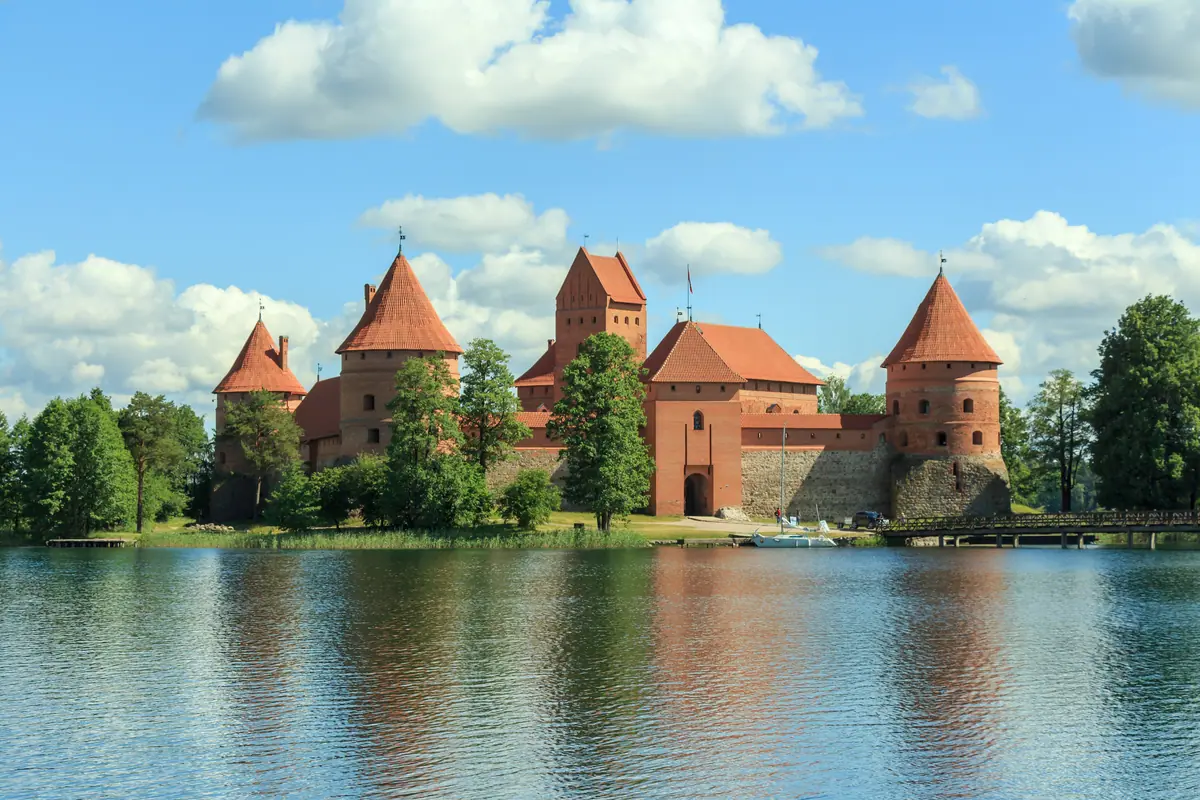
About half an hour west of Vilnius lies Trakai, the medieval capital of the Grand Duchy, and its signature sight: Trakai Island Castle, a red-brick fortress built on an island in Lake Galvė and reached by a long wooden footbridge. Inside, the halls hold a modest but absorbing museum of the Grand Duchy's history; from the battlements you look out over water dotted with small yachts and, on a calm morning, a mirror image of the towers.
Trakai also has a cultural footnote most visitors don't expect. The town was home to the Karaim, a Turkic-speaking community brought here as castle guards centuries ago, and their legacy survives in the wooden houses along Karaimų Street and in the local kitchen — look for kibinai, warm half-moon pastries filled with lamb or beef, sold from tiny windows.
This is prime activity country. Rent a kayak or a pedal boat on Lake Galvė, cycle the lakeside paths to Užutrakis Manor with its restored park terraces, or simply swim off the public beaches in summer. Four to five hours covers the castle and a lakeside lunch comfortably; a full day lets you add the manor and a paddle. The castle stays open year-round but the footbridges and boat rentals are best from May to September.
Kaunas: Funiculars, Modernism and the Ninth Fort
Lithuania's second city is where the country's twentieth-century story gets serious. Kaunas served as the temporary capital between the wars, and the result is an extraordinary concentration of interwar modernist architecture — now recognised as a UNESCO World Heritage site — around Laisvės Alėja, a long tree-lined pedestrian boulevard that anchors the city centre. Pick up a walking route or simply wander the surrounding streets, where functional white facades, curved balconies and bold geometric details appear around every corner.
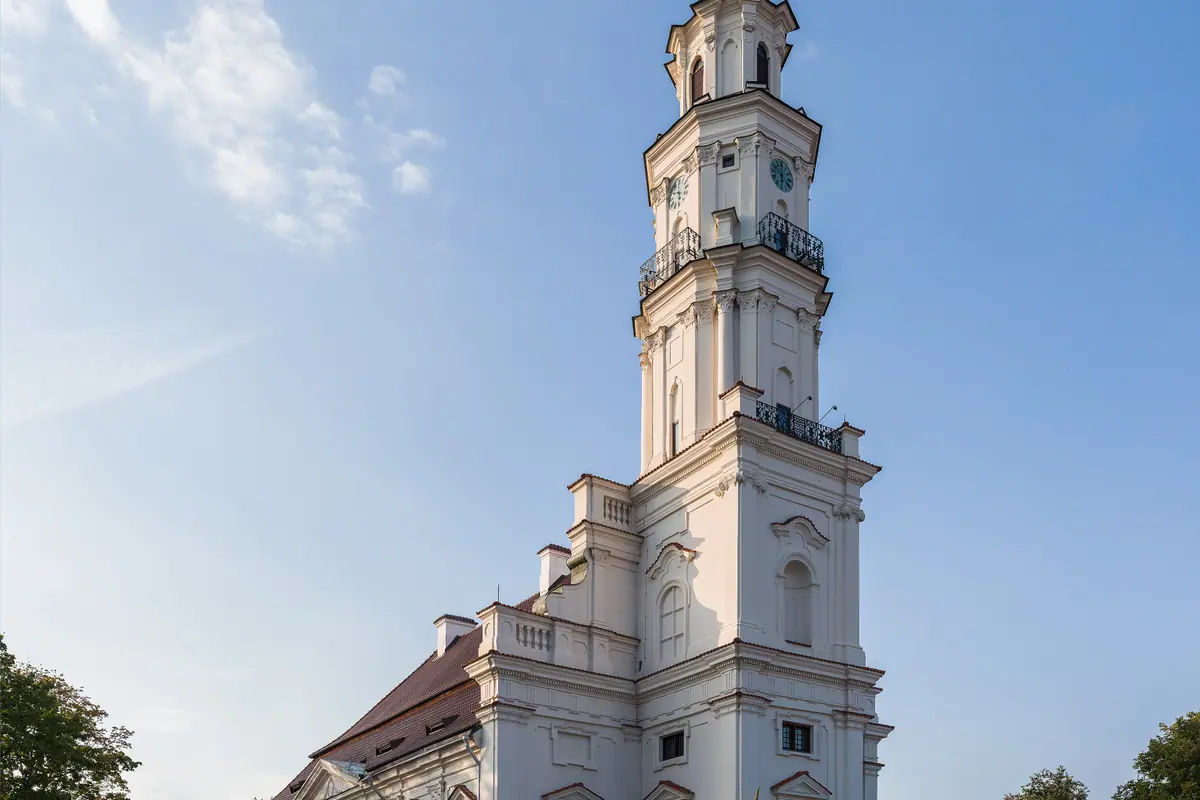
Start the old town at Kaunas Castle, the ruined riverside stronghold where the Nemunas and Neris meet, then walk to Town Hall Square with its white, slender town hall, nicknamed the White Swan. Two historic funiculars — one climbing to Žaliakalnis, one to Aleksotas — still run for pocket change and deliver the best panoramas over the confluence. The Ninth Fort, on the city's edge, is a sobering but essential stop: a nineteenth-century fortress later used as a prison and execution site during the Nazi occupation, now a museum and memorial.
Kaunas rewards quirky curiosity too. There is a museum devoted entirely to devils, a gallery of folk art full of carved wooden figures, and the Baroque monastery complex of Pažaislis, a short bus ride away on the reservoir. Trains from Vilnius take roughly an hour and a half, so Kaunas works as a day trip — but two days lets you see the forts, the funiculars and the architecture properly.
The Curonian Spit and the Port City of Klaipėda
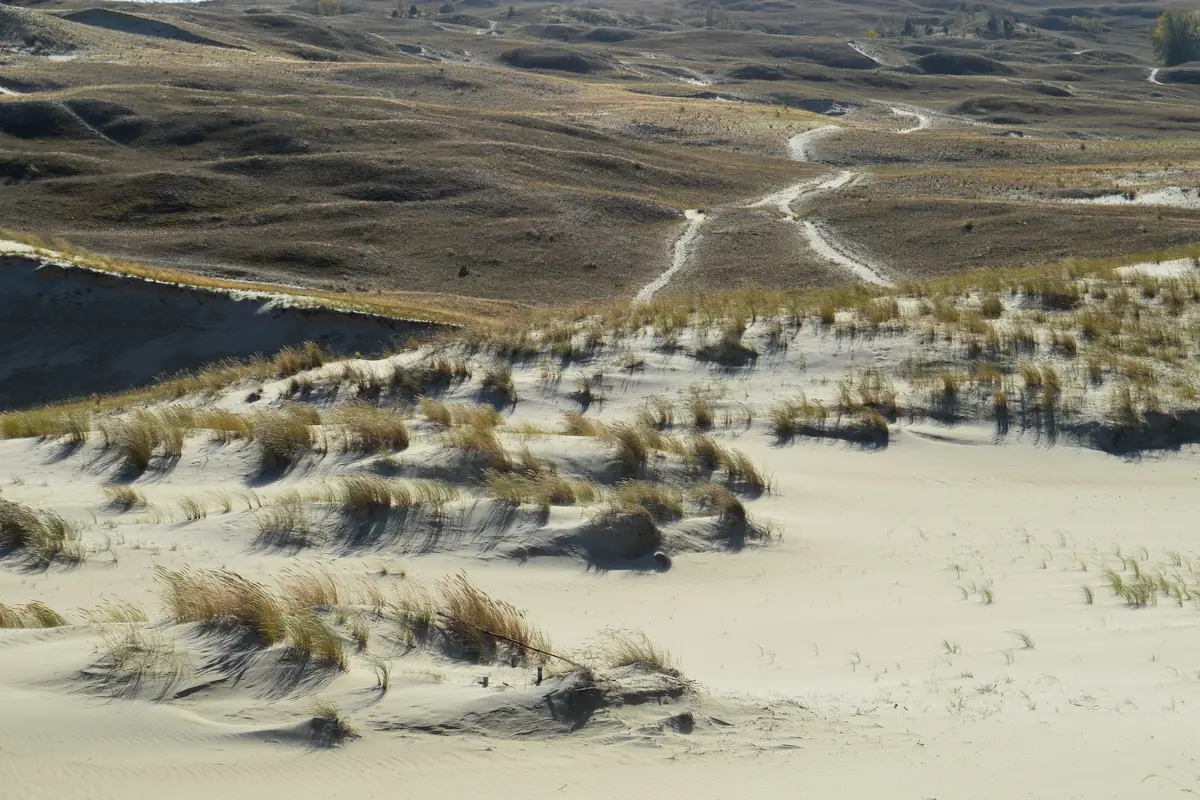
The Curonian Spit is Lithuania's strangest and most beautiful landscape: a hundred-kilometre sliver of sand, pine forest and drifting dunes separated from the mainland by the Curonian Lagoon. It is shared with the Kaliningrad region, and the Lithuanian half — a UNESCO World Heritage site — is reached by a short ferry hop from the port city of Klaipėda. Once across, the villages are tiny and the roads are flat, which makes cycling the obvious way to travel.
Base yourself in Nida, the largest settlement, and walk up the Parnidis Dune for the classic view: a vast grey sand sea on one side, lagoon and forest on the other, with a sundial carved from stone at the top. The German writer Thomas Mann summered here in a thatched cottage that is now a small museum, and the amber workshops along the waterfront sell pieces still gathered from the shore after autumn storms. Further north, Juodkrantė hides the Hill of Witches, a forest trail lined with dozens of carved wooden figures from Lithuanian folk tales — an easy, magical stop for families.
Practicalities are simple. Ferries run frequently from Klaipėda, bicycles can be rented on either side, and the whole Lithuanian section is about fifty kilometres end to end. Visit between June and early September for warm water and long days; May and September are quieter and still pleasant. In Klaipėda itself, the half-timbered facades of the old town and the Theatre Square are worth an afternoon before or after crossing.
The Hill of Crosses and the North
North of Kaunas, near the city of Šiauliai, stands the Hill of Crosses — a low mound entirely covered by tens of thousands of crosses, crucifixes and rosaries left by pilgrims over generations. It began as a quiet act of defiance in the nineteenth century, survived repeated attempts to bulldoze it during the Soviet era, and today is one of the country's most affecting places. There is no ticket, no shelter and little explanation beyond what you bring yourself; most visitors spend thirty to forty minutes walking the paths between the crosses, often in near silence.
The surrounding region is gentler and less visited than the south. Žemaitija National Park, an hour or so further west, is lake country with the quiet town of Plateliai on its shore, a cold-war missile base museum hidden in the forest, and marked cycling and kayaking routes in summer. Šiauliai itself is a straightforward stop with decent cafés, and there is a striking modern monument of archer sculptures in its central square.
Because public transport thins out here, the easiest approach is by car — the drive from Vilnius takes around three hours, from Kaunas about two. Combine the Hill of Crosses with Šiauliai and Žemaitija over two days, or visit as a long day trip if you're based in Kaunas. Winter snow makes the hill starkly beautiful but the surrounding roads can be slow.
Lakes, Forests and Outdoor Activity Across the Country
For active travel, eastern Lithuania is the country's quiet powerhouse. Aukštaitija National Park is a labyrinth of interconnected lakes and pine forest where you can paddle a kayak for days, portaging between waterways, and sleep in village guesthouses or lakeside campsites. Rivers such as the Žeimena and Lakaja are popular gentle runs for beginners, with rental outfits in the gateway towns arranging boats, maps and pickups. In the far south, Dzūkija National Park offers similar scenery with a different flavour — sandy tracks, mushroom-rich woods and the folk traditions of the Dzūkai people.
History and nature overlap constantly. Kernavė, north-west of Vilnius, is a UNESCO-listed archaeological site where a medieval capital once stood on a cluster of river terraces and hillforts; the valley is lovely for a walk and the small museum explains five layers of settlement. Further south, Grūtas Park displays Soviet-era statues in a pine forest, an odd and thought-provoking afternoon. In Druskininkai, a spa town in the south, mineral springs and a large water park make it a good rainy-day or family stop.
Timing matters here. Late May to September is prime for kayaking, cycling and swimming; July and August are warmest but also busiest on the Curonian Spit. Spring brings bird migration to the lagoon and the Nemunas delta, autumn turns the forests gold and fills baskets with mushrooms, and winter — cold, snowy and dark by mid-afternoon — suits city breaks, spa weekends and Christmas markets in Vilnius and Kaunas rather than long-distance touring.
Frequently asked questions
How many days do you need to see Lithuania?
Five to seven days is a comfortable minimum: two days in Vilnius, a half or full day at Trakai, one to two days in Kaunas, and two days for the Curonian Spit with Klaipėda. Add two more if you want the Hill of Crosses, Žemaitija or kayaking in Aukštaitija National Park.
When is the best time to visit Lithuania?
Late May to early September offers warm weather, long daylight and full boat, kayak and cycle rentals. June brings the white nights, when it barely gets dark. December and January suit festive city breaks and spa stays, while spring and autumn are quieter and cheaper but cooler and wetter.
Do you need a car in Lithuania?
Not for the main cities — Vilnius, Kaunas and Klaipėda are linked by frequent trains and buses, and Trakai and the Curonian Spit are reachable by public transport. A car becomes genuinely useful for the Hill of Crosses, the national parks and rural areas where services are sparse.
What food should you try in Lithuania?
Look for cepelinai, potato dumplings stuffed with meat and served with sour cream, cold beetroot soup with hot potatoes on the side, and kibinai pastries in Trakai, where the Karaim community made them famous. Dark rye bread, smoked fish from the Curonian Lagoon and local amber-hued beers round out most menus.
Are the Curonian Spit and the Hill of Crosses worth visiting?
Both are among the country's defining experiences. The Curonian Spit is a protected landscape of moving dunes and pine forest best explored by bicycle over one or two days, while the Hill of Crosses is a pilgrimage site and a powerful political symbol that takes roughly half an hour and pairs naturally with Šiauliai.
Plan it — experiences in Lithuania
Live search, booked directly with trusted providers.
Sort the rest of your trip
Everything for Lithuania, in one place
Stay in Lithuania
Hotels, guesthouses and apartments — compared in one search.
Search hotels
Transfer in Lithuania
Private driver waiting on arrival — no queues, no surprises.
Book a transfer
Stay online in Lithuania
Travel eSIM — data the moment you land, no roaming bills.
Get an eSIM