Kuwait is small on the map and surprisingly big on the ground — a Gulf state where 1970s futuristic water towers, two-century-old trading alleys and Bronze Age island ruins all sit within an hour of each other. It rewards travellers who like their cities lived-in, their deserts empty and their evenings scented with cardamom coffee and charcoal smoke.
Kuwait Towers and the Skyline Icons of Kuwait City
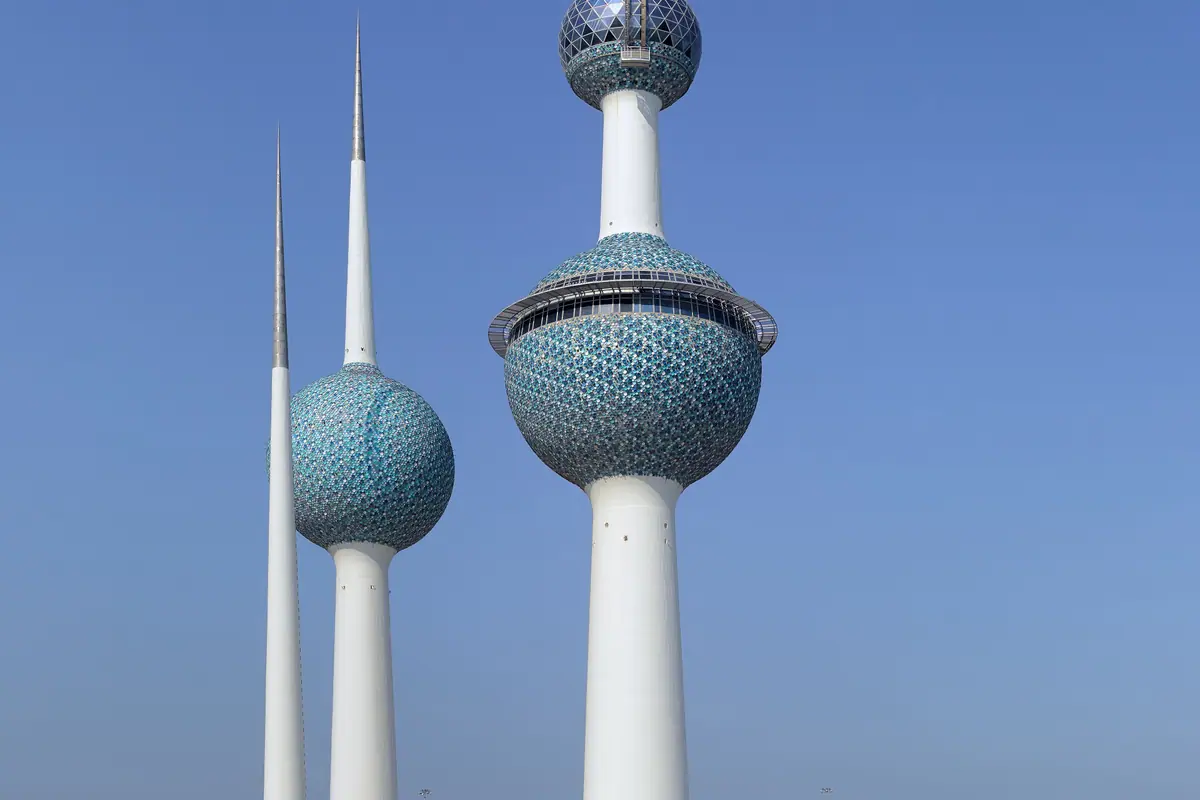
Begin on the Gulf Road at dusk, when the corniche fills with families and the sea turns the colour of wet slate. The Kuwait Towers rise straight out of the waterfront here — three slender concrete needles crowned with blue-green glass spheres, completed in 1979 and still the country's most recognisable silhouette. The tallest spire climbs to roughly 187 metres, and the great lower sphere holds an observation deck at around 120 metres, with a restaurant in the middle one above it.
From the viewing level the geography of the country snaps into focus: Kuwait Bay on one side, the dense grid of downtown on the other, and on a clear winter day the faint industrial plumes of the southern oil fields smudging the horizon. Come on a weekday in the late afternoon rather than a weekend evening, and confirm opening hours on the day — they shift with the season, and the deck sometimes closes for maintenance.
The rest of the skyline is worth a slow drive or a long walk. The Liberation Tower, a 372-metre telecommunications mast in the financial district, was among the tallest structures in the world when it rose in the 1990s and glows green after dark. Al Hamra Tower, the tallest building in Kuwait at over 400 metres, is a piece of asymmetric, stone-clad sculpture that leans and twists away from the sea — the lower floors hold shops and cafés, and the façade alone justifies the detour.
Old Kuwait: Souk Al-Mubarakiya, the Grand Mosque and Seif Palace
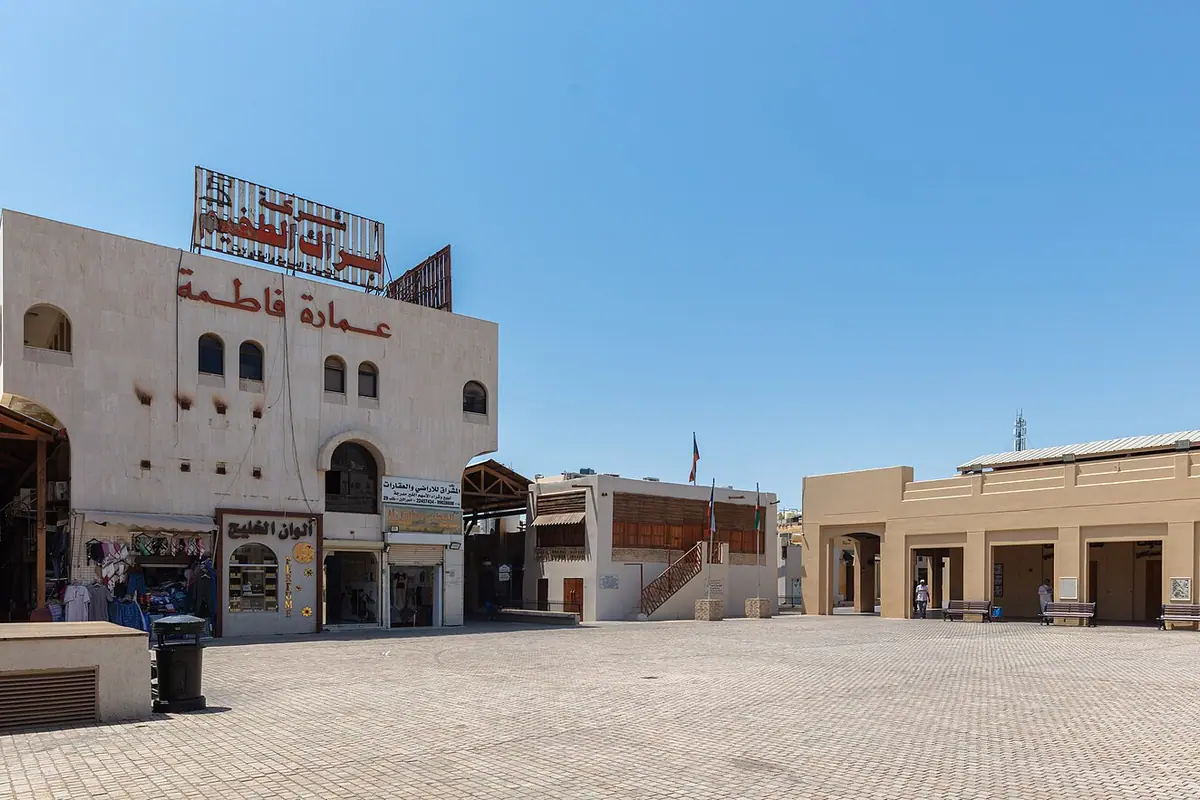
Souk Al-Mubarakiya is the beating heart of the old city, a warren of alleys that has been trading for more than two centuries. Get lost deliberately: the gold market, the date and spice stalls, the perfume and abaya lanes, the hardware sellers and the wheelbarrows of herbs. The food side is where the real pleasure lies — griddle-fried mutabbaq, grilled meat, fresh juice, and cafés where men sit over tiny glasses of tea long after the shops have closed. Mornings are calm and good for photographs; evenings after about six are loud, crowded and far more fun.
A short walk away stands the Grand Mosque, the largest in Kuwait and a study in Andalusian-influenced arches, carved plaster and a minaret that reaches roughly 74 metres. The vast carpeted prayer hall holds thousands, and free guided visits are usually offered on weekday mornings — arrange one in advance, dress modestly, and expect women to be asked to cover their hair, with abayas often lent at the door.
Continue along Gulf Street to Seif Palace, the working seat of the country's leadership. You cannot go inside, but the blue-tiled watchtower and the gold-faced clock above the gate are a classic stop, best photographed from the palm-lined pavement across the road. Nearby, heritage houses such as the former British political residence known as Dickson House and the Sadu House, dedicated to Bedouin weaving, fill in the texture of Kuwait before oil.
Museums Worth Half a Day: Sheikh Abdullah Al Salem, Tareq Rajab and the Mirror House
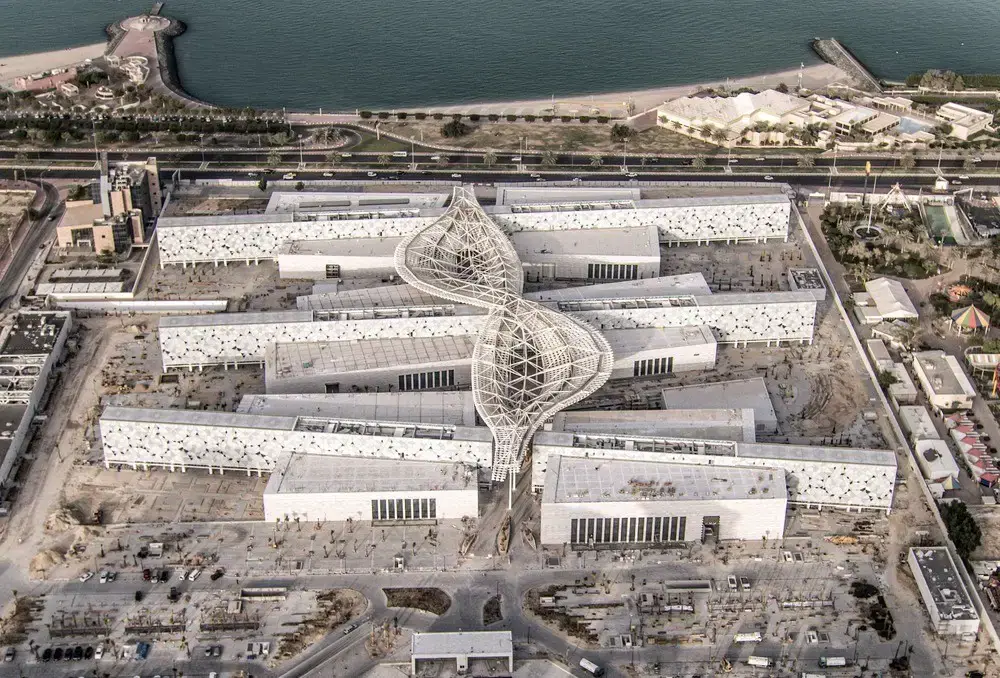
The Sheikh Abdullah Al Salem Cultural Centre in Shuwaikh is the heavyweight. Spread across a landscaped waterfront campus, it houses six separate museums covering natural history, science, space, fine art and Islamic art, with a suspended whale skeleton and interactive halls that keep children occupied for hours. Give it three to four hours at minimum; the air conditioning makes it the obvious choice for a hot midday.
For something smaller and more personal, head to the Tareq Rajab Museum in Jabriya, a private collection of Islamic manuscripts, ceramics, metalwork, textiles and musical instruments assembled over a lifetime and displayed with real care. It is quiet, cool and rarely busy. In Qadsiya, the Mirror House is a different creature entirely — an ordinary villa turned inside out in mirror mosaic and tile by its artist owner, visitable only by prior appointment.
Evenings belong to the Sheikh Jaber Al-Ahmad Cultural Centre, a marble-and-glass performing arts complex whose concert halls host orchestras, Arabic music and theatre through the cooler months. Pair it with a look at the older Kuwait National Museum complex and its neighbouring Sadu House, or the Bait Al-Othman Museum, which traces everyday Kuwaiti life through rescued artefacts and reconstructed rooms.
Green Escapes: Al Shaheed Park, Green Island and the Scientific Centre
Al Shaheed Park is the city's lungs — the largest urban park in Kuwait, split into two halves linked by its own pedestrian crossing, with a botanical garden devoted to desert plants, a curving amphitheatre and a lake that hosts fountain-and-light shows after dark. The museums inside it, including one on the natural habitat of the region and another on the story of the city, are modest but well made. Visit between November and March for pleasant daytime wandering; in summer, treat it strictly as an after-sunset destination.
On the corniche, the Green Island is an artificial spit of walkways, lagoons and lawns reached by a short causeway — popular with families, joggers and anyone wanting sea air without leaving the city. Continue west to the Scientific Centre in Salmiya, where a large aquarium shows off Gulf species, reef life and sharks, alongside a domed cinema and hands-on discovery halls. It is the single best rainy-day or heatwave plan in Kuwait.
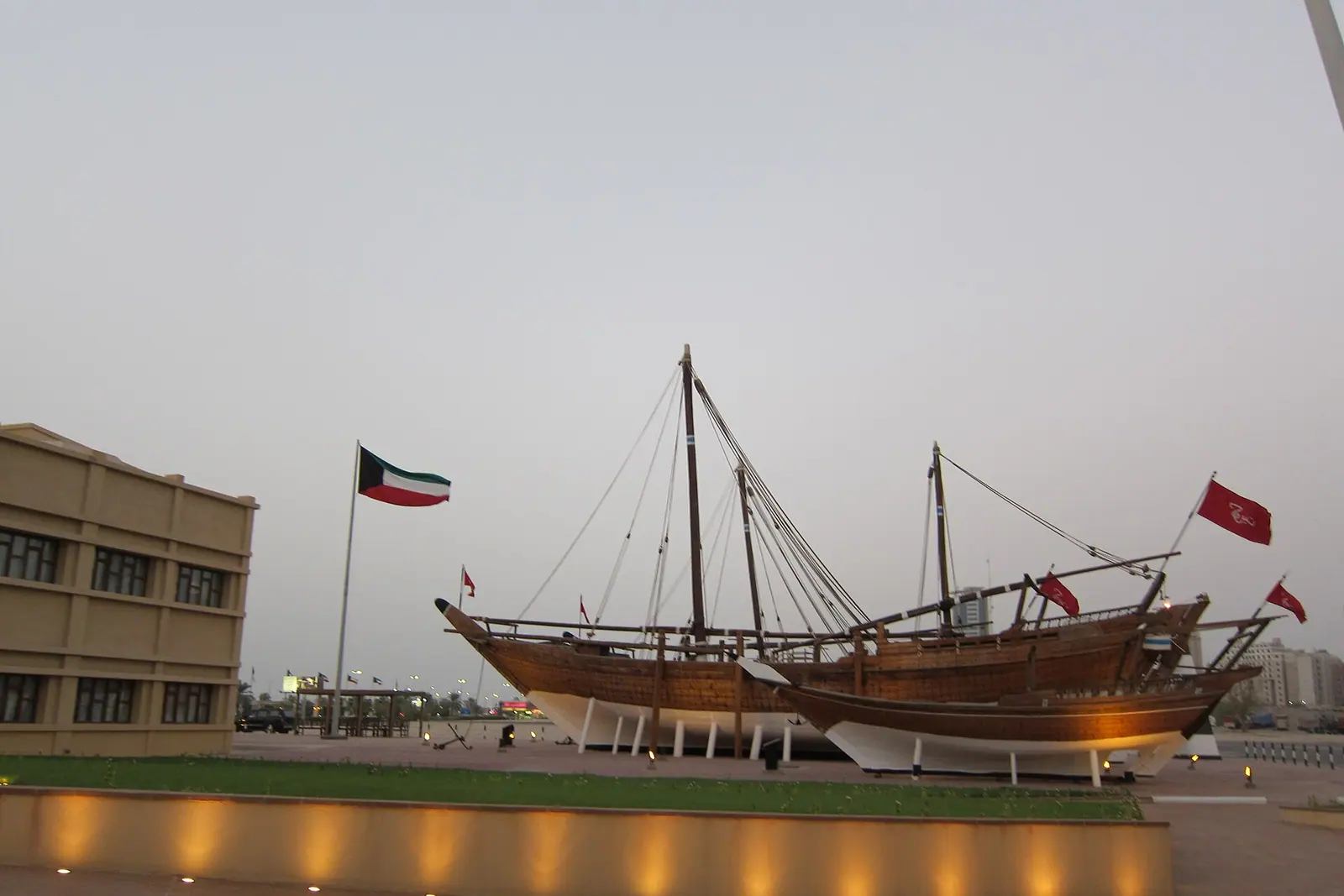
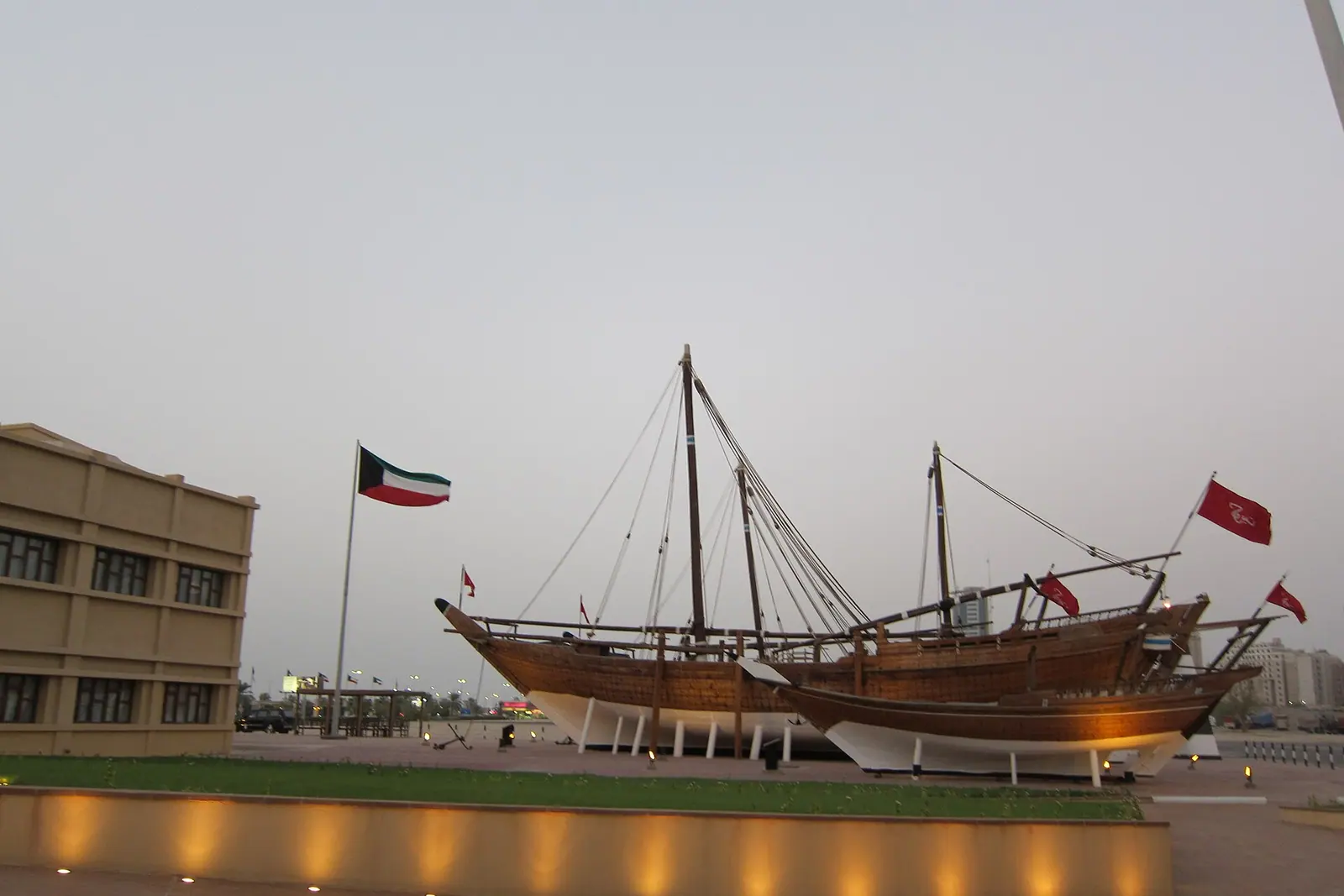
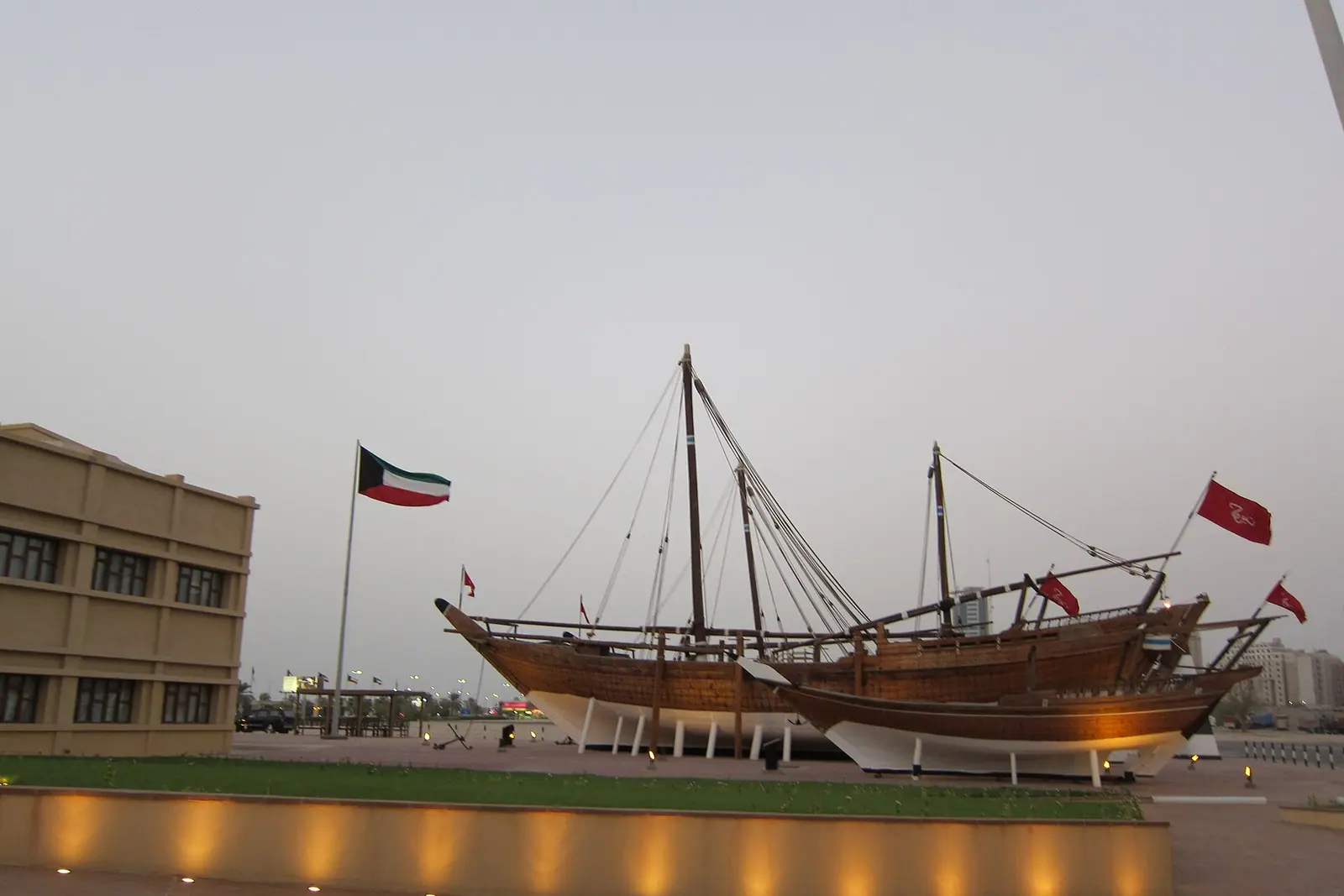
Round off a coastal afternoon at the dhow harbour, where the traditional wooden boats that once carried cargo across the Gulf still moor in rows. Sunset cruises run from here and from the marinas in the cooler months, offering the skyline from the water — the view that makes the city's odd combination of concrete, glass and sea finally make sense.
Islands and Desert: Failaka, Kubbar, Mutlaa Ridge and Jahra's Wetlands
Failaka Island, about 20 kilometres offshore, is Kuwait's most compelling archaeological story. It holds the remains of a Bronze Age Dilmun settlement, a Hellenistic fortress and temple from the era when the island was known as Ikaros, and abandoned houses and vehicles left behind after the 1990 invasion. The ferry from Ras Al-Ardh takes around half an hour, though the service has been suspended and restarted several times over the years — always confirm locally before building a day around it. Bring water, sun protection and cash.
For sand and snorkelling, boats run out to Kubbar Island, a low sandy cay with clear water and decent diving on the surrounding reefs; trips leave mostly from the southern coast and are best in the shoulder months. Umm Al-Maradim, further south, is protected and generally off-limits to landing.
The desert side of Kuwait is underrated. Mutlaa Ridge, the country's highest point at just over 300 metres, catches a breeze and, after decent winter rain, a brief carpet of spring flowers — this is also where locals set up camps between November and March. Nearby Jahra Pools Reserve is a chain of reed-fringed wetlands that draws flamingos, herons and raptors, best visited at dawn with binoculars. On winter Friday mornings, the camel racing track out at Kabd is a genuinely local spectacle, and anyone can watch from the rail.
Beyond the Capital: Jahra's Red Palace, Ahmadi and Practical Pointers
West of the city, the Red Palace in Jahra — Qasr al-Ahmar — is a mud-brick fort built at the end of the nineteenth century and the site of a decisive 1920 battle. It now holds a small museum and is one of the few places where you can stand inside Kuwait's pre-oil history rather than look at it. Further south, Ahmadi is a leafy, deliberately planned town laid out in the 1940s around the oil industry, with palm-lined streets and a distinctly un-Gulf calm; the surrounding fields are among the largest oil reserves on earth.
In the far south, Fahaheel's waterfront mall and corniche make a pleasant half-day, and the vast Avenues complex in Al-Rai is where Kuwait goes to shop, eat and escape the heat — dozens of restaurants, cinemas and an indoor boulevard that stays busy until late.
Timing matters enormously here. November to March is the sweet spot, with mild days, cool evenings and the whole country outdoors; October and April are bearable but dusty, and June to September is genuinely punishing, with life shifting indoors by day and onto the corniche after dark. Note that Kuwait is dry — alcohol is not sold or served anywhere, so don't plan evenings around bars. Dress modestly in public, expect Friday and Saturday as the weekend, carry some cash in Kuwaiti dinars for souks and taxis, and rent a car if you want Jahra, Ahmadi or the ridge without relying on drivers.
Frequently asked questions
What is the best time of year to visit Kuwait?
November through March is by far the most comfortable window, with mild days and cool evenings suited to the desert, the islands and long walks along the corniche. October and April are transitional and often dusty, while June to September brings extreme heat that pushes almost everything indoors.
How many days do you need in Kuwait?
Three to four days covers it well: one for the Kuwait Towers, Souk Al-Mubarakiya and the old city, one for the museums and Al Shaheed Park, and one for the desert, Jahra or Ahmadi. Add another day if the Failaka ferry is running and you want the island.
Is alcohol available in Kuwait?
No. Kuwait is a dry country — alcohol is not sold or served anywhere, and bringing it in is not permitted. Evenings revolve around cafés, restaurants, shisha terraces and the corniche instead, which is part of the country's particular character.
Can you visit Failaka Island, and how do you get there?
A ferry has historically run from Ras Al-Ardh, taking roughly thirty minutes, but the service has been suspended and restarted several times. Check current schedules locally before planning your day, and take water, sun protection and cash since facilities on the island are limited.
Do you need a car to get around Kuwait?
In Kuwait City you can manage with taxis and ride-hailing for the main sights, though walking is only pleasant in the cooler months. For Jahra, the Red Palace, Ahmadi, Mutlaa Ridge or the camel track, renting a car is by far the easiest option.
Plan it — experiences in Kuwait
Live search, booked directly with trusted providers.
Sort the rest of your trip
Everything for Kuwait, in one place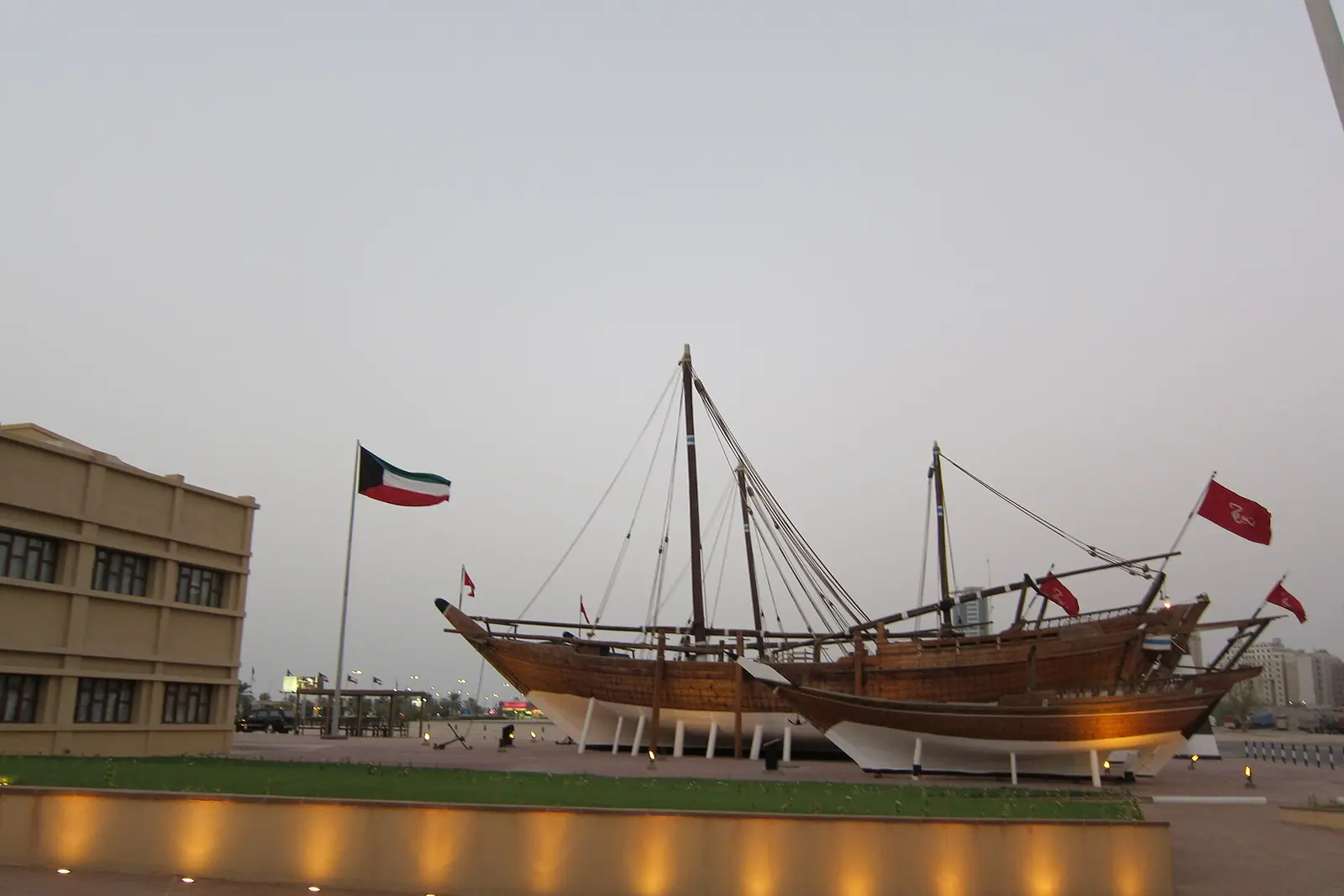
Stay in Kuwait
Hotels, guesthouses and apartments — compared in one search.
Search hotels
Transfer in Kuwait
Private driver waiting on arrival — no queues, no surprises.
Book a transfer
Stay online in Kuwait
Travel eSIM — data the moment you land, no roaming bills.
Get an eSIM